


Ja, Hühner können die meisten gängigen Speisepilze bedenkenlos fressen einschließlich Champignons, Cremini, Portobello, Shiitake, Austernseitlingen und Igelstängeln, solange die Pilze gekocht, ungewürzt serviert und auf maximal 10 % der täglichen Futteraufnahme des Vogels begrenzt werden. Füttern Sie niemals wild gesammelte Pilze, es sei denn, Sie haben sie eindeutig als ungiftig identifiziert. Gekochte Pilze sind für Hühner leichter verdaulich als rohe und bergen kein Risiko durch milde Reizstoffe, die in einigen rohen Pilzen enthalten sind.
Kurzer Sicherheitshinweis
- Sicher (gekocht, in Maßen): Champignons, Cremini, Portobello, Shiitake, Austernseitlinge, Igelstängel, Königsausternseitlinge
- Niemals füttern: jeden Wildpilz, den Sie nicht zu 100 % sicher identifizieren können, schimmelige oder verdorbene Pilze, mit Salz, Öl, Knoblauch oder Zwiebeln gekochte Pilze
- Portion: 1 bis 2 Esslöffel pro ausgewachsenem Huhn, 1 bis 2 Mal pro Woche
- Zubereitung: ungeschützt dämpfen, kochen oder trocken anbraten, bis sie vollständig durchgegart sind, dann auf Raumtemperatur abkühlen lassen
- Altersgrenze: warten, bis die Vögel mindestens 8 bis 10 Wochen alt sind

Hühnerfutter und die Rolle von Pilzen verstehen
Grundlegende Ernährungsanforderungen von Hühnern
Bevor Sie Ihrer Haltung neue Leckerbissen hinzufügen, ist es hilfreich zu wissen, was ein Huhn jeden Tag wirklich braucht:
- Eiweiß: 16 bis 20 % für Legelegerinnen, 20 bis 24 % für wachsende Vögel
- Kohlenhydrate: Energie aus Getreide, Krumen und Gemüse
- Fette: 3 bis 5 % der Gesamtration für essenzielle Fettsäuren
- Vitamine und Mineralstoffe: Calcium, Phosphor, Vitamine A, D, E und B-Komplex
- Sauberes Wasser: jederzeit verfügbar, täglich erneuert
Hühner sind von Natur aus allesfressende Futtersucher. In der freien Natur sammeln sie Samen, Insekten, Würmer, kleine Reptilien und Pflanzenreste. Beim Gründeln in Laubstreu können sie auf Pilze stoßen. Obwohl ihre Instinkte ihnen helfen, einige giftige Arten zu meiden, ist dieser Instinkt nicht zuverlässig genug, um das Leben eines Vogels darauf zu setzen. Laut dem Poultry Extension Service sollten Leckerbissen jeglicher Art nicht mehr als 10 % der gesamten täglichen Futteraufnahme ausmachen, damit das ausgewogene Legefutter weiterhin die Hauptrolle spielt.
Wie Pilze in die Ernährung von Hühnern passen
Essbare Pilze haben einen echten Nährwert, wenn sie in Maßen gefüttert werden:
- Eiweiß: 2 bis 4 Gramm pro 100 Gramm bei den meisten gängigen Arten
- B-Vitamine: Riboflavin, Niacin und Pantothensäure für den Energiestoffwechsel und die Gesundheit des Nervensystems
- Mineralstoffe: Kalium, Selen, Kupfer und Phosphor
- Beta-Glucane: Verbindungen in Austernseitlingen und Shiitake, die die Immunfunktion unterstützen können
- Kalorienarm: abwechslungsreich ohne leere Energie
- Ballaststoffe: in kleinen Mengen unterstützen sie die Verdauungsgesundheit
Dennoch können Pilze kein vollständiges kommerzielles Hühnerfutter ersetzen. Futterhersteller stimmen das Verhältnis von Calcium zu Phosphor, das Aminosäureprofil und die Spurenelementmischung genau auf eine gleichmäßige Eierproduktion und gesundes Wachstum ab. Pilze sind eine Beilage, nicht das Hauptgericht.

Welche essbaren Pilze sind für Hühner sicher?
Im Handel erhältliche Sorten
Champignons (Agaricus bisporus)
- Sicherheit: sicher, wenn gekocht
- Zubereitung: den verschmutzten Stielansatz entfernen, in erbsengroße Stücke schneiden
- Portion: 1 bis 2 Esslöffel pro Vogel
- Vorteile: gute Eiweißquelle, gekocht sehr leicht verdaulich
Cremini- und Portobello-Pilze
- Sicherheit: sicher, wenn gekocht (gleiche Art wie Champignons, nur reifer)
- Zubereitung: bei großen Portobello-Kappen die dunklen Lamellen entfernen (sie können bitter sein), entsprechend zerkleinern
- Portion: aufgrund der größeren Kappen moderate Portionen
- Hinweise: vertrauter Geschmack, das ganze Jahr über weit verbreitet
Shiitake-Pilze (Lentinula edodes)
- Sicherheit: nur sicher, wenn vollständig durchgekocht
- Wichtig: Shiitake niemals roh füttern. Roher Shiitake enthält Lentinan, eine Verbindung, die Haut- und Verdauungsreaktionen auslösen kann
- Zubereitung: den holzigen Stiel abschneiden und entsorgen, vollständig garen, fein hacken
- Vorteile: reich an B-Vitaminen, Eiweiß und Kupfer
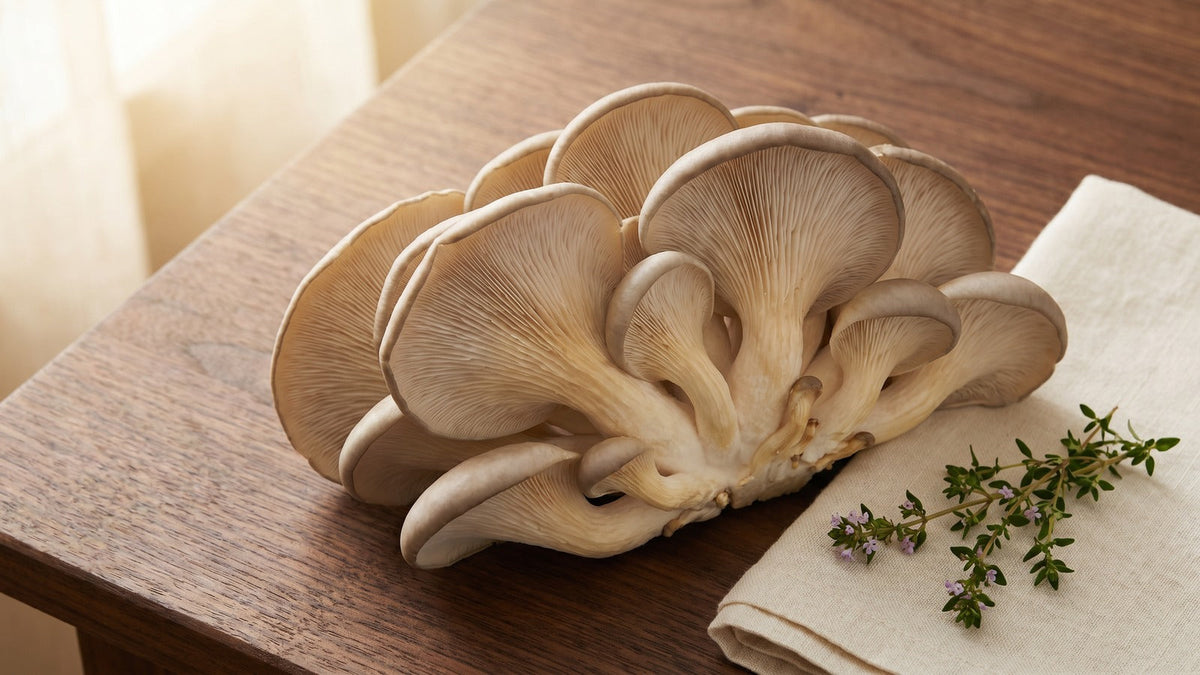
Austernseitlinge (Pleurotus ostreatus, P. eryngii, P. djamor)
- Sicherheit: im Allgemeinen sicher, wenn gekocht
- Sorten: Perlen-, blaue, goldene, rosa und Königsausternseitlinge sind alle geeignet
- Zubereitung: in der Pfanne anbraten oder dämpfen, in Streifen reißen oder schneiden, bei Königsausternseitlingen die harten Stiele entfernen
- Warum Hühner sie mögen: milder Geschmack, weiche Textur nach dem Kochen, leicht zu picken
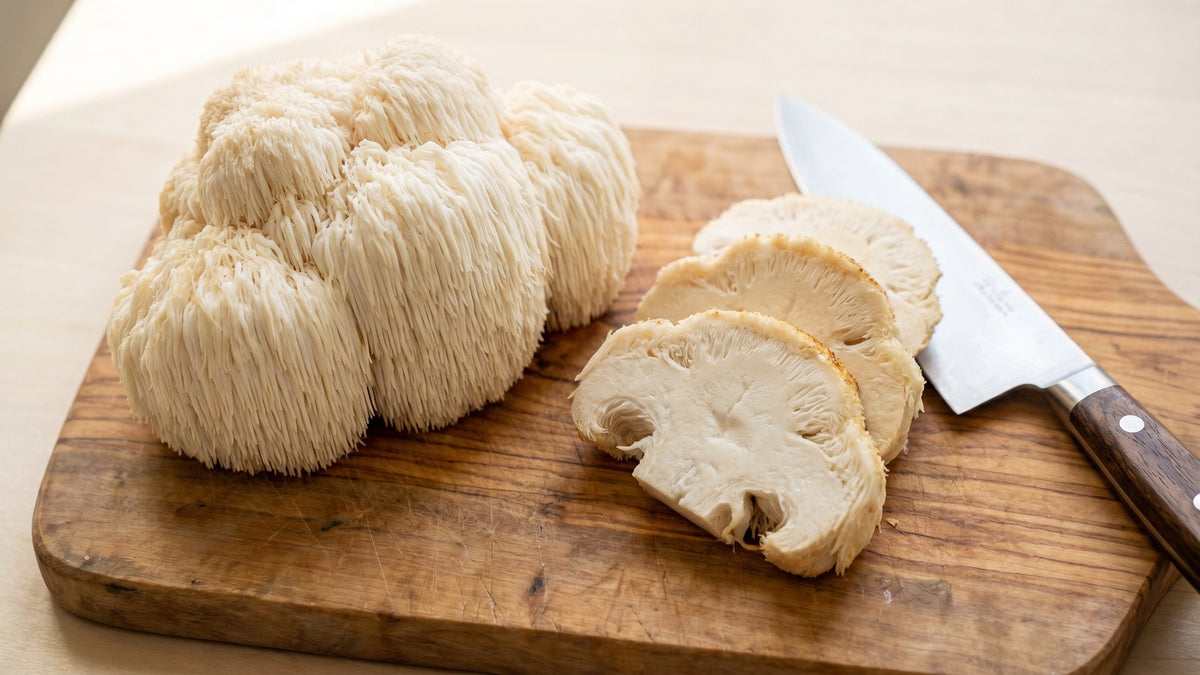
Igelstängel (Hericium erinaceus)
- Sicherheit: sicher, wenn gekocht
- Zubereitung: den Stängelkopf in mundgerechte Stücke reißen, in einer Pfanne ohne Öl anbraten, bis er weich ist
- Hinweise: schwammige, krabbenähnliche Textur, die Hühner leichtfressen können
Für einen tieferen Einblick in den Anbau von Austernseitlingen und Igelstängeln zu Hause sehen Sie sich unsere Anleitungen für das Austernseitlingen-Anbau-Set und das Igelstängel-Pilz-Anbau-Set an.
Pilze aus kontrollierten Anbausystemen zu Hause
Wenn Sie Ihre eigenen Pilze anbauen, beseitigen Sie das größte Risiko beim Füttern von Pilzen an Hühner: eine falsche Identifizierung. Wenn Sie aus einer bekannten Kultur in einem sauberen Substrat anbauen, wissen Sie genau, welche Art Sie ernten. Das ist für Hühner im eigenen Garten wichtiger als für menschliche Köche, denn Vögel verstoffwechseln Giftstoffe anders als Menschen, und eine kleine Dosis der falschen Art kann überproportionalen Schaden anrichten.
Vorteile von selbst angebauten Pilzen für Hühnerhalter
- Bekannte Sorten: garantierte Artidentifizierung
- Kontrollierte Bedingungen: keine Wildkontaminationen, keine giftigen Doppelgänger aus der Nachbarschaft
- Frische Ernte: maximaler Nährwert, keine Lagerzeit
- Chemikalienfrei: keine Pestizide oder Behandlungen nach der Ernte
Beste selbst angebaute Sorten für Hühnerhalter
- Austernseitlinge: schnellwachsend, leicht zu identifizieren, gut verträglich
- Shiitake: hoher Nährwert, wenn gekocht
- Igelstängel: sicher, wenn gekocht, einzigartige Textur, die Hühner genießen
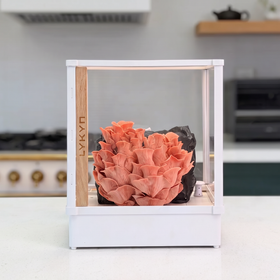
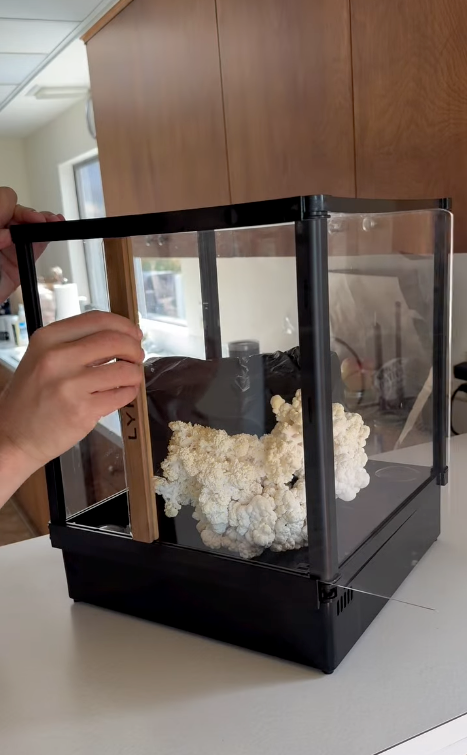
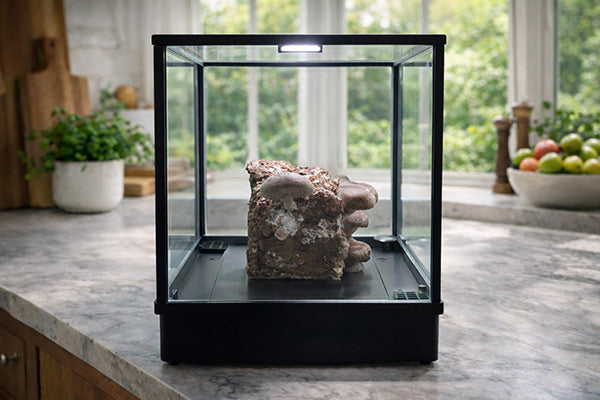
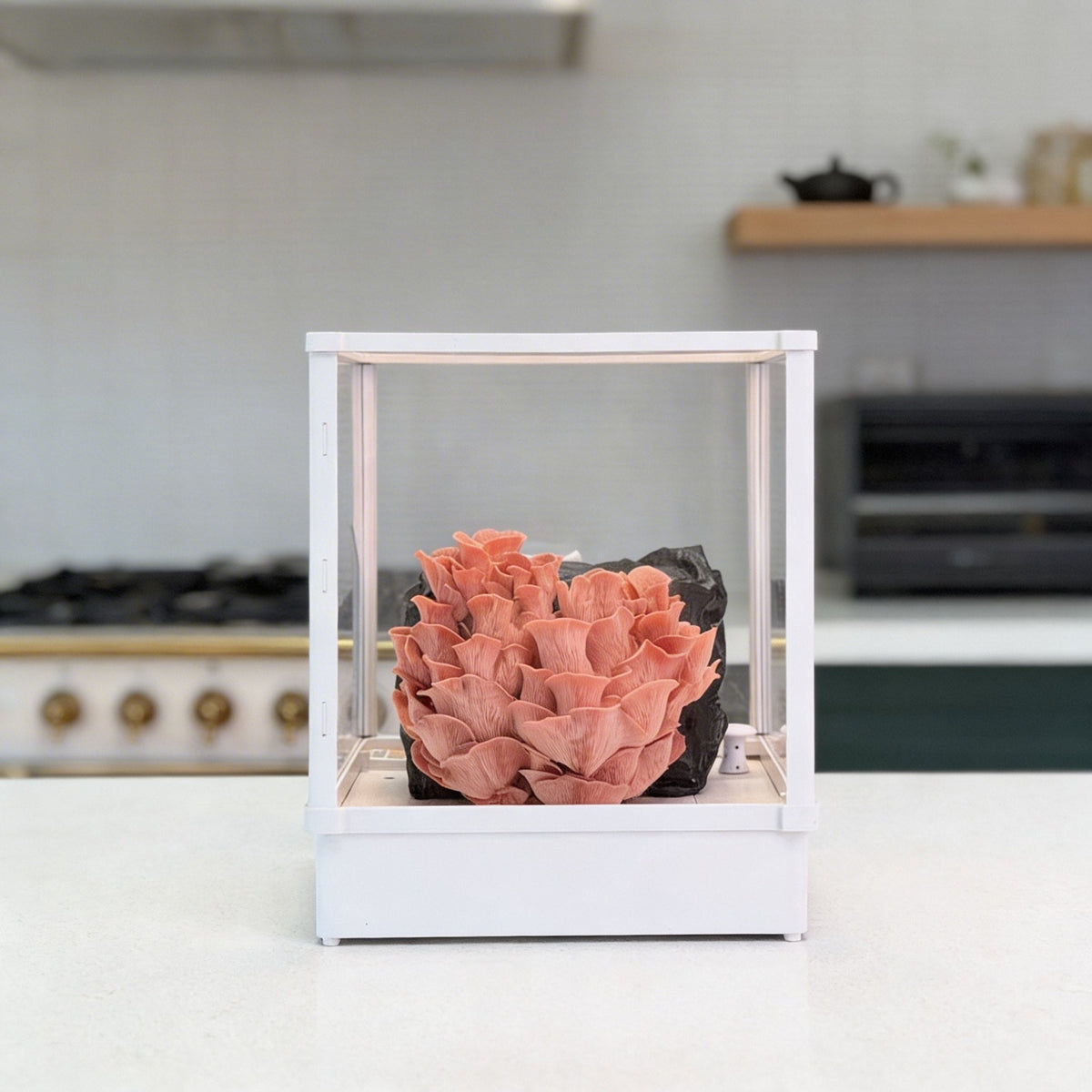
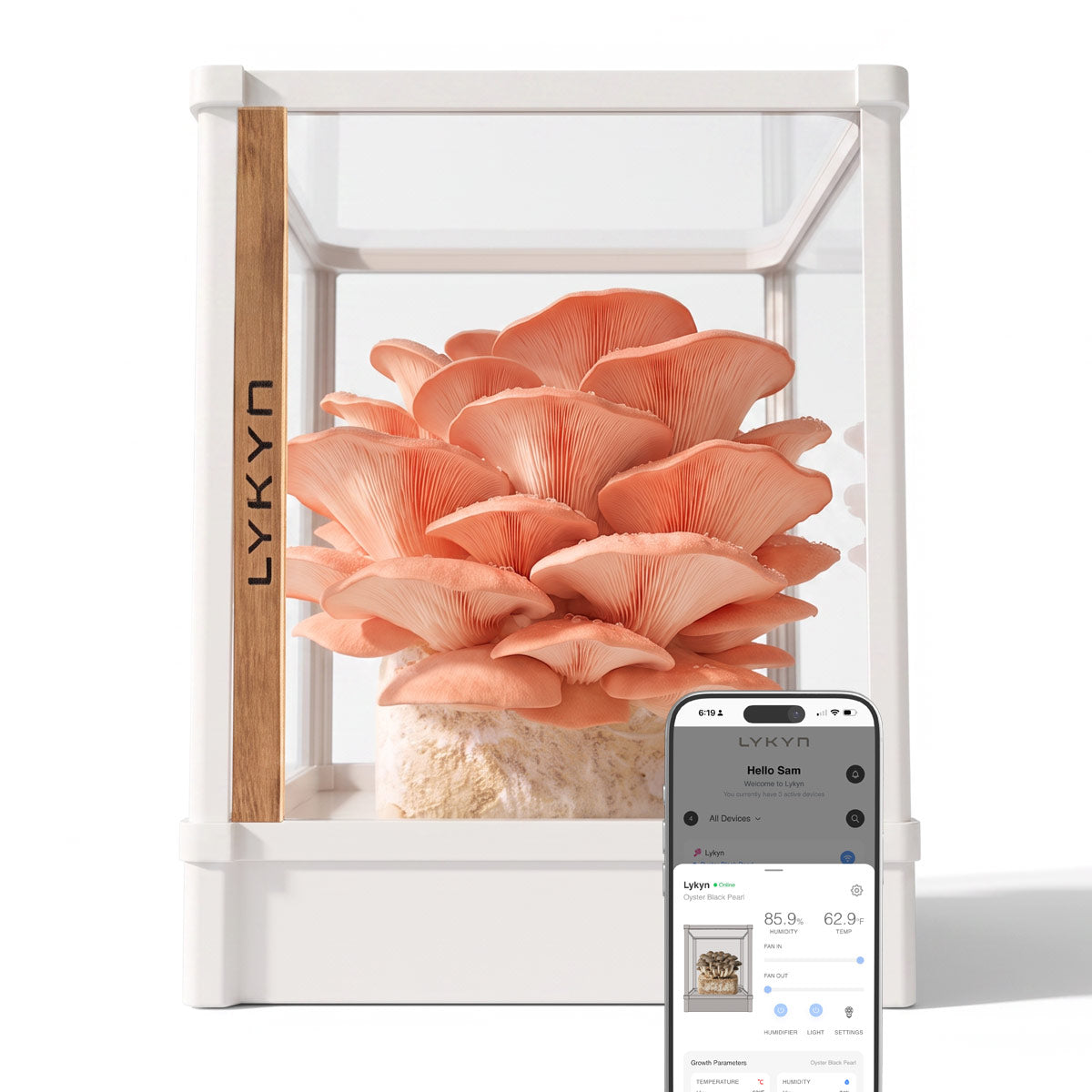
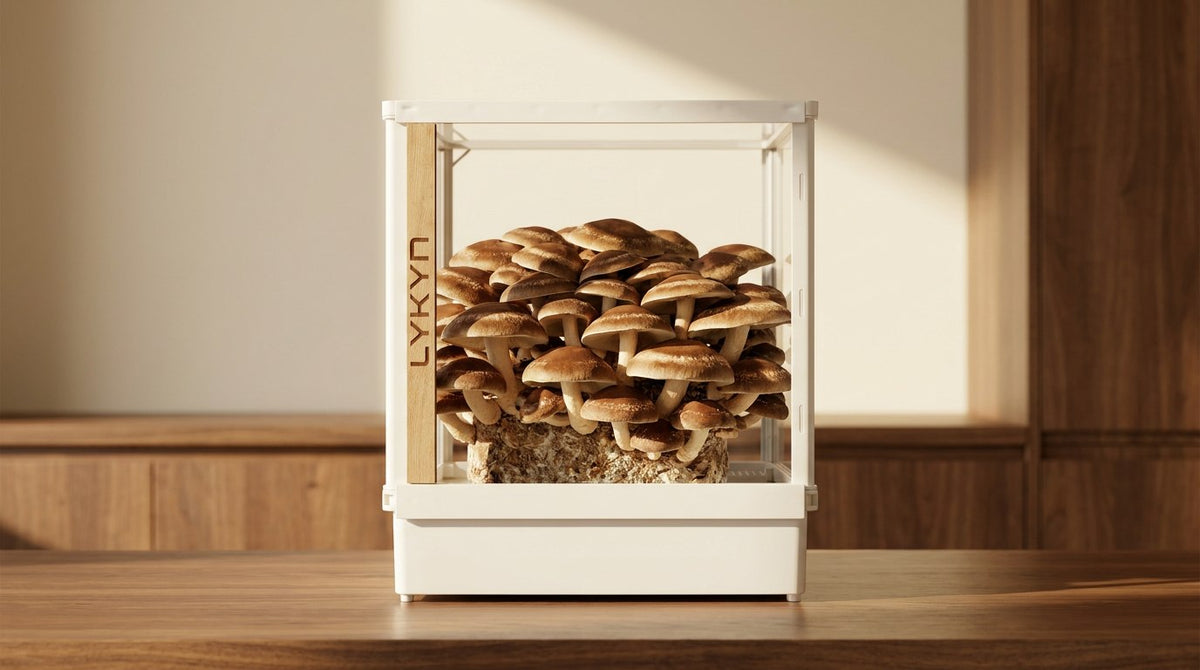
Wenn Sie lieber drinnen mit automatisierten Feuchtigkeits- und Lichtzyklen anbauen möchten, übernimmt die Intelligente Pilzanbau-Box die Bedingungen für die Fruchtbildung, sodass Sie sich auf die Haltung der Hühner konzentrieren können. Die gleiche Ernte versorgt die Familie und bietet gelegentlich eine Leckerbissen für den Stall.
Welche Wildpilze sind für Hühner giftig?
Wildpilze sind die größte Gefahr im Zusammenhang mit Pilzen für Hühner im eigenen Garten. Die Giftstoffe sind oft hitzestabil, was bedeutet, dass Kochen sie nicht neutralisiert, und Vögel können bereits Stunden nach der Aufnahme Symptome zeigen. Hier sind die Arten, die jeder Hühnerhalter in Nordamerika kennenlernen sollte.
Die gefährlichsten Arten
Grüne Knollenblätterpilze (Amanita phalloides)
- Oft tödlich für Vögel und Säugetiere
- Enthalten Amatoxine, die das Lebergewebe zerstören
- Die Symptome können sich 6 bis 24 Stunden verzögern, zu diesem Zeitpunkt sind die Schäden jedoch bereits schwerwiegend
- Tritt häufig in Eichen- und Kastanienwäldern auf, manchmal auch in Vorstadthöfen
Weiße Giftkerze (Amanita virosa, A. bisporigera, A. ocreata)
- Vollständig weiße, trügerisch sauber aussehende Pilze
- Gleiche Amatoxin-Klasse wie der Grüne Knollenblätterpilz
- Häufig in Ost- und West-Nordamerika im Spätsommer und Herbst
Falsche Morcheln (Gyromitra esculenta)
- Gehirnähnliche Kappe, wird oft mit echten Morcheln verwechselt
- Enthält Gyromitrin, das im Darm in Monomethylhydrazin umgewandelt wird
- Verursacht Leberschäden und neurologische Symptome bei Vögeln
Tödliche Galerina (Galerina marginata)
- Klein, braun, in Holzhacks oder Mulchbetten leicht zu übersehen (sehr relevant für Hühnerställe)
- Enthält ebenfalls Amatoxine
- Tritt häufig in Büscheln auf verrottendem Holz auf
Cortinarius-Arten
- Verschiedene Arten mit rostfarbenen Sporen verursachen verzögerte Nierenschäden
- Die giftigen Symptome können erst nach mehreren Tagen auftreten
Inocybe- und Clitocybe-Arten
- Enthalten Muscarin
- Verursachen Speichelfluss, Tränenfluss, Durchfall und Atemwegsbeschwerden (das „SLUDGE“-Syndrom)
Warum Wildpilze nicht auf dem Speiseplan stehen
- Eine eindeutige Identifizierung erfordert Fachwissen und oft mikroskopische Untersuchungen
- Viele giftige Arten ahmen essbare Sorten eng nach
- Die Giftstoffe können in der Kappe stärker konzentriert sein als im Stiel oder umgekehrt
- Vögel verstoffwechseln einige Mykotoxine anders als Menschen, und die Auswirkungen können schwerwiegender sein
- Das Risiko überwiegt bei weitem jeden potenziellen Nährwert
Der Leitfaden der Penn State Extension zu Pilzvergiftungssyndromen ist eine solide kostenlose Referenz, wenn Sie mehr über die wichtigsten Giftstoffgruppen erfahren möchten.
Schimmelige oder verdorbene Pilze
- Können Mykotoxine enthalten (anders als Pilzgifte, sie werden durch Schimmelbildung produziert), die für Hühner schädlich sind
- Können Verdauungsbeschwerden, Immunsuppression und Leberbelastung verursachen
- Verwenden Sie immer frische Pilze und entsorgen Sie alle mit schleimigen Oberflächen, dunklen Flecken oder sauren Gerüchen
Roh vs. Gekocht: Warum das Kochen wichtig ist
Dies ist eine der häufigsten Fragen, die Haltungsbesitzer stellen, und die Antwort ist in der Geflügelernährungsforschung einheitlich: Gekocht ist besser.
Warum Kochen hilft
- Leichtere Verdauung: Hitze baut Chitin ab (die Strukturfaser in den Pilzzellwänden), sodass Eiweiß und B-Vitamine zugänglich werden
- Neutralisiert milde Verbindungen: Einige rohe Pilze enthalten Reizstoffe, die beim Kochen verschwinden, insbesondere bei Shiitake und Morcheln
- Tötet Oberflächenbakterien ab: Jegliche Kontamination durch Handhabung oder Lagerung wird reduziert
- Bessere Akzeptanz: Hühner bevorzugen oft die weichere Textur gekochter Pilze
So bereiten Sie Pilze für Hühner zu
- Immer kochen vor dem Servieren (dämpfen, kochen oder trocken anbraten)
- Keine Gewürze: Salz, Knoblauch, Zwiebeln und Gewürze weglassen, da sie Hühner schaden können
- Kein Öl oder Butter: Zusätzliches Fett ist unnötig und liefert Kalorien
- Durchgaren: vollständig erhitzt, nicht knusprig
- Vollständig abkühlen: Bei Raumtemperatur servieren, niemals heiß
- Klein schneiden: mundgerechte Stücke, gleichmäßig, damit dominante Hühner nicht alle großen Stücke stehlen
- Harte Teile entfernen: Holzige Stielenden sind schwer verdaulich
Portionsgröße und Fütterungsfrequenz
Die wichtigste Regel: Leckerbissen dürfen nicht mehr als 10 % der täglichen Futteraufnahme ausmachen. Die anderen 90 % sollten aus ausgewogenem Lege- oder Wachstumsfutter bestehen.
Häufigkeit
- Maximal 1 bis 2 Mal pro Woche
- 1 bis 2 Esslöffel gekochte Pilze pro ausgewachsenem Huhn pro Portion
- Mit anderen sicheren Leckerbissen abwechseln, damit die Abwechslung eine einseitige Ernährung verhindert
So führen Sie Pilze zum ersten Mal ein
- Klein anfangen: ein halber Esslöffel pro Vogel
- 24 bis 48 Stunden beobachten: Kot, Energie und Futteraufnahme prüfen
- Schrittweise erhöhen wenn alle sie gut vertragen
- Notizen machen über die Sorten, die am besten ankommen
Alters- und Gesundheitsüberlegungen
- Erwachsene Vögel: voll entwickeltes Verdauungssystem, vertragen Pilze gut
- Junge Küken (unter 8 bis 10 Wochen): keine Pilze, bei Starterfutter bleiben
- Junghennen: schrittweise als Teil der Leckerbissenrotation einführen
- Ältere Vögel: können von weicheren, gut gekochten Zubereitungen profitieren
- Kranke oder mausende Vögel: während Stressphasen keine neuen Leckerbissen füttern; sich während der starken Mauser auf proteinreiches Futter konzentrieren
- Brütige Hennen: verminderter Appetit ist normal; nicht mit Leckerbissen drängen
Nährwert für Hühner
Gekochte essbare Pilze bringen echte Vorteile, wenn sie richtig gefüttert werden:
Nährwertvorteile
- Eiweißergänzung: zusätzliche Aminosäuren über die Legefutterration hinaus
- Vitamin-B-Komplex: unterstützt den Energiestoffwechsel und die Funktion des Nervensystems
- Mineralstoffe: Selen für die Schilddrüsenfunktion, Kalium für die Muskeln, Phosphor für die Knochen
- Beta-Glucane: können die angeborene Immunantwort leicht unterstützen (am besten bei Shiitake und Austernseitlingen untersucht)
- Futtersuche-Anreicherung: das Picken und Gründeln nach zerkleinerten Stücken ahmt natürliches Verhalten nach
Verhaltensvorteile
- Geistige Stimulation durch Suchen und Picken
- Ahmt die Futtersuche in der freien Natur nach
- Reduziert picken und Federrupf aus Langeweile in der Haltung
- Fügt das ganze Jahr über Abwechslung in die Ernährung hinzu
Wo Pilze an ihre Grenzen stoßen
- Nicht genug Calcium: Pilze enthalten wenig Calcium und können daher die Eierschalenproduktion nicht unterstützen
- Geringe Gesamtkalorien: keine nennenswerte Energiequelle für kaltes Wetter
- Hoher Wassergehalt: 90 % Wasser, daher ist die tatsächliche Nährstoffdichte pro Portion moderat
Anzeichen einer Pilzvergiftung bei Hühnern
Auch bei den besten Vorsichtsmaßnahmen passieren Unfälle. Ein Vogel läuft in ein mit Mulch bedecktes Beet, oder ein Wildpilz taucht über Nacht im Auslauf auf. Zu wissen, worauf zu achten ist, kann ein Leben retten.
Frühe Symptome (innerhalb von 1 bis 6 Stunden)
- Plötzliche Lethargie oder ungewöhnliche Ruhe
- Appetitlosigkeit
- Wässriger oder grünlich gefärbter Durchfall
- Erbrechen oder Regurgitation (bei Hühnern selten, aber möglich)
- Kropfstauung (ein voller, teigiger Kropf, der sich nicht leert)
Fortschreitende Symptome (6 bis 48 Stunden)
- Atemnot oder Atmen mit offenem Schnabel
- Unkoordinierte Bewegungen, Stolpern oder mit den Flügeln Schleifen
- Zittern oder Krämpfe
- Blasse oder bläuliche Kämme und Kehllappen
- Unfähigkeit zu stehen oder den Kopf hochzuhalten
Späte Anzeichen einer schweren Vergiftung
- Vollständiger Zusammenbruch
- Blutungen aus Kloake oder Schnabel
- Gelbsucht (gelbe Färbung der Haut und des Mundinneren)
- Bewusstlosigkeit
Einige Giftstoffe, insbesondere Amatoxine aus dem Grünen Knollenblätterpilz und der Weißen Giftkerze, verursachen zwischen 24 und 48 Stunden eine trügerische „falsche Genesung“. Der Vogel scheint wieder aufzupolken, bricht dann aber durch Leberversagen stark zusammen. Beobachten Sie niemals auf, nur weil der Vogel besser aussieht.
Was zu tun ist, wenn ein Huhn einen giftigen Pilz frisst
Schnelligkeit und gute Informationen sind Ihre beiden besten Werkzeuge. Hier ist das Protokoll, das jeder Hühnerhalter sich einprägen sollte:
Schritt 1: Die Quelle entfernen
- Entfernen Sie alle verbliebenen Pilze aus dem Stall, Auslauf und auf der Weide
- Gehen Sie den Rand entlang und prüfen Sie Mulchbetten, Holzhacksägehaufen und verrottende Baumstämme auf weitere Fruchtkörper
- Packen Sie eine Probe des verdächtigen Pilzes in eine Papiertüte, niemals in eine Plastiktüte, da Feuchtigkeit die Identifizierungsmerkmale zerstört
Schritt 2: Die betroffenen Vögel isolieren und stabilisieren
- Bringen Sie kranke Vögel an einen ruhigen, warmen und sauberen Ort
- Bieten Sie frisches, sauberes Wasser an, aber füttern Sie sie nicht gewaltsam
- Notieren Sie die vermutete Zeit des Verzehrs und das erste Symptom
Schritt 3: Sofort einen Tierarzt oder einen landwirtschaftlichen Beratungsdienst kontaktieren
- Rufen Sie einen Tierarzt für Vögel, einen Tierarzt für exotische Haustiere oder die Geflügelberatungsstelle Ihres Bundesstaates an
- Wenn Ihr Tierarzt nicht erreichbar ist, kümmert sich das ASPCA Animal Poison Control Center (888-426-4435) gegen eine Beratungsgebühr um Fälle mit Vögeln
- Beschreiben Sie den Pilz (Größe, Farbe, Lamellen- oder Porenmuster, wo er gewachsen ist), die gegessene Menge und die Zeit des Verzehrs
Schritt 4: Unterstützende Pflege unter tierärztlicher Anleitung
- Aktivkohle kann helfen, wenn sie innerhalb der ersten Stunde verabreicht wird, aber nur auf Anweisung und nach Dosierungsempfehlung eines Tierarztes
- Veranlassen Sie kein Erbrechen. Hühner haben keinen echten Erbrecherzeflex, und ein erzwungenes Erbrechen kann zu einer Aspiration führen
- Bei schweren Fällen kann eine Flüssigkeitstherapie empfohlen werden
- Führen Sie ein genaues Protokoll über Symptome und Zeitpunkte, denn dies hilft dem Tierarzt bei der Entscheidungsfindung
Schritt 5: Nachbereitung
- Finden Sie heraus, wie der Pilz in die Umgebung des Vogels gelangt ist (Mulch, Holzschnitzel, umgestürzter Baumstamm, nasser Winkel)
- Passen Sie die Einstreuquellen an oder gehen Sie bei feuchtem Wetter häufiger im Auslauf umher
- Dokumentieren Sie die Art, falls sie identifiziert wurde, damit Sie wissen, worauf Sie in Zukunft achten müssen
Pilzzucht und Haltung Ihrer eigenen Hühnerflocken kombinieren
Warum der Anbau eigener Pilze gut zur Haltung von Hühnern passt
Wenn Sie bereits Eier produzieren und Ihre Vögel auf der Weide halten, ist der Anbau eigener Pilze eine natürliche Erweiterung der gleichen Einstellung, nur das zu füttern, was Sie selbst kontrollieren. Sie ernten, was Ihre Familie isst, und geben der Flocke eine kleine Handvoll Reste, wobei Sie genau wissen, welche Art aus Ihrer Küche stammt.
- Doppelfunktion: dieselbe Ernte ernährt Menschen und Hühner
- Geschlossener Kreislauf: verbrauchtes Pilzsubstrat kann mit Hühnereinstreu kompostiert werden
- Kosteneffizient: ein 20-Dollar-Anbau-Set liefert über seinen Lebenszyklus mehr als 80 Dollar an frischen Pilzen
- Bildend: Kinder lernen die Biologie von Pilzen, während sie bei den Arbeiten helfen
Für einen direkten Vergleich der gängigsten Kultursorten für zu Hause zeigt unsere Übersicht über Pilzanbausets für zu Hause jede Art und das dafür geeignete Setformat.
Hinweise zur saisonalen Fütterung
Frühling: Führen Sie Pilze schrittweise ein, wenn die Vögel wieder regelmäßig Eier legen. Vermeiden Sie während der Brutzeit große Mengen an Leckerbissen, damit Ihre Ration ausgewogen bleibt.
Sommer: Geben Sie Pilz-Leckerbissen in den kühleren Stunden. Pilze bestehen zu 90 % aus Wasser und können bei Hitzewellen die Flüssigkeitszufuhr leicht unterstützen, sind aber kein Ersatz für schattige Wasserstellen.
Herbst: Reduzieren Sie Leckerbissen während der starken Mauser, da die Vögel dieses Protein für das Wachstum neuer Federn benötigen. Sobald die Mauser abgeschlossen ist, ist die Verfügbarkeit frischer Pilze am höchsten und es ist der perfekte Zeitpunkt, sie wieder einzuführen.
Winter: Warme gekochte Pilze (auf Raumtemperatur abgekühlt) sind eine willkommene Abwechslung. Der Anbau in Innenräumen füllt die Lücke, wenn draußen nichts Frisches verfügbar ist.
Alternativen und ergänzende Leckerbissen
Weitere sichere Leckerbissen, die sich abwechselnd anbieten
Gemüse
- Blattgemüse: Spinat, Grünkohl, Salat
- Wurzelgemüse: Karotten, Süßkartoffeln, Rote Bete
- Kürbisgewächse: Kürbis, Zucchini, Winterkürbis (großartig für natürliche Entwurmungsansprüche, obwohl die Beweislage gemischt ist)
- Beeren: Blaubeeren, Erdbeeren, Himbeeren
Proteinhaltige Leckerbissen
- Mehlwürmer (getrocknet oder lebend): proteinreich, sehr hohe Akzeptanz
- Grillen: Protein plus Beschäftigung
- Gekochte Eier (Rührei oder hartgekocht, ohne Schale): hervorragend während der Mauser
- Naturjoghurt in kleinen Mengen: Probiotika und Protein
Eine einfache wöchentliche Leckerbissenrotation
- Montag: Blattgemüse
- Mittwoch: gekochte Pilze
- Freitag: Mehlwürmer oder ein anderer proteinreicher Leckerbissen
- Sonntag: saisonales Obst oder Kürbis
Alle Leckerbissen zusammen bleiben weiterhin unter der 10-%-Grenze. Passen Sie die Menge an die Größe der Flocke, das Gewicht der Vögel und die Aktivität Ihrer Vögel an.
Sicherheitsprotokolle, die Sie in Ihre Routine aufnehmen sollten
Prävention
- Von bekannten Quellen kaufen: seriöse Lebensmittelgeschäfte oder Ihr eigenes Anbau-Set
- Füttern Sie niemals gesammelte Wildpilze, selbst wenn Sie glauben, sie zu erkennen
- Frische prüfen: feste Hüte, keine Schleimschicht, kein saurer Geruch
- Vor dem Kochen auf Schimmel prüfen und alles Verdächtige wegwerfen
- Gehen Sie bei feuchtem Wetter wöchentlich im Auslauf umher, insbesondere durch Mulchbereiche und um verrottende Baumstämme, und entfernen Sie alle Pilze, die Sie finden
Fütterdisziplin
- Führen Sie jedes Mal nur ein neues Futter ein, mit 3 bis 5 Tagen Abstand
- Testen Sie es zunächst an 1 oder 2 Vögeln, bevor Sie die gesamte Flocke füttern
- Führen Sie ein Futterprotokoll: Vielfalt, Datum, Reaktion
- Verwenden Sie einheitliche Kochmethoden, damit die Vögel lernen, was sie erwartet
Wirtschaftliche und praktische Überlegungen
Kosten
- Im Geschäft gekaufte Pilze: 2 bis 5 Dollar pro Pfund, je nach Sorte
- Anbau-Set: 20 bis 40 Dollar im Voraus, liefert mehrere Ernten
- Zeit: etwa 5 Minuten wöchentliche Vorbereitung, sobald Sie eine Routine haben
Vorteile
- Verbesserte Beschäftigung und weniger Langeweile-Gefiederzupfen in der Flocke
- Geschlossener Kreislauf vom Garten über den Stall bis zum Kompost
- Bildungswert für Familien mit Kindern
- Bessere Übersicht darüber, was genau in Ihre Vögel gelangt
Zeitspartipps
- Kochen Sie einmal pro Woche ein paar Tassen Pilze vor und stellen Sie sie in Portionen im Kühlschrank auf
- Planen Sie den Pilztag in Ihre normale Stallroutine ein, damit er nicht untergeht
- Verwenden Sie sie innerhalb von 2 bis 3 Tagen nach dem Kochen oder frieren Sie sie in kleinen Portionen ein
Häufig gestellte Fragen
Können Hühner rohe Pilze essen?
Hühner können technisch gesehen an rohen Pilzen picken, aber Sie sollten sie nicht roh füttern. Kochen macht die Zellwände weich, neutralisiert milde Verbindungen, die die Verdauung eines Vogels stören können, und erleichtert die Aufnahme von Protein und B-Vitaminen. Dämpfen, kochen oder in der Pfanne ohne Zusätze (kein Salz, kein Öl) anbraten und vor dem Servieren vollständig abkühlen lassen.
Sind Pilze für Hühner giftig?
Gängige essbare Pilze aus dem Geschäft (Champignons, Cremini, Portobello, Shiitake, Austernpilze, Igelstachelbart) sind für Hühner nicht giftig, wenn sie gekocht und in Maßen gefüttert werden. Wildpilze und nicht identifizierte Pilze sind eine andere Geschichte. Arten wie der Knollenblätterpilz (Amanita phalloides), der Zerstörerengel (Amanita virosa) und der falsche Steinpilz (Gyromitra esculenta) enthalten Leber- und Nierengifte, die für Vögel tödlich sein können.
Können Küken Pilze essen?
Nein. Küken unter 8 bis 10 Wochen sollten nur ein ausgewogenes Starterfutter (20 bis 24 % Protein) und frisches Wasser bekommen. Ihr Verdauungssystem befindet sich noch in der Entwicklung, und Leckerbissen jeglicher Art, einschließlich Pilze, können die präzise Ernährung verdrängen, die sie für ein gesundes Knochen- und Federwachstum benötigen. Warten Sie, bis sie Hennen sind, bevor Sie Leckerbissen einführen.
Welche Pilze sind für Hühner giftig?
Die gefährlichsten Wildarten in Nordamerika sind Amanita phalloides (Knollenblätterpilz), Amanita virosa und Amanita bisporigera (Zerstörerengel), Gyromitra esculenta (falscher Steinpilz), Galerina marginata (tödliche Galerina) und Cortinarius-Arten. Mehrere Inocybe- und Clitocybe-Arten enthalten Muscarin, das bei Vögeln schwere Atemwegs- und neurologische Symptome verursacht. Wenn Sie einen Pilz nicht zu 100 % identifizieren können, behandeln Sie ihn als giftig.
Können Hühner Pilzstiele essen?
Ja, mit Einschränkungen. Stiele von Champignons, Cremini und Portobello sind in Ordnung, wenn sie gekocht und klein gehackt sind. Shiitake- und Austernpilzstiele sind faserig und zäh, schneiden Sie daher den holzigen Boden ab oder hacken Sie sie sehr fein. Entfernen Sie immer zuerst jegliche Erde oder das Substrat aus Sägemehl.
Haben Pilze einen Nährwert für Hühner?
Ja, in kleinen Mengen. Essbare Pilze liefern 2 bis 4 Gramm Protein pro 100 Gramm, B-Komplex-Vitamine (Riboflavin, Niacin, Pantothensäure), Selen, Kalium und Beta-Glucane, die die Immunfunktion unterstützen können. Sie sind kein Ersatz für Legehenfutter, das so formuliert ist, dass es den Hennen das Calcium und die Aminosäuren liefert, die sie für die Qualität der Eierschalen und eine stetige Legeleistung benötigen.
Was soll ich tun, wenn ein Huhn einen giftigen Pilz frisst?
Handeln Sie schnell. Entfernen Sie alle verbleibenden Pilze aus dem Stall und Auslauf. Isolieren Sie den betroffenen Vogel, bieten Sie sauberes Wasser an und rufen Sie sofort einen Tierarzt für Vögel oder den Geflügelberatungsdienst Ihres Bundesstaates an. Bringen Sie eine Probe des Pilzes (in einer Papiertüte, niemals in Plastik) zur Identifizierung mit. Aktivkohle kann helfen, wenn sie innerhalb der ersten Stunde verabreicht wird, aber nur unter tierärztlicher Anleitung. Veranlassen Sie bei Hühnern kein Erbrechen.
Können Hühner Wildpilze selbst finden und fressen?
Ja, Freigänger picken gelegentlich während der Futtersuche an Pilzen. Hühner haben eine gewisse instinktive Abneigung gegen bitter oder seltsam schmeckende Pilze, aber dieser Instinkt ist nicht perfekt, insbesondere bei neugierigen jungen Vögeln. Gehen Sie bei feuchtem Wetter wöchentlich im Auslauf umher, identifizieren Sie alle Pilze, die in Mulch oder Holzschnitzeln auftauchen, und entfernen Sie alles, was Sie nicht eindeutig als sicher identifizieren können.
Abschließendes Wort
Hühner können gängige essbare Pilze (Champignons, Cremini, Portobello, Shiitake, Austernpilze und Igelstachelbart) sicher fressen, wenn die Pilze pur gekocht, klein gehackt und auf unter 10 % der Tagesration begrenzt werden. Wildpilze sind ausgeschlossen. Der größte Gefallen, den Sie Ihrer Flocke tun können, ist, sie aus einer bekannten Kultur selbst anzubauen oder bei einem vertrauenswürdigen Lebensmittelhändler zu kaufen, damit Sie immer genau wissen, was Ihre Vögel fressen.
Wenn Sie das Risiko von Wildpilzen vollständig ausschließen und gleichzeitig eine stetige Versorgung mit sicheren Sorten sicherstellen möchten, automatisiert unser Intelligentes Pilzanbausystem die Luftfeuchtigkeit und Beleuchtung für die Arten, die sowohl Ihre Familie als auch Ihre Flocke genießen.



Aktie:
Pilze reinigen: Der vollständige Leitfaden zur Zubereitung frischer Pilze
Wie lange Pilze im Kühlschrank haltbar sind: Ihr vollständiger Lagerungsleitfaden