



Kurzantwort: Für den Anbau von Pilzen zu Hause von Grund auf brauchst du neun Ausrüstungsgegenstände: Substrat, Pilzbrut, Pasteurisierungsgeräte, eine Feuchtigkeitskammer, ein Hygrometer, einen Temperaturmonitor, eine Sprühflasche oder einen Luftbefeuchter, eine Vorrichtung für den Luftaustausch und eine Lichtquelle. Die DIY-Ausrüstung kostet insgesamt 230 bis 580 $. Oder du kannst dir mit einer automatisierten Kammer sechs der neun Dinge sparen und 299 $ bezahlen. Im Folgenden werden alle Artikel erklärt, mit echten Preisen, Hinweisen dazu, worauf du verzichten kannst, und einer ehrlichen Vergleichstabelle am Ende.
Die Kurzfassung vorweg: 9 Artikel, wenn du alles selbst zusammenstellst, 3 Artikel mit einer Kammer (Kammer + Blöcke + USB-C-Adapter). Lies weiter, wenn du jeden einzelnen kennen möchtest, bevor du dich entscheidest.
Die ehrliche Checkliste. Kein unnötiger Ballast aus Affiliate-Listen

Die meisten „Ausrüstungslisten für den Pilzanbau“ im Internet enthalten 20 bis 35 Artikel. Die Hälfte davon sind Zubehörteile, die du für deinen ersten Anbau nicht brauchst, und die andere Hälfte ist über Affiliate-Links verknüpft, über die die Verfasser beim Kauf mitverdienen. Diese Liste umfasst neun Artikel. Das ist die tatsächliche Zahl. Jeder Artikel ist für mindestens eine Art oder eine Methode erforderlich. Zu jedem Artikel gibt es eine Preisspanne, die du selbst in 30 Sekunden überprüfen kannst.
Wir führen außerdem auf, wann du guten Gewissens auf den jeweiligen Artikel verzichten kannst. Für manche gibt es eine Alternative, für andere nicht. Wir sagen ehrlich, was Sache ist.
Ein Hinweis zu den Preisen: Zum Zeitpunkt der Erstellung waren die Datenfeeds von Baumärkten nicht erreichbar. Die folgenden Angaben beruhen deshalb auf weithin veröffentlichten US-Preisspannen für den Einzelhandel aus den Jahren 2025–2026, basierend auf Preisen großer Händler. Sie sind konservativ und realistisch. Wir nennen lieber eine etwas höhere Preisspanne, als dich über die Gesamtkosten in die Irre zu führen. Die Preise von Lykyn wurden am 15. Mai 2026 direkt auf lykyn.com überprüft.
Die 9 Artikel

1. Substrat
Die 6 wichtigsten Utensilien (Luftbefeuchter, Ventilator, Sensoren, Handschuhe, Sprühflasche, Skalpell)
Wofür es gebraucht wird: als Nahrungsquelle für das Myzel. Pilze wachsen auf einem besiedelten Substrat, so wie eine Tomatenpflanze in Erde wächst. Das Substrat liefert Zellulose, Lignin und Spurennährstoffe. Verschiedene Arten bevorzugen unterschiedliche Substrate.
Die 3 praktischen Extras
Übliche Optionen und Preise:
- Stroh (Weizen oder Hafer): 8 bis 15 $ pro Ballen, reicht für 8–12 Blöcke
- Hartholzpellets (Räucherpellets): 8 bis 12 $ pro 40-Pfund-Sack, reicht für 8–10 Blöcke
- Sojahülsen: 15 bis 25 $ pro 10-Pfund-Sack
- Master’s Mix (50/50 Hartholz und Sojahülsen): 25 bis 40 $ pro vorgemischter Charge
- Kokosfaser + Vermiculit (CVG-Mischung): 20 bis 30 $ pro Charge
Kosten pro Block: 1 bis 3 $ für Substratmaterialien.
DIY-Alternative: keine, du brauchst ein Substrat. Du kannst es selbst mischen oder fertig gemischt kaufen. Fertigmischungen kosten pro Block mehr, ersparen dir aber das Abwiegen und Befeuchten.
Mit Lykyn sparen: Lykyns Fruchtungsblöcke werden auf ein für die jeweilige Art optimiertes Substrat vorbesiedelt geliefert. Diesen ganzen Artikel kannst du dir sparen.
2. Pilzbrut
Wofür sie gebraucht wird: der „Samen“. Myzel, das bereits einen kleinen Träger (Getreide oder Sägemehl) besiedelt hat und dem Hauptsubstrat beigemischt wird, damit es sich ausbreitet. Ohne Pilzbrut kann im Substrat nichts wachsen.
Übliche Optionen und Preise:
- Getreidebrut (5-Pfund-Beutel, sterilisiert): 25 bis 40 $ pro Beutel, reicht zum Beimpfen von 25–50 Pfund Substrat
- Sägemehlbrut (5-Pfund-Beutel): 25 bis 35 $ pro Beutel, ähnliche Beimpfungsmenge
- Flüssigkultur (10-ml-Spritze): 15 bis 25 $, reicht für etwa 5 Getreidegläser
- Agarplatte (selbst gemacht): 5 bis 10 $ Materialkosten pro Platte, mit etwas Übung unendlich oft wiederverwendbar
Kosten pro Block: je nach Menge und Bezugsquelle der Brut 1 bis 4 $.
DIY-Alternative: Mit Agararbeit und Flüssigkultur kannst du aus einem einzigen Gewebeklon eigene Brut heranziehen und die Kosten dafür pro Block auf unter 0,50 $ senken. Dafür brauchst du sterile Arbeitstechniken und eine Glovebox. Für Anfänger ist das nicht realistisch.
Mit Lykyn sparen: Der Fruchtungsblock ist bereits vollständig besiedelt. Pilzbrut brauchst du gar nicht.
3. Geräte zum Pasteurisieren oder Sterilisieren
Wofür sie gebraucht werden: Sie töten konkurrierende Organismen im Substrat ab, bevor du es mit Pilzbrut beimpfst. Ohne diesen Schritt gewinnen die Verunreinigungen. Trichoderma, Spinnweben-Schimmel und bakterielle Flecken kommen natürlicherweise in Stroh, Holz und Getreide vor und setzen sich gegen das Pilzmyzel durch, wenn du diesen Schritt überspringst.
Zwei Methoden:
- Pasteurisieren (71–82 °C für 60–90 Minuten). Funktioniert bei Austernpilzen auf Stroh oder Kokosfaser. Tötet keine Sporen, sondern nur vegetative Organismen ab. Kostengünstig: großer Kochtopf + Propangasbrenner (Ausstattung für 50–100 $) oder heißes Wasser + isolierte Kühlbox.
- Sterilisieren (121 °C bei 15 PSI für 90–180 Minuten). Erforderlich für Shiitake, Igelstachelbart, Königs-Austernpilze und jede Art von Getreidebrut. Tötet sowohl vegetative Organismen als auch Sporen ab. Erfordert einen für das Einkochen geeigneten Druckkochtopf.
Gerätepreise:
- Presto-Druckeinkochtopf, 23 Quart: 120 bis 180 $
- Presto-Druckeinkochtopf, 16 Quart: 90 bis 130 $
- All American 921 (Gewerbequalität, 21,5 Quart): 300 bis 400 $
- Großer Kochtopf + Propangasbrenner (nur zum Pasteurisieren): 50 bis 100 $
- Heißwassermethode mit isolierter Kühlbox (nur zum Pasteurisieren): 30 bis 50 $
DIY-Alternative: Wasser auf dem Herd zu kochen, erreicht bei Meereshöhe nicht 250 °F. Ohne Druckkochtopf oder Autoklav kannst du nicht sterilisieren. Für Austernpilze allein kannst du mit heißem Wasser in einer isolierten Kühlbox pasteurisieren (Ausstattung für 30–50 $). So sparst du dir die Kosten für den Druckkochtopf, bist aber auf Austernpilze beschränkt.
Mit Lykyn sparen: Die Blöcke werden vorsterilisiert und vorbesiedelt geliefert. Damit entfällt das teuerste einzelne Ausrüstungsteil beim DIY-Anbau.
4. Feuchtigkeitskammer
Wofür sie gebraucht wird: Sie hält während der 5- bis 10-tägigen Phase der Primordienbildung und Fruchtung die relative Luftfeuchtigkeit rund um deinen Fruchtungsblock konstant bei 85–95 %. Ohne kontrollierte Luftfeuchtigkeit sterben Primordien ab, die Ernten fallen klein aus und es kommt nicht zur zweiten und dritten Erntewelle.
Übliche Optionen und Preise:
- Passivkammer (passive Fruchtungskammer): durchsichtige 66-Quart-Aufbewahrungsbox + Perlit + gebohrte Löcher. 40–65 $ an Materialkosten. Du brauchst eine Bohrmaschine (25–50 $, falls du keine hast). Eine Schritt-für-Schritt-Anleitung findest du in unserem Bauplan für eine Passivkammer.
- Growzelt: Kunststoffgewächshaus + Ultraschall-Luftbefeuchter + Schlauch + Inkbird-Steuerung. Insgesamt 150 bis 250 $.
- Selbst gebaute, abgedichtete Kunststoffbox: Aufbewahrungsbox mit 27 oder 32 Quart, für den Frischluftaustausch modifiziert. 20 bis 35 $.
- Mella, Shrooly, TerraShroom (Wettbewerber): 399 bis 499 $.
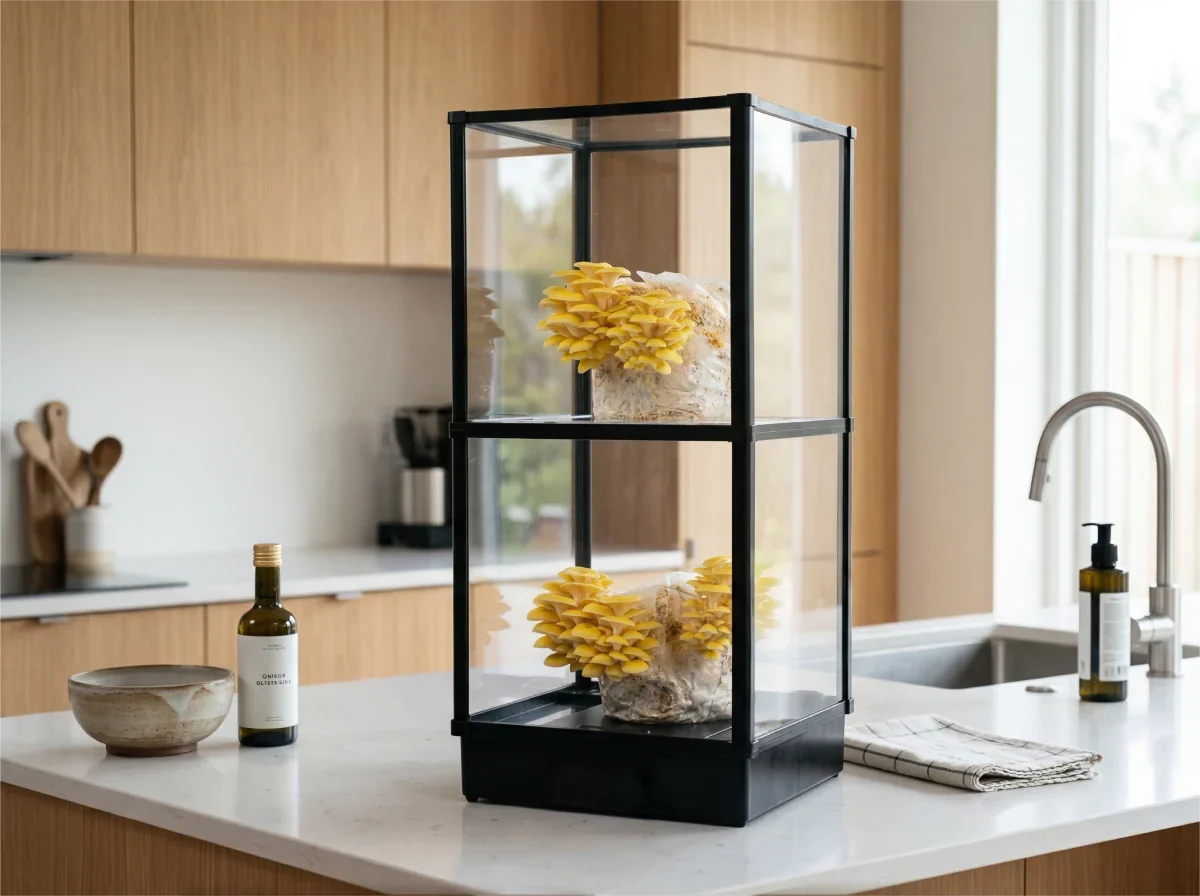
- Lykyn Smart Chamber: 299 $.
Mit Lykyn sparen: Die Kammer ist selbst die Feuchtigkeitskammer. Sie ersetzt diesen Artikel am direktesten.
5. Hygrometer
Wofür es gebraucht wird: Es misst die relative Luftfeuchtigkeit in der Fruchtungskammer. Ohne Hygrometer kannst du nur raten. „Sieht feucht aus“ ist kein Messwert. In den meisten Wohnungen liegt die relative Luftfeuchtigkeit natürlicherweise bei 35–50 % – deutlich unter den mindestens 85 %, die Pilze brauchen.
Übliche Optionen und Preise:
- Analoges Hygrometer mit Zifferblatt: 5 bis 12 $ (Genauigkeit ±10 %, nicht besonders gut)
- Digitales Hygrometer-/Thermometer-Kombigerät: 15 bis 25 $ (Genauigkeit ±3 %, ausreichend)
- Funkfühler von Govee oder SensorPush: 25 bis 50 $ (zeichnet Daten auf, App-Anbindung)
- Kalibrierter gewerblicher Sensor: 80 bis 200 $ (für den Anbau zu Hause übertrieben)
DIY-Alternative: Du kannst ein Zweierpack digitaler Hygrometer für insgesamt 20 $ kaufen. Stelle eines in die Kammer und eines in den Raum. Auf diesen Artikel solltest du nicht verzichten. „Ich prüfe es einfach nach Gefühl“ ist der häufigste Anfängerfehler und kostet dich etwa die Hälfte deines möglichen Ertrags.
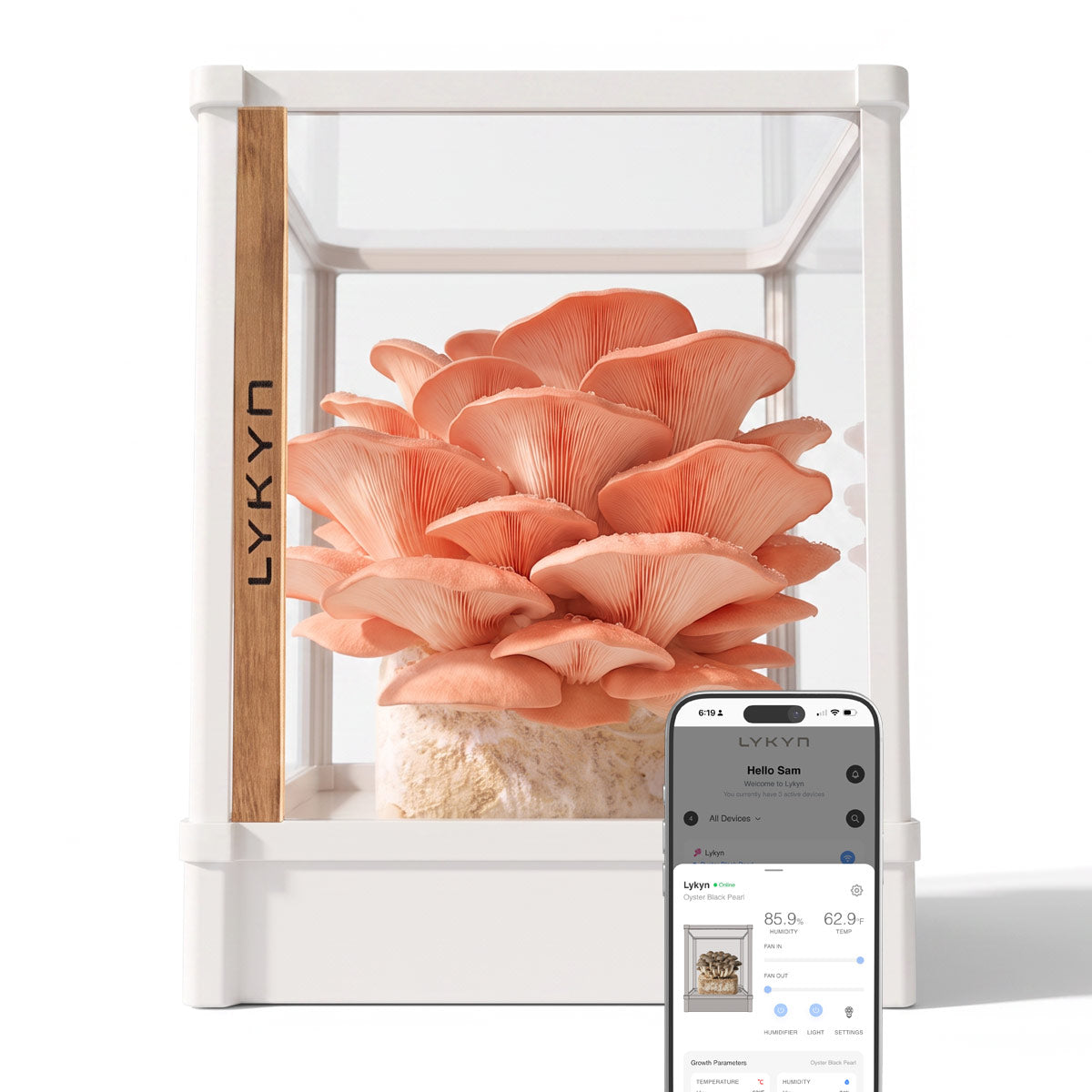
Mit Lykyn sparen: Die Kammer hat einen integrierten SHT3x-DIS-Luftfeuchtigkeitssensor (Genauigkeit ±1,5 % relative Luftfeuchtigkeit), zeigt die Echtzeitdaten in der App an und regelt den Luftbefeuchter automatisch, sobald die Luftfeuchtigkeit unter den Zielwert fällt.
6. Temperaturmonitor
Wofür er gebraucht wird: Er überwacht die Umgebungstemperatur in der Kammer. Die meisten Arten haben für die Fruchtung einen Temperaturbereich von 10 bis 15 °F. Außerhalb dieses Bereichs sinkt der Ertrag oder die Fruchtung kommt ganz zum Stillstand. In vielen Wohnungen schwankt die Temperatur im Laufe eines 24-Stunden-Tages um 8 bis 15 °F. Daher ändert sich auch die Temperatur in der Kammer, selbst wenn dein Thermostat auf einen festen Wert eingestellt ist.
Übliche Optionen und Preise:
- Kombiniertes Hygrometer/Thermometer (wie Artikel 5): inklusive
- Inkbird-Temperaturregler mit Fühler: 30 bis 45 $ (schaltet eine Heizung automatisch ein und aus)
- Funkfühler von Govee oder SensorPush: 25 bis 50 $ (dasselbe Gerät wie bei Artikel 5)
- Heizmatte für Setzlinge in kalten Räumen: 20 bis 40 $
- Kleiner Keramikheizer + smarte Steckdose: 40 bis 60 $
DIY-Alternative: Wenn es in deinem Haus ganzjährig zwischen 65 und 75 °F bleibt, kannst du auf eine aktive Heizung verzichten. Sinkt die Temperatur nachts unter 60 °F (im Winter häufig), brauchst du eine Heizmatte oder einen geregelten Heizkörper. Eine gute Lösung zum Kühlen gibt es nicht. Steigt die Raumtemperatur im Sommer auf über 80 °F, gerät die Fruchtung ins Stocken. Stell die Kammer in einen Keller oder warte bis zum Herbst.
Mit Lykyn sparen: teilweise. Die Lykyn-Kammer überwacht die Temperatur kontinuierlich und meldet sie über die App. Sie verfügt NICHT über eine aktive Heiz- oder Kühlfunktion. Die Temperatur in der Kammer entspricht der Umgebungstemperatur. Ist dein Raum zu kalt, brauchst du weiterhin eine Heizmatte. Der Temperaturmonitor wird ersetzt, die Temperaturregelung jedoch nicht.

Starte deine Pilzreise
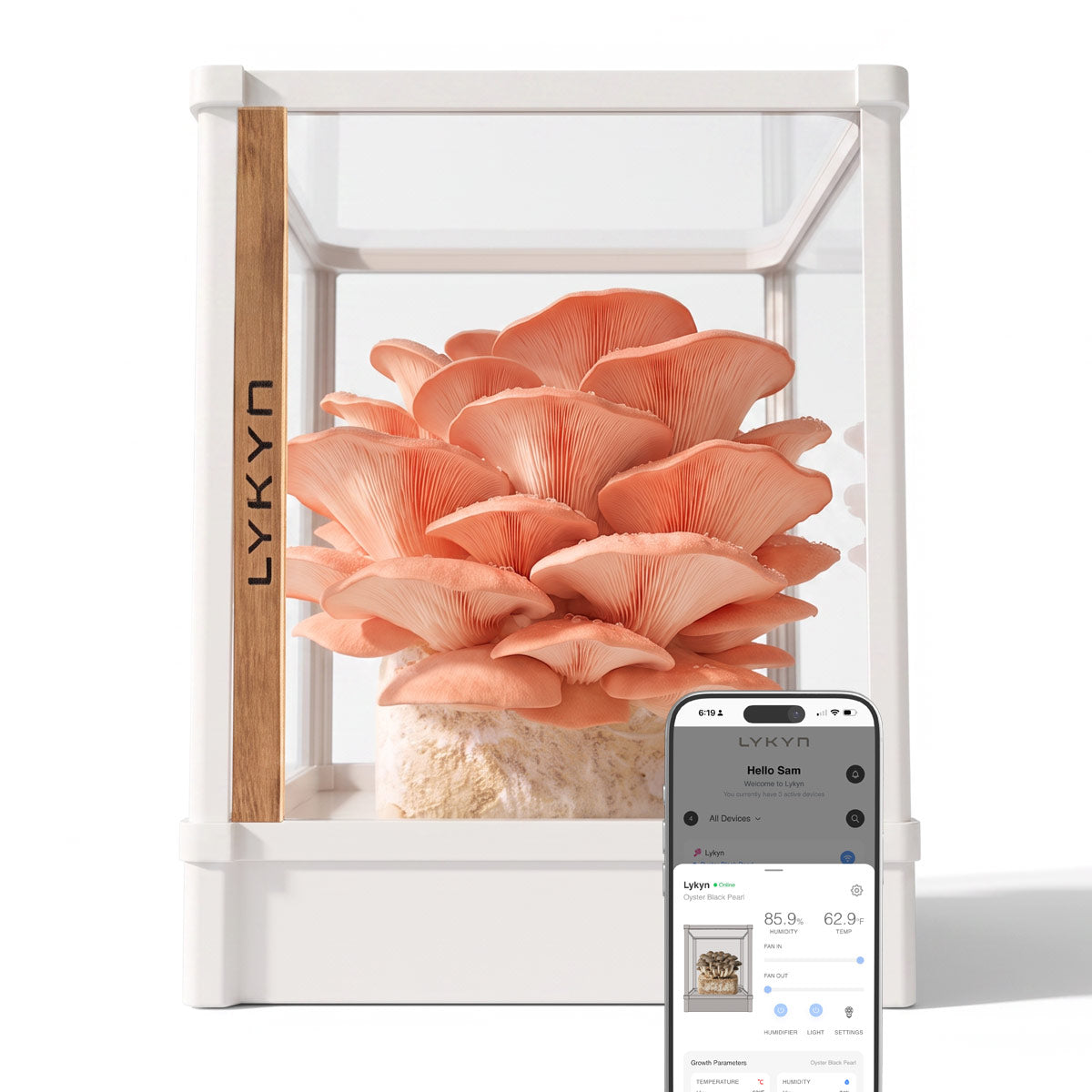
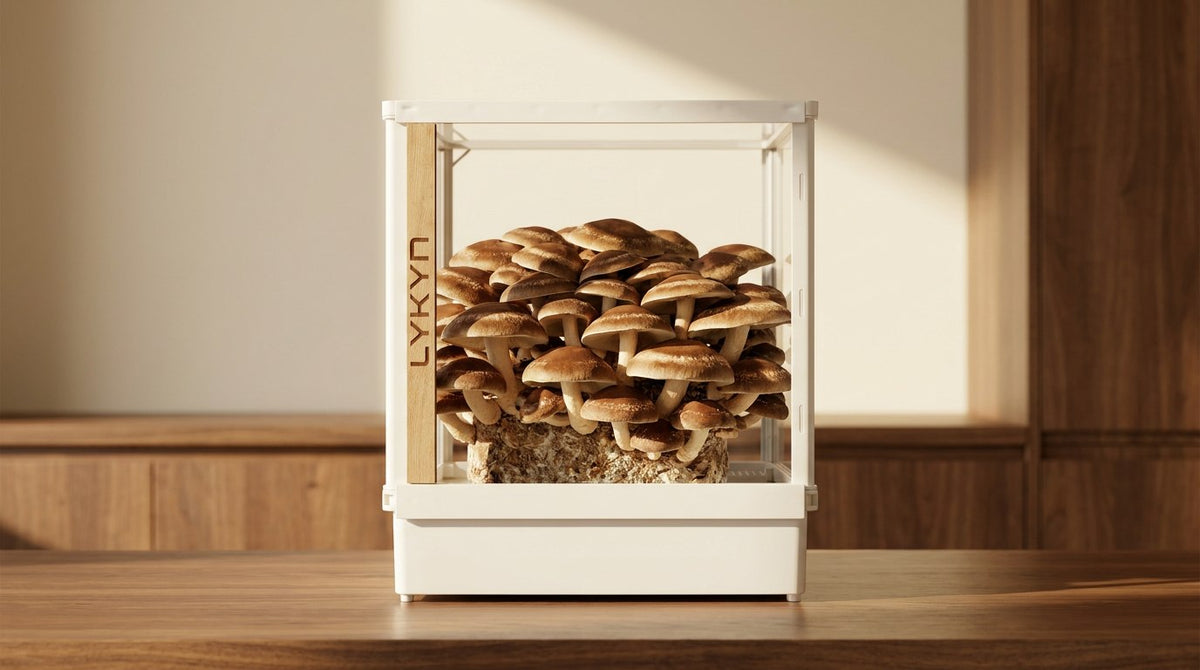
Smarte Pilzzuchtkammer
Sofort einsatzbereite smarte Kammer mit optimal eingestellter Luftfeuchtigkeit, Beleuchtung und Luftzirkulation für jede Art. Anfänger ernten ihre erste Erntewelle schon nach wenigen Tagen statt erst nach Monaten.
In den Warenkorb – 299 $7. Sprühflasche oder Sprühvorrichtung
Wofür sie gebraucht wird: Sie bringt während der Bildung der Primordien und der Erntewellen Wasser auf die Oberfläche in der Kammer. Ohne regelmäßiges Besprühen trocknet die Substratoberfläche aus und die Primordienbildung bleibt aus.
Übliche Optionen und Preise:
- Sprühflasche mit Pumpzerstäuber: 8 bis 15 $
- Drucksprüher (1 Gallone): 15 bis 25 $
- Ultraschall-Kaltnebel-Luftbefeuchter (1,5–3 l): 35 bis 55 $
- Luftbefeuchter + Inkbird-IHC-200-Luftfeuchtigkeitsregler: 75 bis 120 $ (automatische Befeuchtung)
- Nebler (industrieller Ultraschall): 80 bis 150 $
DIY-Alternative: Die Sprühflasche ist der kostengünstige Einstieg. Sie kostet 10 $ und reicht für ein oder zwei Anbauzyklen. Der Haken ist der Arbeitsaufwand. Während der aktiven Fruchtungsphase (10–14 Tage pro Block) musst du zwei- bis viermal täglich sprühen. Vergisst du es einen Tag lang oder bist übers Wochenende verreist, geht die Erntewelle meist verloren. Mit einer Inkbird-Steuerung und einem Luftbefeuchter lässt sich das für 75–120 $ automatisieren, allerdings kommt sichtbare Schlauchtechnik auf deine Arbeitsplatte.
Mit Lykyn sparen: Die Kammer hat einen integrierten, geschlossenen Ultraschall-Luftbefeuchter mit 2,8 l Fassungsvermögen. Er läuft automatisch, gesteuert vom Luftfeuchtigkeitssensor. Du musst nie von Hand sprühen und dir geht nie mitten in einer Erntewelle das Wasser aus (der Tank reicht bei üblicher Fruchtungsluftfeuchtigkeit für 7–10 Tage Befeuchtung).
8. Luftaustausch (FAE)
Wofür er gebraucht wird: Er bringt Frischluft in die Kammer und führt das CO₂ ab, das das Myzel während der Fruchtung produziert. Ohne Frischluftaustausch steigt die CO₂-Konzentration auf 1.500–3.000 ppm und die Primordien entwickeln lange, dünne Stiele mit winzigen Hüten („langbeinige“ Pilze). Für die Qualität des Ertrags ist der Luftaustausch genauso wichtig wie die Luftfeuchtigkeit.
Übliche Optionen und Preise:
- Manuell Luft zufächeln (den Deckel sechsmal täglich öffnen): kostenlos, aber zeitaufwendig
- Kleiner USB-Ventilator + Zeitschaltsteckdose: 15 bis 30 $
- Computerlüfter + 12-V-Netzteil (DIY): 20 bis 35 $
- AC-Infinity-Rohrventilator + Abluftschlauch (für Zelte): 75 bis 150 $
- Inkbird-IHC-Regler für automatischen Luftaustausch: 35 bis 50 $
DIY-Alternative: Manuelles Zufächeln funktioniert, wenn du den ganzen Tag zu Hause bist und daran denkst, es alle vier Stunden zu tun. Ein USB-Ventilator mit Zeitschaltuhr kostet 15–30 $ und läuft automatisch. Außerdem musst du 4–6 Löcher in deine Aufbewahrungsbox bohren, damit die Luft tatsächlich ausgetauscht wird.
Mit Lykyn sparen: Die Kammer hat zwei DFH4010S-Lüfter mit variabler Drehzahl (500–6.000 U/min), die nach einem für jede Art abgestimmten FAE-Zeitplan laufen. Es kommt nicht zu dem CO₂-Anstieg, der bei DIY-Anlagen den Ertrag beeinträchtigt, denn die Lüfter schalten sich automatisch alle 30–60 Minuten ein.
9. Licht
Wofür es gebraucht wird: Es regt die Bildung von Primordien an und beeinflusst die Wuchsrichtung der Hüte. Die meisten kultivierten Pilzarten benötigen täglich 8–12 Stunden Licht mit geringer Intensität. Ohne Licht bilden sich zwar weiterhin Primordien, diese wachsen jedoch ungeordnet und in verschiedene Richtungen, was Ertrag und Aussehen beeinträchtigt.
Übliche Optionen und Preise:
- Aufstellung am Fenster (indirektes Tageslicht): kostenlos
- USB-LED-Leiste mit Zeitschaltuhr: 10 bis 20 $
- Kleine LED-Pflanzenleuchte: 15 bis 35 $
- Smarte Glühbirne mit Zeitplan: 15 bis 25 $
DIY-Alternative: Normales Raumlicht reicht aus. Ein Fenster im selben Raum reicht aus. Eine 5-W-LED mit Zeitschaltuhr reicht aus. Das ist der günstigste und unkomplizierteste Artikel auf der Liste.
Mit Lykyn sparen: Die Kammer verfügt über integrierte dreifarbige LEDs (Blau 465–475 nm, Rot 620–630 nm, Grün 515–525 nm) mit einer für jede Art abgestimmten Beleuchtungsdauer. Die Glühbirne kannst du dir sparen.
DIY oder Lykyn? Der direkte Vergleich

Tatsächliche Gesamtkosten über 12 Monate
Hier ist dieselbe Liste mit neun Posten: auf der einen Seite die Gesamtkosten für den Eigenbau, auf der anderen die Lykyn-Alternative.
| Artikel | Kosten für den Eigenbau (niedrig bis hoch) | Lykyn-Alternative | Mit der Growkammer gespart? |
|---|---|---|---|
| 1. Substrat | 1 bis 3 $ pro Block | Vollständig durchwachsener Block (29,95 $) | Mit Nr. 2 zusammengefasst |
| 2. Brut | 1 bis 4 $ pro Block | Vollständig durchwachsener Block (29,95 $) | Mit Nr. 1 zusammengefasst |
| 3. Pasteurisierung oder Sterilisierung | 50 bis 400 $ (Druckkochtopf) | Nicht nötig (Block wird steril versendet) | JA. Entfällt |
| 4. Feuchtigkeitskammer | 40 bis 250 $ (passive Kammer oder Martha) | Die Lykyn-Kammer selbst (299 $) | JA. Ersetzt |
| 5. Hygrometer | 15 bis 50 $ | Integrierter SHT3x-DIS-Sensor | JA. Entfällt |
| 6. Temperaturüberwachung | 25 bis 50 $ | Integrierter Temperatursensor | JA. Entfällt (nur Überwachung) |
| 7. Sprühflasche oder Luftbefeuchter | 8 bis 120 $ | Integrierter Ultraschall-Luftbefeuchter mit 2,8 l | JA. Entfällt |
| 8. Luftaustausch (FAE) | 15 bis 150 $ | 2 Lüfter mit variabler Geschwindigkeit, automatischer FAE | JA. Entfällt |
| 9. Beleuchtung | 0 bis 35 $ | Integrierte dreifarbige LED mit Zeitplan | JA. Entfällt |
| GESAMTGERÄTEKOSTEN IM ERSTEN JAHR | 230 bis 580 $ | 299 $ Growkammer + 29,95 $/Block | 6 von 9 Posten entfallen |

Bei den reinen Kosten ist die Growkammer dem Eigenbau nicht überlegen. Die Kosten liegen nahe beieinander: Je nachdem, für welche Ausrüstung Sie sich entscheiden, ist der Eigenbau günstiger oder teurer als die Kammer. Die Growkammer punktet bei der Anzahl der benötigten Artikel, dem Zeitaufwand pro Anbau und der Zuverlässigkeit. Statt 9 Dinge zu besitzen und zu verwalten, benötigen Sie nur 1 Gerät und müssen lediglich die Blöcke einsetzen.
Den ausführlicheren TCO-Vergleich einschließlich Verbrauchsmaterialien und 12-Monats-Prognosen finden Sie in unserem Leitfaden zu den tatsächlichen Kosten des Pilzanbaus zu Hause.
Deutlicher CTA in der Artikelmitte: die Komplettlösung
Schauen Sie sich die rechte Spalte der Tabelle an. Mit einer Growkammer entfallen sechs von neun Ausrüstungsgegenständen. Die DIY-Spalte ist durchaus realistisch: 230 bis 580 $ kosten die meisten „kompletten DIY-Pilzzucht-Sets“ tatsächlich, wenn man Druckkochtopf, Luftbefeuchter, Hygrometer und Material für den Bau der Kammer einrechnet. Die Growkammer punktet bei der Anzahl der benötigten Artikel und beim Zeitaufwand, nicht beim niedrigstmöglichen Preis. Entdecken Sie die Lykyn Smart Chamber, wenn Sie lieber ein Gerät kaufen und Pilze züchten möchten, statt neun Dinge zu kaufen und zusammenzubauen.
Die versteckten Einsparungen: Was die Ausrüstungsliste nicht zeigt

Drei Dinge, die in der obigen Tabelle nicht berücksichtigt sind, die aber jeder Hobbyzüchter innerhalb der ersten drei Monate kennenlernt:
- Zeit. Der Pilzanbau in Eigenregie erfordert 4–6 Stunden aktive Arbeit pro Block. Pasteurisierung (1,5 Stunden), Substrat mischen (45 Min.), Beimpfen (30 Min.), tägliches Besprühen und Kontrolle des Luftaustauschs (15–20 Min. × 14 Tage), Ernte und Aufräumen (1 Stunde). Bei sechs Anzuchten sind das 24–36 Stunden pro Jahr. Eine Growkammer braucht etwa 10 Minuten pro Block zum Befüllen; danach können Sie sie sich selbst überlassen. Bei sechs Anzuchten ist das insgesamt 1 Stunde. Sie sparen 23–35 Stunden pro Jahr. Das entspricht ungefähr einer halben Arbeitswoche an Freizeit.
- Platz. Für ein DIY-Setup braucht man dauerhaft Stellfläche für die Fruchtungskammer (1,5–2 sq ft), Arbeitsfläche für den Druckkochtopf (2 sq ft) und Regalfläche für Substrat, Brut und Zubehör (1–2 cubic feet). Die Lykyn-Kammer ist ein Würfel mit 30 cm Seitenlänge. Sie braucht ungefähr so viel Platz wie eine Küchenmaschine und kann auf der Arbeitsplatte stehen, ohne den ganzen Raum einzunehmen.
- Entscheidungsmüdigkeit. Bei jeder DIY-Anzucht müssen Sie mindestens 8–12 kleine Entscheidungen treffen: Wie viel Wasser kommt ins Substrat? Wann beimpfe ich es? Wie viel Luftaustausch braucht es heute? Wann soll ich wieder sprühen? Ist das eine Kontamination oder nur Myzel am Rand? Soll ich einen Schlitz an der Seite oder oben einschneiden? Die meisten Anfänger geben den Eigenbau bis zum vierten Monat auf – nicht, weil er gescheitert ist, sondern weil sich die vielen Entscheidungen summieren. Vollständig durchwachsene Blöcke und eine automatisierte Growkammer bedeuten: keine Entscheidungen. Packung auspacken, Gerät anschließen, Art in der App auswählen, abwarten.
Wann Sie selbst bauen sollten (ehrlich gesagt)

Der Eigenbau ist der richtige Weg, wenn einer dieser Punkte auf Sie zutrifft:
- Sie besitzen bereits einen Druckkochtopf. Damit ist der größte Einzelposten bereits abgedeckt. Für die restliche DIY-Ausrüstung fallen 100–300 $ an, wodurch der Preisunterschied zur Growkammer ins Gewicht fällt.
- Sie haben Freude am Prozess. Manche Züchter mischen gerne Substrat, arbeiten mit Agar oder übertragen Myzel von Getreide auf Getreide. Wenn sich das spannend statt mühsam anhört, ist der Eigenbau das Hobby an sich.
- Sie züchten mehr als 10 Blöcke pro Jahr. Bei einer Menge im kommerziellen Hobbymaßstab sind die Substratkosten pro Block relevant, und die Verbrauchskosten beim Eigenbau (4–7 $) sind deutlich niedriger als ein Block-Abo (25–30 $).
- Sie haben einen eigenen Raum dafür. Ein Growzelt im Keller ist kein Problem. Ein Growzelt in einer 600-sq-ft-Wohnung schon.
- Sie möchten Arten züchten, die nicht als vollständig durchwachsene Blöcke erhältlich sind. Manche Spezialarten (Cordyceps, bestimmte wilde Morcheln, einige Heilpilze) sind im Handel nicht als fertige Fruchtungsblöcke erhältlich.
Wann Sie auf die Liste verzichten sollten (Conversion-Abschnitt)
Die Growkammer ist der richtige Weg, wenn einer dieser Punkte auf Sie zutrifft:
- Sie wohnen in einer Wohnung. Stellfläche, Geräuschpegel und ein mietfreundlicher Aufbau sind wichtig. Der Leitfaden zu wohnungstauglichen Sets erklärt, warum die Growkammer die einzige Option in Kammerqualität für Mieter mit einer Stellfläche von unter 1,5 sq ft ist.
- Sie möchten von der ersten Anzucht an gleichmäßige Ergebnisse. Bei den ersten drei DIY-Anzuchten liegt die Ausfallquote bei ungefähr 40 % (FreshCap und zombiemyco veröffentlichen beide diese Zahl). Bei der Growkammer liegt die Ausfallquote bei der ersten Anzucht unter 5 %.
- Sie züchten Pilze zum Essen, nicht als Handwerk. Wenn Ihnen die Pilze wichtiger sind als der Prozess, nimmt Ihnen die Growkammer den Prozess ab. Sie bekommen dieselben frischen Shiitake-Pilze für Ihre Pasta, ohne Samstagnachmittage mit der Überwachung der Luftfeuchtigkeit zu verbringen.
- Ihre Freizeit ist Ihnen mehr als 20 $ pro Stunde wert. 24–36 Stunden eingesparte Arbeit pro Jahr, bewertet mit 20 $ pro Stunde, entsprechen einem Zeitwert von 480–720 $. Allein dadurch ist die Growkammer bezahlt.
- Sie möchten mindestens drei Arten züchten, ohne sich jede neu aneignen zu müssen. In der App der Growkammer gibt es Voreinstellungen für mehr als 28 Arten. Beim DIY-Anbau jeder neuen Art müssen Sie sich erneut mit Luftfeuchtigkeit, Luftaustausch und Temperaturzielen vertraut machen. Genau dafür gibt es die vorkonfigurierten Profile der Growkammer.
Häufig gestellte Fragen

Benötige ich für den Pilzanbau wirklich einen Druckkochtopf?
Für Austernpilze auf Stroh oder Kokosfasern: nein. Eine Pasteurisierung in heißem Wasser bei 160–180 °F reicht aus. Für Shiitake, Igelstachelbart, Kräuterseitling oder Getreidebrut benötigen Sie dagegen 250 °F bei 15 PSI – das erreicht nur ein Druckkochtopf. Eine günstige Alternative: Kaufen Sie vorsterilisierte Substratbeutel (15–25 $ pro Stück) und verzichten Sie darauf, Ihr eigenes Substrat herzustellen. Oder nutzen Sie eine Growkammer und vollständig durchwachsene Blöcke und sparen Sie sich beides.
Welche Ausrüstung brauche ich mindestens?
Die ehrliche Mindestausstattung für ein Set zum Anbau von Austernpilzen: eine Sprühflasche (10 $), ein digitales Hygrometer (15 $), eine durchsichtige Kunststoffbox mit Deckel (10 $) und ein fertiges Fruchtungsset (25–35 $). Insgesamt: 60 $ plus das Set. Alles andere können Sie weglassen. Mit diesem Aufbau erhalten Sie über 1–2 Erntewellen etwa 0,5–1,2 lb Frischgewicht. Nicht die Erträge der Growkammer, aber echte Pilze gleich beim ersten Versuch.
Kann ich die Ausrüstung für mehrere Anzuchten wiederverwenden?
Das meiste davon, ja. Druckkochtöpfe, Hygrometer, Luftbefeuchter, Temperaturüberwachungsgeräte, Beleuchtung und Kunststoffboxen für Growkammern halten bei normalem Gebrauch mindestens 5–10 Jahre. Verbrauchsmaterialien (Substrat, Brut, Filterpatches) werden bei jeder Anzucht verbraucht. Zur Reinigung reichen zwischen den Anzuchten meist Wasser und eine 10-prozentige Bleichlösung, um Kontaminationen gering zu halten.
Auf welche Ausrüstung kann ich verzichten, wenn ich nur einmal züchte?
Wenn Sie ein einziges Set als unterhaltsames Experiment ausprobieren und danach nicht weitermachen möchten, verzichten Sie auf Druckkochtopf, Luftbefeuchter-Setup, FAE-Lüfter und Beleuchtung. Kaufen Sie einen Anbaubeutel zum Besprühen bei einem seriösen Händler, besprühen Sie ihn dreimal täglich mit einer Sprühflasche in einer durchsichtigen Kunststoffbox, ernten Sie – fertig. Gesamtkosten: 40–60 $. Erwarteter Ertrag: 0,5–1,2 lb Frischgewicht.
Lohnt sich ein Pilzzuchtset im Vergleich zum Kauf der Ausrüstung?
Für eine einzelne Anzucht: ja – ein Set für 30 $ ist mit Ausrüstungskosten von 230–580 $ nicht zu vergleichen. Bei regelmäßigem Anbau sieht die Rechnung anders aus. Sechs Sets pro Jahr zu je 30 $ kosten jedes Jahr 180 $. Eine Growkammer für 299 $ plus ein Abo für 30 $ pro Block kostet im ersten Jahr 300 $, danach 180 $ pro Jahr – bei einem zwei- bis dreimal höheren Ertrag pro Block. Die Growkammer rechnet sich zwischen Block 4 und Block 6 und bleibt danach pro Pfund dauerhaft günstiger.
Welches Gerät zum Pilzanbau wird am meisten überschätzt?
Gloveboxen und Laminar-Flow-Hauben. Online-Tutorials stellen sie als unverzichtbar dar. Sie sind für die Arbeit mit Agar und Transfers von Getreide zu Getreide nützlich, aber völlig optional, wenn Sie vorsterilisierte Substratbeutel und vollständig durchwachsene Blöcke verwenden. Viele Anfänger beim DIY-Anbau kaufen eine Flow-Haube für 200 $, benutzen sie zweimal und verstauen sie dann im Schrank. Kaufen Sie eine erst, wenn Sie sie wirklich für fortgeschrittene Arbeiten benötigen.
Fazit
Neun Artikel, wenn Sie ein DIY-Setup für den Pilzanbau von Grund auf aufbauen. Drei Artikel, wenn Sie eine Growkammer verwenden (Growkammer + Blöcke + USB-C-Adapter). Der Preisunterschied ist real, aber geringer, als die meisten annehmen: 230–580 $ für den Eigenbau gegenüber 299 $ für die Growkammer. Der Zeitunterschied ist deutlich größer: 4–6 Stunden pro Block beim Eigenbau gegenüber 10 Minuten mit der Growkammer. Der Unterschied bei der Entscheidungsmüdigkeit ist der Grund, warum die meisten DIY-Züchter bis zum vierten Monat aufgeben.
Wenn Ihnen der Prozess wichtig ist, stellen Sie die Liste zusammen. Wenn es Ihnen um die Pilze geht, lassen Sie die Liste weg.
Lassen Sie die Liste weg. Starten Sie mit dem Set.
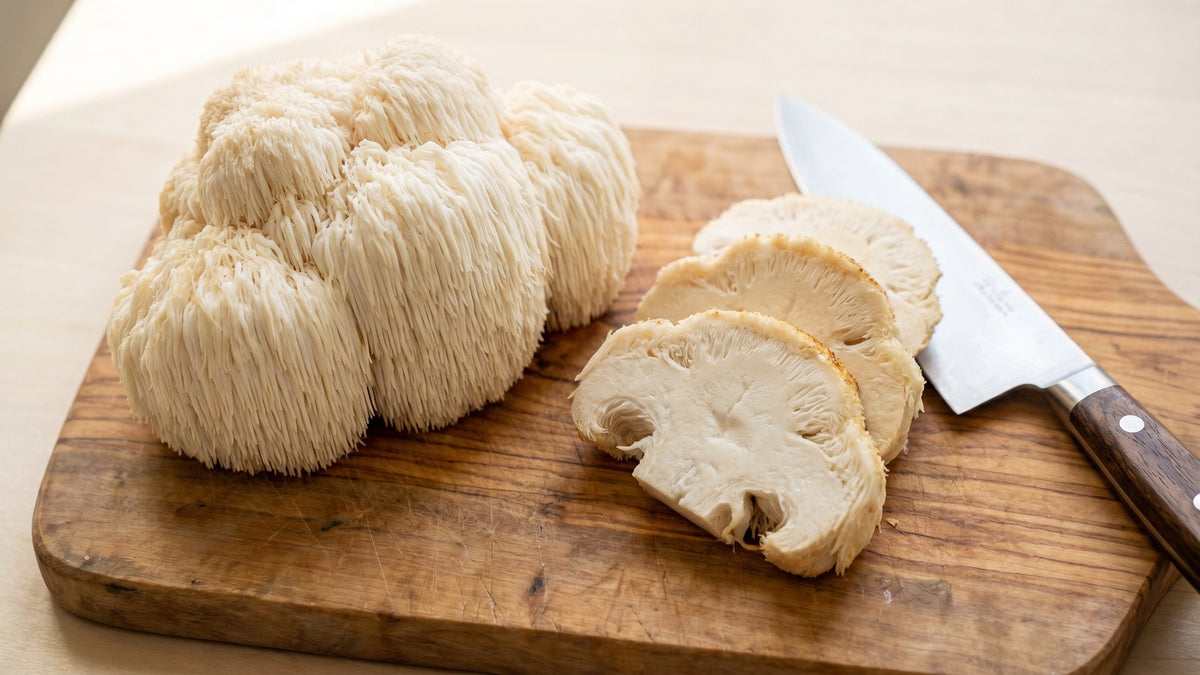
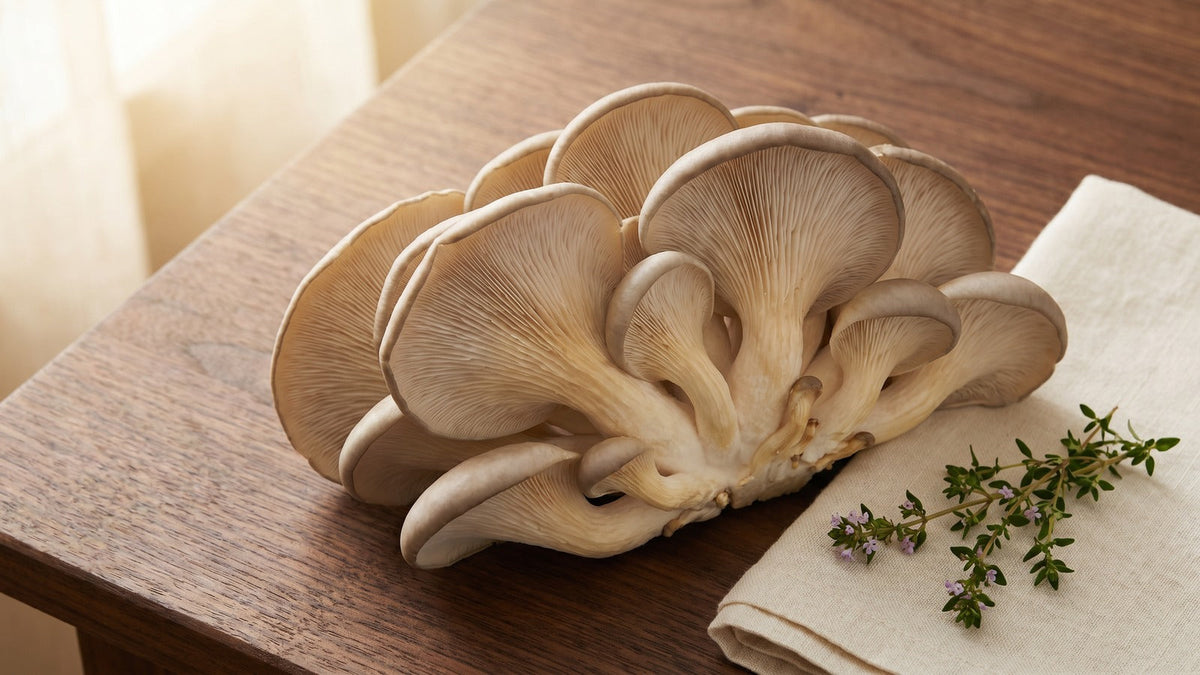
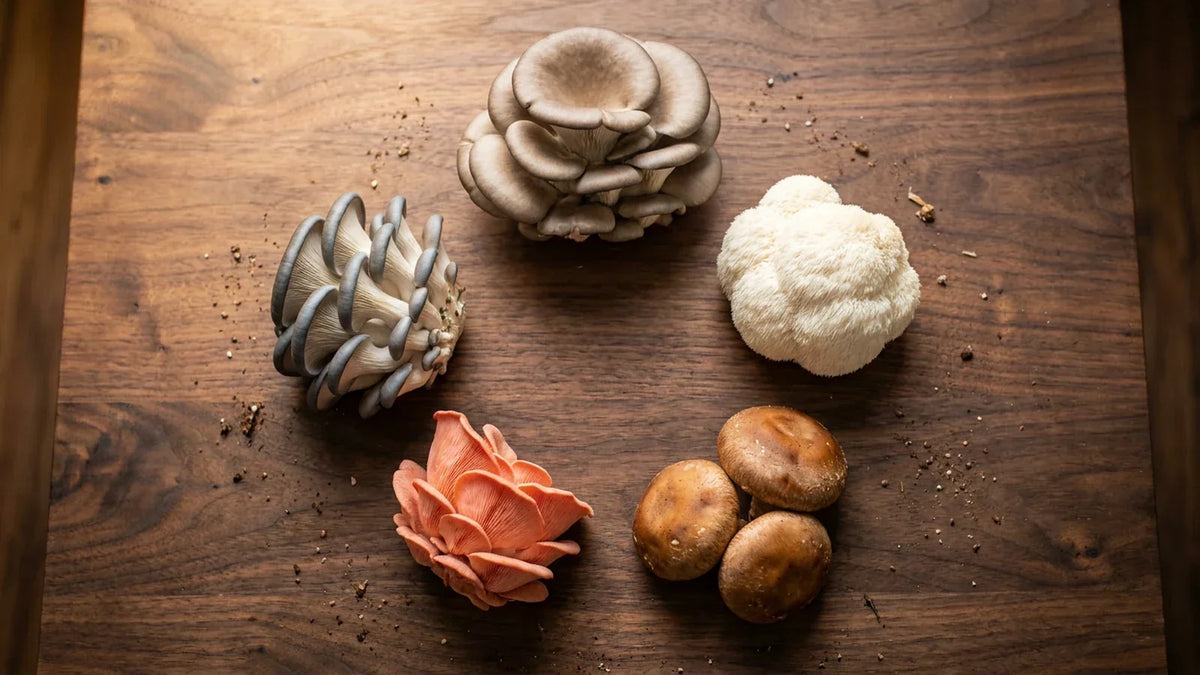
Die Lykyn Smart Chamber ist ab 299 $ erhältlich, wird aus dem US-Lager versandt und enthält alles außer einem USB-C-Netzteil. Fruchtungsblöcke werden separat für jeweils 29,95 $ geliefert (oder für 25,46 $ mit „Subscribe and Save 15 %“) und sind in fünf Sorten erhältlich: Rosa Austernpilz, Shiitake, Igelstachelbart, Zimtfarbenes Samthäubchen und Schwarzer Austernpilz. Sechs der neun oben genannten Ausrüstungsgegenstände entfallen. Der siebte ist Ihre Zeit. Der achte Ihr Platz auf der Arbeitsplatte. Der neunte der mentale Aufwand, daran zu denken, wann Sie wieder sprühen müssen.
Bringen Sie Ihre Pilz-Reise in Schwung

Smart Chamber. Bone White, einstöckig
- 2,8-l-Tank, automatische Luftfeuchtigkeit von 90 %
- App-gesteuert, sofort einsatzbereit
- Für Blöcke bis 6 lb, auf Lager

Smart Chamber. Obsidian Black, einstöckig
- Gleiche Hardware wie bei Bone White
- Hochwertige mattschwarze Ausführung
- Passt zu jeder Kücheneinrichtung

Still Air Box (steriler Arbeitsplatz)
- Steriler Arbeitsplatz zum Beimpfen
- Verhindert Kontaminationen
- Kompatibel mit allen Anzuchtsets



Aktie:
Zuchtanleitung für Austernpilze: Substrat, Fruchtkörperansätze, Ernte
Wie lange dauert es, Pilze zu züchten? Ein ehrlicher Zeitplan