



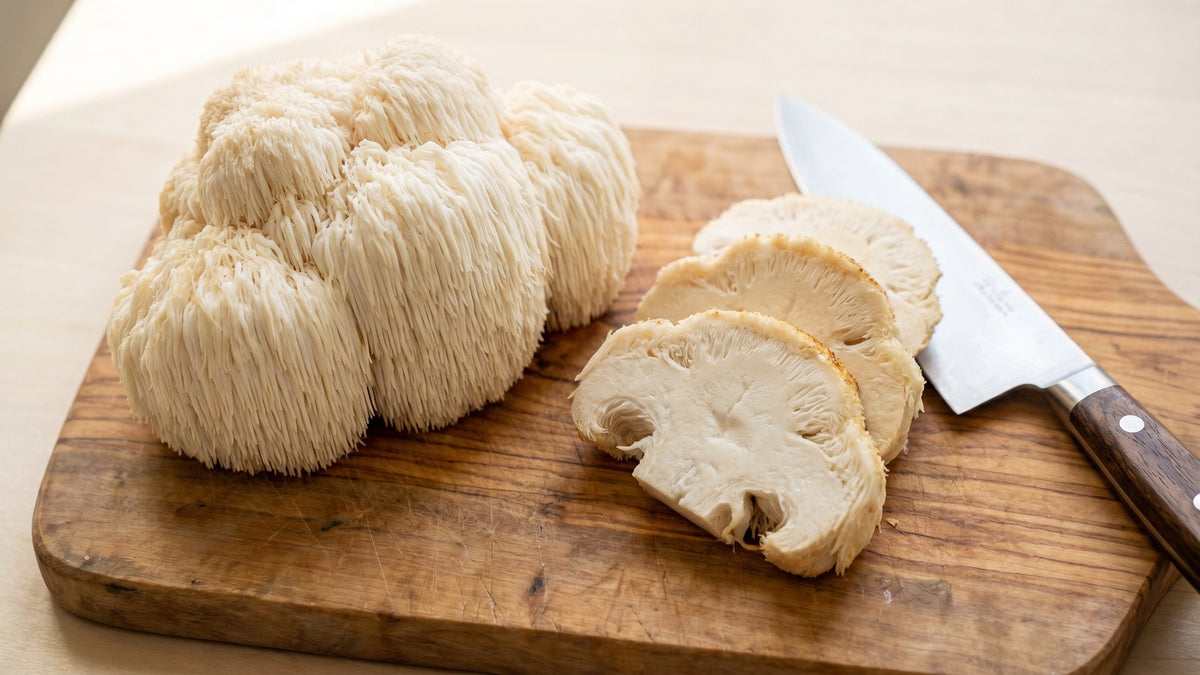
Der Löwenmähnenpilz (Hericium erinaceus) gilt als wählerischer als Austernpilze, und dieser Ruf hängt größtenteils mit dem Substrat zusammen. Während Austernpilzmyzel fast jede Zellulosequelle besiedelt, die man ihm anbietet, benötigt die Löwenmähne ein spezifisches Nährstoffprofil: Hartholz als Basis, eine Stickstoffergänzung im richtigen Verhältnis, den richtigen pH-Wert und eine Hydrationszielmenge, die man nicht nach Gefühl bestimmen kann. Wenn das Rezept stimmt, liegen die Erträge bei 75 bis 110 % biologischer Effizienz. Stimmen die Verhältnisse nicht, stagniert der Block bei halbkolonisiertem Zustand.
Dieser Leitfaden für Löwenmähnen-Substratrezepte bietet Ihnen drei getestete Rezepte, die Chemie dahinter, warum jedes einzelne funktioniert, und eine Schritt-für-Schritt-Zubereitungssequenz, die Hydration, Sterilisation, Abkühlung und Inokulationszeitpunkt abdeckt. Am Ende werden Sie ein auf Ihre verfügbaren Zutaten zugeschnittenes Rezept und eine klare Antwort darauf haben, warum diese Art mehr Pflege als Austernpilze benötigt.
Warum Löwenmähnenpilze wählerischer sind als Austernpilze

Drei biologische Fakten treiben den Unterschied voran. Erstens ist der Löwenmähnenpilz ein holzzerstörender Pilz, der sich auf Hartholzstämmen in gemäßigten Wäldern entwickelte, was bedeutet, dass sein Enzymsatz darauf abgestimmt ist, Lignin und Zellulose abzubauen, nicht die weiche Zellulose von Stroh. Zweitens wächst sein Myzel etwa 30 bis 40 % langsamer als Austernpilzmyzel, sodass jeder Kontaminant, der eindringt, ein längeres Zeitfenster hat, um ihn zu überholen. Drittens sind die Fruchtkörper nährstoffreich, mit hohem Protein- und Fettgehalt im Vergleich zu Austernpilzen, was bedeutet, dass das Substrat eine höhere Stickstoffgrundlage benötigt, um die Clusterbildung zu unterstützen.
Praktisch bedeutet dies, dass der Löwenmähnenpilz Hartholz (nicht Stroh) und eine Stickstoffergänzung (Kleie oder Spelzen) benötigt, Pasteurisierung nicht ausreicht (Sterilisation erforderlich) und das Substrat ein spezifisches Feuchtigkeitsziel von 60 bis 65 % erreichen muss. Austernpilze fruchten auf einem schlampigen Strohsack mit 70 % Feuchtigkeit. Löwenmähnenpilze in der gleichen Umgebung werden sich weigern, Knospen zu bilden oder verkümmerte Cluster zu entwickeln.
Rezept 1: Das klassische Master-Rezept für supplementiertes Hartholzsägemehl

Dies ist das Rezept hinter den meisten kommerziellen Löwenmähnen-Blöcken und die ertragreichste Option für Hobbyzüchter mit einem Dampfkochtopf. Die folgenden Proportionen beziehen sich auf das Trockengewicht vor der Hydration.
- Hartholzsägemehl (Eiche, Buche oder Ahorn): 75%
- Weizenkleie: 20%
- Gips (Calciumsulfat): 1%
- Zugegebenes Wasser: genug, um 60 bis 65% Feuchtigkeit nach Gewicht zu erreichen
Um die Feuchtigkeit zu prüfen, drücken Sie eine Handvoll hydriertes Substrat fest in Ihrer Faust zusammen. Sie sollten 1 bis 2 Tropfen Wasser sehen, keinen Strahl. Ein Strahl bedeutet zu nass (über 70 %) und eine bakterielle Kontamination wird sehr wahrscheinlich. Keine Tropfen bedeutet zu trocken (unter 55 %) und die Kolonisation wird stagnieren.
Für einen typischen 5-Pfund-Block beträgt die Berechnung etwa 1,5 Pfund trockenes Hartholzsägemehl, 6 Unzen Weizenkleie, 1 Esslöffel Gips und 28 bis 32 Unzen Wasser. Der Gips ist klein, aber wichtig: Er stabilisiert den pH-Wert bei 6,5 bis 7,0, was der optimale Bereich für das Löwenmähnenmyzel ist und ungefähr einen vollen pH-Punkt höher als Austernpilze bevorzugen.
Rezept 2: Die Weizenstroh-Alternative

Wenn Sie kein Hartholzsägemehl beschaffen können, ist supplementiertes Weizenstroh eine praktikable Alternative. Die Erträge sinken auf 40 bis 60 % BE im Vergleich zu 75 bis 110 % bei Hartholz, und die resultierenden Pilze sind kleiner und etwas faseriger in der Textur, aber das Rezept funktioniert trotzdem.
- Gehacktes Weizenstroh (1 bis 2 Zoll Stücke): 80%
- Weizenkleie: 18%
- Gips: 2%
- Zugegebenes Wasser: genug, um 65 bis 70% Feuchtigkeit nach Gewicht zu erreichen
Beachten Sie den höheren Hydrationszielwert. Stroh ist weniger wasserbindend als Sägemehl, sodass Sie die Feuchtigkeit um einige Punkte erhöhen können, ohne eine bakterielle Kontamination zu begünstigen. Das Stroh sollte auch fein gehackt sein, idealerweise mit einem Aktenvernichter oder einem stabilen Gartenhäcksler, da lange Strohfasern Lufteinschlüsse bilden, die die Kolonisation verlangsamen.
Rezept 3: Das Hartholzpellet-Rezept

Hartholzbrennstoffpellets (die Art, die für Pelletofen verkauft wird) sind im Wesentlichen gepresstes Hartholzsägemehl ohne Zusatzstoffe und sind bei Hobbyzüchtern beliebt geworden, weil sie vorgetrocknet, leicht zu messen und rindenfrei sind. Das Pelletrezept entspricht in der Zusammensetzung Rezept 1, aber die Zubereitung ist einfacher.
- Hartholzbrennstoffpellets: 75%
- Weizenkleie oder Sojahüllen: 20%
- Gips: 1%
- Kochendes Wasser: ausreichend, um 60 bis 65% Feuchtigkeit nach Gewicht zu erreichen, typischerweise 1 Tasse Wasser pro Tasse Pellets
Der Trick bei Pellets ist, dass sie sich beim Hydrieren ausdehnen. Kochendes Wasser direkt zur trockenen Mischung geben und rühren, bis die Pellets vollständig zerfallen sind (normalerweise 5 bis 10 Minuten), dann die Kleie und den Gips hinzufügen, sobald die Mischung ausreichend abgekühlt ist, um sie handhaben zu können. Der Schritt mit dem kochenden Wasser pasteurisiert das Substrat auch vor, was die anschließende Sterilisation zuverlässiger macht.
Schritt-für-Schritt-Vorbereitungssequenz

Das Rezept ist die halbe Arbeit. Die Vorbereitungssequenz entscheidet, ob Ihr Substrat vollständig kolonisiert oder in Woche 3 mit grünen Flecken stagniert. Befolgen Sie diese Reihenfolge:
- Trockene Zutaten abwiegen in eine saubere Mischwanne. Verwenden Sie eine digitale Küchenwaage, keine Volumenmaße. Eine Tasse Kleie wiegt anders als eine Tasse Sägemehl.
- Trockene Zutaten gründlich mischen, bevor Wasser hinzugefügt wird. Klumpen von Kleie erzeugen Nährstoff-Hotspots, die Kontaminationen lieben.
- Wasser schrittweise hinzufügen, dabei nach jeder Zugabe mischen. Hören Sie auf, Wasser hinzuzufügen, wenn der Quetschtest 1 bis 2 Tropfen Wasser aus einer fest geballten Faust ergibt.
- In Filterbeutel verpacken mit etwa 5 Pfund pro Beutel, fest pressen, um Lufteinschlüsse zu entfernen. Lufteinschlüsse verzögern die Kolonisierung an diesen Stellen.
- Bei 15 PSI für 2 bis 2,5 Stunden sterilisieren. Löwenmähnen-Substrat muss sterilisiert, nicht pasteurisiert werden. Die Pasteurisierung bei 160 F lässt zu viele hitzetolerante Bakteriensporen am Leben, und supplementiertes Sägemehl ist zu nährstoffreich, als dass das Löwenmähnen-Myzel sie übertreffen könnte.
- In einem sauberen Raum auf Raumtemperatur abkühlen lassen. Dieser Schritt wird oft übersprungen und kostet mehr Anbauversuche als jeder andere. Das Substrat muss vor der Inokulation auf unter 80 F abfallen. Die Inokulation von heißem Substrat tötet die Getreidebrut bei Kontakt.
- Mit 5 bis 10 % Getreidebrut nach Gewicht impfen vor einem eingebauten Filter oder in einer Handschuhbox mit stiller Luft. Für einen 5-Pfund-Block sind das 4 bis 8 Unzen vollständig kolonisierter Getreidebrut.
- Bei 72 bis 78 F inkubieren in einem dunklen, sauberen Raum für 14 bis 28 Tage, bis das Substrat vollständig weiß mit Myzel ist.

Befeuern Sie Ihre Pilzreise
Löwenmähnen Zuchtset
Hartholz-Sägemehl-Block, besiedelt mit Löwenmähnen-Myzel. Fällt direkt in Ihre Lykyn-Kammer und beginnt innerhalb weniger Tage zu nadeln.
In den Warenkorb $29.95Pasteurisierung versus Sterilisation: Die schwere Wahl

Dies ist der größte Unterschied zwischen der Substratvorbereitung für Löwenmähne und Austernpilze. Austernpilze vertragen die Pasteurisierung (160 F für 1 bis 2 Stunden), weil das Austernpilzmyzel schnell genug wächst, um die bakteriellen Sporen, die diese Temperatur überleben, zu übertreffen. Die Löwenmähne tut dies nicht. Das supplementierte Hartholzsubstrat, das die Löwenmähne benötigt, ist reich genug, dass bakterielle Konkurrenten eine pasteurisierte Charge überrennen, bevor das langsamere Löwenmähnenmyzel sich etablieren kann.
Wenn Sie keinen Dampfkochtopf besitzen, haben Sie zwei Möglichkeiten. Erstens, kaufen Sie einen 23-Quart-Druckkonservierer (neu etwa 150 $, ausreichend Kapazität für 4 bis 5 Blöcke pro Durchlauf). Zweitens, überspringen Sie die Eigenpräparation und beginnen Sie mit einem vorbeimpften und vorsterilisierten Fruchtblock. Es gibt keine zuverlässige Abkürzung, die nur auf Pasteurisierung basiert, für diese Art bei supplementierten Hartholzkonzentrationen.
Impfzeitpunkt und Brutrate

Das Verhältnis von Brut zu Substrat ist wichtiger, als die meisten Anfänger erkennen. Eine höhere Brutrate (10 bis 15 % nach Gewicht) beschleunigt die Kolonisierung und reduziert das Kontaminationsrisiko, da das Löwenmähnenmyzel mehr "Startpunkte" etabliert und Konkurrenten schneller überwuchert. Der Kompromiss ist der Preis: Körnerbrut ist pro Pfund teurer als Substrat, daher stimmen kommerzielle Züchter das Verhältnis eher auf Wirtschaftlichkeit als auf Geschwindigkeit ab.
Für Hobbyzüchter ist 7 bis 10 % nach Gewicht eine gute Balance. Für einen 5-Pfund-Block wiegen Sie 5 bis 8 Unzen kolonisierter Körnerbrut ab. Impfen Sie innerhalb von 24 Stunden nach dem Abkühlen des Substrats, da längere Abkühlungszeiten das sterile Substrat über den Filterpatch des Beutels luftgetragener Kontamination aussetzen.
Wenn Sie Löwenmähnenpilze neben anderen Arten anbauen, finden Sie in unserem Shiitake-Anbauleitfaden eine vergleichbare, holzliebende Art, die ein ähnliches Substratrezept mit unterschiedlichem Zeitplan verwendet.
Bereit, Pilze zu Hause anzubauen?
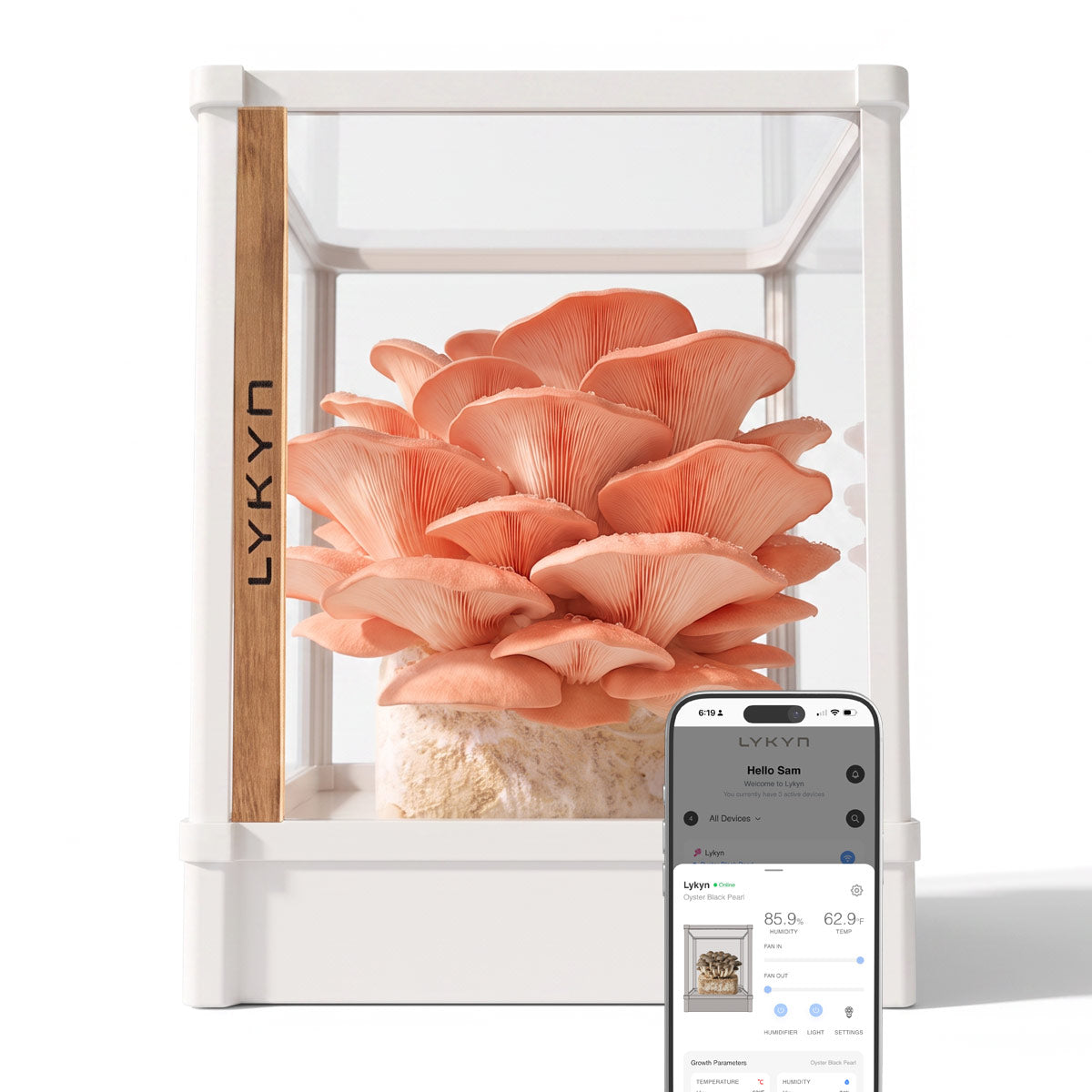
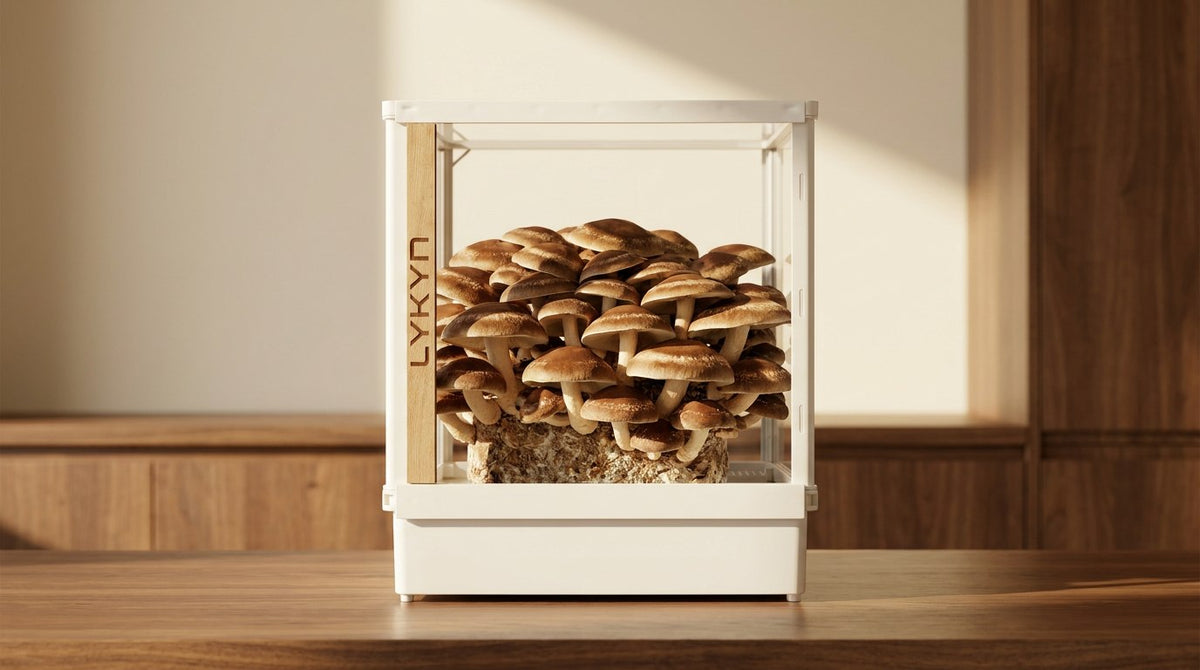
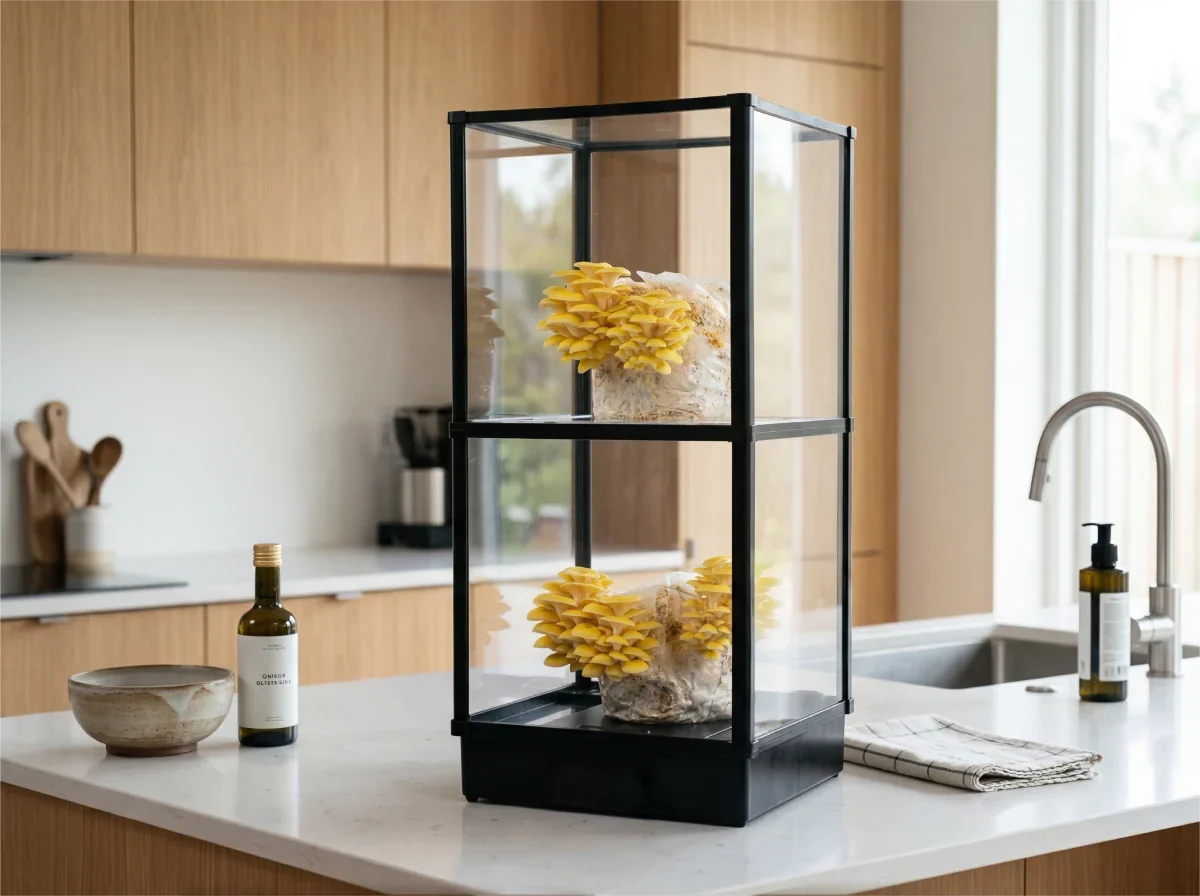
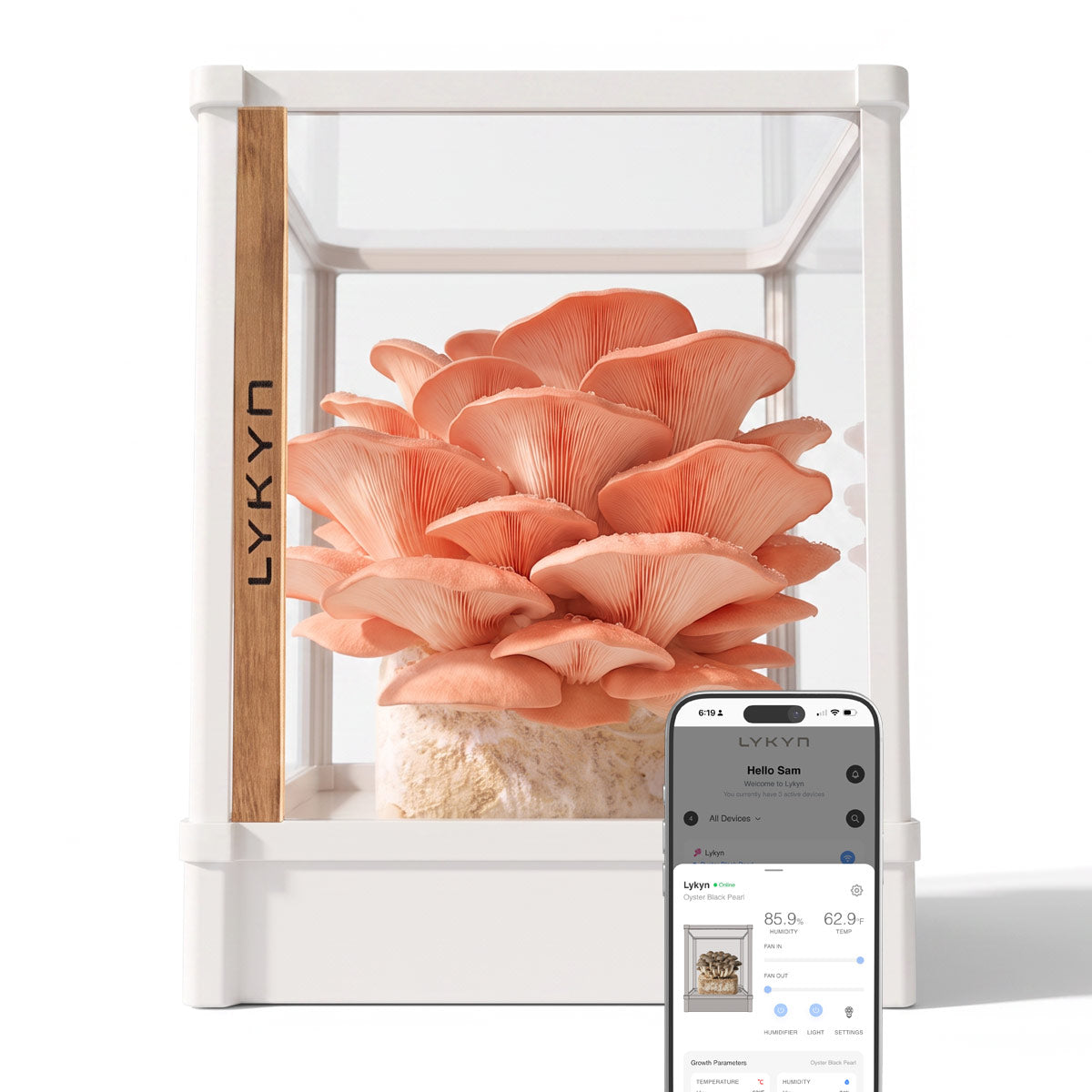
Das Mischen, Sterilisieren, Abkühlen und Beimpfen eines Löwenmähnen-Substrats erfordert 4 bis 6 Stunden aktive Arbeit sowie einen Dampfkochtopf und einen sauberen Impfbereich. Die Lykyn Smart Mushroom Grow Box wird mit vorbeimpften, vorsterilisierten Fruchtblöcken kombiniert, sodass Sie jeden Schritt in diesem Leitfaden überspringen und dennoch den oberen Bereich des Löwenmähnen-Ertragsspektrums erreichen können. Jeder Block verwendet ein supplementiertes Hartholzsubstrat im Stil von Rezept 1, das bei 15 PSI sterilisiert und vor dem Versand vollständig kolonisiert wird.
Legen Sie den Block in die Kammer, stellen Sie Ihre Art ein, und die Grow Box regelt automatisch Luftfeuchtigkeit, Luftzirkulation und Beleuchtung. Stöbern Sie in der gesamten Lykyn Grow Kit Kollektion, um mit Löwenmähne oder einer der anderen über 28 Gourmet- und funktionellen Arten im Wechsel zu beginnen.
Befeuern Sie Ihre Pilzreise

Smart Chamber. Knochenweiß Einzel
- 2.8L Tank, 90% Luftfeuchtigkeit automatisch
- App-gesteuert, Plug-and-Play
- 6 lb Blockdecke, auf Lager

Smart Chamber. Obsidian Schwarz Einzel
- Gleiche Hardware wie Knochenweiß
- Mattes schwarzes Premium-Finish
- Passt zu jeder Küchenpalette
Löwenmähnen Zuchtset
- Auf Lager
- Nadel in 5-7 Tagen
- Ersetzt 1 Kammerzyklus



Aktie:
Löwenmähnenpilz-Ertrag: Realistische Zahlen und wie man sie erreicht
Pilzzucht-Sets: 5 Typen im Vergleich (Ertrag und Kosten)