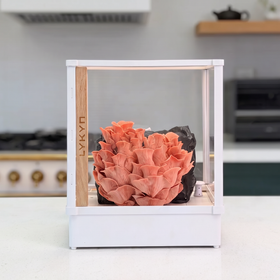



Beflügeln Sie Ihre Pilzreise

Smart Chamber. Bone White Single
- 2.8L Tank, 90% Luftfeuchtigkeit automatisch
- App-gesteuert, Plug-and-Play
- 6 lb Blockdecke, auf Lager

Smart Chamber. Obsidian Black Single
- Gleiche Hardware wie Bone White
- Mattschwarzes Premium-Finish
- Passt zu jeder Küchenpalette

Schwarzer Austernpilz-Zuchtkit
- Auf Lager
- Pins in 3-5 Tagen
- Ersetzt 1 Kammerzyklus
Anmerkung des Autors. Dieser Leitfaden basiert auf Beobachtungen des Lykyn Growing Teams bei über 500 Züchtern (2024 bis 2026), peer-reviewed Mykologie-Referenzen und in den USA veröffentlichter Anbauliteratur.
Goldener Austernpilz: Kompletter Anbau-, Koch- und Identifikationsleitfaden
Goldener Austernpilz (Direkte Antwort)
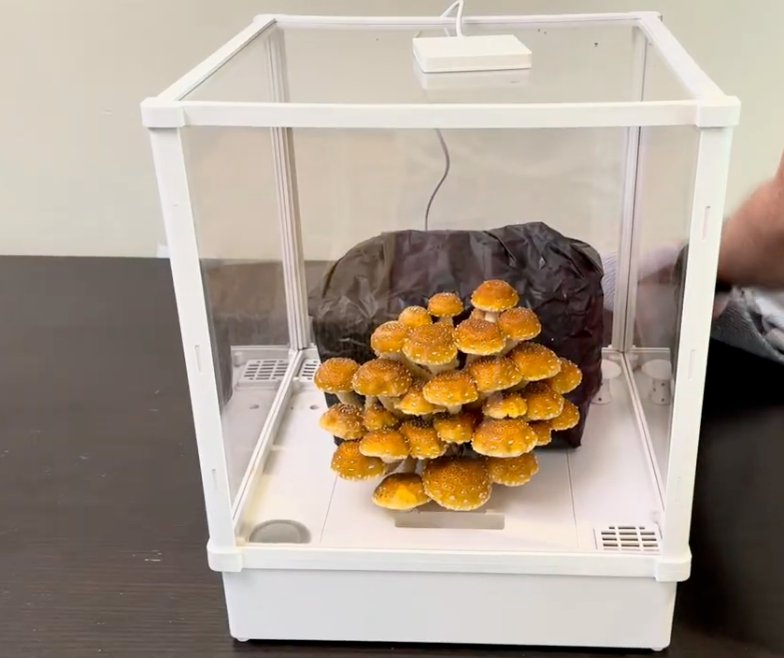
Der Goldene Austernpilz (Pleurotus citrinopileatus) ist ein essbarer Gourmetpilz, der in Ostasien beheimatet ist, wo er als Tamogitake bekannt ist. Er bildet leuchtend gelbe Hütchen in Büscheln an schlanken weißen Stielen, benötigt 10 bis 14 Tage von der Pin-Bildung bis zur Ernte bei 70 bis 80°F mit 85 bis 95% Luftfeuchtigkeit und schmeckt am besten nach einem scharfen Anbraten, das seinen Cashew- und Weißweingeschmack konzentriert. Er ist einfach zu Hause aus einem vorkultivierten Block anzubauen.
Identifikation: Wie man Pleurotus citrinopileatus unterscheidet
Der Goldene Austernpilz ist einer der optisch markantesten Pilze, die man anbauen kann. Wenn Sie erst einmal einen gesunden Büschel gesehen haben, werden Sie ihn nie wieder mit etwas anderem verwechseln.
Hutfarbe und -form
Die Hüte erscheinen jung in einem tiefen, fast neonfarbenen Gelb. Denken Sie an Eigelb, nicht an Zitrone. Wenn der Fruchtkörper über 24 bis 48 Stunden reift, verblasst die Farbe zu einem sanften, buttrigen Cremeton, und der Hutrand rollt sich nach oben zu einem flachen Trichter. Der Durchmesser reicht von 2 bis 6 Zentimetern. Jüngere Hüte bleiben konvex; ältere Hüte werden wellig und am Rand leicht durchscheinend.
Stiel- und Lamellenstruktur
Die Stiele sind exzentrisch (seitlich angesetzt), weiß bis hellcremefarben und bündeln sich an einer gemeinsamen Basis. Dieses gebündelte "Bouquet"-Wachstum ist das Merkmal, das Austernpilze von den meisten anderen Lamellenpilzen unterscheidet. Die Lamellen laufen am Stiel herab (herablaufend), sind dicht gedrängt und bleiben während des gesamten Fruchtzyklus weiß. Ein Sporenabdruck ist weiß bis helllila.
Geruch
Frische Goldene Austernpilze riechen leicht nach Anis und Wassermelonenschale. Wenn Sie etwas Saures, Ammoniakartiges oder Muffiges riechen, ist der Block bakteriell kontaminiert und der Büschel sollte nicht gegessen werden.
Lebenszyklus-Hinweise
Pins beginnen als winzige gelbe Knötchen an der Seite eines kolonisierten Blocks innerhalb von 5 bis 7 Tagen nach Beginn der Fruchtbildung. Diese Pins verdoppeln ihre Größe alle 12 Stunden, bis sie erkennbare Hüte bilden. Nach 10 bis 14 Tagen haben Sie volle Büschel mit einem Gewicht zwischen 200 und 500 Gramm pro Erntewelle, abhängig von der Blockgröße.
Vier Pleurotus-Arten im Vergleich
Die meisten Hobbyzüchter probieren irgendwann mehr als einen Austernpilz aus. Hier ist, wie sich der Goldene Austernpilz von den anderen drei Pleurotus-Arten unterscheidet, die wir für Anfänger empfehlen.
| Art | Hutfarbe | Geschmacksprofil | Optimale Anbautemperatur | Tage bis zur Ernte | Schwierigkeitsgrad für Anfänger |
|---|---|---|---|---|---|
| Perlausternpilz (P. ostreatus) | Grau bis Hellbraun | Mild, herzhaft, pilzig | 13 bis 24°C | 10 bis 14 | Einfach |
| Blauer Austernpilz (P. columbinus) | Schiefergrau bis Marineblau | Erdet, salzig, leicht nach Meeresfrüchten | 10 bis 18°C | 7 bis 10 | Einfach |
| Rosa Austernpilz (P. djamor) | Lebhaftes Rosa bis Magenta | Speckartig beim Anbraten, salzig roh | 21 bis 29°C | 5 bis 7 | Einfach (warme Räume) |
| Goldener Austernpilz (P. citrinopileatus) | Leuchtendes Eigelb | Cashew, Weißwein, leichter Anis | 21 bis 27°C | 10 bis 14 | Einfach (warme Räume) |
Der Goldene Austernpilz passt besonders gut zum rosa Austernpilz in einer warmen Sommerküche, da beide im gleichen Temperaturbereich gedeihen. Kombinieren Sie den Goldenen Austernpilz mit dem Blauen Austernpilz, wenn Sie eine kühlere Saison-Alternative wünschen.
Wie man Goldene Austernpilze zu Hause anbaut
Der Goldene Austernpilz verzeiht viele Anfängerfehler, hat aber eine strenge Obergrenze bei der Luftfeuchtigkeit. Fällt diese unter 80% RH, reißen die Kappen innerhalb weniger Stunden auf. Hier ist das Sechs-Schritte-Protokoll für den Heimanbau, das konstant 1 Pfund pro 5-Pfund-Block liefert.
Schritt 1: Wählen Sie den richtigen Block
Bestellen Sie einen vorkolonisierten Goldene-Austernpilz-Block (zwischen 3 und 5 Pfund für eine einzelne Kammer). Der Block sollte bei Ankunft vollständig mit Myzelium bewachsen und weiß sein. Ein paar gelbe Pins an der Seite des Beutels sind ein gutes Zeichen, kein schlechtes. Lagern Sie ihn bei 18 bis 24°C, bis Sie mit dem Anbau beginnen möchten.
Schritt 2: Frische Luftzufuhr einrichten
Goldene Austernpilze produzieren während der Pin-Bildung viel CO2, und erhöhter CO2-Gehalt führt zu langen Stielen mit winzigen Kappen. Betreiben Sie Ihre Kammer mit einem Frischluftwechsel (FAE), der mindestens alle 30 Minuten zyklisch stattfindet. In einer Lykyn-Kammer übernimmt dies das Doppellüftersystem automatisch; bei einer selbstgebauten Einrichtung benötigen Sie einen kleinen Computerlüfter und einen Timer.
Schritt 3: Luftfeuchtigkeit bei 85 bis 95% halten
Dies ist die entscheidende Einstellung. Goldene Austernpilzhüte trocknen bei niedrigerer Luftfeuchtigkeit schnell aus, weshalb Goldene Austernpilze im Supermarkt oft rissig aussehen. Verwenden Sie einen Luftbefeuchter mit Hygrometer-Rückkopplungsschleife, keine passive Feuchtigkeitsschale.
Schritt 4: Temperatur bei 70 bis 80°F halten
Unter 65°F stockt die Pin-Bildung. Über 85°F vergilben die Kappen schnell und werden ledrig. Ein Raum mit normaler Sommertemperatur ist perfekt. Im Winter sorgt eine Heizmatte für Setzlinge unter der Kammer für den unteren Temperaturbereich.
Schritt 5: Auf Pin-Bildung achten
Nach 5 bis 7 Tagen unter Fruchtungsbedingungen werden Sie kleine gelbe Pin-Cluster sehen, die durch die Seite des Blocks brechen. Stören Sie sie nicht. Halten Sie weiterhin Feuchtigkeit und FAE aufrecht. Vom ersten Pin bis zur Ernte vergehen typischerweise weitere 5 bis 7 Tage.
Schritt 6: Ernte bei Hütchenkrümmung
Der richtige Erntezeitpunkt ist, wenn der Hutrand gerade anfängt, sich nach oben zu krümmen und der Hutdurchmesser aufgehört hat zu wachsen (normalerweise 3 bis 5 cm). Drehen Sie den gesamten Cluster mit einer Bewegung an der Basis ab; schneiden Sie keine einzelnen Stiele. Ein sauberes Abzwirbeln bewahrt den Block für eine zweite Spülung, die typischerweise 10 bis 14 Tage später mit 60 bis 80% des Ertrags der ersten Spülung erfolgt.
Wie der Goldene Austernpilz tatsächlich schmeckt
Dies ist der Teil, den die meisten Online-Anleitungen vermasseln. Sie werden Ihnen sagen, Goldene Austernpilze schmecken "mild und austernartig", was technisch richtig ist, aber den Punkt verfehlt.
Frische Goldene Austernpilze, richtig zubereitet, haben eine deutliche Cashew-Note, überlagert von einer Weißwein-Säure. Dieser Cashew-Geschmack tritt nur auf, wenn der Pilz trocken angebraten wird (zuerst kein Öl, nur heiße Pfanne und die eigene Feuchtigkeit des Pilzes). Wenn Sie von Anfang an in Butter anbraten, dominieren die Milchfeststoffe und der Cashew-Geschmack verschwindet vollständig. Hitze über etwa 60°C in Butter tötet auch die sanfte Anisnote ab, die frische Hüte haben.
Die Textur der Hüte bleibt auch nach vollständigem Garen zart. Die Stiele werden etwas zäher, weshalb die meisten Köche sie schräg schneiden.
Die einzige Einschränkung: Der Geschmack des Goldenen Austernpilzes ist zart. Er verträgt kein starkes Knoblauch, Sojasauce oder Chili. Behandeln Sie ihn wie Jakobsmuscheln, nicht wie Portobello.
Das invasive Problem in Nordamerika
Wir haben Ehrlichkeit versprochen, also hier ist sie. Der Goldene Austernpilz ist in Nordamerika aus dem Anbau entkommen. Jüngsten mykologischen Erhebungen zufolge wurde er wild an Amerikanischer Ulme, Zuckerahorn und Gelber Birke im Osten und Mittleren Westen der Vereinigten Staaten nachgewiesen, wobei die ersten wilden Beobachtungen auf die frühen 2010er Jahre zurückgehen. Mykologen haben berechtigte Bedenken geäußert, dass er einheimische saprotrophe Pilze verdrängen könnte, insbesondere in durch Feuer gestörten und von Ulmen dominierten Wäldern.
Was das für Hobbyzüchter bedeutet:
- Entsorgen Sie verbrauchte Blöcke nicht im Freien. Verpacken Sie sie und entsorgen Sie sie im Müll, kompostieren Sie sie in einem geschlossenen Kompostsystem, das 60°C erreicht, oder pasteurisieren Sie den verbrauchten Block vor der Entsorgung.
- Geben Sie keine Sporenabdrücke in die Wildnis. Dieselbe Regel gilt, wenn Sie Genetik erforschen oder Schrägen für Hobbyklonen herstellen.
- Der Innenanbau ist der verantwortungsvolle Weg. Eine versiegelte Kammer mit passiver Filtration und kontrollierter Luftzirkulation hält Sporen eingeschlossen. Das Kameradesign von Lykyn lüftet durch einen kleinen Kohlefilter, der den Großteil der luftgetragenen Sporen auffängt; wenn Sie in einem offenen Beutel im Keller anbauen, erwarten Sie Sporenflug.
Dies ist kein Grund, auf den Goldenen Austernpilz zu verzichten. Es ist ein Grund, den verbrauchten Block verantwortungsvoll zu behandeln. Wir erwähnen es, weil die meisten Anbauanleitungen dies nicht tun, und ein informierter Züchter ist ein besserer Verwalter.
Kochen von Goldenen Austernpilzen: Beste Methoden
Der Pilz belohnt einige spezifische Techniken und bestraft andere.
Am besten: Trocken anbraten
Erhitzen Sie eine schwere Pfanne (Gusseisen ist ideal) auf mittelhoher Stufe ohne Öl. Geben Sie zerrissene (nicht gehackte) Goldene Austernpilz-Büschel in einer einzigen Schicht hinzu. Bewegen Sie sie 3 Minuten lang nicht. Der Pilz gibt sein Wasser ab, dann verdunstet das Wasser, und dann bräunen die Kappen. Fügen Sie zu diesem Zeitpunkt ein Stück Butter, eine Prise Salz und einen Schuss trockenen Weißwein hinzu. Weitere 60 Sekunden kochen lassen. Die Cashewnote wird Sie treffen.
Gut: Tempura
Leichter, knuspriger Teig hebt die zarten Kappen hervor. Verwenden Sie kaltes Sprudelwasser und rühren Sie nicht zu stark um. Bei 175 °C frittieren, bis der Teig gerade anfängt, Farbe anzunehmen (ca. 90 Sekunden). Sofort salzen.
Gut: Pasta-Finisher
Separat anbraten, dann in eine fertige Pasta mit brauner Butter und Zitronenschale unterheben. Kochen Sie den Pilz nicht in einer Pastasauce; Sie würden die Cashew-Note vollständig verlieren.
Überspringen: Roh
Pleurotus-Arten können bei rohem Verzehr leichte Magen-Darm-Beschwerden verursachen. Immer auf mindestens 60 °C Innentemperatur kochen.
Überspringen: Starke Marinaden
Alles mit Sojasauce, Fischsauce oder Chilipaste überdeckt den zarten Geschmack. Sparen Sie diese für Shiitake oder Königsausternpilze auf.
Für detailliertere Kochtechniken für Austernpilze erklärt unser Leitfaden zum Kochen von Austernpilzen Pfannentemperatur, Salzdosierung und die Regel des zuerst trockenen Anbratens ausführlich.
Befeuern Sie Ihre Pilzreise
Schwarzes Austernpilz-Zuchtset
Hartholz-Sägemehlblock, besiedelt mit Schwarzem Austernpilzmyzel. Passt direkt in Ihre Lykyn-Kammer und beginnt innerhalb weniger Tage zu pinnen.
In den Warenkorb $29.95Häufig gestellte Fragen
Sind Goldene Austernpilze essbar?
Ja. Pleurotus citrinopileatus ist ein weit verbreiteter essbarer Pilz mit einer langen kulinarischen Geschichte in Japan, China und Russland. Er muss vor dem Verzehr gekocht werden, da rohe Pleurotus-Arten bei manchen Menschen leichte Magen-Darm-Beschwerden verursachen. Kochen Sie ihn auf mindestens 60°C Innentemperatur.
Wie schmeckt Goldener Austernpilz?
Ein scharf angebratener Goldener Austernpilz schmeckt nach Cashew, Weißwein und einer sanften Anisnote. Der Cashew-Geschmack tritt nur auf, wenn der Pilz zuerst in einer heißen, trockenen Pfanne gekocht wird; Butter und starke Saucen überdecken ihn. Die Textur ist am Hut zart, am Stiel leicht zäh.
Sind Goldene Austernpilze invasiv?
In Nordamerika, ja. Wildpopulationen wurden seit Anfang der 2010er Jahre an Amerikanischer Ulme und Zuckerahorn im Osten und Mittleren Westen der Vereinigten Staaten dokumentiert. Indoor-Züchter sollten verbrauchte Blöcke nicht im Freien entsorgen. Verpacken Sie verbrauchte Blöcke und entsorgen Sie sie im Müll, oder pasteurisieren Sie sie bei 60 °C, bevor Sie sie kompostieren. Der Indoor-Anbau in versiegelten Kammern ist der verantwortungsvolle Ansatz.
Wie kocht man Goldene Austernpilze?
Die beste Methode ist das scharfe Anbraten. Erhitzen Sie eine schwere Pfanne auf mittelhohe Hitze ohne Öl, geben Sie zerrissene Büschel in einer einzigen Schicht hinzu, lassen Sie sie 3 Minuten lang ungestört, bis das Wasser freigesetzt und verdunstet ist, und vollenden Sie dann mit einem Stück Butter, einer Prise Salz und einem Schuss trockenen Weißweins. Vermeiden Sie starke Marinaden und stark gewürzte Beilagen (Soja, Knoblauch, Chili), die die zarte Cashew-Note überdecken würden.
Wo wachsen Goldene Austernpilze natürlich?
Natürlich wächst Pleurotus citrinopileatus auf Hartholz-Totholz in gemäßigten Wäldern Ostasiens (Japan, China und der äußerste Osten Russlands). Er fruchtet im Sommer und Frühherbst auf stehenden und liegenden Ulmen, Eichen und Buchen. In den letzten 15 Jahren haben sich auch Wildpopulationen in nordamerikanischen Wäldern etabliert, wo die Art als nicht-heimisch gilt.
Wie schnell wachsen Goldene Austernpilze?
Von der ersten Pin-Bildung bis zur Ernte dauert es 10 bis 14 Tage bei 21 bis 27 °C und 85 bis 95 % relativer Luftfeuchtigkeit. Pins sind 5 bis 7 Tage nach Beginn der Fruchtungsbedingungen sichtbar. Eine zweite Erntewelle trifft typischerweise 10 bis 14 Tage nach der ersten Ernte ein, mit etwa 60 bis 80 % des ursprünglichen Ertrags.
Züchten Sie Ihre eigenen Goldenen Austernpilze
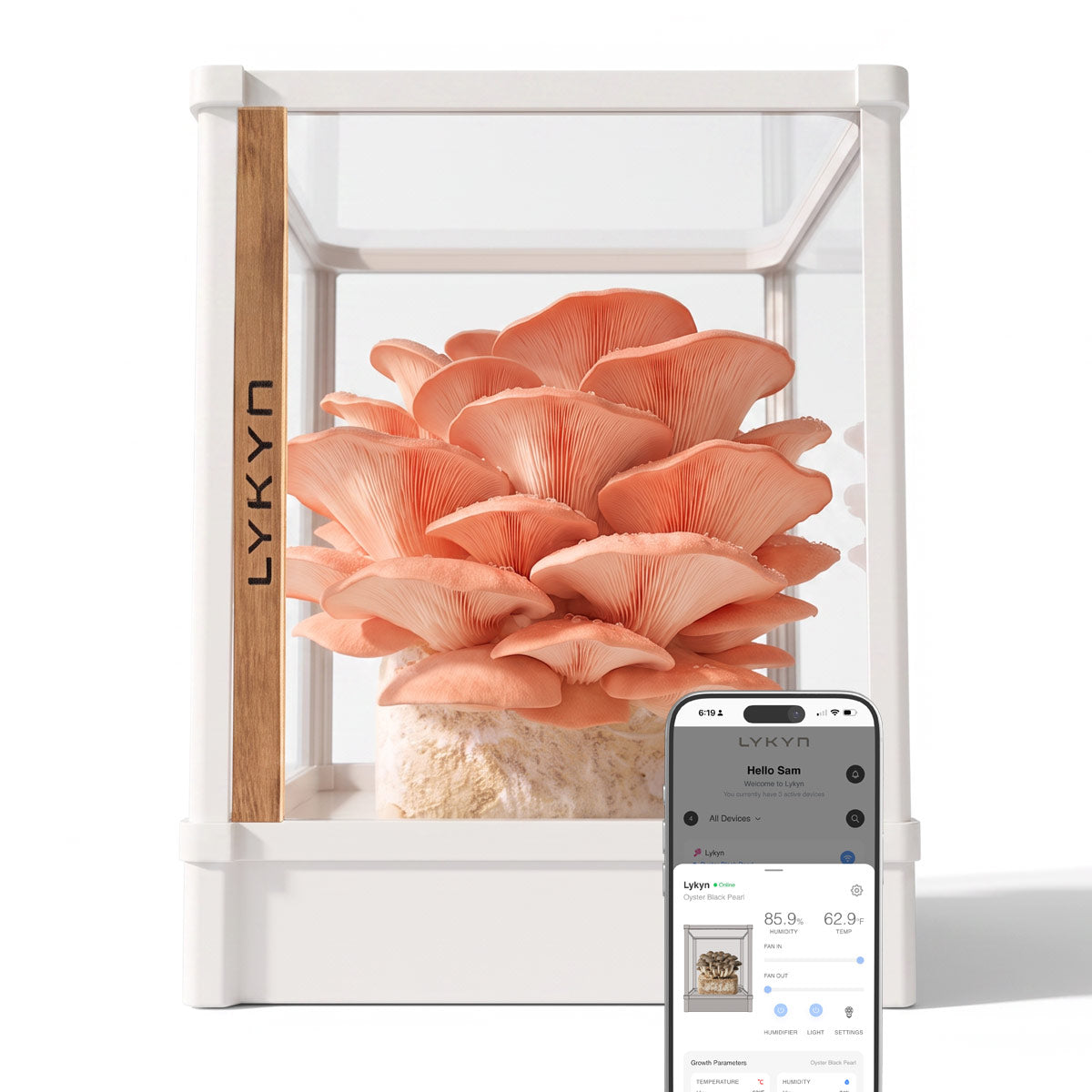
Der Goldene Austernpilz ist einer der anfängerfreundlichsten Gourmetpilze, die Sie zu Hause anbauen können. Die einzige Voraussetzung ist eine konstante Luftfeuchtigkeit über 85%, die die intelligente Lykyn-Kammer mit Sensor-Feedback alle 30 Sekunden automatisch aufrechterhält.
Wenn Sie den selbstgebauten Luftbefeuchter- und Hygrometer-Tanz überspringen möchten, wird unser Goldener Austernpilz-Zuchtblock vorkolonisiert und erntereif geliefert. Oder durchsuchen Sie die gesamte Kollektion von Zuchtblöcken, um verschiedene Arten in einer einzigen Kammer zu mischen. Für eine kühlere Saison-Kombination erklärt der Anbauleitfaden für Blaue Austernpilze dasselbe Sechs-Schritte-Protokoll bei niedrigeren Temperaturen.
Beginnen Sie noch heute mit dem Anbau. Ihre erste Ernte ist zehn bis vierzehn Tage entfernt.
Aktie:
Sind Austernpilze gut für Sie? Ernährungswissenschaft
Austernpilze zubereiten (Grundrezept + 4 Variationen)