


Kurze Antwort: Shiitake-Pilze sind für die meisten Menschen sicher, wenn sie richtig gekocht werden. Sie können jedoch bei manchen Personen Nebenwirkungen verursachen, darunter die Shiitake-Dermatitis (ein ausgeprägter, peitschenhiebartiger Hautausschlag), Verdauungsstörungen, allergische Reaktionen und Wechselwirkungen mit bestimmten Medikamenten. Gründliches Kochen der Shiitake-Pilze für mindestens 5-7 Minuten eliminiert die meisten Risiken.
Shiitake-Pilze gehören zu den beliebtesten Speisepilzen der Welt. Sie sind reich an Nährstoffen, in der asiatischen Küche weit verbreitet und ihre immununterstützenden Eigenschaften sind wissenschaftlich belegt. Doch wie jedes Lebensmittel haben auch sie potenzielle Nachteile.

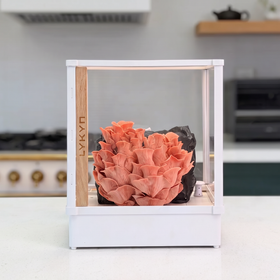
Smart Chamber. Bone White Single
- 2,8L Tank, 90% Luftfeuchtigkeit automatisch
- App-gesteuert, Plug-and-Play
- 2,7 kg Blockdecke, auf Lager

Smart Chamber. Obsidian Black Single
- Gleiche Hardware wie Bone White
- Mattschwarzes Premium-Finish
- Passt zu jeder Küchenpalette

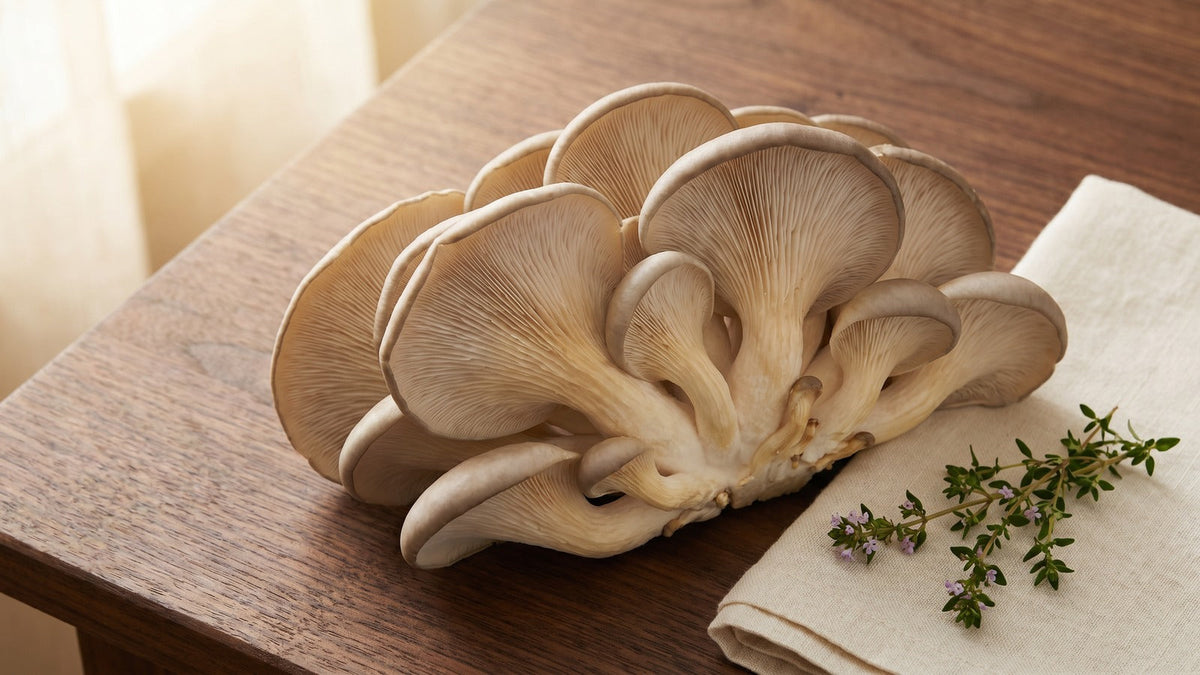
Austernpilz-Zuchtset
- Auf Lager
- Fruchtkörper in 3-5 Tagen
- Ersetzt einen Kammerzyklus
Wenn Sie schon einmal nach „Shiitake-Pilz-Nebenwirkungen“ gesucht haben, sind Sie wahrscheinlich auf eine Mischung aus alarmierenden Schlagzeilen und vagen Beruhigungen gestoßen. Die Wahrheit liegt in der Mitte. Die meisten Menschen essen Shiitake-Pilze regelmäßig und ohne Probleme. Aber ein kleiner Prozentsatz der Menschen erlebt Reaktionen, die von leichten Verdauungsbeschwerden bis zu einem sehr ausgeprägten Hautausschlag reichen, der alarmierend aussieht, aber normalerweise harmlos ist.
Dieser Leitfaden behandelt jede dokumentierte Nebenwirkung von Shiitake-Pilzen. Was die Ursachen sind, wer am stärksten gefährdet ist und wie man sie genau vermeidet. Keine vagen Warnungen. Nur klare, wissenschaftlich fundierte Informationen, die Sie tatsächlich nutzen können.

1. Shiitake-Dermatitis. Der Peitschenhieb-Ausschlag
Dies ist die bekannteste und optisch auffälligste Nebenwirkung von Shiitake-Pilzen. Die Shiitake-Dermatitis äußert sich in linearen roten Streifen auf der Haut, die bemerkenswert an Peitschenhiebspuren oder Kratzer erinnern. Der medizinische Fachbegriff lautet „Flagellaten-Erythem“.
Was es verursacht: Eine Verbindung namens Lentinan – ein Polysaccharid, das in rohen und unzureichend gekochten Shiitake-Pilzen vorkommt. Lentinan löst eine toxische Reaktion in den Blutgefäßen unter der Haut aus, die das charakteristische lineare Muster verursacht. Dies ist KEINE allergische Reaktion. Es ist eine direkte toxische Reaktion.
Symptome:
- Rote, erhabene, lineare Streifen am Oberkörper, an den Armen und Beinen
- Intensiver Juckreiz
- Tritt 24-48 Stunden nach dem Verzehr von rohen oder unzureichend gekochten Shiitake auf
- Kann ohne Behandlung 1-3 Wochen anhalten
Wer ist gefährdet: Jeder, der rohe oder deutlich unzureichend gekochte Shiitake-Pilze isst. Diese Reaktion wurde bei Personen ohne frühere Pilzempfindlichkeiten dokumentiert.
Wie man es vermeidet: Kochen Sie Ihre Shiitake-Pilze gründlich. Hitze baut Lentinan ab und eliminiert das Risiko. Braten, grillen oder köcheln Sie sie mindestens 5-7 Minuten bei voller Gartemperatur. Essen Sie niemals rohe Shiitake-Pilze.
Behandlung: Falls es auftritt, beseitigen Antihistaminika und topische Kortikosteroide es typischerweise innerhalb von 10-14 Tagen. Der Ausschlag sieht alarmierend aus, ist aber nicht gefährlich.
2. Verdauungsnebenwirkungen
Manche Menschen verspüren nach dem Verzehr von Shiitake-Pilzen Magen-Darm-Beschwerden, insbesondere wenn sie in großen Mengen oder als konzentriertes Nahrungsergänzungsmittel konsumiert werden.
Häufige Verdauungssymptome:
- Blähungen und Gasbildung
- Übelkeit
- Durchfall
- Magenkrämpfe
Was es verursacht: Shiitake-Pilze enthalten komplexe Polysaccharide, darunter Beta-Glucane und Chitin, die einige Verdauungssysteme nur schwer vollständig abbauen können. Eine in PubMed veröffentlichte Studie zeigte, dass die tägliche Einnahme von Shiitake-Pulver bei einigen gesunden Probanden erhöhte Eosinophilenspiegel und gastrointestinale Symptome verursachte.
Wie man das Risiko minimiert:
- Beginnen Sie mit kleinen Portionen, wenn Sie neu bei Shiitake sind
- Immer gründlich kochen. Kochen baut zähe Zellwände ab
- Vermeiden Sie es, große Mengen in einer einzigen Mahlzeit zu essen
- Wenn Sie Nahrungsergänzungsmittel verwenden, beginnen Sie mit der niedrigsten empfohlenen Dosis
3. Allergische Reaktionen
Obwohl Shiitake-Pilze nicht zu den häufigsten Nahrungsmittelallergenen gehören, gibt es tatsächlich Shiitake-Allergien, deren Schweregrad von mild bis schwer reichen kann.
Symptome einer Shiitake-Allergie:
- Hautausschlag oder Nesselsucht (unterscheidet sich von der Shiitake-Dermatitis. Allergische Ausschläge sind typischerweise nicht linear)
- Schwellung von Lippen, Zunge oder Rachen
- Atembeschwerden oder pfeifende Atmung
- Laufende Nase oder tränende Augen
- In seltenen Fällen Anaphylaxie
Wichtige Unterscheidung: Shiitake-Dermatitis (durch Lentinan) ist NICHT dasselbe wie eine echte Pilzallergie. Dermatitis ist eine toxische Reaktion, die jeder von rohen Shiitake bekommen kann. Eine Allergie ist eine immunvermittelte Reaktion, die spezifisch für sensibilisierte Personen ist.
Wenn Sie nach dem Verzehr von Pilzen Atembeschwerden oder eine Schwellung des Rachens verspüren, suchen Sie sofort einen Notarzt auf.
4. Überstimulation des Immunsystems
Shiitake-Pilze sind bekannt für ihre immunstärkenden Eigenschaften. Dies ist in der Regel von Vorteil. Aber für Menschen mit Autoimmunerkrankungen kann es ein Problem sein.
Shiitake enthält Beta-Glucane und Lentinan, die die Aktivität von Immunzellen stimulieren. Bei gesunden Menschen unterstützt dies die normale Immunfunktion. Bei Menschen mit Autoimmunerkrankungen kann es ein bereits überaktives Immunsystem noch stärker anregen.
Betroffene Zustände:
- Lupus (systemischer Lupus erythematodes)
- Rheumatoide Arthritis
- Multiple Sklerose
- Morbus Crohn
- Typ-1-Diabetes
Wenn Sie eine Autoimmunerkrankung haben, sprechen Sie mit Ihrem Arzt, bevor Sie regelmäßig Shiitake-Pilze konsumieren oder Shiitake-Präparate einnehmen.
Befeuern Sie Ihre Pilzzucht
Intelligente Pilzzuchtkammer
Plug-and-Play Smart Chamber mit Feuchtigkeit, Licht und Luftstrom, abgestimmt auf jede Spezies. Anfänger ernten ihre erste Spülung in Tagen, nicht Monaten.
In den Warenkorb $2995. Wechselwirkungen mit Medikamenten
Shiitake-Pilze können aufgrund ihrer Auswirkungen auf das Immunsystem und die Blutgerinnung mit bestimmten Medikamenten interagieren.
| Medikamentenart | Interaktion | Risikostufe |
|---|---|---|
| Immunsuppressiva | Shiitake kann deren Wirkung entgegenwirken, indem es die Immunaktivität steigert | Mittel |
| Blutverdünner (Warfarin) | Shiitake enthält Verbindungen, die die Blutgerinnung beeinflussen können | Niedrig-Mittel |
| Diabetesmedikamente | Shiitake kann den Blutzucker senken und die Wirkung von Medikamenten verstärken | Niedrig |
| Chemotherapeutika | Lentinan kann mit bestimmten Krebsbehandlungen interagieren | Arzt konsultieren |
Wenn Sie verschreibungspflichtige Medikamente einnehmen, konsultieren Sie Ihren Arzt, bevor Sie Shiitake-Ergänzungsmittel zu Ihrer Routine hinzufügen. Gelegentlicher gekochter Shiitake in Mahlzeiten ist im Allgemeinen sicher.
6. Atemprobleme durch Sporeninhalation
Diese Nebenwirkung betrifft speziell Personen, die Shiitake-Pilze gewerblich anbauen oder sie in geschlossenen Räumen handhaben. Nicht Personen, die sie essen.
Das Einatmen hoher Konzentrationen von Shiitake-Pilzsporen kann eine Hypersensitivitätspneumonitis verursachen. Eine entzündliche Reaktion in der Lunge. Mehrere Studien haben diesen Zustand bei professionellen Shiitake-Züchtern dokumentiert.
Symptome:
- Anhaltender Husten
- Kurzatmigkeit
- Fieber und Schüttelfrost
- Müdigkeit
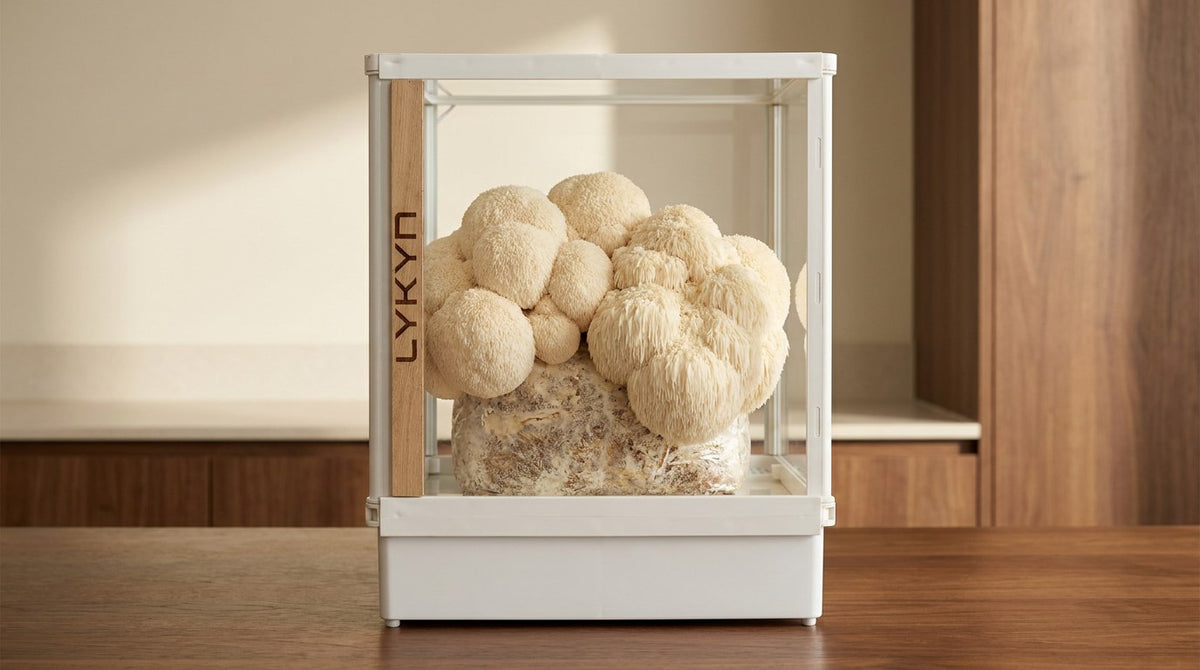
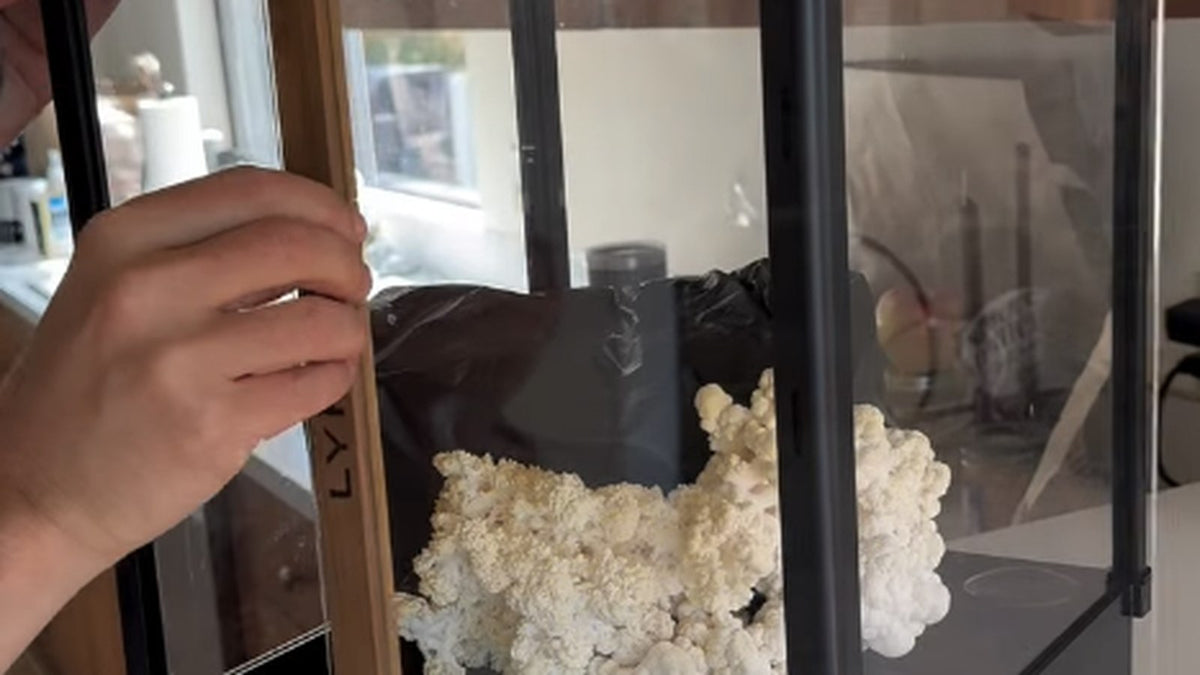
Wenn Sie Pilze zu Hause anbauen, sorgen Sie für eine angemessene Belüftung Ihres Anbaubereichs. Die LYKYN Automated Mushroom Fruiting Chamber ist mit kontrollierter Luftzirkulation ausgestattet, die die Ansammlung von Sporen verhindert. Ein wichtiges Sicherheitsmerkmal für Heimgärtner. Bei gelegentlichem Anbau mit einem Pilzzucht-Kit ist die Sporenexposition minimal und birgt kein signifikantes Risiko.
7. Hautempfindlichkeit beim Umgang mit rohem Shiitake
Manche Menschen entwickeln eine Kontaktdermatitis, wenn sie rohe Shiitake-Pilze direkt anfassen. Dies ist unabhängig von der durch den Verzehr ausgelösten Shiitake-Dermatitis. Zu den Symptomen gehören Rötungen, Juckreiz und leichte Schwellungen an den Händen. Das Tragen von Handschuhen bei der Zubereitung großer Mengen roher Shiitake verhindert dies.
Wer sollte Shiitake-Pilze meiden?
Obwohl Shiitake-Pilze für die überwiegende Mehrheit der Menschen sicher sind, sollten bestimmte Gruppen Vorsicht walten lassen:
- Personen mit Autoimmunerkrankungen – die immunstimulierende Wirkung kann die Symptome verschlimmern
- Jeder, der immunsuppressive Medikamente einnimmt – Shiitake kann der Medikation entgegenwirken
- Personen mit bestätigter Pilzallergie – Risiko einer allergischen Reaktion
- Jeder, der eine Shiitake-Dermatitis hatte – erhöhte Empfindlichkeit gegenüber Lentinan
- Schwangere oder stillende Frauen – unzureichende Sicherheitsdaten für hochdosierte Nahrungsergänzungsmittel (normale Mengen in gekochten Speisen gelten als sicher)
Wie man Shiitake-Pilze sicher isst
Die wichtigste Sicherheitsregel ist einfach: gründlich kochen.
- Essen Sie niemals rohe Shiitake-Pilze. Rohe Shiitake sind die Hauptursache für Dermatitis und Verdauungsprobleme.
- Mindestens 5-7 Minuten kochen. Anbraten, grillen, rösten oder köcheln, bis sie vollständig weich und leicht gebräunt sind.
- Fangen Sie klein an. Wenn Sie Shiitake zum ersten Mal essen, versuchen Sie eine kleine Portion.
- Wählen Sie hochwertige Quellen. Kaufen Sie frische Shiitake in seriösen Geschäften oder züchten Sie Ihre eigenen mit flüssigen Pilzkulturen für garantierte Frische.
- Richtig lagern. Bewahren Sie frische Shiitake in einer Papiertüte im Kühlschrank auf. Innerhalb von 7-10 Tagen verbrauchen.
- Nahrungsergänzungsmittel mit Bedacht wählen. Wenn Sie Shiitake-Nahrungsergänzungsmittel verwenden, beginnen Sie mit der niedrigsten Dosis und konsultieren Sie Ihren Arzt, wenn Sie Medikamente einnehmen.
Shiitake-Vorteile vs. Nebenwirkungen
Es ist wichtig, Nebenwirkungen in den Kontext zu setzen. Für die überwiegende Mehrheit der Menschen sind Shiitake-Pilze nicht nur sicher. Sie sind wirklich vorteilhaft.
Dokumentierte gesundheitliche Vorteile:
- Reich an B-Vitaminen, Vitamin D (bei Sonnentrocknung), Selen und Zink
- Beta-Glucane unterstützen die Immunfunktion
- Lentinan wurde auf seine Antitumor-Eigenschaften untersucht
- Kann helfen, den Cholesterinspiegel zu senken (Eritadenin-Verbindung)
- Entzündungshemmende und antioxidative Eigenschaften
Die in diesem Artikel beschriebenen Nebenwirkungen betreffen eine kleine Minderheit der Verbraucher und sind durch richtiges Kochen fast vollständig vermeidbar. Für weitere Informationen darüber, wie verschiedene Pilzarten Ihre Gesundheit beeinflussen, lesen Sie unseren Leitfaden über Nebenwirkungen von Pilzkaffee – ein weiterer Bereich, in dem das Verständnis der Wissenschaft Ihnen hilft, bessere Entscheidungen zu treffen.
Häufig gestellte Fragen
Was sind die Nebenwirkungen von Shiitake-Pilzen?
Die häufigsten Nebenwirkungen sind Shiitake-Dermatitis (ein linearer Hautausschlag durch Lentinan in rohen oder unzureichend gekochten Pilzen), Verdauungsbeschwerden wie Blähungen und Übelkeit sowie allergische Reaktionen bei sensibilisierten Personen. Diese sind selten und durch gründliches Kochen weitgehend vermeidbar.
Können Shiitake-Pilze einen Hautausschlag verursachen?
Ja. Der Verzehr von rohen oder unzureichend gekochten Shiitake-Pilzen kann eine Shiitake-Dermatitis verursachen. Ein ausgeprägter Ausschlag mit linearen roten Streifen, die Peitschenhiebspuren ähneln. Er wird durch Lentinan verursacht, nicht durch eine Allergie. Er tritt 24-48 Stunden nach dem Verzehr auf und verschwindet innerhalb von 1-3 Wochen. Gründliches Kochen von Shiitake-Pilzen verhindert dies.
Sind Shiitake-Pilze sicher, wenn man sie jeden Tag isst?
Für die meisten gesunden Erwachsenen ist der tägliche Verzehr von gekochten Shiitake-Pilzen in normalen Portionen sicher. Personen mit Autoimmunerkrankungen sollten die Einnahme jedoch einschränken, und hochdosierte Nahrungsergänzungsmittel sollten nicht täglich ohne ärztliche Anleitung eingenommen werden. Shiitake-Pilze immer gründlich kochen, bevor sie gegessen werden.
Kann man auf Shiitake-Pilze allergisch sein?
Ja, obwohl es ungewöhnlich ist. Echte Shiitake-Allergien verursachen typische allergische Symptome wie Nesselsucht, Schwellungen und in seltenen Fällen Anaphylaxie. Dies unterscheidet sich von der Shiitake-Dermatitis, die eine toxische Reaktion auf Lentinan ist und jeden betreffen kann, der rohe Shiitake-Pilze isst.
Wechselwirken Shiitake-Pilze mit Medikamenten?
Shiitake-Pilze können mit immunsuppressiven Medikamenten interagieren, indem sie die Immunaktivität steigern, was der Medikation entgegenwirken kann. Sie können auch Blutverdünner und Diabetesmedikamente beeinflussen. Konsultieren Sie Ihren Arzt, bevor Sie Shiitake-Nahrungsergänzungsmittel einnehmen, wenn Sie verschreibungspflichtige Medikamente einnehmen.
Ist Shiitake-Dermatitis gefährlich?
Shiitake-Dermatitis sieht beunruhigend aus, ist aber nicht gefährlich. Der Ausschlag verschwindet von selbst innerhalb von 1-3 Wochen oder schneller mit Antihistaminika und Kortikosteroiden. Sie verursacht keine dauerhaften Hautschäden und ist vollständig vermeidbar, indem Shiitake-Pilze mindestens 5-7 Minuten lang gekocht werden.
Kann man Shiitake-Pilzstiele essen?
Ja, Shiitake-Stiele sind essbar und sicher. Sie sind zäher als die Hüte und erfordern eine längere Garzeit. Schneiden Sie die Stiele dünn oder verwenden Sie sie in Suppen und Brühen, wo längeres Köcheln sie weich macht. Es gelten die gleichen Kochregeln. Niemals roh essen.
Fazit
Nebenwirkungen von Shiitake-Pilzen sind real, aber selten und fast vollständig vermeidbar. Kochen Sie Ihre Shiitake-Pilze gründlich. Dieser einzelne Schritt verhindert Dermatitis, reduziert Verdauungsprobleme und macht sie insgesamt sicherer. Personen mit Autoimmunerkrankungen sollten vor regelmäßigem Verzehr oder Ergänzung einen Arzt konsultieren. Die überwiegende Mehrheit der Menschen isst Shiitake sicher mit erheblichen gesundheitlichen Vorteilen.
Wenn Sie daran interessiert sind, Ihre eigenen frischen Shiitake-Pilze zu Hause anzubauen. Die frischeste und sicherste Art, sie zu genießen. Entdecken Sie unsere Pilzzucht-Sets und starten Sie Ihre erste Ernte.








Aktie:
Shiitake-Dermatitis: Symptome und Lösungen
Shiitake-Pilze perfekt zubereiten: 5 einfache Techniken für perfekte Ergebnisse