


Asian mushrooms have shaped the culinary and medicinal traditions of Japan, China, Korea, and Southeast Asia for thousands of years. When you walk into a well-stocked Asian grocery store, you'll see a produce case that looks like a botany lecture: clustered enoki the thickness of toothpicks, beech mushrooms in neat bouquets, jelly-like wood ear, and king trumpets the size of small bananas. Each one has its own texture, its own cooking technique, and its own role in traditional dishes.
This is the practical field guide to the most common Asian mushrooms you'll encounter at the market: how to identify them, how to cook each one, and why they've become some of the most studied edible fungi in the world.
Shiitake
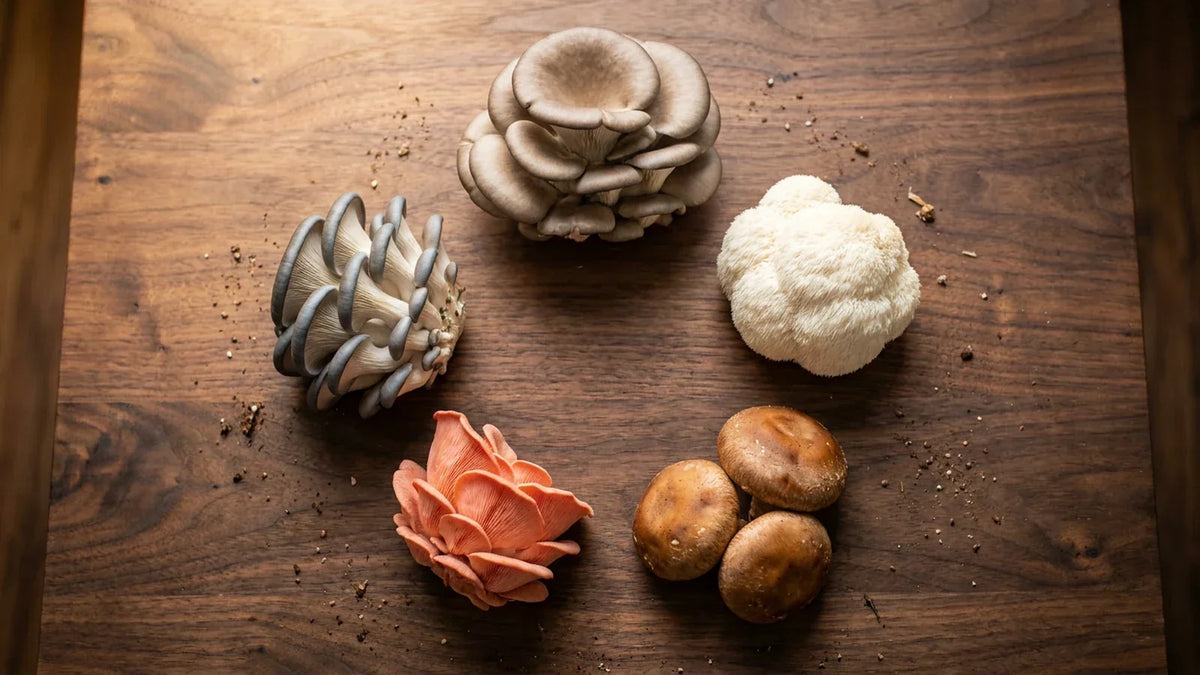
Native to East Asia and cultivated for at least 1,000 years, shiitake (Lentinula edodes) is the dark-capped, umbrella-shaped mushroom most Americans see first when they explore Asian varieties. Caps run 2 to 4 inches across with a brown to dark-brown surface and ivory underside. The stems are woody and should be removed before cooking, though they're worth saving for stock.
Cooking notes: shiitake has a meaty, smoky flavor that intensifies dramatically when dried and rehydrated. Fresh caps work well in stir-fries, soups, and miso glazes. Dried shiitake is the backbone of dashi alternatives and braised dishes. Dried versions also concentrate guanylate, one of the umami-boosting nucleotides, which is why dashi made from dried shiitake tastes so deep.
Beyond flavor, shiitake has been studied for compounds like lentinan, a polysaccharide with documented immune-modulating effects in clinical trials, primarily as an adjunct cancer therapy in Japan.

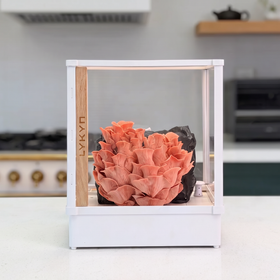
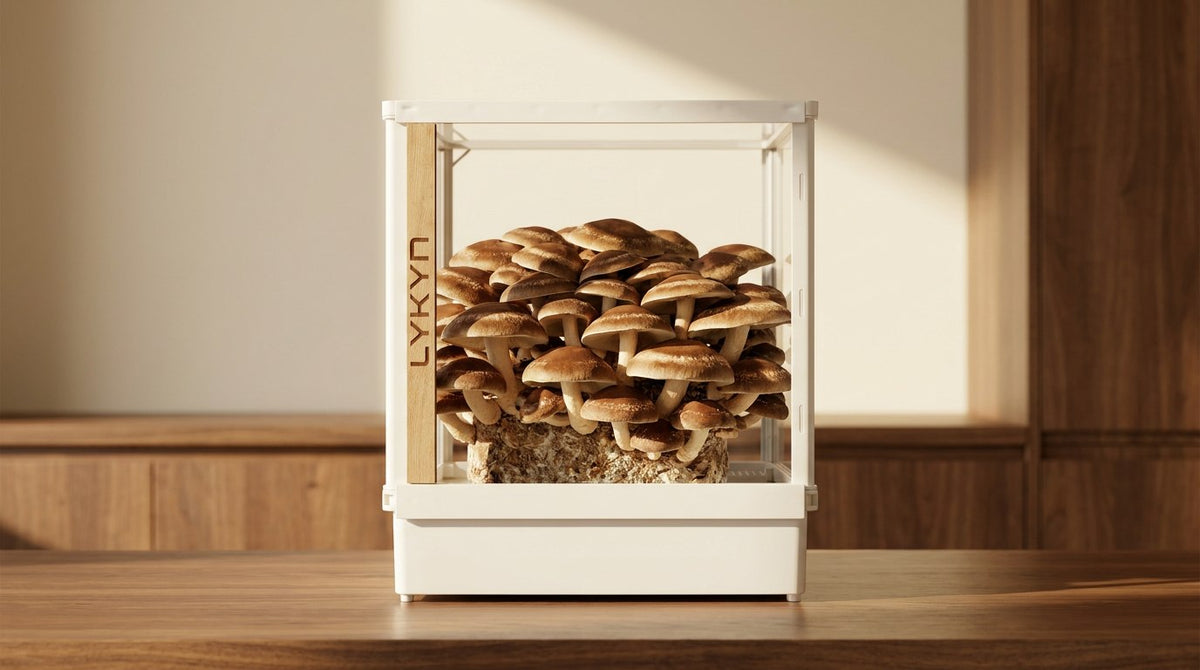
Smart Chamber. Bone White Single
- 2.8L tank, 90% humidity automatic
- App-controlled, plug-and-play
- 6 lb block ceiling, in stock

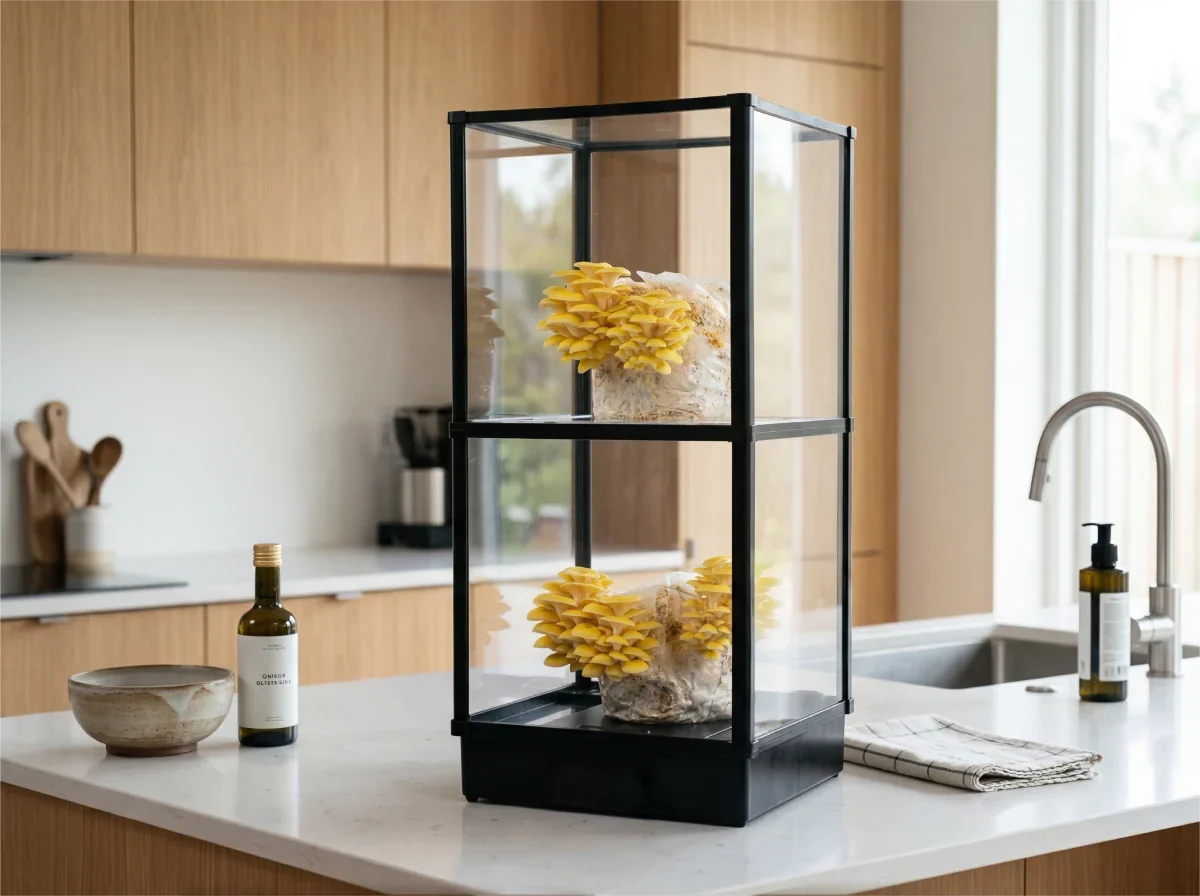
Smart Chamber. Obsidian Black Single
- 2.8L tank, 90% humidity automatic
- App-controlled, plug-and-play
- Matte obsidian finish, in stock

Black Oyster Fruiting Block
- 5 lb colonized hardwood block
- 1-3 day cycle, easy first flush
- Lab-tested strain, in stock
Enoki
Enoki (Flammulina velutipes) is the long, white, needle-thin mushroom sold in small bundled bunches. Caps are tiny and white, stems are thin and crunchy. The variety sold in Asian markets is the cultivated form grown in low light and high CO2 conditions, which keeps the cap small and the stem long and pale.
Cooking notes: cut off the root end (the dense pad at the bottom), then separate the strands. Enoki cooks in seconds. Add it to hot pot, miso soup, ramen, or salads near the end of cooking. Overcooking turns the strands tough and rubbery. Raw enoki is technically edible but has caused listeria outbreaks in the past, so cooking is the safer choice.
Oyster Mushroom
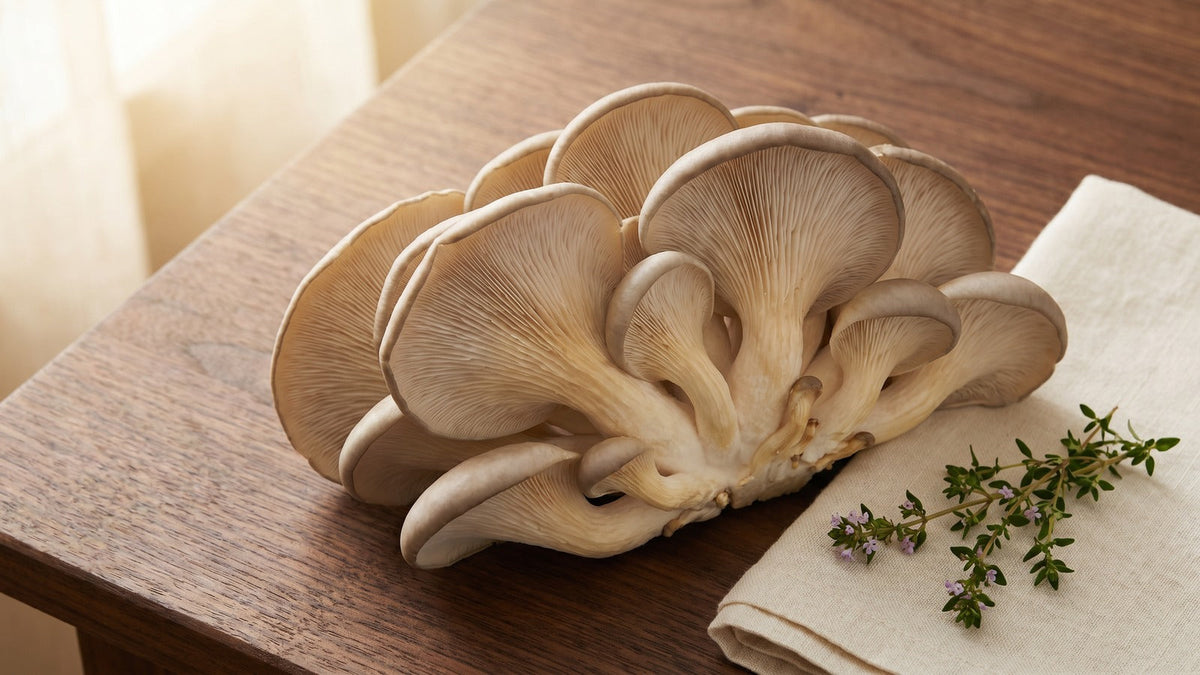
Oyster mushrooms (Pleurotus species) grow in fan-shaped clusters with a delicate texture and a mild flavor. The most common varieties at Asian markets are pearl oyster (Pleurotus ostreatus), king trumpet (Pleurotus eryngii), and golden oyster (Pleurotus citrinopileatus). Pink oyster turns up occasionally and is striking but loses most of its color when cooked.
Cooking notes: oyster mushrooms tear into strips like pulled pork and crisp up beautifully in a hot pan. King trumpet is sturdier; slice the stems into thick rounds and sear them like scallops. The thinner pearl oyster is better for stir-fries and quick saute. All oyster varieties pair well with garlic, soy sauce, sesame oil, and ginger.
King Trumpet (Eryngii)
King trumpet (Pleurotus eryngii), called eryngii in Japan and xing bao gu in China, deserves its own entry even though it's technically an oyster mushroom. Thick white stems and small brown caps give it a unique structure: most of the mushroom is the stem, which is firm, dense, and almost meatlike.
Cooking notes: slice the stems crosswise into 1/2 inch rounds. Score one side in a crosshatch pattern. Sear in a hot dry pan, then finish with butter and garlic. The result is a savory, scallop-like medallion that holds its shape and absorbs marinades well. Roasted whole, the stems develop a rich umami flavor and can stand in for meat in stir-fries.

Fuel Your Mushroom Journey
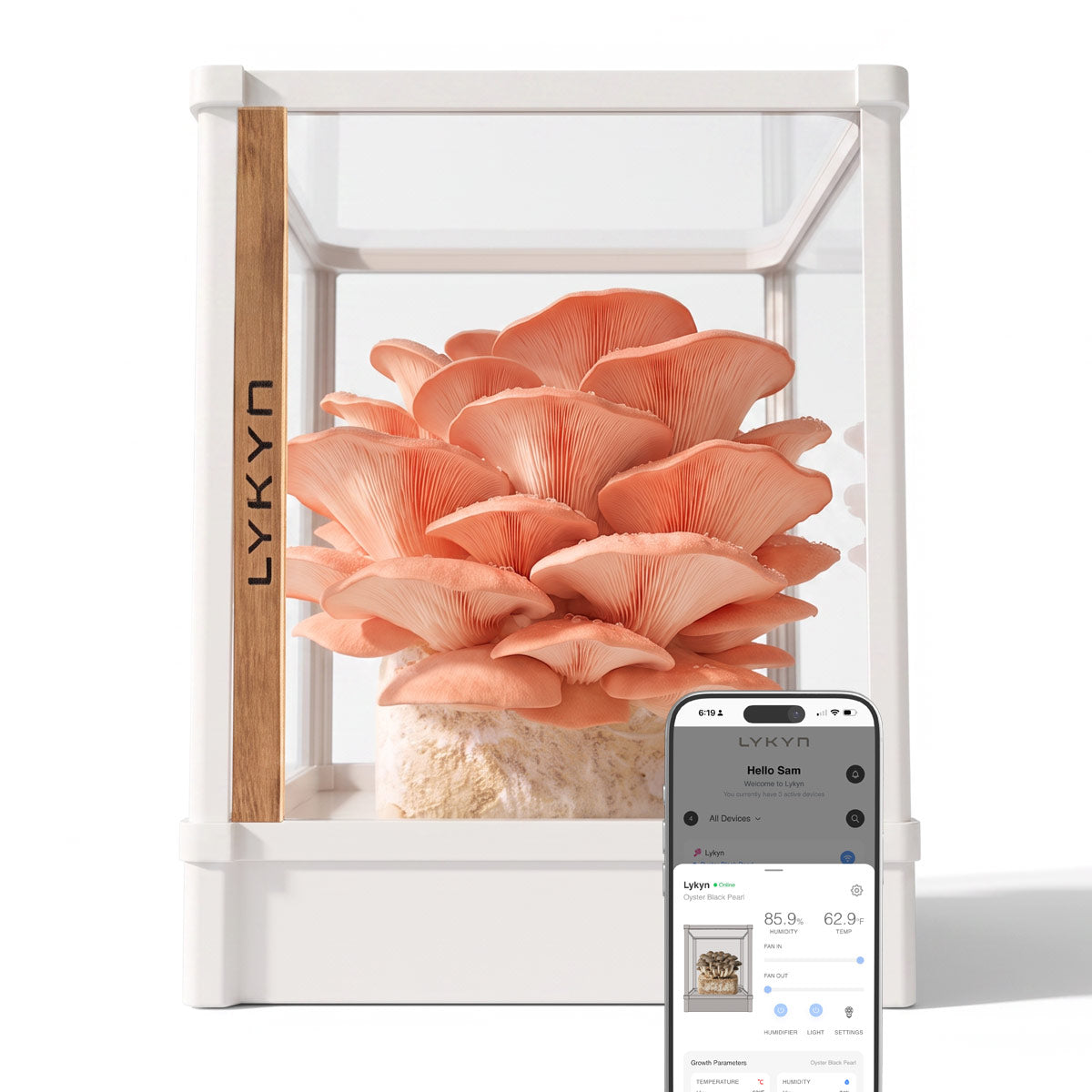
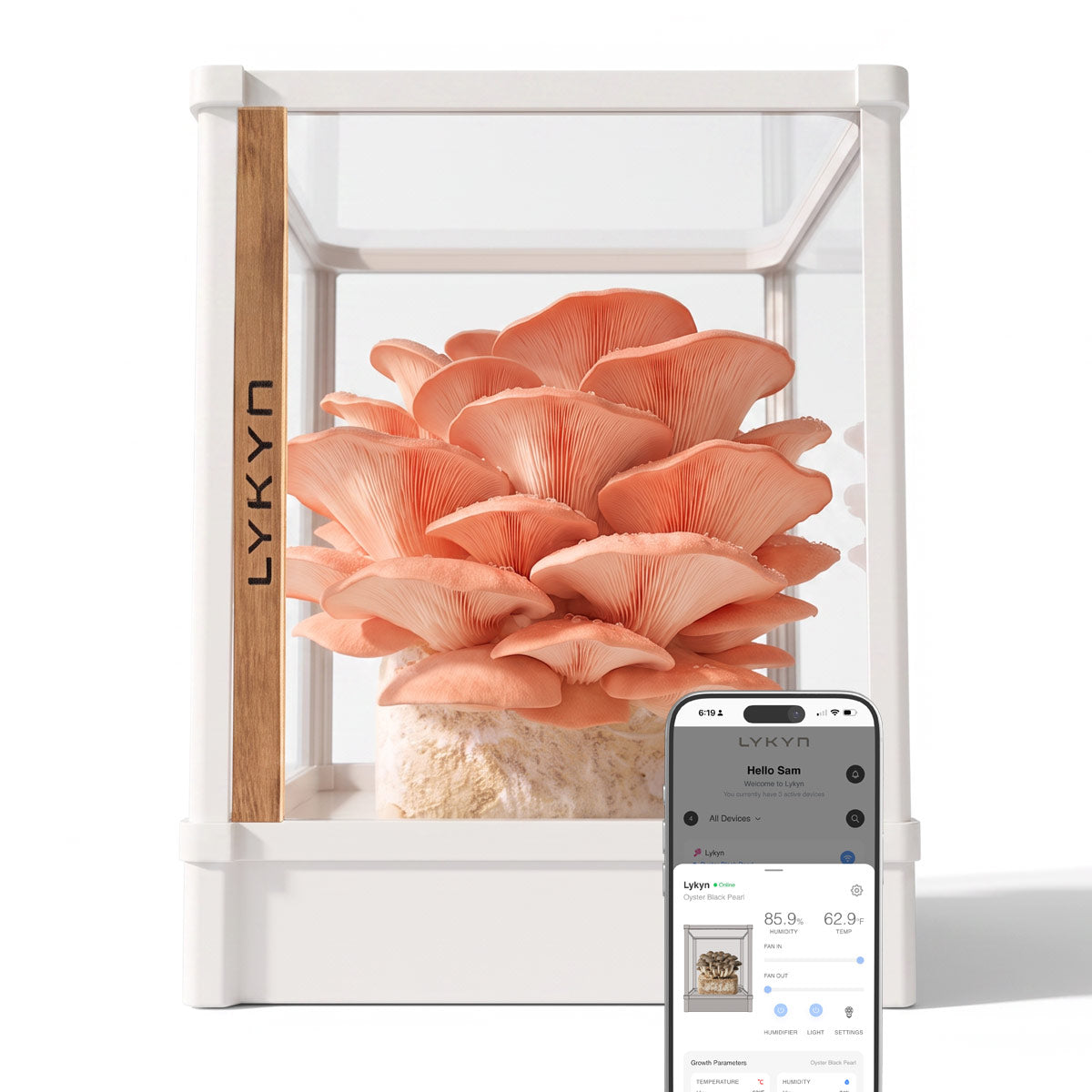
Smart Mushroom Grow Chamber
Plug-and-play smart chamber with humidity, light, and airflow dialed in for every species. Beginners harvest their first flush in days, not months.
Add to cart $299Beech Mushroom (Shimeji)
Beech mushroom or shimeji (Hypsizygus tessellatus) is sold in small clusters of stems with brown or white caps. Marketed as either buna-shimeji (brown) or bunapi-shimeji (white), these mushrooms are nutty, slightly crunchy, and need cooking to develop their flavor and release their natural slight bitterness.
Cooking notes: trim the root cluster, separate the individual stems, and saute for at least 4 to 5 minutes. Beech mushrooms hold their shape well in soups, hot pots, and rice dishes. Their tidy appearance also makes them popular as a plate garnish.
Wood Ear
Wood ear (Auricularia auricula-judae and related species) is the dark, gelatinous mushroom in hot and sour soup. Most often sold dried in cellophane bags, it rehydrates into floppy, ear-shaped pieces with a unique crisp-yet-soft texture.
Cooking notes: soak in hot water for 15 to 20 minutes until pliable. Rinse thoroughly to remove grit. Slice into ribbons and add to soups, stir-fries, or cold salads. Wood ear has almost no flavor of its own but provides remarkable texture contrast. It's also high in soluble fiber and has been studied for cardiovascular benefits at regular consumption levels.
Straw Mushroom
Straw mushrooms (Volvariella volvacea) are common in canned form in Asian grocery stores. The fresh versions, popular across Southeast Asia, look like small egg-shaped buttons before opening into umbrellas. Most North American shoppers will encounter them only canned, sliced into halves.
Cooking notes: drain and rinse canned straw mushrooms before use. They add chewy texture and mild flavor to stir-fries, curries, and Thai dishes. Avoid raw straw mushrooms; they contain heat-labile compounds that aren't well tolerated raw.
Lion's Mane
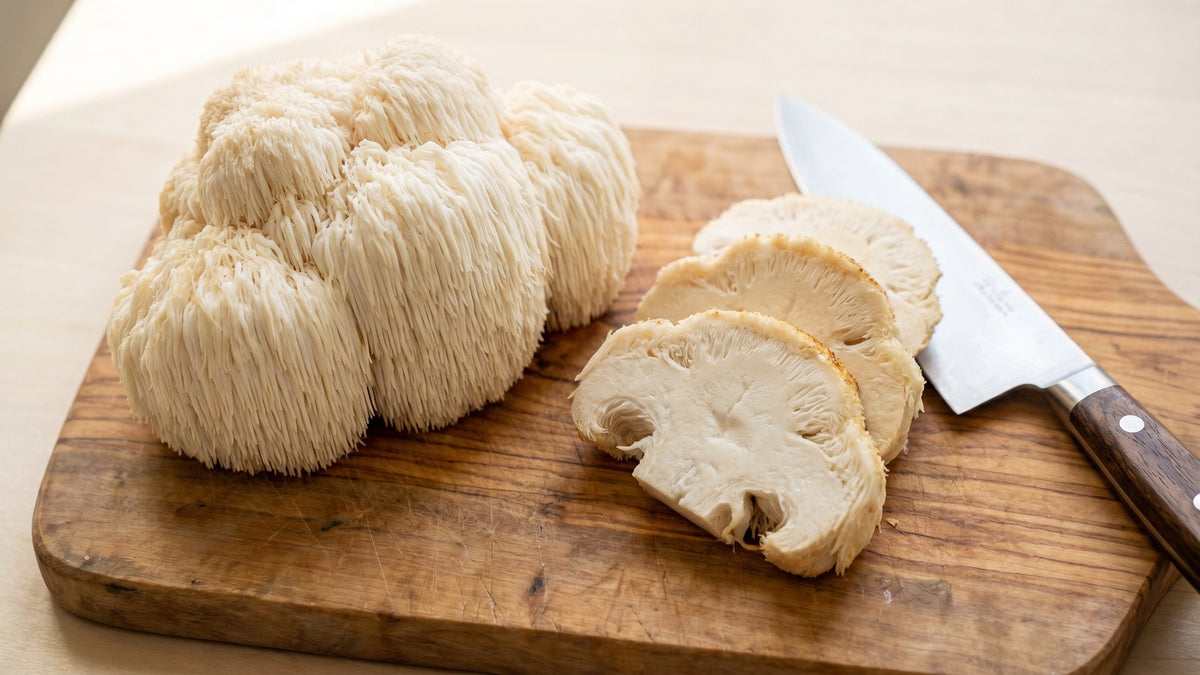
Lion's mane (Hericium erinaceus), called yamabushitake in Japan and hou tou gu in China, doesn't look like a typical mushroom. It's a white, shaggy globe covered in dangling spines, with no cap, stem, or gills. It has a delicate seafood-like flavor often compared to crab or lobster.
Cooking notes: tear lion's mane into bite-size pieces and dry-pan saute over medium-high heat until golden, then finish with butter. It pairs beautifully with white wine, garlic, and lemon. Lion's mane has become especially popular in functional-food circles for its hericenones and erinacines, compounds shown in lab studies to stimulate nerve growth factor production.
Maitake (Hen of the Woods)
Maitake (Grifola frondosa) grows in large rosettes of overlapping fronds, sometimes weighing 20 pounds or more in the wild. Cultivated maitake is sold in smaller clusters, brown and feathery, with a peppery, earthy flavor.
Cooking notes: tear maitake into clusters and roast or saute. The frilly edges crisp dramatically in a hot pan. Maitake adds depth to soups, sauces, and grain dishes. Like shiitake, it has a long traditional medicinal history and contains beta-glucan polysaccharides studied for immune effects.
Growing Asian Mushrooms at Home
Most of these varieties are available as home grow kits now, which is a substantial change from a decade ago. Oyster, lion's mane, king trumpet, and shiitake are all reliable for first-time growers. A countertop kit from Lykyn's mushroom grow kits produces a pound or more of fresh mushrooms in 5 to 7 days. For varieties that are expensive or hard to find fresh at the supermarket (king trumpet especially), growing your own is often cheaper and always fresher than the import-shipped alternative.
Asian mushrooms are worth exploring for reasons beyond flavor. Many of these species have centuries of culinary tradition behind them and decades of clinical research mapping their compounds. Start with one or two varieties, learn how each behaves in a hot pan, and the rest of the Asian-mushroom shelf becomes familiar territory fast.



Share:
Can Cats Eat Mushrooms? A Vet-Informed Safety Guide
Can Cats Eat Mushrooms? A Vet-Informed Safety Guide