


How to Cook Oyster Mushrooms (Master Method + 4 Easy Variations)
How to Cook Oyster Mushrooms
To cook oyster mushrooms, tear the caps into bite-sized pieces by hand, heat a dry cast-iron or stainless skillet over medium-high heat, add the torn mushrooms in a single layer, and let them sit undisturbed for 3 to 4 minutes. The mushrooms will release their water, the water will evaporate, and the edges will turn deep gold. Only then add 2 tablespoons of butter or neutral oil, season with kosher salt, and finish for 2 more minutes. Total time: about 8 minutes for one pound. This is the dry-sear method, the same approach used in professional kitchens.
The trick is patience with that empty pan. Most home cooks add oil first, which is exactly what turns oyster mushrooms into a soggy, gray pile. Skip the oil at the start. Let the heat do its job.
The Master Dry-Sear Method
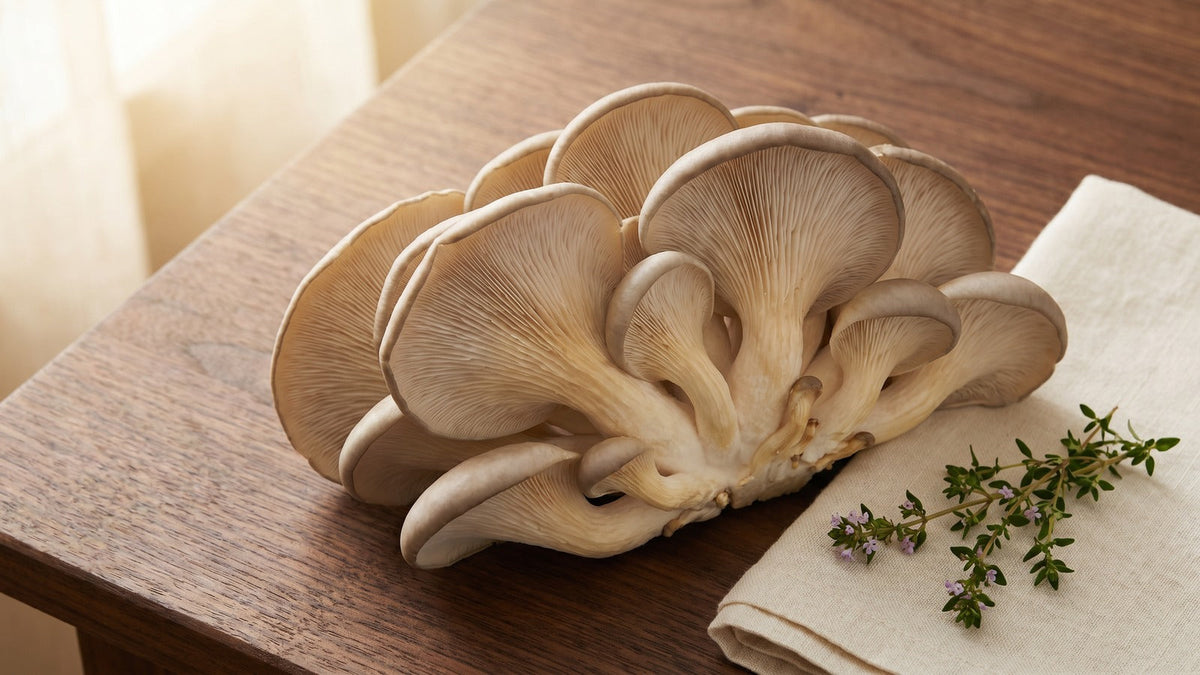
The dry-sear is the single most important technique for oyster mushrooms (genus Pleurotus). It works for every species in the family, from delicate pearl oysters to meaty king trumpets. The method exploits two facts of oyster mushroom biology: they are about 92% water by weight, and their flavor compounds (guanylate, glutamate) intensify dramatically when that water is driven off and the edges caramelize.
Step 1. Prep the mushrooms
Trim the tough base where the cluster was attached to the substrate. Tear, do not slice, the caps and stems into pieces roughly the size of your thumbnail. Pearl oyster caps tear cleanly along their natural grain. King trumpets are stem-heavy and need a knife on the thickest part of the stem only.
Step 2. Heat the pan dry
Place a 12-inch cast-iron or stainless steel skillet over medium-high heat. No oil, no butter, nothing in the pan. Wait 2 to 3 minutes until the pan is hot enough that a drop of water skitters and evaporates within 1 second.
Step 3. Add mushrooms in a single layer
Drop the torn pieces into the dry pan in a single layer. Do not crowd. One pound of mushrooms needs a 12-inch pan; less than that and you are steaming, not searing. The mushrooms will squeak and the pan may smoke lightly. That is correct.
Step 4. Let the water release and evaporate
For the first 2 minutes, do not touch the mushrooms. Water will pool around them. Around the 3-minute mark, the water will start to evaporate, and the mushrooms will shrink to about 60% of their original volume.
Step 5. Add fat AFTER the water is gone
When the pan looks dry and you hear the mushrooms sizzling instead of hissing, add 2 tablespoons of unsalted butter (for richness) or a high-smoke-point neutral oil like avocado or grapeseed (for crisp edges). Toss to coat. The edges will deepen to mahogany brown within 90 seconds.
Step 6. Season at the end
Add 3/4 teaspoon of kosher salt, freshly cracked black pepper, and a clove of finely minced garlic if you like. Toss for 30 more seconds. Salt at the end, never at the start: salt draws water out, the opposite of what step 4 is trying to accomplish.
Total time: 7 to 9 minutes from cold pan to plated. Internal temperature at the finish should be at least 160 degrees Fahrenheit.
Why Tear and Not Slice
Tearing oyster mushrooms is not a stylistic choice. It is a structural one. Oyster mushroom flesh has fibers running in the direction the cap grew outward from the stem base. When you tear along that grain, you get rough, irregular edges. Every one of those edges becomes a tiny crisp-up surface in the pan. Sliced edges are smooth and uniform, so they brown evenly but never get that lacy, almost bacon-like texture.
There is a flavor dimension too. Torn pieces retain more of the mineral, slightly anise note that pearl and blue oysters carry. A clean blade compresses the cell walls and squeezes some of that aromatic liquid out before it ever hits the pan. Reserve the knife for two situations only: trimming the cluster base, and cutting king trumpet stems (which are too dense to tear cleanly).
Four Oyster Species, Four Best Methods
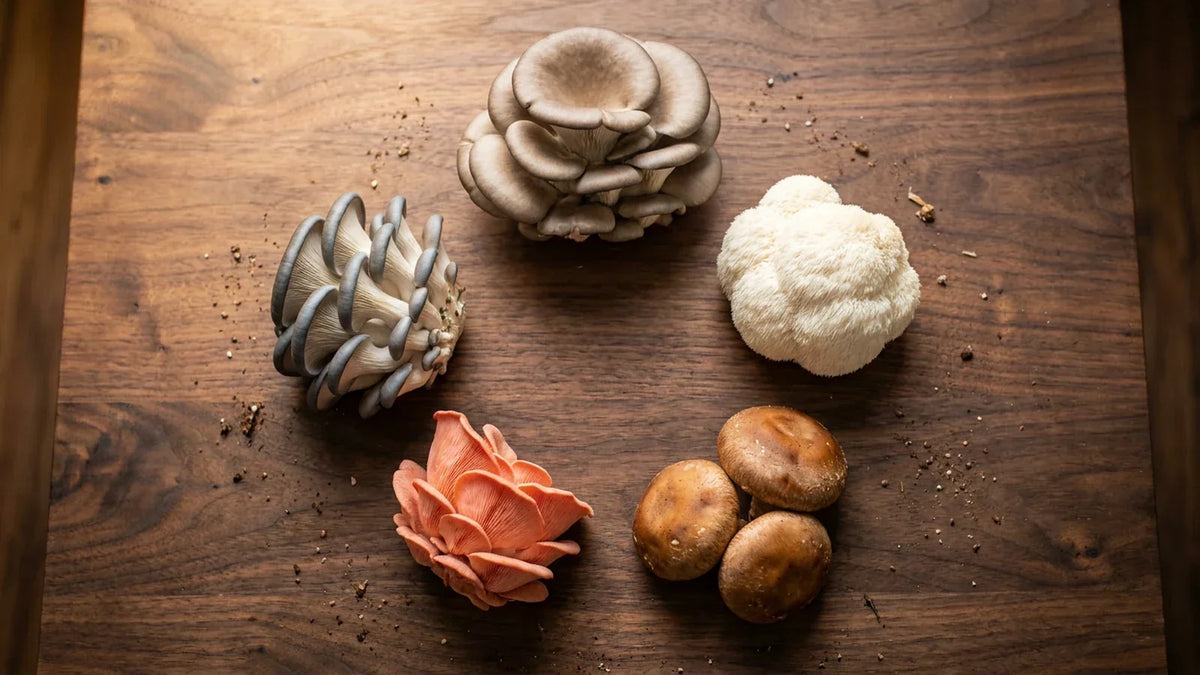
Not every oyster wants the same treatment. The four species you are most likely to cook with each have a different ideal method based on texture and flavor.
| Species | Texture | Best cook method | Flavor profile | Best dish |
|---|---|---|---|---|
| Pearl Oyster (P. ostreatus) | Tender, silky | Dry-sear, 8 min | Mild, slightly sweet, anise note | Garlic butter pan sear over toast |
| Pink Oyster (P. djamor) | Crisp, almost bacon-like when crisped | Dry-sear hot, 6 min | Smoky, savory, meatiest of the four | Pulled "BBQ" sandwich, pasta |
| Blue Oyster (P. columbinus) | Firm, meaty | Dry-sear then braise, 12 min | Deep, earthy, oyster-shell mineral | Cream sauce over pappardelle |
| King Trumpet (P. eryngii) | Dense, scallop-like | Slice stem into coins, sear hard, 10 min | Rich, buttery, umami-heavy | Seared "scallops" with brown butter |
Pearl oysters are the friendliest beginners' species, most commonly sold at US grocery stores. Pink oysters (hot pink raw, gold cooked) crisp up better than any other oyster, which is why they dominate vegan "bacon" recipes. Blue oysters bridge pearl tenderness and king trumpet density. King trumpets are the meatiest: slice the thick stems into half-inch coins, cross-hatch the cut faces, and treat them like scallops.
Common Mistakes That Make Oyster Mushrooms Soggy
If your oyster mushrooms have come out limp, watery, and gray, one of these five mistakes is the reason.
Mistake 1: Adding oil to a cold pan. Oil at the start coats the mushrooms before their water can leave. The water then steams under the oil instead of evaporating, and you end up with mushroom soup.
Mistake 2: Washing under running water. Cultivated oyster mushrooms are never exposed to soil and need no rinsing. They absorb water like a sponge and will never crisp once wet. Brush with a dry pastry brush or a damp paper towel if needed.
Mistake 3: Crowding the pan. Each piece should touch the pan, with bare metal visible between most of them. Cook in two batches if you have to.
Mistake 4: Salting too early. Salt pulls water out of the cell walls through osmosis. Salting at the start accelerates water release at exactly the moment you want the surface to be dry enough to brown. Always salt in the final 60 seconds.
Mistake 5: Stirring constantly. Oyster mushrooms need contact time with hot metal to develop color. Every flip resets the surface temperature. Stir twice maximum during the entire 8 minutes.
Four Easy Variations: Garlic Butter, Asian Glaze, Cream Sauce, BBQ
Once the master method is locked in, the variations are just finishing moves. Each starts with the same dry-sear (steps 1 through 4) and only changes what happens after the water is gone.
Variation 1: Garlic Butter Pan Sear (the everyday default)
After the water evaporates, add 3 tablespoons of unsalted butter, 3 minced garlic cloves, and a handful of fresh thyme. Toss for 90 seconds. Finish with kosher salt, black pepper, and a squeeze of fresh lemon. Serve over sourdough toast, scrambled eggs, or steak. Works best with: pearl oyster, blue oyster.
Variation 2: Asian Glaze (the umami bomb)
After the water evaporates, add 1 tablespoon of avocado oil and 2 cloves of minced ginger. Toss 30 seconds. Add a glaze of 2 tablespoons soy sauce, 1 tablespoon mirin, 1 teaspoon rice vinegar, and 1 teaspoon honey. Bubble and reduce 60 seconds until glossy. Finish with toasted sesame seeds and sliced scallion. Works best with: king trumpet, pink oyster.
Variation 3: Cream Sauce (the comfort move)
After the water evaporates, add 2 tablespoons of butter and 2 minced shallots. Cook 60 seconds. Add 1/4 cup dry white wine and reduce until almost dry. Pour in 1/2 cup heavy cream and 1 tablespoon grated Parmesan. Simmer 2 to 3 minutes until the sauce coats the back of a spoon. Finish with chopped parsley over pappardelle, gnocchi, or pan-seared chicken. Works best with: blue oyster, pearl oyster.
Variation 4: BBQ Pulled-Sandwich (the crowd pleaser)
This one works best with pink oyster, which crisps almost like bacon. After the water evaporates, add 1 tablespoon of avocado oil and cook an extra 3 minutes until the edges are deeply browned. Pull the pan off the heat, add 1/3 cup of smoky BBQ sauce and toss to coat. Pile onto a toasted brioche bun with quick-pickled red onion and a slaw of shredded cabbage, mayo, and apple cider vinegar.
Works best with: pink oyster, king trumpet.
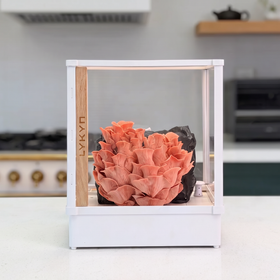
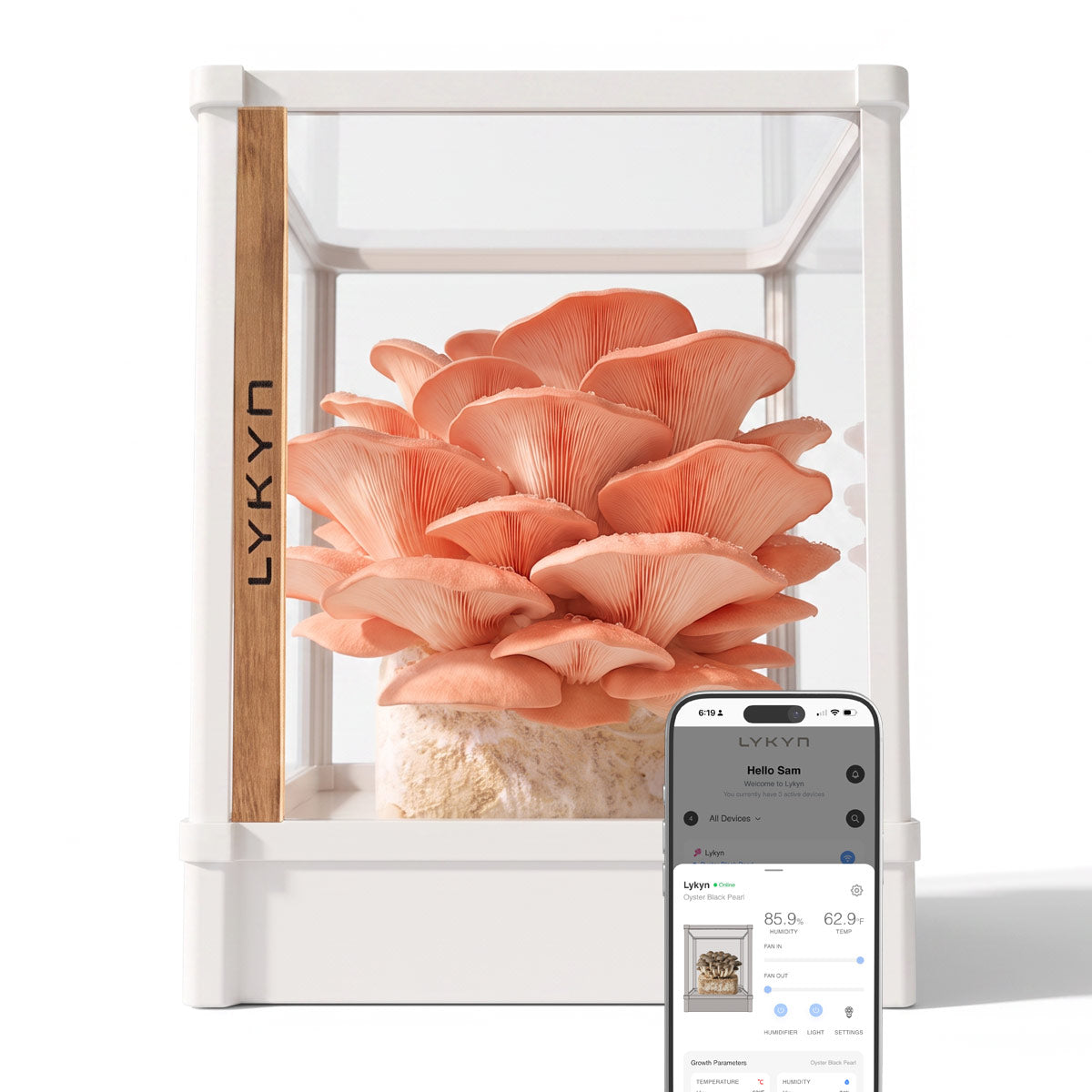
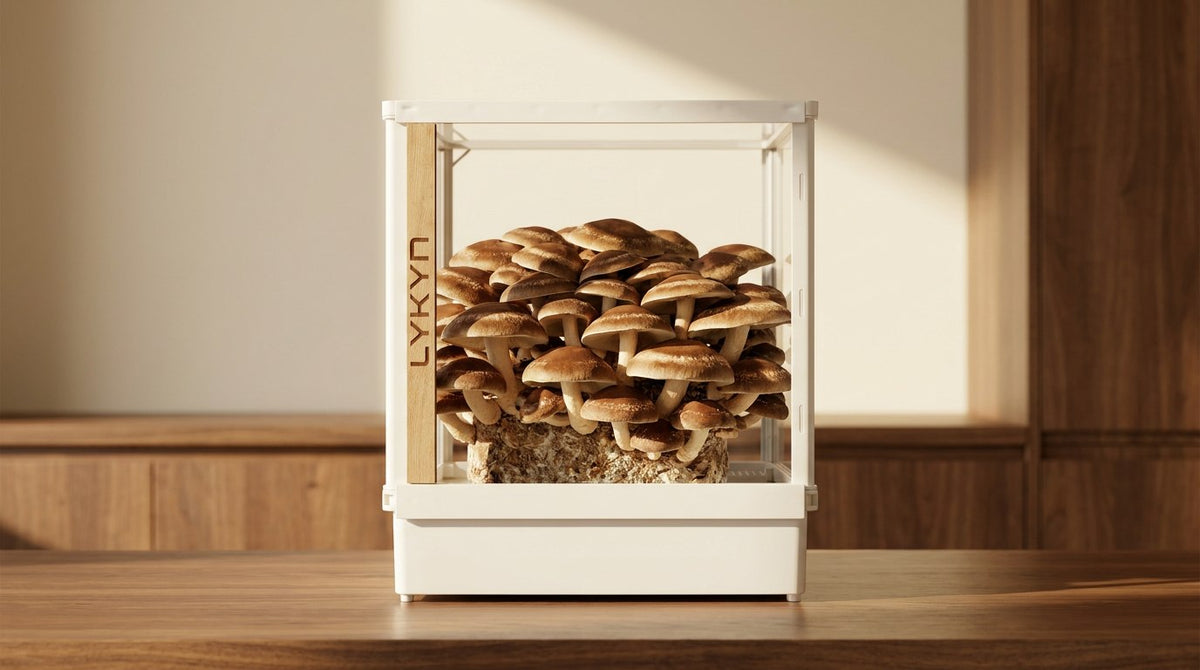
If you grow your own from a pearl oyster grow block on a Lykyn chamber, this BBQ variation is the recipe most first-time growers cook on harvest day. The crisp-up is dramatic and the flavor concentrates in a way grocery-store mushrooms (often days old) cannot match.

Fuel Your Mushroom Journey
Pink Oyster Grow Kit
Hardwood sawdust block colonized with Pink Oyster mycelium. Drops straight into your Lykyn chamber and starts pinning within days.
Add to cart $29.95FAQ
Do you wash oyster mushrooms before cooking?
No. Cultivated oyster mushrooms are grown on a clean substrate and never exposed to soil. They absorb water like a sponge, which means a quick rinse can leave them too wet to brown properly. If you see visible debris, wipe gently with a damp paper towel or brush with a dry pastry brush, then trim the tough cluster base.
Should you slice or tear oyster mushrooms?
Tear them. Oyster mushroom flesh has a natural grain, and tearing creates rough, irregular edges that crisp up far better than uniform sliced edges. Torn pieces also keep more of the mineral, anise-like note that oyster mushrooms are prized for. The only time you reach for a knife is to trim the cluster base or cut king trumpet stems, which are too dense to tear cleanly.
Why are my oyster mushrooms watery?
Watery oyster mushrooms come from one of three mistakes: you added oil before the mushrooms released their water, you crowded the pan so they steamed instead of seared, or you washed them under running water. The fix is the dry-sear method: heat the pan empty, add torn mushrooms in a single layer, let the water release and evaporate for 3 to 4 minutes, and only then add fat. Salt at the very end.
Can you eat oyster mushrooms raw?
Technically yes, but you really should not. Raw oyster mushrooms contain small amounts of chitin (the structural compound in their cell walls) that is hard for humans to digest, and they have a slightly bitter, woody flavor that disappears with heat. Cooking for at least 5 to 8 minutes breaks down the chitin and unlocks the savory, umami-rich flavor that makes oyster mushrooms worth eating.
How long do you cook oyster mushrooms?
Seven to nine minutes total for one pound, using the dry-sear method. The first 3 to 4 minutes the mushrooms release their water and the water evaporates. The next 90 seconds you add fat and the edges deepen to mahogany brown. The final 60 to 90 seconds you season and finish. The visual cue is gold edges, glossy surfaces, and no visible water in the pan. Internal temperature at the finish should be at least 160 degrees Fahrenheit.
What flavor do oyster mushrooms taste like?
Oyster mushrooms taste mild, slightly sweet, and faintly of anise, with a savory umami depth that intensifies when cooked properly. Pearl oysters are the most delicate. Pink oysters lean smoky and almost bacon-like when crisped. Blue oysters carry a deeper, more mineral, oyster-shell note. King trumpets are the meatiest, with a buttery, scallop-like flavor when seared in coins. The umami compounds (guanylate, glutamate) are the same found in aged Parmesan and soy sauce, which is why oyster mushrooms pair so well with both.
Cooking From Your Own Harvest
There is one variable no recipe can fix: freshness. Grocery-store oyster mushrooms are usually 5 to 8 days off the substrate by the time they reach your kitchen. The cell walls have started to break down, and a noticeable amount of water and aroma is gone before the pan even gets hot.
A mushroom you harvest the same morning you cook it behaves differently. The caps are firmer, water content peaks around 92%, and flavor compounds are at full concentration. The dry-sear becomes even more rewarding because there is more water to drive off and more flavor to concentrate.
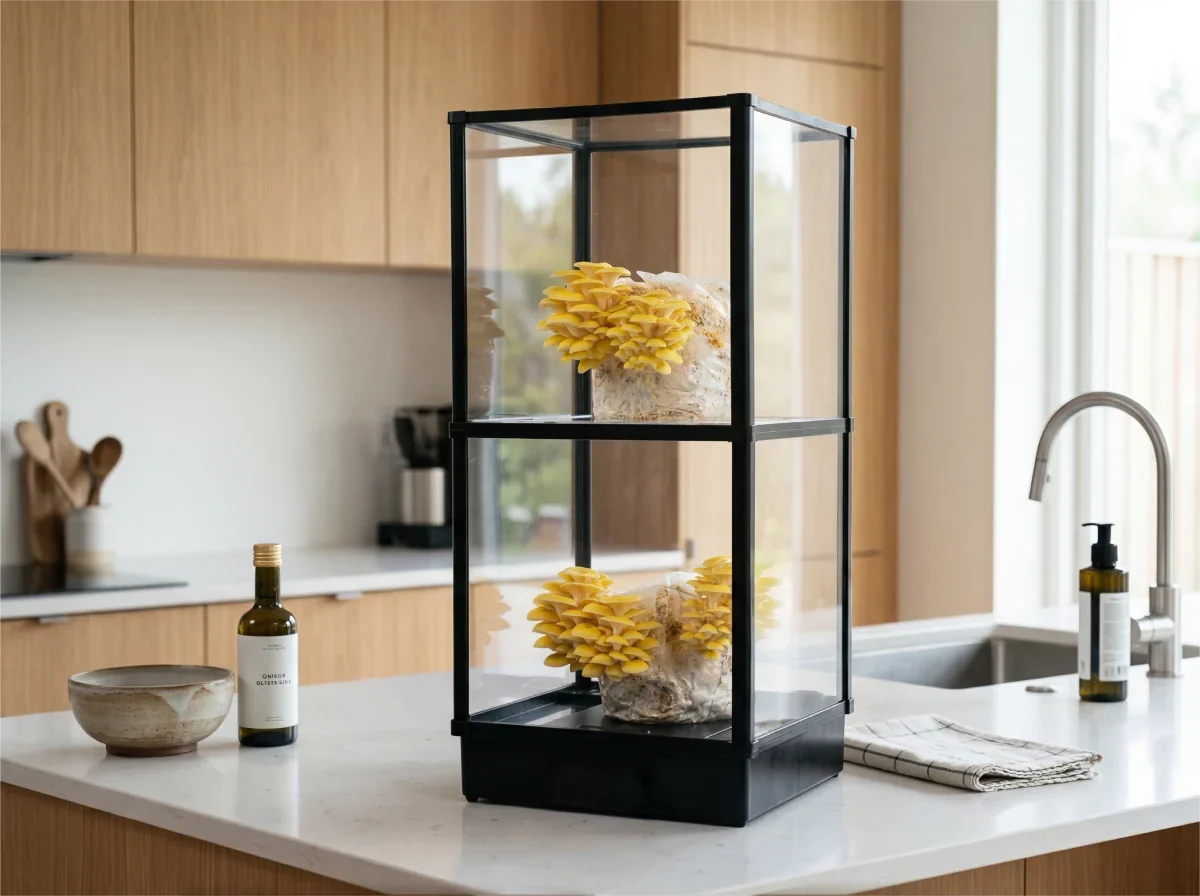
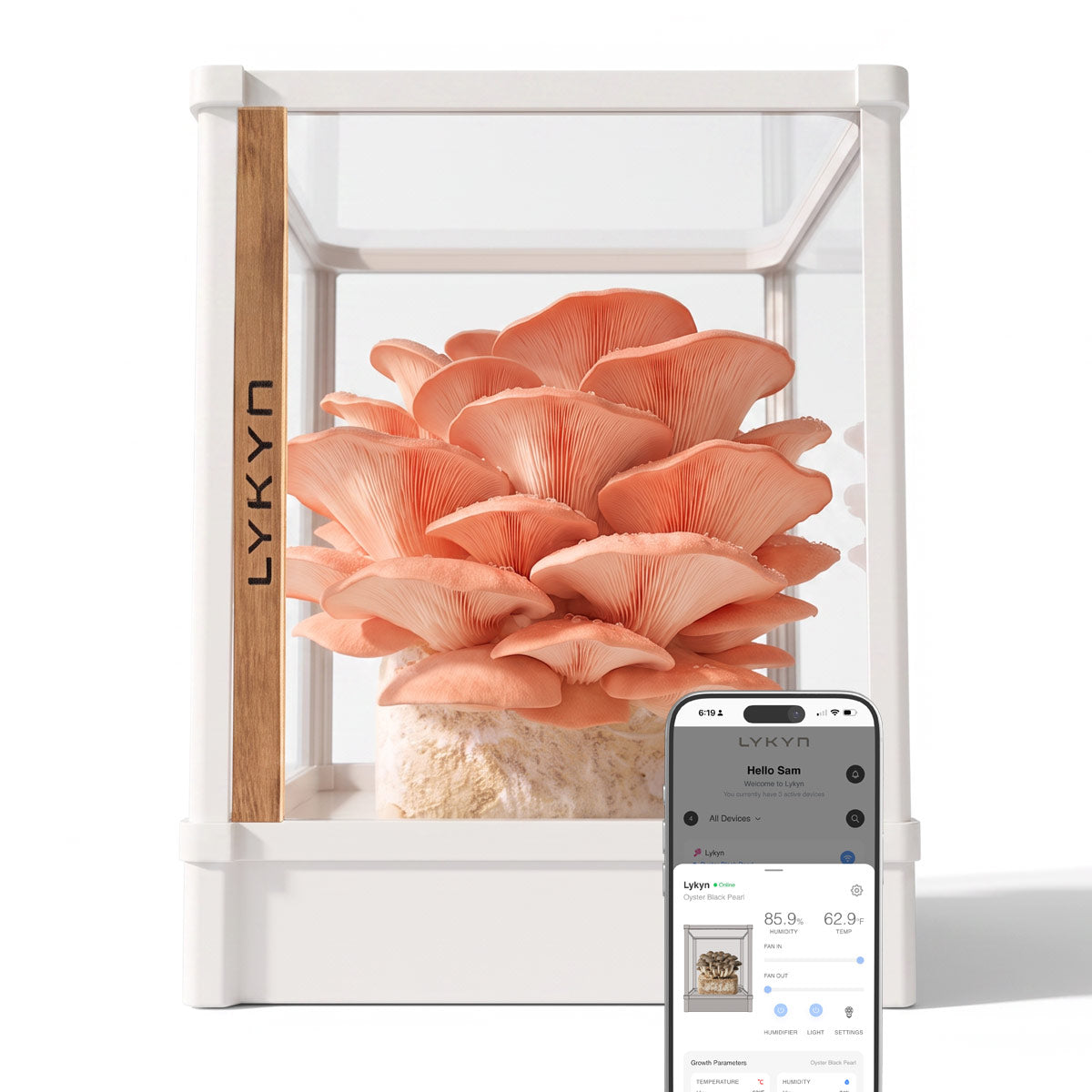
A pearl oyster grow block on a Lykyn smart chamber produces about 1.25 pounds per block, harvest-ready 5 to 7 days from pinning. Pink and blue oyster varieties are available as alternate blocks for the same chamber. The chamber holds humidity at 90 to 95% automatically.
For more, our blue oyster mushroom recipes and pink oyster mushroom recipes guides go deep on species-specific dishes, and how to store oyster mushrooms covers fridge and dehydrator methods.
Master the dry-sear. Tear the caps. Add fat after the water is gone. That is the whole game.
Fuel Your Mushroom Journey

Smart Chamber. Bone White Single
- 2.8L tank, 90% humidity automatic
- App-controlled, plug-and-play
- 6 lb block ceiling, in stock

Smart Chamber. Obsidian Black Single
- Same hardware as Bone White
- Matte black premium finish
- Pairs with any kitchen palette
Author note. This guide draws on Lykyn Growing Team observations across 500+ growers (2024 to 2026), peer-reviewed mycology references, and US-published cultivation literature.



Share:
Golden Oyster Mushroom: Pleurotus citrinopileatus Guide | Lykyn
How Much Lion's Mane Is Too Much? Daily Dose Reality Check