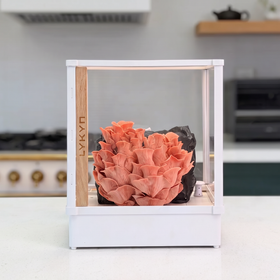



A mushroom growing cabinet is a sealed, humidity-controlled enclosure that turns a kitchen counter into a working mushroom grow room. Humidity, airflow, and light run on a schedule, and a pre-colonized fruiting block goes from pin set to first harvest in five to fourteen days depending on species.
What a mushroom growing cabinet actually is

A cabinet, in mushroom cultivation, is a purpose-built enclosure that holds the three environmental variables gourmet species need to fruit: humidity above eighty percent, air exchange around six to twelve turns per hour, and light on a twelve hour cycle. Cabinets replace the mist-and-guess routine of an open room or a plastic tub with a set-and-forget appliance that fits on a counter.
The category expanded around 2024 when connected cabinets started arriving with humidity control on an app, HEPA-grade air filtration, and species-specific presets. That shift matters because it collapses the setup barrier that kept most home growers from ever attempting anything past a single hardy oyster.
The five design questions that decide whether a cabinet works

Any cabinet buying decision reduces to five questions. Answer each one honestly before you spend anything.
- Does it hold humidity automatically? Manual misting means the cabinet is really a container. A working cabinet holds humidity within a three to five percent band across the full flush cycle without you touching it.
- Does it filter incoming air? Contamination is the number one reason home mushroom grows stall by the third flush. A HEPA or 0.2 micron filter on the incoming air path is what keeps the block clean.
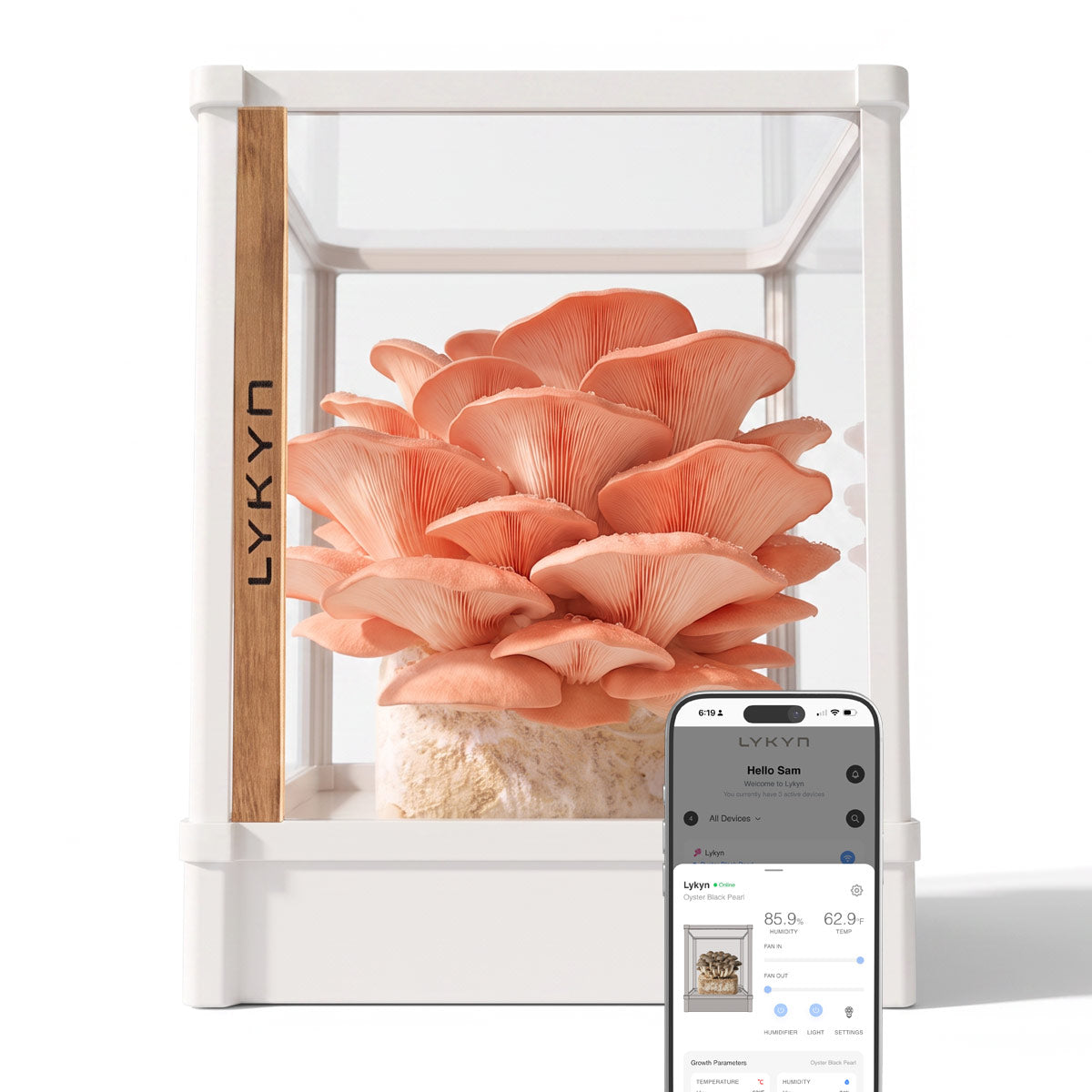
- Is it sized to a standard 5 lb fruiting block? Cabinets built around a specific block size, like the Lykyn Smart Grow Box, waste no space and hold conditions more precisely. Oversized cabinets bleed humidity.
- Can you monitor and adjust it remotely? Travel days, weekend trips, and just walking away for a workday become non-events with app control. Older cabinets without connectivity require someone home to intervene.
- Does it work with third-party blocks too? A cabinet locked to a single vendor's supply chain is a liability if the vendor changes. Open compatibility protects the investment.
DIY cabinet vs smart cabinet: real cost comparison
DIY builds look cheap on paper. They stop looking cheap when you count time and consumables.
| Factor | DIY shotgun tub | Lykyn Smart Grow Box |
|---|---|---|
| Hardware cost | Around 140 to 200 dollars in parts | One purchase, appliance-grade build |
| Build time | A weekend | Five minutes out of the box |
| Daily grower work | Two to four misting sessions | Refill reservoir every three days |
| Humidity control | Swings of 15 to 25 percent | Held within 3 percent band |
| Contamination protection | Partial, fabric filter | HEPA-grade filtered airflow |
| Species range | Hardiest oysters only | Six species, oyster to Lion's Mane to Shiitake |
Where the Lykyn Smart Grow Box sits in this category
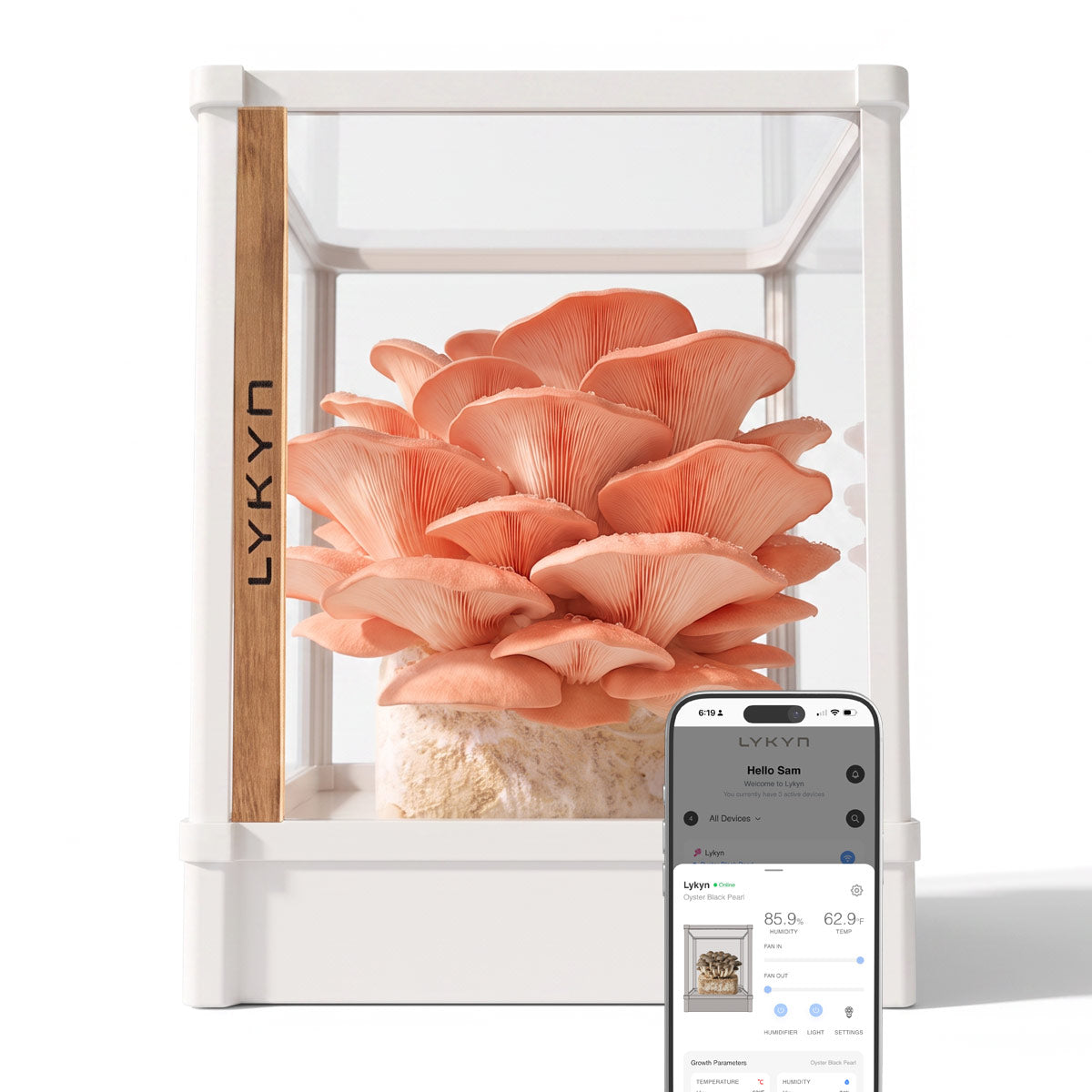
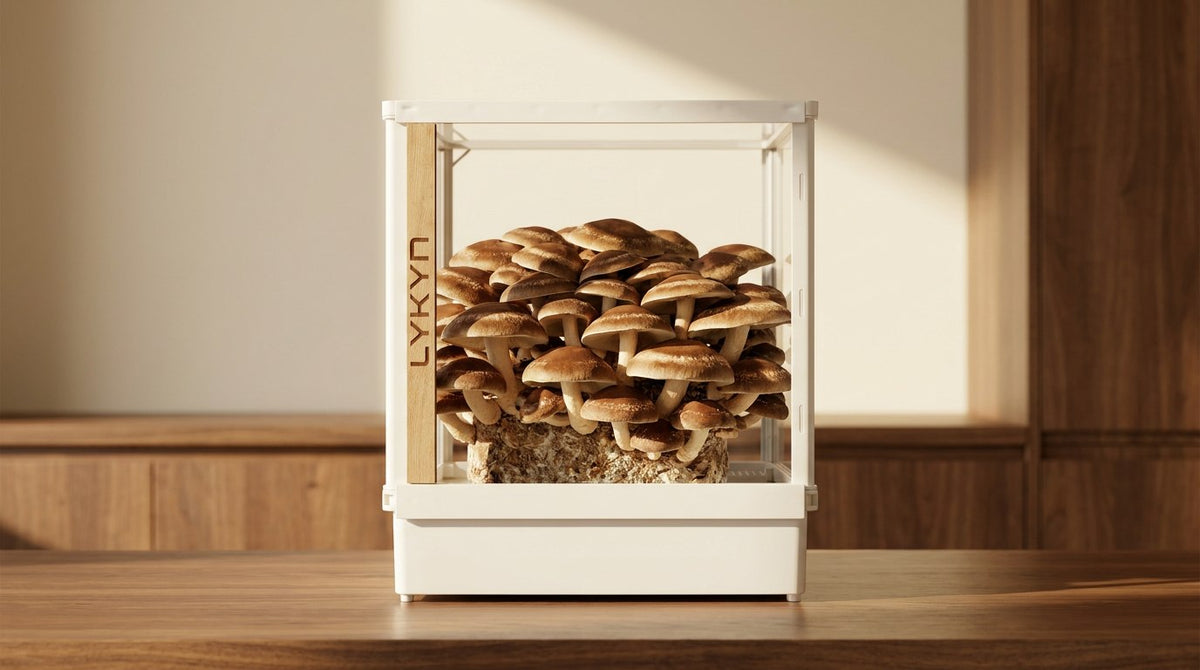
The Lykyn Smart Grow Box is a mushroom growing cabinet built specifically for the 5 lb pre-colonized fruiting block format. It arrives ready to fruit: humidifier tuned, filter installed, species presets loaded, app connection ready. Everything a DIY build spends a weekend assembling is already inside the box, and the humidity and airflow logic is more precise than a hand-tuned rig can hold.
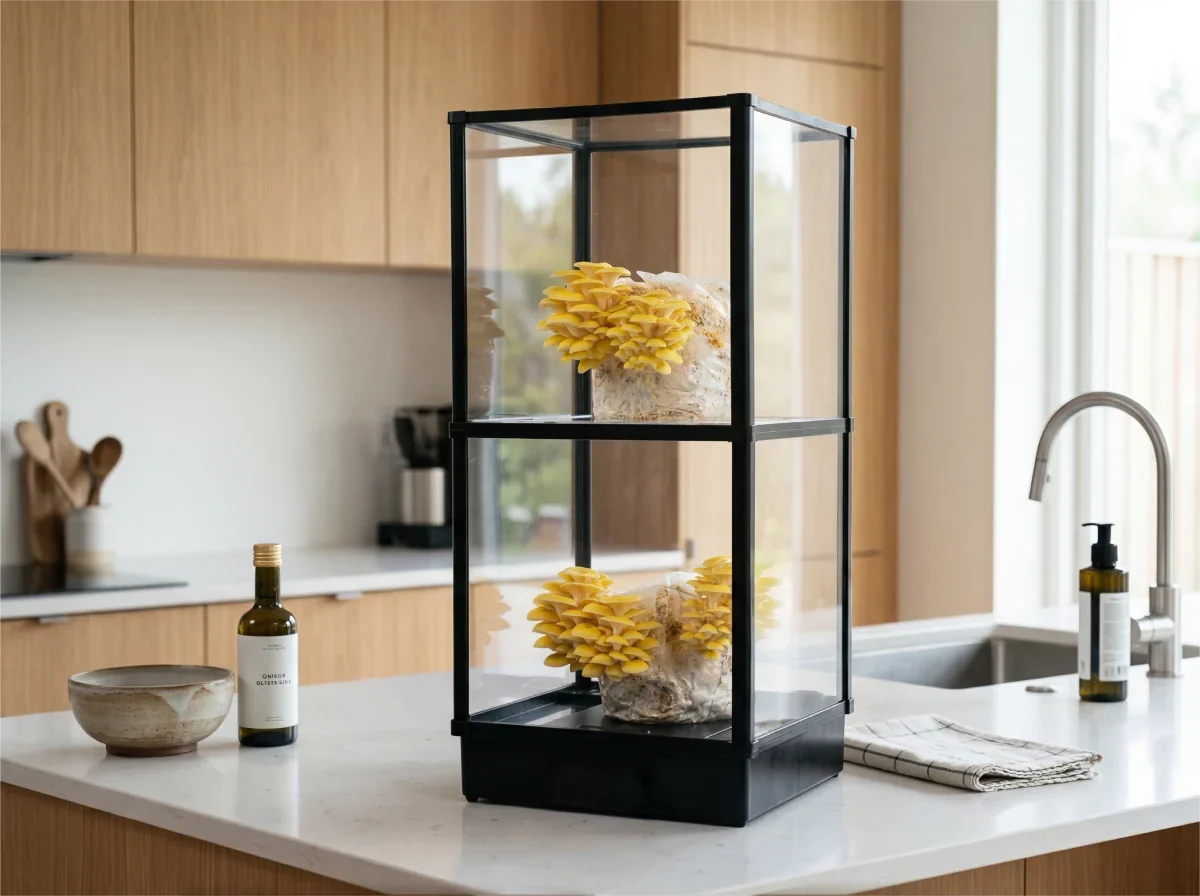
Two versions ship: a single-layer counter model and a double-layer format that runs two flushes side by side. Both work with the same Lykyn 5 lb fruiting blocks and with standard third-party blocks that fit the footprint.
How the cabinet handles a full grow cycle

A working cycle inside the cabinet runs through four stages.
- Setup (day 0): Open the block bag, cut an X in the top, place inside the cabinet, close the door. App starts the species preset. Total elapsed time under five minutes.
- Pin set (day 3 to 7): Small pinheads form on the block surface. Chamber holds humidity higher during this window to protect the pins from drying.
- Fruiting (day 5 to 14): Pins expand into full mushrooms. Airflow ramps up, humidity drops slightly to firm the caps.
- Harvest and rest: Twist off mushrooms at the base, rest the block for three days, then restart the cycle for flush two.
Species that work inside a mushroom growing cabinet

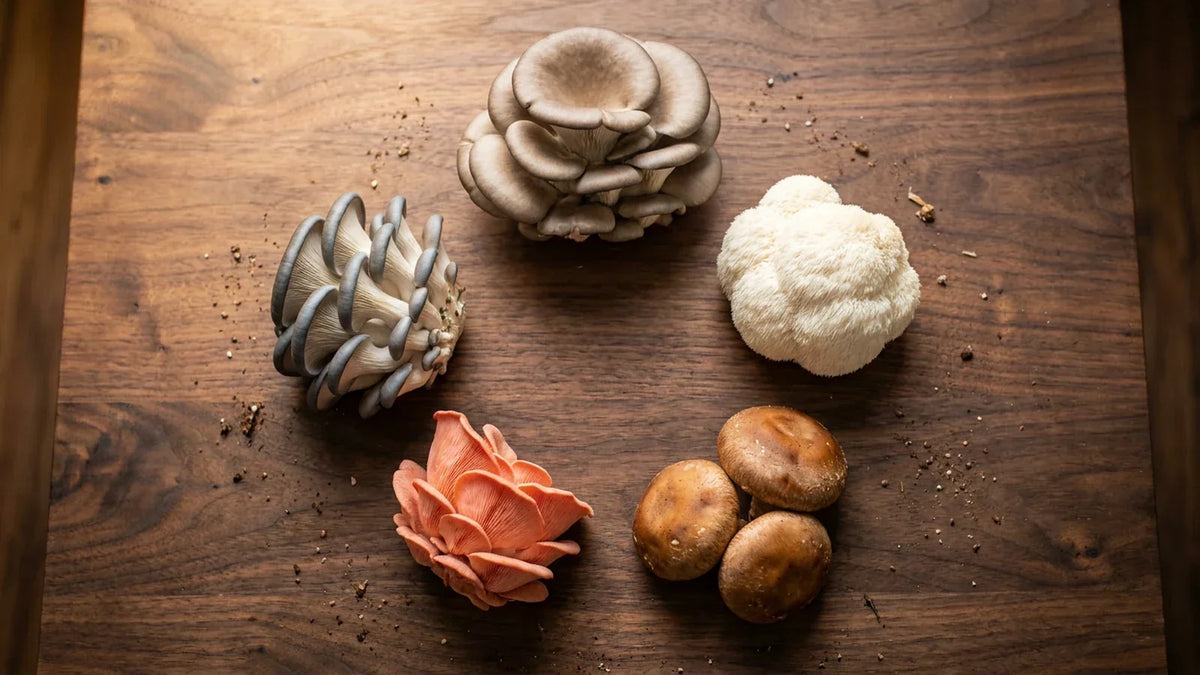
All six of the Lykyn 5 lb fruiting blocks fit inside the same cabinet footprint. Difficulty ladder runs roughly:
- Pink Oyster Mushroom Grow Kit · easiest, coral color makes every stage visible, 5 to 7 days.
- Blue Oyster Grow Kit · cool-tolerant, 5 to 10 days.
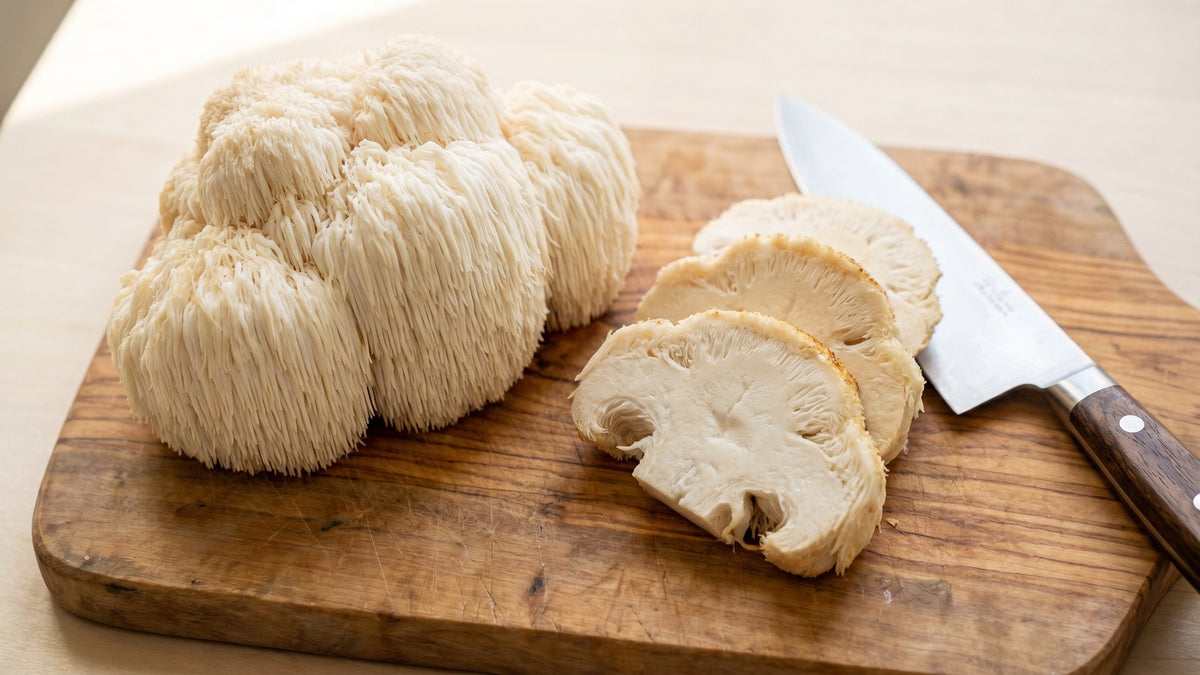
- Lion's Mane Mushroom Grow Kit · 7 to 14 days, nootropic profile.
- Shiitake Mushroom Grow Kit · 10 to 14 days, deeper flavor.
- Chestnut Mushroom Grow Kit · 10 to 14 days, nutty and crisp.
- Cinnamon Cap Mushroom Grow Kit · 10 to 14 days, sweet earthy notes.
Frequently Asked Questions
What is a mushroom growing cabinet?
A mushroom growing cabinet is a sealed, humidity-controlled enclosure sized to fit on a kitchen counter or in a closet. It holds a fruiting block through the eight to fourteen day cycle from pin set to harvest, without daily misting or contamination management from the grower.
How is a mushroom growing cabinet different from a grow tent?
Cabinets are rigid, sealed, and purpose-built for mushrooms. Tents are soft-walled, borrowed from cannabis growing, and expect the grower to add a humidifier, fan, and filter separately. A cabinet arrives ready to fruit. A tent arrives as a project.
Do I really need a mushroom growing cabinet or can I fruit in the open room?
Oyster mushrooms will fruit in the open room if bathroom humidity happens to hold above seventy percent. Every other gourmet species stalls. A cabinet doubles average yield, eliminates daily misting, and lifts contamination protection from partial to filtered air. It becomes worth it the moment you plan a second grow.
What size mushroom growing cabinet works for a household of two to four people?
One 5 lb fruiting block per cabinet flush produces enough for two to three meals across a week. Households of two to four settle into a cadence of one block every ten days, which means a single cabinet slot is enough. Two households running back to back need a two-block cabinet like the Lykyn Smart Grow Box double-layer configuration.
Can a mushroom growing cabinet fit on a kitchen counter?
Modern smart cabinets like the Lykyn Smart Grow Box are shaped to counter dimensions specifically. Footprint stays under a standard toaster oven. Silent operation and matte finish keep it in the kitchen the same way a stand mixer stays out.
What does a mushroom growing cabinet cost compared to DIY?
A DIY shotgun tub setup with a hygrometer, humidifier, and filter kit runs a hundred and forty to two hundred dollars in parts plus a weekend of build time. A smart cabinet like the Lykyn Smart Grow Box replaces all of that and adds automated humidity, filtered airflow, and app control. It becomes cheaper on a per-flush basis by flush three.
Which mushroom species do best in a growing cabinet?
Pink Oyster, Blue Oyster, Lion's Mane, Shiitake, Chestnut, and Cinnamon Cap all fruit reliably inside the same cabinet footprint. Pink Oyster is the fastest, five to seven days to first harvest, and forgives the most humidity swings, so most first-time cabinet owners start there.
Summary
A mushroom growing cabinet is the shortest path from wanting fresh mushrooms to actually having them on a plate. DIY builds still work for the tinker-hobbyist. For anyone who wants two flushes a month without a weekend build, a purpose-built smart cabinet like the Lykyn Smart Grow Box collapses the entire process into a five-minute setup and a reservoir top-up every three days.



Share:
Best Mushroom Grow Boxes for Beginners in 2026: Complete Comparison
Growable Mushrooms: The Complete Guide to Home Cultivation Varieties