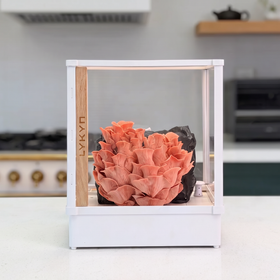



Shiitake is one of the more finicky species to grow at home. Not as forgiving as oyster. Harder than lion's mane. If conditions slip (humidity drops, temperature swings, light is insufficient) pins abort, caps crack, or your block stalls. We've run thousands of blocks through our chambers. The patterns repeat. Most "my shiitake failed" moments trace back to 3 or 4 root causes. Know them, and you can save the block. This guide walks through 12 of the most common shiitake problems, what's happening inside the block, and the concrete steps to fix it.

1. The block is turning green
What you see: Green fuzz spreading across the block. This is Trichoderma, a competitor mold that outcompetes shiitake mycelium.
Why: Trichoderma loves high moisture and low airflow. The block was likely contaminated at production, or spores settled during early fruiting when the surface is wet.
The fix: Stop misting immediately. Let the surface dry 2-3 hours. Scrape off all visible fuzz with a clean blade. Spray the area with 1-part white vinegar to 3-part water. Let air-dry. Resume misting only the sides and bottom for 5 days. If green returns, compost the block.
2. Pins are aborting before they open

What you see: Tiny white bumps form. Then they brown and shrivel before caps develop.
Why: Humidity crashed. Pins are 95% water. Drop from 85% RH to 60% and pin cell walls collapse in hours, sometimes overnight.
The fix: Mist 3-4 times daily. Keep the block surface visibly wet (not dripping, just wet). Move the block away from heating vents, direct sun, and fans. Use a humidifier or place a bowl of water nearby. Aim for 85-90% RH during fruiting.
3. Caps are cracking on top
What you see: Caps grow but deep cracks form across the surface before harvest.
Why: The cap skin dries faster than the interior hydrates. This happens with moderate humidity (70-75% RH) and high airflow.
The fix: Reduce airflow. Mist caps directly 2-3 times daily during expansion. Keep caps feeling firm and waxy, not papery. Increase ambient humidity if your room sits below 70% RH.
4. Stems are long and skinny, caps are tiny
What you see: Shiitake grow tall and thin, reaching for something.
Why: Low light. Mushrooms extend stems toward light; energy goes into height, not cap size.
The fix: Move the block to a spot with 12 hours daily of 150-200 lux indirect light. A north-facing winter window won't work. Add a grow bulb or warm-white LED (3000K) positioned 12-18 inches away. Results are visible in 3-4 days.
5. Nothing is happening after 10 days

What you see: Block stays white, no pins after 2-3 weeks of misting.
Why: Either the block missed a cold shock trigger, or room temperature is above 72°F, keeping mycelium in growth mode instead of fruiting mode.
The fix: Cold shock the block. Place it in a fridge or cold room (50-55°F) for 12-24 hours. Then remove, let it warm to room temperature, mist heavily, and set it in the fruiting area. Wait 7 days after shock before expecting pins. If your fruiting space is above 72°F, move the block to a cooler spot (basement, garage, north window).
6. Bruising and yellow patches on the block
What you see: Brown or yellow spots with a slimy feel, spreading across the surface.
Why: Bacterial blotch. Water pooled on the block too long. The tissue oxidizes and bacterial colonies bloom.
The fix: Remove the block from any enclosure immediately. Mist less frequently and more finely using a spray bottle. Don't let water pool in folds. If the spot is small (< 1 inch), it often halts with improved airflow. If it spreads past 2 inches, compost the block.
7. The block smells sour or like ammonia
What you see: A sharp, acrid smell. Not earthy. Sour vinegar or ammonia.
Why: Anaerobic bacteria colonized the block. This happens when it's too wet, too warm, and has no airflow. Anaerobic fermentation produces ammonia.
The fix: Stop misting. Remove the block from any humidity-controlled space. Let it sit in open air for 24 hours in a cool space (60-70°F). If the smell fades, resume light misting. If it persists, compost the block. It won't produce edible mushrooms.
8. Mushrooms only grow on one side of the block
What you see: All pins cluster on one face or the top. Back and sides stay bare.
Why: Uneven light or the block is positioned against a wall. Pins orient toward light. Uneven airflow follows the same pattern.
The fix: Rotate the block 90 degrees every 2-3 days while pins are setting. Ensure light comes from multiple angles, not one window. Move the block away from walls into open air.
9. Second flush is not coming

What you see: First flush was good. Weeks later, no new pins despite misting.
Why: The block dried out between flushes. After a heavy first flush, moisture drops to 40-50%. Mycelium goes dormant without re-hydration.
The fix: Soak the block in clean, cool water for 4-8 hours immediately after harvest. Submerge it in a bucket if possible. This rehydrates it to 80-85% moisture. Remove, let excess drain (5 minutes), place back in the fruiting area. Second pins appear in 7-10 days. The block feels noticeably lighter between flushes as it dries, so weight is your cue that re-hydration is needed.
10. Fuzzy white growth that isn't shiitake
What you see: Cottony, hairy white fuzz covering the block. No mushroom caps beneath.
Why: Usually aerial mycelium (harmless) from high humidity and low airflow, or competing molds (contamination).
The fix: For aerial mycelium: increase airflow with a small fan. Reduce misting by 25%. The growth halts in 5 days and pins emerge. For competing molds: scrape off the fuzz, spray with 1:3 vinegar solution, let dry. If it returns in 3 days, the block is compromised; compost it. Aerial mycelium smells normal (earthy). Competing molds smell sweet, fruity, or acrid.
11. First flush was huge, second is tiny
What you see: Second harvest has half the caps or only 5 pins instead of 20.
Why: This is normal. The first flush pulls stored energy from colonization. Flushes decline in size over 3-4 cycles before the block is spent.
The fix: There is no fix. This is how shiitake works. If you want consistent yields, purchase fresh blocks for each run. If you want to stretch a block's life, ensure each flush has a full 2-week rest and re-hydration between harvests.
12. When to give up on a block

Compost it if: Visible contamination returns after treatment. More than 4 weeks since cold shock with zero pins and humidity above 80% RH. A block has produced 2 full flushes. The block feels soft or is collapsing. The substrate has broken down.
Keep failed blocks as data. What conditions led to success or failure? Did you run two blocks side by side? Every failed block teaches you something about your growing space. That learning compounds.
When to reach out for help
Most shiitake failures fit one of these 12 categories. If your issue doesn't fit, or you've tried the fix and the block stalls after 7 days, email us with a photo and what you've tried.
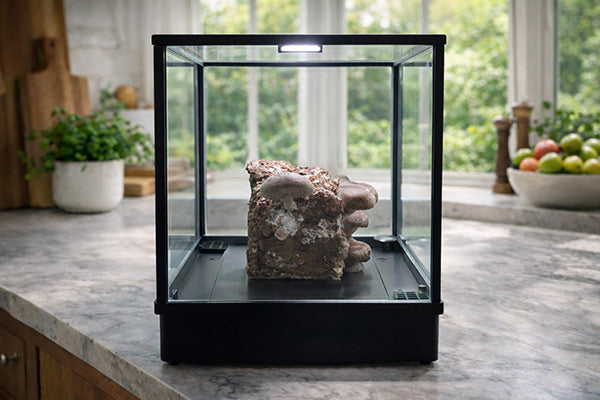
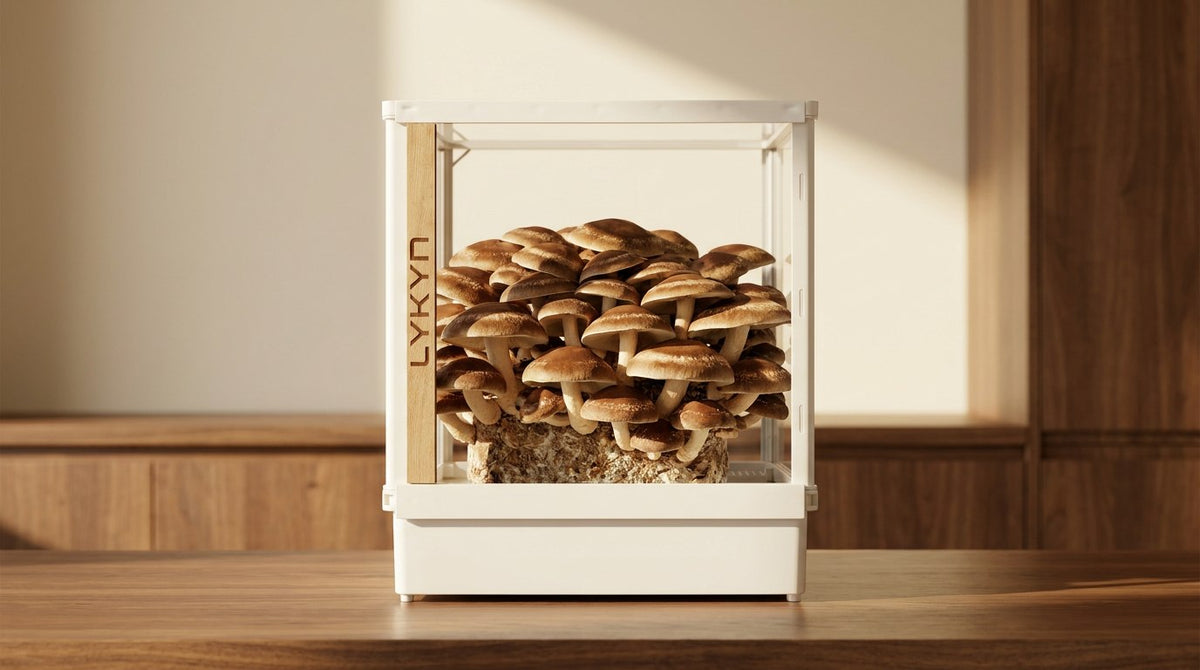
Worth noting: our shiitake kit comes with our Lykyn chamber, which automates humidity, airflow, and light. That handles problems #2 (pin abort), #3 (cap cracking), and #4 (stem elongation) automatically. The other 9 problems (contamination, temperature, drying, bacterial issues) are inherent to the substrate and home environment, not the hardware. Understanding them makes you a better grower, with or without the chamber.
If you're just starting out, read our beginner's guide to growing mushrooms at home. Ready to run your own blocks, our Smart Mushroom Grow Box holds humidity and airflow inside the ranges shiitake wants. Shiitake rewards patience and precision.
FAQ
How long does shiitake take to grow at home?
From unpacking your block to harvesting: 10-14 days if conditions are optimal, 3-4 weeks if you need to dial in humidity or temperature. A block can produce 3-4 flushes over 8-12 weeks if re-hydrated between cycles.
What is the ideal humidity for shiitake?
85-90% relative humidity during fruiting. Below 80% and pins abort. Above 95% and you invite mold or bacterial blotch. A digital hygrometer ($10) shows if you're in range. If consistently below 80%, mist more often or place a bowl of water near the block.
Do shiitake need light to grow?
Yes. Minimum 12 hours daily of 150-200 lux (indirect, not direct sun). Insufficient light causes stems to elongate and caps to stay small. A north-facing window or a standard LED bulb 12-18 inches away works. Our chamber includes integrated light tuned for fruiting.
Can you save a contaminated shiitake block?
If it's Trichoderma (green fuzz): sometimes yes. Scrape off the mold, spray with vinegar, isolate for 5 days. If green returns, compost it. If bacterial blotch or ammonia smell: no. The contamination is in the substrate, not the surface. Compost it and clean the chamber before reuse.
Why do my shiitake caps crack?
Low humidity combined with high airflow dries the cap skin before the interior finishes hydrating. The surface contracts and splits. Increase misting to 3-4 times daily during cap expansion, reduce direct airflow, and mist caps directly (gently).





Share:
Lions Mane Mushroom Growing Kit: Easy Home Harvest
Cinnamon Cap Mushroom: Complete Home Growing Guide