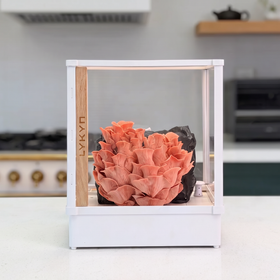



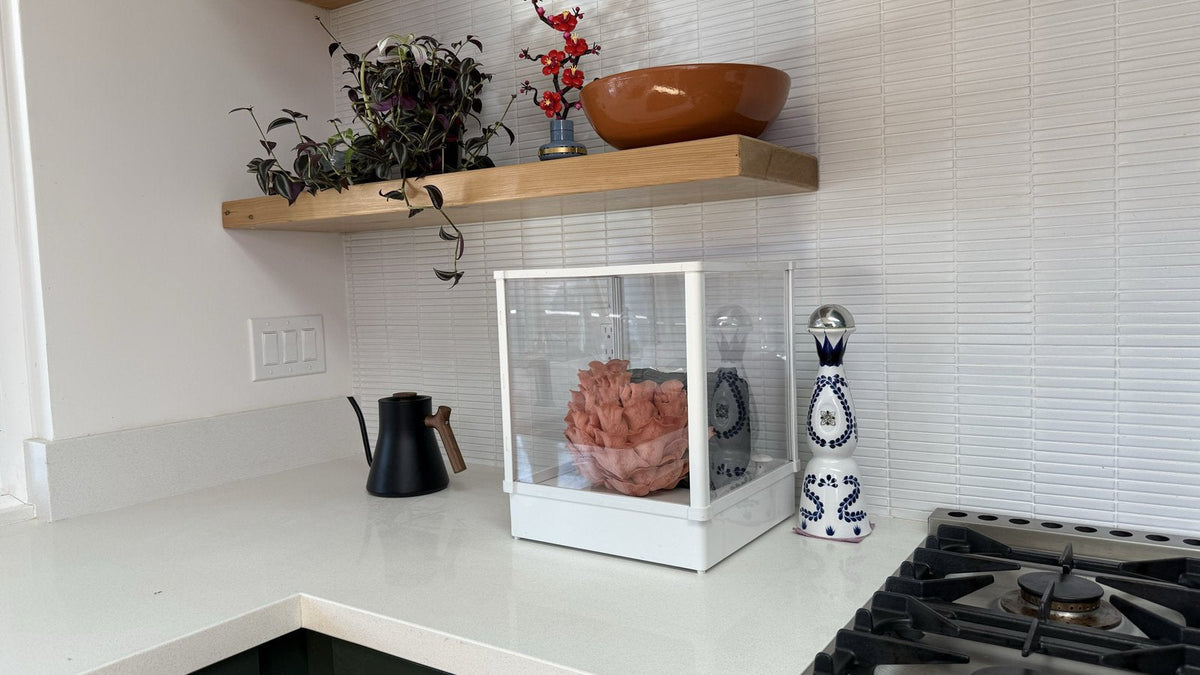
Das beste Pilzzuchtset für Anfänger ist eines, das Feuchtigkeit, Luftstrom und Temperatur für Sie regelt. Intelligente Kammern wie das Lykyn Mushroom Grow Kit automatisieren den gesamten Zyklus. Wählen Sie eine Sorte in der App aus, füllen Sie den Wassertank nach und ernten Sie in 7-14 Tagen frische Austernpilze, Shiitake oder Hericium Erinaceus. Traditionelle Block-Kits kosten weniger, erfordern aber zweimal tägliches Besprühen und bieten weniger Schutz vor Kontamination.
Frische Pilze zu Hause anzubauen war noch nie einfacher und lohnender. Egal, ob Sie Ihre eigenen Austernpilze für den Pasta-Abend, Shiitake für Ihr Pfannengericht oder Hericium Erinaceus für einen pflanzlichen "Crab Cake" möchten, das richtige Zuchtset verwandelt Ihre Küchenzeile in eine produktive Mini-Farm.
Dieser Leitfaden erklärt, wie Pilzzuchtsets funktionieren, welche Sorten für Anfänger geeignet sind und welche praktischen Einrichtungsmöglichkeiten einen erfolgreichen Ertrag von einem verschimmelten Block unterscheiden.
Warum ein Pilzzuchtset für den Heimanbau wählen?

Pilzzuchtsets sind der sauberste Einstieg in die Pilzzucht. Im Gegensatz zum Sammeln von wilden Pfifferlingen, das eine fachkundige Identifizierung erfordert, um giftige Doppelgänger zu vermeiden, bietet Ihnen ein Zuchtset eine sichere, kontrollierte Umgebung mit bekannten essbaren Arten.
Die meisten Kits werden mit vorinkubierten Substratblöcken geliefert, die bereits vollständig kolonisiert und bereit zum Fruchten sind. Sie überspringen das Rätselraten und die technischen Hürden, die die meisten Anfänger abschrecken. Bei richtiger Pflege produziert ein einziges Kit über mehrere Wochen 2-4 Ernten. Ein großer Ertrag bei geringer Investition.
Top-Pilzsorten für angehende Züchter

Nicht jede Gourmet-Art ist anfängerfreundlich. Diese drei sollten Sie zuerst ausprobieren. Tippen Sie auf jede Registerkarte, um sie zu vergleichen.
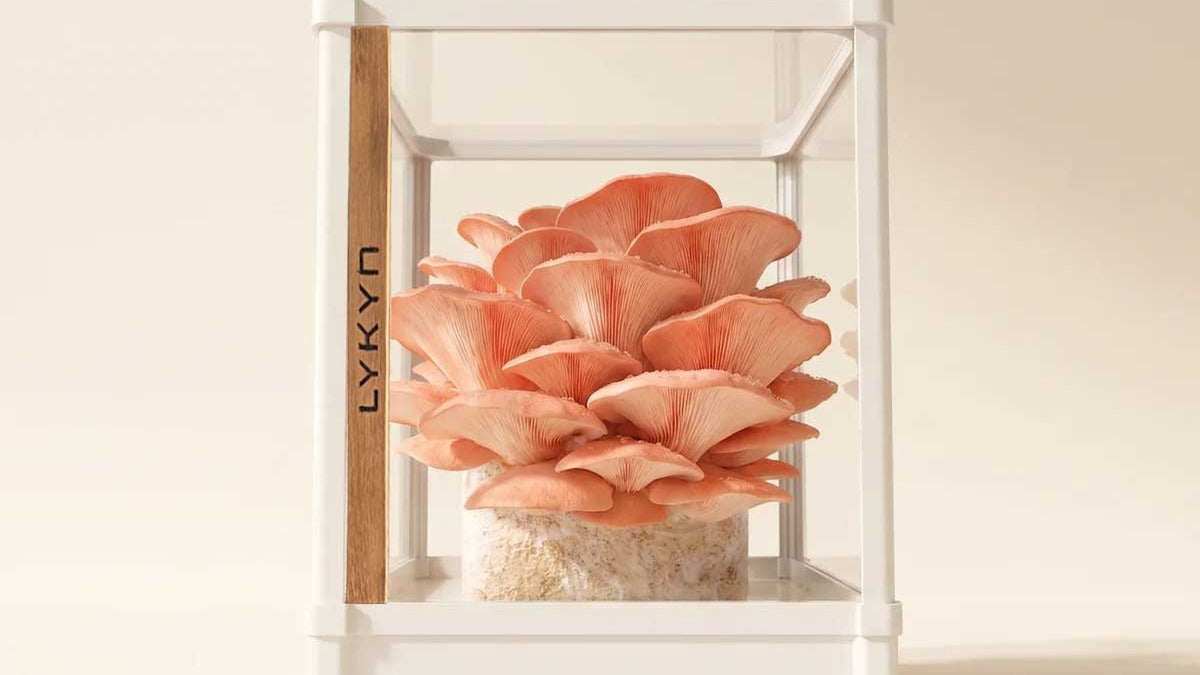
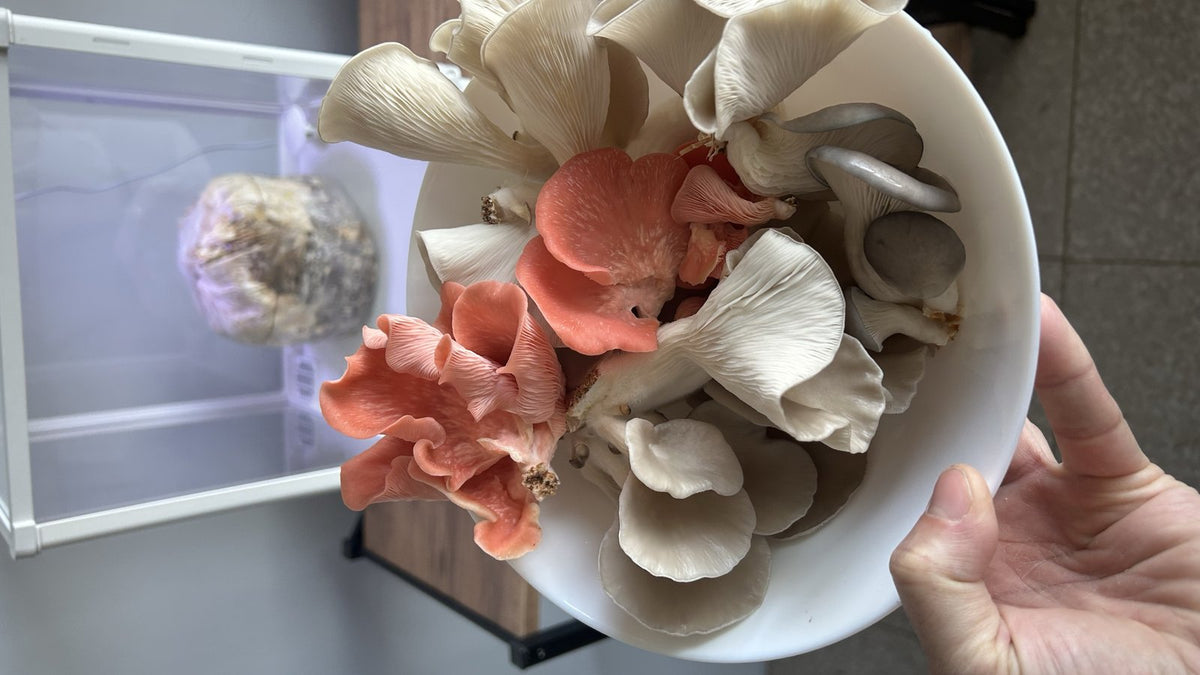
Austernpilze sind der perfekte Starter. Sie wachsen schnell, vertragen Umweltschwankungen, die empfindliche Arten töten würden, und liefern beeindruckende Erträge. Rosa, blaue und Perlen-Austernpilze funktionieren alle. Im Gegensatz zu Pfifferlingen, die spezielle Waldbedingungen erfordern, gedeihen Austernpilze in jeder sauberen Heimumgebung.
Tempo: 5-10 Tage bis zur Ernte · Schwierigkeit: Leicht · Geschmack: Mild, würzig, fleischige Textur
Shiitake sind aromatisch und lohnend – der reichste Geschmack der drei. Sie bevorzugen etwas kühlere Temperaturen und einen Feuchtigkeitsabfall zwischen den Wassergaben. Dauert etwas länger als Austernpilze, aber der Umami-Geschmack ist das Warten wert. Passt hervorragend zu Gerichten mit viel Soja.
Tempo: 14-21 Tage bis zur Ernte · Schwierigkeit: Mittel · Geschmack: Tiefes Umami, fleischiger Biss
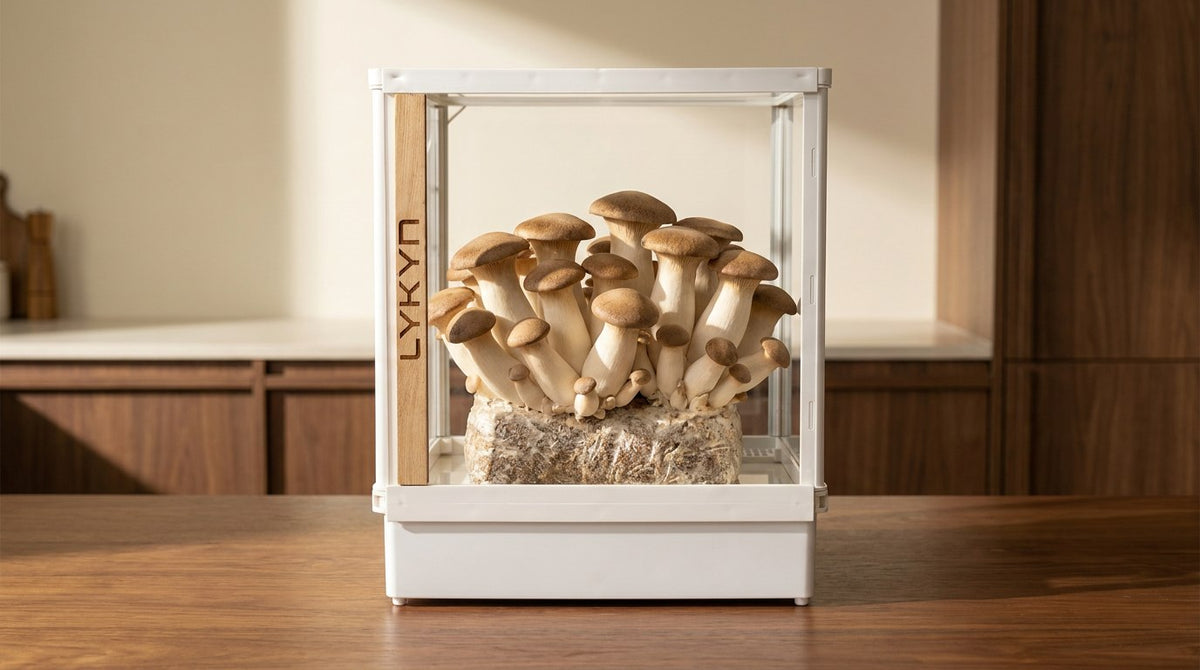
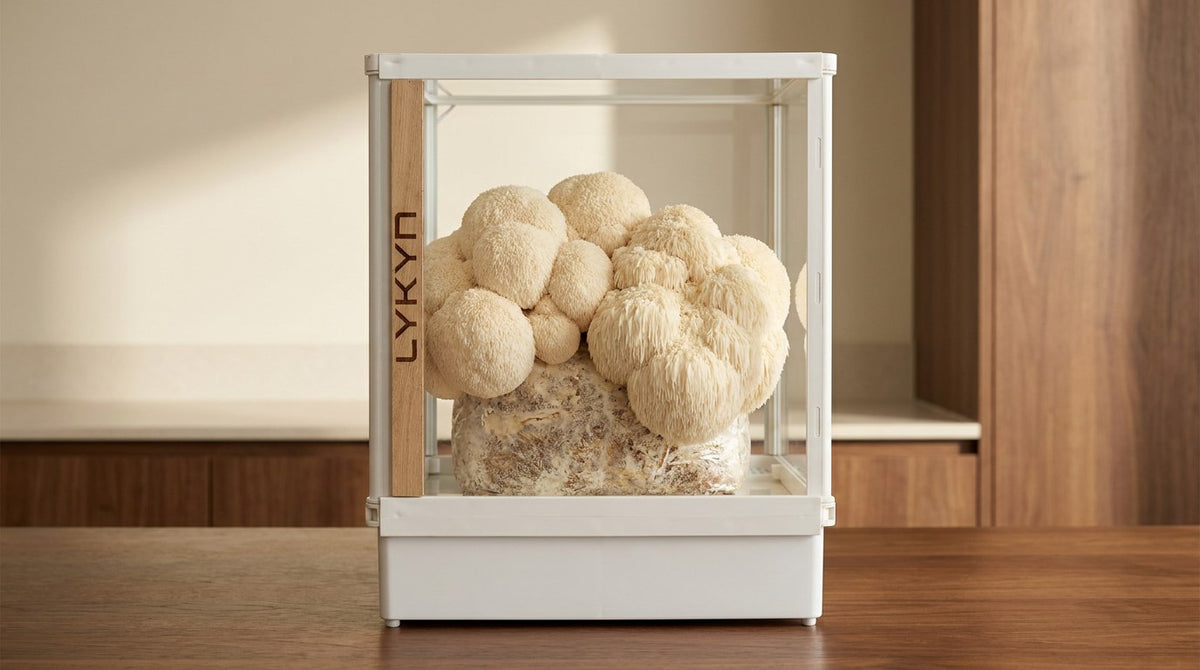
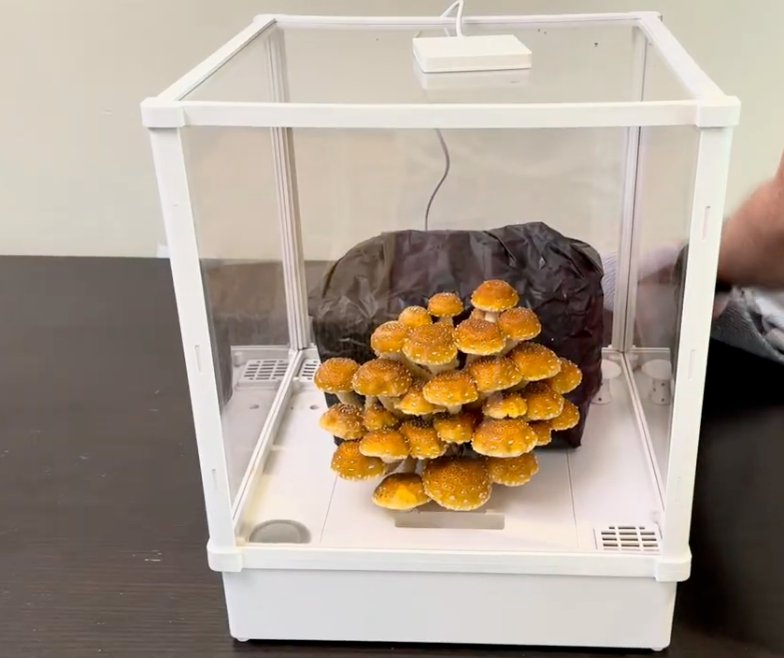
Löwenmähne ist die Gourmet-Wahl. Kaskadierende weiße Stacheln machen ihn zum optisch beeindruckendsten Pilz, den Sie zu Hause anbauen können. Die Textur ist beim Anbraten bemerkenswert ähnlich wie die von Krabben oder Hummer. Benötigt konstante Luftfeuchtigkeit. Hier zahlt sich eine Smart Chamber aus.
Tempo: 14-21 Tage bis zur Ernte · Schwierigkeit: Mittel · Geschmack: Meeresfrüchte-ähnlich, delikat
Wesentliche Ausrüstung für den Erfolg beim Pilzanbau
Intelligente Anbausysteme vs. traditionelle Methoden
Die häusliche Pilzzucht hat sich dramatisch entwickelt. Vor einem Jahrzehnt war jeder Heimanbauer ein Selbstbauer von versiegelten Behältern. Heute können Sie eine Arbeitsplattenkammer anschließen und nie wieder eine Sprühflasche anfassen.
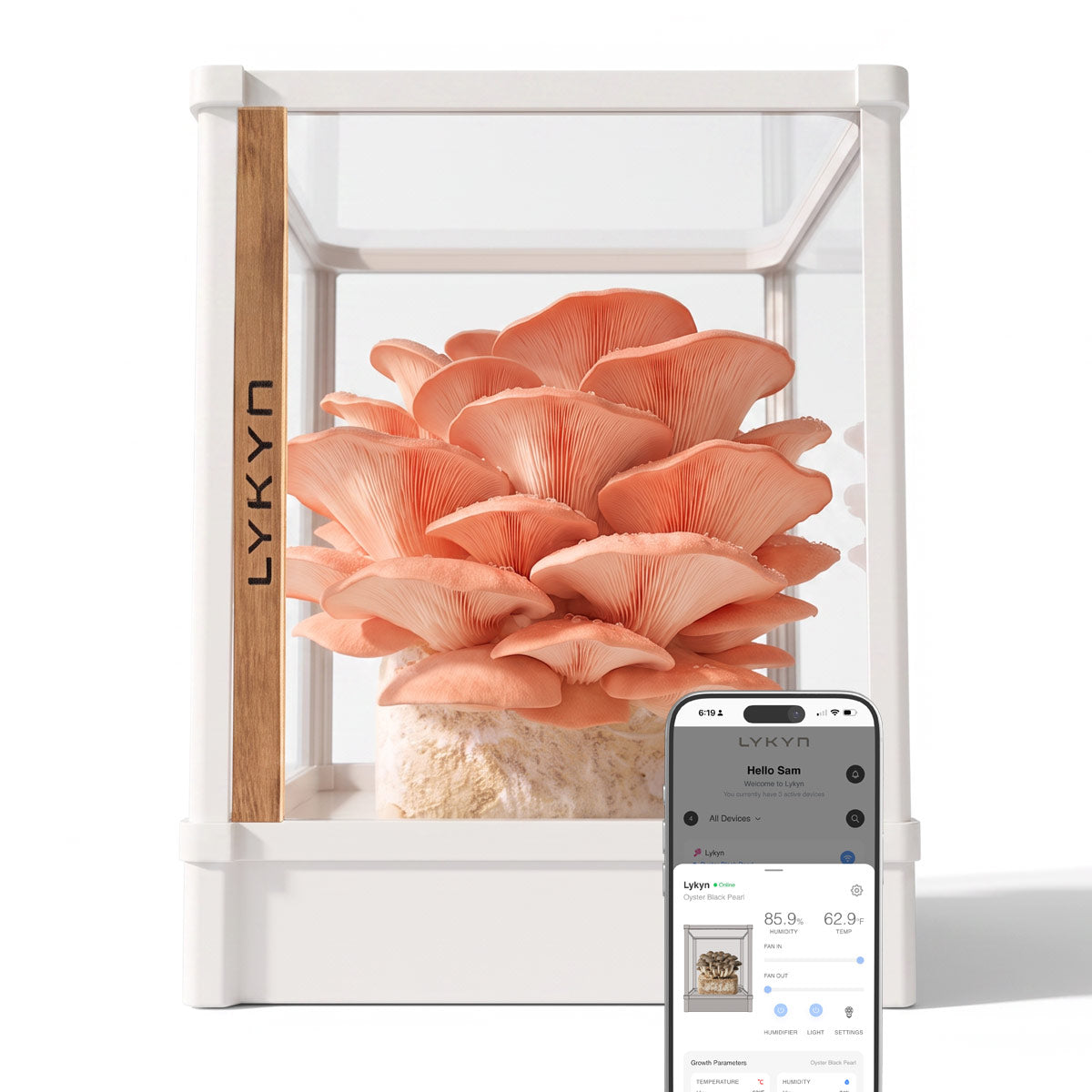
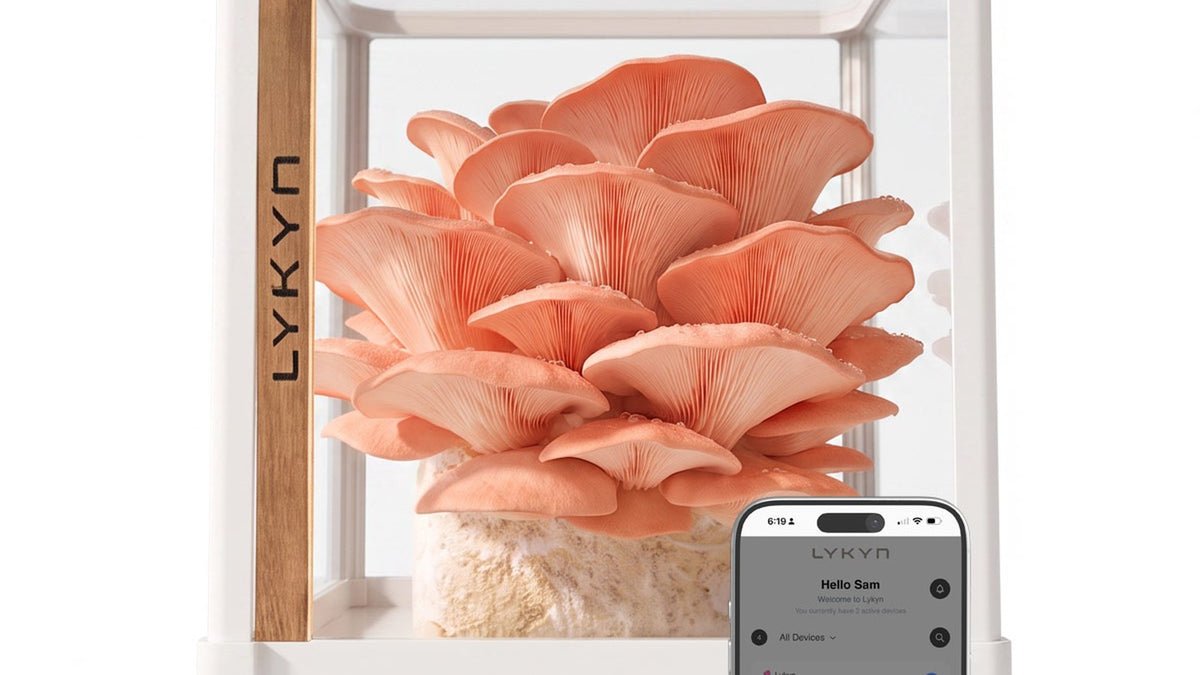
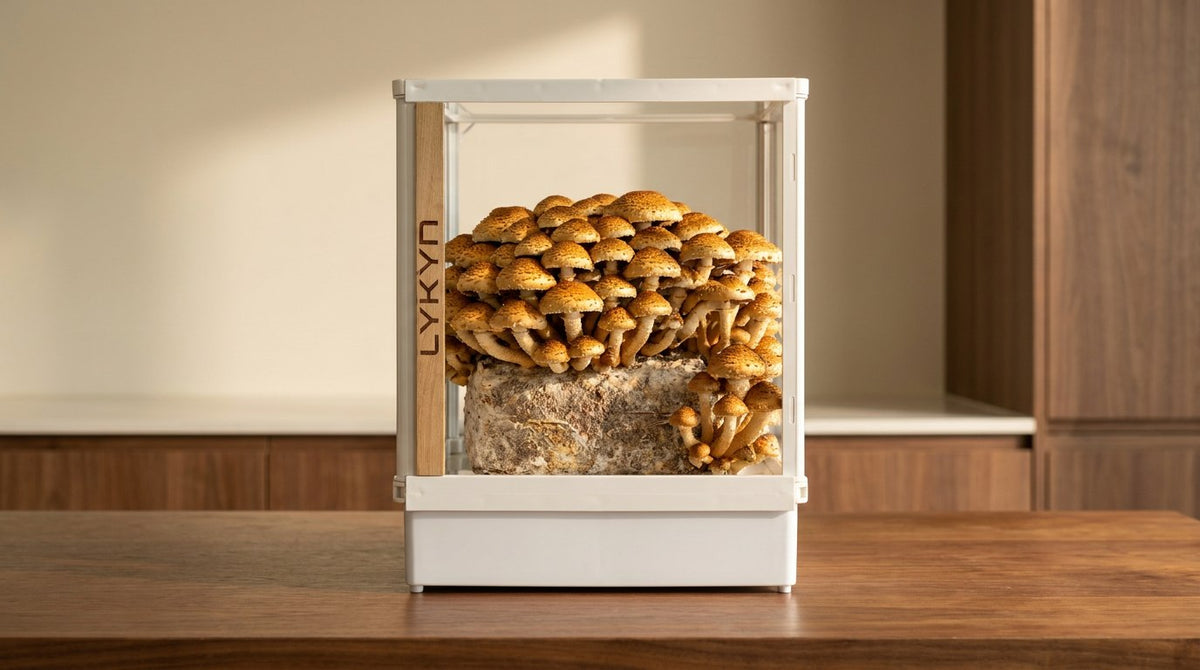
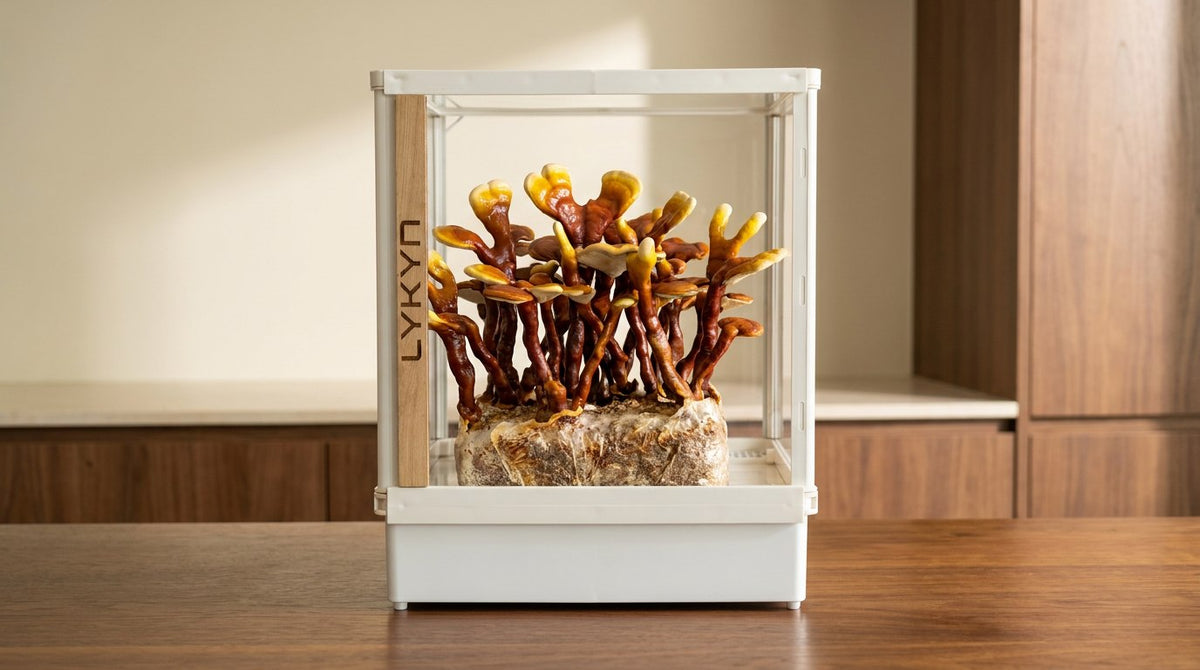
Das Lykyn Mushroom Grow Kit repräsentiert die aktuelle Generation des Heimanbaus, mit:
- Automatischer Feuchtigkeitsregelung über Ultraschallzerstäuber
- Ventilatoren mit variabler Geschwindigkeit für den Frischluftaustausch
- Temperatur- und Feuchtigkeitssensoren, die an die App melden
- Mobiler App mit Art-Voreinstellungen für die Konfiguration mit einem Fingertipp
Grundausstattung für DIY-Setups
Wenn Sie einen praktischen Ansatz bevorzugen (oder einen kostengünstigeren Einstieg wünschen), können Sie die Grundlagen selbst zusammenstellen:
- Sprühflasche zum Besprühen (mindestens zweimal täglich)
- Plastikbehälter oder feuchtigkeitsdichte Zelttasche
- Thermometer und Hygrometer (das am meisten unterschätzte DIY-Upgrade)
- Saubere, raumtemperierte Wasserquelle
- Eine Möglichkeit, frische Luft durch die Kammer zu leiten, ohne sie auszutrocknen
Sparen Sie nicht am Hygrometer. Die meisten fehlgeschlagenen ersten Anbauversuche scheitern daran, dass die Luftfeuchtigkeit viel niedriger war, als der Züchter annahm. Ein 10-Euro-Hygrometer beseitigt das Rätselraten.
Einrichtung Ihrer Pilzanbau-Umgebung
Das perfekte Pilzhaus schaffen
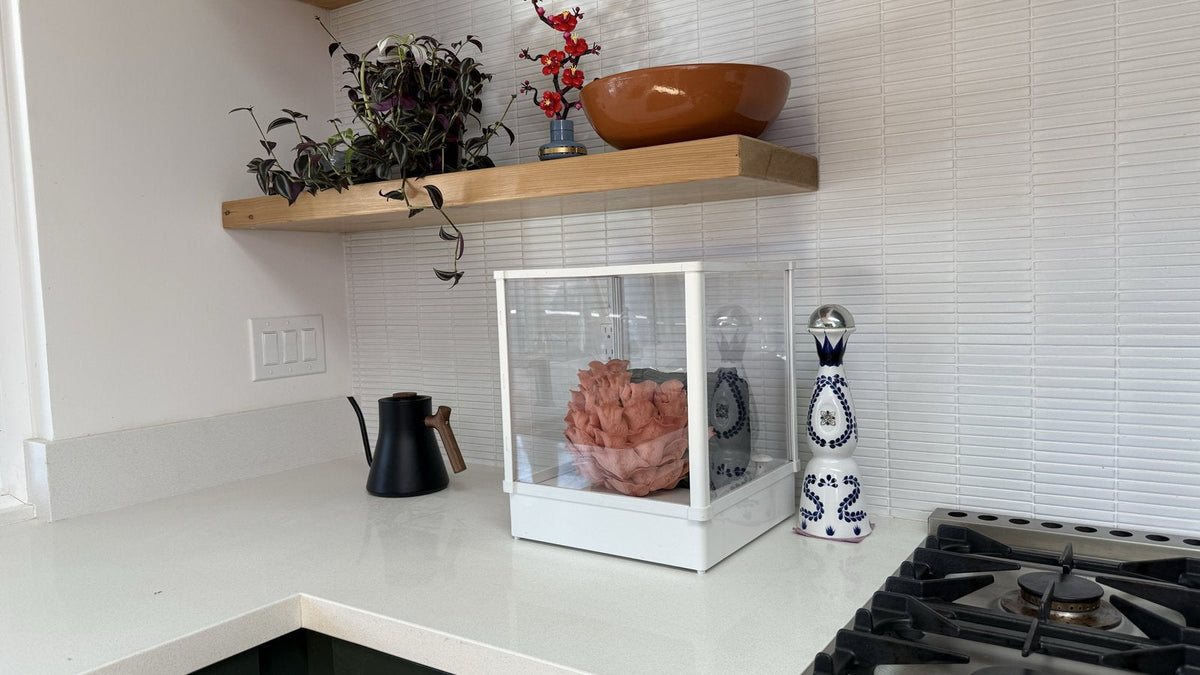
Ihr Anbauraum muss nicht aufwendig sein. Ein freies Zimmer, eine Kellerecke oder eine Küchenzeile funktionieren alle. Konzentrieren Sie sich auf drei Variablen:
Temperaturkontrolle: Die meisten Gourmetpilze bevorzugen 15-24°C (60-75°F). Im Gegensatz zu wilden Pfifferlingen, die von saisonalen Waldtemperaturen abhängen, gedeihen kultivierte Sorten unter gleichmäßigen Innenbedingungen.
Feuchtigkeitsmanagement: Pilze benötigen während der Fruchtbildung eine relative Luftfeuchtigkeit von 80-95%. Intelligente Kammern halten diesen Bereich automatisch ein. DIY-Setups benötigen ein Feuchtigkeitszelt, ein Hygrometer und einen Sprühplan.
Luftzirkulation: Frischluftaustausch verhindert CO2-Ansammlung und Kontamination. Schlechte Belüftung führt zu dünnen, schlaffen Stielen und winzigen Hüten. Eine ausreichende Belüftung bedeutet eine sanfte Luftzirkulation. Keinen Zug.
Checkliste zur Raumvorbereitung
Bereiten Sie Ihren Raum vor dem Start vor:
- Reinigen und desinfizieren Sie alle Oberflächen in der Nähe mit Isopropylalkohol oder Wasserstoffperoxid
- Vergewissern Sie sich, dass eine ausreichende Belüftung vorhanden ist. Eine Tür, die sich öffnen lässt, ist in Ordnung, ein Ventilator ist besser
- Installieren Sie ein Thermometer und Hygrometer im Anbaubereich
- Organisieren Sie Ihre Ausrüstung so, dass die tägliche Pflege weniger als 2 Minuten dauert
- Stellen Sie einen Kalender-Alarm für das nächste Besprühen oder Nachfüllen des Wassers
Befeuern Sie Ihre Pilzreise
Intelligente Pilzzuchtkammer
Plug-and-Play-Smart-Kammer mit Feuchtigkeits-, Licht- und Luftstromregelung für jede Art. Anfänger ernten ihre erste Welle in Tagen, nicht Monaten.
In den Warenkorb $299Schritt-für-Schritt-Anleitung zur Pilzzucht
Ersteinrichtung und Substratvorbereitung
Die meisten Zuchtsets werden mit vorbereiteten Substratblöcken geliefert, aber das Verständnis des Prozesses hilft:
- Packen Sie Ihr Set aus und überprüfen Sie den Block auf gesundes weißes Myzel
- Weichen Sie den Block ein, falls die Anweisungen dies vorschreiben (variiert je nach Art und Kit-Typ)
- Platzieren Sie ihn mit ausreichend Abstand in Ihrer Zuchtkammer
- Beginnen Sie mit dem Fruchten, indem Sie die Luftfeuchtigkeit erhöhen und eine Fruchtfläche freilegen
Tägliche Pflege und Wartung
Eine erfolgreiche Kultivierung erfordert konsequente, geringfügige Aufmerksamkeit:
- Morgenkontrolle: Halten Sie die Oberfläche feucht, ohne sie zu übersättigen
- Bedingungen überwachen: Werfen Sie einen Blick auf die Temperatur- und Feuchtigkeitswerte
- Luftzirkulation: Stellen Sie sicher, dass ein Frischluftaustausch stattfindet (oder erledigen Sie dies manuell)
- Beobachtung: Achten Sie auf Anzeichen von Kontamination. Grüne oder rosa Flecken sind ein schlechtes Zeichen
Grüner Schimmel, rosa Bakterienflecken oder schleimige nasse Stellen auf dem Block sind Kontaminationen. Entfernen Sie den Block sofort ins Freie. Schütteln Sie ihn nicht in Innenräumen. Kontaminationen verbreiten sich durch luftgetragene Sporen und infizieren alles in der Nähe.
Ernte Ihrer Pilze
Der Erntezeitpunkt beeinflusst Geschmack, Textur und Ertrag:
- Austernpilze: Ernten, wenn die Hüte voll entwickelt, aber noch leicht konvex sind. Bevor sie flach werden und Sporen freisetzen
- Shiitake: Ernten, wenn die Hüte zu 80% geöffnet sind, während das Schleiergewebe darunter noch sichtbar ist
- Löwenmähne: Ernten, wenn die Stacheln gut entwickelt, aber noch weiß sind. Braun bedeutet, dass Sie zu lange gewartet haben
Häufig gestellte Fragen
Wie bereite ich ein Pilzhaus vor?
Schaffen Sie eine saubere, kontrollierte Umgebung mit einer Temperatur von 15-24°C, einer Luftfeuchtigkeit von 80-95% und einer sanften Luftzirkulation. Desinfizieren Sie den Raum, installieren Sie eine Belüftung und richten Sie eine Überwachung ein. Wählen Sie einen Ort ohne direkte Sonneneinstrahlung mit konstanten Temperaturen.
Brauchen Pilze Luft zum Wachsen?
Ja. Pilze benötigen Frischluftaustausch. Hohe Luftfeuchtigkeit ist unerlässlich, aber stehende Luft führt zu CO2-Ansammlung, was zu dünnen Stielen, winzigen Hüten und Kontamination führt. Eine gute Belüftung entfernt überschüssiges CO2 und versorgt die Pilze mit dem Sauerstoff, den sie für ein gesundes Wachstum benötigen.
Wie bereite ich einen Raum für die Pilzzucht vor?
Gründlich reinigen, ausreichende Belüftung gewährleisten, eine konstante Temperatur von 15-24 °C aufrechterhalten und Ihre Ausrüstung organisieren. Feuchtigkeitsregulierung installieren, Überwachungstools einrichten und einen Wartungsplan erstellen. Der Raum sollte vor direkter Sonneneinstrahlung geschützt sein und eine gute Luftzirkulation haben.
Was ist der Unterschied zwischen wilden und kultivierten Pilzen?
Wilde Pilze wie Pfifferlinge wachsen in spezifischen Waldumgebungen und erfordern eine fachmännische Identifizierung, um giftige Doppelgänger zu vermeiden. Kultivierte Pilze werden unter kontrollierten Bedingungen aus sterilem Myzel gezüchtet, was sie für Hobbyzüchter viel sicherer und vorhersehbarer macht.
Wie lange dauert es, Pilze aus einem Kit zu züchten?
Die meisten Kits produzieren innerhalb von 7-14 Tagen sichtbare Nadeln. Der Zeitrahmen variiert je nach Art. Austernpilze sind am schnellsten (5-10 Tage), während Shiitake 2-3 Wochen dauern können. Aus einem einzigen Kit können über 2-3 Monate mehrere Spülungen erfolgen.
Bereit für Ihre Pilzanbau-Reise?
Das beste Pilzzuchtset für Anfänger ist eines, das das Rätselraten beseitigt. Intelligente Systeme wie die Lykyn-Kammer automatisieren jede kritische Variable. Feuchtigkeit, Luftstrom, Beleuchtung. So können Sie sich auf den unterhaltsamen Teil konzentrieren: Pilze beim Wachsen beobachten und mit ihnen kochen.
Beginnen Sie mit einer anfängerfreundlichen Art wie dem Austernpilz, meistern Sie die Grundlagen und erweitern Sie dann Ihre Anbaufähigkeiten im Laufe der Zeit. Ihre erste frische, selbstangebaute Ernte ist nur 7-14 Tage entfernt.
Wählen Sie zuerst Ihre Art, dann das Kit, das zu Ihrer Geduld für die tägliche Pflege passt. Austernpilze + automatisierte Kammer ist der Anbau mit der höchsten Erfolgsquote für die meisten Haushalte.
Befeuern Sie Ihre Pilzreise

Smart Chamber. Knochenweiß Einzeln
- 2,8 l Tank, 90 % automatische Luftfeuchtigkeit
- App-gesteuert, Plug-and-Play
- 6 lb Blockdecke, auf Lager

Smart Chamber. Obsidianschwarz Einzeln
- Gleiche Hardware wie Knochenweiß
- Mattschwarze Premium-Oberfläche
- Passt zu jeder Kücheneinrichtung

Austernpilz-Zuchtset
- Auf Lager
- Pin in 3-5 Tagen
- Ersetzt 1 Kammerzyklus
Aktie:
Wie lange hält sich Pilz-Flüssigkultur: Vollständiger Leitfaden zu Lagerung und Lebensfähigkeit
Pilze im Beutel anbauen: Der komplette Anfängerleitfaden für den Heimanbau