



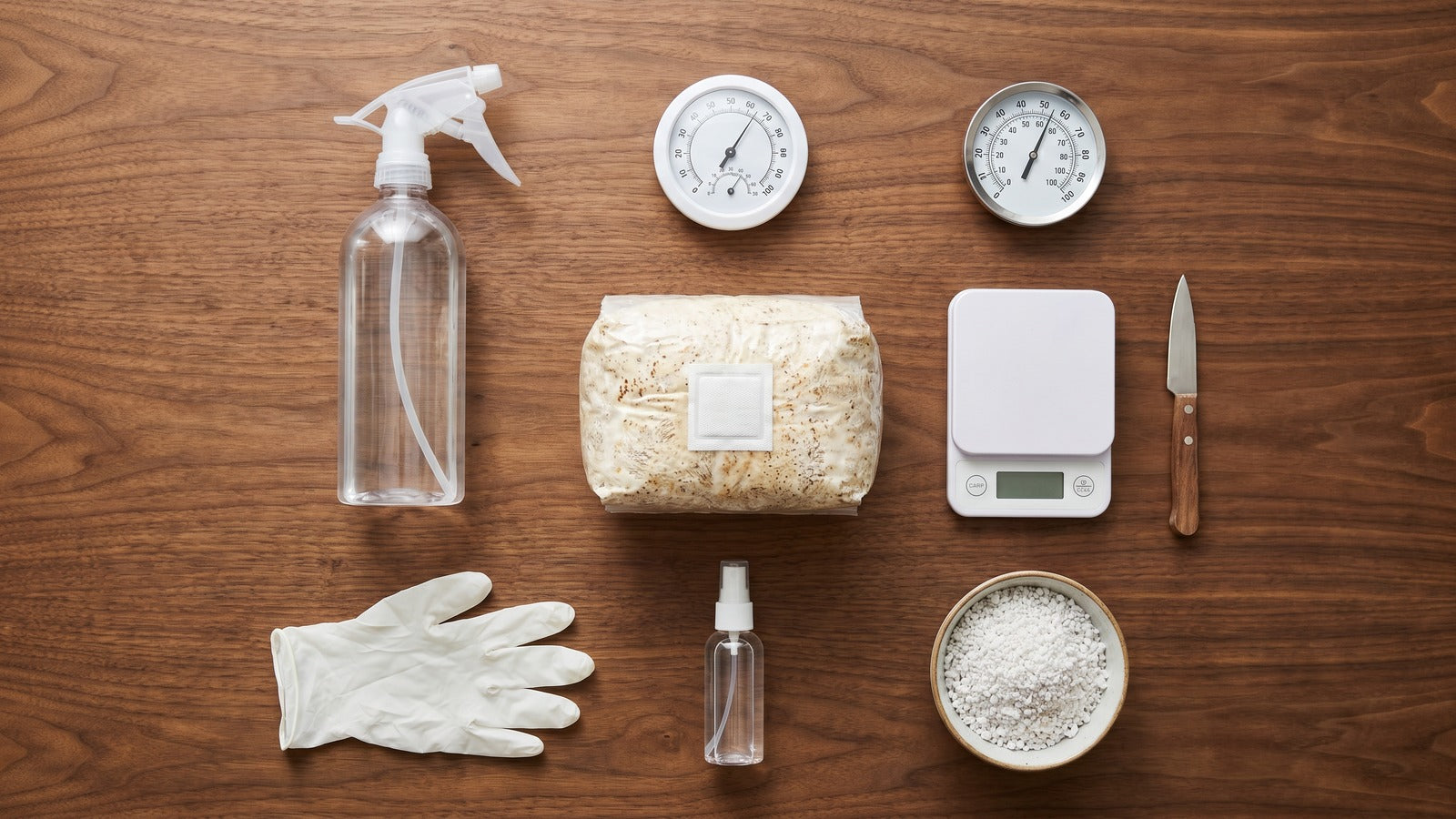
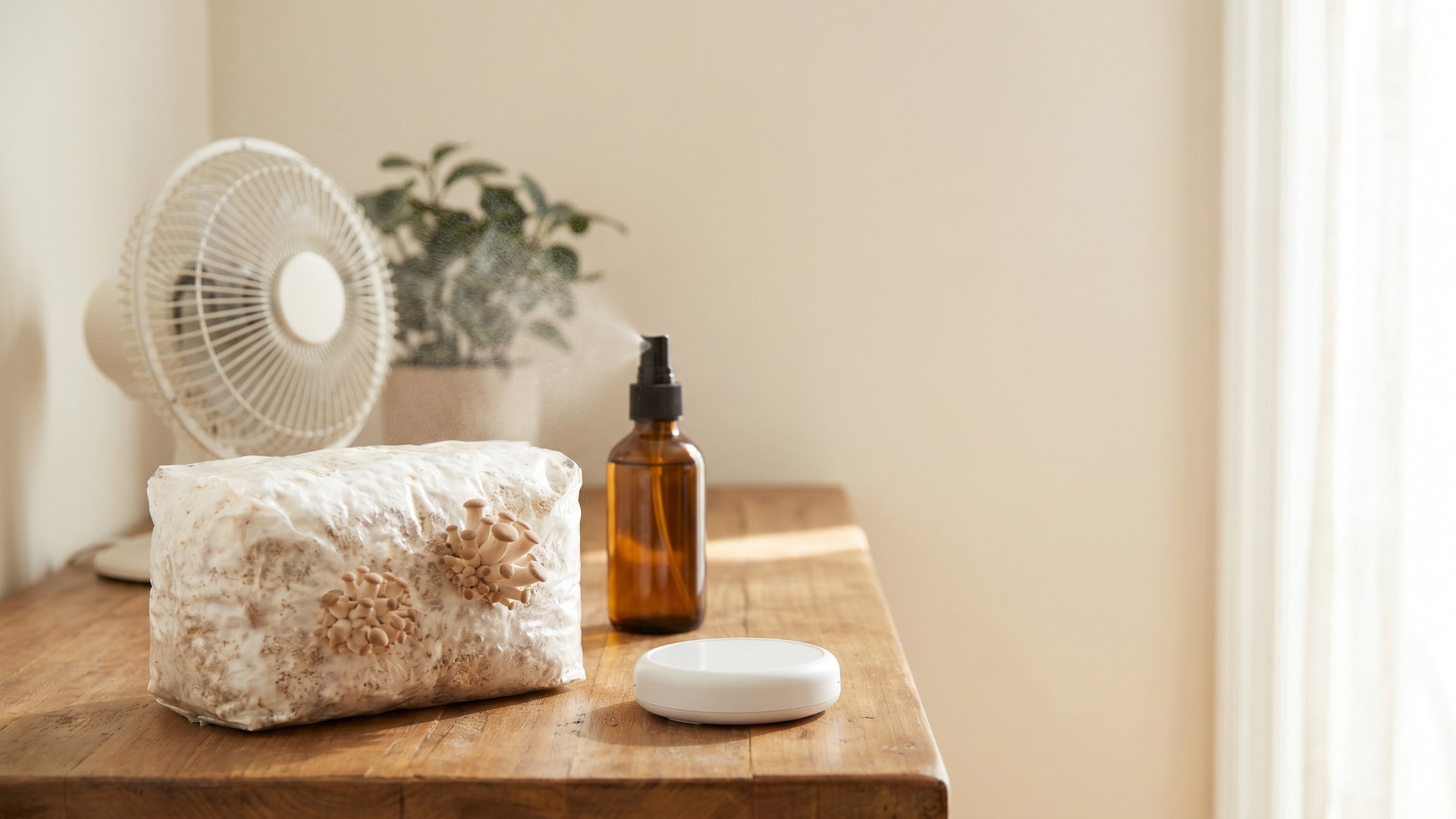
The mushroom growing world used to make you choose: buy a small spray-and-grow bag (cheap, but a tiny harvest and daily misting). Or build a DIY monotub (a lot of work and a higher contamination risk). The grow box plus fruiting block approach changes that math. You get the ease of a pre-colonized block. There is no sterile inoculation, agar plates, or grain spawn. You also get the climate control of a real chamber. There is no daily misting, humidity guesswork, or antler-shaped lion's mane.
This guide explains how a grow box and a fruiting block work together. It shows which combinations give the best yields. It also provides step-by-step setup instructions. You can go from unboxing to harvest in 14 to 21 days.

Smart Chamber. Bone White Single
- 2.8L tank, 90% humidity automatic
- App-controlled, plug-and-play
- 6 lb block ceiling, in stock

Smart Chamber. Obsidian Black Single
- Same hardware as Bone White
- Matte black premium finish
- Pairs with any kitchen palette

Why Grow Box Plus Fruiting Block Is the Best Home Setup
Three reasons this combination outperforms every alternative for home growers:
1. The Hard Part Is Already Done
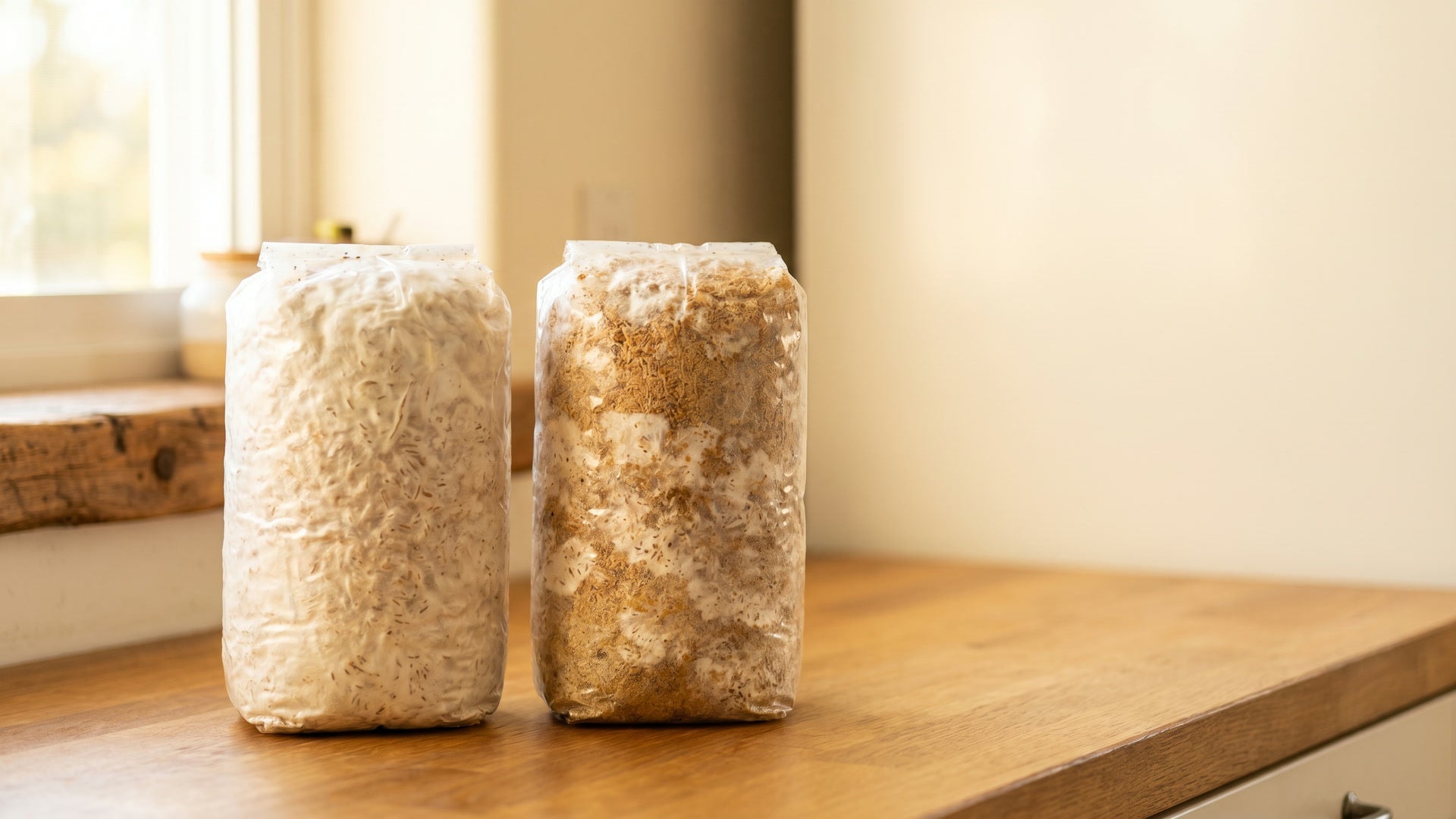
Mushroom cultivation has two phases: colonization (mycelium grows into the substrate) and fruiting (mushrooms appear). Colonization is the contamination-prone phase that requires sterile equipment, lab-grade airflow, and weeks of waiting. A pre-colonized fruiting block ships with colonization already complete. You only handle the fruiting phase, which is forgiving and visually rewarding.
2. The Climate Stays Stable
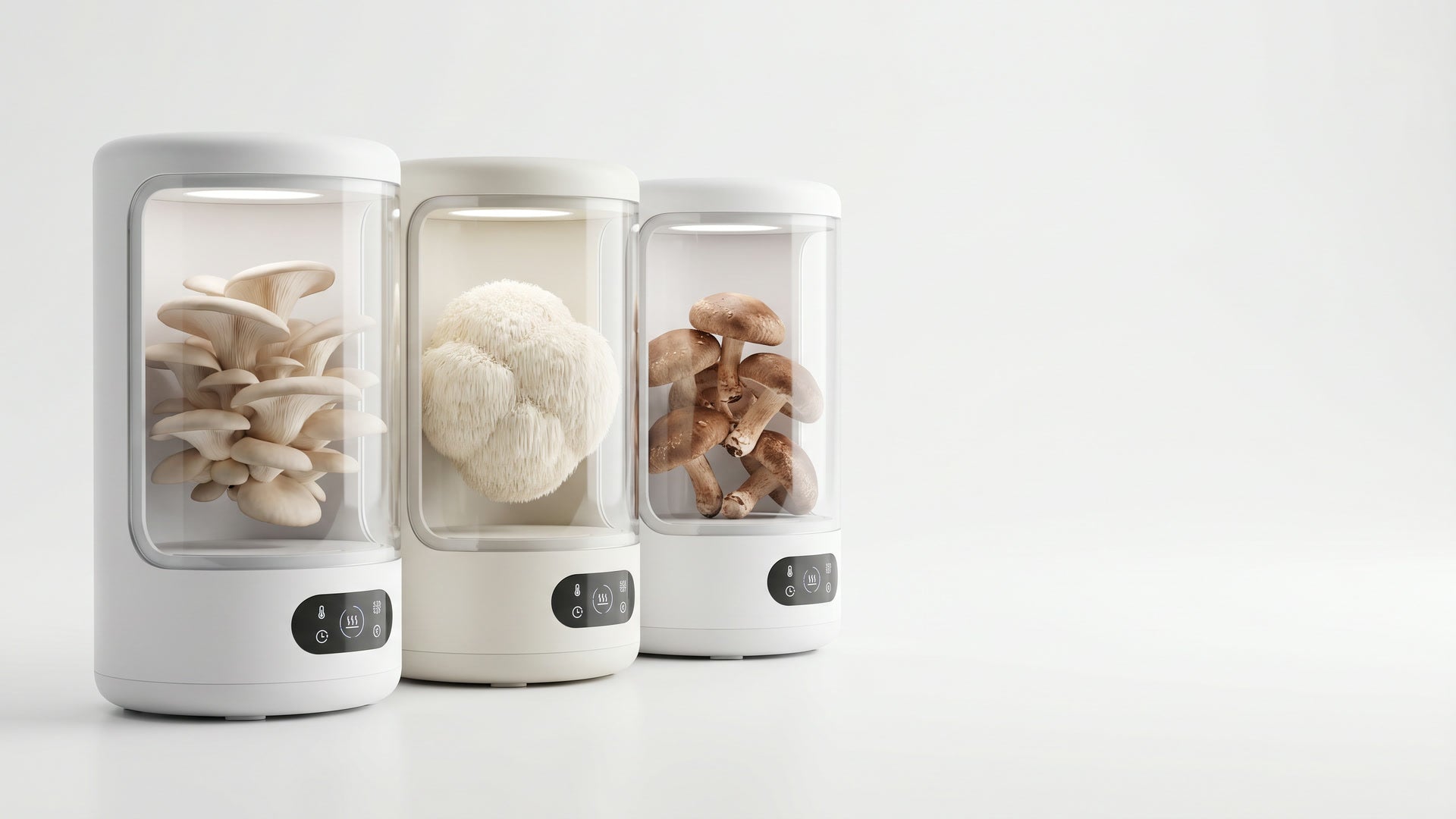
Fruiting requires 85 to 95 percent humidity, fresh air exchange every 1 to 2 hours, and indirect light. Indoor air in most homes is 30 to 50 percent humidity, fully ventilated by HVAC, and either too bright or too dark. A grow box solves all three variables in one piece of hardware. The Lykyn Smart Mushroom Grow Box holds humidity, runs an automated fresh air cycle, and includes a 12-hour LED lighting program.
3. The Hardware Pays Off Across Many Blocks
A spray-and-grow kit is single-use. After 2 to 3 flushes the substrate is exhausted and the kit goes in the compost. A grow box is reusable for years; you swap in a new fruiting block every 4 to 6 weeks. Block prices in 2026 range from $25 to $45, which makes the per-pound cost of fresh mushrooms drop below the supermarket price after the third block.
Which Fruiting Blocks Work in a Lykyn Grow Box?

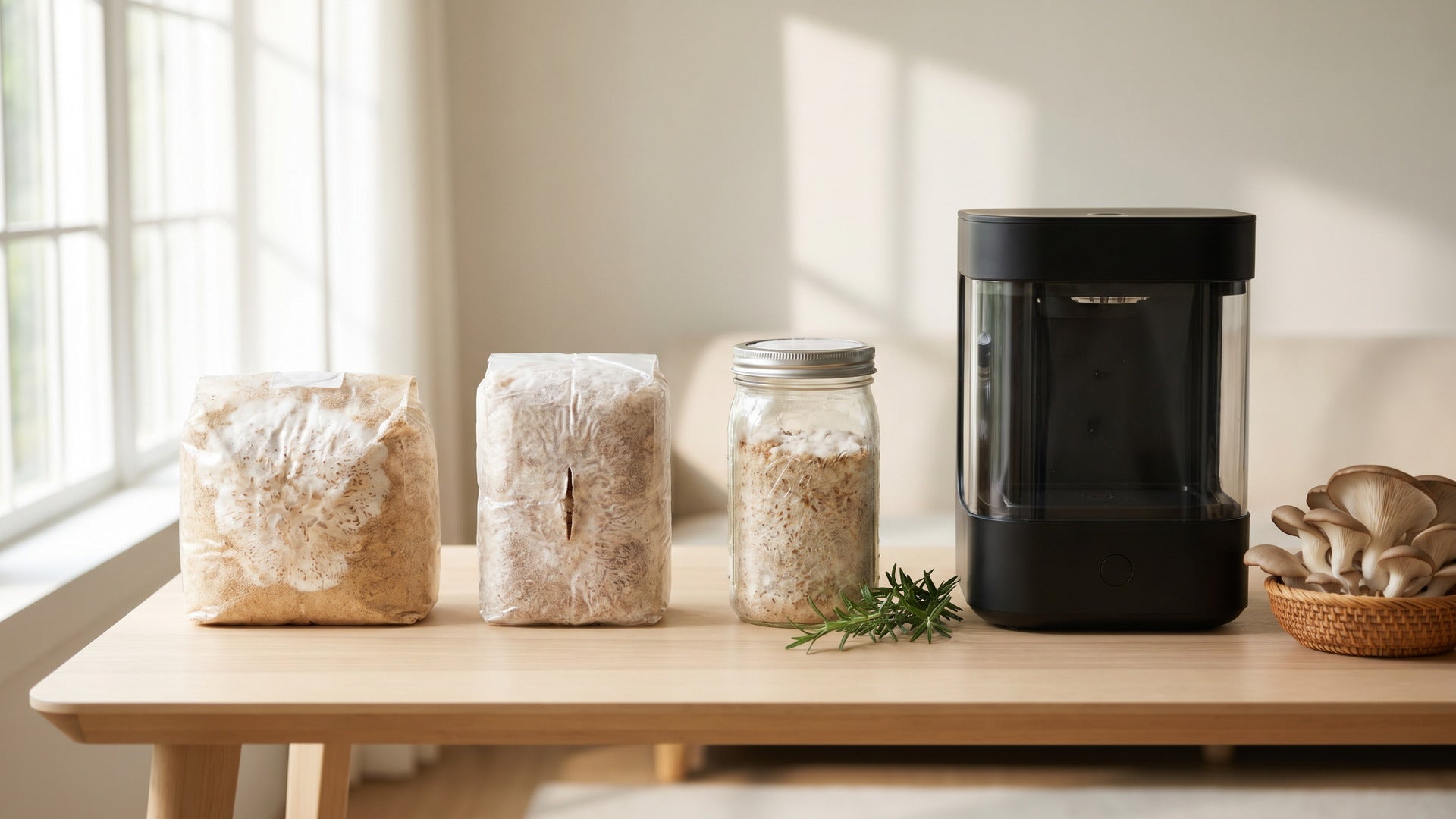
The Lykyn chamber is sized to fit standard 5-pound fruiting blocks from major suppliers. You are not locked into a single brand. Compatible blocks include:
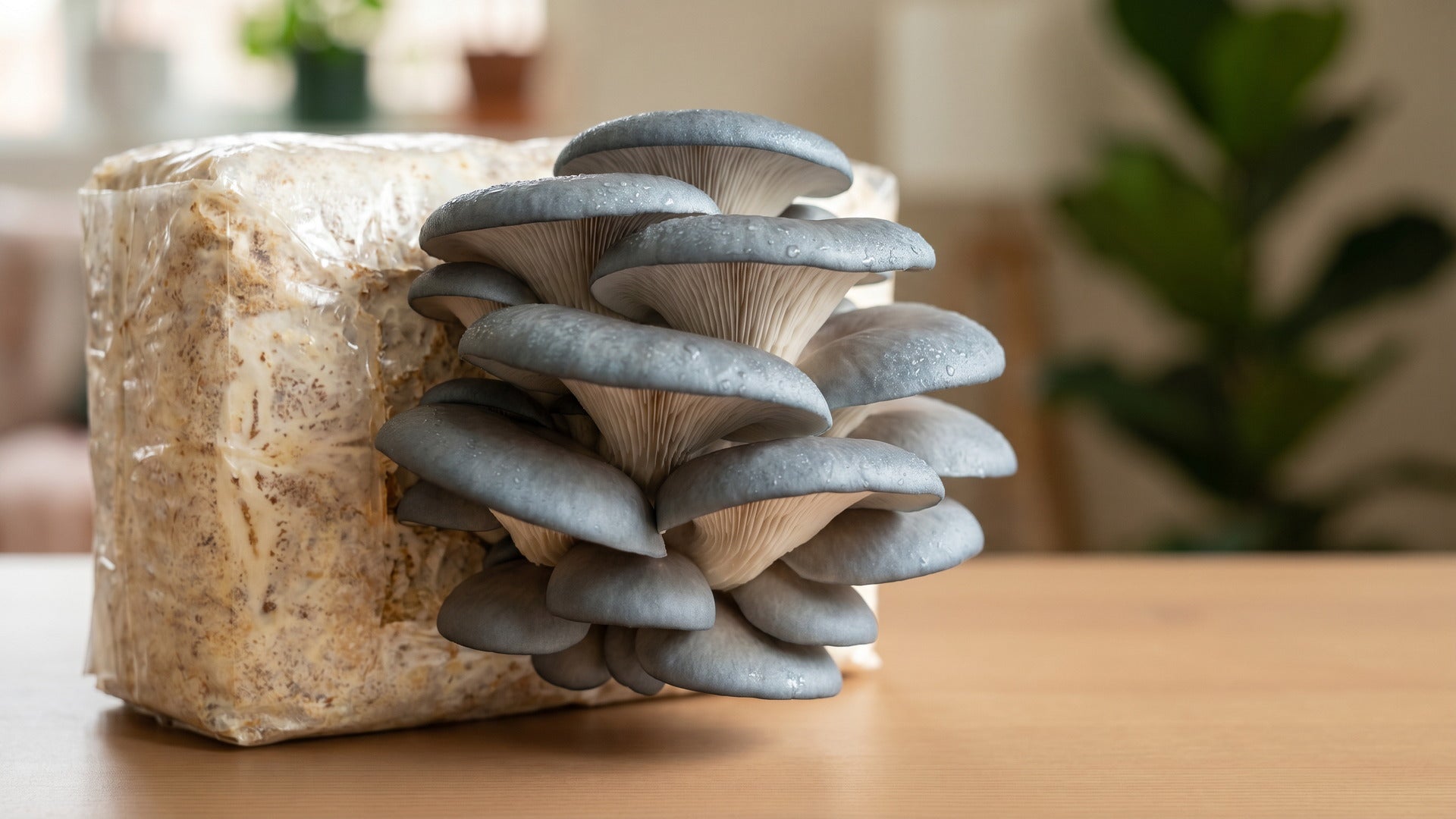
- North Spore (5 lb): Pearl oyster, blue oyster, lion's mane, shiitake, pink oyster, chestnut, and seasonal species. North Spore blocks fit the chamber out of the box.
- FreshCap (4 to 5 lb): Lion's mane, shiitake, oyster varieties, king trumpet. FreshCap blocks are slightly more compact but fit comfortably.
- Field and Forest (5 to 6 lb): Wider species selection including pioppino, chestnut, blue oyster, and king oyster. Larger blocks may need to be repositioned slightly to clear the chamber lid.
- Regional and small suppliers: Most independent suppliers ship 4 to 5 pound pre-colonized blocks that fit standard chamber dimensions. Check the supplier's block size before ordering.
The species you can grow in a grow box is essentially the same as the species available as fruiting blocks. The Lykyn chamber supports 28+ species through species-specific climate profiles in the app, so the same hardware grows pearl oyster, lion's mane, shiitake, and king trumpet without any equipment swap.
Step-by-Step Complete Setup: Grow Box Plus Fruiting Block
Step 1: Order the Right Fruiting Block for Your Skill Level
Pick one species for your first cycle. Pearl oyster is the easiest (forgiving humidity, fast pinning). Lion's mane is the most rewarding (high market value, lobster-like flavor). Shiitake is the most flavorful but takes 2 to 3 weeks. Avoid trying multiple species in your first chamber cycle until you have nailed the basic process once.
Step 2: Acclimate the Block (24 to 48 Hours)
When the fruiting block arrives, leave it sealed on a kitchen counter near the grow box for 24 to 48 hours. Mycelium recovers from shipping stress in this window. Cutting the block immediately is the most common cause of slow pinning.
Step 3: Prep the Grow Box
If you are using the Lykyn chamber: fill the ultrasonic humidifier reservoir with distilled water (the chamber prompts you in the app). Plug in the chamber and let it run a 30-minute pre-conditioning cycle so the interior reaches target humidity before the block goes in.
Step 4: Cut the Fruiting Slits on the Block

Use a clean knife to make 1 to 3 small X-shaped cuts on the block (depending on the species and supplier instructions). Pearl oyster typically gets 2 cuts on opposite faces. Lion's mane gets 2 to 3 small cuts to encourage multiple smaller heads. Shiitake gets a single cut on the top face. Cut through the plastic and just barely break the surface of the substrate; do not cut deep into the block.
Step 5: Place the Block in the Grow Box
Slide the block onto the chamber base with the cut face oriented up or to the side (whichever the supplier recommends for the species). Close the lid. Open the Lykyn app, scan the block QR code if your supplier provides one, or manually select the species. The chamber automatically configures humidity, fresh air exchange, and lighting for that species.
Step 6: Watch for Pinning (5 to 14 Days)

Tiny mushroom pins appear at the cut faces between days 5 and 14, depending on species. Pearl oyster pins fastest (5 to 7 days). Lion's mane and shiitake take 7 to 14 days. The chamber holds humidity steady around the clock, which is the variable that most often fails on manual setups.
Step 7: Harvest at Peak
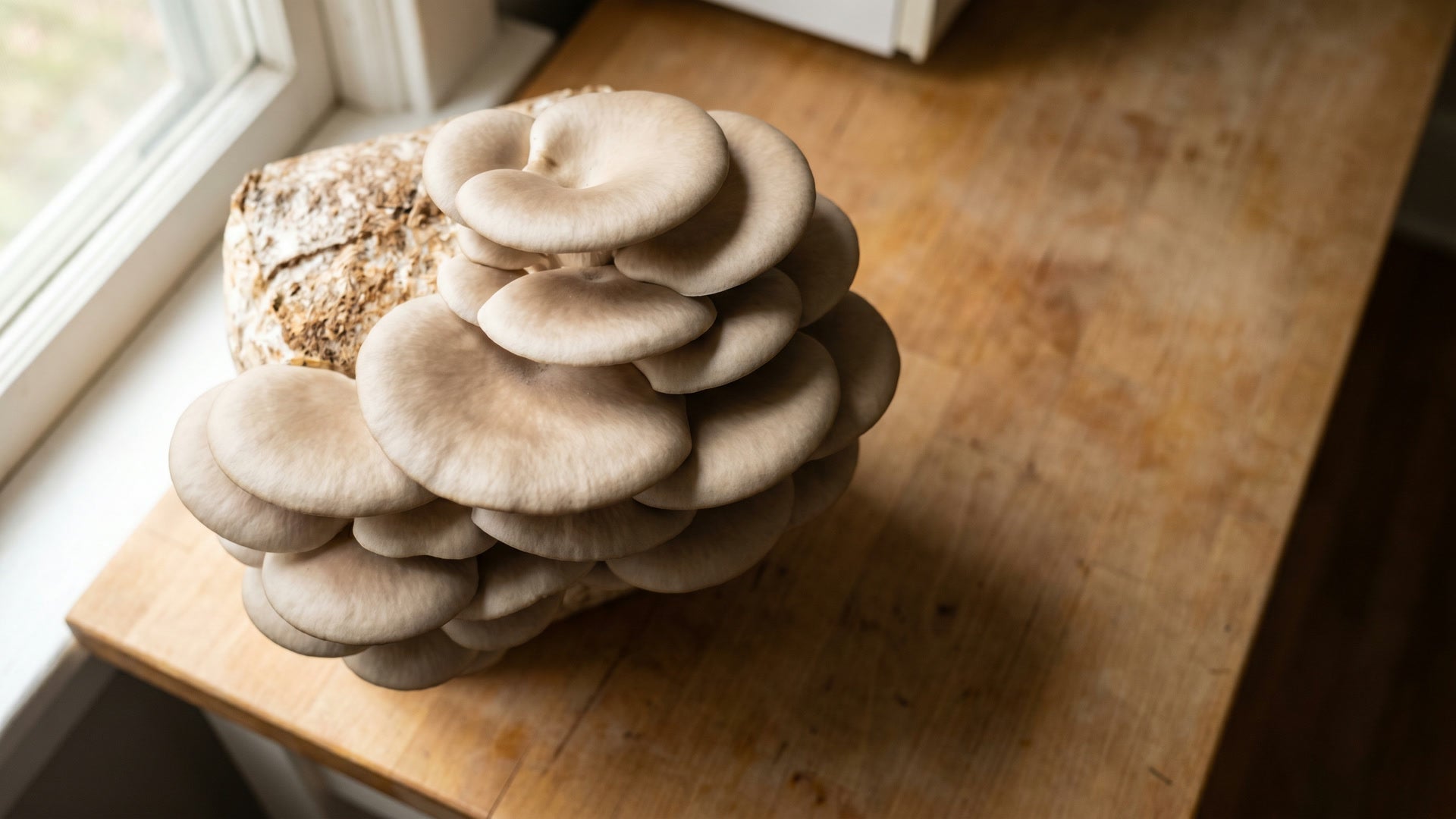
Most species are harvest-ready 7 to 10 days after first pinning. Cut or twist the cluster off the block, leaving the substrate intact. The block has not finished , soak in cold water for 6 to 8 hours, drain, and place back in the chamber for the second flush.
Step 8: Run the Block Through 2 to 3 Flushes
A 5-pound fruiting block typically produces 2 to 3 flushes total. The first is the largest (1 to 1.5 lb of fresh mushrooms), the second is roughly half, and the third is half again. After the third flush, compost the block and load a new one. The chamber is ready for the next species immediately.

Fuel Your Mushroom Journey
Smart Mushroom Grow Chamber
Plug-and-play smart chamber with humidity, light, and airflow dialed in for every species. Beginners harvest their first flush in days, not months.
Add to cart $299How Yields Compare: Grow Box vs. Plastic Bag
Identical fruiting blocks produce different yields depending on the climate they fruit in.
| Setup | Pearl Oyster (5 lb block) | Lion's Mane (5 lb block) | Shiitake (5 lb block) |
|---|---|---|---|
| Spray-and-grow bag (manual) | 0.7 to 1.0 lb / first flush | 0.6 to 0.9 lb / first flush | 0.5 to 0.8 lb / first flush |
| Lykyn grow box + same block | 1.2 to 1.5 lb / first flush | 1.0 to 1.3 lb / first flush | 0.9 to 1.2 lb / first flush |
The yield difference comes from humidity stability. Manual setups with twice-daily misting average 78 to 88 percent humidity with frequent dips down to 60 percent (which kills pins). The Lykyn chamber holds 88 to 92 percent humidity around the clock, so every pin matures into a harvest-ready mushroom.
Common Setup Mistakes (and How to Avoid Them)
- Skipping acclimation: Cutting the block within an hour of arrival cracks open mycelium that has not yet recovered from shipping. Always wait 24 to 48 hours.
- Cutting too deep: The slit only needs to break the plastic and slightly score the substrate surface. Cutting deep into the block damages the colonized substrate and slows pinning.
- Filling the humidifier with tap water: Chlorine and minerals in tap water leave deposits inside the humidifier and slowly degrade the mycelium. Use distilled water.
- Loading multiple blocks at once: Two blocks crowded into a chamber sized for one cause humidity dead spots. Run one block per chamber cycle for the first 3 to 4 cycles until you understand the chamber dynamics.
- Skipping the second flush soak: Most growers harvest the first flush and leave the block in the chamber dry. Soaking the block in cold water for 6 to 8 hours after each flush rehydrates the substrate and triggers the next pinning round.
How to Choose a Fruiting Block Supplier
Block quality varies enormously between suppliers. Three signs of a reliable fruiting block source:
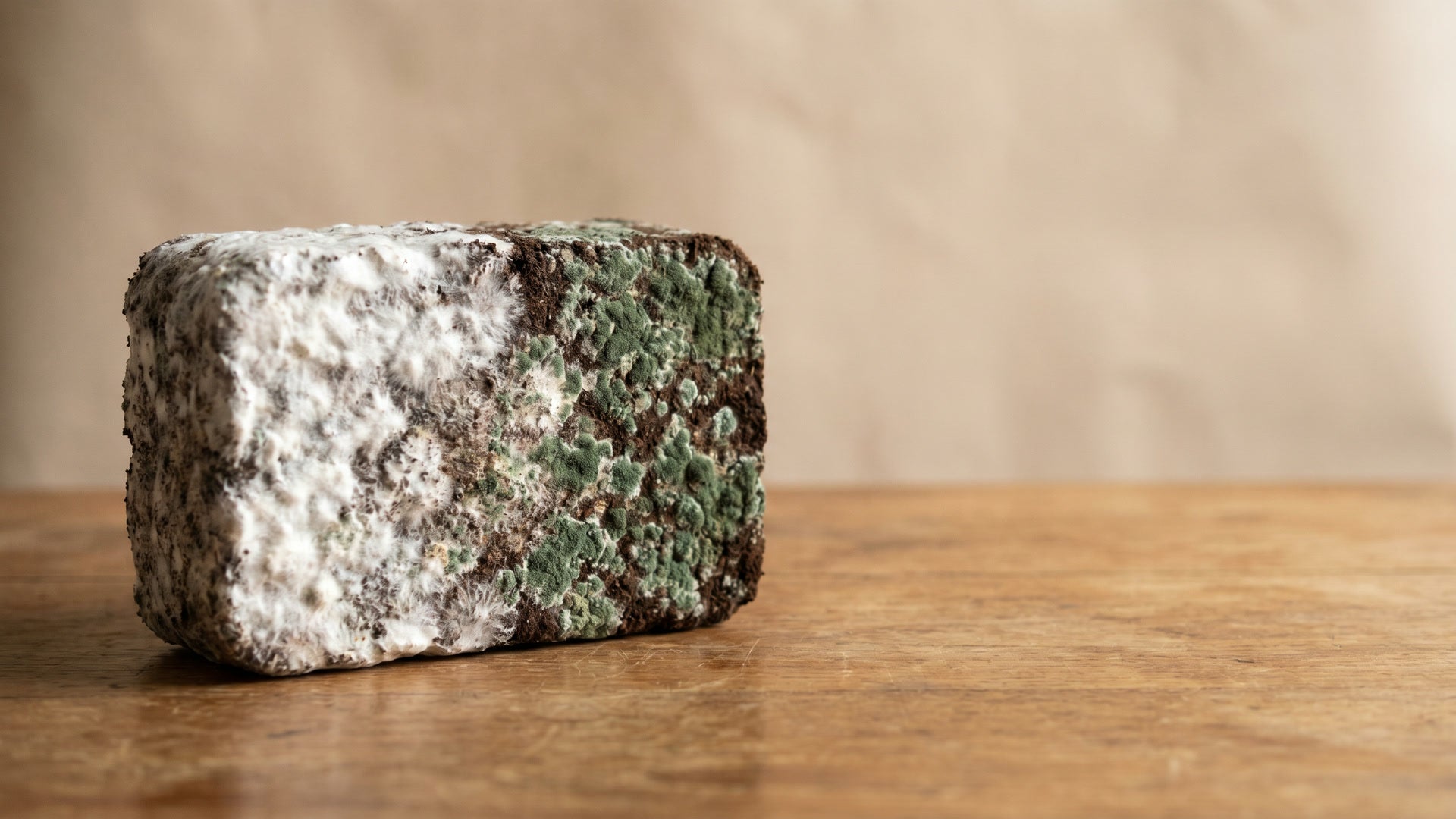
- 30-day contamination guarantee: The block ships fully colonized; if it arrives with mold or fails to pin within 14 days, the supplier replaces it. North Spore, FreshCap, and Field and Forest all offer this.
- Species-specific genetics: Reputable suppliers source genetics from named strains (for example, "PoH 21" pearl oyster). Bargain-bin blocks often use generic spawn that produces inconsistent yields.
- Cool-pack shipping: Mycelium dies above 90°F. Reputable suppliers ship blocks with insulation and cold packs in summer months. If your block arrives warm to the touch, request a replacement.
The blog post The Best Fruiting Blocks to Use with Lykyn compares specific suppliers and species pairings if you want a deeper dive.
Frequently Asked Questions
What is the difference between a grow box and a fruiting block?
A grow box (also called a fruiting chamber) is the hardware enclosure that controls humidity, airflow, and lighting. A fruiting block is the pre-colonized substrate that contains the mycelium and produces the mushrooms. You need both for a complete setup. The block goes inside the box.
Can I use any fruiting block in any grow box?
Most pre-colonized 5-pound blocks fit most consumer grow boxes. The Lykyn chamber is sized for standard North Spore, FreshCap, and Field and Forest 5-pound blocks. Always check chamber interior dimensions against block size before ordering.
How long does the grow box plus fruiting block setup take?
Setup takes 5 to 10 minutes (acclimate, cut, place, configure). The full grow cycle from setup to first harvest takes 14 to 21 days for most species, with second and third flushes adding another 4 to 6 weeks of harvests from the same block.
Do I need to sterilize the grow box between blocks?
Yes. After each block cycle, wipe the interior with a 5 percent hydrogen peroxide solution and let air-dry for 30 minutes. The Lykyn chamber has removable panels that make this fast (about 5 minutes).
What happens if my fruiting block does not pin?
If a block does not show pins by day 14, the most likely causes are (1) humidity is too low, (2) the block has not finished re-colonizing after shipping, or (3) the block was contaminated before shipping. Increase humidity to 92 percent, wait another 5 days, and contact the supplier if no pins appear. Reputable suppliers replace failed blocks under their contamination guarantee.
Can a grow box and fruiting block setup pay for itself?
Yes. At $25 to $45 per fruiting block and 1 to 1.5 pounds of fresh mushrooms per first flush, the per-pound cost is $20 to $40 for first flush mushrooms , roughly half the supermarket price for gourmet species. Across 4 to 6 cycles, the chamber pays back its purchase price.
Final Setup: One Box, Many Species, Year-Round Harvest
The grow box plus fruiting block setup is the most flexible mushroom cultivation system available to home growers in 2026. The chamber is the constant; the species rotates with the block. Pearl oyster on cycle 1 (the easy first win), lion's mane on cycle 2 (the high-value species), shiitake on cycle 3 (the everyday cooking mushroom), king trumpet on cycle 4 (the meaty texture), and back to pearl oyster on cycle 5 if you have a dinner party coming up.
For people who want to grow gourmet mushrooms regularly without daily misting routines, contamination panic, or the complexity of monotub builds, the Lykyn Smart Mushroom Grow Box plus a rotating supply of pre-colonized fruiting blocks is the complete setup. Drop in a block, pick a species, harvest 2 to 3 weeks later. Repeat.
Ready to grow?
Skip the substrate guesswork. Start with the smart fruiting chamber that handles humidity, airflow, and lighting for you.
Start with the Lykyn Grow Box →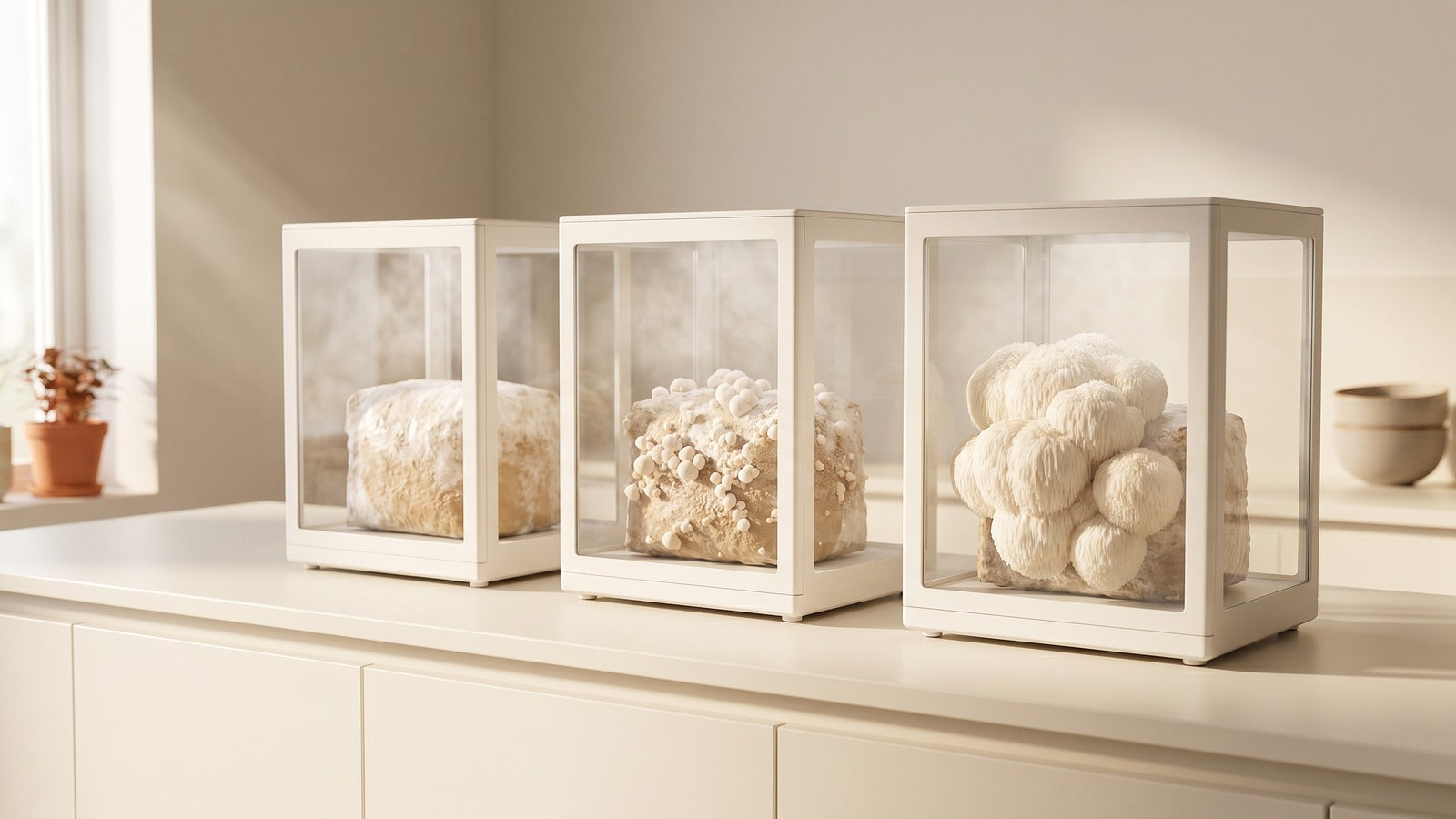
Share:
How to Grow Lion's Mane Mushrooms at Home (2026 Guide)
Oyster Mushroom Grow Kit: A Beginner's Guide