


Fuel Your Mushroom Journey

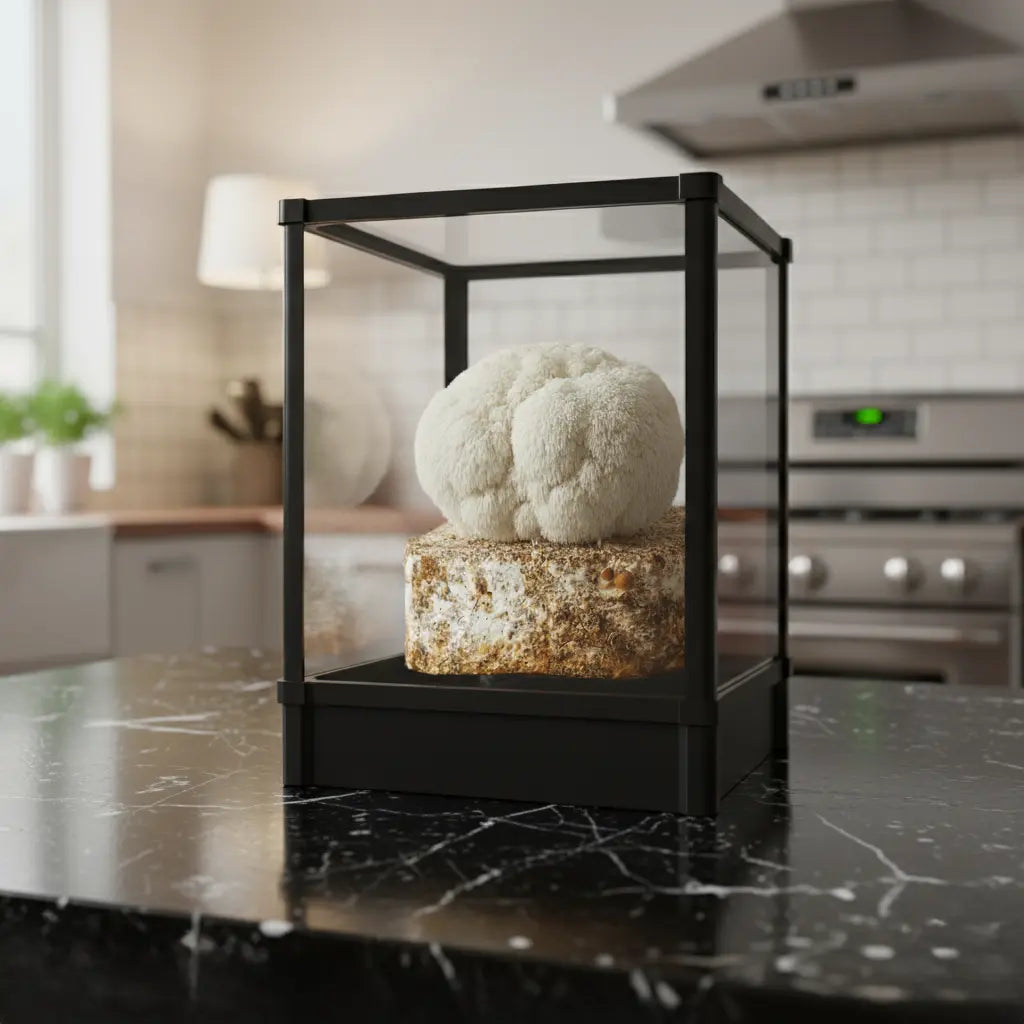
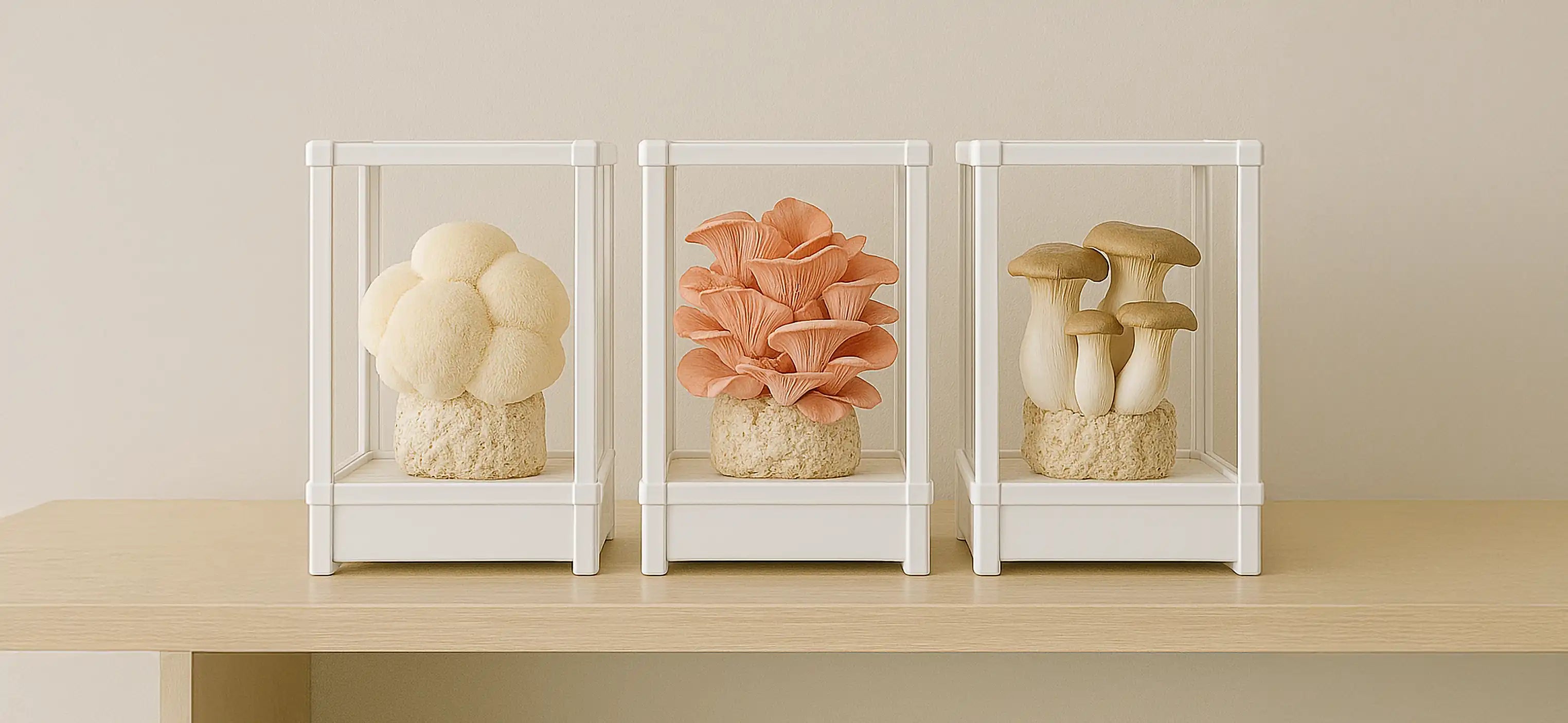
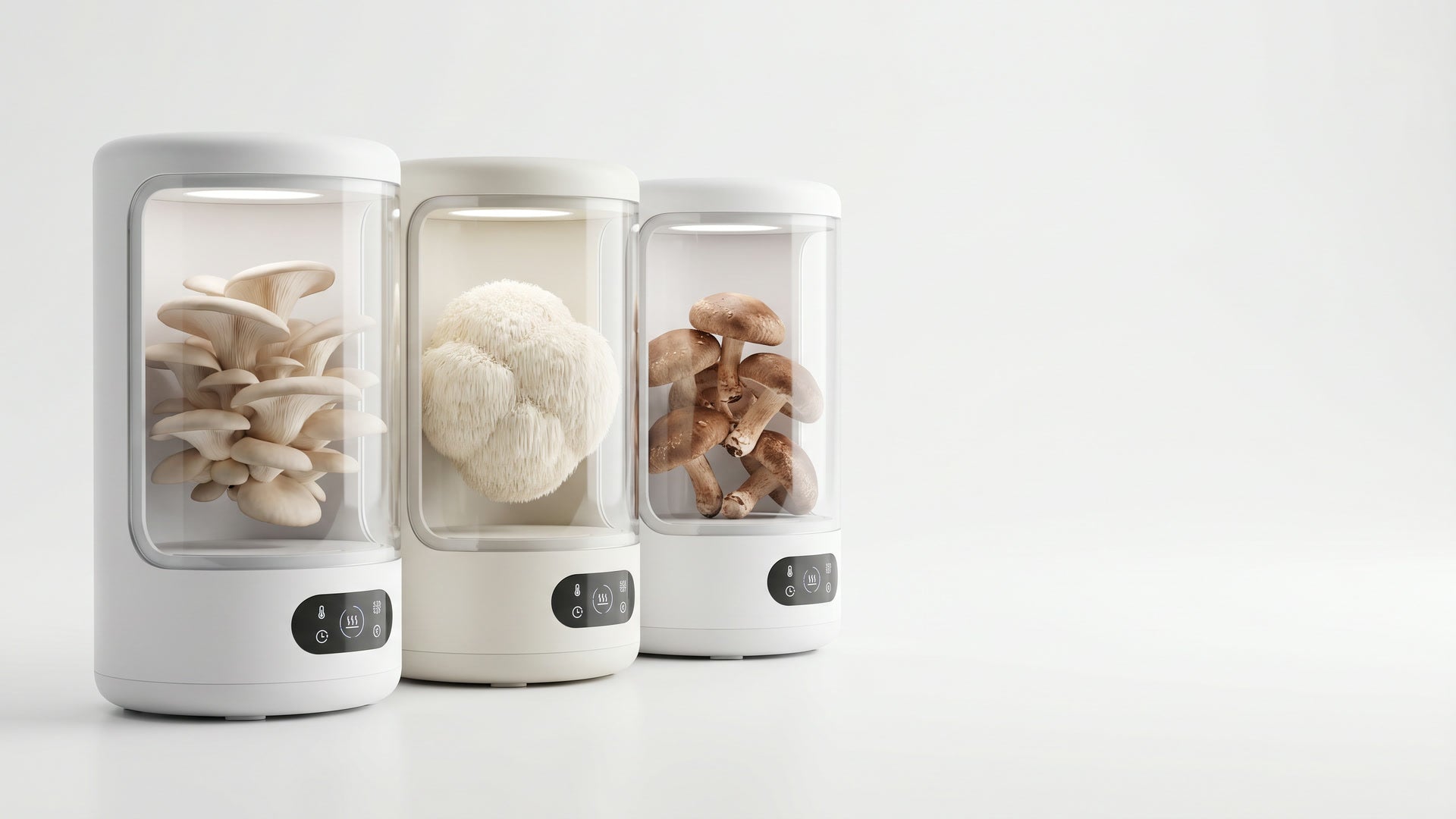
Smart Chamber. Bone White Single
- 2.8L tank, 90% humidity automatic
- App-controlled, plug-and-play
- 6 lb block ceiling, in stock

Smart Chamber. Obsidian Black Single
- Same hardware as Bone White
- Matte black premium finish
- Pairs with any kitchen palette

Author note. This guide draws on Lykyn Growing Team observations across 500+ growers (2024 to 2026), peer-reviewed mycology references, and US-published cultivation literature.
How to Prepare Lion's Mane Mushrooms (Direct Answer)
Quick answer: To prepare Lion's Mane (Hericium erinaceus), brush the fresh fruiting body dry with a soft-bristled brush. Never rinse: the lobate, sponge-like structure absorbs liquid and ruins searing. Tear the cluster into thumb-sized chunks by hand, following the natural lobes and spines. Pat dry if you must rinse. Expect about 25% volume shrinkage once cooked. Total prep: 5 minutes for a 1.25 lb cluster.
Brush, Don't Rinse: The Sponge Problem
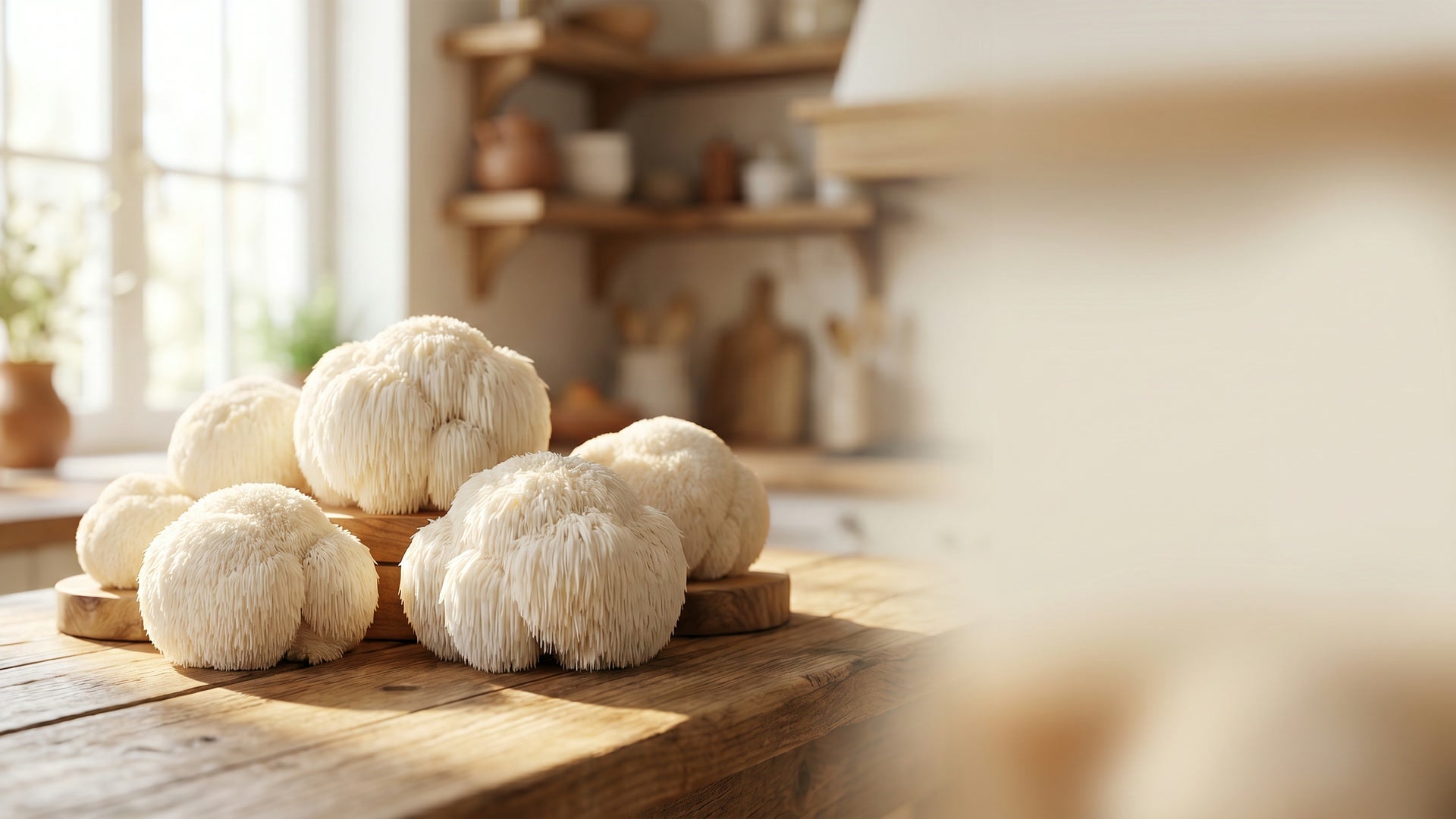
Lion's Mane is built from a network of fine spines (also called teeth) hanging from a lobate fruiting body. Those spines hold most of the surface area and behave like a kitchen sponge when wet. Run a fresh cluster under the tap and water soaks in within seconds, the cluster doubles in weight, and the spines collapse into a soggy mat.
That waterlogged texture is why most home cooks say their Lion's Mane was rubbery or never browned. It was the prep, not the pan. Searing needs a dry surface so moisture flashes off above 300°F and the Maillard reaction kicks in. A wet cluster steams in its own water and turns pale and chewy.
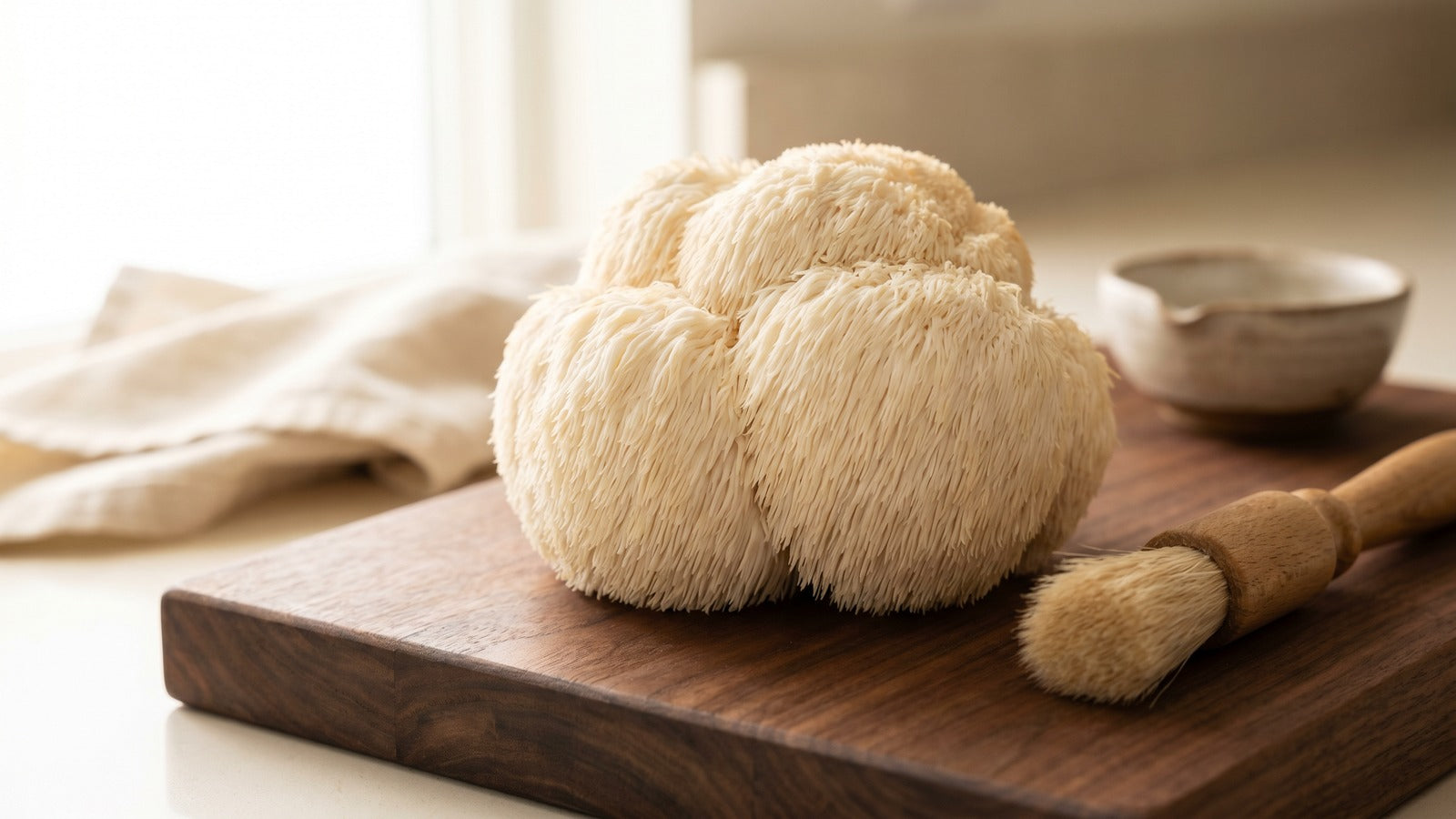
Treat fresh Lion's Mane like a delicate piece of bread, not lettuce. Brush off dust and substrate with a soft-bristled brush or dry pastry brush. From a Lykyn chamber the surface is usually clean and brushing takes 30 seconds.
If you must rinse, use the lightest stream of cold water for under 5 seconds, pat firmly with paper towels, and rest on a wire rack for 15 minutes. The brush-only method always wins.
Clean and Tear Lion's Mane in 5 Minutes (HowTo)
Full prep sequence for one fresh 1 lb to 1.5 lb cluster. Total time: 5 minutes.
- Inspect. Look for discolored patches (pink or yellow tinges), soft spots, and embedded substrate at the base. Trim the base with a clean paring knife if needed. A healthy cluster is uniformly cream-white and faintly springy.
- Brush, do not rinse. Sweep the surface with a soft-bristled brush in short downward strokes, following the spines. Rotate and repeat until no visible dust remains. Under 90 seconds.
- Tear, do not cut. Pull the natural lobes apart with your fingers, then tear each lobe into thumb-sized chunks (1 to 1.5 inches across) along the grain of the spines. Ragged torn edges catch oil and brown deeper. Knife cuts give smooth faces that brown unevenly.
- Pat dry. Spread the chunks on a clean dry kitchen towel. Press gently with a second towel until the surface feels dry, not damp.
- Cook or store. Same-day cooking? Ready for the pan. For storage, see the three paths below.
Three Prep Paths Compared
| Path | Time | Equipment | Shelf life | Texture impact |
|---|---|---|---|---|
| Fresh, cook same day | 5 min prep | Brush, paper towels | 3 to 5 days at 38°F in paper bag (never plastic) | Best, full springy bite |
| Dehydrate and store | 5 min prep + 6 to 10 hr at 110°F (43°C) | Dehydrator, airtight jar + silica | 12 to 18 months, cool dark cupboard | Chewy when rehydrated, ~10% original volume |
| Blanch and freeze | 5 min prep + 90 sec blanch + ice bath | Pot, ice, freezer bag | 6 to 9 months at 0°F | Holds ~80% texture; no enzymatic browning |
Fresh is simplest and best. Dehydrate is most space-efficient (1 lb fresh becomes ~1.6 oz dried, ideal for broth or rehydrated "crab cakes"). Freeze is the middle ground when a harvest exceeds counter time.
How to Dehydrate Lion's Mane at Home
Dried Lion's Mane holds for over a year and the concentrated flavor is great for broths, teas, and powder.
- Clean and tear following the 5-step HowTo.
- Arrange chunks in a single layer on dehydrator trays. No overlap, air must flow around every piece.
- Set to 110°F (43°C). Below 110°F risks spoilage; above 125°F starts cooking the mushroom and traps moisture.
- Dry 6 to 10 hours. Done when chunks snap cleanly with no flex.
- Store in a sealed glass jar with food-grade silica in a cool dark cupboard.
Rehydrate dried chunks in warm water for 20 minutes. Save the soak water for broth, it is loaded with umami.
Freeze With a Quick Blanch
Freezing works when a flush exceeds your counter time. The blanch is non-negotiable; skip it and the harvest is wasted.
- Boil a large pot of unsalted water. Prepare an ice bath.
- Clean and tear the cluster (5-step HowTo).
- Drop chunks into boiling water for exactly 90 seconds. Lift with a slotted spoon.
- Plunge into the ice bath for 2 minutes.
- Drain on paper towels until surface-dry. Press gently, do not squeeze.
- Vacuum-seal in portion batches, freeze flat at 0°F (-18°C).
The blanch denatures polyphenol oxidase, the enzyme that browns a cut apple. Without it, frozen Lion's Mane develops dark spots and a faintly fishy off-flavor within weeks. With it, texture stays clean for 6 to 9 months.
Thaw overnight in the fridge, pat very dry (chunks release water as they thaw), then cook as fresh. Expect ~90% of fresh texture.
Why Lykyn Growers Get the Best Lion's Mane
Supermarket Lion's Mane is often 5 to 10 days post-harvest, softening at the spines, and never quite recovers from cold-chain storage. Home-grown prepares better for one reason: time from harvest to skillet.
A cluster picked from a chamber on your counter goes from substrate to pan in under an hour. Spines firm, body slightly springy, no transit moisture damage. That is why home-grown Lion's Mane brushes clean, tears predictably along the lobes, and sears with a deep golden crust.
On a Lion's Mane grow block, the harvest window is about 5 days from first pin to picking. Pick before the spines elongate past 1 inch for the densest texture.
What Sets Lykyn Lion's Mane Prep Apart
Three observations from hundreds of Lykyn harvests:
- First-flush tears cleanly; second-flush needs a paring knife at the base. Second flushes have a tougher substrate attachment. Trim the base, tear the rest.
- Ragged, not uniform. Home cooks instinctively cut even cubes. Resist. Irregular thumb-sized chunks with feathered edges hold more oil and brown deeper than tidy cubes.
- Refrigerator humidity beats temperature. A sealed plastic bag at 38°F goes slimy in 48 hours; the same cluster in a paper bag stays firm for 5 days. Moisture is the enemy, not warmth.
Fuel Your Mushroom Journey
Lion's Mane Grow Kit
Hardwood sawdust block colonized with Lion's Mane mycelium. Drops straight into your Lykyn chamber and starts pinning within days.
Add to cart $29.95FAQ
Should you wash Lion's Mane mushrooms?
No. The lobate, sponge-like fruiting body absorbs water in seconds and ruins the texture for searing. Brush the fresh cluster dry with a soft-bristled brush. If you must rinse, use a light stream of cold water for under 5 seconds, pat firmly with paper towels, and rest on a wire rack for 15 minutes before cooking.
Do you cut or tear Lion's Mane?
Tear. Pull the cluster apart by hand into thumb-sized chunks, following the natural lobes. Ragged torn edges catch oil and brown deeply. Knife cuts give smooth faces that brown unevenly. Only use a knife at the base to trim residual substrate.
Can you freeze Lion's Mane mushrooms?
Yes, but blanch first. Boil torn chunks for 90 seconds, plunge into an ice bath for 2 minutes, drain dry, freeze in airtight bags at 0°F. The blanch denatures the enzymes that cause browning and off-flavors. Properly blanched and frozen, Lion's Mane keeps for 6 to 9 months.
What part of Lion's Mane do you eat?
The entire fresh fruiting body. Lobes, spines (teeth), and firm base. Trim only the very bottom if it carries substrate fragments. There is no inedible cap or stem to discard. About 95% of a fresh cluster ends up on the plate.
How do you dry Lion's Mane at home?
Use a home dehydrator at 110°F (43°C) for 6 to 10 hours. Clean and tear first. Single-layer on trays, no overlap. Pieces are done when they snap cleanly with no flex. Store in a sealed glass jar with a food-grade silica packet in a cool dark cupboard for 12 to 18 months. Avoid ovens; most cannot hold a low enough temperature.
Ready to Cook?
Brushed clean, torn into thumb-sized chunks, patted dry. You are 30 seconds from the searing pan. The cooking technique is its own discipline: hot pan, neutral oil, do not crowd, do not flip too early. Read how to cook Lion's Mane mushrooms for the full skillet method, or browse Lion's Mane mushroom recipes for nine ways to use a single 1.25 lb cluster.
Home-grown is the cleanest path to a perfectly fresh cluster. A Lion's Mane grow block on the Lykyn chamber goes from pin to plate in about 5 days, with no daily misting and no guesswork. Start growing today.
Share:
How to Grow Mushrooms at Home: 3 Paths, 21 Days | Lykyn