


Am zuverlässigsten trocknest du Pilze in einem Dörrautomaten bei 43 bis 52 °C für sechs bis acht Stunden, bis die Scheiben vollständig trocken sind und beim Biegen brechen. Alternativ kannst du einen Ofen bei niedriger Temperatur, eine Heißluftfritteuse mit Niedrigtemperaturprogramm oder einen warmen, trockenen und gut belüfteten Ort zum Lufttrocknen verwenden. Bei allen Methoden gilt dasselbe Prinzip: Dem Pilz wird das Wasser langsam genug entzogen, damit er nicht gart, aber gleichmäßig genug, damit er nicht verdirbt, bevor er vollständig getrocknet ist.
Richtig gelagert halten sich getrocknete Pilze mindestens zwölf Monate, ihr Aroma wird intensiver (besonders bei Shiitake und Austernpilzen) und in warmem Wasser nehmen sie innerhalb von 20 bis 30 Minuten wieder eine brauchbare Konsistenz an. Im Folgenden erfährst du alles, was du wissen musst, um es gleich beim ersten Mal richtig zu machen.
Was du brauchst

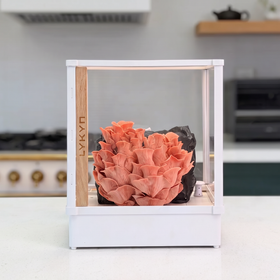
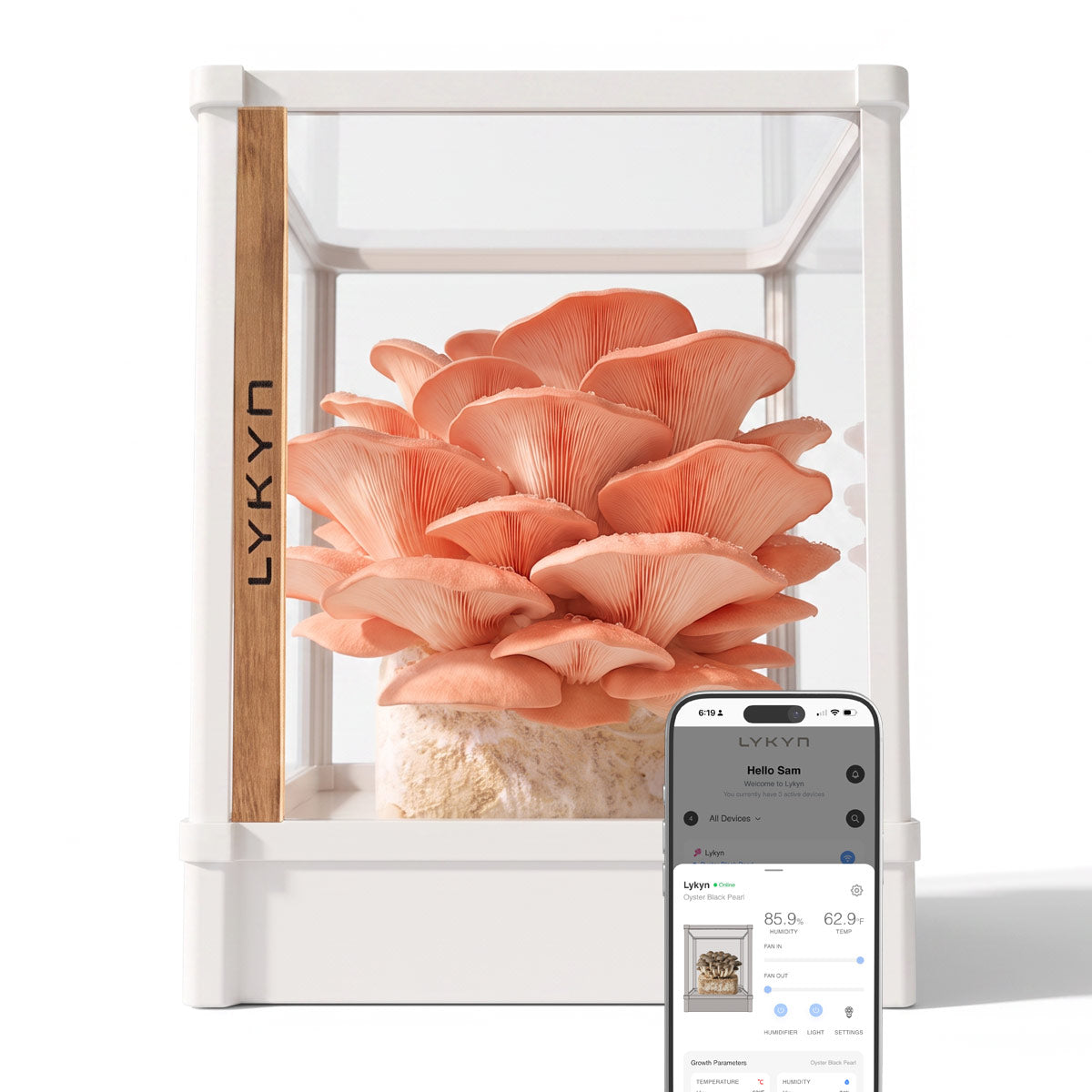
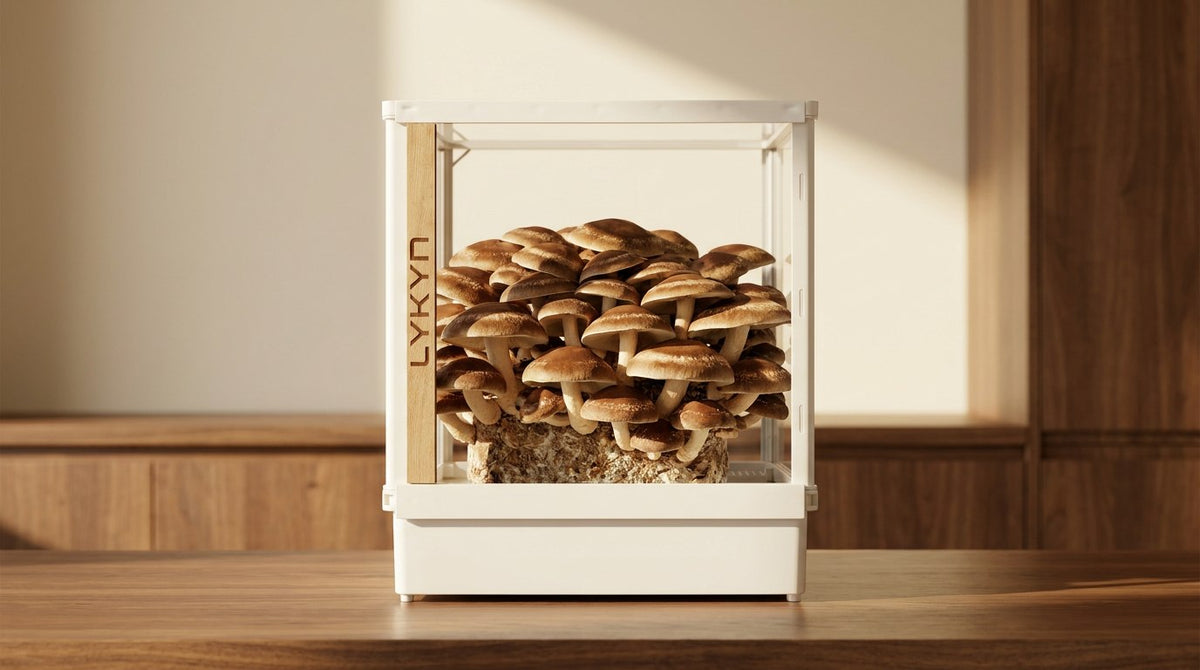
Smart Chamber. Bone White Single
- 2,8-l-Tank, automatische Luftfeuchtigkeit von 90 %
- App-gesteuert, sofort einsatzbereit
- Kapazität für Blöcke bis 6 lb, auf Lager

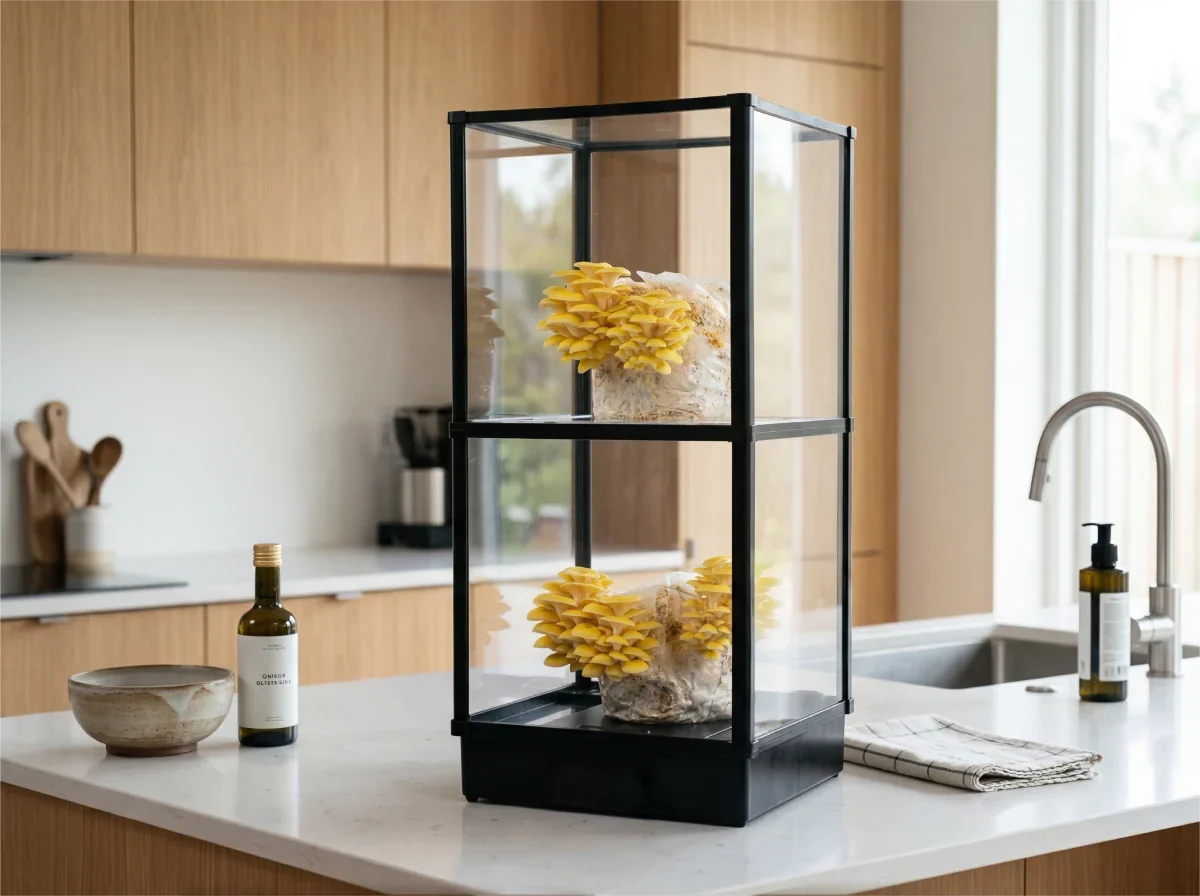
Smart Chamber. Obsidian Black Single
- Gleiche Ausstattung wie Bone White
- Hochwertige matte schwarze Oberfläche
- Passt zu jeder Kücheneinrichtung

Zuchtset für Schwarze Austernpilze
- Auf Lager
- Erste Ansätze in 3–5 Tagen
- Ersetzt einen Zuchtzyklus in der Kammer
Ein Pfund frische Pilze (jede Art eignet sich, siehe Hinweise weiter unten), ein scharfes Messer oder einen Gemüsehobel, einen sauberen Dörrautomaten oder eine andere Trocknungsmöglichkeit, luftdichte Gläser oder Vakuumbeutel zur Aufbewahrung sowie Silicagel-Päckchen (optional, aber für die Langzeitlagerung in feuchtem Klima empfehlenswert).
Salz, Öl oder Gewürze brauchst du nicht. Ungesalzene, ungewürzte Trockenpilze sind am vielseitigsten, und Gewürze, die du beim Trocknen hinzufügst, schränken später ihre Verwendungsmöglichkeiten ein.
Schritt 1: Frische, saubere Pilze auswählen
Verwende Pilze, die gerade ihre beste Qualität erreicht haben, und nicht die, die hinten im Kühlschrank liegen und bald aufgebraucht werden müssen. Beim Trocknen intensiviert sich auch der Beigeschmack. Leicht überreife Pilze ergeben getrocknet also Pilze mit einem schlechteren Geschmack.
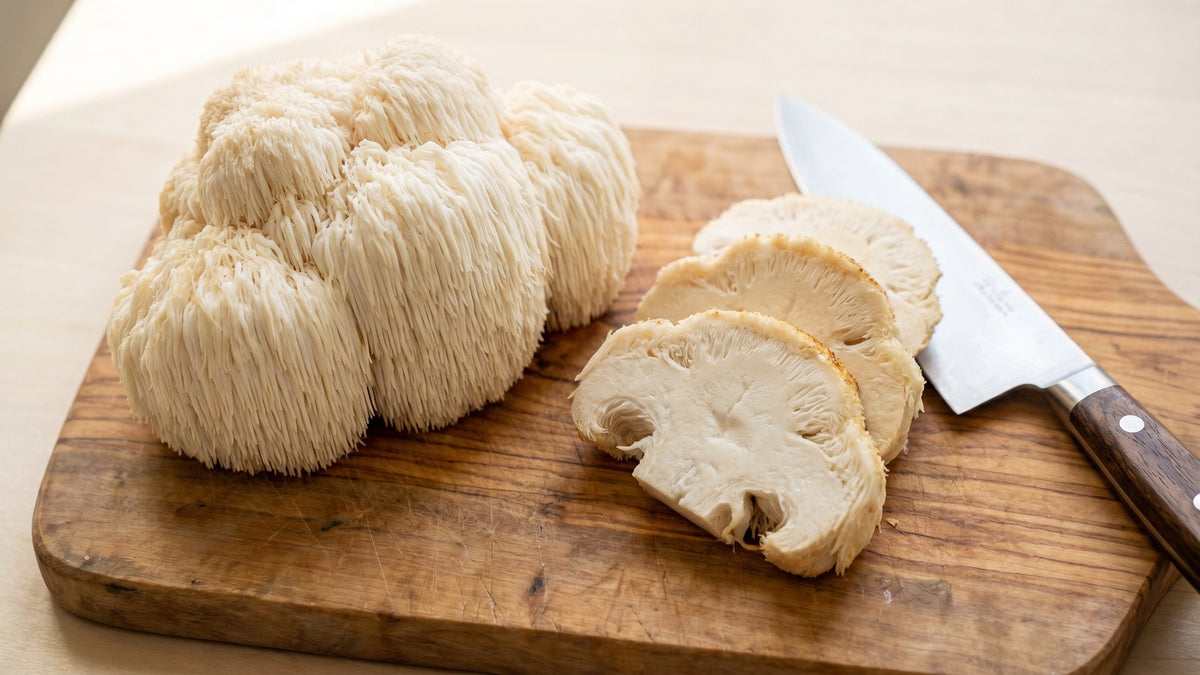
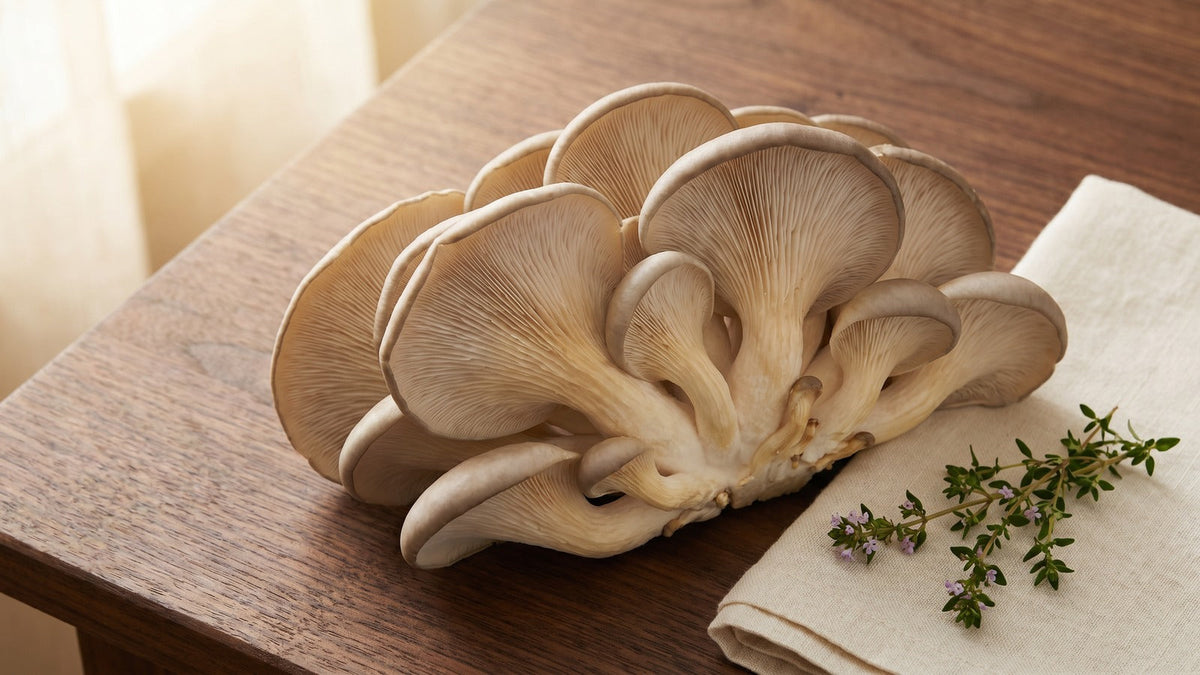
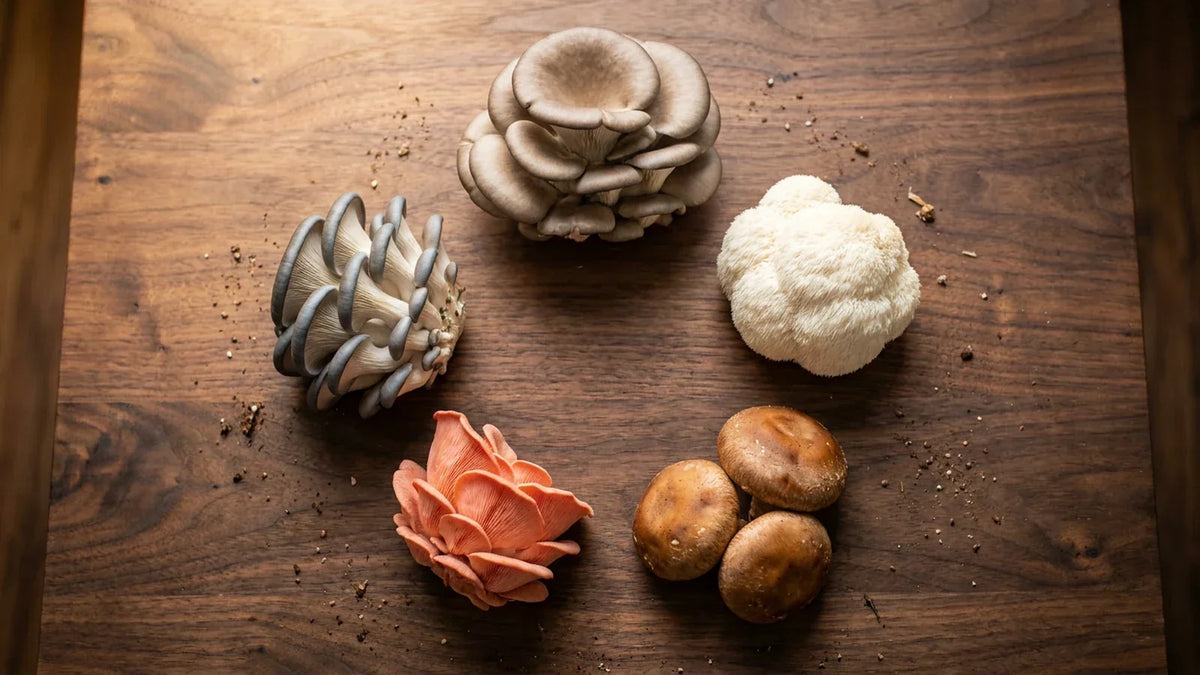
Am besten zum Trocknen eignen sich Shiitake (der Goldstandard – getrocknete Shiitake spielen aromatisch in einer ganz anderen Liga als frische), Steinpilze (nach dem Trocknen besonders herzhaft), Morcheln (ihr unverwechselbares Aroma bleibt erhalten), Austernpilze (mild, aber vielseitig), Kräuterseitlinge (lassen sich gut in feste, zähe Scheiben schneiden) und Igelstachelbart (trocknet gut, wird nach dem Einweichen aber weicher).
Weniger geeignet sind weiße Champignons und braune Champignons: Sie verlieren mehr Aroma, als sie durch die Konzentration gewinnen. Maitake lässt sich zwar trocknen, schmeckt frisch aber so gut, dass es sich fast wie Verschwendung anfühlt.
Schritt 2: Ohne Wasser reinigen
Wische jeden Pilz mit einem leicht feuchten Papiertuch ab oder entferne den Schmutz mit einer weichen Bürste. Spüle die Pilze vor dem Trocknen nicht ab. Das Wasser würde die Feuchtigkeit erhöhen, die du anschließend stundenlang entziehen musst. Wenn du Pilze vor dem Trocknen einweichst, trocknen sie außerdem ungleichmäßig.
Schneide harte Stielenden ab. Entferne bei Shiitake die Stiele vollständig – sie bleiben auch nach dem Einweichen zäh, eignen sich aber noch für Brühe.
Schritt 3: Gleichmäßig schneiden
Das ist der wichtigste Schritt überhaupt. Werden die Stücke unterschiedlich dick geschnitten, trocknen sie auch unterschiedlich schnell. Dann sind manche knusprig, während andere noch feucht und damit schimmelgefährdet sind.
Die Scheiben sollten etwa einen Viertelzoll dick oder etwas dünner sein. Ein scharfes Messer reicht aus, mit einem Gemüsehobel werden die Scheiben jedoch besonders gleichmäßig. Austernpilze zupfst du besser von Hand in ähnlich große Stücke, statt sie zu schneiden.
Kleine Pilze (kleine Champignons, junge Shiitake oder kleine Kastanienpilze) kannst du auch im Ganzen trocknen, wenn du sie später für eine ansprechende Optik in Gerichten verwenden möchtest. Ganze Pilze brauchen länger als geschnittene – oft 10 bis 14 Stunden.
Schritt 4: Auf den Dörrautomat-Einsätzen verteilen
Lege die Scheiben in einer einzelnen Lage flach auf die Einsätze des Dörrautomaten. Sie dürfen sich nicht überlappen und sollten etwas Abstand zueinander haben, damit die Luft zirkulieren kann.
Lege größere oder dickere Scheiben an den äußeren Rand des Einsatzes (dort ist die Luftzirkulation bei den meisten Dörrautomaten am stärksten) und kleinere Stücke eher in die Mitte. So trocknet alles gleichmäßiger.
Schritt 5: Temperatur und Zeit einstellen
Stelle den Dörrautomaten auf 43 bis 52 °C ein. Bei niedrigeren Temperaturen bleiben mehr Aroma und Nährstoffe erhalten, allerdings dauert das Trocknen länger. Höhere Temperaturen beschleunigen den Vorgang, können aber dazu führen, dass der Pilz eher gart als trocknet.
Voraussichtliche Trocknungszeit: sechs bis acht Stunden für dünne Scheiben, 10 bis 14 Stunden für dickere Stücke oder ganze Pilze. Kontrolliere die Pilze nach vier Stunden alle zwei Stunden.
Der Pilz ist vollständig getrocknet, wenn er beim Biegen bricht, sich nicht mehr biegen lässt und bis in die Mitte trocken ist. Stücke, die sich biegen, ohne zu brechen, enthalten noch Feuchtigkeit und müssen länger trocknen. Pilze, die sich leicht klebrig oder lederartig anfühlen, sind noch nicht fertig.

Starte dein Pilzabenteuer
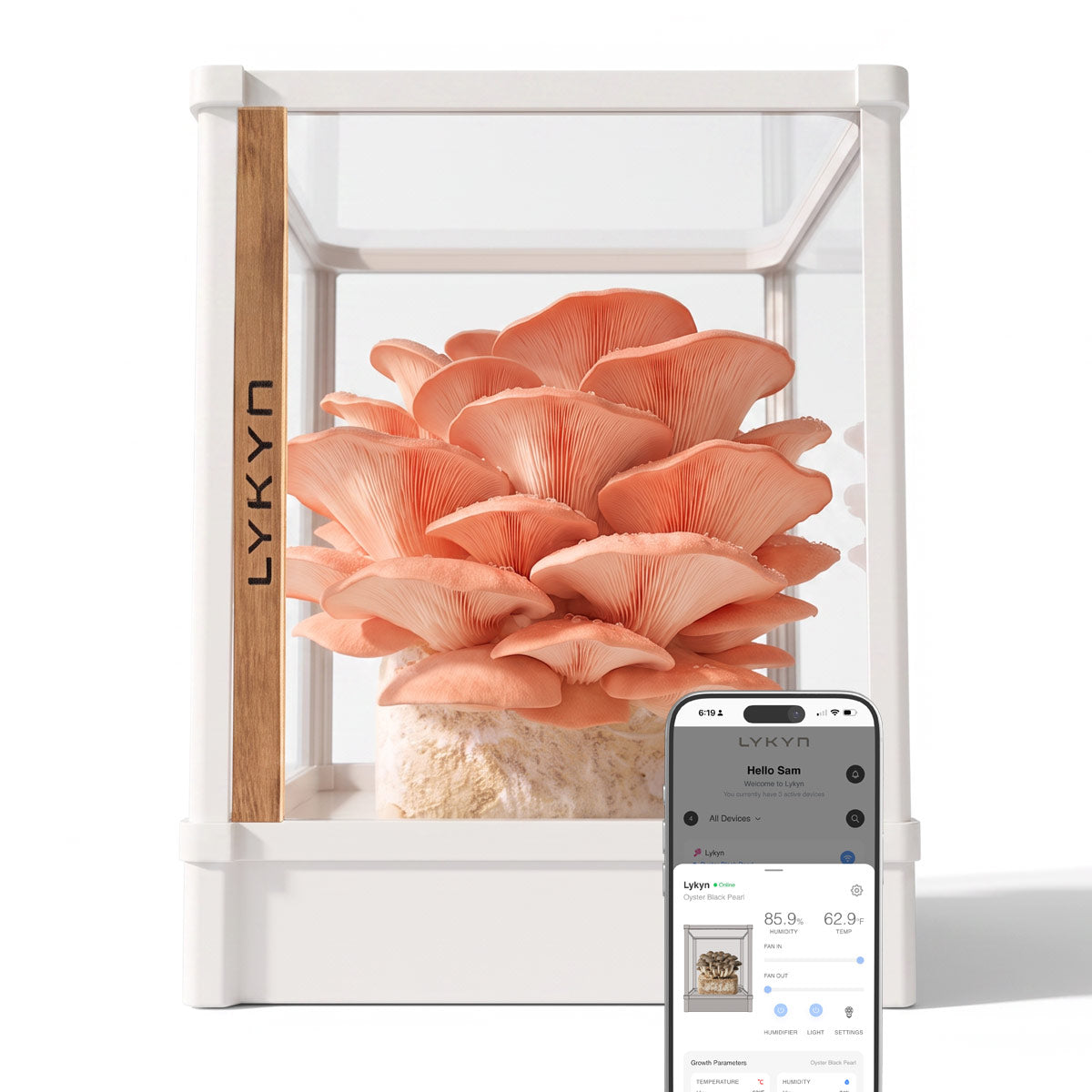
Smarte Pilzzuchtkammer
Sofort einsatzbereite, smarte Zuchtkammer mit optimal eingestellter Luftfeuchtigkeit, Beleuchtung und Luftzirkulation für jede Pilzart. Anfänger ernten ihre erste Pilzwelle innerhalb weniger Tage statt Monate.
In den Warenkorb – $299Methoden mit Ofen und Heißluftfritteuse
Wenn du keinen Dörrautomaten hast, eignet sich auch ein herkömmlicher Backofen. Stelle ihn auf die niedrigste Temperatur ein (normalerweise 65 bis 77 °C), klemme einen Holzlöffel in die Ofentür, damit die Feuchtigkeit entweichen kann, und verteile die Pilze auf mit Backpapier ausgelegten Blechen. Kontrolliere sie stündlich und tausche die Bleche für ein gleichmäßiges Ergebnis durch. Die Gesamtdauer beträgt vier bis sechs Stunden. Das ist schneller als mit einem Dörrautomaten, die Ergebnisse können aber stärker variieren.
Heißluftfritteusen mit Dörrfunktion (die meisten modernen Modelle) arbeiten bei niedrigeren Temperaturen als der Backofen und liefern gleichmäßigere Ergebnisse. Stelle, wenn möglich, 52 °C ein, andernfalls die niedrigste Temperatur, die dein Gerät unterstützt. Die Dauer hängt vom Fassungsvermögen ab, üblich sind sechs bis acht Stunden.
Lufttrocknen im Freien funktioniert in trockenen Klimazonen (bei einer relativen Luftfeuchtigkeit unter 60 Prozent). Fädle die Pilzscheiben auf eine Schnur oder verteile sie auf Gitterrosten an einem warmen, sonnigen und gut belüfteten Ort. Decke sie mit Käsetuch ab, um Insekten fernzuhalten. Die Trocknung dauert ein bis drei Tage. Vermeide das Lufttrocknen bei feuchtem oder regnerischem Wetter, da die Pilze nicht schnell genug trocknen und verderben könnten.
Schritt 6: Konditionieren
Wenn sich deine Pilze vollständig trocken anfühlen, verschließe sie nicht sofort. Gib sie in ein Glas, lege den Deckel locker auf und kontrolliere sie eine Woche lang täglich. Wenn sich im Glasinneren Feuchtigkeit niederschlägt, sind die Pilze noch nicht vollständig trocken. Gib sie für ein oder zwei weitere Stunden zurück in den Dörrautomaten.
Durch diesen Konditionierungsschritt wird restliche Feuchtigkeit erkannt, bevor sie bei der Langzeitlagerung Schimmel verursachen kann. Die zusätzliche Woche lohnt sich.
Schritt 7: Richtig lagern
Wenn du sicher bist, dass die Pilze vollständig trocken sind, fülle sie in luftdichte Behälter um. Gläser mit Gummidichtung, Einmachgläser oder Vakuumbeutel eignen sich gut. Lagere sie kühl und dunkel, zum Beispiel in der Speisekammer, in einem Schrank mit Abstand zum Herd oder in einem kühlen Keller.
Für eine längere Lagerung in feuchtem Klima kannst du jedem Behälter ein lebensmittelechtes Silicagel-Päckchen oder ein kleines Sauerstoffabsorber-Päckchen beilegen. Damit verlängert sich die Haltbarkeit deutlich.
Richtig getrocknete und gelagerte Pilze behalten ihre Qualität mindestens zwölf Monate. Laut vielen Quellen halten vakuumversiegelte Trockenpilze bei kühler und dunkler Lagerung zwei bis drei Jahre. Das Aroma lässt nach dem ersten Jahr jedoch langsam nach. Am besten verwendest du sie deshalb innerhalb von zwölf Monaten.
So weichst du Trockenpilze ein
Gib die Trockenpilze in eine hitzebeständige Schüssel. Übergieße sie mit warmem Wasser oder für zusätzliches Aroma mit Brühe. Lass sie 20 bis 30 Minuten einweichen, bis sie prall und biegsam sind.
Gieße die Einweichflüssigkeit durch einen Kaffeefilter oder ein feinmaschiges Sieb, um Sand und andere Rückstände zu entfernen. Schütte sie aber nicht weg: Das ist Pilzbrühe und eine der aromatischsten Zutaten, die du selbst herstellen kannst. Verwende sie für Risotto, Suppen, Schmorgerichte oder Soßen.
Drücke überschüssiges Wasser aus den eingeweichten Pilzen, bevor du sie kochst. Sie eignen sich nun für alle Gerichte, in denen du frische Pilze verwenden würdest, haben allerdings eine etwas festere Konsistenz. Das passt besonders gut zu Suppen und Schmorgerichten.
Die besten Verwendungsmöglichkeiten für Trockenpilze
Getrocknete Shiitake passen in Dashi oder andere asiatische Brühen. Getrocknete Steinpilze eignen sich für Pilzrisotto, Ragù und italienische Gerichte, in denen ein intensives Pilzaroma gefragt ist. Getrocknete Morcheln passen in Sahnesoßen zu Hähnchen oder Kalb. Getrocknete Austernpilze eignen sich für Nudelgerichte. Zerbrösele getrockneten Igelstachelbart auf dem Boden des Schongarers, bevor du die Zutaten für einen Eintopf hinzufügst.
Zu Pulver gemahlene Trockenpilze (einfach in einer Gewürzmühle oder einem Mixer mahlen) sorgen im Handumdrehen für mehr Umami. Ein Teelöffel Pilzpulver in Suppen, Bratensoßen, Marinaden und Gewürzmischungen ist eine der wirkungsvollsten Möglichkeiten, Gerichten mit Trockenpilzen mehr Geschmack zu verleihen.
Warum selbst gezogene Pilze besser trocknen
Frisch geerntete Pilze, die innerhalb weniger Stunden getrocknet werden, ergeben deutlich bessere Ergebnisse als gekaufte Pilze, die erst Tage nach dem Kauf getrocknet werden. Die Aromastoffe sind auf ihrem Höhepunkt, der Feuchtigkeitsgehalt ist gleichmäßig und die Konsistenz wird nach dem Einweichen besser wiederhergestellt.
Wenn du regelmäßig mit Trockenpilzen kochst, kannst du mit einem Pilzzuchtset eigene Pilze züchten und die Ernte trocknen. So hast du das ganze Jahr über einen Vorrat und gibst nur einen Bruchteil dessen aus, was getrocknete Spezialpilze pro Unze kosten. Aus einer einzigen Ernte von einem Pfund frischen Shiitake oder Austernpilzen werden ungefähr zwei bis drei Unzen Trockenpilze – genug, um einen Monat lang jede Woche ein Gericht zu verfeinern.




Aktie:
Französische Rezepte mit Pilzen: 7 Bistro-Klassiker für Hobbyköche
Französische Rezepte mit Pilzen: 7 Bistro-Klassiker für Hobbyköche