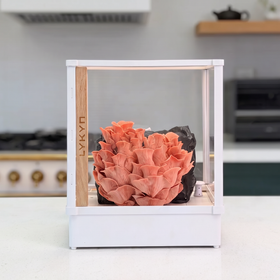



Ein Pilzzucht-Set ist der kürzeste Weg von „Ich möchte Pilze zu Hause anbauen“ bis zum tatsächlichen Verzehr des Ergebnisses. Es vereint die schwierigsten, fehleranfälligsten Teile des Anbaus (steriles Substrat, lebensfähige Brut, kontrollierte Luftfeuchtigkeit) in einem Produkt, das Sie auf eine Arbeitsplatte stellen und in 2 bis 4 Wochen ernten können. Dies ist der praktische, schnörkellose Überblick darüber, was Anbau-Kits wirklich sind, wie sie funktionieren, welche Arten Sie realistisch anbauen können und wie Sie das passende für Ihr Leben auswählen.
Die direkte Antwort für alle, die nur überfliegen: Ein modernes Pilzzucht-Set ist ein vorbefeuchteter Substratblock (Sägemehl, Stroh oder Getreide, das von Pilzmyzel besiedelt ist), verpackt in einem Beutel oder Behälter, manchmal mit einem Feuchtigkeitszelt oder einer Anzuchtbox. Sie packen es aus, geben ihm Licht und frische Luft, besprühen es ein- oder zweimal täglich und ernten frische Pilze in 10 bis 21 Tagen. Die meisten Kits produzieren 2 bis 4 Ernten (Flushes), bevor das Substrat erschöpft ist.
Was sich tatsächlich in einem Anzuchtset befindet
Moderne Heimzucht-Kits fallen in drei große Designkategorien:
- Fertige Sets zum Fruchten auf Beutelbasis. Ein Plastikbeutel mit besiedeltem Sägemehl oder Stroh. Sie schneiden ein X in den Beutel, befeuchten ihn und lassen ihn fruchten. Das günstigste und häufigste Format. Kosten: 20 bis 40 $ pro Set. Ertrag: insgesamt 0,5 bis 1,5 Pfund über alle Ernten hinweg.
- Box-basierte Sets mit Feuchtigkeitszelten. Eine Karton- oder Plastikbox, die das Substrat enthält und oft mit einem Plastik-Sprühzelt geliefert wird. Fehlertoleranter als Beutel-Sets, da das Zelt die Feuchtigkeit stabilisiert. Kosten: 30 bis 60 $. Ertrag: 1 bis 2 Pfund.
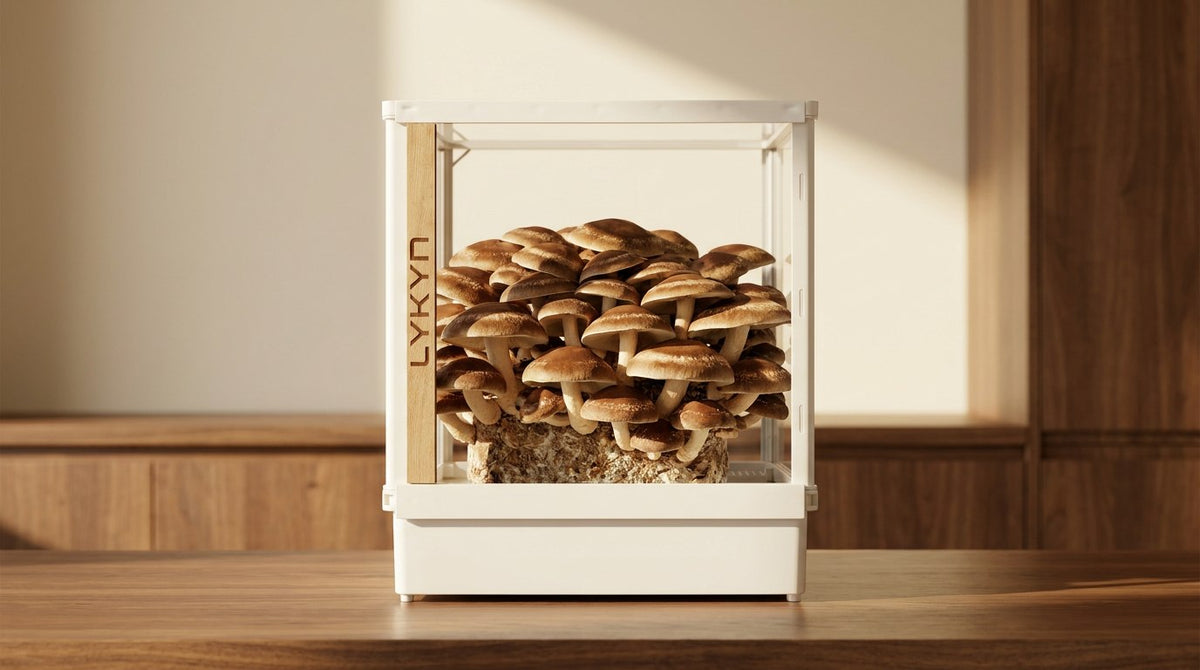
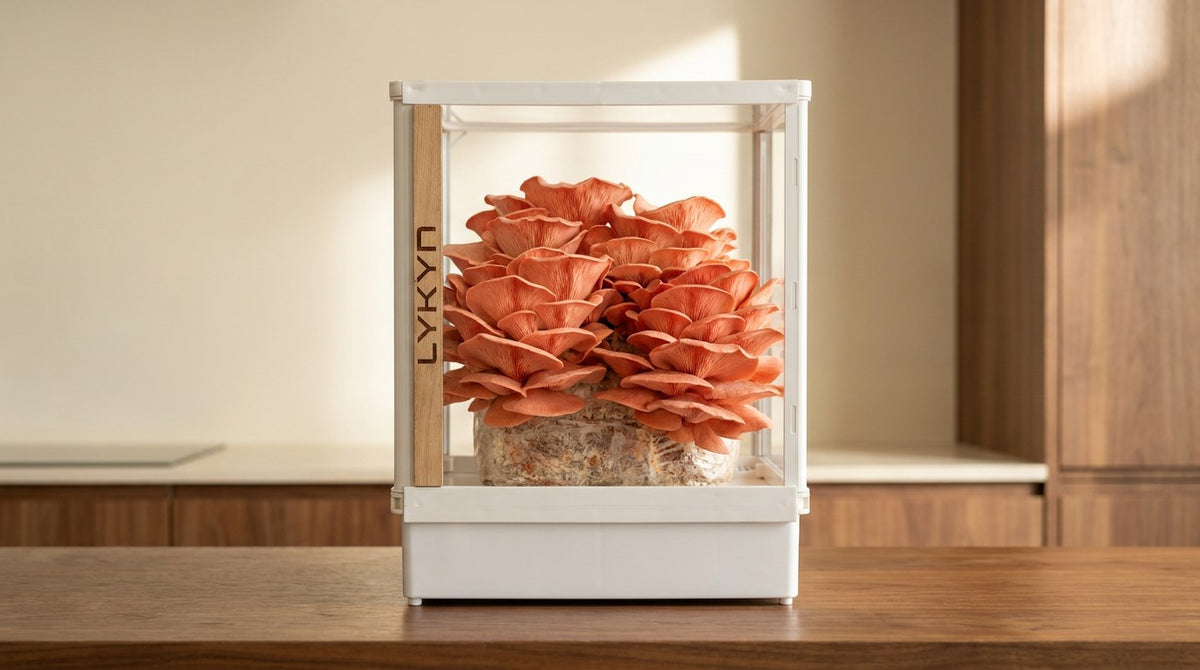
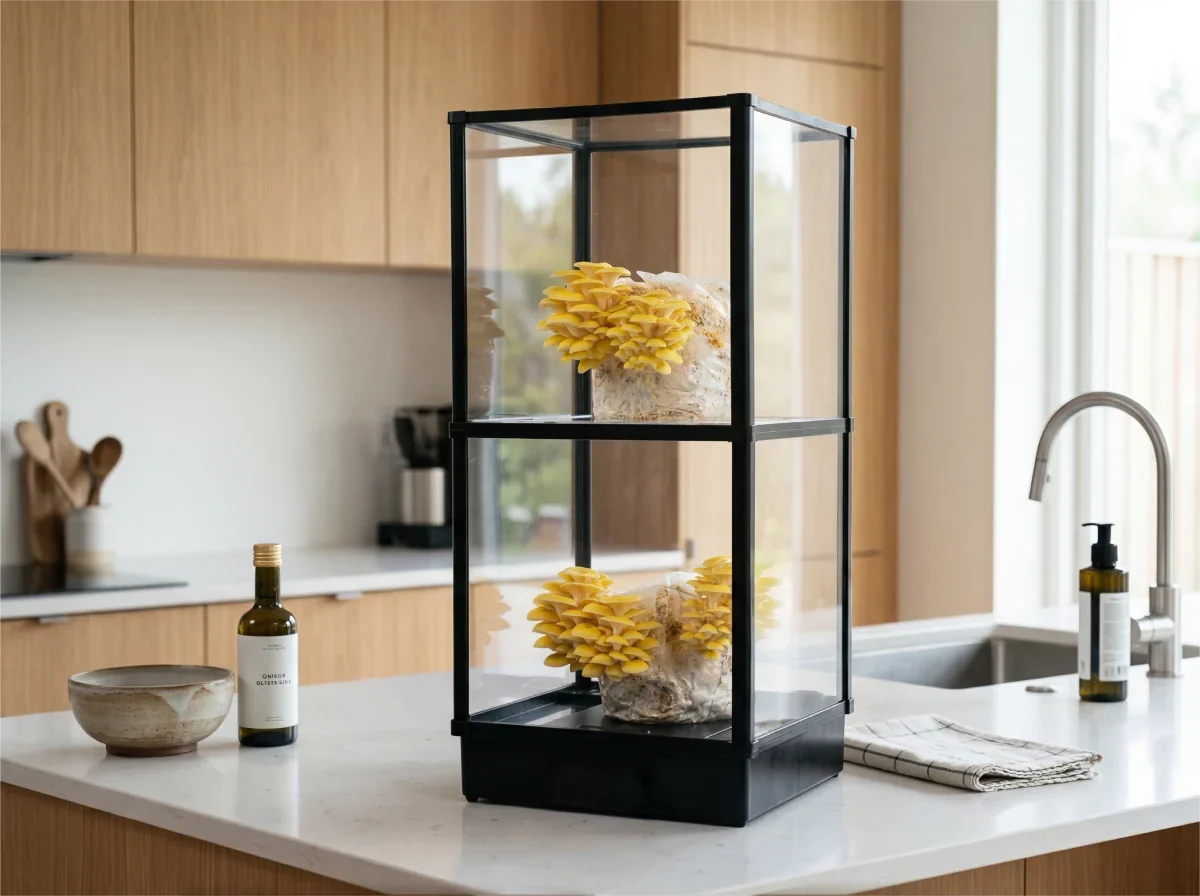
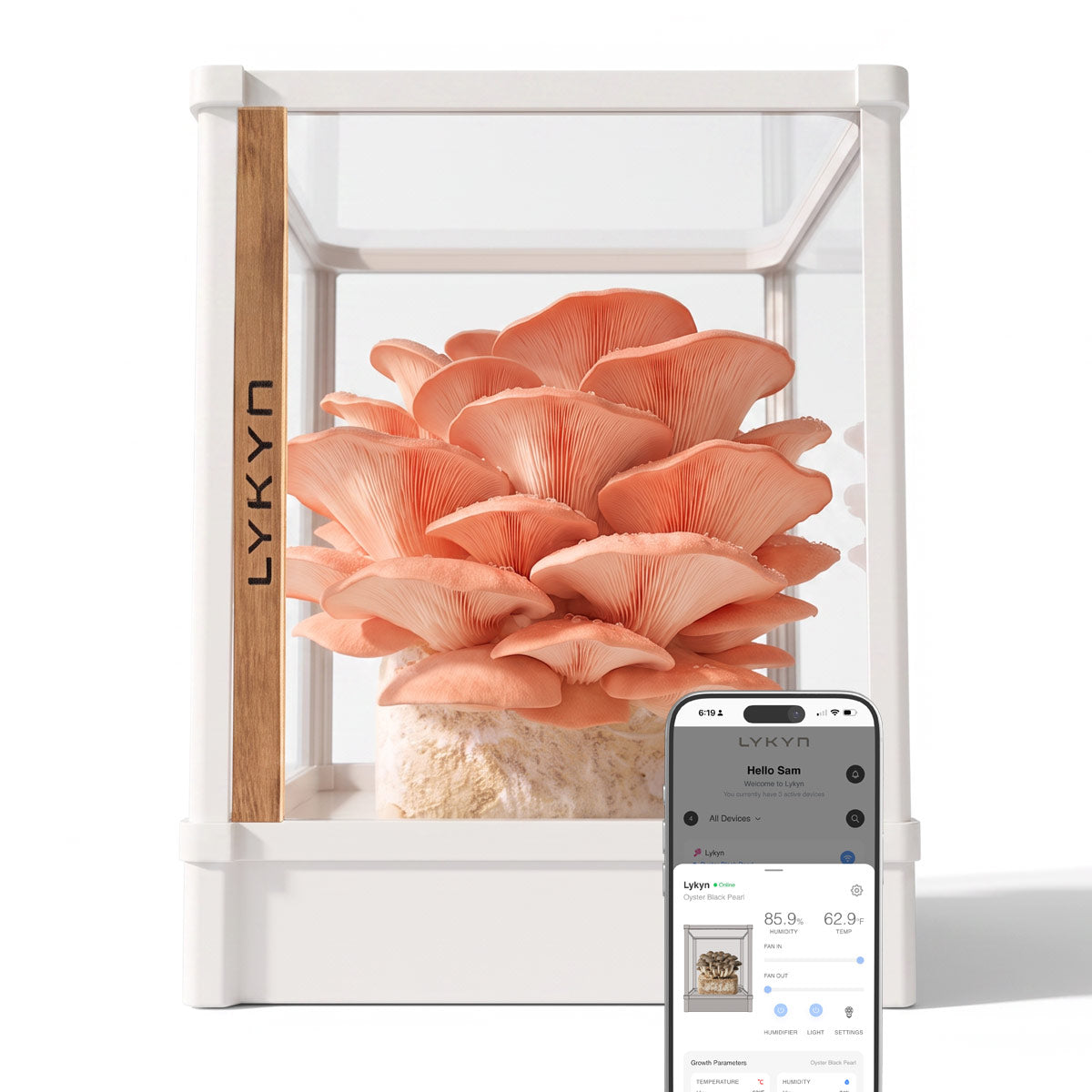
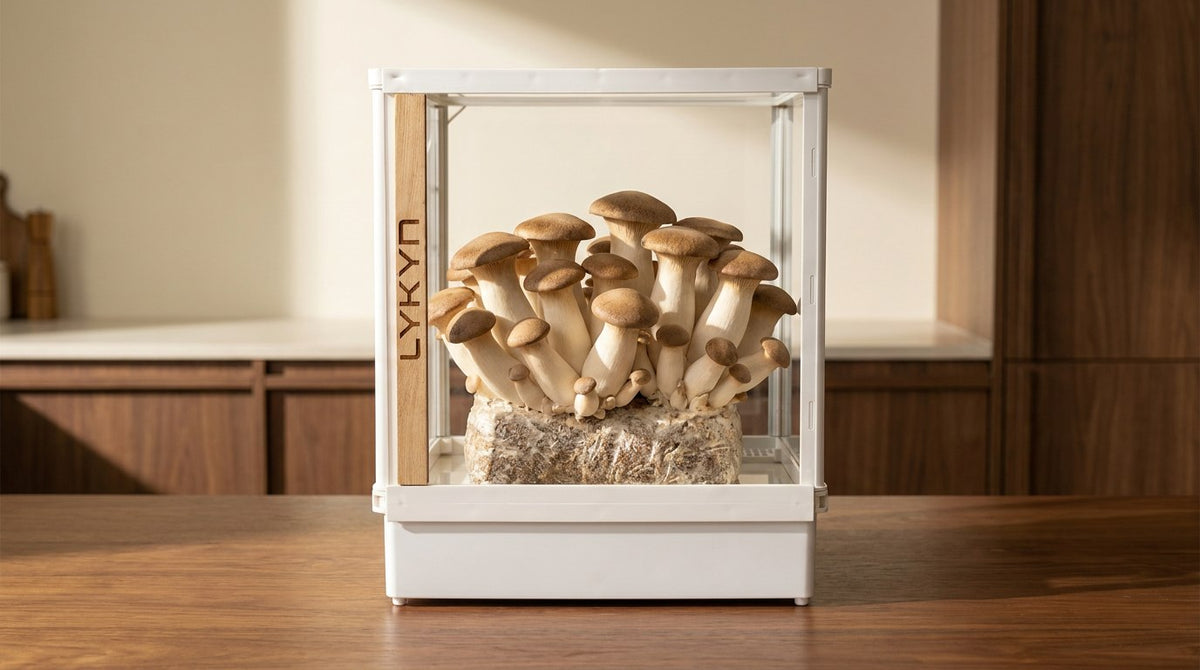
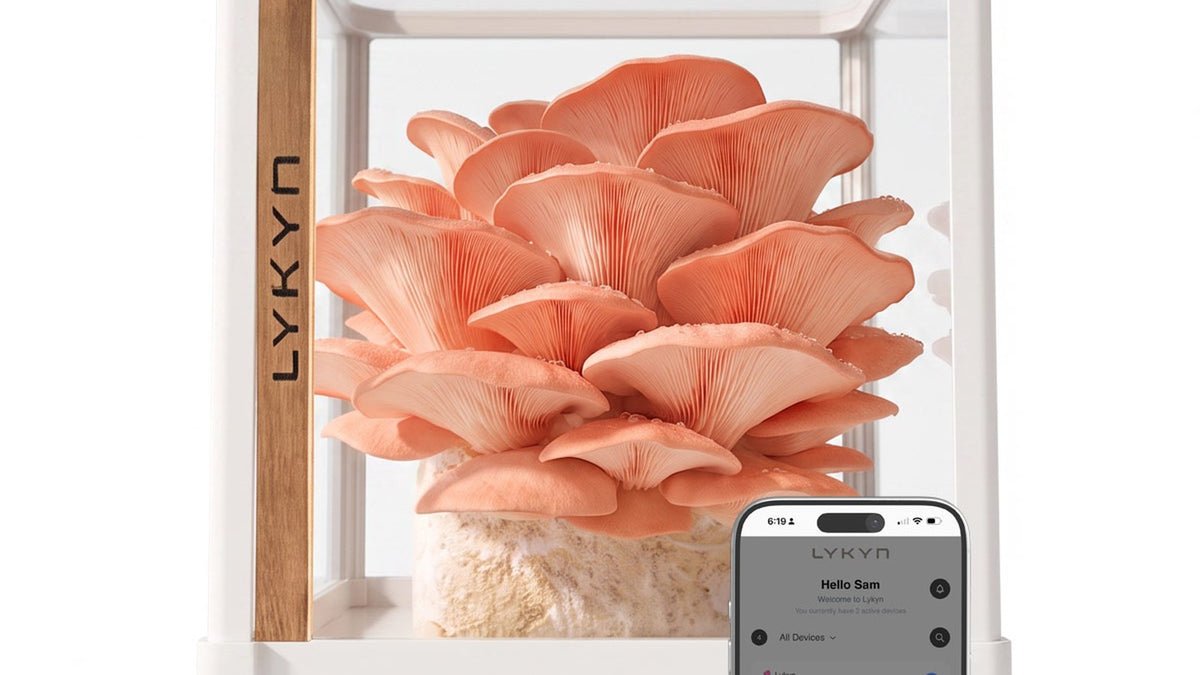
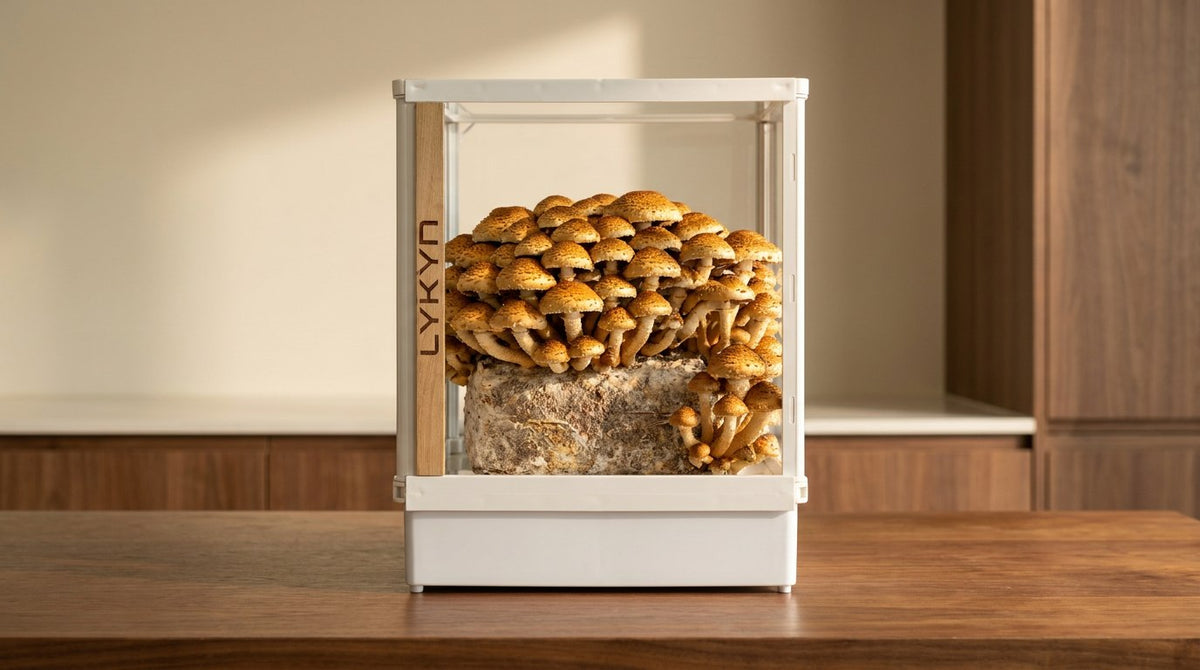
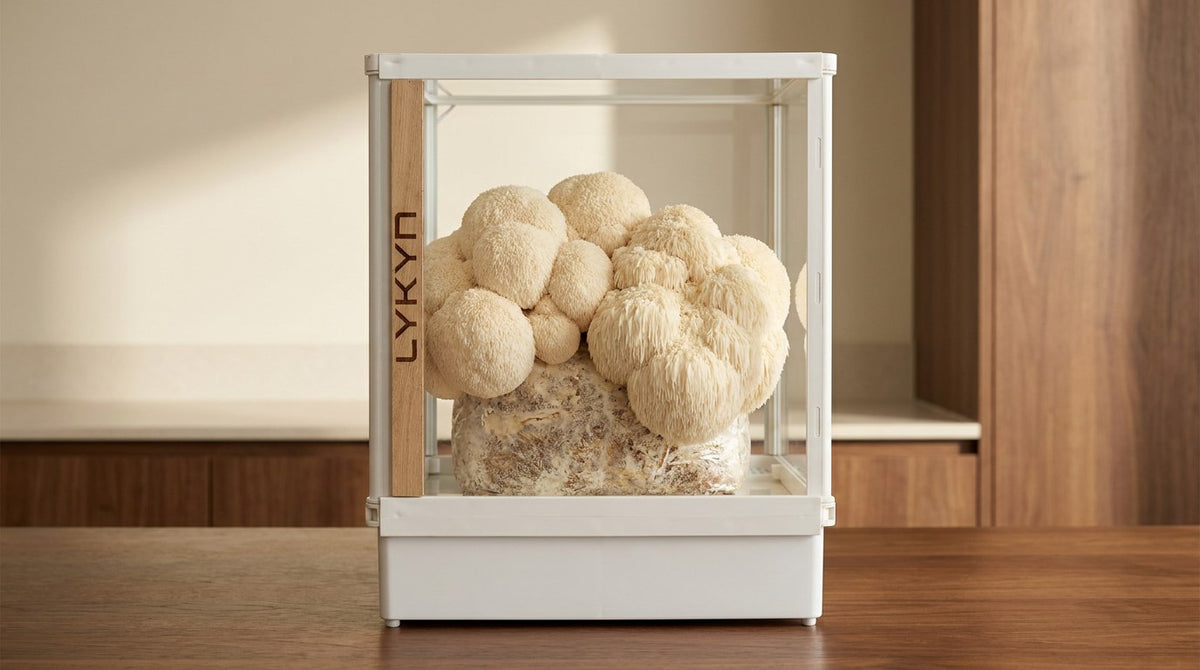
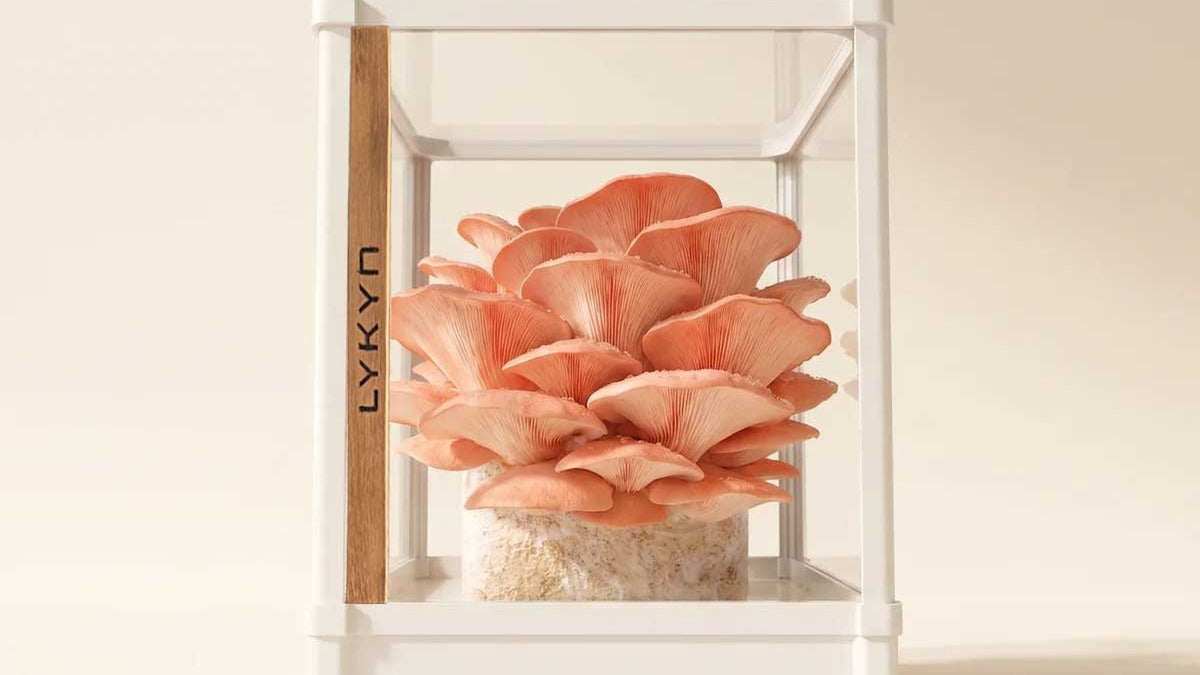
- Geschlossene intelligente Anzuchtboxen. Ein wiederverwendbares Gerät mit einer versiegelten Kammer, automatischer Luftfeuchtigkeit, Frischluftzufuhr und Beleuchtung. Sie legen einen Nachfüllblock ein, das Gerät regelt das Klima, und Sie ernten. Höhere Anschaffungskosten, aber konsistente Ergebnisse über viele Zyklen hinweg. Kosten: 200 bis 500 $ für das Gerät plus 25 bis 40 $ pro Nachfüllblock. Ertrag: 1 bis 1,5 Pfund pro Block, wobei das Gerät jahrelang verwendbar ist.
Das richtige Format hängt davon ab, ob Sie ein einmaliges Experiment (Beutel- oder Box-Set), einige Ernten pro Jahr (Box-Set mit Feuchtigkeitszelt) oder eine kontinuierliche Heimpilzzucht (Smart Grow Box) wünschen.

Smart Chamber. Bone White Single
- 2,8L Tank, 90% Luftfeuchtigkeit automatisch
- App-gesteuert, Plug-and-Play
- 6 lb Block-Decke, auf Lager

Smart Chamber. Obsidian Black Single
- Gleiche Hardware wie Bone White
- Mattschwarzes Premium-Finish
- Passt zu jeder Kücheneinrichtung

Black Oyster Anzuchtset
- Auf Lager
- Pin in 3-5 Tagen
- Ersetzt 1 Kammerzyklus
Arten, die Sie realistisch in einem Kit anbauen können
Einige Arten eignen sich für ein Kit-Format. Andere nicht, unabhängig davon, wie gut das Kit konzipiert ist. Die Arten, die zuverlässig als Heimzucht-Kits funktionieren:
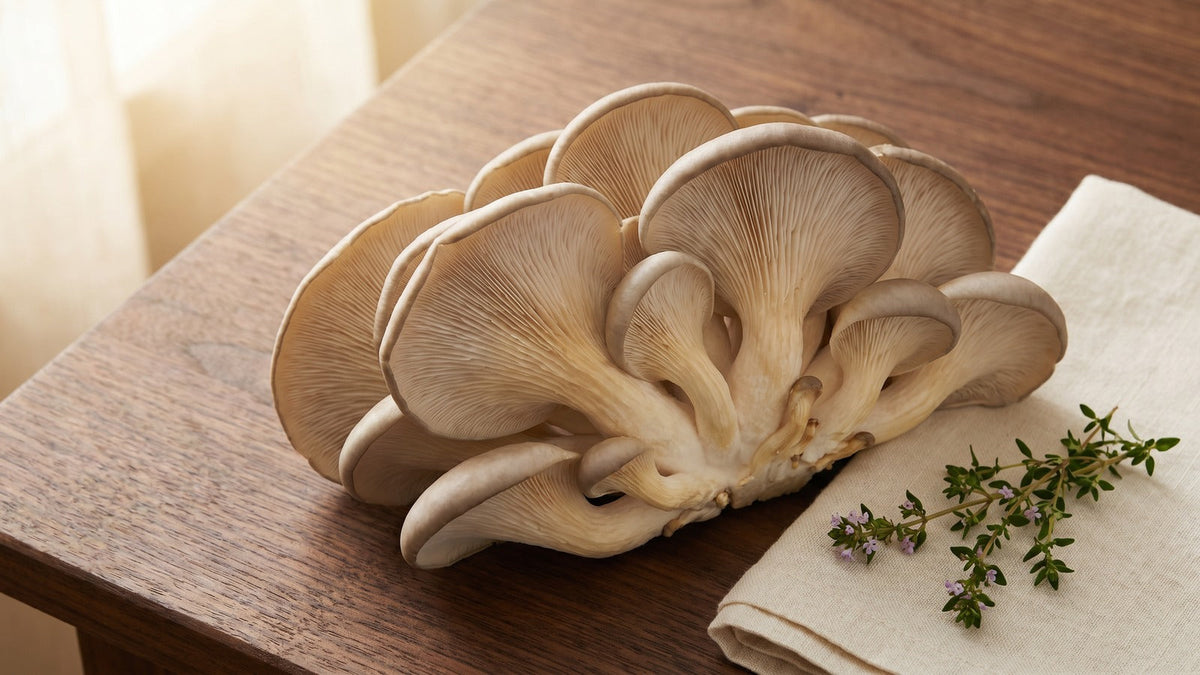
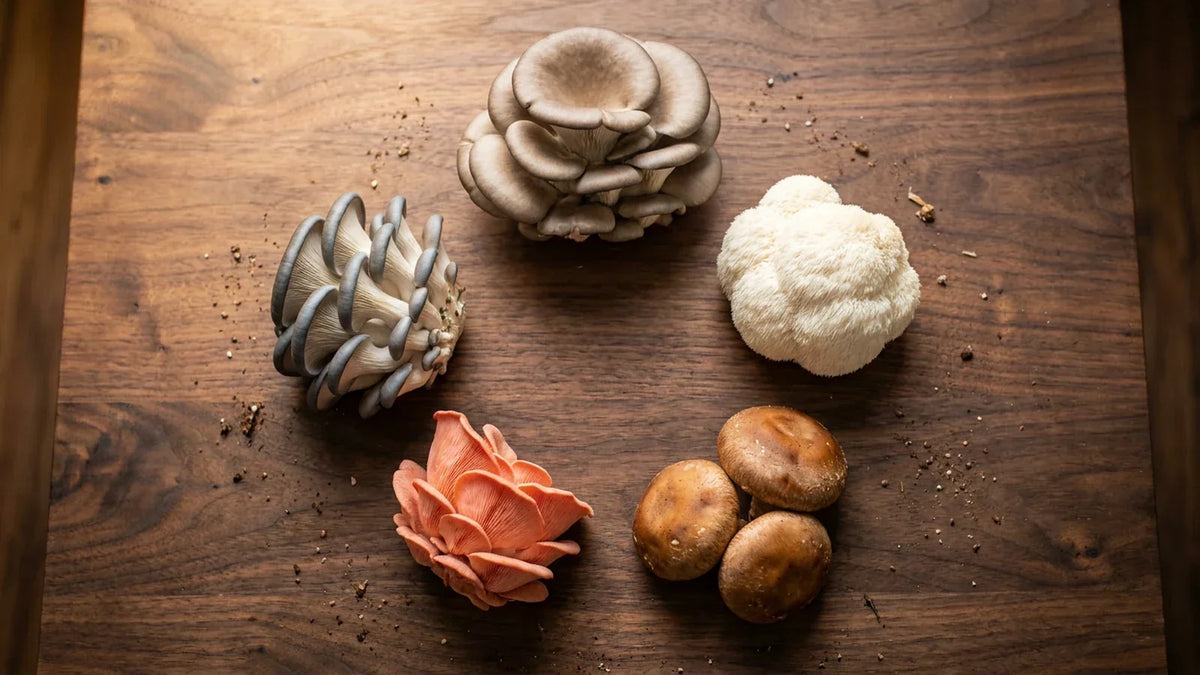
- Austernpilze (Pleurotus ostreatus, P. eryngii, P. djamor): Die klassischen Kit-Arten. Schnell (10 bis 14 Tage), fehlertolerant, ertragreich. Rosa, blaue, goldene und Königs-Austernpilze funktionieren alle.
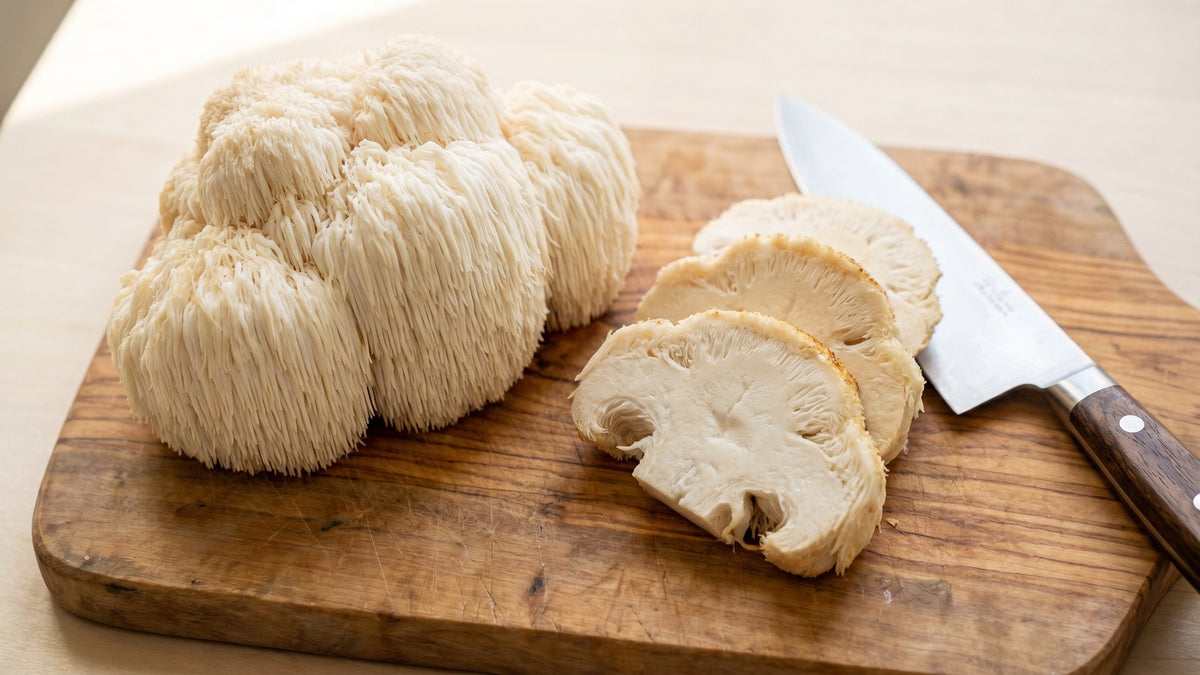
- Löwenmähne (Hericium erinaceus): Etwas langsamer (14 bis 21 Tage), wunderschönes Pompon-Wachstum, großer kulinarischer und funktionaler Reiz.
- Shiitake (Lentinula edodes): Funktioniert als Block-Kit (Sägemehlblock-Format). 14 bis 28 Tage. Geringerer Ertrag pro Kit als Austernpilze, aber Premium-Qualität.
- Pioppino (Cyclocybe aegerita): Ein nussiger, dichtfleischiger Pilz, der gut im Kit-Format gedeiht. 14 bis 21 Tage.
- Reishi (Ganoderma lucidum): Langsam (60+ Tage), aber einzigartig. Hauptsächlich für medizinische Zwecke angebaut, nicht zum Verzehr.
Arten, die in Kits nicht gut funktionieren, obwohl sie als solche verkauft werden:
- Morcheln (Morchella spp.): Freilandkulturen, keine Kit-Kulturen. Mehrjährige Zeiträume, 10 bis 30 % Erfolgsquote.
- Trüffel: Benötigen Baum-Wirte, 5 bis 10 Jahre zur Etablierung.
- Pfifferlinge, Steinpilze, Matsutake: Mykorrhizapilze, die spezifische Baumpartner benötigen. Nicht in einem Kit kultivierbar.
- Champignons (Agaricus bisporus): In einem Kit möglich, erfordern aber kompostiertes Substrat und eine Deckschicht, die bei den meisten Kits fehlt. Möglich, aber heikel.
Wenn ein Kit Pfifferlinge, Trüffel oder Steinpilze in Ihrer Küche verspricht, betrachten Sie es als Betrug. Die Biologie erlaubt den Indoor-Kit-Anbau dieser Arten einfach nicht.

Befeuern Sie Ihre Pilzreise
Smart Mushroom Grow Chamber
Plug-and-Play Smart Chamber mit Luftfeuchtigkeit, Licht und Luftstrom, abgestimmt auf jede Spezies. Anfänger ernten ihre erste Ernte in Tagen, nicht Monaten.
In den Warenkorb 299 $Wie ein typischer Anbau mit einem Kultivierungsset funktioniert
Vom Auspacken bis zur Ernte verläuft ein typisches Austern- oder Löwenmähnen-Kit wie folgt:
- Tag 1: Kit auspacken. An einen Ort mit indirektem Licht und stabilen Temperaturen zwischen 18 und 22 Grad Celsius stellen. Die empfohlene Öffnung schneiden (normalerweise ein X oder ein horizontaler Schlitz). Die Öffnung leicht mit gefiltertem Wasser besprühen.
- Tage 2 bis 5: 1 bis 2 Mal täglich sprühen. Die Substratoberfläche sollte feucht, nicht durchnässt aussehen. Kleine, stifftartige Primordien erscheinen, manchmal innerhalb von 48 Stunden, manchmal bis Tag 5.
- Tage 6 bis 10: Die Pins entwickeln sich zu erkennbaren Miniaturpilzen. Häufiger sprühen, wenn Sie Trockenheit bemerken. Wenn Sie flauschiges weißes Myzel sehen, das die Pins überwuchert, die Frischluftzufuhr erhöhen.
- Tage 11 bis 14: Die Pilze erreichen Erntgröße. Der richtige Erntezeitpunkt ist, wenn die Kappen gerade anfangen abzuflachen und die Ränder noch leicht eingerollt sind (Austernpilz) oder wenn Zähne/Stacheln vollständig entwickelt sind, aber noch keine Sporen abwerfen (Löwenmähne).
- Tag 14 und später: Ernten Sie, indem Sie den gesamten Cluster an der Basis drehen und ziehen. Warten Sie 7 bis 14 Tage, sprühen Sie leicht, und ein zweiter Flush erscheint. Die meisten Kits produzieren insgesamt 2 bis 4 Flushes.
Was Sie um das Kit herum benötigen
Ein Beutel-Kit benötigt fast nichts. Eine Sprühflasche mit gefiltertem oder destilliertem Wasser, einen Platz auf der Arbeitsplatte mit indirektem Licht und 14 Tage Aufmerksamkeit.
Ein Box- oder Smart-Kit-Setup bietet den Komfort stabiler Luftfeuchtigkeit, verwendet aber den gleichen Workflow. Etwas weniger Sprühen, etwas zuverlässigere Erträge.
Was Sie für die meisten Kits NICHT benötigen:
- Sterile Handschuhe oder sterilen Arbeitsbereich (das Kit ist vorbesiedelt)
- Eine Still-Air-Box oder Laminar-Flow-Haube
- Dampfkochtopf, Autoklav oder Pasteurisierungsgeräte
- Ein Indoor-Growzelt (es sei denn, Sie betreiben mehrere Kits gleichzeitig)
Einer der Hauptvorteile von Anzucht-Kits ist, dass sie den Teil des Pilzanbaus eliminieren, der ein steriles Labor erfordert. Der Hersteller des Kits hat diese Arbeit für Sie erledigt.
Häufige Fehler und Behebungen bei Anzucht-Kits
- Keine Pins nach 10 Tagen: Zu trocken, zu kalt oder kontaminiert. Sprühen erhöhen, Temperatur prüfen, auf abweichende Farben achten.
- Lange Stiele, winzige Kappen: CO2 zu hoch (schlechter Frischluftaustausch). Kit an einen besser belüfteten Ort stellen oder den Bereich zweimal täglich belüften.
- Rissige Kappenränder, trockene Oberfläche: Luftfeuchtigkeit zu niedrig. Häufiger sprühen, eine Feuchtigkeitszelt über das Kit legen.
- Grüne, schwarze oder pink-orange Flecken: Schimmelkontamination. Betroffene Bereiche herausschneiden. Wenn sich die Kontamination ausbreitet, ist das Kit möglicherweise nicht mehr zu retten.
- Pilze wachsen, erreichen aber nie die volle Größe: Substrat schneller als erwartet erschöpft oder Umweltstress. Ernten, was Sie haben, sprühen und einen weiteren Flush versuchen.
Ein Kit auswählen, das zu Ihrem Leben passt
Das richtige Anzucht-Kit hängt davon ab, wie oft Sie frische Pilze möchten und wie viel manuelle Pflege Sie betreiben wollen:
- Einmaliger Anbau aus Neugier: Kaufen Sie ein einzelnes Beutel-Kit. 20 bis 40 $. In einem Monat erledigt.
- Gelegentliche Gourmet-Ernten, 3 bis 4 Mal im Jahr: Kaufen Sie Box-Kits mit Feuchtigkeitszelten, wenn Sie sie brauchen. 30 bis 60 $ pro Ernte.
- Regelmäßig wöchentlich frische Pilze: Investieren Sie in ein geschlossenes Smart-Grow-Kit und wechseln Sie die Nachfüllblöcke. Höhere Anschaffungskosten, geringere Kosten pro Ernte, viel weniger tägliches Herumfummeln. Stöbern Sie in Pilzzucht-Sets für das Smart-Kit-Format, wenn das Ihren Zielen entspricht.
Der ehrliche Kompromiss
Anzucht-Kits sind kein Weg, Pilze billiger anzubauen, als sie im Supermarkt zu kaufen. Ein 30-Dollar-Kit, das 1 Pfund Austernpilze produziert, kostet ungefähr dasselbe wie 1 Pfund Austernpilze bei einem Spezialitätenhändler. Der Grund, warum Sie Ihre eigenen anbauen sollten, ist die Frische, die Vielfalt (Arten, die Sie lokal nicht finden können), das Erlebnis, wie Pilze wachsen, der Bildungswert und die Zufriedenheit, mit etwas zu kochen, das Sie selbst angebaut haben.
Wenn Sie die Kosten mit den Preisen im Supermarkt vergleichen, gewinnen die Kits nicht. Wenn Sie sie mit dem Erlebnis des Anbaus vergleichen, gewinnen sie leicht.
Unterm Strich
Ein Pilzzucht-Set ist der beste Einstieg in den Pilzanbau zu Hause im Jahr 2026. Die verfügbaren Arten funktionieren tatsächlich, die Zeitpläne sind vorhersehbar und der manuelle Pflegeaufwand ist gering. Beginnen Sie mit einem Austernpilz- oder Löwenmähnen-Kit, sehen Sie, wie sich der Arbeitsablauf anfühlt, und entscheiden Sie dann, ob Sie zu einer Smart Grow Box wechseln oder bei einmaligen Kits für gelegentliche Anbauten bleiben möchten. Beide Wege führen zu frischen Pilzen, und das ist der ganze Sinn.
Aktie:
Morchel-Pilzkarte 2025: Wo und wann man sie findet
Morchel-Pilzkarte 2025: Wo und wann man sie findet