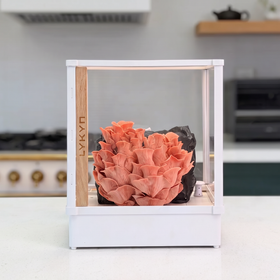



Die Teile eines Pilzes, die die meisten Menschen benennen können (Hut, Stiel, Lamellen), machen nur einen Bruchteil dessen aus, was beim Wachstum eines Pilzes tatsächlich geschieht. Ein Pilz ist der Fruchtkörper eines Pilzes, so wie ein Apfel der Fruchtkörper eines Apfelbaums ist. Und wie eine Frucht übernimmt er als sichtbare Struktur die Fortpflanzung. Der Rest des Organismus lebt unterirdisch oder in seinem Substrat als ein Netzwerk aus Fäden, das Myzel genannt wird.
Dieser Leitfaden führt durch alle Teile, die an einem ausgewachsenen Pilz sichtbar sind, sowie durch die unterirdischen Teile, aus denen er entsteht – mit den korrekten mykologischen Begriffen und einer Erklärung, welche Funktion die einzelnen Teile haben.
Der Hut (Pileus)

Smart Chamber. Bone White Single
- 2,8-l-Wassertank, automatische Luftfeuchtigkeit von 90 %
- App-gesteuert, Plug-and-Play
- Kapazität für Blöcke bis 2,7 kg, auf Lager

Smart Chamber. Obsidian Black Single
- Gleiche Ausstattung wie Bone White
- Hochwertiges mattes Schwarz
- Passt zu jeder Kücheneinrichtung

Zuchtset für schwarze Austernpilze
- Auf Lager
- Erste Primordien in 3–5 Tagen
- Ersetzt einen Zuchtzyklus in der Kammer
Der schirmförmige obere Teil des Pilzes. Der Hut schützt die darunterliegende sporentragende Fläche vor Regen, Sonne und Fressfeinden und sorgt zugleich dafür, dass die Fortpflanzungsstrukturen für eine optimale Sporenverbreitung positioniert sind.
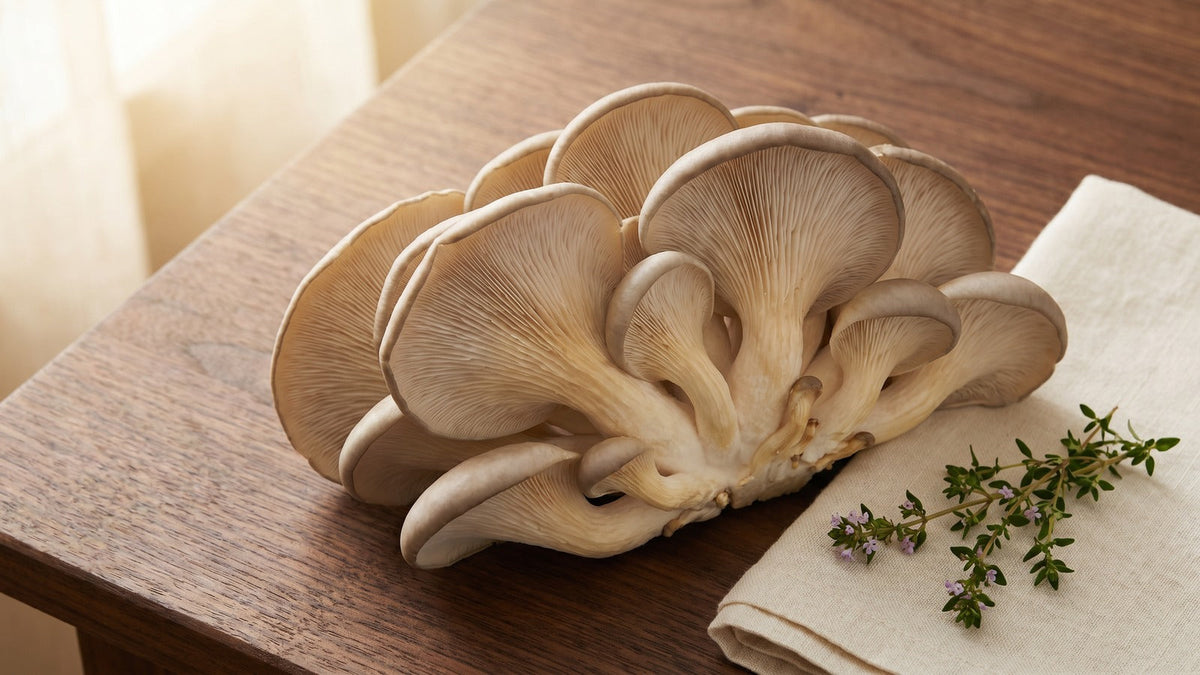
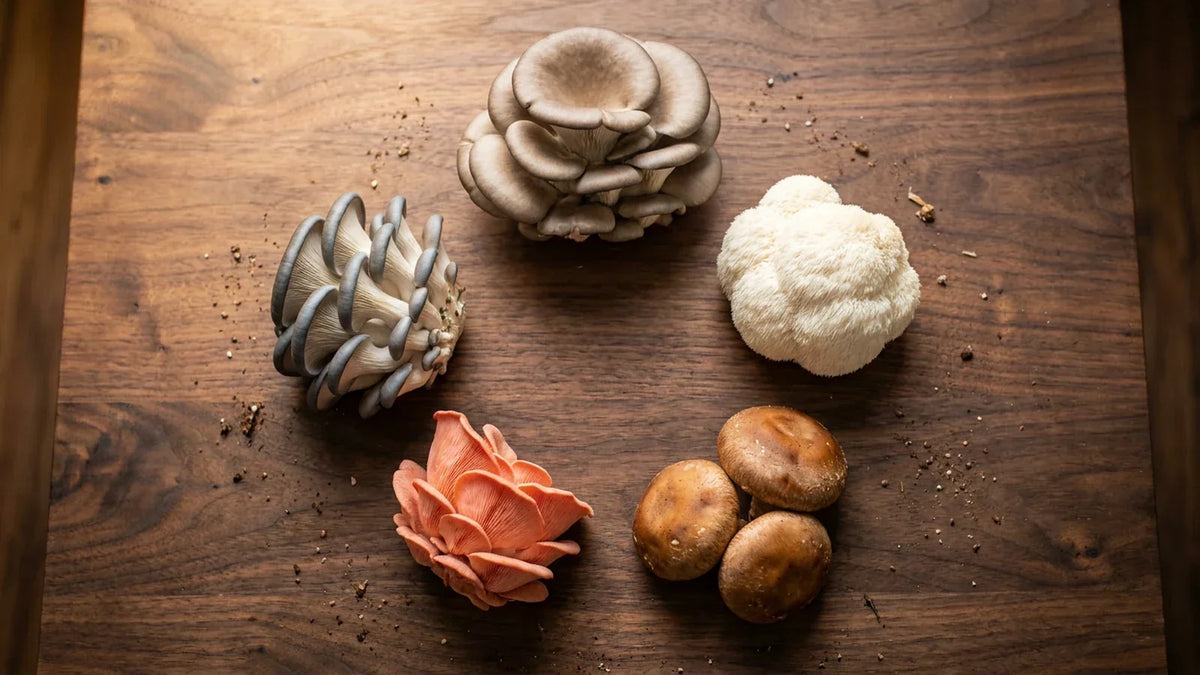
Die Hutform unterscheidet sich je nach Art enorm. Junge Pilze beginnen als kleine Kugeln und flachen mit der Reife ab. Austernpilze haben gerillte, fächerförmige Hüte. Morcheln haben wabenartig vertiefte Hüte. Becherlinge (Peziza) bilden einen nach innen gestülpten Hut in Form eines richtigen Bechers. Jede Form ist eine evolutionäre Lösung für eine effiziente Sporenfreisetzung.
Die Hutoberfläche kann glatt, schuppig (squamulos), warzig, faserig oder klebrig (viscid) sein. Farbe und Textur des Huts sind wichtige Bestimmungsmerkmale für Sammler.
Die Lamellen oder andere sporentragende Flächen
Die meisten bekannten Pilze (wie Champignons, Cremini, Portobello und Shiitake) haben Lamellen – dünne Platten, die auf der Unterseite vom Stiel bis zum Hutrand verlaufen. Die Sporen bilden sich auf den Lamellen und fallen zur Verbreitung in die Luft. Die Farbe der Lamellen verändert sich, wenn die Sporen reifen. Deshalb können junge Lamellen rosa oder blass sein, während alte dunkelbraun oder schwarz sind.
Nicht alle Pilze haben Lamellen. Röhrlinge haben eine schwammige Schicht aus Poren. Porlinge haben festere Röhren. Stoppelpilze haben kleine Stacheln. Stäublinge halten ihre Sporen in einem geschlossenen Fruchtkörper zurück, der sie bei Erschütterung wolkenartig freisetzt. Bei Becherlingen ist die Innenseite mit der sporentragenden Schicht ausgekleidet. Jede Variante ist eine andere Lösung für dasselbe Problem (Sporen in den Wind freizusetzen), und die Art der Sporenfläche ist eines der ersten Merkmale, die Mykologen zur Bestimmung untersuchen.
Der Stiel (Stipes)
Der Stiel hebt den Hut vom Boden ab, damit die Sporen ungehindert in den Wind gelangen können. Nicht alle Pilze haben einen ausgeprägten Stiel. Austernpilze haben sehr kurze Stiele, und Konsolenpilze (Baumpilze) haben gar keinen. Trüffeln, die unterirdisch fruchten, haben keinen Stiel, weil sie ihre Sporen überhaupt nicht in die Luft abgeben sollen (stattdessen graben Tiere sie aus und verbreiten die Sporen).
Der Stiel kann hohl oder massiv, glatt oder faserig, geringelt oder glatt, schuppig oder kahl sein. Manche Stiele haben im oberen Bereich einen Ring (den Annulus). Er ist der Rest eines Gewebes, das den Rand des jungen Huts mit dem Stiel verband und beim Aufschirmen des Huts riss.
Der Annulus (Ring)
Der Ring um den Stiel entsteht aus dem Teilvelum, einer Gewebeschicht, die die sich entwickelnden Lamellen im jungen Stadium des Pilzes schützte. Wenn sich der Hut aufschirmt, reißt das Teilvelum am Hutrand ab und hinterlässt häufig einen Ring am Stiel.
Manche Arten haben auffällige Ringe (Amanita, bestimmte Arten der Gattung Agaricus). Bei anderen verschwinden die Ringe, wenn der Pilz altert. Manche Arten haben überhaupt kein Teilvelum (Austernpilze, Pfifferlinge).
Die Volva (Scheide an der Stielbasis)
Manche Arten, insbesondere aus der Gattung Amanita und einigen anderen Gattungen, wachsen in einem Gesamtvelum, einer Art eierschalenartiger Hülle, die beim Hervortreten des Pilzes aufreißt. Der Rest dieser Hülle an der Stielbasis wird Volva genannt. Sie sieht häufig wie ein kleiner Becher oder ein aufgerissener Sack aus, der den unteren Teil des Stiels umgibt.

Starte deine Pilzzucht
Intelligente Pilzzuchtkammer
Plug-and-Play-Pilzzuchtkammer mit optimal eingestellter Luftfeuchtigkeit, Beleuchtung und Luftzirkulation für jede Art. Anfänger ernten ihre erste Pilzwelle in wenigen Tagen statt Monaten.
In den Warenkorb – $299Die Volva ist ein entscheidendes Bestimmungsmerkmal. Sowohl der tödlich giftige Grüne Knollenblätterpilz (Amanita phalloides) als auch der Weiße Knollenblätterpilz (Amanita virosa) haben eine ausgeprägte Volva. Wer nicht danach sucht und einen tödlich giftigen Pilz stattdessen fälschlich für einen essbaren Champignon hält, trägt zu den meisten tödlichen Pilzvergiftungen bei. Grabe bei jedem Wildpilz, den du bestimmen möchtest, immer die Stielbasis aus.
Das Hymenium
Das ist die Fachbezeichnung für die sporenbildende Fläche, egal ob es sich um Lamellen, Poren, Stacheln oder eine glatte Oberfläche handelt. Die Sporen entstehen auf spezialisierten Zellen, den Basidien (bei Basidiomyceten wie den meisten Speisepilzen) oder Asci (bei Ascomyceten wie Morcheln und Trüffeln). Das Hymenium ist der Maschinenraum der Fortpflanzung.
Die Sporen
Sporen sind die Fortpflanzungseinheiten und entsprechen den Samen bei Blütenpflanzen. Ein einzelner Fruchtkörper setzt Millionen oder Milliarden davon frei. Jede Spore ist mikroskopisch klein, leicht genug, um von Luftströmungen davongetragen zu werden, und kann zu neuem Myzel keimen, wenn sie auf geeignetem Substrat landet.
Die Sporenfarbe ist ein wichtiges Bestimmungsmerkmal. Um sie zu erkennen, lege einen Pilzhut mit den Lamellen nach unten auf ein weißes Blatt Papier, decke ihn mit einem Glas ab und warte sechs bis zwölf Stunden. Die Sporen fallen auf das Papier und hinterlassen einen Abdruck, der ihre Farbe zeigt (weiß, rosa, braun, schwarz oder je nach Art andere Farbtöne). Sporenabdrücke sind seit über einem Jahrhundert ein wichtiges Bestimmungsmittel für Pilzsammler.
Das Myzel (unterirdisches Netzwerk)
Das ist der Teil des Pilzes, den die meisten Menschen vergessen. Der Pilz, den man pflückt, ist im Grunde der Apfel. Der Baum ist das Myzel, ein weitläufiges Netzwerk feiner weißer Fäden (Hyphen), die sich durch Erde, Holz oder Substrat ziehen. Das Myzel ist der eigentliche Organismus, der manchmal schon jahrelang, jahrzehntelang oder in Extremfällen jahrhundertelang lebt, bevor er einen Fruchtkörper hervorbringt.
Das Myzel zersetzt organisches Material, nimmt Nährstoffe auf, tauscht in symbiotischen Beziehungen Signale mit Pflanzenwurzeln aus und bildet weitläufige unterirdische Lebensgemeinschaften, die sich über Hektar erstrecken können. Der „Riesenpilz“ im Malheur National Forest in Oregon ist ein einzelnes Myzel der Hallimasch-Gattung Armillaria, das sich über fast 2.400 Acres (rund 970 Hektar) erstreckt und auf ein Alter von über 2.400 Jahren geschätzt wird.
Das Primordium und die Primordienbildung
Bevor ein Pilz als solcher erkennbar ist, beginnt er als winziger Myzelknoten, der Primordium genannt wird. Während er wächst, bildet sich daraus ein Pin, ein frühes, aufrecht wachsendes Stadium, das wie eine kleine weiße Spitze aussieht. Durch die Differenzierung der Zellen entwickelt sich daraus die typische Struktur aus Hut und Stiel.
Wenn du schon einmal zu Hause Pilze gezüchtet hast, hast du die Bildung der Primordien in Echtzeit beobachtet. Bei einem Pilzzuchtset sind die ersten Anzeichen der Fruchtbildung kleine Primordien, die aus dem Substrat hervortreten – meist 7 bis 14 Tage nach dem Start des Sets. Während der Hauptwachstumsphase verdoppelt sich die Größe des Pilzes alle 24 Stunden. Innerhalb einer Woche kannst du beobachten, wie sich der ganze Pilz bildet – Hut, Stiel und Lamellen.
Warum der Aufbau wichtig ist
Die Teile eines Pilzes zu kennen, ist mehr als bloßes Wissen am Rande. Es ist die Grundlage für die Bestimmung – wichtig für Pilzsammler, Züchter, Köche und alle, die verstehen möchten, was sie essen. Zwei Pilze können von oben ähnlich aussehen und sich doch in der Sporenfarbe, dem Vorhandensein einer Volva oder der Lamellenansatzstelle völlig unterscheiden. Das kann den Unterschied zwischen einem hervorragenden Risotto und einem Krankenhausbesuch ausmachen.
Für Züchter zeigt der Aufbau, welche Bedingungen sich für die Kultivierung der einzelnen Arten eignen (mit dem Hut nach unten, seitlich, in einer Fruchtungskammer oder auf Baumstämmen) – und hilft so bei der Einrichtung einer Pilzzucht zu Hause. Pilze sind keine Dekorationsobjekte, sondern Organismen mit einer bestimmten Struktur und Biologie sowie sehr spezifischen Anforderungen, die sie zum Gedeihen brauchen.







Aktie:
Pilztarte: 45-Minuten-Rezept mit einem knusprigen, gelingsicheren Boden
Pilztarte: 45-Minuten-Rezept mit einem knusprigen, gelingsicheren Boden