


Yes, chickens can safely eat most common edible mushrooms including button, cremini, portobello, shiitake, oyster, and lion's mane, as long as the mushrooms are cooked, served plain, and kept to under 10% of the bird's daily intake. Never feed wild-foraged mushrooms unless you have positively identified them as non-toxic. Cooked mushrooms are easier for chickens to digest than raw and carry no risk of the mild irritants present in some raw fungi.
Quick Safety Snapshot
- Safe (cooked, in moderation): button, cremini, portobello, shiitake, oyster, lion's mane, king oyster
- Never feed: any wild mushroom you cannot identify with 100% confidence, moldy or spoiled mushrooms, mushrooms cooked with salt, oil, garlic, or onion
- Portion: 1 to 2 tablespoons per full-sized hen, 1 to 2 times per week
- Cooking: steam, boil, or dry-sear plain until fully heated, then cool to room temperature
- Age limit: wait until birds are at least 8 to 10 weeks old

Understanding Chicken Nutrition and Where Mushrooms Fit
Basic Chicken Dietary Requirements
Before adding any treat to your flock's routine, it helps to know what a chicken actually needs each day:
- Protein: 16 to 20% for laying hens, 20 to 24% for growing birds
- Carbohydrates: energy from grains, scratch, and vegetables
- Fats: 3 to 5% of total diet for essential fatty acids
- Vitamins and minerals: calcium, phosphorus, vitamins A, D, E, and B-complex
- Clean water: constant access, refreshed daily
Chickens are natural omnivorous foragers. In the wild they pick up seeds, insects, worms, small reptiles, and plant matter. They may encounter mushrooms while scratching through leaf litter, and while their instincts help them avoid some toxic varieties, that instinct is not reliable enough to bet a bird's life on. According to the Poultry Extension service, treats of any kind should stay under 10% of total daily intake so the balanced layer feed does the heavy lifting.
How Mushrooms Fit Into a Chicken's Diet
Edible mushrooms bring real nutritional value when fed in moderation:
- Protein: 2 to 4 grams per 100 grams in most common varieties
- B vitamins: riboflavin, niacin, and pantothenic acid for energy metabolism and nervous system health
- Minerals: potassium, selenium, copper, and phosphorus
- Beta-glucans: compounds in oyster and shiitake mushrooms that may support immune function
- Low calorie: variety without empty energy
- Fiber: supports digestive health in small amounts
That said, mushrooms cannot replace a complete commercial chicken feed. Feed formulators get the calcium-to-phosphorus ratio, amino acid profile, and trace mineral mix dialed in for steady egg production and healthy growth. Mushrooms are a side dish, not the main course.

Which Edible Mushrooms Are Safe for Chickens
Store-Bought Varieties
Button mushrooms (Agaricus bisporus)
- Safety: safe when cooked
- Prep: trim the dirty base, chop into pea-sized pieces
- Serving: 1 to 2 tablespoons per bird
- Benefits: good protein source, very easy to digest cooked
Cremini and portobello mushrooms
- Safety: safe when cooked (same species as button, just more mature)
- Prep: remove the dark gills on large portobello caps (they can be bitter), chop appropriately
- Serving: moderate portions due to larger cap size
- Notes: familiar flavor, widely available year-round
Shiitake mushrooms (Lentinula edodes)
- Safety: safe only when thoroughly cooked
- Important: never feed shiitake raw. Raw shiitake contains lentinan, a compound that can cause skin and digestive reactions
- Prep: trim and discard the woody stem, cook completely, chop finely
- Benefits: high in B vitamins, protein, and copper
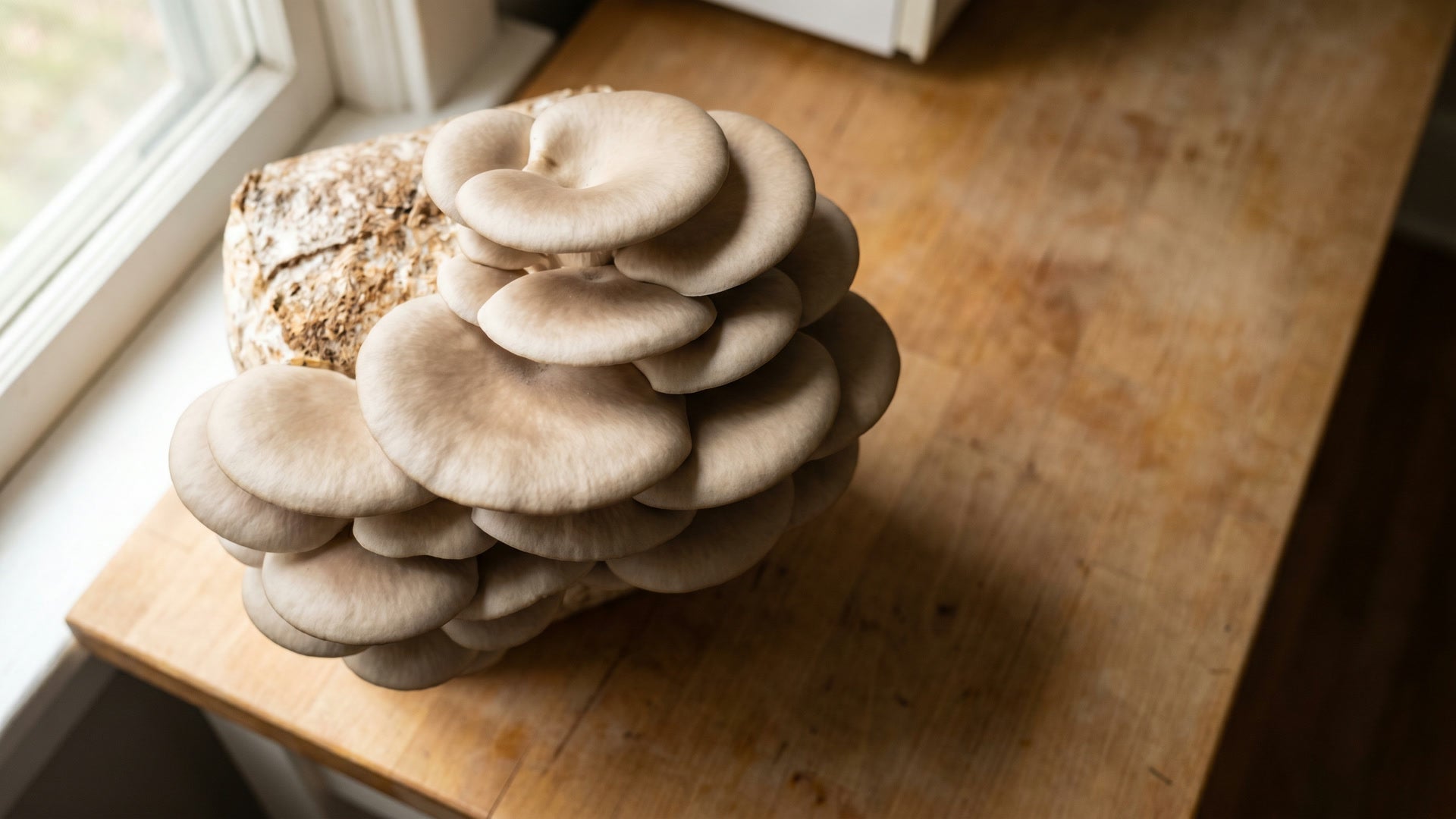
Oyster mushrooms (Pleurotus ostreatus, P. eryngii, P. djamor)
- Safety: generally safe when cooked
- Varieties: pearl, blue, golden, pink, and king oyster all work
- Prep: pan-sear or steam, tear or chop into ribbons, remove tough stems on king oyster
- Why chickens like them: mild flavor, soft texture once cooked, easy to peck up
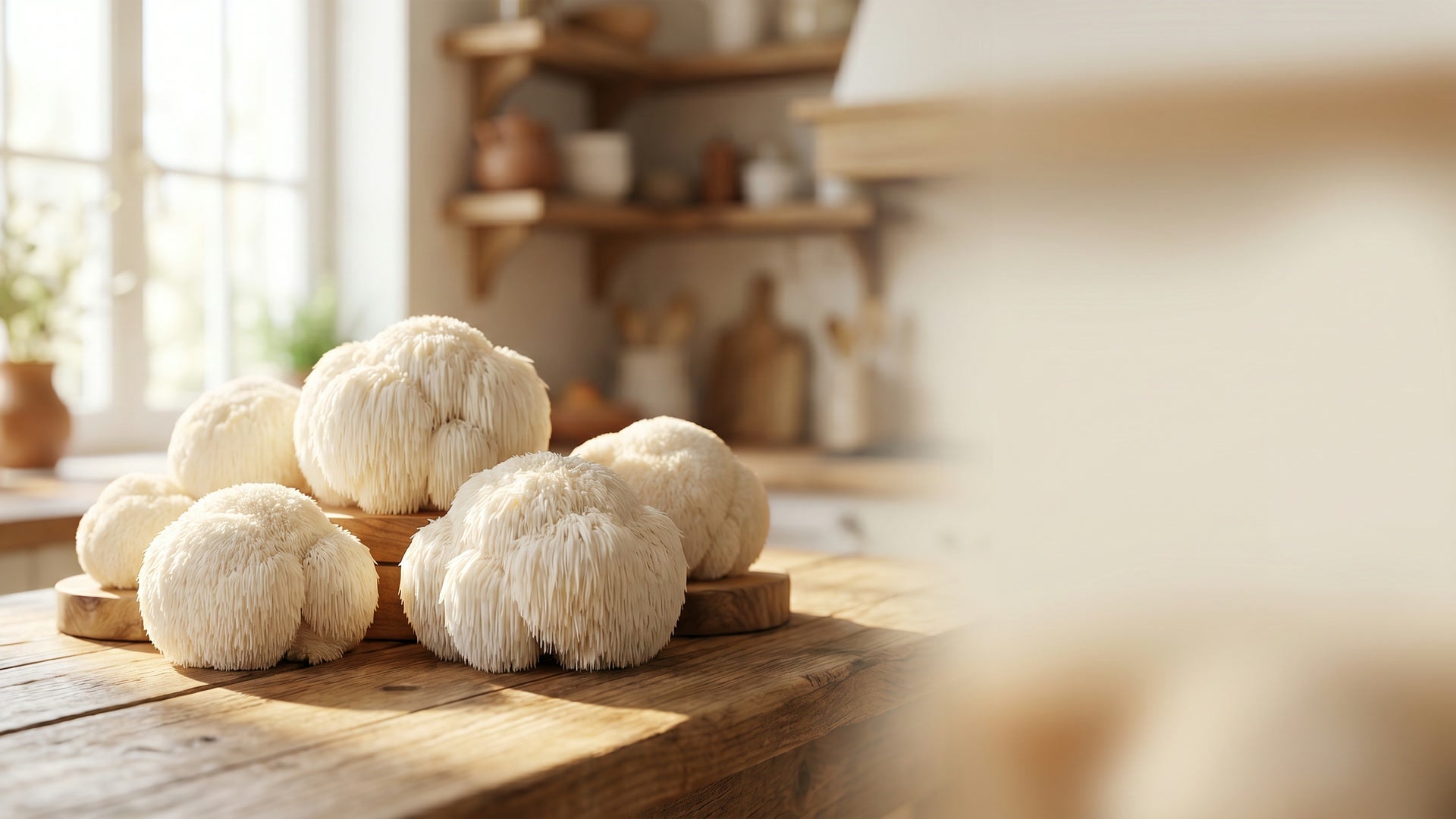
Lion's mane (Hericium erinaceus)
- Safety: safe when cooked
- Prep: tear the cluster into bite-sized chunks, dry-sear in a pan (no oil) until tender
- Notes: spongy, crab-like texture chickens find easy to eat
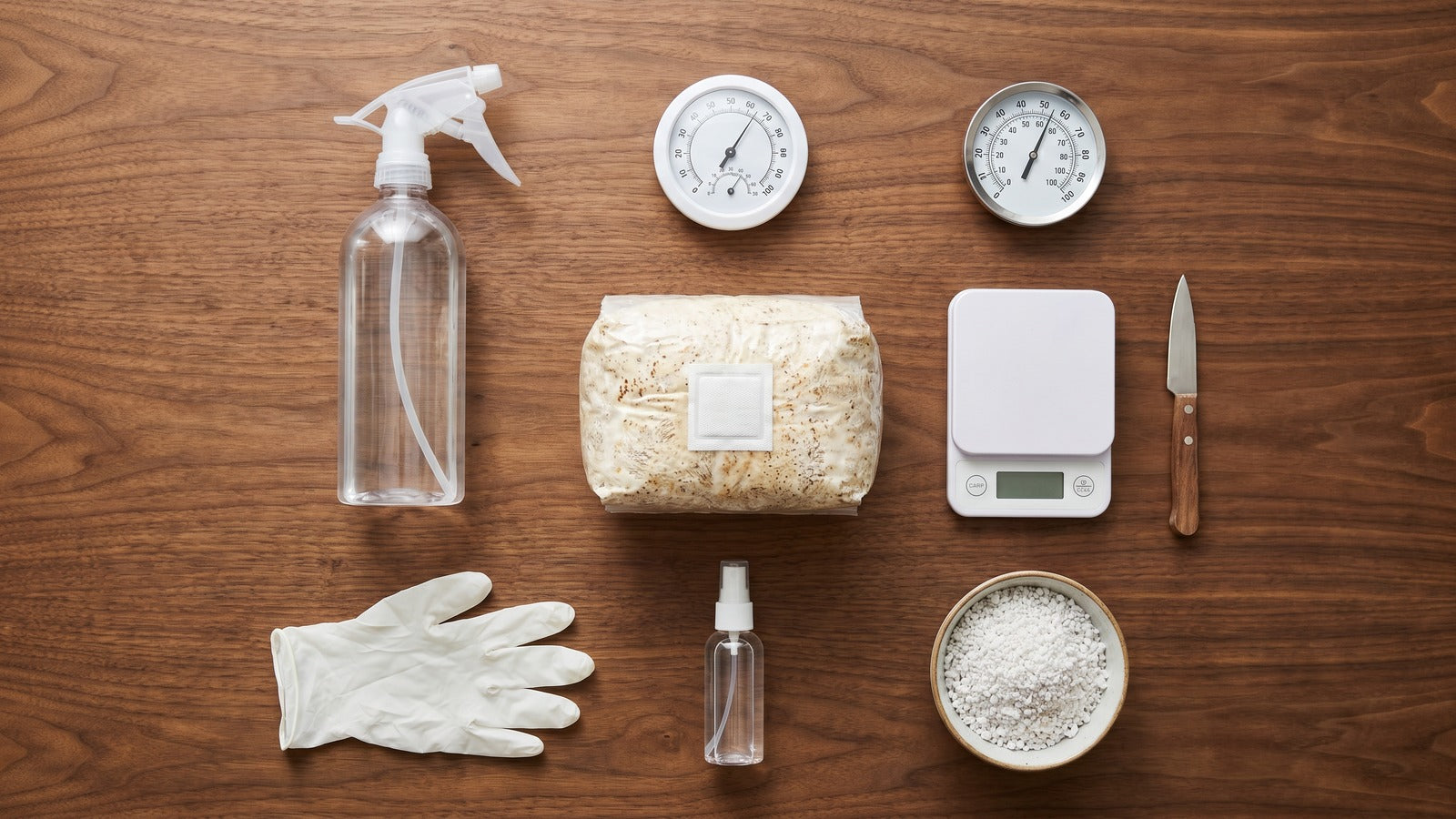
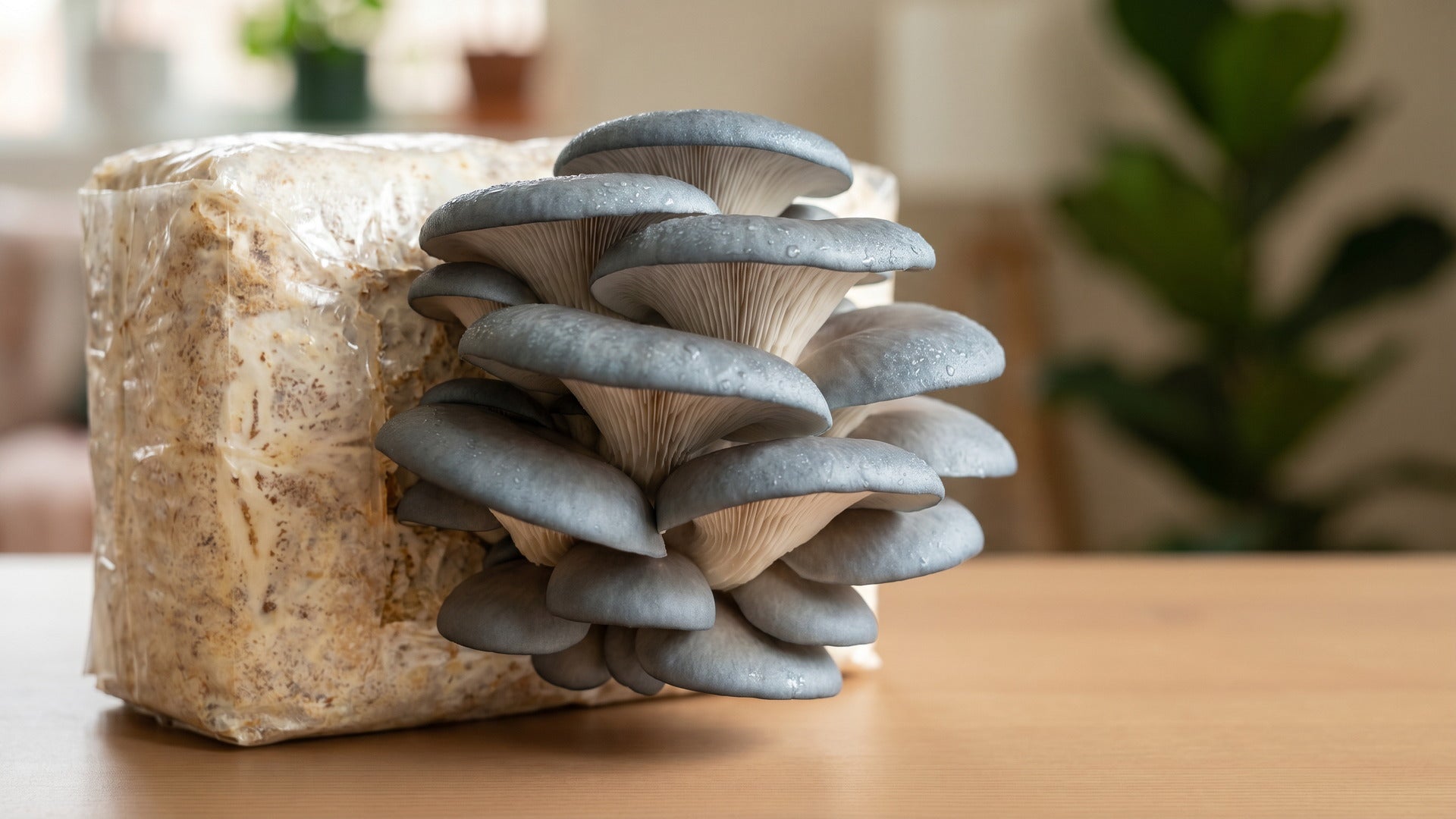
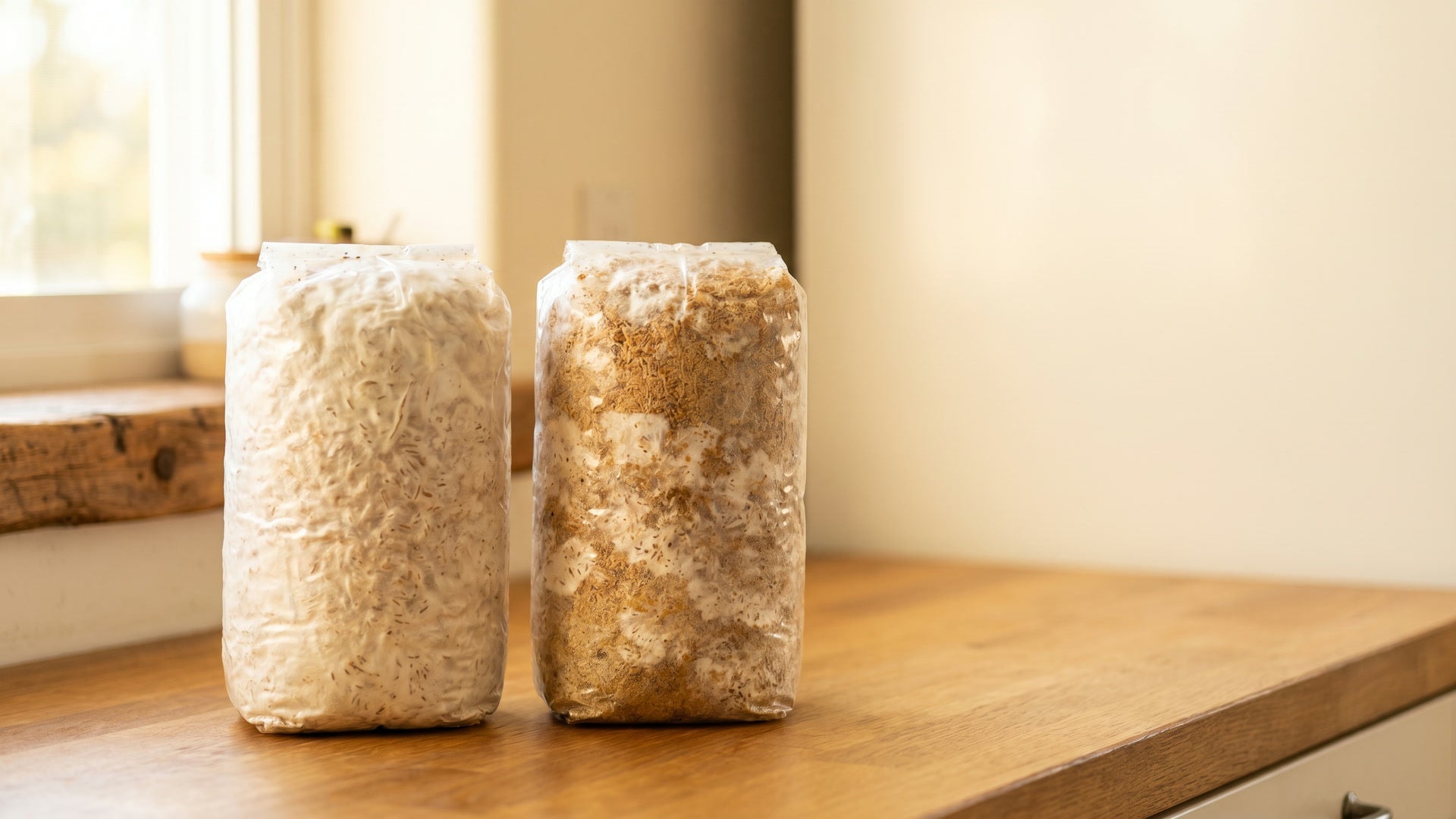
For a deeper look at growing oyster and lion's mane at home, see our guides to the oyster mushroom growing kit and the lion's mane mushroom grow kit.
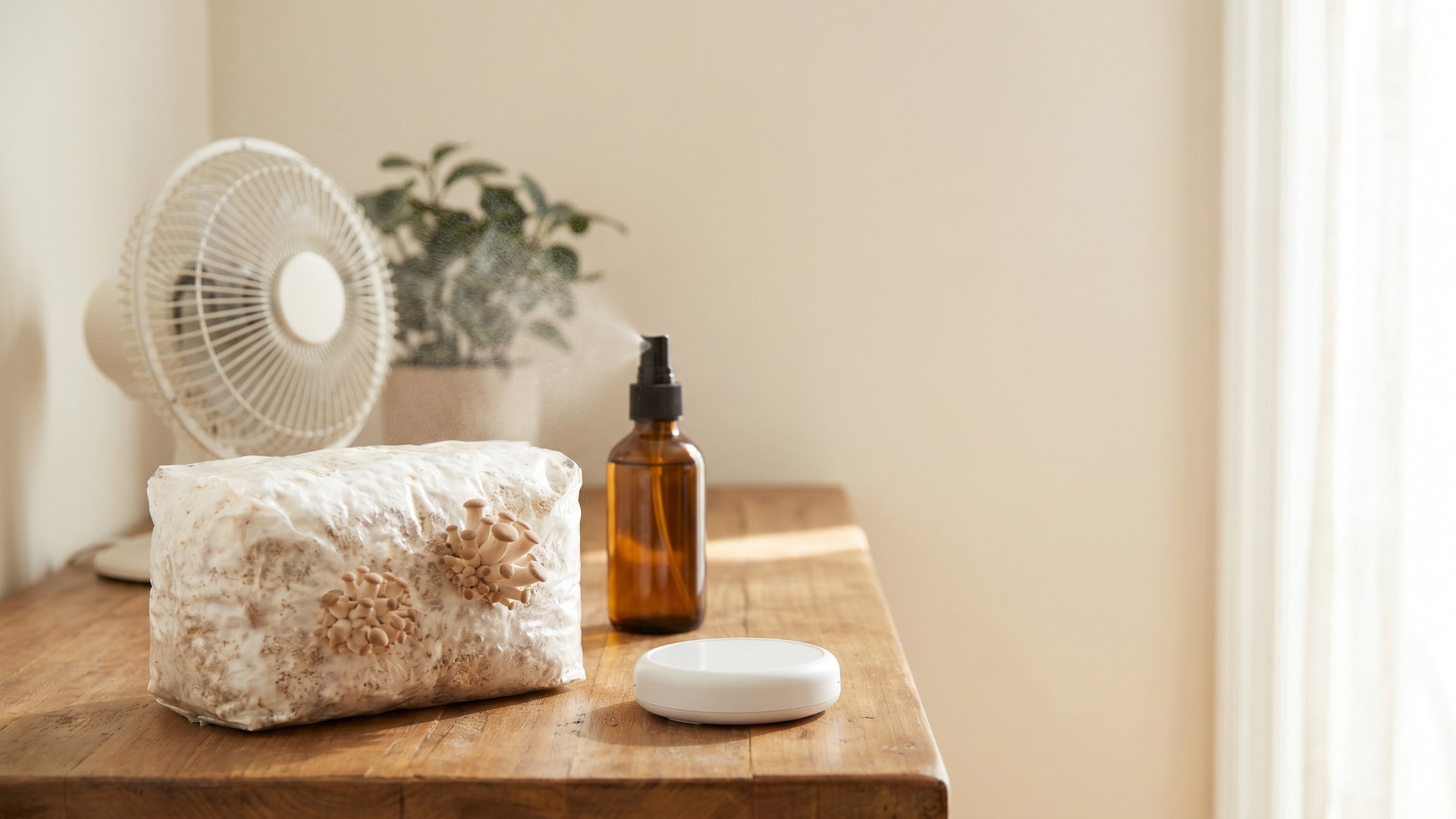
Homegrown Mushrooms from Controlled Systems
Growing your own mushrooms removes the biggest risk in feeding fungi to chickens: misidentification. When you grow from a known culture in a clean substrate, you know exactly what species you are harvesting. That matters more for backyard flocks than for human cooks because birds metabolize toxins differently from people, and a small dose of the wrong species can cause outsized harm.
Advantages of homegrown mushrooms for chicken keepers
- Known varieties: guaranteed species identification
- Controlled conditions: no wild contaminants, no neighboring toxic look-alikes
- Fresh harvest: maximum nutritional value, no shelf time
- Chemical free: no pesticides or post-harvest treatments
Best homegrown varieties for chicken keepers
- Oyster mushrooms: fast-growing, easy to identify, broadly tolerated
- Shiitake: high nutritional value when cooked
- Lion's mane: safe when cooked, unique texture chickens enjoy
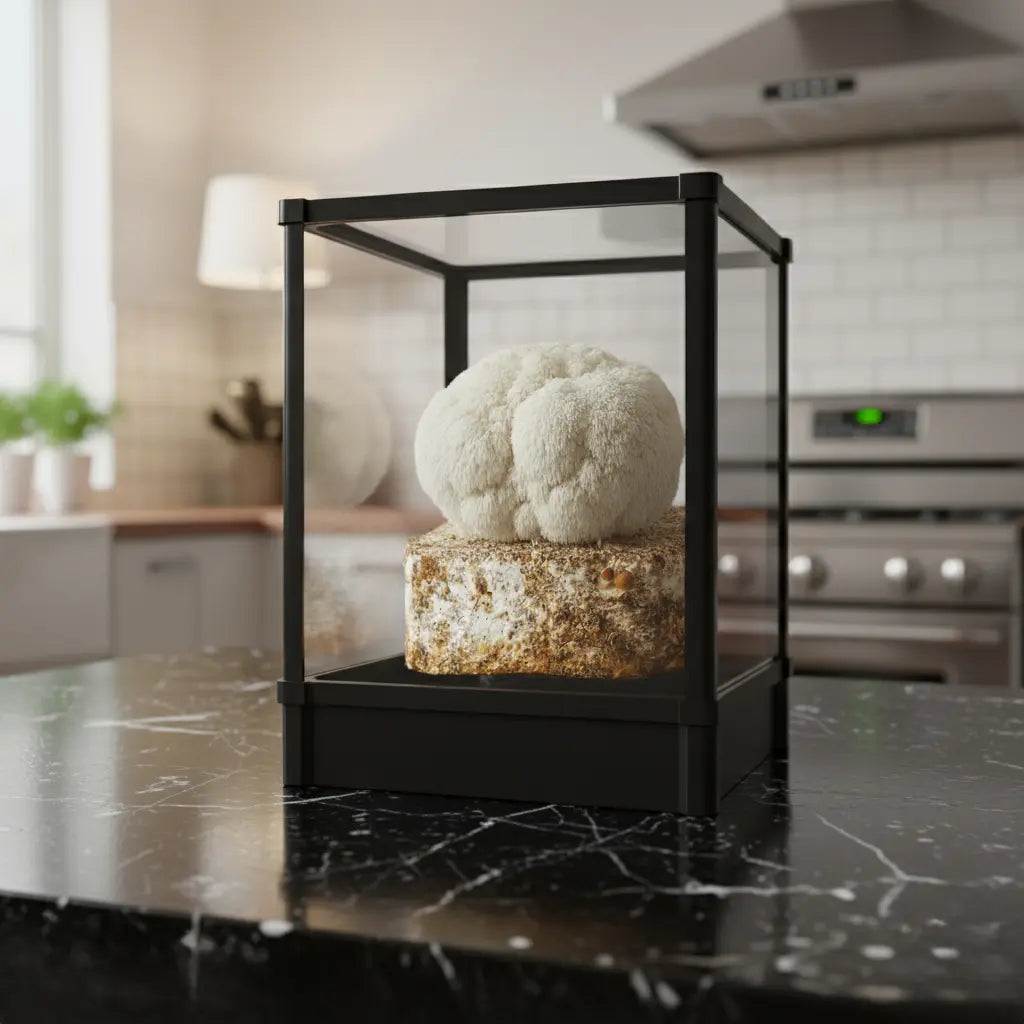
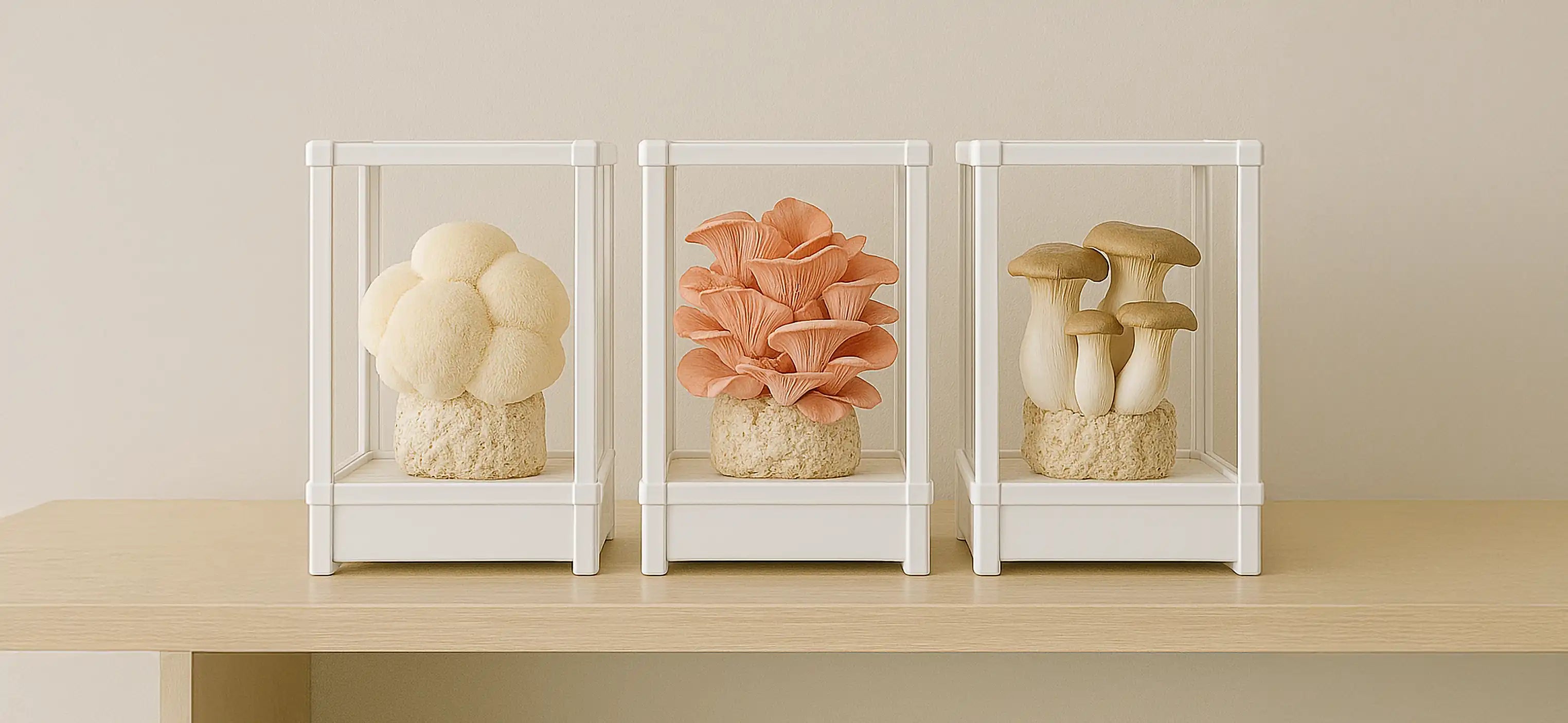
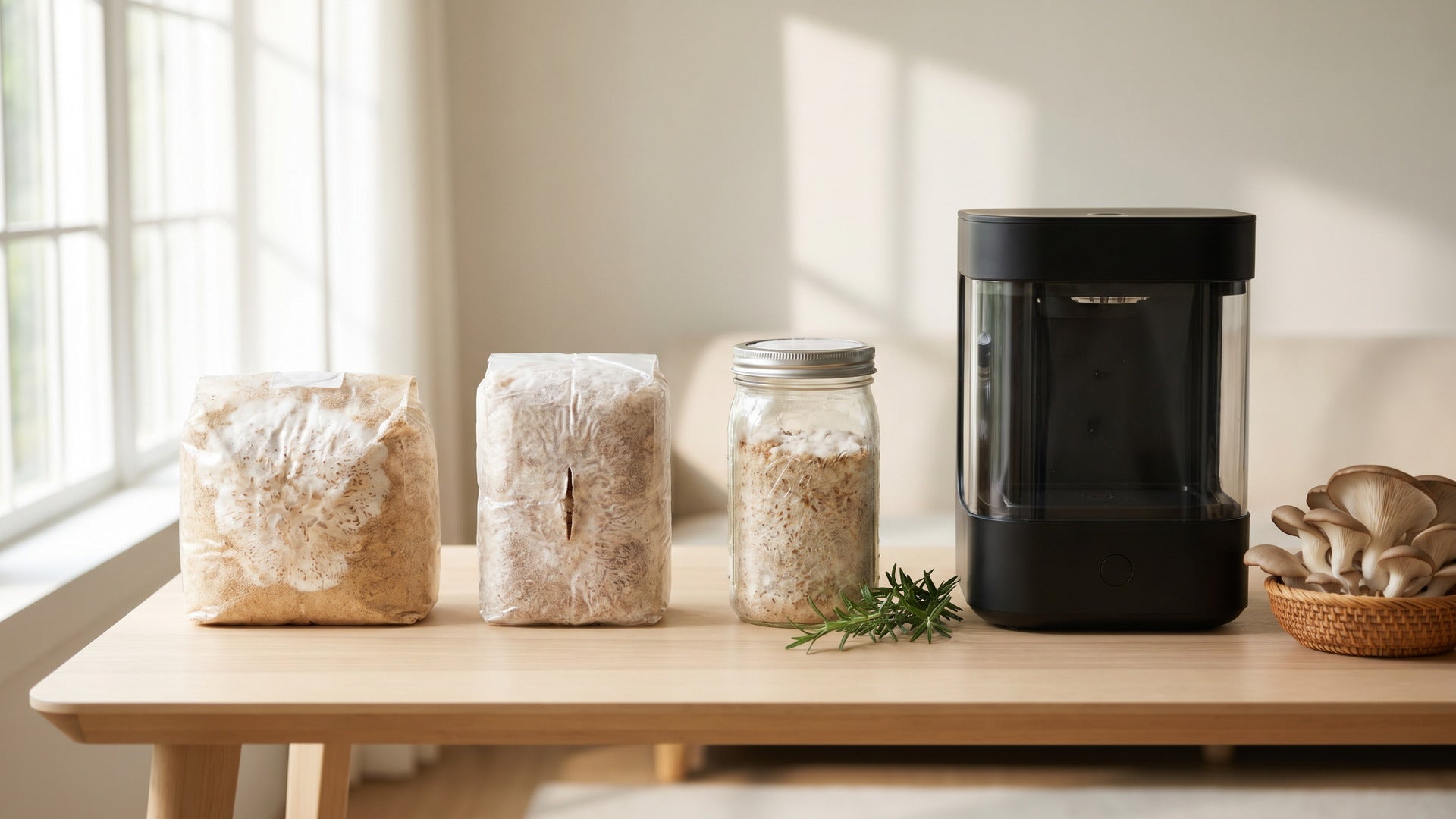
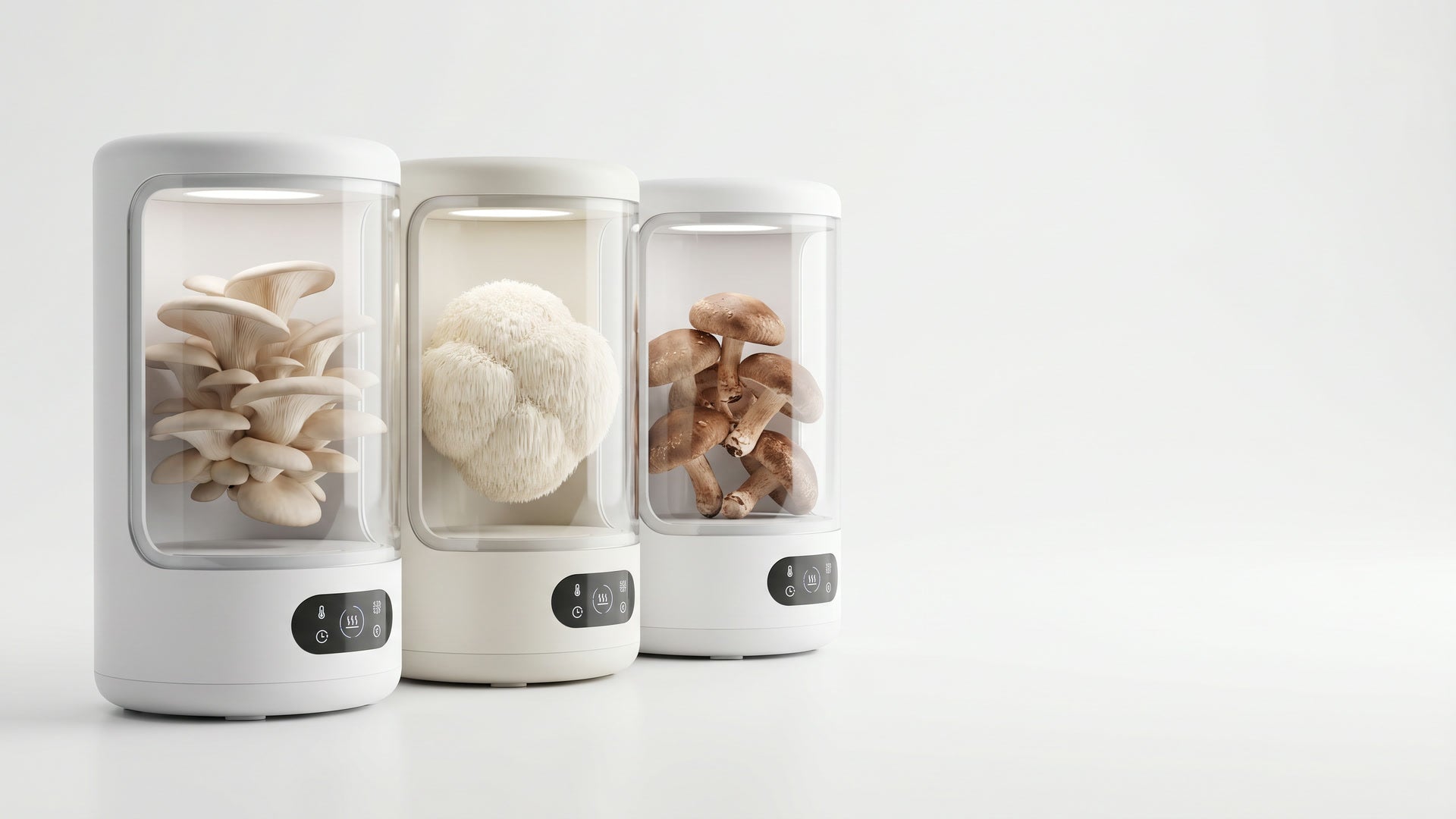
If you would rather grow indoors with automated humidity and light cycles, the Smart Mushroom Grow Box handles fruiting conditions so you can focus on flock care. The same harvest feeds the family and supplies the occasional treat for the coop.
Which Wild Mushrooms Are Toxic to Chickens
Wild mushrooms are the single biggest fungi-related danger to backyard flocks. The toxins are often heat-stable, meaning cooking will not neutralize them, and birds can show symptoms within hours of ingestion. Here are the species every chicken keeper in North America should learn to recognize.
The Most Dangerous Species
Death cap (Amanita phalloides)
- Often fatal in birds and mammals
- Contains amatoxins that destroy liver tissue
- Symptoms can delay 6 to 24 hours, by which time damage is severe
- Frequently appears in oak and chestnut woodland, sometimes in suburban yards
Destroying angel (Amanita virosa, A. bisporigera, A. ocreata)
- All-white, deceptively clean-looking mushrooms
- Same amatoxin class as death cap
- Common in eastern and western North America in late summer and fall
False morel (Gyromitra esculenta)
- Brain-like cap, often confused with true morels
- Contains gyromitrin, which converts to monomethylhydrazine in the gut
- Causes liver damage and neurological signs in birds
Deadly galerina (Galerina marginata)
- Small, brown, easily missed in wood chips or mulch beds (very relevant to coops)
- Also contains amatoxins
- Often appears in clusters on rotting wood
Cortinarius species
- Various rust-spored species cause delayed kidney damage
- Toxic signs may not appear for several days
Inocybe and Clitocybe species
- Contain muscarine
- Cause salivation, lacrimation, diarrhea, and respiratory distress (the "SLUDGE" syndrome)
Why Wild Mushrooms Are Off the Menu
- Positive identification requires expert knowledge and often microscopy
- Many toxic species closely mimic edible varieties
- Toxins can be more concentrated in the cap than the stem, or vice versa
- Birds metabolize some mycotoxins differently than humans, and effects may be more severe
- The risk far outweighs any potential nutritional benefit
The Penn State Extension guide to mushroom poisoning syndromes is a solid free reference if you want to learn the major toxin groups in more detail.
Moldy or Spoiled Mushrooms
- May contain mycotoxins (different from mushroom toxins, produced by mold growth) that are harmful to chickens
- Can cause digestive upset, immune suppression, and liver stress
- Always use fresh mushrooms, and discard any with slimy surfaces, dark spots, or sour smells
Raw vs Cooked: Why Cooking Matters
This is one of the most common questions backyard keepers ask, and the answer is consistent across poultry nutrition research: cooked is better.
Why cooking helps
- Easier digestion: heat breaks down chitin (the structural fiber in mushroom cell walls) so the protein and B-vitamins become accessible
- Neutralizes mild compounds: some raw fungi contain irritants that cook off, especially in shiitake and morel
- Kills surface bacteria: any contamination from handling or storage is reduced
- Better acceptance: chickens often prefer the softer texture of cooked mushrooms
How to cook mushrooms for chickens
- Always cook before serving (steam, boil, or dry-sear)
- No seasoning: skip salt, garlic, onion, and spices, all of which can harm chickens
- No oil or butter: added fat is unnecessary and adds calories
- Cook through: fully heated, not crunchy
- Cool completely: serve at room temperature, never hot
- Chop small: bite-sized pieces, uniform so dominant hens do not steal all the big chunks
- Remove tough parts: woody stem ends are hard to digest
Portion Size and Feeding Frequency
The single rule that matters most: treats stay under 10% of daily intake. The other 90% should be a balanced layer or grower feed.
Frequency
- 1 to 2 times per week, maximum
- 1 to 2 tablespoons of cooked mushroom per full-sized hen per serving
- Rotate with other safe treats so variety prevents nutritional skew
How to introduce mushrooms for the first time
- Start small: half a tablespoon per bird
- Observe for 24 to 48 hours: check droppings, energy, and feed intake
- Increase gradually if everyone tolerates them well
- Keep notes on which varieties go over best
Age and Health Considerations
- Adult birds: fully developed digestive system, handle mushrooms well
- Young chicks (under 8 to 10 weeks): no mushrooms, stick to starter feed
- Pullets: introduce gradually as part of treat rotation
- Senior birds: may benefit from softer, well-cooked preparations
- Sick or molting birds: avoid new treats during stress; focus on protein-rich feed during heavy molt
- Broody hens: reduced appetite is normal; do not push treats
Nutritional Value for Chickens
Cooked edible mushrooms bring real benefits when fed correctly:
Nutritional advantages
- Protein supplementation: additional amino acids beyond the layer ration
- Vitamin B complex: supports energy metabolism and nervous system function
- Minerals: selenium for thyroid function, potassium for muscle, phosphorus for bone
- Beta-glucans: may modestly support innate immune response (most studied in shiitake and oyster)
- Foraging enrichment: pecking and scratching for chopped pieces mimics natural behavior
Behavioral benefits
- Mental stimulation from searching and pecking
- Mimics wild foraging
- Reduces boredom-related pecking and feather-pulling in the flock
- Adds dietary variety year-round
Where mushrooms fall short
- Not enough calcium: mushrooms are low in calcium, so they cannot support eggshell production
- Low overall calories: not a meaningful energy source for cold weather
- High moisture: 90% water, so the actual nutrient density per serving is modest
Signs of Mushroom Toxicity in Chickens
Even with the best precautions, accidents happen. A bird wanders into a mulched garden bed, or a wild mushroom pops up overnight in the run. Knowing what to watch for can save a life.
Early symptoms (within 1 to 6 hours)
- Sudden lethargy or unusual stillness
- Loss of appetite
- Watery or green-tinged diarrhea
- Vomiting or regurgitation (uncommon in chickens but possible)
- Crop stasis (a full, doughy crop that does not empty)
Progressive symptoms (6 to 48 hours)
- Difficulty breathing or open-beak breathing
- Uncoordinated movement, stumbling, or wing-dragging
- Tremors or seizures
- Pale or bluish comb and wattles
- Inability to stand or hold the head up
Late-stage signs of severe poisoning
- Complete collapse
- Hemorrhage from the vent or mouth
- Jaundice (yellow tint to skin and inner mouth)
- Loss of consciousness
Some toxins, especially amatoxins from death cap and destroying angel, cause a deceptive "false recovery" between 24 and 48 hours. The bird seems to perk up, then crashes hard from liver failure. Never stop monitoring just because the bird looks better.
What to Do If a Chicken Eats a Toxic Mushroom
Speed and good information are your two best tools. Here is the protocol every chicken keeper should commit to memory:
Step 1: Remove the source
- Take out any remaining mushrooms from the coop, run, and pasture
- Walk the perimeter and check mulch beds, wood-chip piles, and rotting logs for more fruit bodies
- Bag a sample of the suspect mushroom in a paper bag, never plastic, because moisture destroys identification features
Step 2: Isolate and stabilize the affected birds
- Move sick birds to a quiet, warm, clean space
- Offer fresh, clean water, but do not force-feed
- Note the time of suspected ingestion and the first symptom
Step 3: Contact a vet or extension service immediately
- Call an avian veterinarian, exotic-pet vet, or your state's poultry extension office
- If your vet is unavailable, the ASPCA Animal Poison Control Center (888-426-4435) handles avian cases for a consultation fee
- Describe the mushroom (size, color, gill or pore pattern, where it grew), the quantity eaten, and the time of ingestion
Step 4: Supportive care under veterinary guidance
- Activated charcoal may help if administered within the first hour, but only at a veterinarian's direction and dose
- Do not induce vomiting. Chickens lack a true vomiting reflex, and forcing it can cause aspiration
- Fluid therapy may be recommended for severe cases
- Keep a clear log of symptoms and timing, because it helps the vet make decisions
Step 5: After-action review
- Identify how the mushroom got into the bird's environment (mulch, wood chips, fallen log, wet corner)
- Adjust bedding sources or walk the run more often during damp weather
- Document the species if it was identified, so you know what to watch for in the future
Integrating Mushroom Growing with Your Backyard Flock
Why Growing Your Own Pairs Well with Keeping Chickens
If you already produce eggs and pasture your birds, growing your own mushrooms is a natural extension of the same control-what-you-feed mindset. You harvest what your family eats and pass a small handful of trimmings to the flock, knowing exactly what species came from your kitchen.
- Dual purpose: the same harvest feeds humans and chickens
- Closed loop: spent mushroom substrate can be composted with chicken bedding
- Cost effective: a $20 grow kit yields more than $80 of fresh mushrooms over its lifecycle
- Educational: children learn fungal biology while helping with chores
For a side-by-side of the most common home cultivars, our overview of home mushroom growing kits walks through each species and the kit format that suits it.
Seasonal Feeding Notes
Spring: introduce mushrooms gradually as birds resume steady laying. Avoid heavy treat loads during the breeding window so your ration stays balanced.
Summer: serve mushroom treats in the cooler hours. Mushrooms are 90% water, so they can lightly support hydration during heat waves, but they are not a substitute for shaded water stations.
Fall: back off treats during heavy molt, since birds need that protein for new feather growth. Once molt is done, fresh mushroom availability peaks and it is a perfect time to rotate them in.
Winter: warm cooked mushrooms (cooled to room temperature) make a welcome variation. Indoor growing fills the gap when nothing fresh is available outside.
Alternatives and Complementary Treats
Other Safe Treats Worth Rotating In
Vegetables
- Leafy greens: spinach, kale, lettuce
- Root vegetables: carrots, sweet potatoes, beets
- Squash family: pumpkin, zucchini, winter squash (great for natural deworming claims, though evidence is mixed)
- Berries: blueberries, strawberries, raspberries
Protein-rich treats
- Mealworms (dried or live): high protein, very high acceptance
- Crickets: protein plus enrichment
- Cooked eggs (scrambled or hard-boiled, no shell): excellent during molt
- Plain yogurt in small amounts: probiotics and protein
A Simple Weekly Treat Rotation
- Monday: leafy greens
- Wednesday: cooked mushrooms
- Friday: mealworms or another protein treat
- Sunday: seasonal fruit or squash
All treats combined still stay under the 10% threshold. Adjust based on flock size, bird weight, and how active your birds are.
Safety Protocols Worth Building Into Your Routine
Prevention
- Buy from known sources: reputable grocers or your own grow kit
- Never feed foraged wild mushrooms, even ones you think you recognize
- Check freshness: firm caps, no slime, no sour smell
- Inspect for mold before cooking and discard anything questionable
- Walk the run weekly during damp weather, especially through mulched corners and around rotting logs, and remove any mushrooms you find
Feeding Discipline
- Introduce one new food at a time, 3 to 5 days apart
- Test with 1 or 2 birds before feeding the entire flock
- Keep a feeding log: variety, date, response
- Use consistent cooking methods so birds learn what to expect
Economic and Practical Considerations
Cost
- Store-bought mushrooms: $2 to $5 per pound depending on variety
- Grow kit: $20 to $40 upfront, yielding multiple flushes
- Time: about 5 minutes of weekly prep once you have a routine
Benefits
- Improved enrichment and reduced boredom-pecking in the flock
- Closed-loop garden-to-coop-to-compost cycle
- Educational value for families with children
- Better visibility into exactly what is going into your birds
Time-saving tips
- Batch-cook a few cups of mushrooms once a week, refrigerate in portions
- Schedule mushroom day in your normal coop routine so it does not slip
- Use within 2 to 3 days of cooking, or freeze in small portions
Frequently Asked Questions
Can chickens eat raw mushrooms?
Chickens can technically peck at raw mushrooms, but you should not feed them raw. Cooking softens cell walls, neutralizes mild compounds that can upset a bird's digestion, and makes the protein and B-vitamins easier to absorb. Steam, boil, or pan-sear plain (no salt, no oil) and let them cool fully before serving.
Are mushrooms toxic to chickens?
Common store-bought edible mushrooms (button, cremini, portobello, shiitake, oyster, lion's mane) are not toxic to chickens when fed cooked and in moderation. Wild and unidentified mushrooms are a different story. Species like death cap (Amanita phalloides), destroying angel (Amanita virosa), and false morel (Gyromitra esculenta) contain liver and kidney toxins that can be fatal to birds.
Can baby chicks eat mushrooms?
No. Chicks under 8 to 10 weeks old should eat only a balanced starter feed (20 to 24% protein) and fresh water. Their digestive systems are still developing, and treats of any kind including mushrooms can crowd out the precise nutrition they need for healthy bone and feather growth. Wait until they are pullets before introducing treats.
Which mushrooms are poisonous to chickens?
The most dangerous wild species in North America are Amanita phalloides (death cap), Amanita virosa and Amanita bisporigera (destroying angels), Gyromitra esculenta (false morel), Galerina marginata (deadly galerina), and Cortinarius species. Several Inocybe and Clitocybe species contain muscarine, which causes severe respiratory and neurological signs in birds. If you cannot identify a mushroom with 100% certainty, treat it as toxic.
Can chickens eat mushroom stems?
Yes, with caveats. Stems from button, cremini, and portobello mushrooms are fine when cooked and chopped small. Shiitake and king oyster stems are fibrous and tough, so trim and discard the woody base or chop very finely. Always remove any dirt or sawdust substrate first.
Do mushrooms have nutritional value for chickens?
Yes, in small amounts. Edible mushrooms provide 2 to 4 grams of protein per 100 grams, B-complex vitamins (riboflavin, niacin, pantothenic acid), selenium, potassium, and beta-glucans that may support immune function. They are not a substitute for layer feed, which is formulated to deliver the calcium and amino acids hens need for eggshell quality and steady laying.
What should I do if a chicken eats a toxic mushroom?
Act fast. Remove any remaining mushrooms from the coop and run. Isolate the affected bird, offer clean water, and call an avian veterinarian or your state's poultry extension service immediately. Bring a sample of the mushroom (in a paper bag, never plastic) for identification. Activated charcoal may help if administered within the first hour, but only under veterinary guidance. Do not induce vomiting in chickens.
Can chickens find and eat wild mushrooms on their own?
Yes, free-range birds will occasionally peck at mushrooms during foraging. Chickens have some instinctive aversion to bitter or strange-tasting fungi, but that instinct is not perfect, especially with curious young birds. Walk your run weekly during damp weather, identify any fungi popping up in mulch or wood chips, and remove anything you cannot positively identify as safe.
Final Word
Chickens can safely eat common edible mushrooms (button, cremini, portobello, shiitake, oyster, and lion's mane) when the mushrooms are cooked plain, chopped small, and kept to under 10% of the daily ration. Wild mushrooms are off the table. The single biggest favor you can do your flock is to grow your own from a known culture or buy from a trusted grocer, so you always know exactly what your birds are eating.
If you would like to take the wild-mushroom risk off the table entirely while keeping a steady supply of safe varieties on hand, our Smart Mushroom Grow Box automates humidity and light for the species your family and your flock both enjoy.
Share:
How to Clean Mushrooms: The Complete Guide to Preparing Fresh Fungi
How Long Do Mushrooms Last in Fridge: Your Complete Storage Guide