


Most people picture mushrooms as beige or brown caps on a forest floor, which is a fair starting point because that describes a lot of them. But the fungal kingdom is far more visually adventurous than the supermarket produce case suggests. Colorful mushrooms exist in shades of red, orange, yellow, pink, blue, purple, and even iridescent green, and many of them are perfectly edible and increasingly available as home grow kits.
This is the field guide to the most striking colorful mushrooms in nature and on the dinner table, why they're colored the way they are, and which ones are safe to grow or forage.
Why Mushrooms Have Color at All
Mushroom pigments serve a handful of biological functions: UV protection for surface tissues, antioxidant defense against environmental damage, spore dispersal signaling, and in some cases, communication with insects and other organisms that help move spores around. Unlike plants, mushrooms don't use color to attract pollinators (they don't pollinate), but pigments still pay off in survival terms.
Common pigment families in mushrooms include carotenoids (yellows, oranges, reds), melanins (browns and blacks), betalains (some pinks and purples), and a handful of fungus-specific compounds like azulenes and quinones that produce blues and greens.

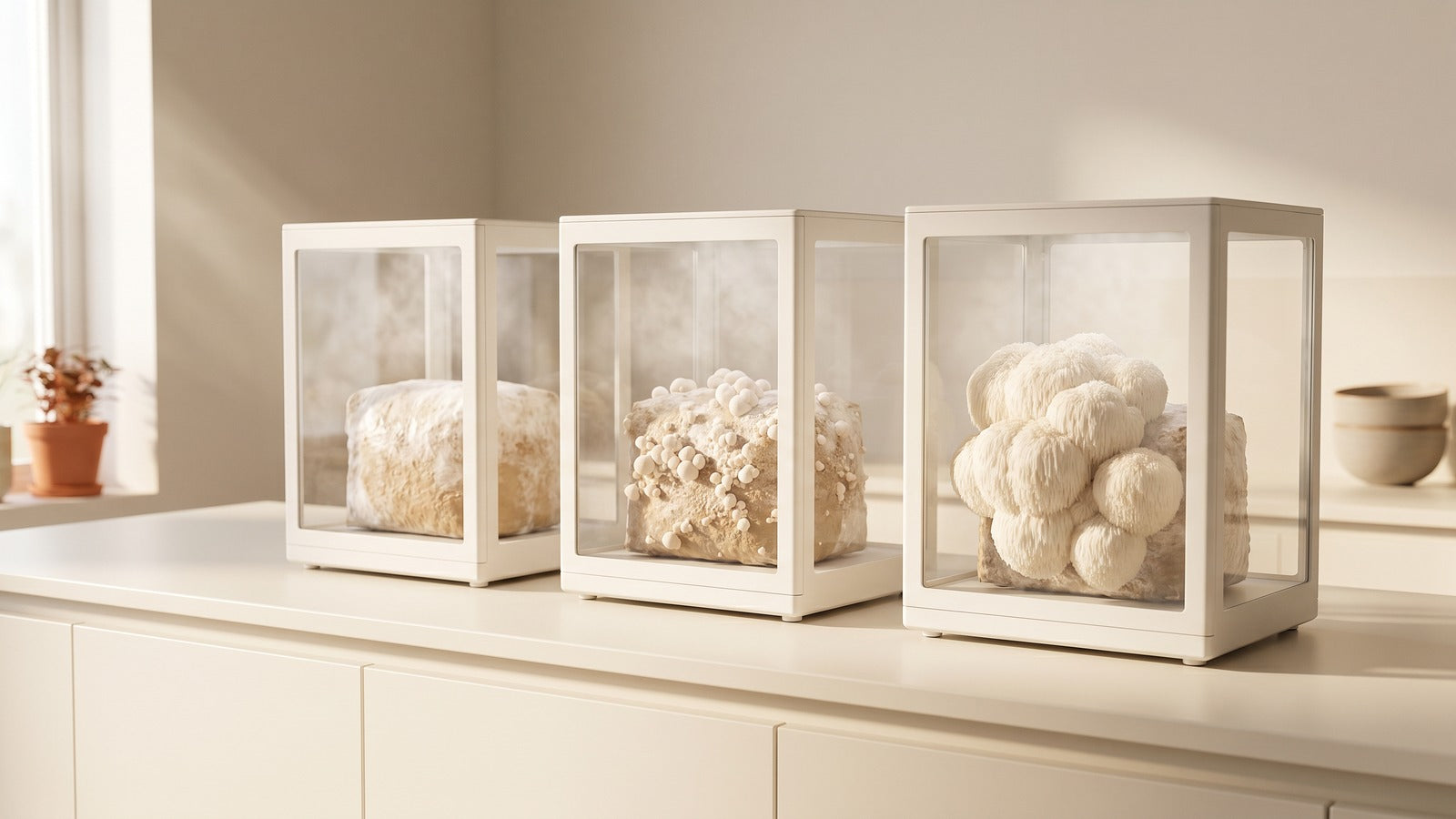
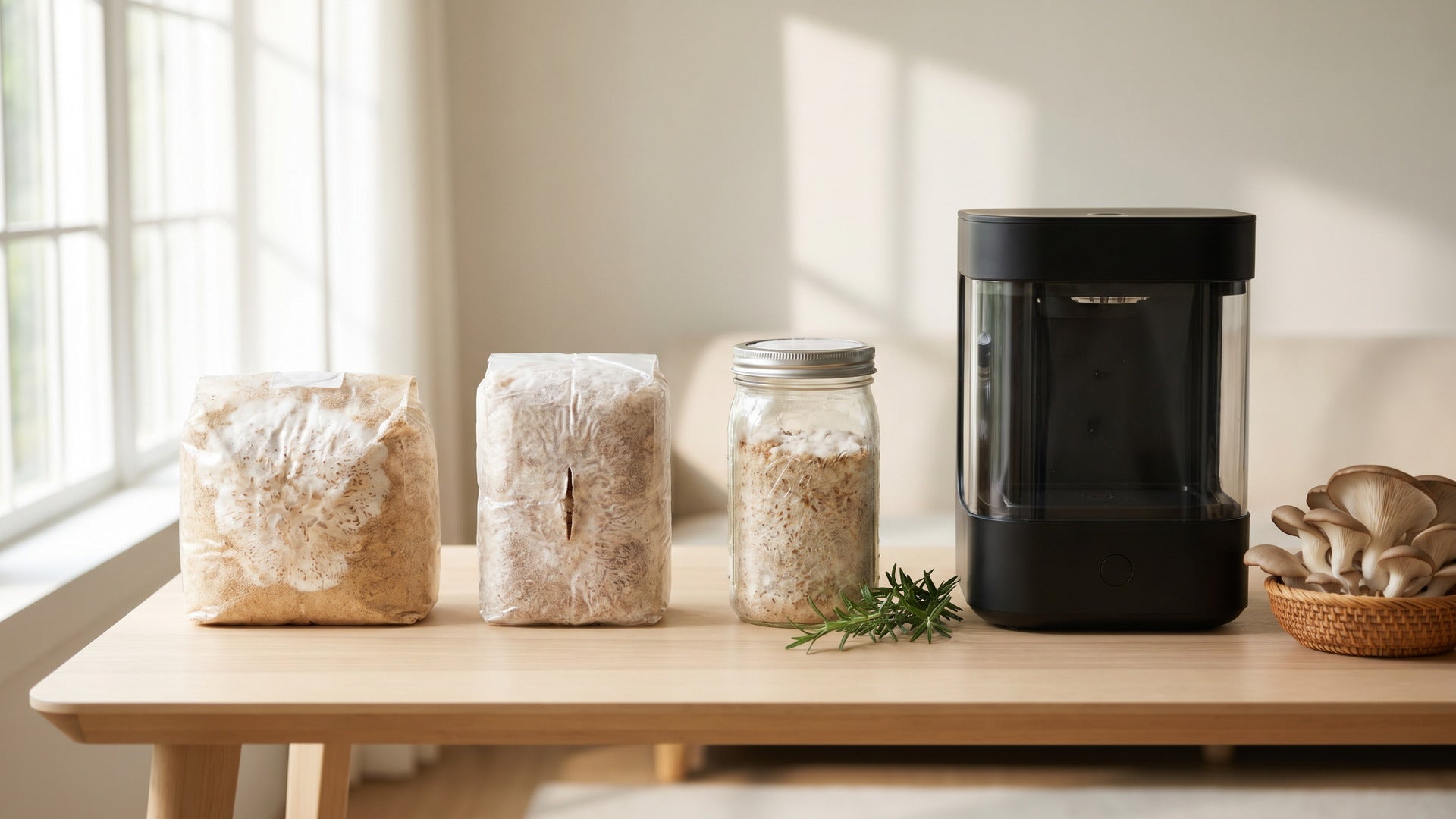
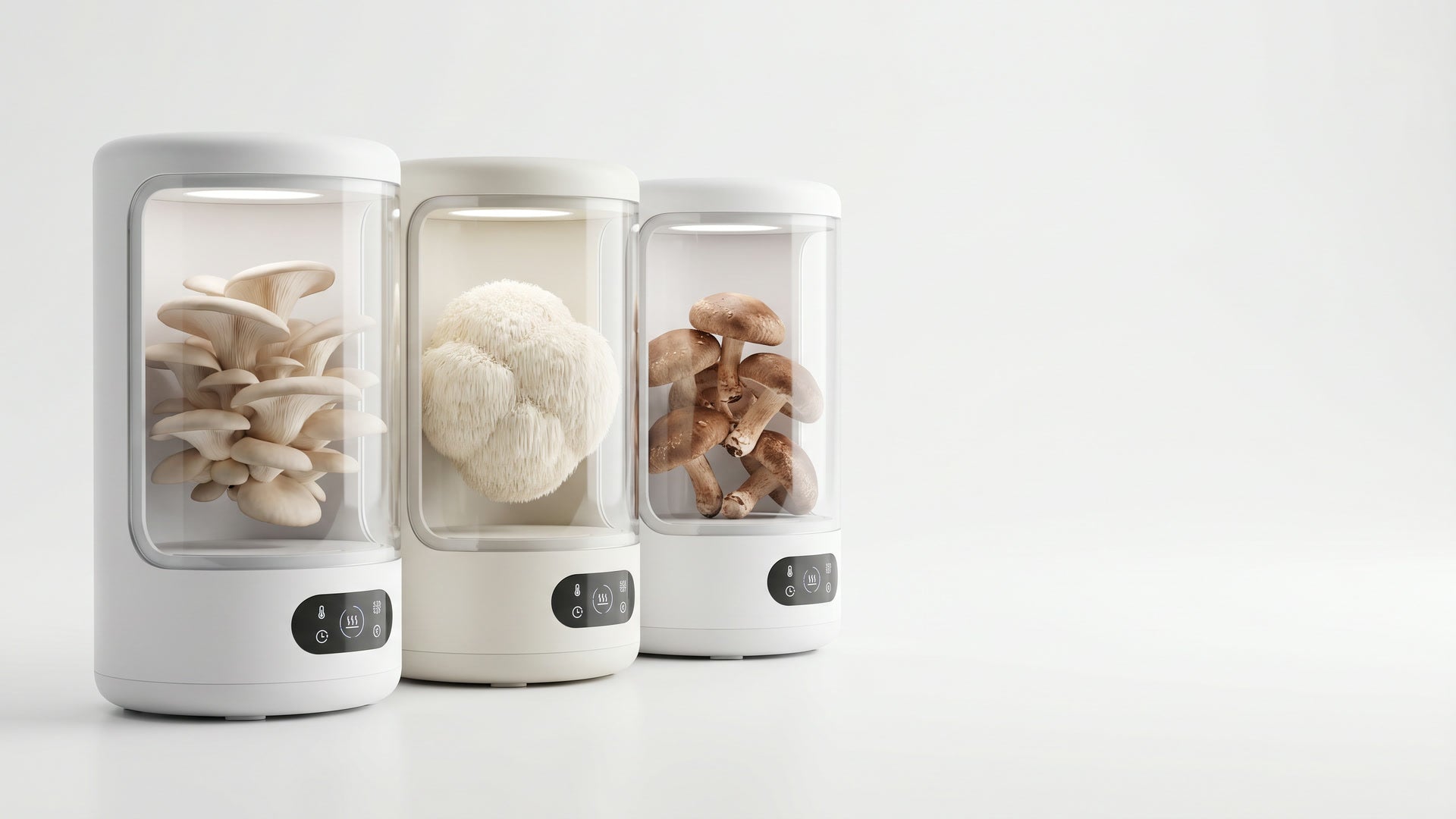
Smart Chamber. Bone White Single
- 2.8L tank, 90% humidity automatic
- App-controlled, plug-and-play
- 6 lb block ceiling, in stock

Smart Chamber. Obsidian Black Single
- 2.8L tank, 90% humidity automatic
- App-controlled, plug-and-play
- Matte obsidian finish, in stock

Black Oyster Fruiting Block
- 5 lb colonized hardwood block
- 1-3 day cycle, easy first flush
- Lab-tested strain, in stock
Pink: Pink Oyster Mushroom
Pink oyster (Pleurotus djamor) is probably the most photogenic edible mushroom in cultivation. Bright pink clusters of fan-shaped caps grow on hardwood substrate, producing dramatic harvests that range from soft salmon to vivid magenta depending on light exposure and growing conditions.
Flavor notes: when raw, pink oyster has a delicate flavor. Cooked, it develops a smoky, bacon-like quality that's surprisingly meaty. The pink color fades to tan in the pan, which disappoints some growers, but the flavor is what matters at dinner.
Pink oyster is a fast, warm-loving species. Fruiting temperatures around 75 to 85 degrees Fahrenheit suit it perfectly, making it one of the easier mushrooms to grow indoors in summer.
Yellow: Golden Oyster
Golden oyster (Pleurotus citrinopileatus) produces clusters of bright yellow caps that lighten and darken depending on humidity and age. The color comes from carotenoids similar to those in carrots and squash.
Flavor notes: golden oyster has a slightly nutty, almost cashew-like flavor when cooked, with a tender texture that holds up well in stir-fries and rice dishes. Like pink oyster, it loses some color during cooking but keeps an attractive yellow tint when sauteed gently.
Cultivation is straightforward on hardwood substrates, with a slightly cooler fruiting range (65 to 75 degrees Fahrenheit) than pink oyster.
Red: Reishi (Lingzhi)
Reishi (Ganoderma lucidum) grows as a glossy, lacquered, reddish-brown bracket fungus on hardwood logs. The vivid burgundy and amber tones come from melanin-related pigments laid down during the slow growth phase. Mature reishi can be polished to a literal shine.
Reishi is too tough and bitter to eat as food. Its traditional and modern uses are entirely medicinal, primarily as a tea, tincture, or powdered supplement. Compounds including triterpenes and beta-glucans have been studied for immune-modulating and stress-response effects.
Home reishi cultivation is increasingly popular, partly because the dramatic visual makes the mushrooms striking display pieces in addition to their functional use.
Orange: Chicken of the Woods
Chicken of the woods (Laetiporus sulphureus and related species) is a bright orange and yellow bracket fungus that grows on dead or dying hardwoods, primarily oak. Found in shelves of overlapping fronds, sometimes reaching dinner-plate size, it's one of the most visually arresting mushrooms in eastern North American forests.
Flavor notes: as the name suggests, the texture and flavor resemble chicken breast when young and tender. Slice and saute or use in stews and curries. Older specimens turn tough and chalky.
Foraging caution: a small percentage of people experience gastrointestinal sensitivity to chicken of the woods, particularly from specimens growing on conifers or eucalyptus. Stick to oak-grown chickens and try a small portion first.

Fuel Your Mushroom Journey
Smart Mushroom Grow Chamber
Plug-and-play smart chamber with humidity, light, and airflow dialed in for every species. Beginners harvest their first flush in days, not months.
Add to cart $299Blue: Blewit
Blewit (Lepista nuda, also called wood blewit) is a temperate-zone edible with a pale violet to lavender cap and gills. Fresh blewits are unmistakable when you find them, and they hold their color through cooking unlike most pigmented species.
Flavor notes: nutty, earthy, slightly sweet. Best sauteed with butter and shallots. Eaten raw or undercooked, blewits can cause stomach upset, so always cook thoroughly.
Blewits also grow in cultivated beds, though they're slower and less reliable than oysters or lion's mane.
Purple: Purple-Capped Russula
Several Russula species produce purple, lavender, or wine-colored caps that stand out dramatically against forest leaf litter. Some are edible, several are mildly toxic, and accurate identification is essential.
For home growers, purple isn't really an option yet; the Russula genus hasn't been domesticated for cultivation. They're a foraging-only color category, and one to leave alone unless you're working with an expert.
Green: Indigo Milk Cap
Indigo milk cap (Lactarius indigo) is one of the world's most striking edible mushrooms. The cap is a bold blue-indigo when young, fading to grayish blue with age. When cut, the flesh exudes a blue latex that's chemically distinct from any other mushroom genus.
Flavor notes: mildly peppery, slightly bitter raw, mellowing after cooking. Found in southern U.S. oak and pine forests during late summer and early fall. Slice and saute with garlic and butter.
Indigo milk cap is mycorrhizal (forms partnerships with tree roots), which means it doesn't cultivate easily. Foraging is the only practical way to encounter it.
Brown and Beige Aren't Boring Either
The most heavily cultivated species (button, cremini, portobello, shiitake, lion's mane) lean toward earth tones, and that's not a knock on them. Brown pigmentation comes from melanins that provide UV protection and structural support to outdoor-fruiting species. The compounds also have antioxidant activity in the human gut, which is part of why dietary fungi consistently show up in nutritional research.
Cremini and portobello are the same species at different maturity stages, with cremini being the younger brown form of the white button. The same pigment chemistry continues to develop as the mushroom ages.
Growing Colorful Mushrooms at Home
Three of the most beautifully colored cultivable species (pink oyster, golden oyster, and reishi) are widely available as home grow kits. Pink and golden oyster fruit in about a week from a pre-colonized block, while reishi takes 4 to 8 weeks for full cap maturation.
A countertop kit from Lykyn's mushroom grow kits handles the colonization phase entirely, so beginners can experience the color and texture of fresh pink or golden oysters within their first week of growing. The fruiting flush is genuinely beautiful, and watching pink caps emerge over 3 to 5 days is the closest thing to nature theater in a kitchen.
The Safety Reminder
Colorful mushrooms are visually striking, but color is not a reliable safety indicator. Some of the most toxic species in the world are mundane brown or white. Some of the brightest red mushrooms (Russula emetica, for example) are mildly toxic. And some of the most colorful temperate species (indigo milk cap, blewit) are perfectly edible.
If you forage, learn from local experts and a regional field guide. Better yet, start your color journey in the kitchen with cultivated pink and golden oysters, where the species is guaranteed and the harvest is safe.
The world of colorful mushrooms is wider than most people realize, and increasingly accessible. The fungal kingdom turns out to be every bit as visually rich as the plant kingdom; we've just been looking in the wrong section of the grocery store.
Share:
Cooking Oyster Mushrooms: 4 Techniques That Always Work
Cooking Oyster Mushrooms: 4 Techniques That Always Work