


Coral mushrooms look like a piece of underwater reef pulled out of the forest floor. They grow in branching clusters of finger-like or antler-like stalks in shades of white, cream, yellow, pink, purple, and orange. Most species are technically edible, but a handful are slightly toxic or simply not worth eating. The challenge with coral mushrooms is that field identification to species level is one of the harder tasks in mycology, even for experienced foragers.
This guide walks through what coral mushrooms are, which kinds are commonly seen, how to tell edible from non-edible groups, and how to cook them once you have something safe to eat.
What coral mushrooms actually are
Coral mushroom is an umbrella term for several distantly related genera that share a branched, coral-like growth form. The main groups are Ramaria, Clavaria, Clavulina, Clavulinopsis, Calocera, and Artomyces. They are not closely related to each other in evolutionary terms, but they all evolved the same shape independently because the branching surface area is efficient at releasing spores.
Coral mushrooms grow on the ground in forests, on rotting wood, or in soil rich with leaf litter. Some species are mycorrhizal, meaning they form partnerships with tree roots, while others are saprotrophic and feed on decaying organic matter.

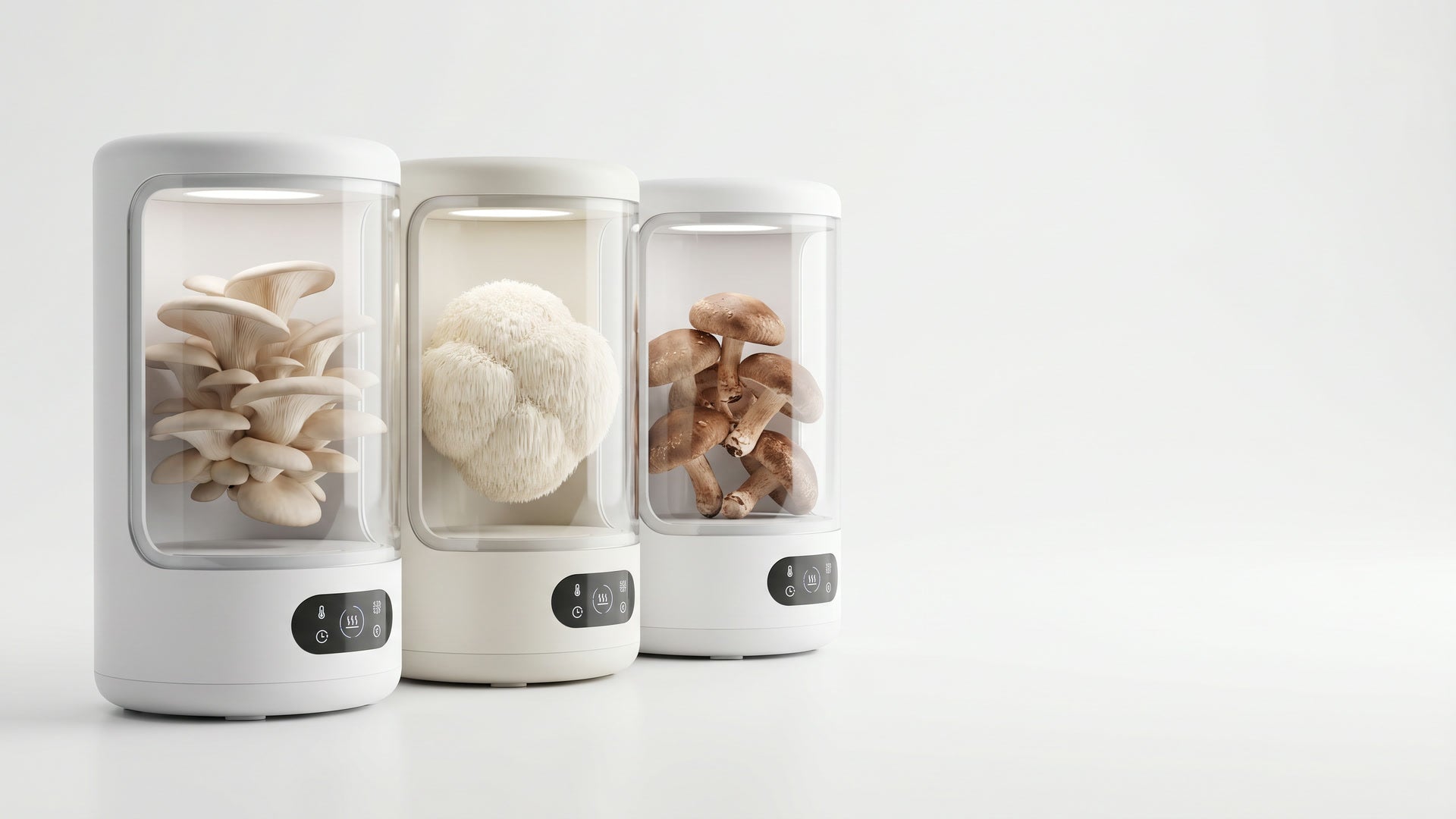
Smart Chamber. Bone White Single
- 2.8L tank, 90% humidity automatic
- App-controlled, plug-and-play
- 6 lb block ceiling, in stock

Smart Chamber. Obsidian Black Single
- Same hardware as Bone White
- Matte black premium finish
- Pairs with any kitchen palette

The most common coral mushroom groups
Some of the groups you are most likely to encounter while foraging:
- Ramaria: the largest and most colorful coral mushrooms, often the size of a head of cauliflower. Some are edible, some are mildly toxic.
- Clavulina cristata (crested coral): a common white forest coral, edible but bland.
- Clavaria fragilis (white worm coral): clusters of unbranched white spindles, edible.
- Clavulinopsis fusiformis: bright yellow spindles growing in clusters, edible.
- Artomyces pyxidatus (crown-tipped coral): small white-cream coral that grows on rotting wood, each tip ending in a tiny crown shape. Edible.
- Calocera viscosa (yellow stagshorn): bright orange branched coral on conifer wood, technically edible but gelatinous and rarely eaten.
The big takeaway is that color alone is not a reliable safety guide. Some yellow corals are edible, some white corals are edible, and some bitter or bowel-irritating species exist in both color groups.
Are coral mushrooms safe to eat?
Most coral mushrooms are edible, but several species cause gastrointestinal distress, and a few have a strongly bitter taste that makes them unpleasant. Notable groups to be cautious with:
- Ramaria formosa (beautiful clavaria): a pink-tipped coral that causes vomiting and diarrhea in many people, despite being eaten regularly in some regions.
- Ramaria pallida and similar pale Ramaria: often laxative effects.
- Ramaria gelatinosa: bitter taste and unreliable digestibility.
The rule most foragers use is: try small amounts of any new coral mushroom species, cook it thoroughly, and wait 24 hours before eating more. Many corals that cause mild stomach upset are individual sensitivity issues, not strict toxins.

Fuel Your Mushroom Journey
Smart Mushroom Grow Chamber
Plug-and-play smart chamber with humidity, light, and airflow dialed in for every species. Beginners harvest their first flush in days, not months.
Add to cart $299How to identify coral mushrooms in the field
Look at these characteristics in order:
- Substrate: ground, soil rich in leaf litter, or wood
- Color: cap tips, branches, and base, since many species change color from base to tip
- Branching pattern: tight cauliflower-like clusters, antler shapes, or simple unbranched spindles
- Texture: brittle, rubbery, gelatinous, or flexible
- Bruising: cut a branch and check whether the flesh changes color when exposed to air
- Smell: some species smell strongly of sweet hay, cucumber, or radish
Take photos of all of these features. A mycologist or a regional mushroom field guide will need every one to make a confident ID.
How to cook coral mushrooms
Coral mushrooms have a delicate texture similar to crispy seafood, with a mild taste that takes on the flavor of whatever they are cooked in. They benefit from quick high-heat cooking, since long simmering turns them mushy.
- Saute in butter or olive oil for 4 to 6 minutes with salt and garlic
- Tempura: dip in light batter and flash-fry for 90 seconds
- Stir-fry with ginger, soy, and sesame oil
- Pickle in vinegar with herbs for a long-keeping condiment
Always rinse coral mushrooms gently and check inside the branches for forest debris, since the branched structure traps everything from pine needles to insects. Inspect carefully under good light.
Are coral mushrooms medicinal?
A few coral mushroom species have been investigated for antioxidant, antimicrobial, and anti-inflammatory compounds in lab studies. Hericium-style nerve-growth-factor activity does not show up in true coral mushrooms (Hericium erinaceus, lion's mane, is sometimes grouped with corals because of its appearance but is actually a tooth fungus). The medicinal data on coral species is thin compared to other edible mushrooms.
If you are interested in mushroom nutrition and bioactives, lion's mane, turkey tail, and reishi have more research behind them, and they are all easier to grow at home than to forage.
Should you forage coral mushrooms?
Coral mushrooms are a fun beginner-friendly group in some ways (they cannot easily be confused with the most dangerous Amanita species, which have caps and stems) but a tough group in others (species-level ID is hard). If you forage, start by collecting samples for identification practice without eating, and only put them on your plate after multiple confirmations from a regional guide or experienced mycologist.
For consistent edibility and known safety, cultivated species are a more reliable starting point. You can grow culinary mushrooms at home with a kit that delivers known species and predictable harvests, freeing your foraging time for curiosity rather than caution.
The takeaway
Coral mushrooms are beautiful, sometimes delicious, and frequently misidentified. Most are safe to eat, but a few will give you a rough afternoon. Treat them as a slow-build foraging project, eat conservatively the first few times, and rely on cultivated species for daily cooking until your local-coral confidence is high.
Share:
How to Make Mushroom Tea: Brewing Times, Ratios, and Tips
How to Make Mushroom Tea: Brewing Times, Ratios, and Tips