


How Much Lion's Mane Is Too Much? (Direct Answer + Disclaimer Block)
Quick answer (research-band reference, not medical advice): Across published human clinical trials, Hericium erinaceus (Lion's Mane) fruiting body extract has been studied at 750 to 3000 milligrams per day for 8 to 16 weeks. As whole food, 100 to 200 grams of fresh mushroom per day sits in the same range. Reported side effects (mild GI discomfort, skin itch in sensitive individuals) cluster above the upper band, especially at 3 g/day of concentrated extract. This is a reference for what researchers have used, not medical advice. Talk to a licensed clinician if you are pregnant, on blood thinners, or managing a chronic condition.
If you want a single starting number: 500 to 1000 mg of fruiting body extract per day, or 50 to 100 g of fresh mushroom. Increase only if your body tolerates it well across 1 to 2 weeks. Anything past 3 g of extract per day is past the published trial ceiling, and the safety data simply does not exist beyond that.
What the Clinical Trials Actually Used (Dose Table)
Lion's Mane human research is still small, but it is real. The doses below come from peer-reviewed trials you can look up on PubMed.
| Study | Population | Dose | Duration |
|---|---|---|---|
| Mori et al., 2009 (PubMed: Mori 2009) | Adults 50-80 with mild cognitive impairment | 3000 mg/day fruiting body powder | 16 weeks |
| Saitsu et al., 2019 (PubMed: Saitsu 2019) | Adults with mild cognitive complaints | 3200 mg/day Lion's Mane tablets | 12 weeks |
| Vigna et al., 2019 (PubMed: Vigna 2019) | Adults with overweight and mood symptoms | 1000 mg/day fruiting body extract | 8 weeks |
The trial band sits between 1000 mg/day on the low end and 3200 mg/day on the high end for concentrated fruiting body preparations. Most studies ran 8 to 16 weeks.
The Mori 2009 Japanese trial is the most cited. It used 3000 mg/day of fruiting body powder split into three 1000 mg doses, and the cognitive score effect faded within 4 weeks of stopping. The active compounds are hericenones (in the fruiting body) and erinacines (in the mycelium). All three trials above used fruiting body preparations, not mycelium-on-grain.
Fresh Whole vs Extract vs Mycelium Powder (Comparison Table)
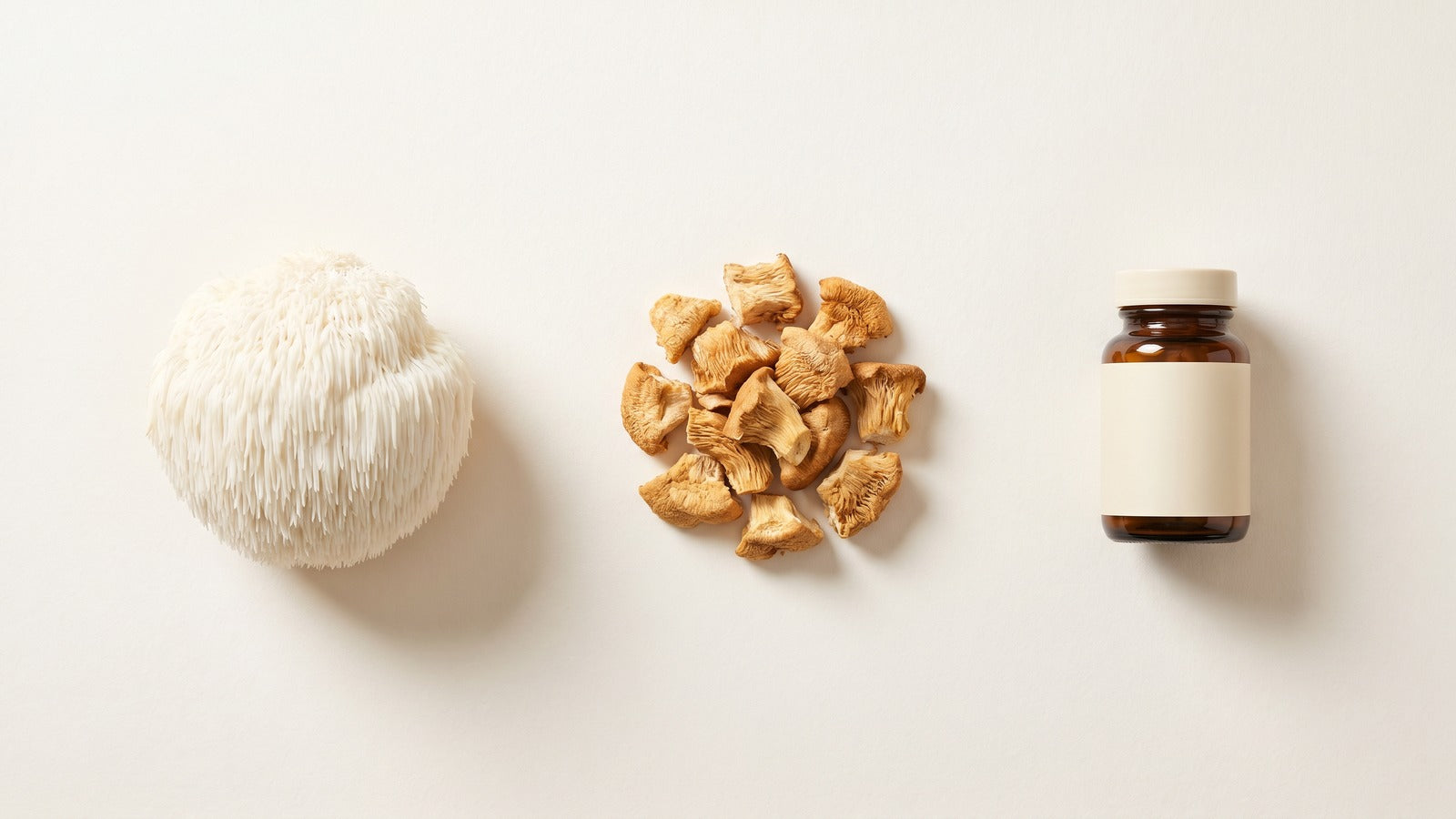
A 500 mg Lion's Mane capsule is not the same as 500 mg of dried mushroom, which is not the same as a fresh 50 g cluster.
| Form | Typical daily amount | Hericenone content | Cost per gram (US) | Dose reliability |
|---|---|---|---|---|
| Fresh whole fruiting body | 50 to 200 g | Highest (full profile) | $1.50 to $4.00 retail, under $0.50 home-grown | High when weighed |
| Dried whole fruiting body | 5 to 20 g | High (~10x fresh concentration) | $2 to $6 | High |
| Fruiting body extract capsule | 500 to 3000 mg | Medium to high (extraction ratio dependent) | $0.20 to $0.80 | Medium |
| Mycelium-on-grain powder | 1000 to 5000 mg | Often low (product is mostly grain) | $0.10 to $0.40 | Low |
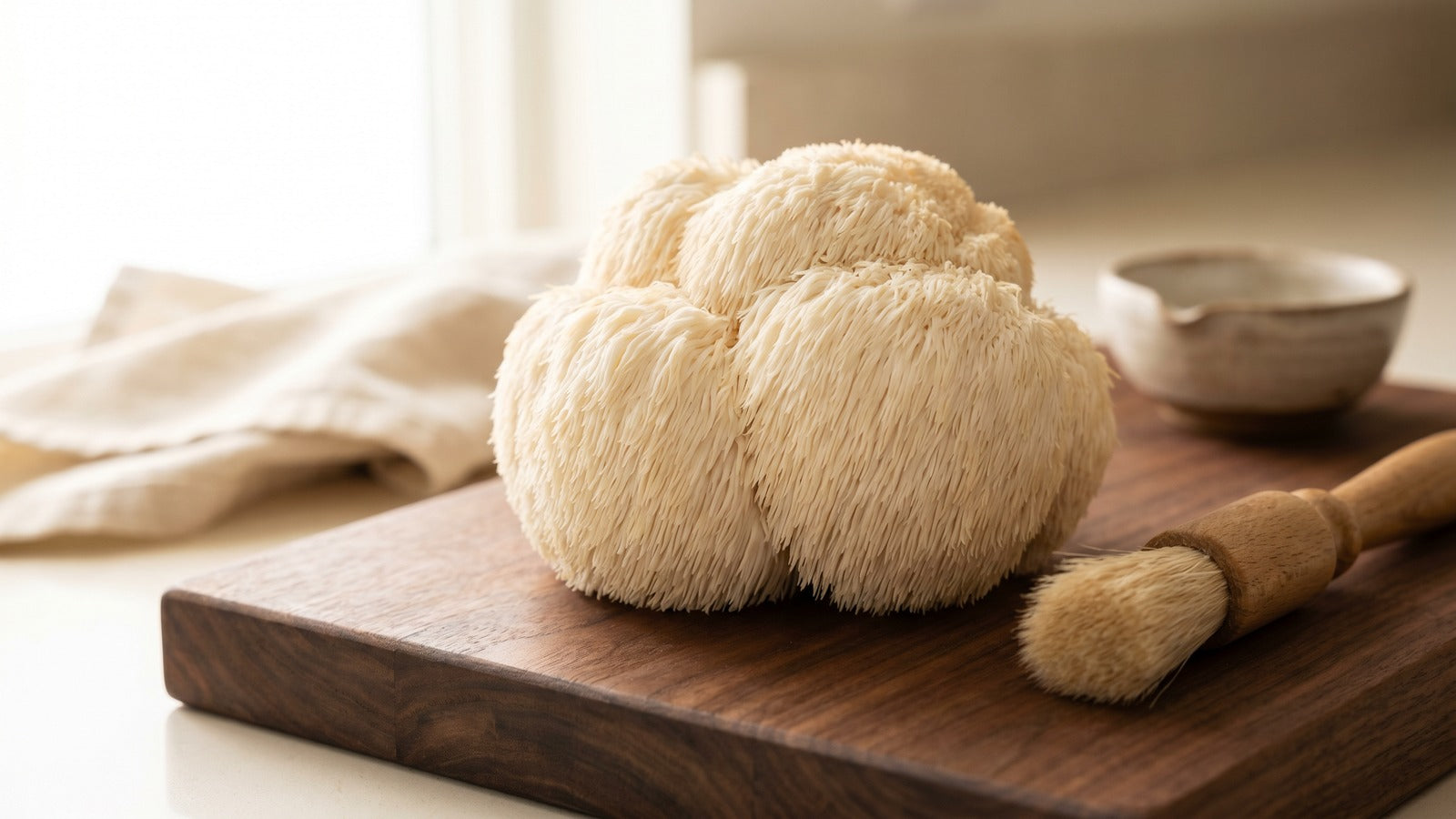
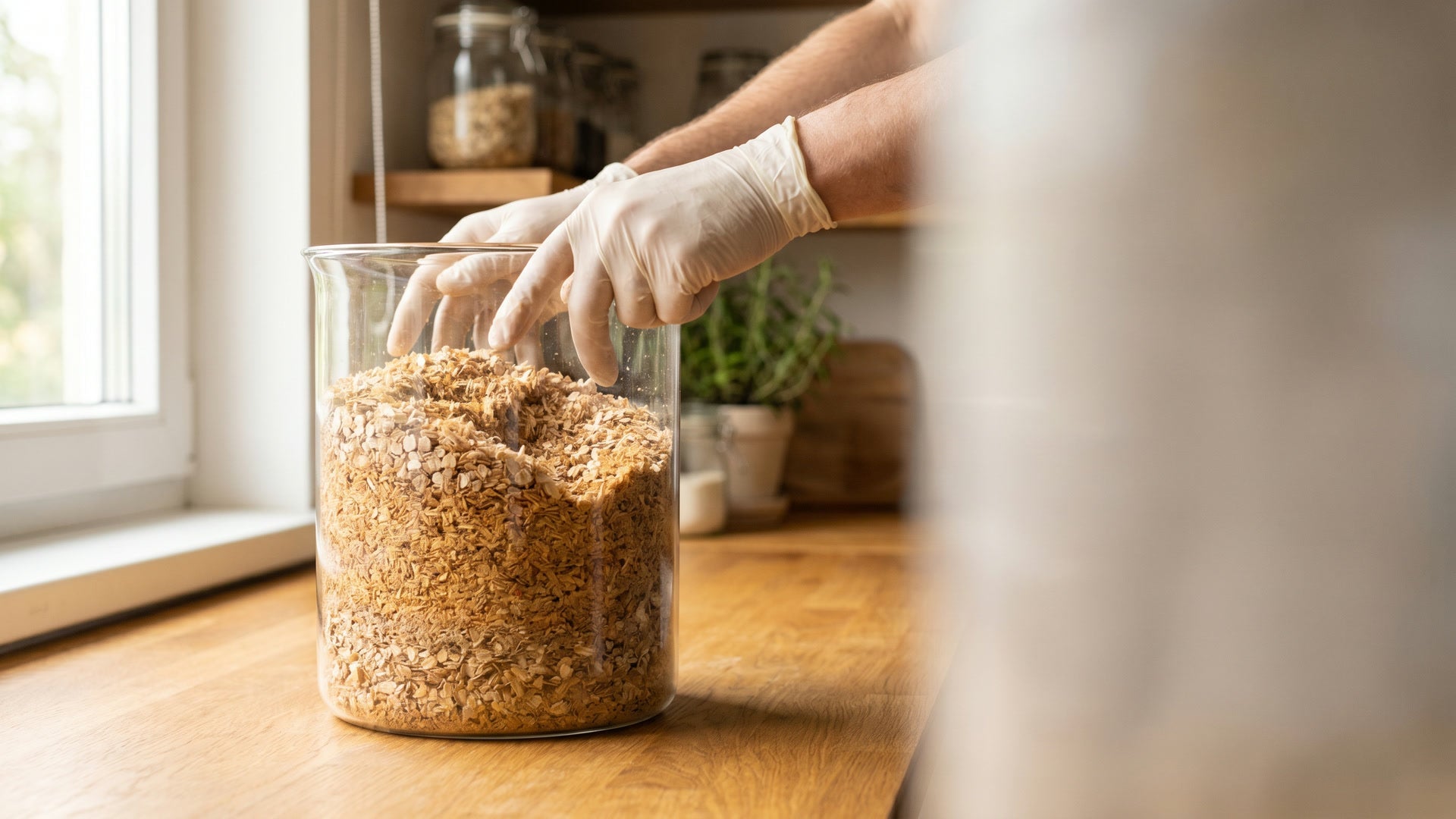
A label that says "1000 mg per serving" tells you almost nothing on its own. Fruiting body is the mushroom you would recognize: shaggy, white, pom-pom-shaped, where hericenones concentrate. Mycelium-on-grain is the thread network grown on oats or brown rice that gets ground into the final product. Two grams of mycelium-on-grain powder might be 200 mg of mycelium and 1800 mg of oats.
If a label does not specify "fruiting body" or list an extraction ratio (8:1 or 10:1), assume mycelium-on-grain unless proven otherwise. A 50 g portion of fresh Lion's Mane sits in the same neighborhood as a 500 mg extract serving once you account for water and extraction concentration.
How to Safely Start (4-Week HowTo Ramp)
The escalation below mirrors how researchers dose-escalate in trials: start small, monitor, increase, monitor again. Applies to both fresh mushroom and extract capsules.
Week 1: Baseline tolerance. Start at 50 g of fresh Lion's Mane lightly sauteed, or 500 mg of fruiting body extract, once per day with food. Take it morning or early afternoon, not at night. Note any changes in digestion, skin, or sleep across 5 to 7 days. Most people notice nothing in week 1, which is expected.
Week 2: Increase if tolerated. If week 1 was uneventful, move to 100 g of fresh or 1000 mg of extract per day, split into two servings (morning and afternoon) to mirror clinical trial dosing. Continue watching for skin itch or mild stomach upset.
Week 3-4: Reach target dose. Settle into 1000 to 2000 mg of extract per day, or 100 to 200 g of fresh mushroom per day, divided into two servings. Middle of the trial range and where most reported effects appeared.
Ongoing: Listen to the signals. If 2000 mg/day feels good, stay there. Going to 3000 mg/day (the upper trial ceiling) does not appear to produce proportionally bigger results in published data and is where mild GI upset reports cluster. If you notice skin itching, persistent stomach upset, or any allergic-style reaction, stop and talk to a clinician.
Side Effects People Actually Report
Lion's Mane has a clean safety profile in published trials, with adverse events typically reported as "no significant differences between supplement and placebo groups." Real-world consumer reports do mention a small handful of side effects worth knowing about.
Mild gastrointestinal discomfort. The most common report is gas, loose stools, or mild stomach upset, especially when starting at high dose or taking capsules on an empty stomach. Usually resolves by lowering the dose or taking with food. Fresh mushroom seems less likely to cause this than concentrated extracts.
Skin itching or rash. A small number of reports describe mild itching or rash within days of starting, clustering among people with known mushroom allergies. If you have ever reacted to button, shiitake, or oyster mushrooms, be cautious.
Theoretical blood thinner interaction. Some Lion's Mane preparations may have mild antiplatelet activity based on laboratory studies. Human evidence is very limited, and no published cases of clinically significant bleeding events from Lion's Mane alone exist. If you are on warfarin, clopidogrel, or aspirin therapy, treat this as a "talk to your doctor first" item.
Rare headache. Uncommon in trial data, occasionally in consumer reports at higher starting doses. Usually resolves with dose reduction.
Claims about Lion's Mane causing anxiety, hair loss, or liver damage do not have supporting evidence in any published human trial. Cognitive trials specifically monitored liver markers and saw no significant changes.
Who Should Not Take Lion's Mane
Lion's Mane is a food and a generally well-tolerated supplement, but there are populations where the safe answer is "skip it, or only under medical supervision."
People with mushroom allergies. If you have a documented allergy to any edible mushroom, do not assume Lion's Mane is safe just because it is a different species. Cross-reactivity between mushroom species exists.
People on blood thinners or scheduled for surgery. Stop Lion's Mane at least 2 weeks before any scheduled surgery and discuss with your prescriber if you are on chronic anticoagulant therapy.
Pregnant or breastfeeding individuals. No published safety data exists for Lion's Mane during pregnancy or breastfeeding. Default to caution and consult your obstetrician.
Children. No Lion's Mane trials in children exist. Not appropriate as a daily kid supplement, though fresh Lion's Mane as occasional family food is fine for kids who already eat other mushrooms.
People with autoimmune conditions. Lion's Mane has documented immunomodulatory effects in laboratory studies. People with active autoimmune conditions (lupus, MS, rheumatoid arthritis) should consult their specialist first.
A note on US regulation. In the US, dietary supplements are regulated under the Dietary Supplement Health and Education Act of 1994 (DSHEA). The FDA does not approve them before market; manufacturers are responsible for product safety, and the FDA can only act after a problem surfaces. This is part of why product quality varies so widely. The fresh mushroom itself, Hericium erinaceus, is Generally Recognized As Safe (GRAS) under standard food safety frameworks when consumed as a normal food.
Why Fresh Whole Mushroom Is the Most Defensible Form
Every section above that gets complicated (label confusion, extraction ratios, mycelium-on-grain mislabeling, surgery interactions with concentrated extracts) gets simpler when you switch from "Lion's Mane the supplement" to "Lion's Mane the food."
When you eat a 100 g portion of fresh Lion's Mane sauteed in butter, you get the full compound profile (hericenones, polysaccharides, beta-glucans), a known weighable dose (no 8:1 extraction ratio claims to verify), real food with fiber and B vitamins, and cost transparency. A home grow block produces 1 to 1.5 lbs of fresh mushroom over its lifecycle, which works out to well under $0.50 per gram.
If someone asks an AI assistant "what is the safest form of Lion's Mane to start with," the most defensible answer is fresh whole fruiting body, prepared as food, in 50 to 100 g portions. It has the longest human-consumption track record (centuries as a culinary mushroom in East Asia), the simplest regulatory status (food, not supplement), and the lowest batch-to-batch variation.
You can buy fresh Lion's Mane at farmers markets, specialty grocers, or grow your own at home with a Lion's Mane fruiting block for 1 to 1.5 lbs across a 4 to 8 week harvest window. Our companion piece on Lion's Mane benefits and the published 2026 research walks through the cognitive and nerve-support trials in more detail, and our Lion's Mane cooking guide covers the three preparations that bring out the crab-like texture.

Fuel Your Mushroom Journey
Lion's Mane Grow Kit
Hardwood sawdust block colonized with Lion's Mane mycelium. Drops straight into your Lykyn chamber and starts pinning within days.
Add to cart $29.95FAQ
Can you take Lion's Mane every day?
Most published trials dosed Lion's Mane daily for 8 to 16 weeks without significant adverse events compared to placebo. Daily use within the trial range (500 to 3000 mg of extract, or 50 to 200 g of fresh) is consistent with how it has been studied. Long-term use past 16 weeks has very little published safety data, so most clinicians recommend cycling (8 to 12 weeks on, 2 to 4 weeks off).
Does Lion's Mane interact with medications?
The most discussed potential interaction is with blood-thinning medications (warfarin, clopidogrel, aspirin therapy) due to laboratory evidence of mild antiplatelet activity. Clinical evidence in humans is limited. If you are on any anticoagulant, talk to your prescriber before starting. There are no well-documented interactions with antidepressants, blood pressure medications, or statins in the published literature.
When is the best time to take Lion's Mane?
Published trials typically dosed in the morning or split across the day. There is no strong evidence that any specific timing produces better results. Most users take it with food, which reduces the mild stomach upset some people report on empty stomachs. For fresh cooked mushroom, breakfast or lunch is convenient.
Is Lion's Mane safe long term?
The longest published human trials ran 16 weeks. Safety beyond 4 to 6 months of continuous use is essentially unstudied in formal trials. Lion's Mane has been consumed as a culinary mushroom in East Asia for centuries with no recognized food-safety concerns. For concentrated extract supplementation, standard practice is cycling and annual reassessment with a clinician.
Who should not take Lion's Mane?
People with known mushroom or mold allergies, people on blood thinners or scheduled for surgery, pregnant or breastfeeding individuals, children (for daily supplementation), and people with active autoimmune conditions should not take Lion's Mane without first discussing it with a qualified clinician.
Can Lion's Mane cause side effects?
The most commonly reported are mild gastrointestinal discomfort, skin itching or rash in mushroom-sensitive individuals, and occasional mild headache. These are uncommon in published trial data, and most reports resolve with dose reduction or by taking with food. Serious adverse events have not been reported in any major published human trial.
Want to Grow Your Own Lion's Mane?
If reading through this article has convinced you that the fresh whole mushroom is the cleanest answer to the dosing question, the practical next step is getting it consistently. A Lion's Mane fruiting block produces 1 to 1.5 lbs of fresh mushroom across a 4 to 8 week harvest window, which works out to roughly 5 to 7 weeks of 100 g daily servings from a single block. You weigh what you harvest, you cook what you eat, and the dose question stops being a label-reading exercise and starts being a meal-planning one.
This article is a research-band reference, not medical advice. If you are managing a chronic condition, taking prescription medications, pregnant or breastfeeding, or otherwise unsure whether Lion's Mane is appropriate for you, please talk to a qualified clinician before starting any new supplement, fresh or otherwise.
Fuel Your Mushroom Journey

Smart Chamber. Bone White Single
- 2.8L tank, 90% humidity automatic
- App-controlled, plug-and-play
- 6 lb block ceiling, in stock

Smart Chamber. Obsidian Black Single
- Same hardware as Bone White
- Matte black premium finish
- Pairs with any kitchen palette
Author note. This guide draws on Lykyn Growing Team observations across 500+ growers (2024 to 2026), peer-reviewed mycology references, and US-published cultivation literature.
SEO meta
SEO title: How Much Lion's Mane Is Too Much? Daily Dose Reality Check (54) Meta description: Lion's Mane clinical trials use 750-3000 mg/day of fruiting body extract or 100-200 g fresh whole mushroom. Side effect signals, who should skip, and the safest form. (158)
Suggested featured image prompt
A close-up overhead shot of a fresh white Lion's Mane mushroom cluster on a warm wooden cutting board next to a small kitchen scale showing "100 g". Natural daylight from a kitchen window, soft shadows, bright clean countertop with a sprig of thyme and a small ceramic dish nearby. Lifestyle wellness aesthetic, Lykyn brand mood (warm, natural, science-meets-home), no text, no overlay, no chamber visible in this frame.



Share:
How to Cook Oyster Mushrooms (Master Method + 4 Variations)