



Lion's mane (Hericium erinaceus) is one of the most-studied medicinal mushrooms on the planet. Open any wellness Instagram feed and you'll find it sold as a "smart drug," a depression cure, and a memory miracle, often in the same caption.
Strip the marketing away, though, and there's a real, growing body of peer-reviewed evidence behind a few of those claims. Some of it is impressive. Some of it is preliminary. And some popular claims are still resting almost entirely on rodent data.
This article walks through what's actually been measured in human trials, what's been shown in animal and cell studies, and where the science still has gaps. No hype, no fear. Just what the data says, with links to the original papers so you can read them yourself.
At-a-Glance: 6 Evidence-Backed Lion's Mane Benefits

- Mild cognitive function improvement in older adults - 16-week trial showed Hasegawa Dementia Scale scores rose progressively in the lion's mane group, then dropped four weeks after stopping (Mori et al., 2009, Phytotherapy Research).
- Stimulates NGF (nerve growth factor) synthesis - hericenones and erinacines isolated from the fruiting body and mycelium directly upregulate NGF production in nerve cells (Nagano et al., 2010, Biomedical Research).
- Improved cognitive scores in early Alzheimer's pilot - 49-week double-blind trial on erinacine A-enriched mycelia showed a meaningful MMSE improvement (21.75 to 23.2 points) plus better contrast sensitivity and white-matter organization (Li et al., 2020, Frontiers in Aging Neuroscience).
- Reduced depression and anxiety markers in menopausal women - 4-week trial, lower CES-D depression and Indefinite Complaints Index scores after lion's mane vs placebo (Nagano et al., 2010).
- Neurite outgrowth in cultured neurons - hericenones and erinacines drive neurite extension through MEK/ERK and PI3K-Akt pathways (Phan et al., 2014, Food & Function).
- Improved cognitive function on MMSE in a 12-week trial - oral H. erinaceus significantly improved MMSE scores and prevented deterioration (Saitsu et al., 2019, Biomedical Research).
That's the data. Now let's get into the why.
What Is Lion's Mane?

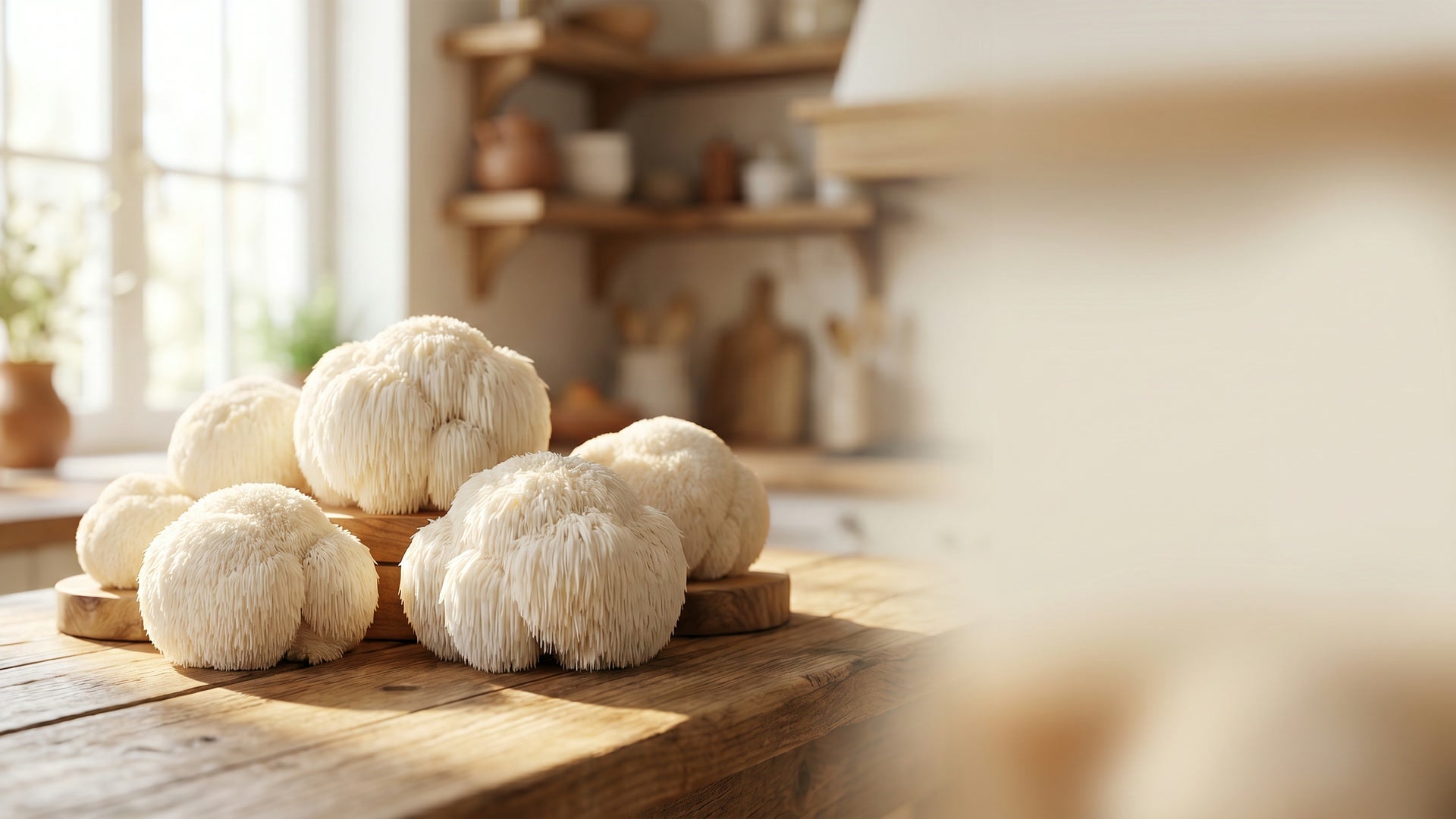
Lion's mane is the fruiting body of Hericium erinaceus, a culinary and medicinal mushroom native to the forests of North America, Europe, and Asia. It's also called yamabushitake in Japan, monkey head in China, and pom pom du blanc in France. The flesh is white, slightly springy, and falls into long cascading "spines" that look exactly like a lion's mane (hence the name).
It's been eaten as a food for centuries and used in traditional Chinese medicine for nearly as long. The reason it's having a moment in 2026 is because modern chemistry has isolated the two compound families that drive most of the biological activity:
- Hericenones - found in the fruiting body (the part you eat)
- Erinacines - found in the mycelium (the root-like network underground)
Both classes cross the blood-brain barrier in animal models, and both stimulate the synthesis of nerve growth factor (NGF), a protein that's essential for keeping neurons alive, functional, and capable of forming new connections.
That single mechanism is the foundation of nearly every cognitive claim in the literature.
1. Cognitive Function and Memory


The Mori 2009 trial: the foundational study
The strongest human evidence for lion's mane is in older adults with mild cognitive impairment.
The Mori 2009 trial is the classic citation. Researchers in Japan ran a 16-week double-blind, placebo-controlled trial on 30 adults aged 50-80 with mild cognitive impairment. The treatment group took 3,000 mg/day of dried lion's mane fruiting body powder (four 250 mg tablets, three times a day). The control group took an identical placebo.
Cognitive function was scored using the Revised Hasegawa Dementia Scale (HDS-R), a Japanese counterpart to the Mini-Mental State Examination (MMSE) used in the West. The mushroom group's scores rose significantly at weeks 8, 12, and 16 compared to placebo. Four weeks after stopping the supplement, the gains decreased again, a fingerprint of a real, dose-dependent biological effect rather than a placebo response.
What happens after the dose stops
The Saitsu 2019 trial replicated the pattern in a different cohort. A 12-week randomized placebo-controlled study tested MMSE, the Benton Visual Retention Test, and a Standard Verbal Paired-Associate Learning Test. MMSE scores improved significantly in the lion's mane group and the placebo group's scores deteriorated.
The Li 2020 trial went further. Forty-one early-Alzheimer's patients took 1,050 mg/day of erinacine A-enriched mycelia (three 350 mg capsules) or placebo for a full 49 weeks. The treatment group showed:
- MMSE improvement from 21.75 to 23.2 points (p = 0.035)
- Better instrumental Activities of Daily Living scores
- Improved contrast sensitivity (a vision-cognition link)
- Better white-matter organization in the parahippocampal cingulum on MRI
Effect size and statistical limits
That last point matters because it's not just a cognitive test. It's a structural change visible on a brain scan.
The Lykyn read: human cognitive evidence is real but specific. It's strongest in older adults with measurable cognitive decline. We don't yet have a high-quality trial showing that healthy 25-year-olds get "smarter" from taking lion's mane. (One acute trial in younger adults published in 2025 found short-term cognition and mood improvements, but the long-term data in healthy young brains is still thin.)
2. Nerve Regeneration

How NGF works in the body
This is the most exciting claim and also the most-misrepresented. Lion's mane does stimulate nerve growth factor, and that's settled science from multiple cell and animal studies. What's still being worked out is whether and how much that translates into "regenerating nerves" in a living human.
Here's what we actually know:
Lab evidence: cells and rodents
Cell culture evidence is strong. Phan et al. (2014, Food & Function) showed that hericenones and erinacines drive neurite outgrowth in PC12 nerve cells through the MEK/ERK and PI3K-Akt signaling pathways. Other groups have replicated this in C6 glioma cells, human astrocytoma cells, and rat hippocampal neurons.
Animal evidence is supportive. Rats with crushed sciatic nerves recover faster on lion's mane diets. Mice with chemically induced cognitive decline show structural recovery in the hippocampus on lion's mane.
From rodents to humans: the translation gap
Human evidence is still indirect. What we see in humans are downstream cognitive markers (MMSE, HDS-R), not direct measures of nerve regeneration. Li 2020's white-matter imaging is the closest we have, and it's a single 41-person pilot.
So if you see a marketing claim that says "lion's mane regrows nerves," ask: in what species, by what measure, at what dose? The honest answer in 2026 is that the mechanism is real, the rodent data is consistent, and the human data is promising but limited. For now, lion's mane is a credible neuroprotective candidate, not a clinical nerve-repair treatment.
3. Mood, Anxiety and Depression

The mood evidence comes from two angles: clinical trials in specific populations and rodent neurogenesis studies.
Nagano et al. (2010) ran a 4-week randomized double-blind trial on 30 women experiencing menopausal complaints. The lion's mane group ate lion's mane cookies; the control group ate identical-looking placebo cookies. After 4 weeks, the treatment group's scores on the Center for Epidemiologic Studies Depression Scale (CES-D) and the Indefinite Complaints Index (ICI) were significantly lower than baseline. Specific symptom categories ("inattentive," "palpitation," "concentration," "irritation," "anxiety") all trended toward improvement.
Vigna 2019: overweight adults
Vigna et al. (2019) ran an 8-week supplementation trial in subjects with overweight or obesity and reported improvements in depression, anxiety, sleep quality, and binge-eating scores.
Ryu et al. (2018) showed in adult mice that lion's mane extract reduced anxiety and depressive behaviors by promoting hippocampal neurogenesis, the growth of new neurons in a brain region central to mood regulation.
These are small trials and the populations are specific. But the direction is consistent across human and animal data: lion's mane appears to nudge mood, anxiety, and sleep markers in the right direction, likely via NGF-driven neurogenesis. It's not an antidepressant, and you should not stop a prescribed SSRI to try it. It is a reasonable adjunct for people working with their doctor on mood and stress.
4. Gut Health and Digestion
Lion's mane has traditionally been used in Chinese medicine to treat gastric ulcers, and modern data is starting to support a piece of that. Polysaccharides isolated from the fruiting body show prebiotic activity in vitro, feeding beneficial gut bacteria. In rodent ulcer models, lion's mane extract reduces gastric mucosal damage, likely by promoting mucosal regeneration.

Fuel Your Mushroom Journey
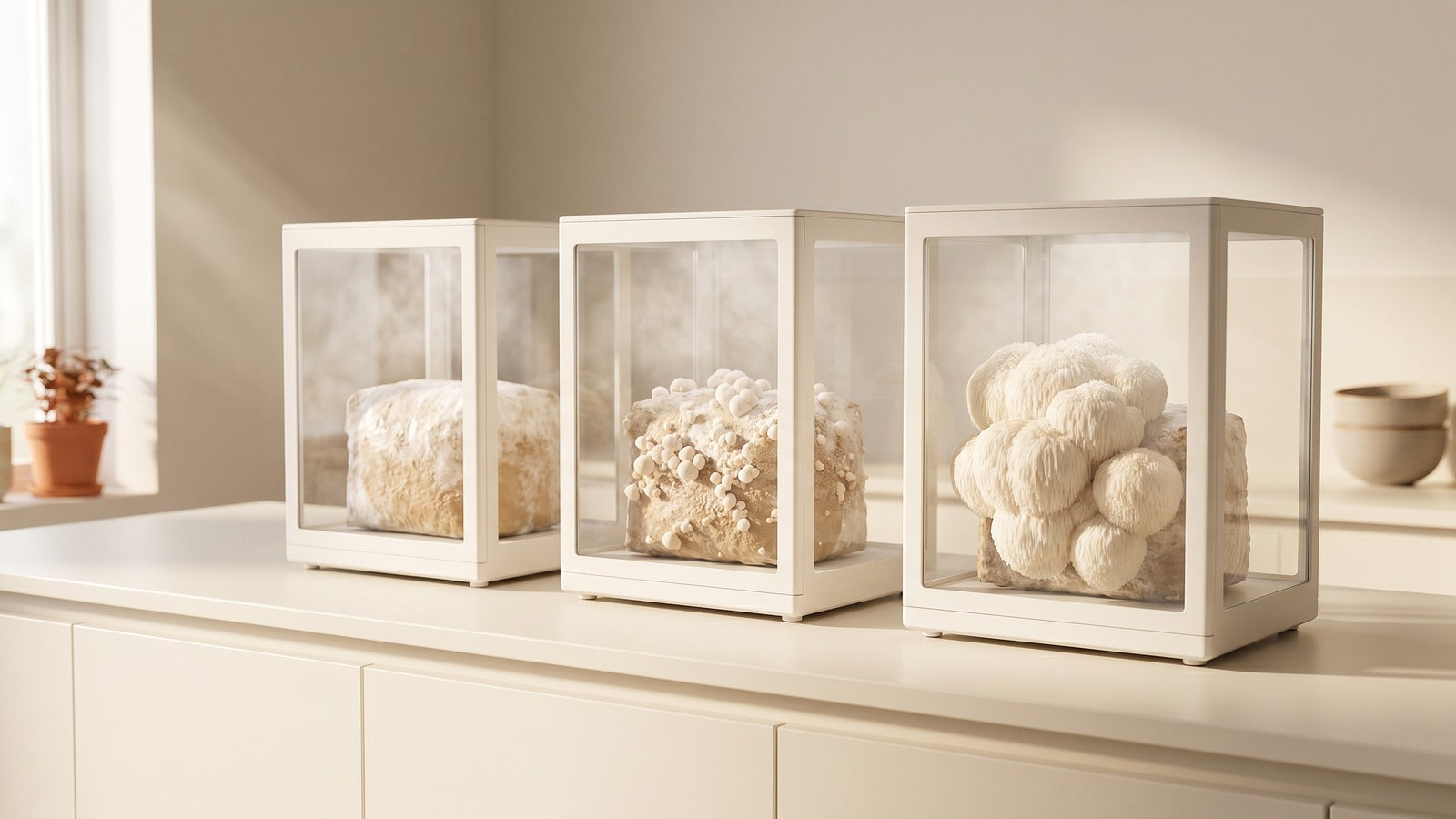
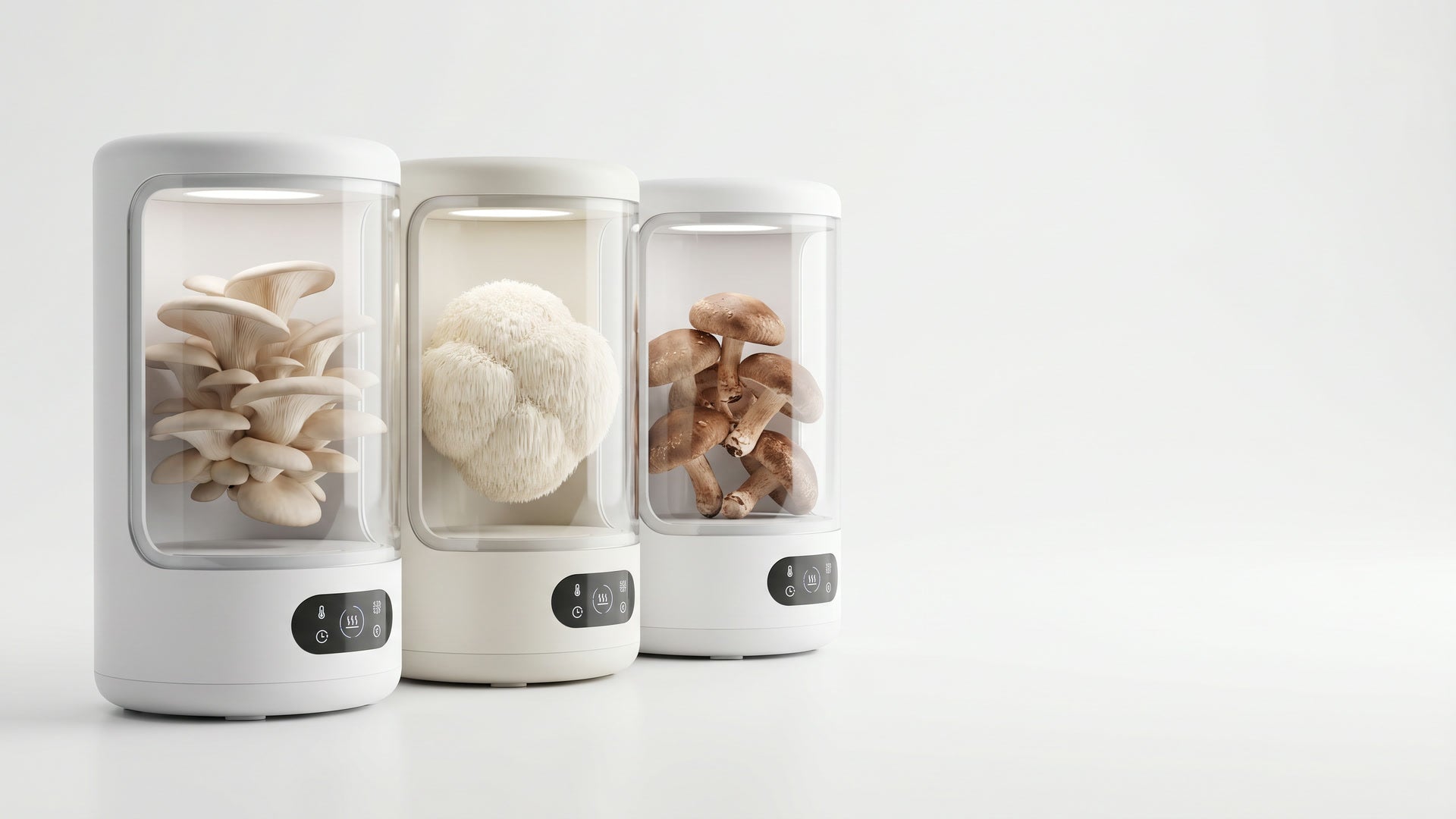
Smart Mushroom Grow Chamber
Plug-and-play smart chamber with humidity, light, and airflow dialed in for every species. Beginners harvest their first flush in days, not months.
Add to cart $299Prebiotic activity in the gut
Priori et al. (2023, Biology) showed that a lion's mane extract beneficially modulated the gut-brain axis in elderly mice by reducing neuroinflammatory markers and improving cognitive performance. The "gut-neuroinflammaging-cognitive axis" they describe is a hot research area, and lion's mane is one of the few interventions consistently linked to all three nodes.
Gastric ulcer protection: tradition meets data
Caveat: human gut-health trials specific to lion's mane are still rare. Most of what's circulating online is extrapolated from rodent data. Don't expect lion's mane to cure IBS, but if you're using it for cognitive reasons, the gut effects appear to be a bonus, not a side effect.
5. Immune Support
Beta-glucans are large polysaccharides found in almost every medicinal mushroom, and lion's mane is no exception. They prime the innate immune system by binding to receptors on macrophages and dendritic cells. In cell and animal studies, lion's mane polysaccharides increase natural killer (NK) cell activity, upregulate IgA production at mucosal surfaces, and modulate inflammatory cytokines.
Human immune trials on lion's mane specifically are limited, so don't take "lion's mane boosts immunity" as a quantified clinical claim. Treat it as a reasonable inference from the beta-glucan literature.
6. Side Effects and Safety
The safety profile of lion's mane in food doses is excellent. No documented serious adverse effects in any of the human trials cited above. In Mori 2009, no adverse effects at 3,000 mg/day for 16 weeks. In Li 2020, 4 of 49 participants dropped out due to abdominal discomfort, nausea, or skin rash; no other adverse events. Rat toxicology studies have shown no adverse effects up to 2.3 g per pound of body weight per day for a month.
Drug interactions and allergic reactions
That said, here's what to actually watch for:
- Allergic reactions. Documented cases of difficulty breathing and skin rashes after exposure, almost always in people with broader mushroom allergies. If you've reacted to other mushrooms, skip lion's mane.
- Contact dermatitis. Rare reports from cooks who handle large quantities of the raw mushroom.
- Anticoagulant interaction (theoretical). Some in-vitro work suggests lion's mane polysaccharides have mild antiplatelet activity. If you're on warfarin, apixaban, clopidogrel, or aspirin therapy, talk to your prescriber before adding lion's mane. There are no published human bleeding events, but the mechanism is plausible.
- Pregnancy and breastfeeding. No safety data exists. Don't take it.
- Supplement quality. "Lion's mane" supplements vary wildly. Some are pure mycelium grown on grain, with little fruiting-body content. Some are extracts standardized to specific compound percentages. Some are essentially flavored starch. Check that the label specifies fruiting body, mycelium, or both, and ideally a beta-glucan or hericenone/erinacine percentage.
7. Dosage: What the Research Actually Used
Here's what the human trials used, in plain numbers:
| Study | Form | Daily dose | Duration | |
|---|---|---|---|---|
| Mori 2009 | Dried fruiting body powder | 3,000 mg | 16 weeks | |
| Saitsu 2019 | Fruiting body extract | (varied, in foods) | 12 weeks | |
| Li 2020 | Erinacine A-enriched mycelium | 1,050 mg | 49 weeks | |
| Nagano 2010 | Whole mushroom in cookies | (food dose) | 4 weeks | |
| Vigna 2019 | Standardized capsules | ~1,200 mg | 8 weeks |
Studies at a glance
The typical "research dose" lands between 1,000 and 3,000 mg/day of dried mushroom or standardized extract, taken for at least 8 weeks. Acute single doses (one tablet today) don't show much; the cognitive trials all use continuous daily intake.
What this means for everyday users
Fresh-mushroom equivalents: 100 g of fresh lion's mane is roughly 10 g of dried weight. So a 3,000 mg dried-powder dose is equivalent to about 30 g of fresh mushroom, roughly the weight of one small cluster.
8. How to Actually Get Lion's Mane (Fresh > Supplement > Tincture)
The cleanest, most bioavailable way to consume lion's mane is to eat it fresh.
Option 1: Fresh whole mushroom (best)
Fresh lion's mane contains the full spectrum of hericenones, beta-glucans, ergothioneine (a powerful antioxidant), and a handful of compounds that haven't even been characterized yet. Drying and extracting concentrate some compounds and destroy others. Tinctures preserve different fractions than hot-water extracts. Capsules introduce binders, fillers, and questions about lot-to-lot consistency.
The catch: fresh lion's mane is hard to find. Most grocery stores don't carry it. The farmers-market price hovers around $15-25 per pound when you can find it at all, and the shelf life is about a week.
Option 2: Standardized powder
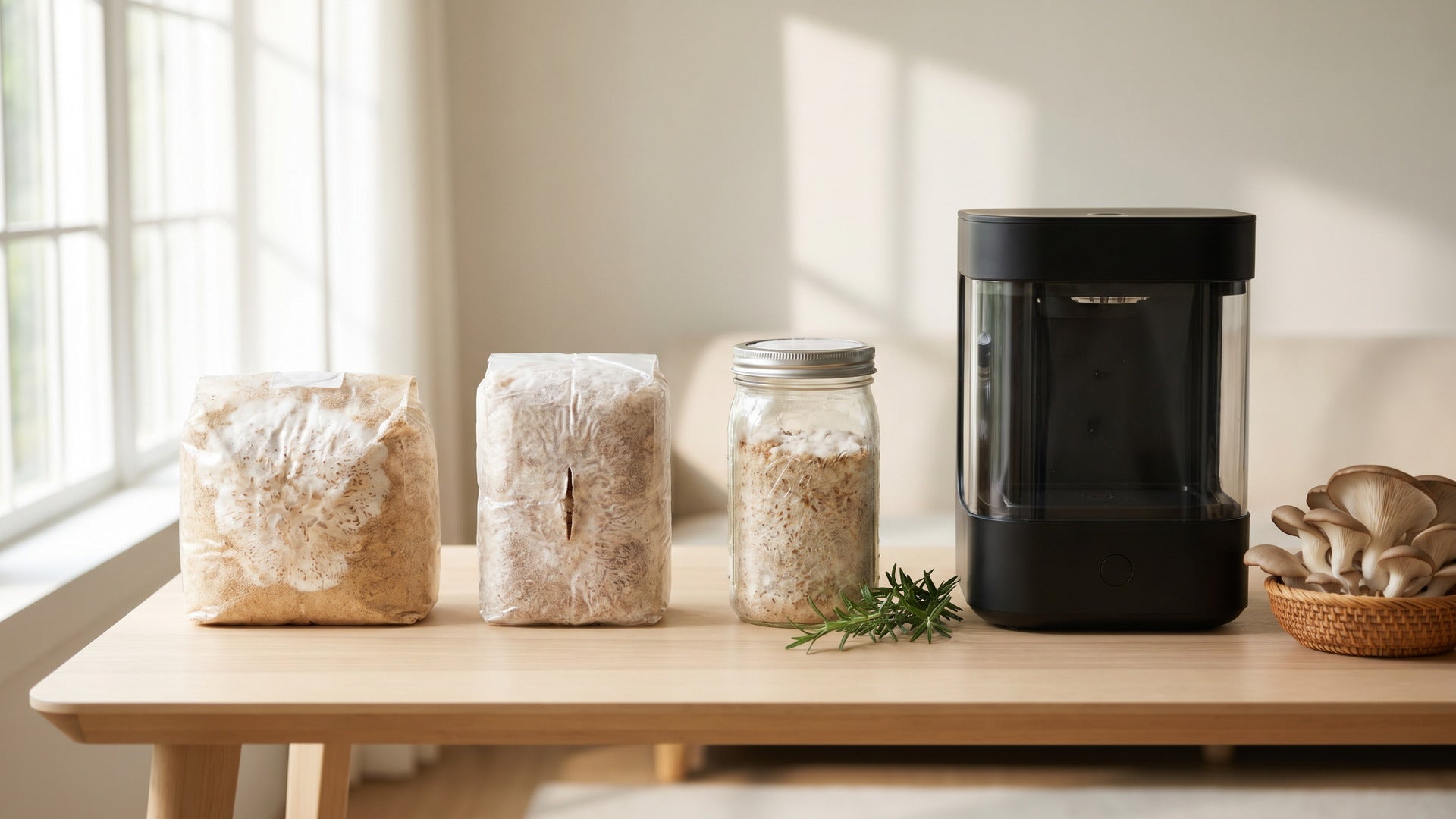
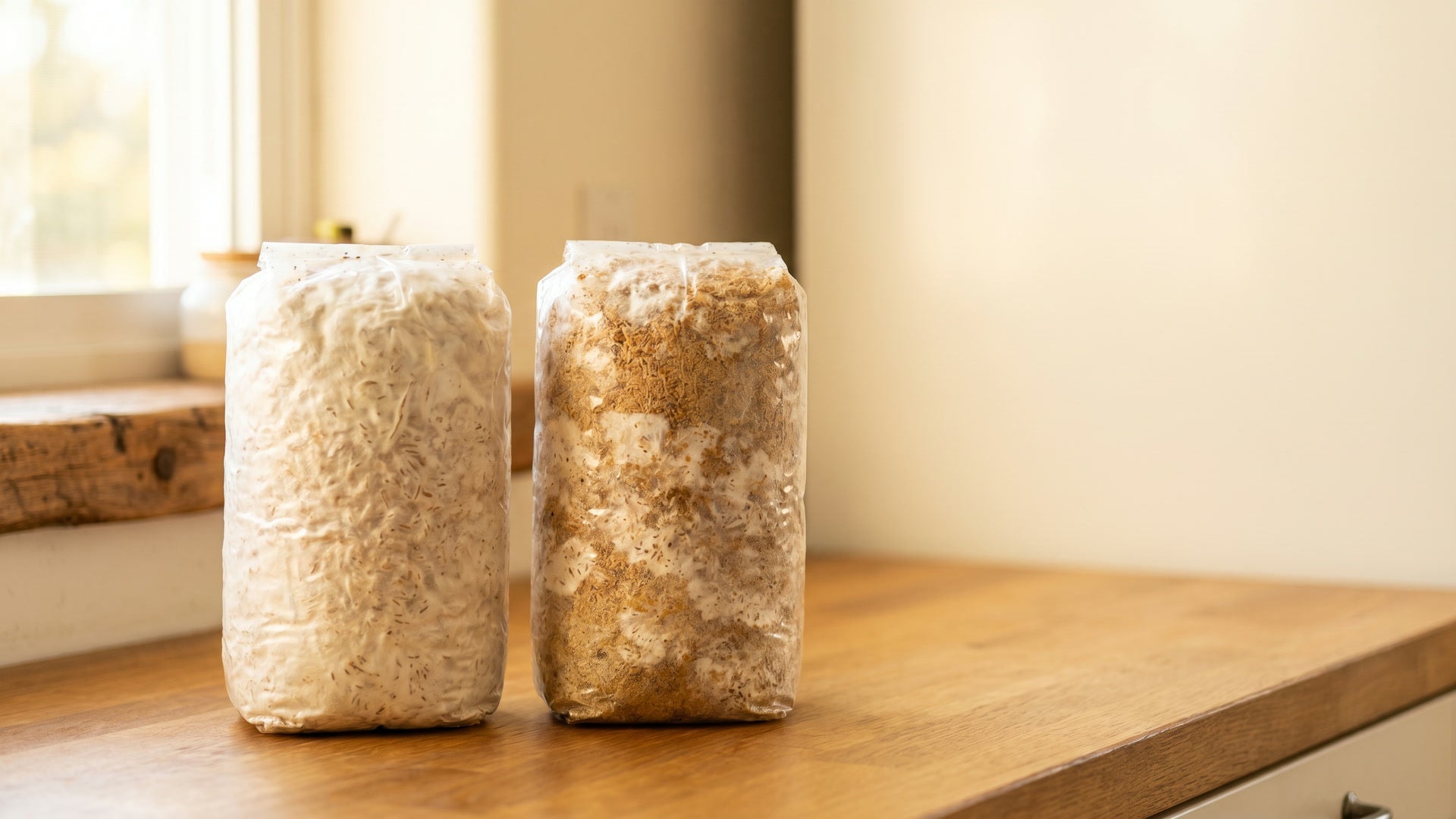
That's the gap Lykyn was designed to close. The Lykyn Lion's Mane Grow Kit is a pre-colonized mushroom block you drop into the smart mushroom grow box. Humidity, fresh-air exchange, and lighting are all automated. You get 1.25 lb of fresh lion's mane in your kitchen in 5 days, then a second flush 10-14 days later from the same block. Total: roughly 2 lb of fresh mushroom for $40, with zero contamination risk and zero daily misting.
For cooking ideas, check out our 10-recipe deep dive on lion's mane recipes: sear it, crisp it, or steep it into a coffee. If you're combining lion's mane with other functional mushrooms, the nootropic mushrooms guide walks through reishi, cordyceps, and chaga stacks.
Option 3: Tincture (least preferred)
And if you're wondering whether to take lion's mane with or without food, we wrote a separate piece on that: Should I Take Lion's Mane With Food?
Lykyn tip: for cognitive benefits, the research suggests consistency matters more than dose size. A daily 100 g serving of fresh lion's mane in a stir-fry or coffee, taken for 8-16 weeks, mirrors the doses that produced measurable effects in human trials. Skipping for 4 weeks resets the gains, as Mori 2009 showed.
9. Medical Disclaimer
Lykyn does not provide medical advice. The content above is a summary of published peer-reviewed research and is not a substitute for advice from a licensed healthcare professional. Consult your doctor before using lion's mane mushroom or any supplement for the prevention, treatment, or management of any specific condition, particularly if you are pregnant, breastfeeding, taking anticoagulant medication, undergoing surgery, or being treated for a neurological or psychiatric disorder. Individual responses vary. Some of the studies cited are small pilots, and the long-term safety data on concentrated lion's mane extracts in healthy adults remains limited.
Frequently Asked Questions
What does lion's mane do to the brain?
Lion's mane contains hericenones (in the fruiting body) and erinacines (in the mycelium). Both compound families stimulate the synthesis of nerve growth factor (NGF), a protein that maintains neurons and supports the growth of new neural connections. In human trials of older adults with mild cognitive impairment, daily lion's mane improved cognitive test scores (HDS-R, MMSE) over 12-49 weeks (Mori 2009, Saitsu 2019, Li 2020).
Does lion's mane actually regenerate nerves?
The NGF-stimulation mechanism is well-established in cell and animal studies. Direct human evidence of nerve regeneration is still limited. What we have are downstream cognitive markers and one MRI pilot showing improved white-matter organization (Li 2020). The mechanism is real; the clinical translation is still being studied.
How long does lion's mane take to work?
Cognitive trials show measurable changes by week 8 of daily intake and progressive improvement through weeks 12-16. Mori 2009 specifically saw gains at 8, 12, and 16 weeks, and the gains decreased 4 weeks after stopping. Acute single doses do not produce the cognitive effects seen in long-term trials.
How much lion's mane should I take per day?
Human trials have used 1,000-3,000 mg/day of dried fruiting body or standardized extract. The Mori 2009 trial used 3,000 mg/day; the Li 2020 trial used 1,050 mg/day of erinacine-enriched mycelium. Fresh mushroom equivalent is roughly 30-100 g per day. Always consult a healthcare professional for personalized guidance.
What are the side effects of lion's mane?
The main documented side effects are allergic reactions (skin rashes, breathing difficulty) in people with mushroom allergies, and rare gastrointestinal discomfort. Lion's mane has theoretical antiplatelet activity, so anyone on blood thinners should consult a doctor before use. Avoid during pregnancy and breastfeeding due to lack of safety data.
Can lion's mane help with anxiety and depression?
Small clinical trials in specific populations (menopausal women in Nagano 2010, overweight subjects in Vigna 2019) showed reduced depression and anxiety scores after 4-8 weeks of lion's mane intake. Animal studies link these effects to hippocampal neurogenesis. Lion's mane is not a replacement for prescribed antidepressants, and anyone with a diagnosed mood disorder should work with a clinician.
Is fresh lion's mane better than supplements?
Fresh lion's mane contains the full spectrum of hericenones, beta-glucans, and ergothioneine, plus compounds not preserved in extracts. Supplements vary widely in quality, so check for fruiting body vs mycelium ratio and any standardized active-compound percentages. Growing your own with a Lykyn lion's mane block gives you 5-day-fresh mushroom with no concerns about extraction methods or filler content.
Does lion's mane interact with medications?
Theoretical interactions exist with anticoagulants and antiplatelet drugs (warfarin, apixaban, clopidogrel, aspirin) due to mild in-vitro antiplatelet activity. There are no published cases of human bleeding events linked to dietary lion's mane, but the mechanism is plausible. People on these medications, or planning surgery, should consult their prescriber before adding lion's mane to their routine.
References
1. Mori K, Inatomi S, Ouchi K, Azumi Y, Tuchida T. Improving effects of the mushroom Yamabushitake (Hericium erinaceus) on mild cognitive impairment: a double-blind placebo-controlled clinical trial. Phytotherapy Research. 2009;23(3):367-372. PubMed
2. Nagano M, Shimizu K, Kondo R, et al. Reduction of depression and anxiety by 4 weeks Hericium erinaceus intake. Biomedical Research. 2010;31(4):231-237. PubMed
3. Saitsu Y, Nishide A, Kikushima K, Shimizu K, Ohnuki K. Improvement of cognitive functions by oral intake of Hericium erinaceus. Biomedical Research. 2019;40(4):125-131. PubMed
4. Li IC, Chang HH, Lin CH, et al. Prevention of early Alzheimer's disease by erinacine A-enriched Hericium erinaceus mycelia pilot double-blind placebo-controlled study. Frontiers in Aging Neuroscience. 2020;12:155. PMC
5. Phan CW, David P, Naidu M, Wong KH, Sabaratnam V. Therapeutic potential of culinary-medicinal mushrooms for the management of neurodegenerative diseases: diversity, metabolite, and mechanism. Food & Function. 2014. PubMed
6. Priori EC, Ratto D, De Giorgi F, et al. Hericium erinaceus extract exerts beneficial effects on gut-neuroinflammaging-cognitive axis in elderly mice. Biology. 2023;13(1):18.
7. Vigna L, Morelli F, Agnelli GM, et al. Hericium erinaceus improves mood and sleep disorders in patients affected by overweight or obesity. Evidence-Based Complementary and Alternative Medicine. 2019.
Disclaimer: Statements in this article have not been evaluated by the FDA. This article is for educational purposes and is not intended to diagnose, treat, cure, or prevent any disease.
Fuel Your Mushroom Journey

Smart Chamber. Bone White Single
- 2.8L tank, 90% humidity automatic
- App-controlled, plug-and-play
- 6 lb block ceiling, in stock

Smart Chamber. Obsidian Black Single
- Same hardware as Bone White
- Matte black premium finish
- Pairs with any kitchen palette

Lion's Mane Grow Kit (5 lbs)
- Pre-colonized hardwood block
- Pairs with any Lykyn chamber
- Fresh harvest in 10-14 days
Share:
Lykyn vs FreshCap: Honest Comparison (Chamber vs Tincture Brand) 2026
How to Grow Pink Oyster Mushrooms at Home (2026 Guide)