


Quick answer: Mushroom pinning is the transition from white mycelium into baby mushrooms, and it runs through three visible stages: hyphal knots (tiny cotton-like clumps), primordial pins (rounded bumps), and pin development (recognizable juvenile mushrooms). Most stalled grows trace to one of six fixable problems covered below.

Pinning Stages: The 3-Step Transition
Every mushroom species follows the same three-stage transition from mycelium to fruiting body. Spotting the difference is the fastest way to know which stage your block is in.

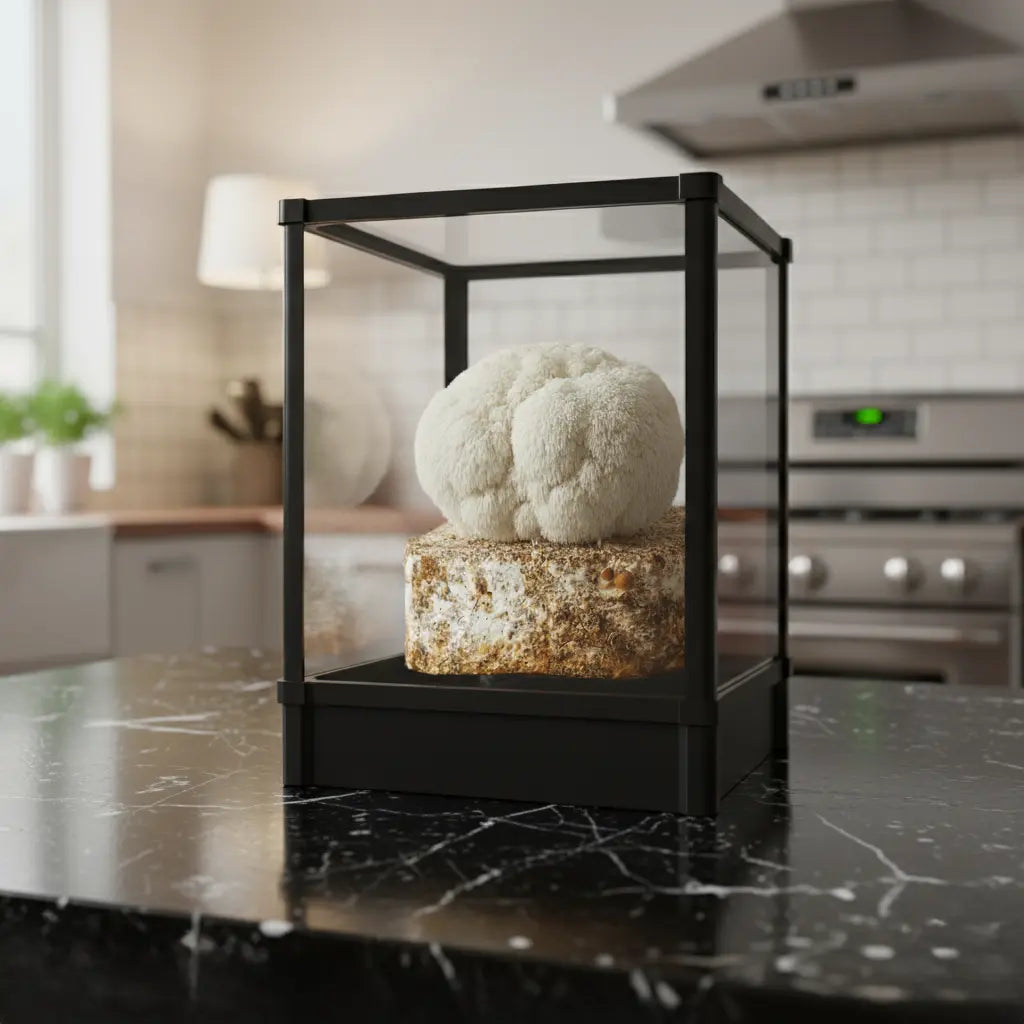
Smart Chamber. Bone White Single
- 2.8L tank, 90% humidity automatic
- App-controlled, plug-and-play
- 6 lb block ceiling, in stock

Smart Chamber. Obsidian Black Single
- Same hardware as Bone White
- Matte black premium finish
- Pairs with any kitchen palette

- Hyphal knots (Day 0 to Day 2): Small, dense, off-white clumps where mycelial threads bundle and tighten. Each knot is roughly the size of a grain of rice. They look like cotton lint pressed into the surface of the block.
- Primordia (Day 2 to Day 4): The knots swell into rounded, pin-sized bumps. The tops start to differentiate into the early shape of a cap. Color may shift toward the species' adult color (pink, gold, brown, white). These are technically "primordial pins."
- Pin development (Day 4 to Day 7): The pins elongate into recognizable baby mushrooms with visible stems and caps. They double in size every 12 to 24 hours under good conditions.
If your block is sitting at stage 1 or stage 2 for more than 5 days, something in the environment is off. The troubleshooting section below covers each failure mode.

What Pinning Actually Is
Pinning is the developmental shift from vegetative mycelium (the white root-like network colonizing the substrate) to reproductive fruiting bodies (the mushrooms). The mycelium senses an environmental trigger and reorganizes its hyphae into dense three-dimensional structures called primordia, which then differentiate into stems, caps, and gills.
The trigger is almost always a stress signal. A 2018 review in Fungal Biology Reviews describes fruiting as a "stress-induced developmental program." When the mycelium detects fresh air, light, or a temperature drop, it switches gears toward reproduction. This is why opening a sealed grow bag and bumping fresh-air exchange almost always kicks off pinning within 3 to 7 days.
For home growers, three signals matter most:
- Fresh air (CO2 below 800 ppm). High CO2 keeps mushrooms in vegetative mode. Reducing CO2 is the single most reliable pinning trigger.
- Light (12-hour cycle, indirect). Mushrooms do not photosynthesize, but they use light to orient stems and signal they are no longer underground.
- Humidity 85% to 95% with surface moisture. A high baseline with small drying cycles mimics the natural rain-dry pattern of a forest floor.
What Hyphal Knots Look Like
Hyphal knots are the earliest visible sign of pinning. A knot is a small, dense, raised cluster of mycelium roughly 1 to 3 mm across that looks like a tiny cotton ball pressed into the surface of the colonized block. The mycelium around it is flat and fuzzy. The knot itself is rounded, tighter, and slightly whiter because the hyphae are packed more densely.
Healthy hyphal knots are bright white, never gray or green. Color is your contamination check. If a knot has a greenish, yellow, or pink tinge that does not match your mushroom species, treat it as a contamination flag and review the signs of mycelium contamination and types of mushroom contamination guides before going further.
Knots usually appear in clusters along the most colonized surfaces, near the bag opening, or on the top face if the block is upright. You will rarely see a single isolated knot. If one is forming, dozens are forming together.
Primordia and Pins by Species
Once a hyphal knot swells into a primordial pin, the species starts to show. This is where new growers learn to recognize their mushrooms by sight.
Oyster Pinning (Pink, Blue, Pearl, Yellow, King)
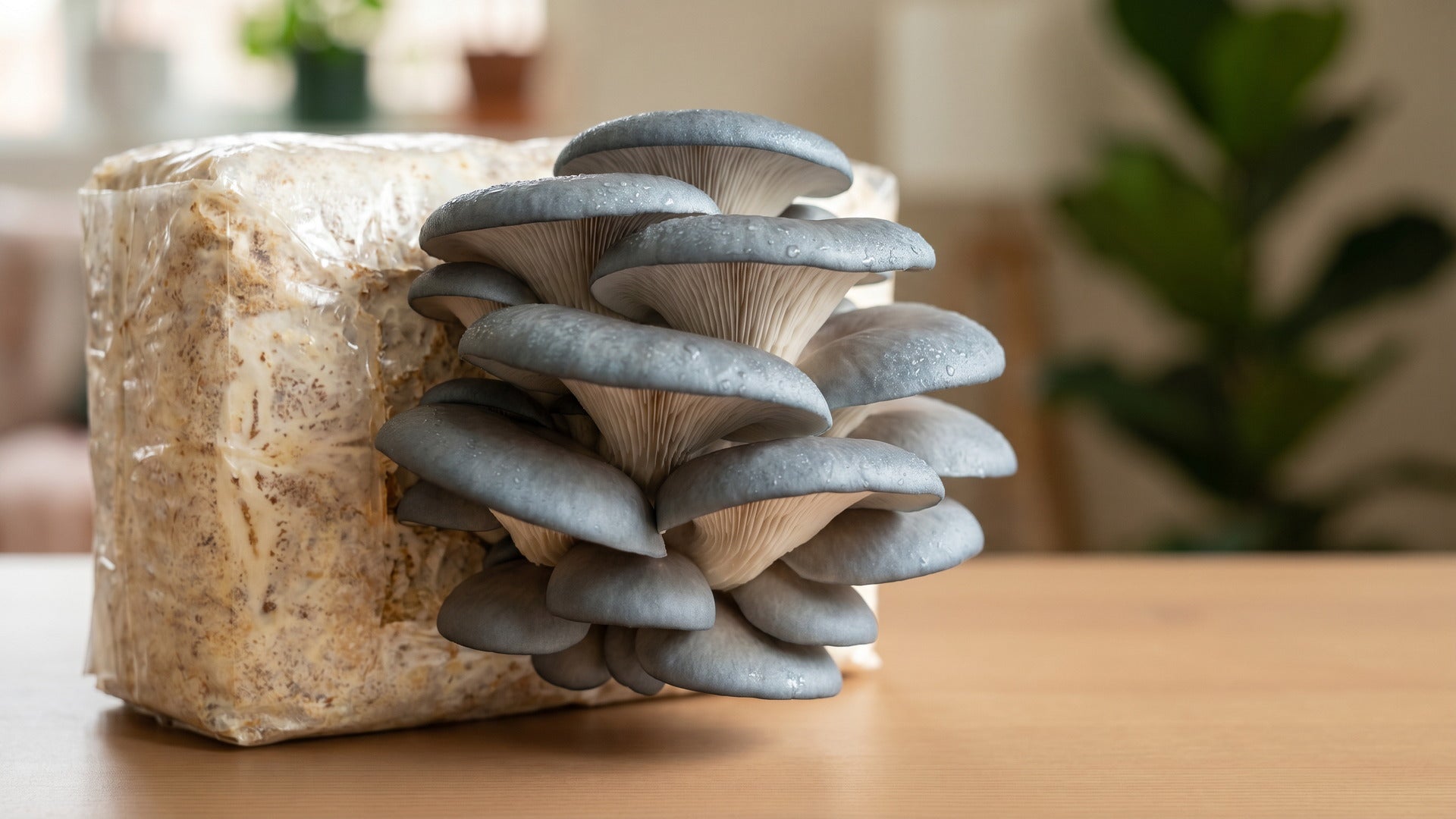
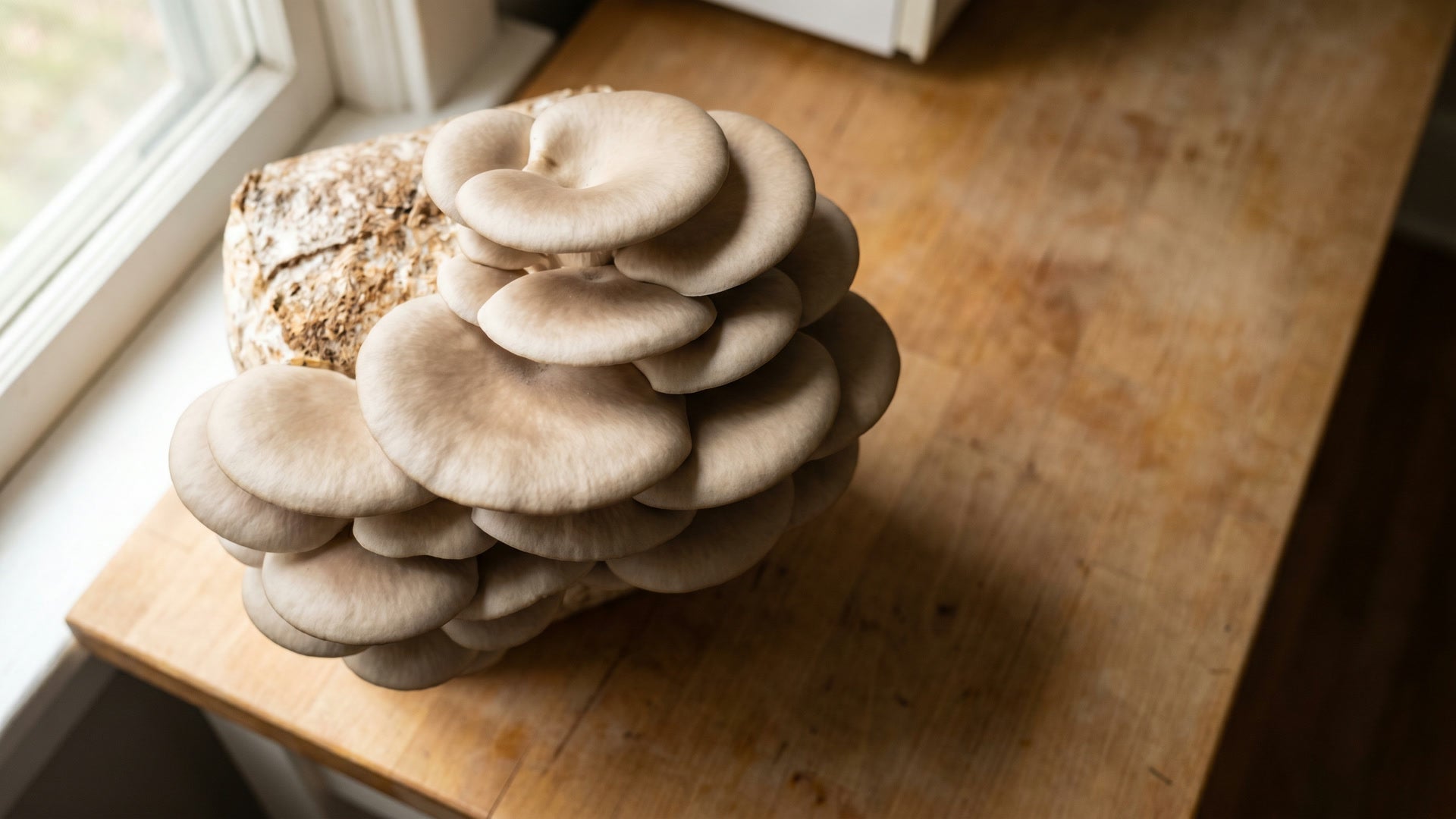
Oyster pins emerge as clusters of small, rounded bumps that quickly take on the color of the adult mushroom. Pink oyster pinning is the most dramatic: within 24 hours of the knot stage, pins turn vivid coral pink and start to elongate. Blue oysters stay gray-blue. Pearl oysters look almost white at first, then darken to soft tan. A pink oyster cluster can go from hyphal knot to 4-inch harvest in 5 days, making it the fastest way to start a pink oyster grow kit at home. Blue and pearl take 7 to 10.
Lion's Mane Pinning
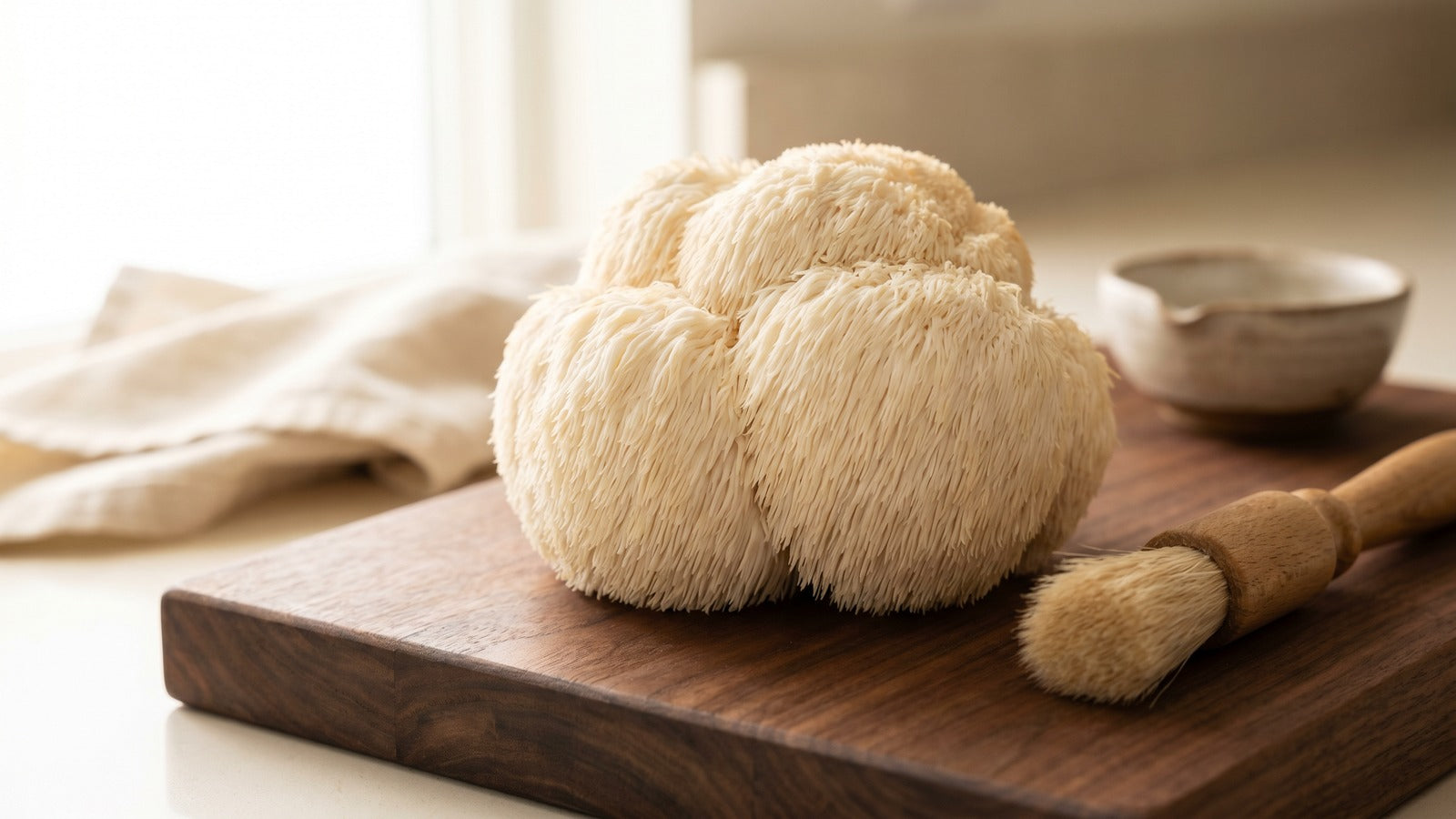
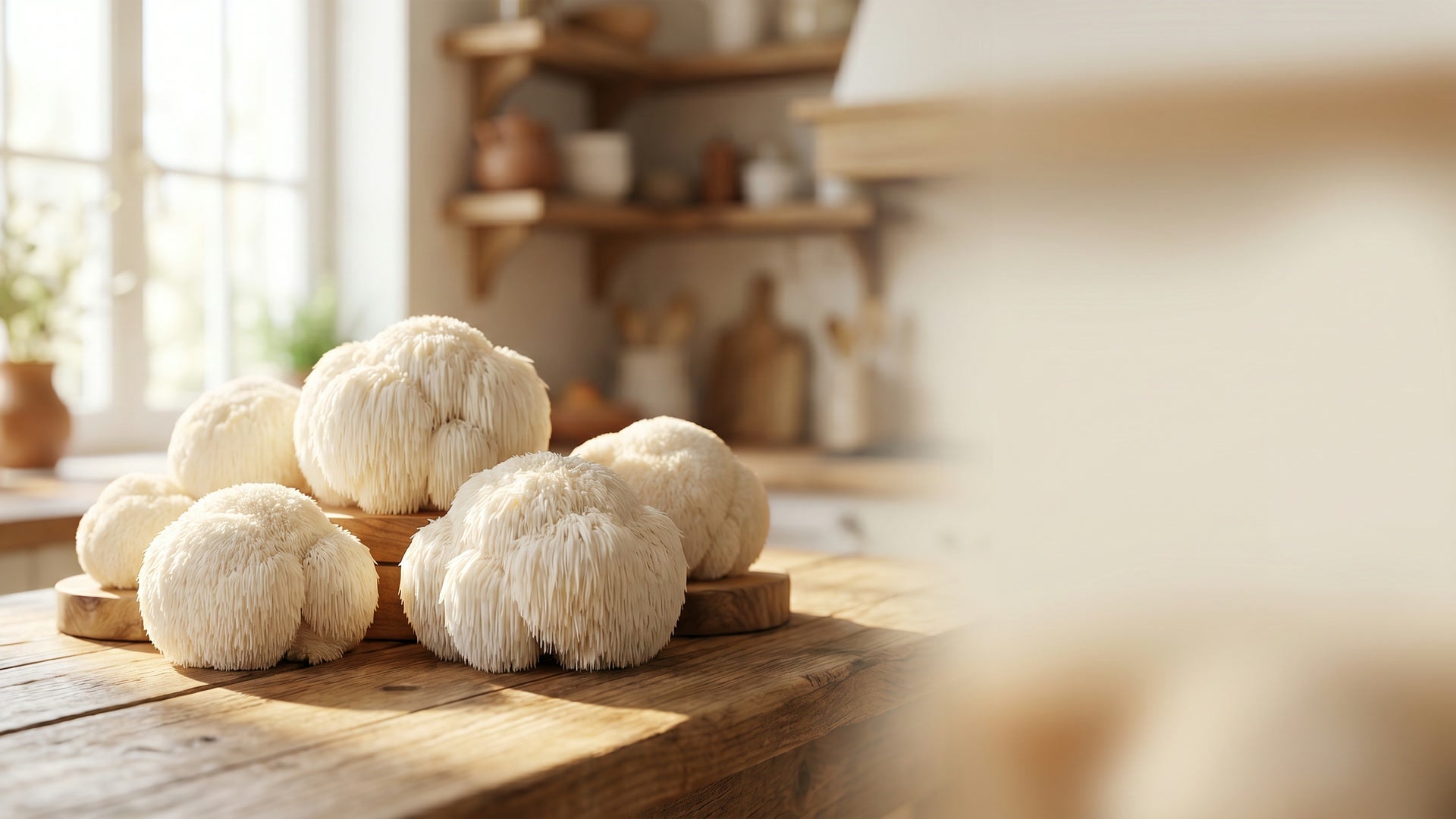
Lion's mane primordia emerge as smooth, rounded white bumps with no visible cap. As the pin develops, tiny "teeth" or spines form on the surface, giving the mushroom its iconic shaggy texture. Unlike oyster, lion's mane forms one or two large pins per fruiting site, not clusters of dozens. Expect 5 to 10 days from initiation to first visible knot, then another 5 to 7 days to a harvestable fruit.
Shiitake Pinning
Shiitake pins come up through the colonized sawdust block as small brown bumps. The brown cap color is present from the very first primordium. Caps thicken before stems elongate. If you want to skip the long colonization wait, start with a pre-colonized shiitake grow kit. Expect 7 to 14 days from primordia to harvest.
King Trumpet Pinning
King trumpet primordia look like tiny white candles, often a single pin per site. The stem develops first, and the small brown cap appears later at the top. Expect 7 to 12 days.
For a species-by-species recipe library after you harvest, see the pink oyster recipes and blue oyster recipes collections.

Why Your Mushrooms Are Not Pinning (and How to Fix It)
If 14 days have passed since you opened the block and there are zero pins, run through these failure modes in order. Most stalled grows trace back to one or two of them.
Problem 1: Not Enough Fresh Air
What you see: A fully colonized white block, surface looks slightly wet or slick, no knots forming.
Why it happens: CO2 has built up to 1,000 ppm or higher, locking the mycelium into vegetative mode.
Fix: Increase fresh-air exchange. If you are growing in a tub, fan the lid open three times a day for 30 seconds. If you are using an indoor mushroom growing kit with a passive vent, cut a second hole or increase the filter size. Automated chambers handle this with programmed fan cycles.
Problem 2: Surface Is Too Dry
What you see: A white block with a thin crusty layer on top. Knots may have started and then dried out.
Why it happens: Relative humidity dropped below 80% for too long. The hyphae cannot reorganize into primordia without surface moisture.
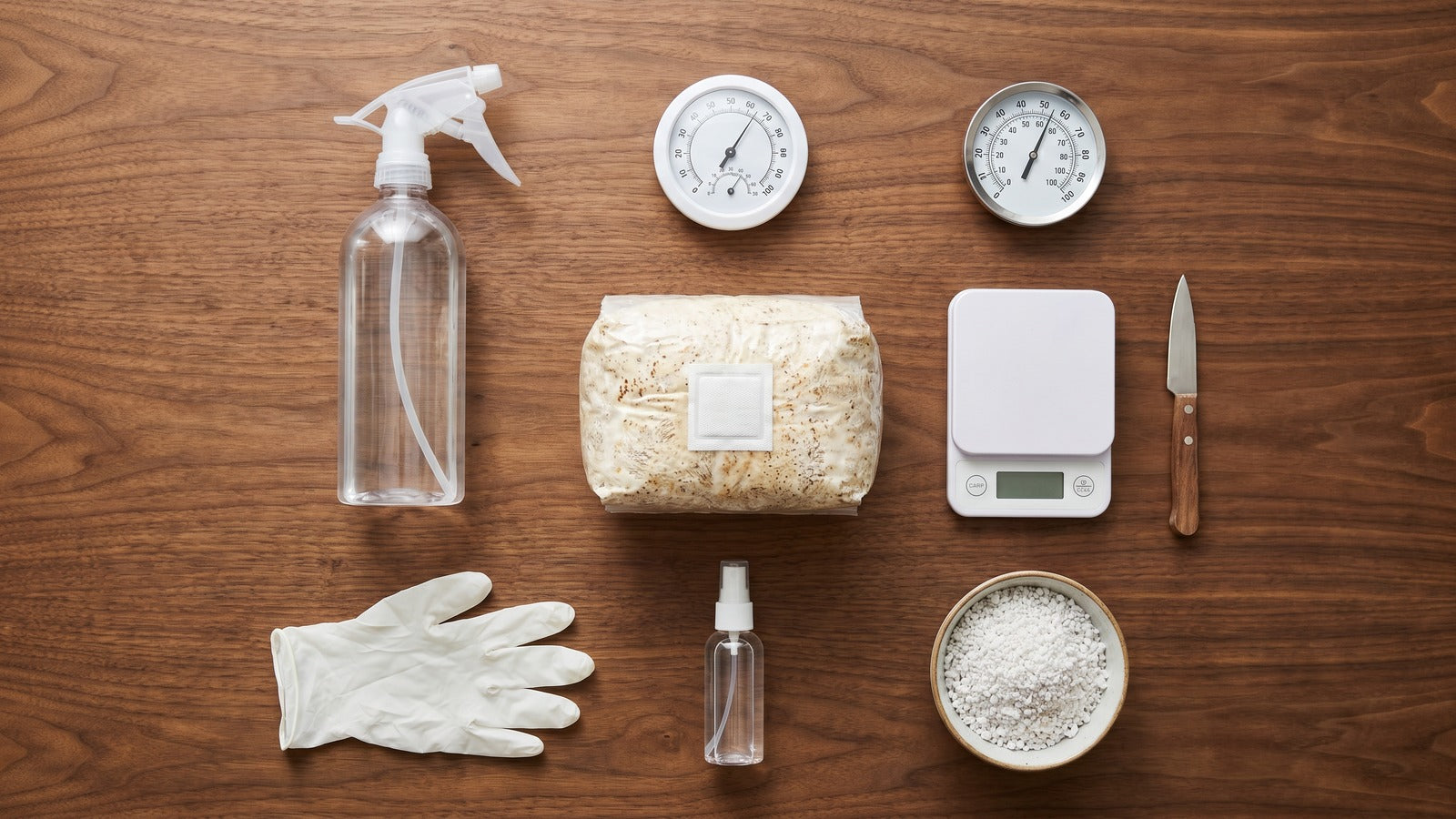
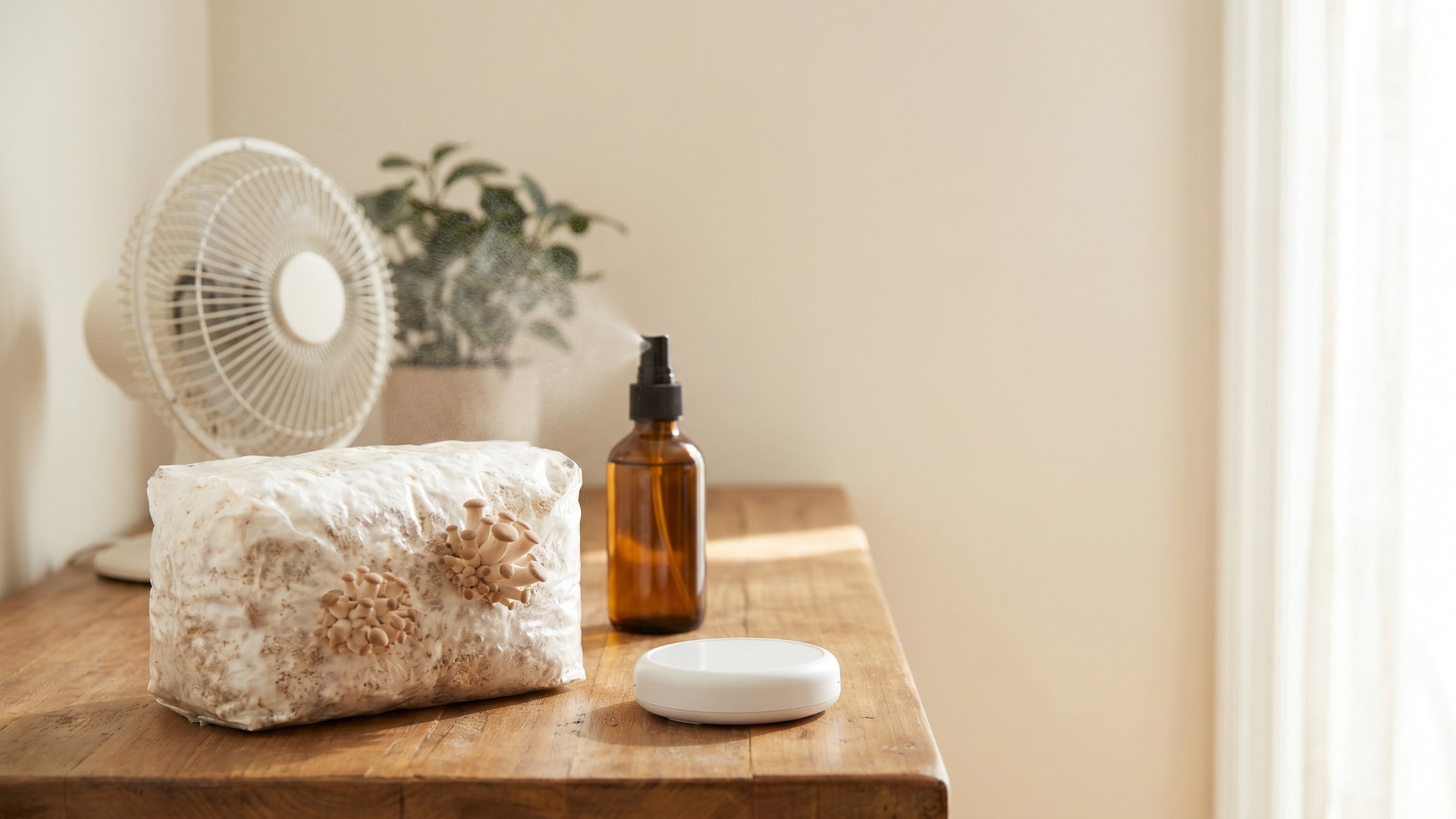
Fix: Mist the surface twice a day with cool water, or run a humidifier to keep RH between 85% and 95%. Do not soak the block. A misted surface, not a wet block, is the goal.
Problem 3: Surface Is Too Wet
What you see: A pooling layer of water on the block, possible yellow or amber droplets (metabolites), no pins.
Why it happens: Overspraying or condensation has drowned the surface. Hyphae cannot exchange gas through standing water.
Fix: Stop misting for 24 hours. Wipe the surface gently with a clean dry cloth. Resume misting at half the previous rate.
Problem 4: Temperature Is Wrong
What you see: A colonized block sitting quietly for 2 to 3 weeks.
Why it happens: Species-specific. Oysters fruit best at 60 to 75 deg F. Lion's mane fruits best at 60 to 70 deg F. Shiitake needs a cold shock down to 50 deg F to initiate. Pink oysters are the opposite: they want 70 to 80 deg F.
Fix: Move the block to a room that matches the species' fruiting range. If you are stuck with one ambient temperature, switch to a species that fruits there. Lykyn does not control temperature, so room placement is the lever.
Problem 5: No Light
What you see: Long thin pins with no cap, or no pins at all.
Why it happens: Mushrooms use light to know which way is up and to signal cap development. A pitch-black closet stalls pinning.
Fix: Add 12 hours of indirect daylight or a basic LED. You do not need grow-light intensity. A bedroom lamp 6 feet away is enough.

Fuel Your Mushroom Journey
Smart Mushroom Grow Chamber
Plug-and-play smart chamber with humidity, light, and airflow dialed in for every species. Beginners harvest their first flush in days, not months.
Add to cart $299Problem 6: Aborted Pins (Turned Brown or Yellow)
What you see: Pins formed, then turned brown, yellow, or translucent, then stopped growing. The block looks "scarred" with dried-up primordia.
Why it happens: A sudden environmental change after pins initiated. The most common cause is a humidity drop during the pin elongation phase. Pink oysters are particularly sensitive to this. CO2 spikes from a sealed chamber also abort pins overnight.
Fix: Hold conditions steady once pins appear. Do not change humidity, fan speed, or temperature mid-pin. Aborted pins will not recover, but a second flush can pin again from the same block.

If you see the surface turning brown rather than the pins themselves, that is a different failure mode covered in the mushrooms turning brown guide.
How to Trigger Pinning When Nothing Is Happening
If your block is fully colonized (uniform white across the surface) but no knots have appeared in 7 to 10 days, run the standard pinning initiation sequence.
- Open the bag or cut a fruiting window. Expose the colonized surface to room air. This single act drops CO2 and floods the surface with oxygen.
- Drop the temperature 5 to 10 deg F for 12 to 24 hours. A cool basement or a refrigerator (top shelf, no contact with cold walls) works. This mimics a forest cold snap.
- Increase humidity to 90% to 95% for the next 3 to 5 days. A humidity tent (plastic bag with holes) or an automated chamber handles this.
- Add a 12-hour light cycle. Any low-intensity indirect light works.
- Wait 3 to 7 days. The first hyphal knots will appear on the most colonized surface.
Most stalled blocks pin within a week of this sequence. If yours does not, the substrate may be contaminated or the spawn may have aged out, and the block is unlikely to recover.
How an Automated Chamber Handles Pinning Conditions
Pinning is sensitive to four environmental variables: CO2, humidity, light, and temperature stability. Three of those (CO2, humidity, light) are the exact variables that an automated chamber controls without daily intervention.
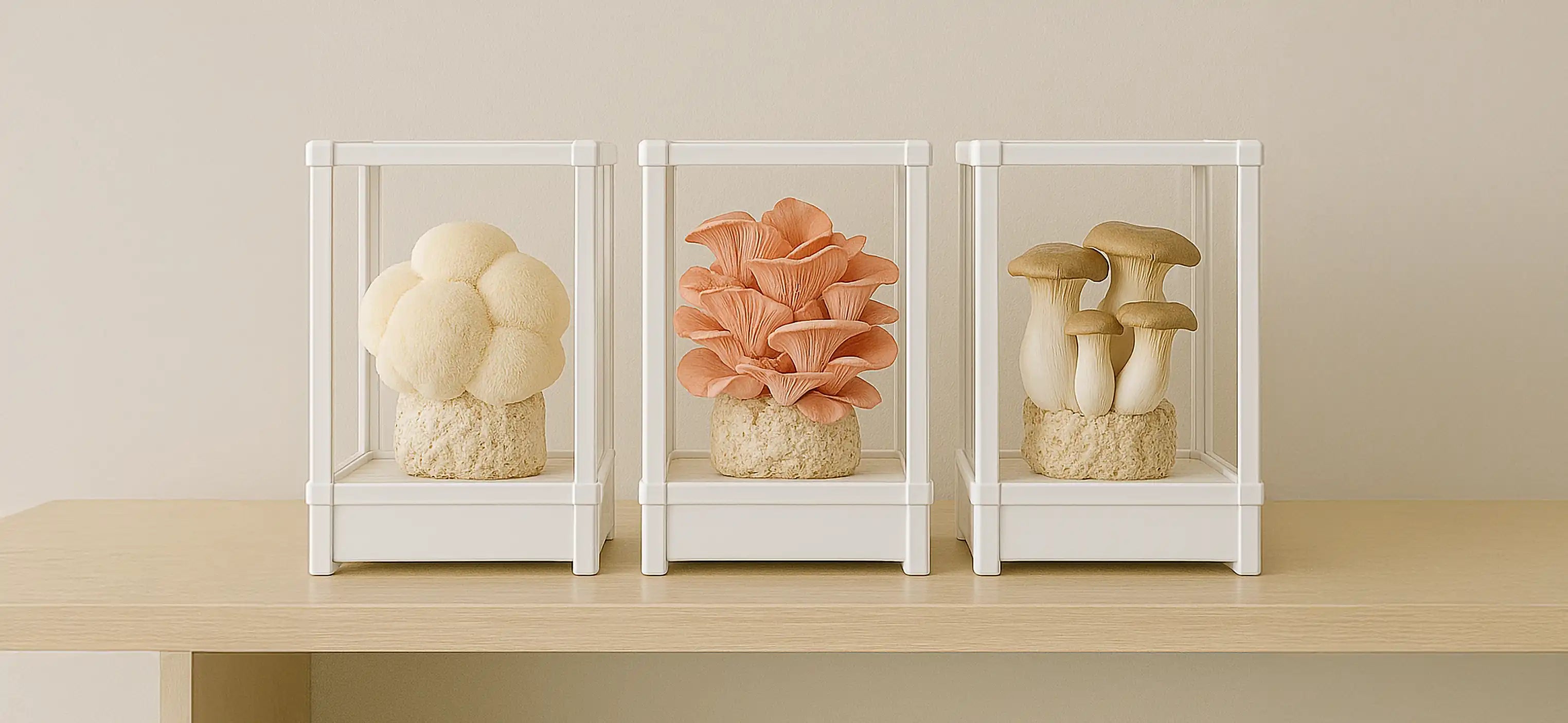
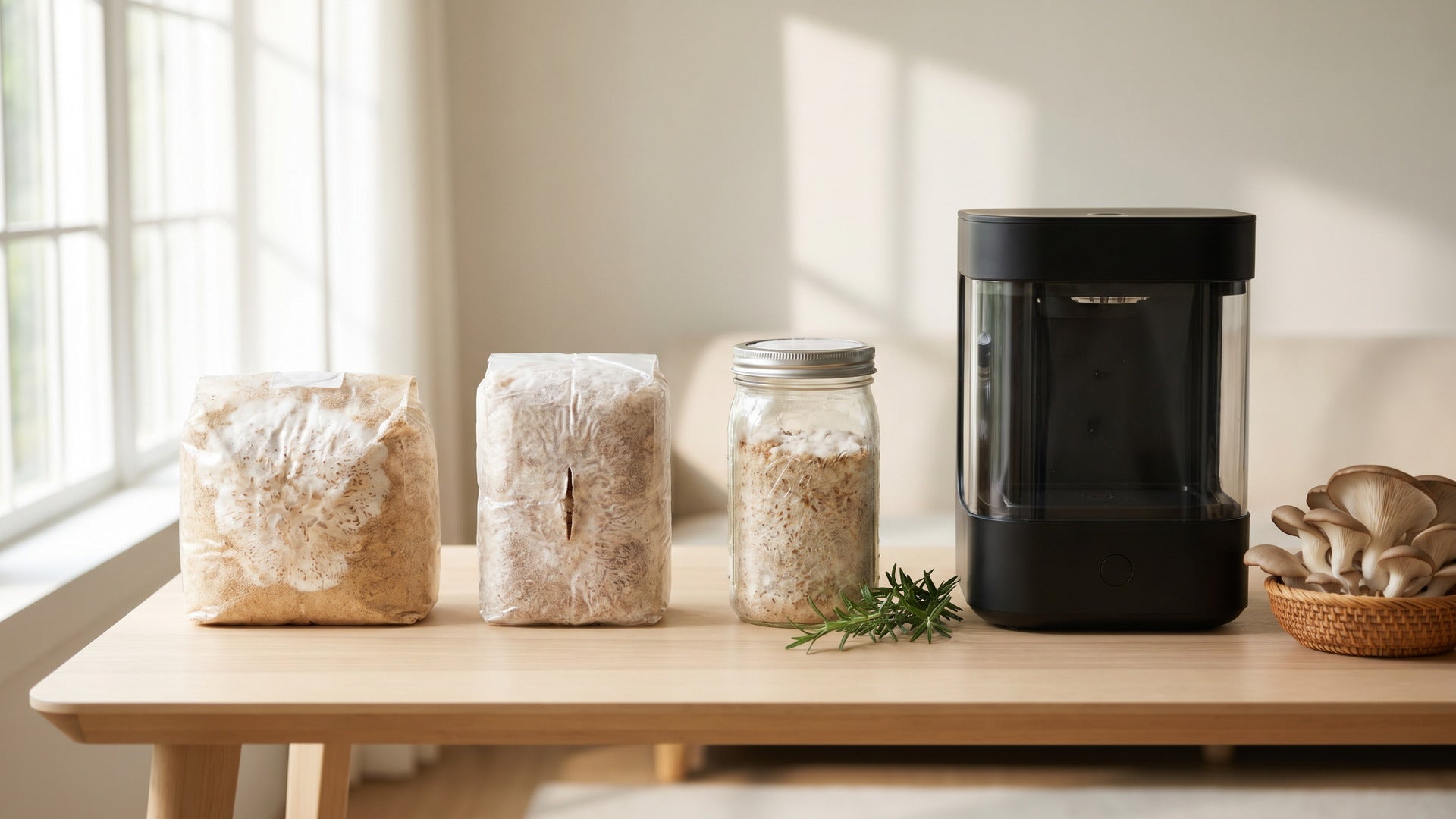
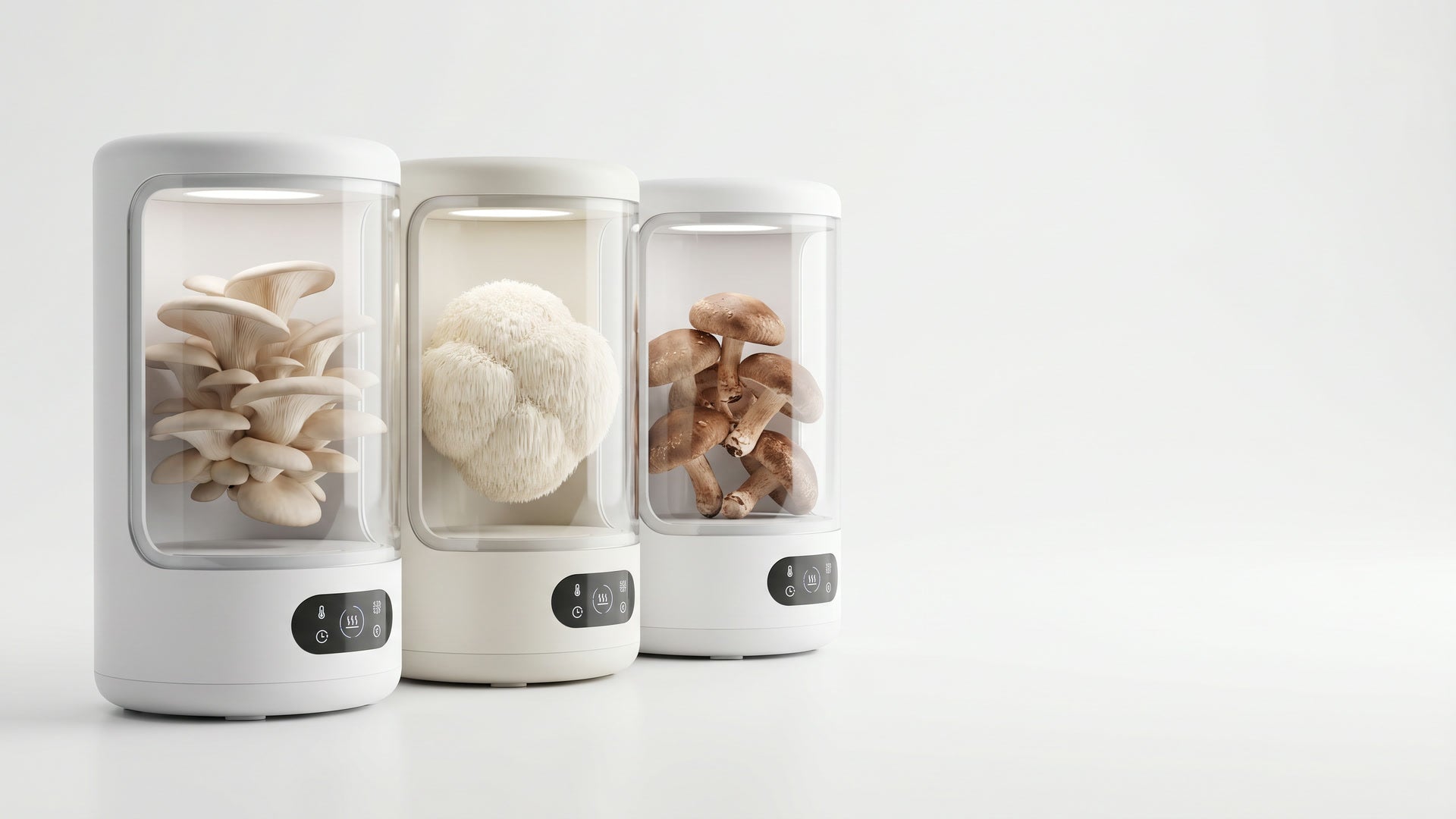
The Lykyn smart mushroom grow box was built to handle this part of the grow. Two waterproof variable-speed fans cycle fresh air on a programmable schedule to keep CO2 below 800 ppm during fruiting. An ultrasonic humidifier with a 2.8L tank holds 85% to 95% relative humidity within plus or minus 2%, so the surface stays misted without flooding. A blue-spectrum LED runs a 12-hour light cycle automatically. The mycelium gets the same triggers a forest floor would deliver, just on a kitchen counter.
What the chamber does not control is temperature. Room temperature is the lever for species selection. If your room sits at 68 to 72 deg F, oyster, lion's mane, and shiitake (with a brief cold shock) all fruit reliably. If your room is colder, a seedling heat mat under the chamber helps. This honesty about what the chamber does and does not do is also why we recommend a pre-colonized lion's mane grow kit over starting from spawn: skipping colonization eliminates the contamination risk that kills most beginner grows and gets you to the pinning stage in days instead of weeks.
Lykyn tip: once pins appear, hold conditions steady for 5 to 7 days. The single fastest way to abort a pink oyster flush is to crack the door open during peak elongation.
For the full anatomy of how the mushroom fruiting chamber handles each environmental variable, see the chamber overview.
Frequently Asked Questions
What are hyphal knots?
Hyphal knots are the earliest visible structures in mushroom pinning. They are small, dense, rounded clusters of mycelium roughly 1 to 3 mm across, formed when the threads of vegetative mycelium bundle together and tighten in response to environmental triggers like fresh air, light, and humidity changes. Each knot is the precursor to a primordial pin, which is the precursor to a baby mushroom.
What do hyphal knots look like?
A hyphal knot looks like a tiny cotton ball pressed into the surface of a colonized block. It is bright white, rounded, slightly raised, and visibly denser than the flat fuzzy mycelium around it. Knots appear in clusters along the most colonized surfaces, never as single isolated dots. If a knot is gray, green, yellow, or any color that does not match your mushroom species, treat it as a contamination flag.
What do mushroom pins look like?
Mushroom pins are small, rounded bumps that emerge from hyphal knots over 1 to 3 days. They are 3 to 10 mm across at first and quickly take on the color of the adult mushroom. Oyster pins look like clusters of small caps in pink, blue, gray, or tan. Lion's mane pins look like smooth white domes that later sprout shaggy teeth. Shiitake pins are small brown bumps from the start.
What does pinning look like across the full process?
Pinning runs through three stages over 5 to 10 days. First, small white knots appear (1 to 3 mm). Within 48 hours, those knots swell into rounded pins and start to differentiate into cap and stem shapes. Over the next 3 to 5 days, the pins elongate into baby mushrooms that double in size every 12 to 24 hours.
Why are my mushrooms not pinning?
Six common causes: CO2 buildup from poor fresh-air exchange, surface too dry (below 80% RH), surface too wet from overspraying, wrong temperature for the species, no light cycle, or a contaminated or aged-out block. The single most common fix is to increase fresh-air exchange and hold humidity steady at 85% to 95%.
How long does mushroom pinning take?
From the moment you trigger fruiting conditions (open the bag, drop CO2, add light), expect 3 to 7 days for the first hyphal knots, then another 2 to 4 days for those knots to become primordial pins, then 3 to 7 days for the pins to elongate into harvestable mushrooms. Total: 8 to 18 days from fruiting initiation to first harvest, depending on species.
What is the difference between lion's mane pinning and oyster pinning?
Lion's mane pins as one or two large smooth white domes per fruiting site, with a slow 5 to 10 day pin-to-harvest window. Oyster pins emerge in dense clusters of 20 to 100 small caps per site, often colored from the first day, with a fast 5 to 7 day pin-to-harvest window. Lion's mane needs more patience. Oyster rewards a hands-off setup.
Can pink oyster pinning be triggered differently?
Pink oyster pinning runs hotter than other species. It wants 70 to 80 deg F (versus 60 to 75 for blue and pearl) and pins faster, sometimes within 24 hours of opening the block. Pink oysters are also the most sensitive to humidity drops once pins are visible, so hold conditions extra-steady during the elongation phase or you will get aborted pins.
Final Tips for First Pinning Success
If you are watching your first block and nothing has happened in 10 days, the temptation is to keep changing things. Resist that. Pinning needs steady conditions, not constant intervention. Open the block, set the chamber, walk away for 5 days, and check on day 6. The mycelium does not move on your schedule. It moves on its biology.
Ready to skip the contamination risk and start at the pinning stage? Try a pre-colonized lion's mane grow kit or pink oyster grow kit, or pair it with the Lykyn smart mushroom grow box for fully automated humidity, light, and fresh-air exchange.
Sources
- Sakamoto, Y. (2018). Influences of environmental factors on fruiting body induction, development and maturation in mushroom-forming fungi. Fungal Biology Reviews.
- Cornell University Mushroom Cultivation Extension
- Penn State Extension: Mushroom Production
- USDA National Agricultural Library: Specialty Mushrooms
Share:
Gourmet Mushroom Recipes: A Cook's Guide to Lion's Mane, Oyster, Shiitake & More
Gourmet Mushroom Recipes: A Cook's Guide to Lion's Mane, Oyster, Shiitake & More