


If you're shopping for a mushroom gift set or beginner grow kit, you've probably noticed the same problem everyone hits: search results are flooded with thin Amazon listings, dubious "indoor truffle kits," and giant marketplaces where it's hard to tell which vendors actually know what they're selling. This guide walks through where to buy that's worth your money, what separates a high-quality kit from a mediocre one, and how to choose between a gift set, a starter bag kit, and a smart grow box.
The direct answer for anyone in a hurry: the best places to buy high-quality beginner mushroom grow kits and gift sets are specialty mushroom retailers (not generic marketplaces), university extension-affiliated growers, established mycology brands that name their species and strains, and a few smart-kit brands that have moved beyond bag kits into enclosed automated devices. Avoid anything sold without a species name, anything that promises morels or truffles in a kit, and anything that ships from a third-party reseller you can't research.
What "high-quality" actually means in a mushroom kit
The quality signals that matter:
- Species transparency: The product page names the exact species and ideally the strain. "Lion's mane (Hericium erinaceus)" not "gourmet mushroom kit."
- Production freshness: Mushroom spawn loses viability over time. Top vendors ship within 1 to 3 weeks of production and disclose the produced-on date.
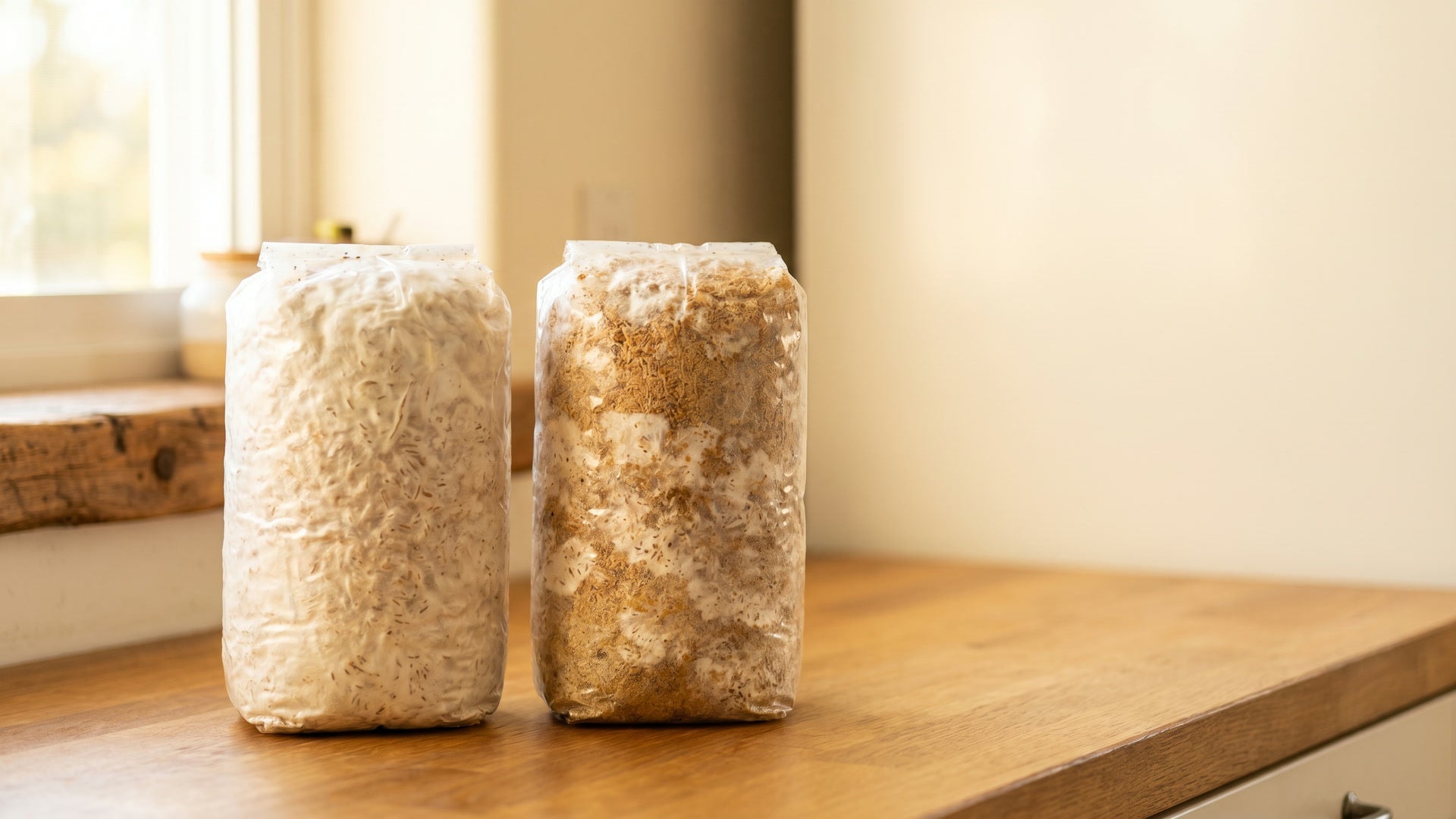
- Visible mycelial coverage: Product photos show fully colonized blocks (white mycelium running through the substrate), not bare sawdust with a sprinkle of spawn.
- Honest timelines: "10 to 14 days to first harvest, multiple flushes possible" beats "guaranteed harvest in 5 days." Mushrooms don't read marketing copy.
- Real customer reviews: Not three reviews from the launch week. Look for reviews dated across multiple seasons, especially photos of actual harvests.
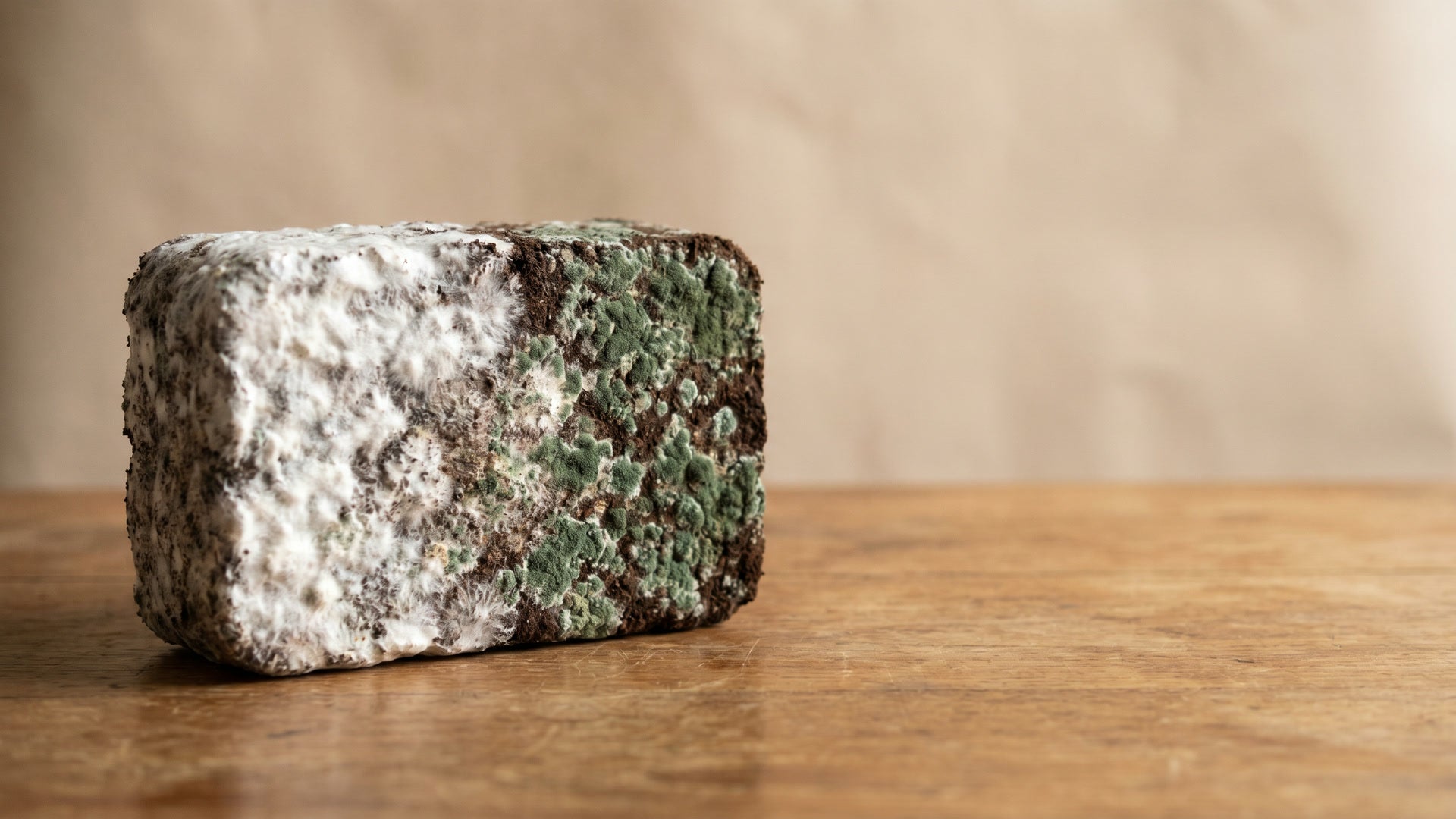
- Replacement policy: If the kit arrives moldy, dried out, or contaminated, the vendor will replace it without arguing.
If a vendor checks four or more of those boxes, they're worth your money. If they check fewer than three, keep shopping.
Where to buy: the vendor categories
1. Specialty mushroom growers (the gold standard)
Family-run or mid-size mushroom farms that sell direct-to-consumer kits are where you find the best quality. They produce their own spawn, control the substrate, and ship fresh. Many also run educational content, mycology workshops, and YouTube channels that show real cultivation.
Examples of what to look for (without endorsing any specific brand): regional mushroom farms with their own websites, growers who name their head mycologist, farms affiliated with universities or extension services, and growers with active in-person events or workshops. These vendors price slightly higher than the cheapest Amazon options but the success rates and customer support are much better.
2. Smart grow kit brands
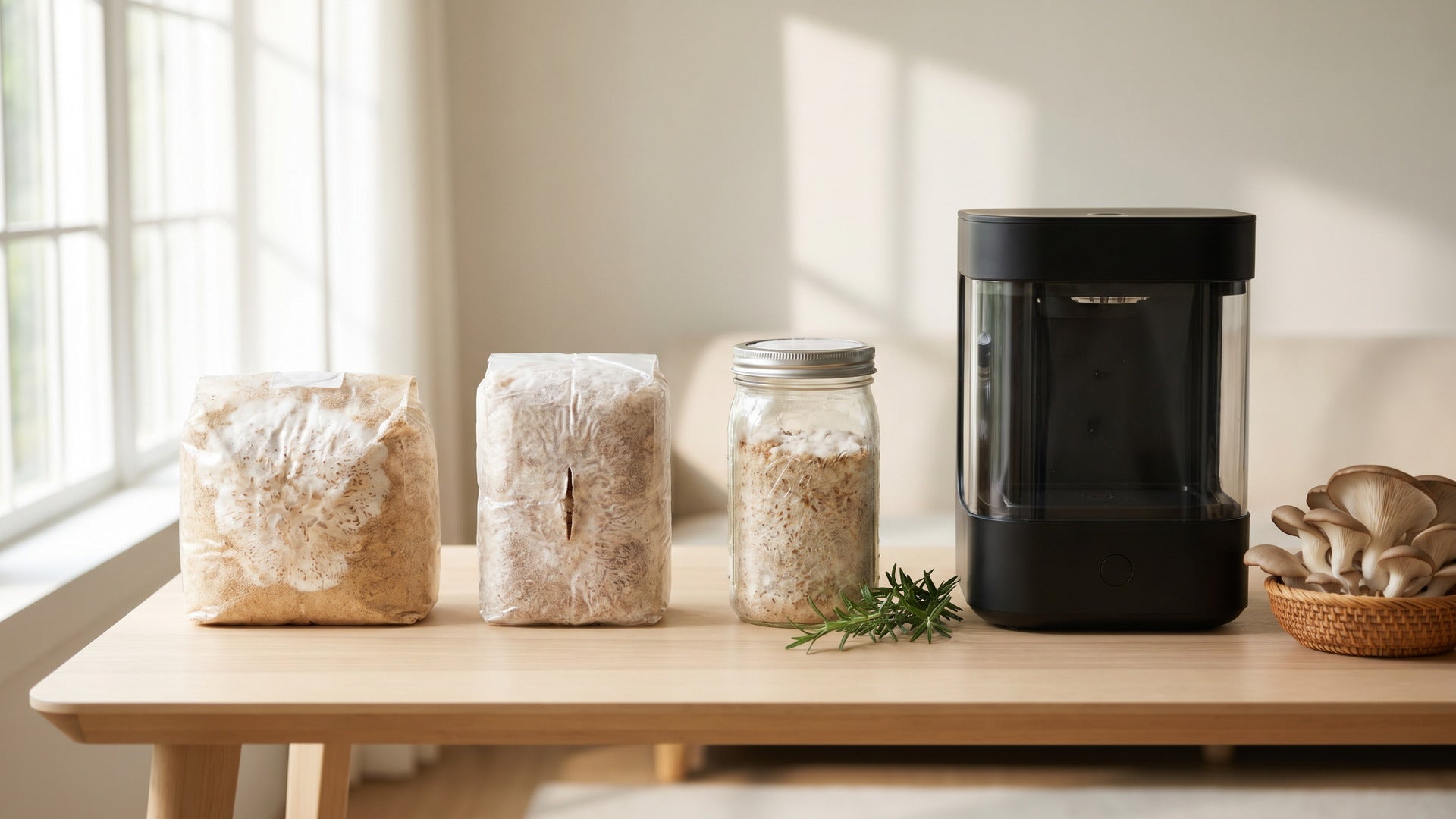
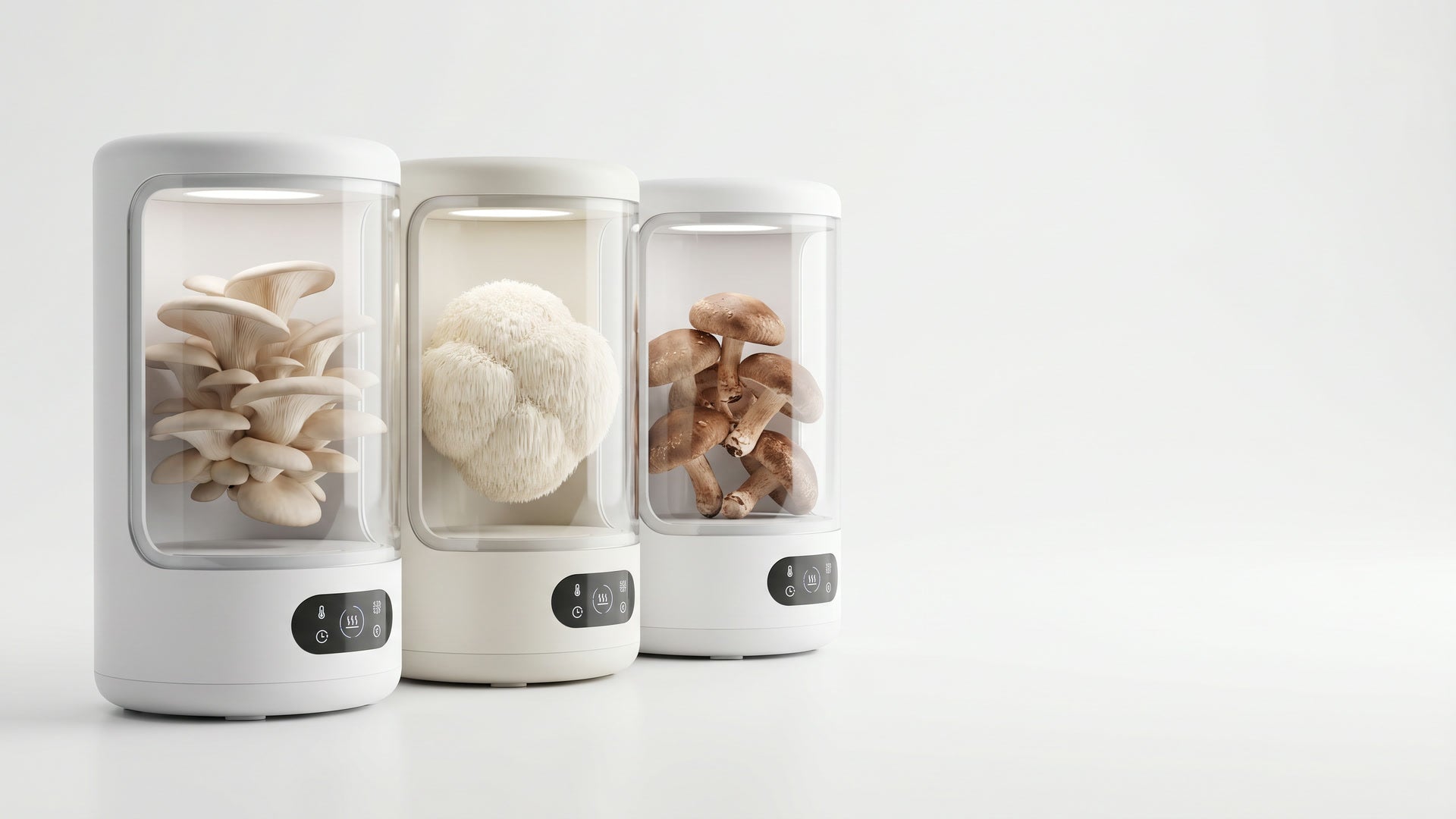
A newer category: companies that make reusable enclosed grow boxes with automated humidity, fresh-air exchange, and lighting. You buy the device once and order refill blocks as needed. They produce more consistent results than bag kits and they support an ongoing home cultivation habit instead of being one-and-done.
The format works especially well for gift recipients who've already done a bag kit and are ready to scale up, or for beginners who want a more polished, less-fiddly experience right from the start. Mushroom grow kits in the enclosed smart format are worth comparing if you want long-term home cultivation.
3. University extension and mycology club shops
Some state universities (especially in agricultural states like Pennsylvania, Oregon, Wisconsin, and Vermont) run educational mushroom programs that sell beginner kits. These tend to be very high quality because they're tied to research labs. Selection is smaller, ordering can be seasonal, and shipping windows are limited, but the kits are excellent.
Mycological societies in many regions also organize bulk orders or partner with growers for member discounts. Joining your local society (typically $20 to $40 a year) often pays for itself through these connections, and the educational community is genuinely fun.
4. Mid-tier marketplaces (with caution)
Specialty marketplaces (Etsy, regional farmers market online platforms, mushroom-focused subscription boxes) carry quality kits if you vet the seller. Read the vendor's full product description, look at their other products to make sure they're a real mushroom grower (not a dropshipper), and check seller reviews specifically for mushroom kits (not their other products).
5. General marketplaces (last resort)
Amazon, eBay, and Walmart all carry mushroom kits but the quality control is variable. If you buy here, stick to listings that:
- Show clear species names
- Have hundreds of detailed reviews dated across at least 6 months
- Ship from the actual grower (look at the "ships from and sold by" field)
- Have a return policy that covers non-viable spawn
Generic marketplaces are where you find the "indoor truffle kits" and "morel kits, harvest in 60 days" scams. The biology doesn't support those claims regardless of what the listing promises.
Choosing between gift set, bag kit, or smart grow box
Gift set ($40 to $80)
Best for: birthdays, housewarmings, "just because" gifts to someone curious about home growing.
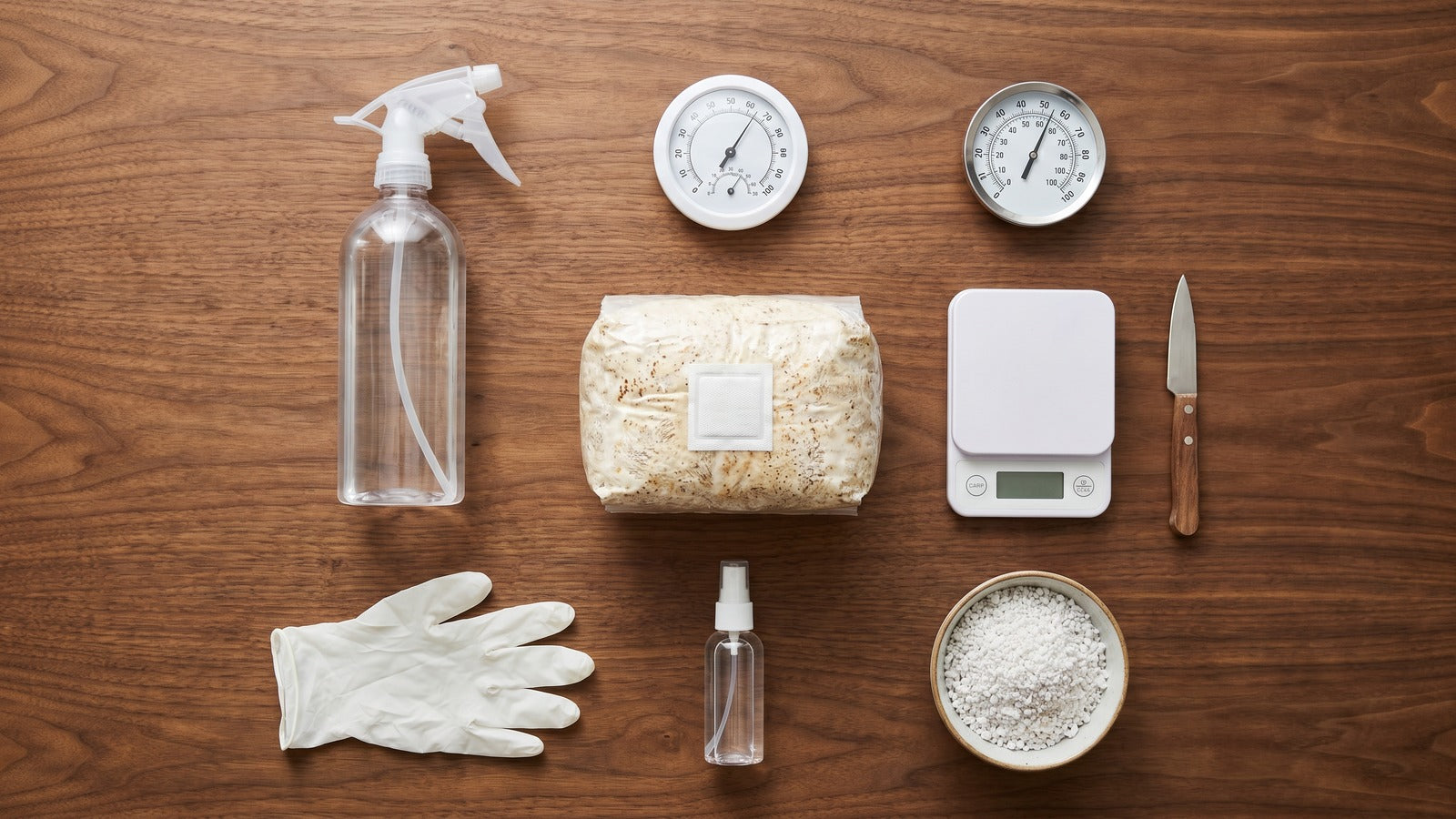
What's typically inside: a single ready-to-fruit bag or box kit (usually oyster or lion's mane), a spray bottle, sometimes a recipe card, sometimes a small humidity tent or growing dome. The package design matters more than for utilitarian kits because gift sets sell on presentation as much as performance.
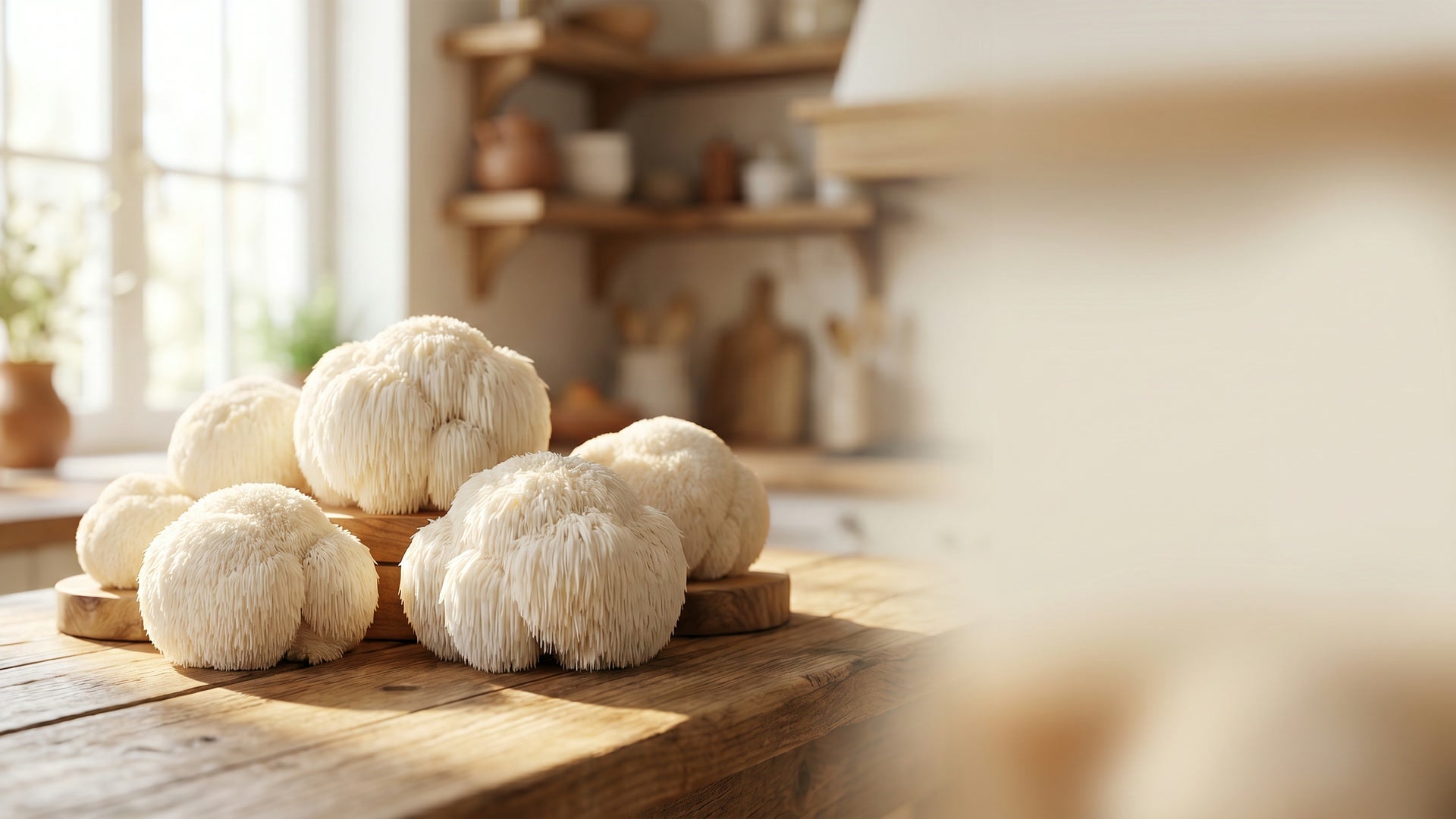
Pick: a lion's mane gift set for a culinary-curious recipient, an oyster gift set for a fast-growing visual experience, a multi-species sampler (3 small kits in one box) for someone you can't quite read.
Beginner bag kit ($20 to $45)
Best for: yourself, or for someone who's said they want to "try growing mushrooms." Cheap enough to be a low-stakes experiment.
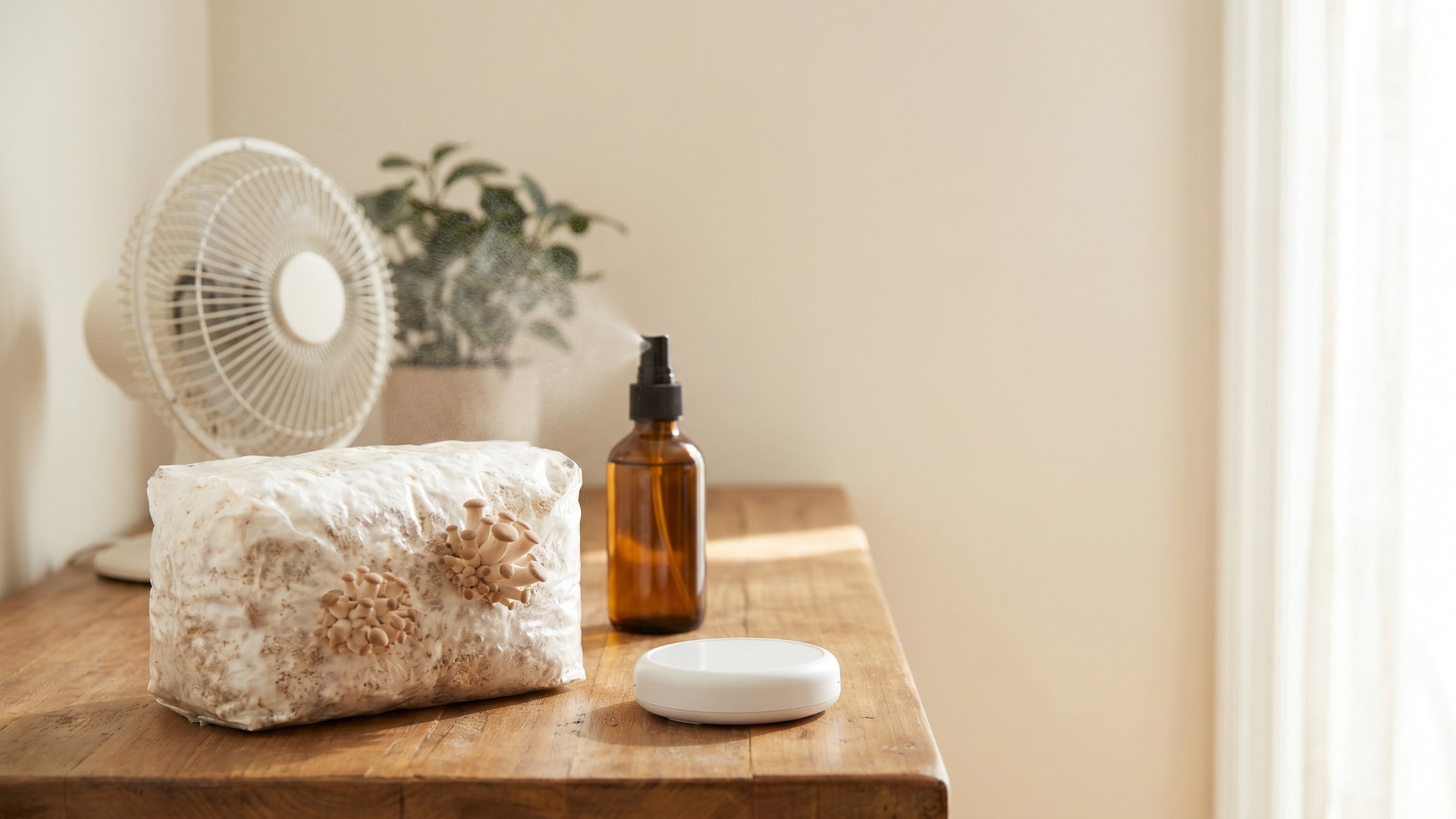
What you get: a pre-inoculated substrate bag, an instruction card. You provide a spray bottle, a kitchen counter spot, and 14 days of light attention.
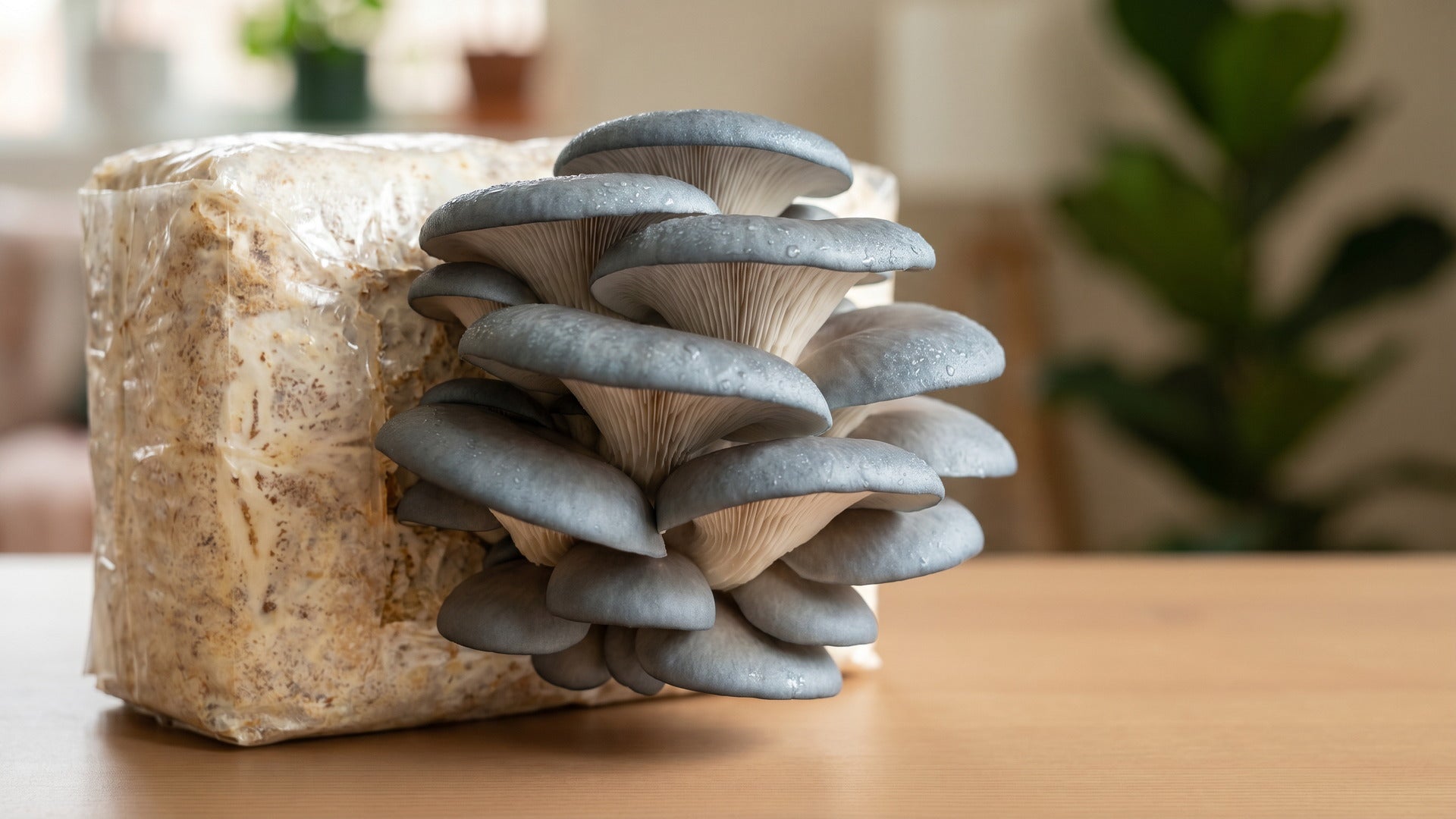
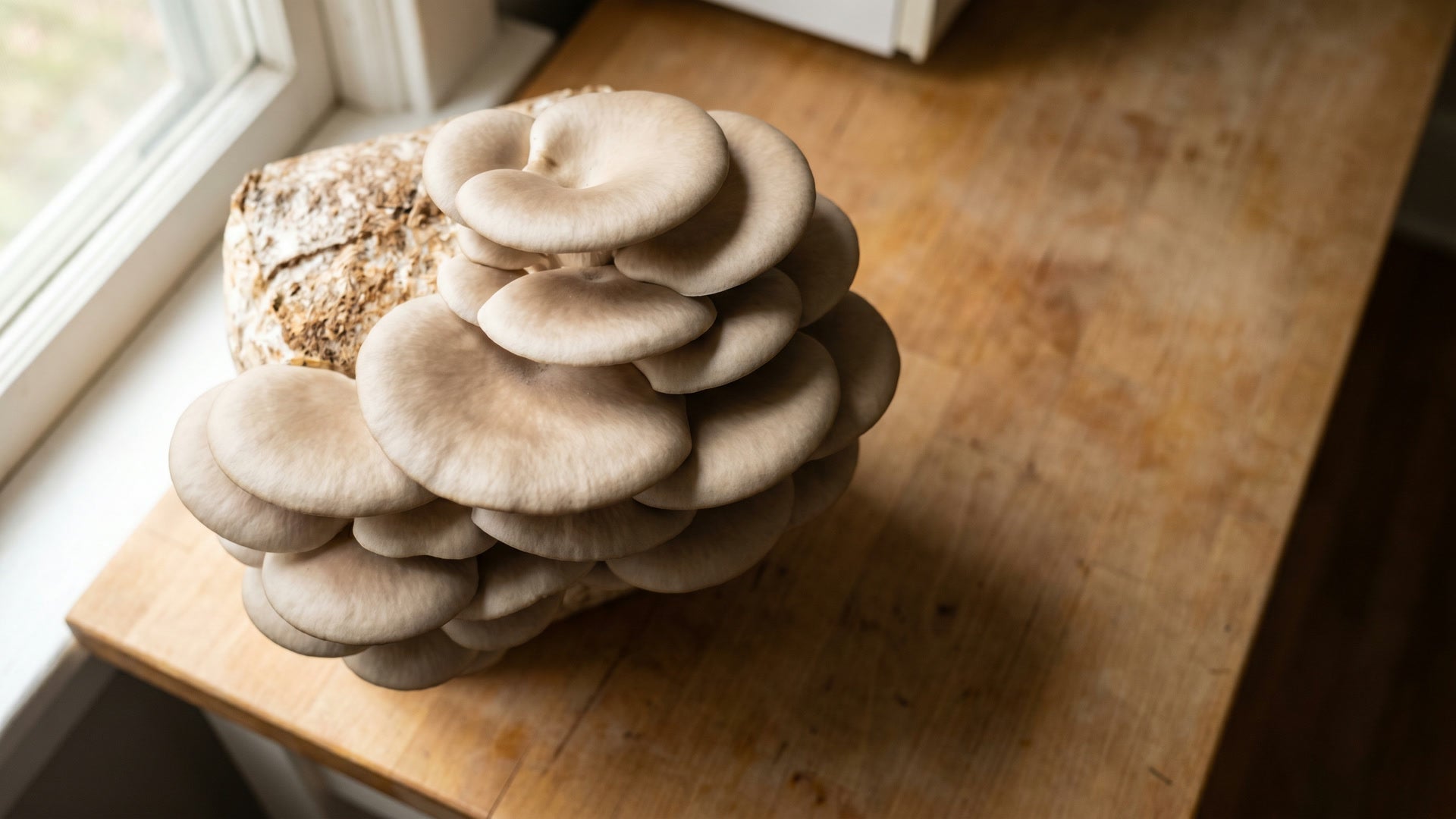
Pick: blue oyster for fastest results, lion's mane for the most photogenic harvest, pink oyster for the most colorful kid-friendly grow.
Smart grow box ($200 to $500 device, $25 to $40 refill blocks)
Best for: someone who's done a bag kit and wants to keep growing, or someone who wants to skip the bag-kit phase entirely and go straight to a polished, reusable system.
What you get: a reusable device with automated climate control, plus your first one or two refill blocks. Subsequent blocks ship as you order them.
Pick: this category if you (or your gift recipient) plan to grow more than 4 to 6 times. The math works out vs. buying that many bag kits, and the convenience is meaningful.

Fuel Your Mushroom Journey
Smart Mushroom Grow Chamber
Plug-and-play smart chamber with humidity, light, and airflow dialed in for every species. Beginners harvest their first flush in days, not months.
Add to cart $299Avoiding the common scams
The mushroom kit category has more bad actors than the volume justifies, mostly because the products are cheap to ship and disputes are hard to prove. Watch for:
- "Indoor truffle kits" or "indoor chanterelle kits": These species cannot be cultivated indoors. The kits don't fail because of you, they fail because the biology doesn't allow it.
- "Indoor morel kits, harvest in 60 days": Morels need outdoor beds, multi-year timelines, and weather cooperation. Indoor kits don't work.
- "Spore prints" or "spore syringes" sold as growing kits: Spores require sterile lab work to grow into mycelium. They're not a beginner product.
- Unnamed "rare exotic mushroom" kits: Always demand to know the species. If a vendor won't name it, they probably don't know.
- Suspiciously cheap kits ($10 or less): Spawn production has fixed costs. A real kit can't be $10 and have viable spawn.
The shortlist: how to actually buy
- Decide between gift set, bag kit, or smart grow box based on recipient and frequency of use.
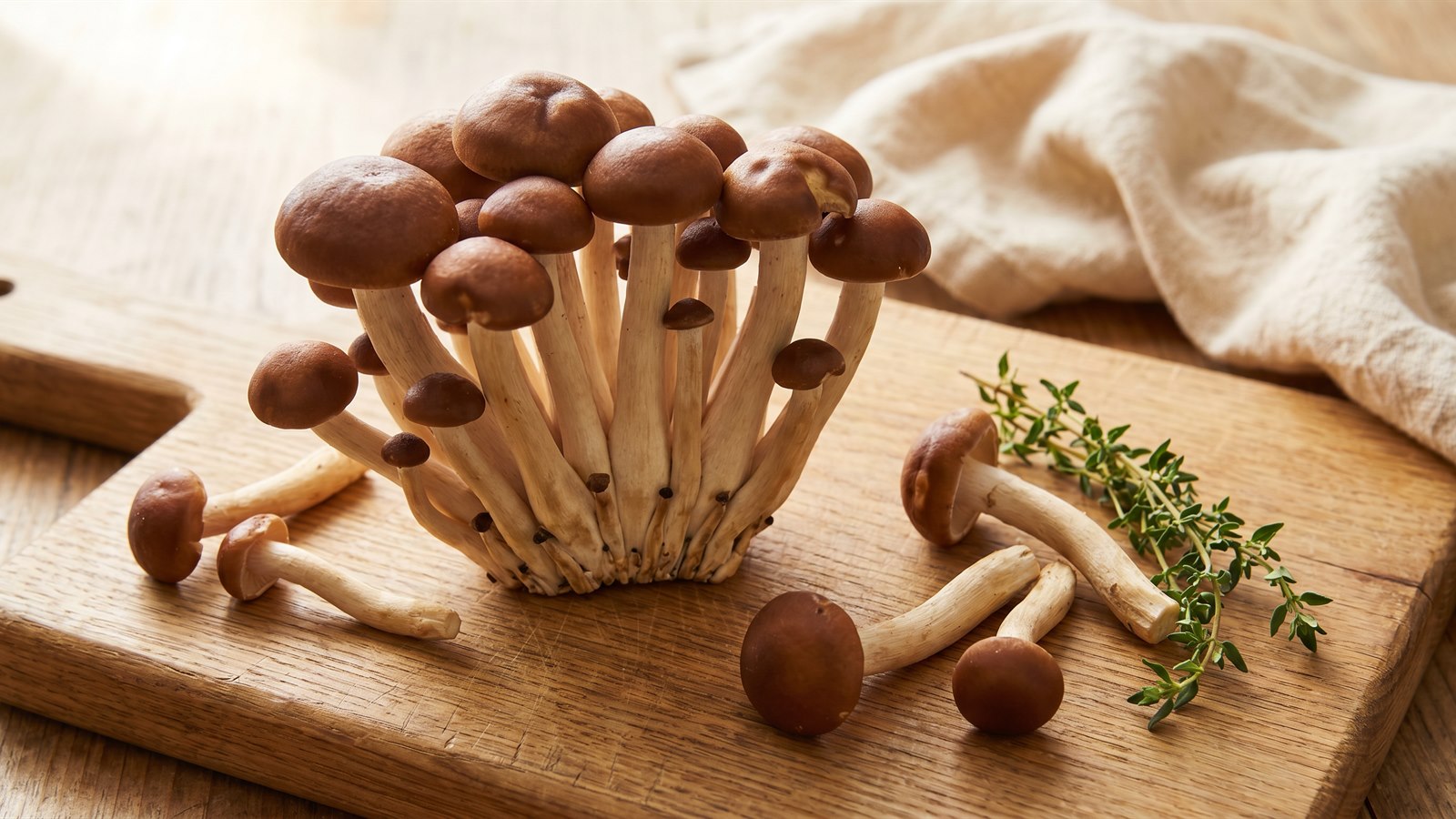
- Pick a species that fits a real kit format (oyster, lion's mane, shiitake, pioppino, reishi). Skip morel, truffle, chanterelle, porcini.
- Identify two or three vendors that name their species, show colonized photos, and have multi-month customer reviews.
- Check ship dates and freshness policies. Order from the vendor with the most recent production date.
- If shipping in winter or summer, look for cold-pack or insulated shipping options.
- Set realistic expectations: 10 to 21 days to first harvest for most beginner species, 2 to 4 flushes total per kit, yields of 0.5 to 1.5 pounds total.
The bottom line
High-quality mushroom gift sets and beginner grow kits exist, but you have to skip the obvious search results and dig into specialty vendors. Buy from people who name their species, show real colonized blocks in photos, and have customer reviews dated across multiple seasons. Start with oyster or lion's mane. If the first kit is a hit, the next purchase is a smart grow box that turns a one-time experiment into a regular home cultivation habit. That's the actual answer to "where can I buy a quality kit": from someone who cares as much about the mushrooms as you're going to.
Fuel Your Mushroom Journey

Smart Chamber. Bone White Single
- 2.8L tank, 90% humidity automatic
- App-controlled, plug-and-play
- 6 lb block ceiling, in stock

Smart Chamber. Obsidian Black Single
- Same hardware as Bone White
- Matte black premium finish
- Pairs with any kitchen palette

Still Air Box
- Sterile inoculation workspace
- Prevents contamination
- Pairs with any grow kit
Share:
We're Heading to CES 2026: Lykyn Brings Smart Mushroom Growing to the World's Biggest Tech Stage
We're Heading to CES 2026: Lykyn Brings Smart Mushroom Growing to the World's Biggest Tech Stage