


White mushrooms in the yard usually appear overnight, especially after a stretch of rain followed by warm humid days. The first reaction is often alarm: are they poisonous, will the lawn die, do the kids or the dog need to stay inside? The short answer is that most white mushrooms in lawns are harmless to the grass and are actually a sign of healthy soil, but a few common ones are toxic to pets and people if eaten. This guide walks through identification, what to do, and when to worry.
White lawn mushrooms are typically saprophytic, meaning they feed on dead organic matter like buried roots, old mulch, or decaying leaves. They are the visible fruiting body of a much larger fungal network living in the soil. Pulling them up will not kill the underground network, and the mushrooms themselves will dry out and disappear within days.
The most common white mushrooms found in yards
A handful of species show up over and over in residential lawns across temperate climates:
- Fairy ring mushrooms (Marasmius oreades): tan-to-white caps growing in circles or arcs, often appearing in rings as the underground mycelium expands outward
- Green-spored parasol (Chlorophyllum molybdites): large white caps with cream-colored scales, the most common cause of mushroom poisoning in North America
- Common puffballs (Lycoperdon perlatum): round white balls that pop out of the ground with no stem
- Death cap and false parasol species: less common in mowed lawns, but worth knowing about
Identifying which one you have matters more than you might think, because some are edible after careful identification and some can send you to the emergency room.

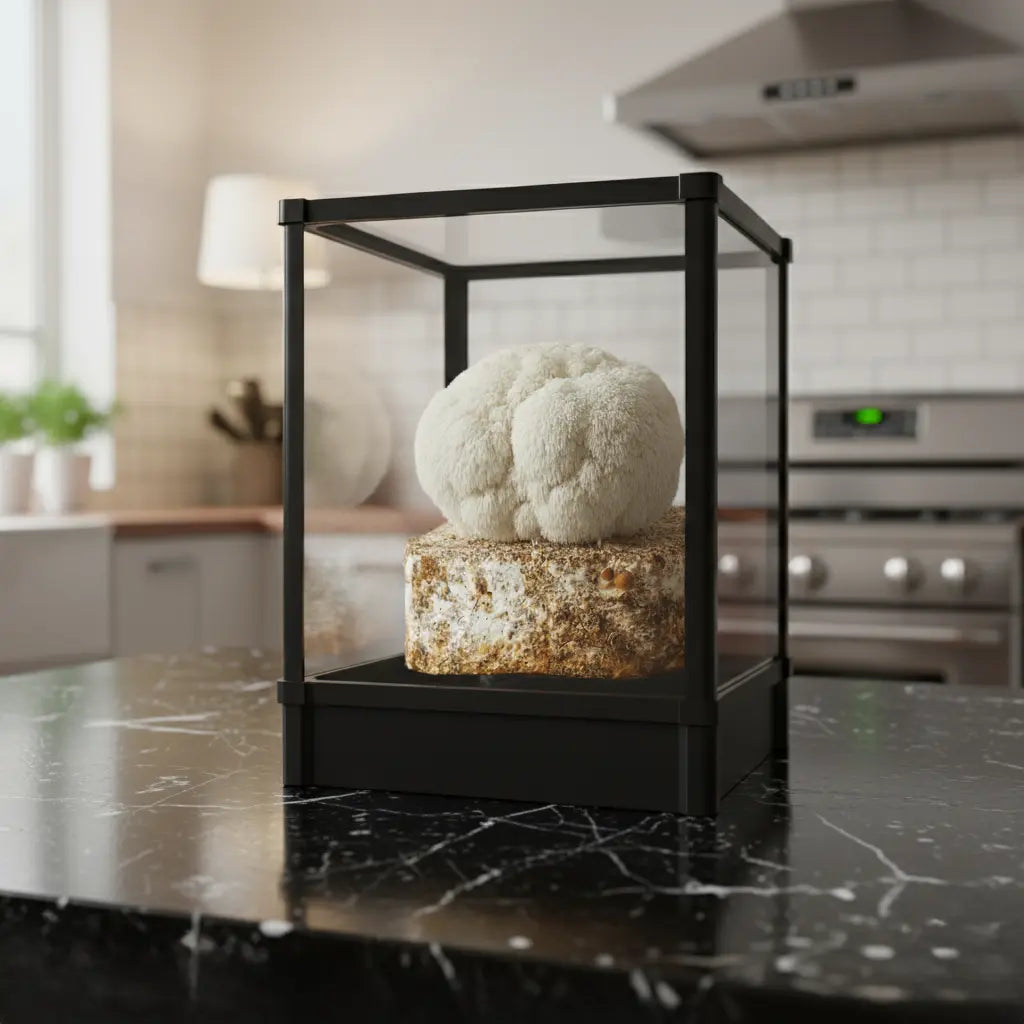
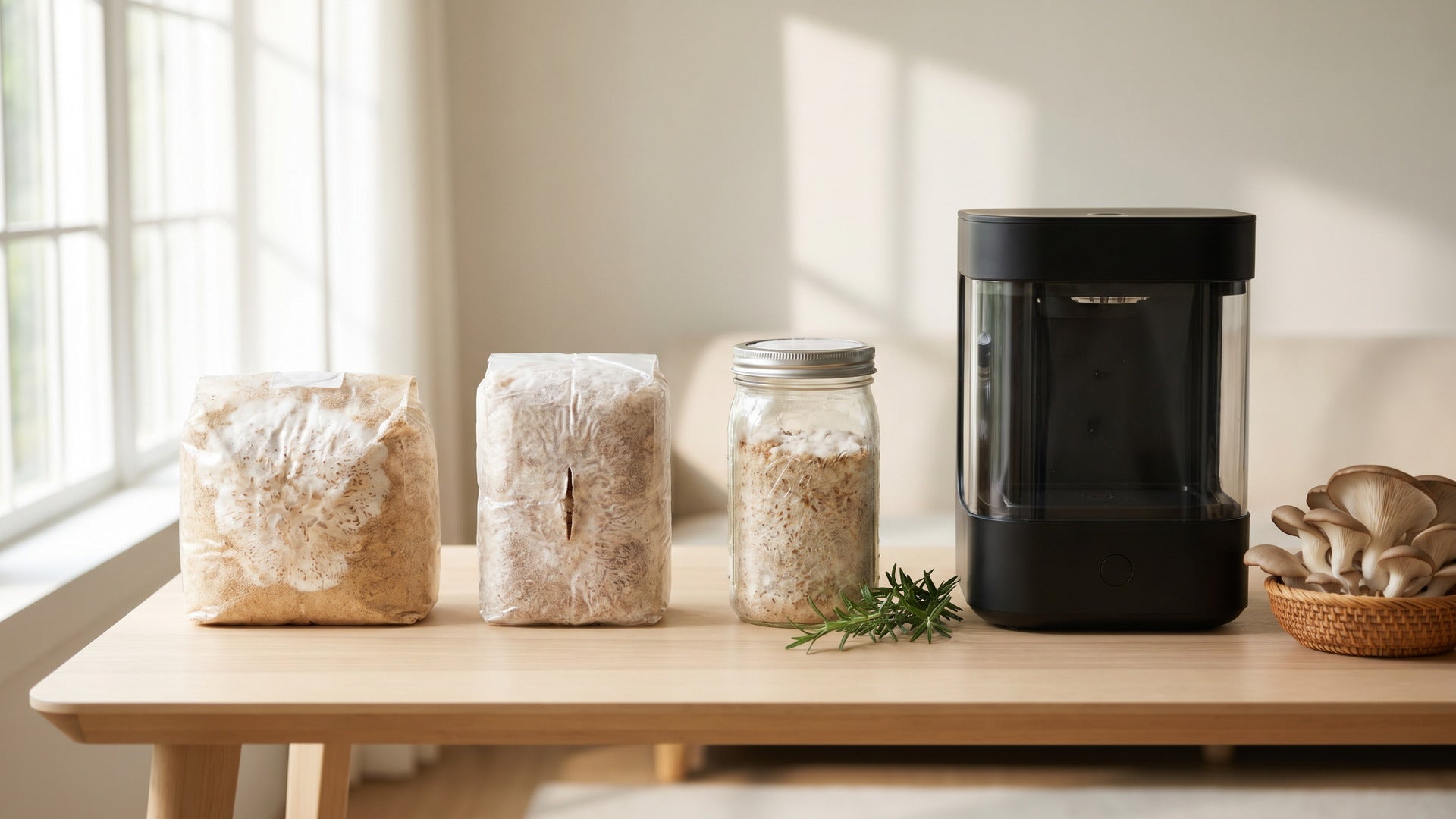
Smart Chamber. Bone White Single
- 2.8L tank, 90% humidity automatic
- App-controlled, plug-and-play
- 6 lb block ceiling, in stock

Smart Chamber. Obsidian Black Single
- Same hardware as Bone White
- Matte black premium finish
- Pairs with any kitchen palette

Are white lawn mushrooms dangerous?
Most are not dangerous to the lawn itself. Mushrooms feed on organic debris in the soil, not on living grass roots. Fairy ring mushrooms can cause a darker green ring of grass because their underground mycelium releases nitrogen as it digests organic matter. That ring is sometimes followed by a dead zone if the mycelium becomes thick enough to repel water, but the problem there is the dry soil, not the mushrooms.
The danger to people and pets depends on the species. The green-spored parasol (Chlorophyllum molybdites) is the species responsible for the majority of mushroom poisoning calls to U.S. poison control centers each year. It looks similar to the edible shaggy parasol, but its mature gills turn olive-green from its spore color. Eating it causes severe vomiting and diarrhea within one to three hours.
If a dog or child eats a white mushroom from the yard, the safest move is to bag a sample, take a clear photo, and call your veterinarian or the Pet Poison Helpline immediately. Never wait for symptoms to confirm a problem.

Fuel Your Mushroom Journey
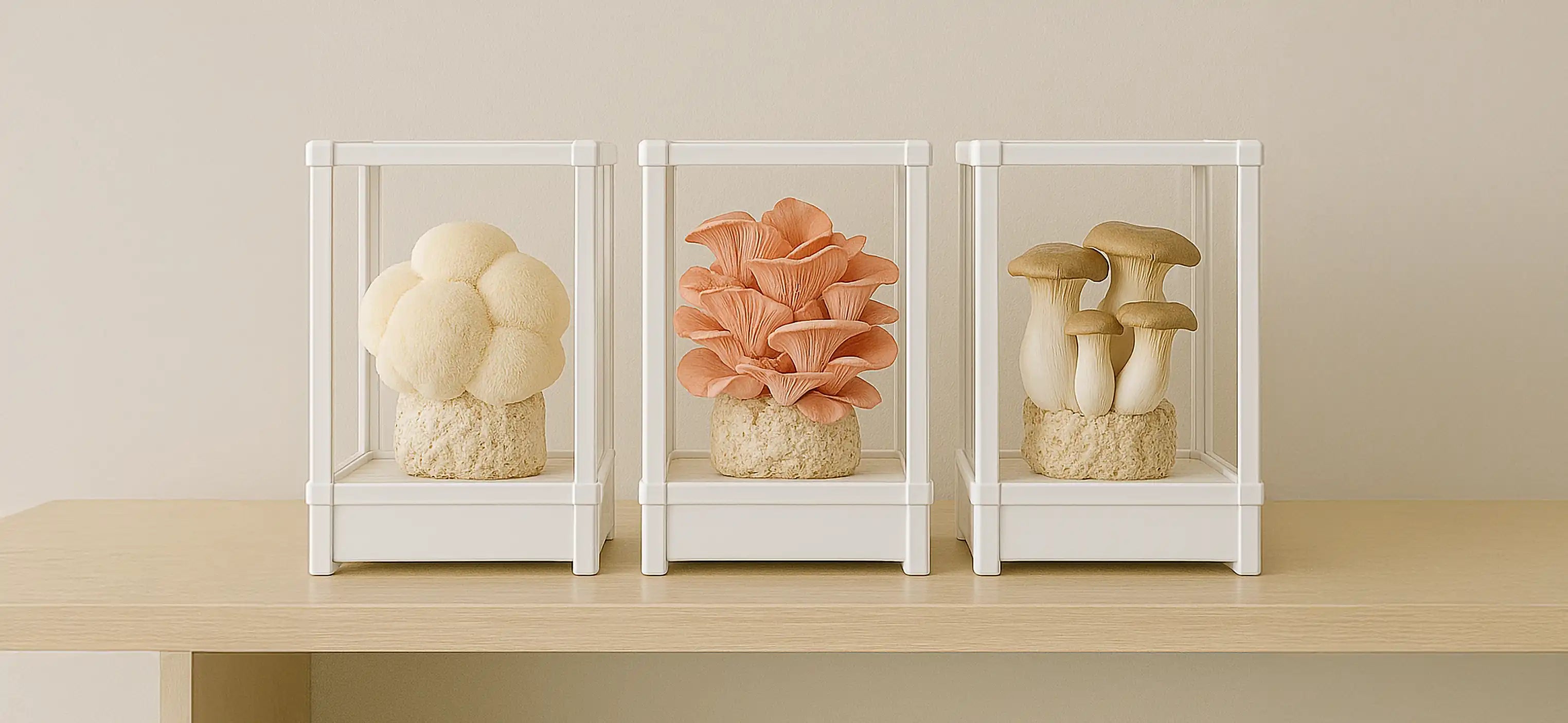
Smart Mushroom Grow Chamber
Plug-and-play smart chamber with humidity, light, and airflow dialed in for every species. Beginners harvest their first flush in days, not months.
Add to cart $299How to identify a white lawn mushroom
Quick visual cues to narrow things down:
- Look at the gills under the cap. White gills, pink gills, brown gills, or green gills each point to different species groups.
- Check for a ring on the stem and a cup (volva) at the base. A cup at the base is a warning sign of the Amanita family, which contains some of the most toxic mushrooms.
- Note whether the mushrooms grow in a ring, in a cluster, or scattered.
- Smell the cap. Some species have distinctive odors like flour, almond, or chlorine.
Photograph the cap top, the gills underneath, the stem base, and the surrounding habitat. If you ever want to confirm an identification, those four shots are what mycologists ask for first. Apps like iNaturalist and Mushroom Identifier provide a useful starting point, but they are not reliable enough to clear a mushroom for eating.
Why mushrooms keep coming back to the same spot
The fruiting bodies you see above ground are temporary. The actual fungus is a network of microscopic threads called mycelium living in the soil, sometimes spread across many square feet. When conditions are right (moist soil, warm temperatures, and decomposing organic matter), the mycelium pushes up fruiting bodies to release spores. The mushrooms vanish in days, but the network stays put.
Common organic food sources hiding under a lawn include buried tree stumps, dead roots from a removed shrub, old mulch piles, and decaying construction debris like buried wood scraps. Until the food source decomposes fully, the mycelium will keep producing mushrooms when the weather cooperates.
How to get rid of mushrooms in the yard
If the mushrooms bother you visually or you have pets and kids, the most effective approach is to remove the conditions that favor them:
- Improve drainage by aerating compacted soil and avoiding overwatering
- Rake up grass clippings, leaves, and other organic debris
- Locate and remove buried wood, stumps, or old mulch
- Cut mushrooms off at the base as they appear, to prevent spore release and reduce visible clusters
Fungicides exist but rarely work, because they target the surface mushroom rather than the underground mycelium. The mushrooms come back as soon as the chemical breaks down. Mechanical removal plus reducing organic material is what actually changes the outcome.
The upside of having mushrooms in your yard
Mushrooms are decomposers. They break down dead organic matter into the soil nutrients that grass and plants need. A yard with no mushrooms is often a yard with no fungal activity, which usually means poorer soil biology over time. Many landscape professionals treat occasional mushrooms as a positive sign of soil health, especially around mature trees and garden beds.
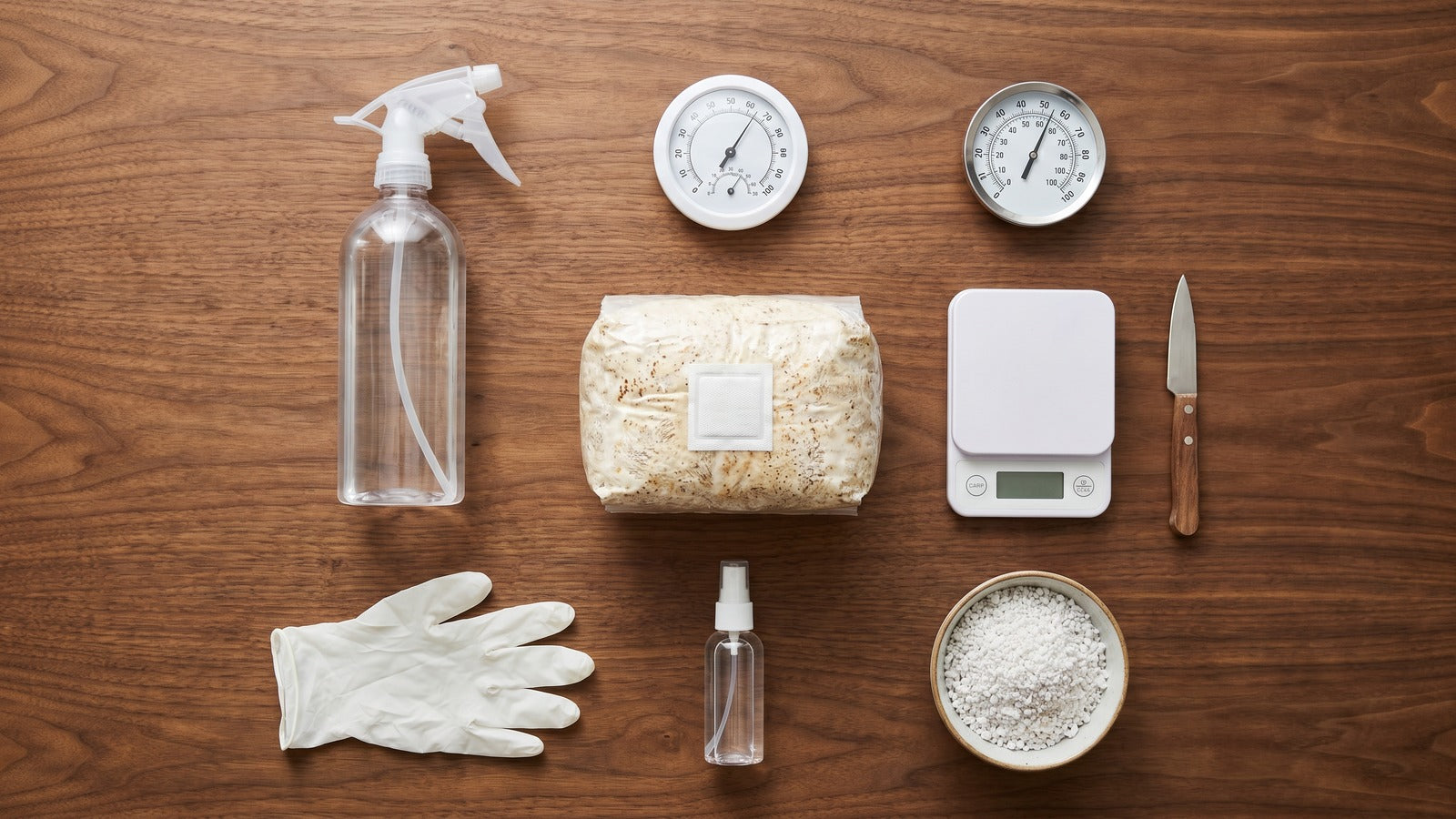
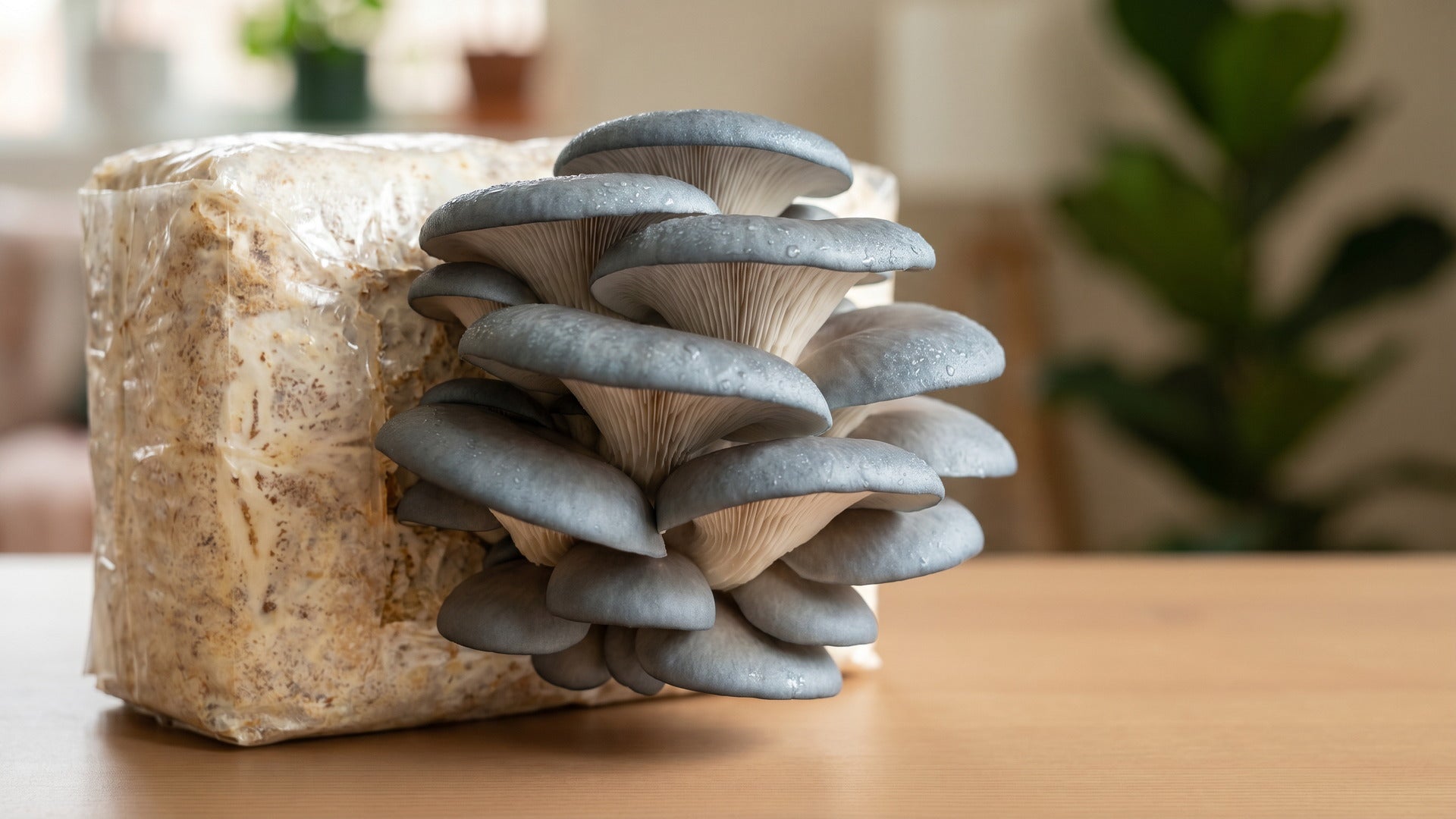
If you find the fungi interesting, growing edible mushrooms at home is a satisfying way to channel that curiosity into food. A controlled grow kit lets you produce species you can actually identify and eat, without the risk of misidentifying a wild lookalike. You can explore home mushroom grow kits that handle the soil, humidity, and species selection for you.
When to call a professional
Call a certified mycologist or your county extension office if you have a child or pet that may have eaten a mushroom, if you see a large fairy ring causing dead patches of grass, or if you simply want a reliable ID. Most U.S. states have a free extension service staffed by botanists and mycologists who will identify samples in person or from clear photos.


Share:
Turkey Tail Mushroom for Dogs: Science and Dosing Guide
Turkey Tail Mushroom for Dogs: Science and Dosing Guide