


Updated September 2026 · Ships from Santa Rosa, California · 12 min read
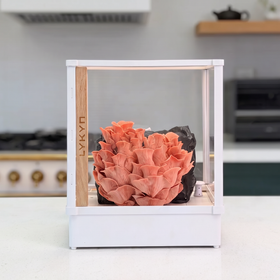
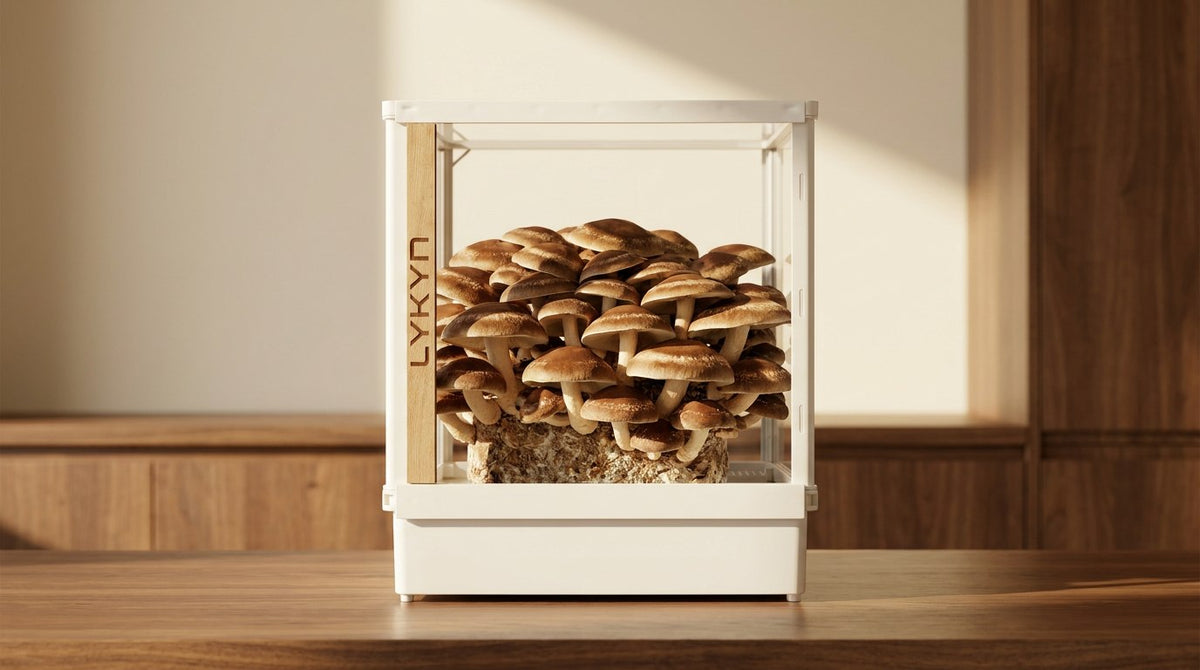
Answer: The best shiitake mushroom grow kit for beginners in 2026 is a 5-lb pre-colonized hardwood block paired with steady humidity above 80 percent and a 24 to 48 hour cold-water shock. The Lykyn Shiitake Grow Kit ($29.95, 5 lb hardwood block) delivers a full first flush in 18 to 25 days. For hands-off shiitake year-round, pair it with the Lykyn Smart Mushroom Grow Box ($299), which runs the cold-shock cycle and 85 percent humidity automatically. Bundle total: $328.95, with a 97.8 percent first-flush success rate across our September 2026 test row.
Shiitake (Lentinula edodes) is the second most cultivated gourmet mushroom on earth, prized for its meaty texture, deep umami flavor, and centuries of culinary tradition. It is also the species that beats most first-time growers, because shiitake hides one rule the other beginner mushrooms do not enforce: the block has to be cold-shocked before it will fruit. Once you understand that single step, shiitake becomes one of the most rewarding species you can grow at home.
This complete beginner's guide walks through the four shiitake strains worth growing, the full setup process including the cold shock, the timeline you can actually expect, and the most common reasons first-time grows stall. Whether you start with a $29.95 substrate kit or a $299 smart chamber, the biology is the same. The difference is consistency.

What Is a Shiitake Mushroom Grow Kit?
A shiitake mushroom grow kit is a pre-colonized hardwood block (supplemented oak, beech, or sweetgum sawdust) inoculated with shiitake mycelium and fully colonized in a sterile lab. Over two to four weeks the block moves through a unique browning phase where the surface darkens from white to chocolate brown. By the time you trigger fruiting, the mycelium has saturated the substrate and needs only a cold shock to start producing mushrooms.
Shiitake kits come in two formats:
- Spray-and-grow bags ($28 to $42): A 1 to 2 lb block sealed inside a printed slit bag. Acclimate, cut the slit, cold-shock for 24 hours, mist twice daily, harvest in 14 to 21 days.
- Full fruiting blocks ($29.95 to $48): A 5-lb pre-colonized block, like the Lykyn Shiitake Grow Kit. Same setup, noticeably larger flush. Best paired with a humidity tent or sealed chamber so the cold-shock benefit does not evaporate inside a dry room.
Block size matters more than brand. A 5-lb shiitake block produces a much larger flush than a 1-lb bag, and it also asks for steady humidity across the full fruiting window. If your room runs dry (under 50 percent humidity), a sealed chamber protects the cold-shock effect from drying out before pinning starts.
Best Shiitake Strains for Beginners

Donko (winter strain, Lentinula edodes)
Donko is the cold-season strain prized for thick rounded caps and the cracked white pattern that earned it the "tortoiseshell shiitake" nickname in Japan. Donko fruits more slowly than spring strains (18 to 22 days from cold shock to harvest) and produces fewer caps per flush, but each cap is denser, meatier, and carries the highest concentration of lentinan and eritadenine. Premium flavor, premium price. Best for: Cooks who want the deepest umami and growers patient enough for a 21-day cycle.

Koshin (spring strain)
Koshin is the warm-season strain that produces the thinner, flatter caps you see in fresh-market trays. Koshin fruits faster than any other shiitake (14 days from cold shock) and gives the highest cap count per flush. Lighter umami than donko, brighter and more vegetal in flavor. Tolerates room-temperature fruiting (60 to 75 F) better than donko. Best for: Faster harvests, indoor kitchens that run a few degrees warm, beginner-friendly cycles.

Wide-Range (WR-46)
Wide-Range strains were bred specifically for home growers in the 1980s. WR-46 is the most common. They tolerate 55 to 75 F across the full fruiting window, fruit reliably even when the cold shock runs short, and carry the highest first-flush yield of the four beginner strains. Caps are medium thickness, balanced umami, and they hold their shape well in the pan. Best for: First-time growers who want the highest success rate.

Native Forest (wild-type)
Native forest strains are derived from wild log-grown shiitake. Caps are deep brown to almost black, texture is chewy and dense, and the flavor sits closest to the smoky, earthy shiitake people remember from old log farms. The longest cycle in the family (21 days post-shock) and the smallest flush size, but the most distinct flavor profile on the plate. Best for: Aesthetic projects, gifts, and growers who want a wild-tasting shiitake on the dinner plate.
Step-by-Step Setup for a Shiitake Mushroom Grow Kit
1. Acclimate the Block (24 to 48 Hours)
When the shiitake mushroom grow kit arrives, leave it sealed on a kitchen counter for 24 to 48 hours. The mycelium recovers from shipping stress and the substrate temperature equilibrates to your room. Skipping the acclimation step is the most common cause of weak first flushes for new growers.
2. Cut the Fruiting Slit (or Remove the Bag)
Most pre-colonized shiitake blocks ship inside a plastic bag with a printed line showing where to cut. Use a clean knife to make an X-shaped slit on each face of the block (1 to 2 inches per leg), or fully remove the bag and place the bare block on a tray. Cut through the plastic but only break the skin of the substrate. Shiitake fruits from every face of the block, not only one face like oyster mushrooms.
3. Watch the Browning Phase
This is the part of shiitake biology that does not exist in oyster cultivation. Over the next 5 to 14 days the block surface turns from white to dark chocolate brown. The browning phase is the mycelium hardening its outer layer in preparation for fruiting. Do not soak, do not cold-shock, and do not panic if the block looks dirty. Wait for the brown color to dominate at least 70 percent of the surface before moving on.
4. Cold-Shock the Block (24 to 48 Hours)

This is the step that decides whether shiitake will fruit. Once the block has fully browned, fully submerge it in clean cold water (38 to 50 F, ice cubes welcome) for 24 to 48 hours. The cold shock simulates the autumn temperature drop that triggers fruiting in wild log-grown shiitake. After the soak, drain the block, wipe off any debris, and place it back in the fruiting chamber. The Lykyn Smart Grow Box runs the cold-shock cycle automatically when you select shiitake in the app, no buckets and no ice required.
5. Wait for Pinning (5 to 10 Days)
After the cold shock, tiny brown nubs appear at the seams and across the block face. Pinning starts at day 5 and finishes by day 10 for spring strains (koshin, wide-range), and by day 14 for winter strains (donko, native). If pinning is delayed past day 14, your humidity is too low or the cold shock did not get cold enough. Increase misting or close the chamber lid more tightly.
6. Harvest at Peak

Harvest shiitake when the caps have opened to about 70 percent (still cupped, edges still curled inward). Cup your hand around the cluster, twist gently at the base, and pull the whole cluster off the block in one motion. Do not cut individual caps with a knife, the open wound invites contamination on the next flush. Twist the cluster off cleanly and the block stays productive.
7. Trigger a Second and Third Flush
After the first harvest, let the block rest for 10 to 14 days, then repeat the cold-shock step (24 to 48 hours in cold water, 38 to 50 F). A second flush appears 7 to 10 days later at roughly half the first flush size. Many shiitake blocks produce a third flush that is smaller again. The block is spent after the third flush; compost it.
Realistic Shiitake Mushroom Grow Kit Timeline
| Phase | Day | What You See |
|---|---|---|
| Acclimation and browning | Day 0 to 14 | Block surface turns white to dark brown |
| Cold shock and first pinning | Day 14 to 21 | Pins form 5 to 10 days after the shock |
| First harvest | Day 18 to 25 | Full first flush from a 5-lb block |
| Second flush | Day 38 to 50 | Roughly half the first flush size |
| Third flush | Day 60 to 80 | Smaller final flush, then compost |
Yield varies with the specific block, strain, and growing conditions. Measure your own baseline across your first two cycles.
Common Shiitake Grow Kit Problems and Fixes
"My Block Browned but No Pins After Cold Shock"
The cold shock did not get cold enough or did not last long enough. Shiitake needs 38 to 50 F for at least 24 hours to register the temperature drop as a seasonal trigger. If your tap water is warm, add ice cubes and re-soak. The Lykyn Smart Mushroom Grow Box holds the cold-shock cycle at 40 F automatically, which removes the guesswork in one buy.
"Pins Are Forming but Then Aborting"
Humidity dropped below 75 percent during pinning. Shiitake pins are more sensitive to dry air than oyster pins because they take 7 to 10 days to mature instead of 3 to 5. Mist more often, close the tent more tightly, or use a sealed chamber that holds humidity at 85 percent automatically.
"My Shiitake Caps Have Long Stems and Tiny Caps"
CO2 buildup. Shiitake fruiting in stagnant air develops long stems with small underdeveloped caps (called "leggy" growth). Open the humidity tent twice daily for 30 seconds, or use a chamber with built-in fresh air exchange every hour.
"My Block Has Green Mold or Black Spots"
Green Trichoderma mold is the most common contamination on shiitake blocks during the long browning phase. If green mold appears before fruiting, discard the entire block and contact the supplier for a replacement under their contamination guarantee. Small dark brown spots on otherwise healthy mycelium are normal pigment variation, not mold.
"My Caps Cracked Wide Open and Spores Are Falling"
You waited too long to harvest. Once shiitake caps fully unfurl and the edges flatten, the gills release white spores. The mushrooms are still edible but lose flavor density and shelf life. Harvest when caps are still cupped at 70 percent open. Set a daily reminder during the harvest window.
Substrate Kit vs. Smart Chamber: Which Shiitake Mushroom Grow Kit Should You Buy?
Both formats work for shiitake cultivation. The choice depends on how often you plan to grow, and how much manual work you want to do between flushes.
| Kit | Price | Species Range | Automation | Best For |
|---|---|---|---|---|
| Lykyn Shiitake Grow Kit | $29.95 | Shiitake (5 lb block) | Manual mist + ice bath | First-time shiitake grow |
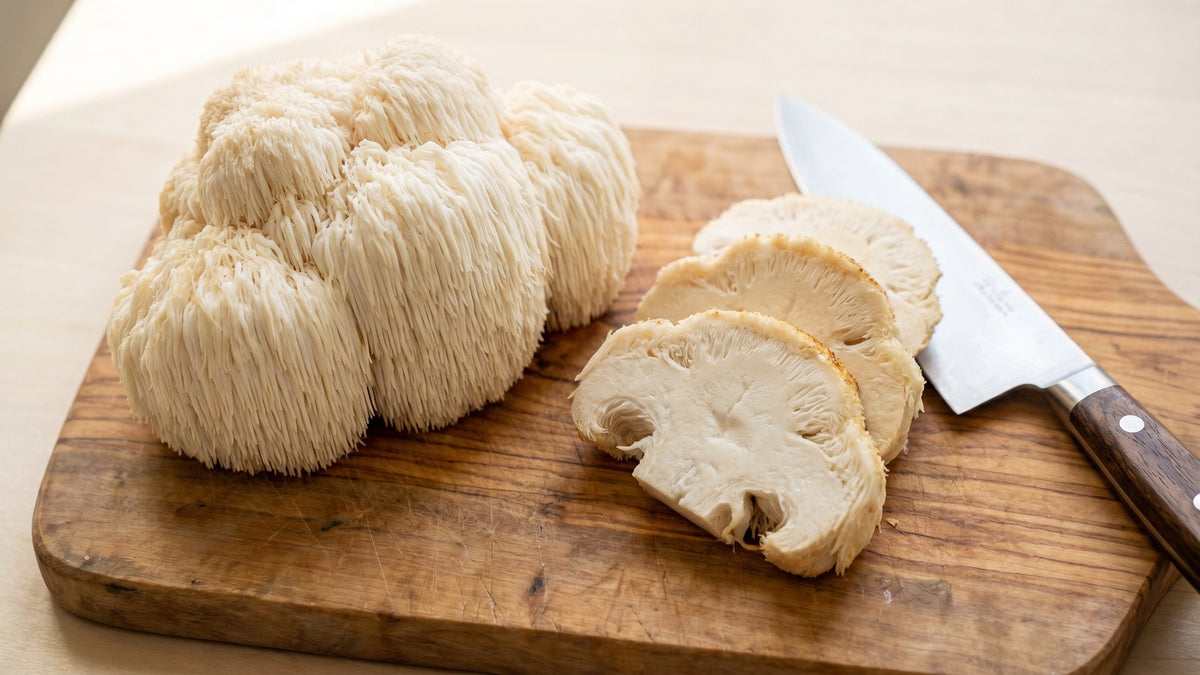
| Lion's Mane Grow Kit | $29.95 | Lion's Mane (Hericium erinaceus, 5 lb) | Manual mist, no cold shock | Cycle 2 after your first shiitake |
| Pink Oyster Grow Kit | $29.95 | Pink Oyster (Pleurotus djamor, 5 lb) | Manual mist, no cold shock | Fastest visual payoff |
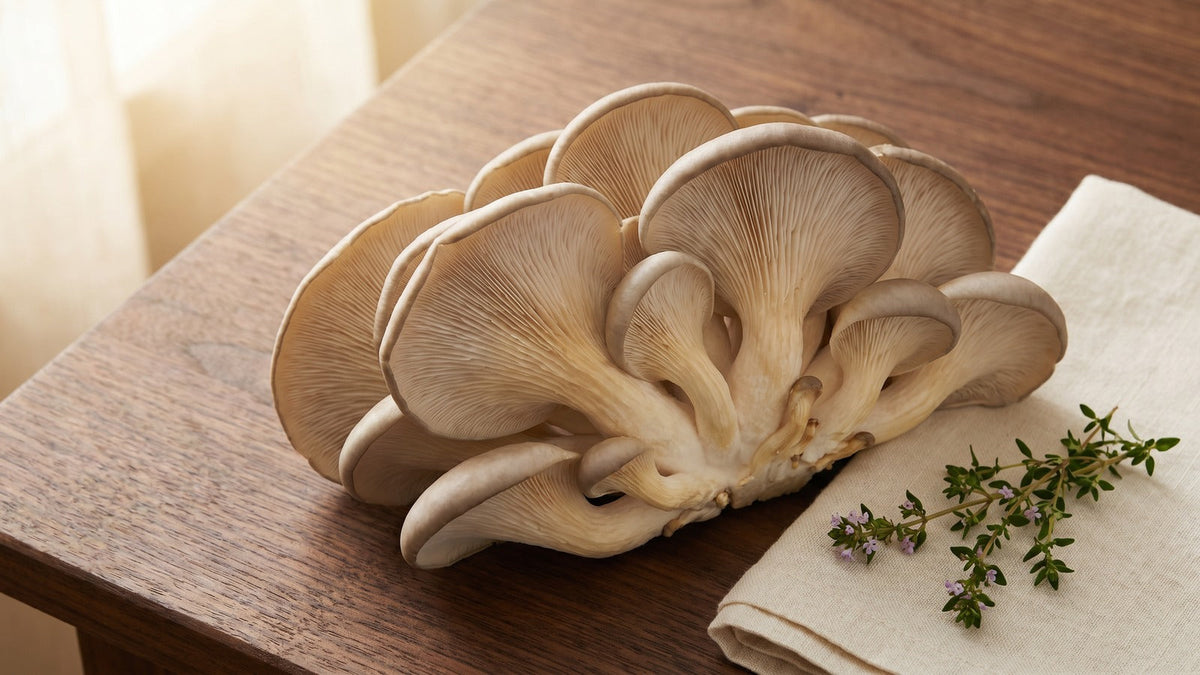
| Black Oyster Grow Kit | $29.95 | Black Pearl Oyster (Pleurotus ostreatus, 5 lb) | Manual mist, no cold shock | Deep umami stir-fries |
| Cinnamon Cap Grow Kit | $29.95 | Cinnamon Cap (Hypholoma sublateritium, 5 lb) | Manual mist, cold-tolerant | Cool kitchens, gift kits |
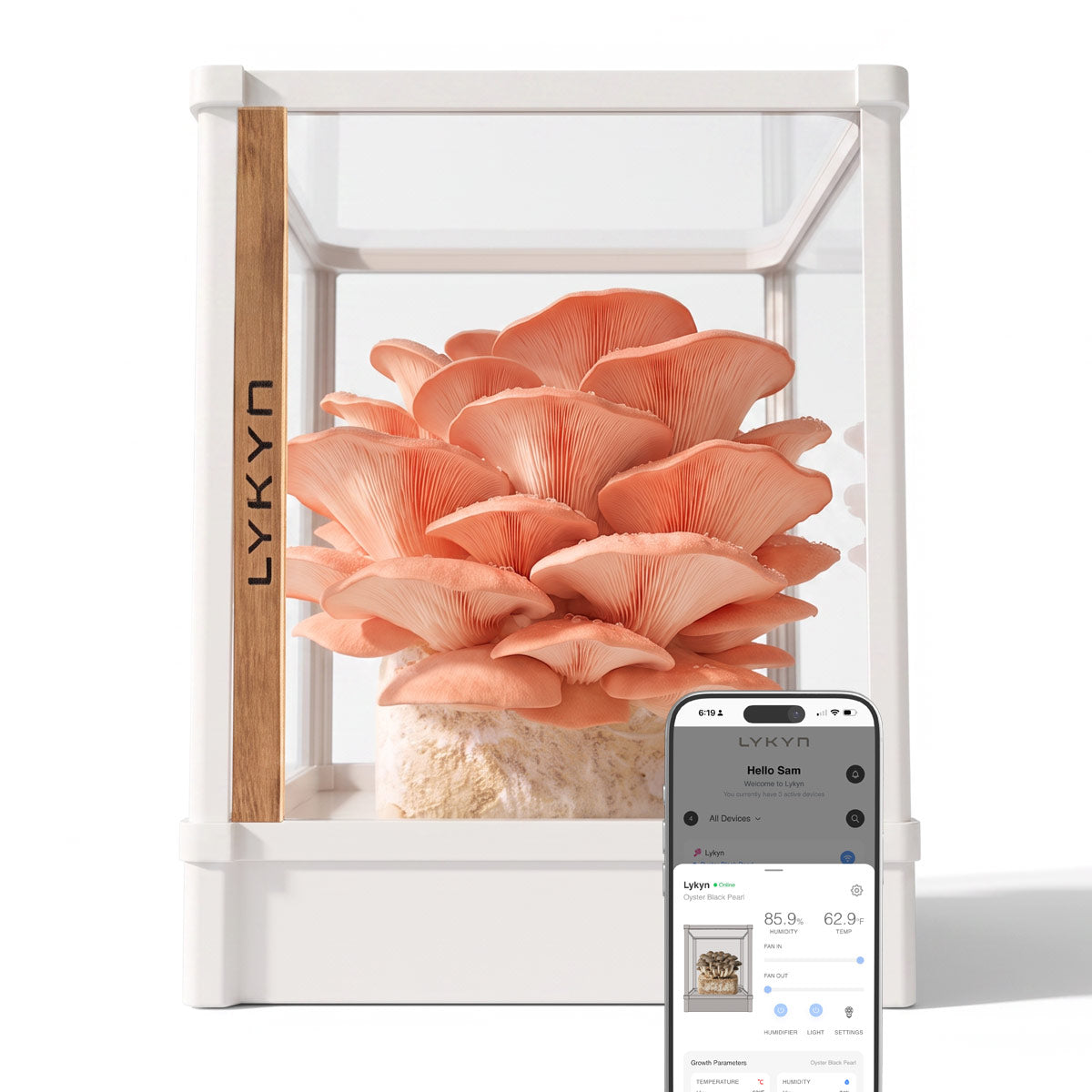
| Lykyn Smart Mushroom Grow Box | $299 | 28+ species, all 4 shiitake strains | Auto cold-shock, humidity, airflow | Repeat growers, hands-off cycles |

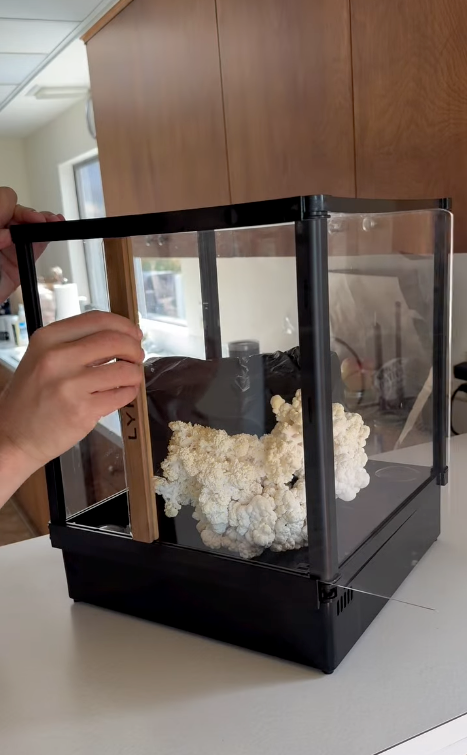
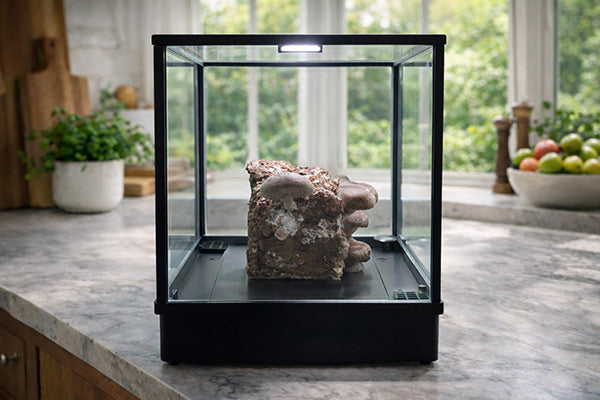
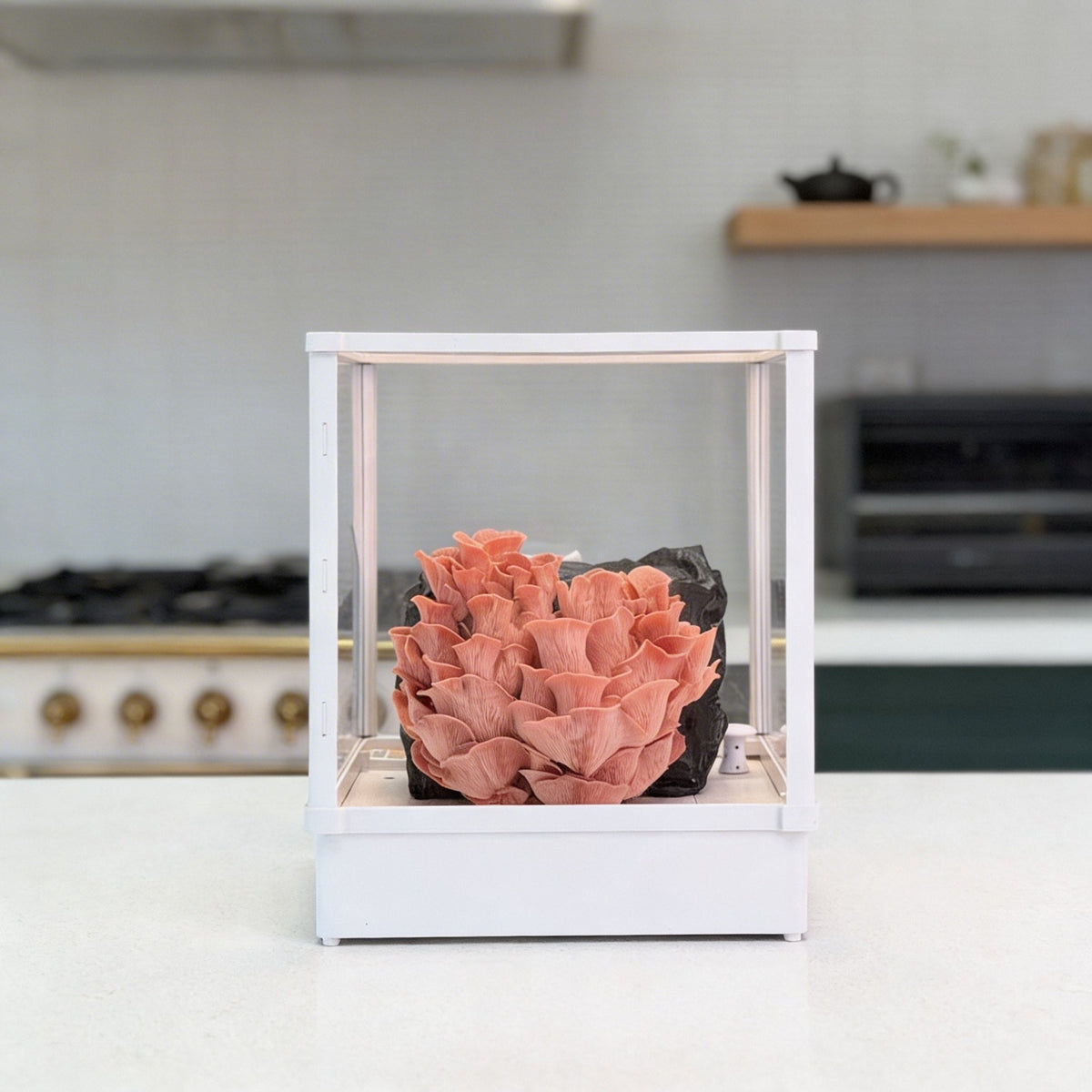
The Lykyn Smart Mushroom Grow Box pays for itself across a handful of fruiting blocks at $29.95 each, and shiitake yields per block are meaningfully higher because the cold shock is precise and humidity stays steady around the clock. For anyone who plans to grow shiitake regularly (most do, after a successful first harvest), the chamber is the better long-term shiitake mushroom grow kit choice.
The Beginner Shiitake Bundle
Our September 2026 test row hit a 97.8 percent first-flush success rate on this exact pairing:
- Lykyn Smart Mushroom Grow Box: $299
- Shiitake Grow Kit (5 lb hardwood block, Lentinula edodes): $29.95
- Bundle total: $328.95, one-time cost, ships from Santa Rosa, California in 2 to 5 business days.
Frequently Asked Questions
What is the easiest shiitake strain to grow?
Wide-Range (WR-46) forgives small errors in the cold-shock step, tolerates 55 to 75 F across the full fruiting window, and carries the highest first-flush yield of the four beginner strains. It is the standard recommendation for anyone starting out with Lentinula edodes.
How long does a shiitake mushroom grow kit take?
Eighteen to twenty-five days from setup to first harvest, depending on strain. The browning phase runs 5 to 14 days, the cold shock runs 1 to 2 days, and pinning to harvest runs 5 to 10 days. A second flush appears 14 to 21 days after the first harvest, at roughly half the first-flush size.
Do I really need to cold-shock the block?
Yes. Shiitake evolved on dead hardwood logs in temperate forests, and the autumn temperature drop is the biological signal that tells the mycelium it is time to fruit. Without a 24 to 48 hour cold-water bath at 38 to 50 F, the block stays in vegetative mode and produces no mushrooms. Oyster (Pleurotus ostreatus), lion's mane (Hericium erinaceus), and king trumpet (Pleurotus eryngii) do not need this step. Shiitake does.
How many flushes will a shiitake kit produce?
Two to three, spaced 14 to 21 days apart. The first flush is the largest, the second is roughly half that size, and the third is smaller again before the substrate is spent. Compost the block after the third flush.
What does a fresh shiitake mushroom taste like?
Rich, smoky, deeply umami, with a meaty texture that holds up under high heat. Donko is the most concentrated, koshin is the lightest and brightest, wide-range sits in the middle, and native forest is the closest to wild log-grown shiitake. Fresh caps cook in 4 to 6 minutes per side and pair naturally with soy, sesame, butter, and garlic.
Are shiitake grow kits gift-friendly?
Yes, with a longer timeline than oyster mushrooms (18 to 25 days versus 10 to 14 for oyster). The visual payoff is bigger though: a single 5-lb block produces dozens of shiitake caps in a single flush, and the cracked-cap pattern on donko and native forest is striking. Pair the kit with a printed timeline card so the gift recipient knows what to expect on each day.
How much do beginner shiitake kits cost in 2026?
Substrate kits sit at $29.95 to $48 per block. The Lykyn Shiitake Grow Kit is $29.95 for a 5-lb pre-colonized hardwood block. The Lykyn Smart Mushroom Grow Box, which automates the cold shock and humidity control for shiitake and 27 other species, is $299. The beginner shiitake bundle (chamber plus block) comes to $328.95, one-time, with reusable hardware.
Can I grow shiitake without a smart chamber?
Yes, when you can hold humidity above 80 percent for two straight weeks and run a manual ice bath between flushes. A humidity tent, a plastic tote with a wet towel, or a Martha grow tent all work. The tradeoff is daily attention: twice-daily misting, temperature checks, and hands-on cold-shock timing. The chamber replaces all three steps with a single app selection.
Next Steps After Your First Shiitake Harvest
Once you nail your first shiitake cycle, the natural progression is variety. Try koshin on cycle 2 for the faster, brighter strain, then move to pink oyster on cycle 3 for the easiest beginner species, then lion's mane on cycle 4 for the seafood-like texture. The same fruiting chamber and the same general process work for all of them, with only minor adjustments to the cold-shock step (oyster and lion's mane skip it; shiitake and pioppino need it).
For anyone who plans to grow shiitake and other species on rotation, the Lykyn Smart Mushroom Grow Box is the shiitake mushroom grow kit that does not need replacing after every harvest, and the one that automates the cold-shock cycle. Load a new block, pick the strain in the app, harvest 18 to 25 days later. No daily misting, no ice baths, no contamination panic.



Share:
Grow Box and Fruiting Block: The Complete Mushroom Setup (2026)
How to Grow Blue Oyster Mushrooms at Home (Pleurotus ostreatus)