


Ja, Pilze können verderben, aber wie schnell, hängt von der Form ab. Frische Pilze halten sich gekühlt 7 bis 10 Tage. Getrocknete Pilze halten sich 6 bis 12 Monate in einem verschlossenen Glas (und oft 1 bis 2 Jahre). Tinkturen und Pulver bleiben 1 bis 3 Jahre wirksam. Achten Sie auf Schleimigkeit, dunkle Flecken und Ammoniakgeruch als Hauptzeichen des Verderbs.
Pilzhaltbarkeit auf einen Blick
Hier ist die Schnelltabelle, die die häufigsten Lagerfragen beantwortet. Die unten angegebenen Zeiten setzen korrekte Bedingungen voraus: Papiertüte, Hauptfach des Kühlschranks, luftdichter Behälter für getrocknete Pilze.

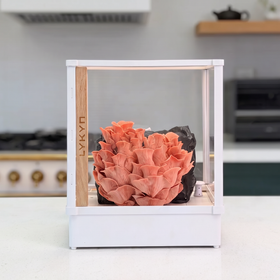
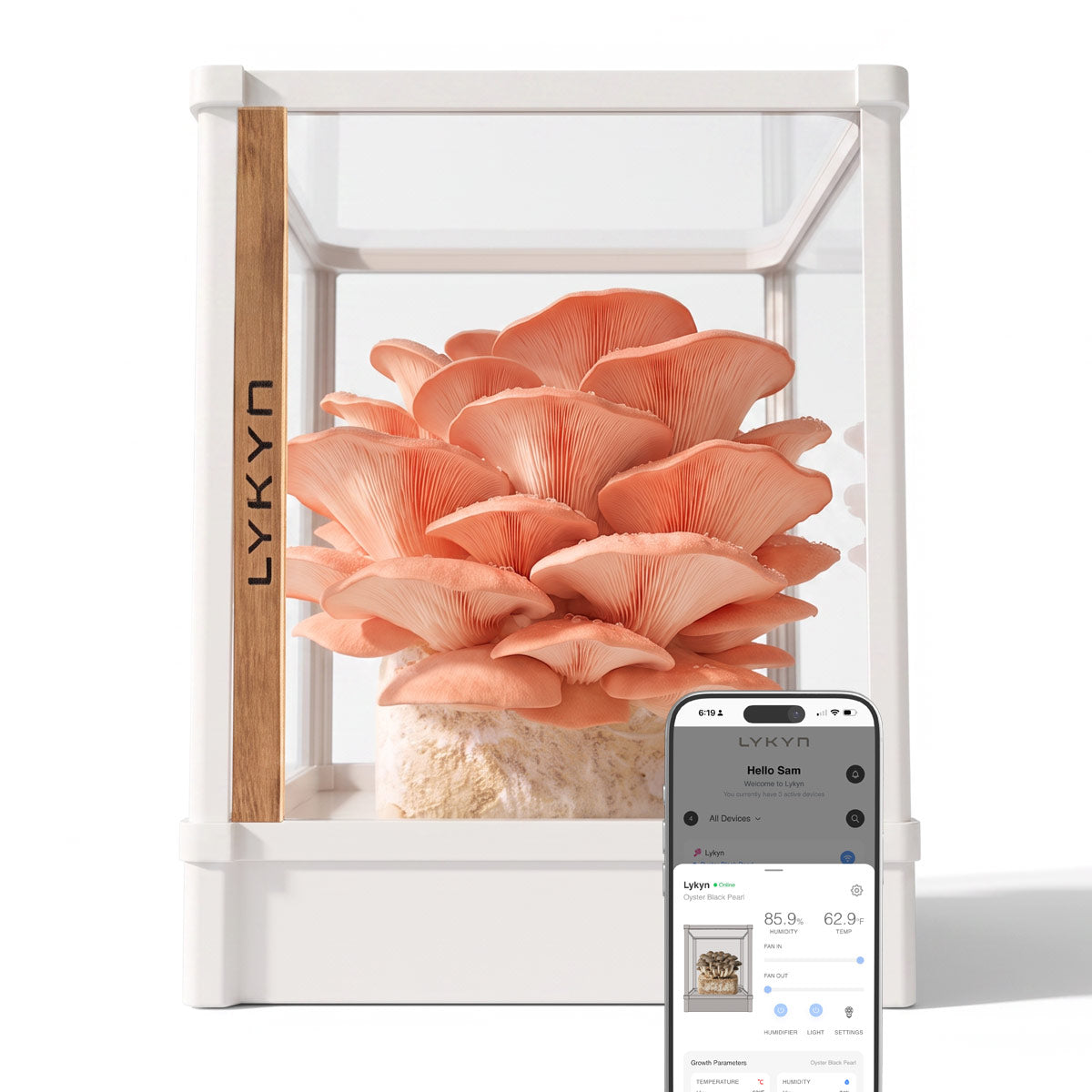
Smart Chamber. Knochenweiß Single
- 2.8L Tank, 90% Luftfeuchtigkeit automatisch
- App-gesteuert, Plug-and-Play
- 6 Pfund Block Decke, auf Lager

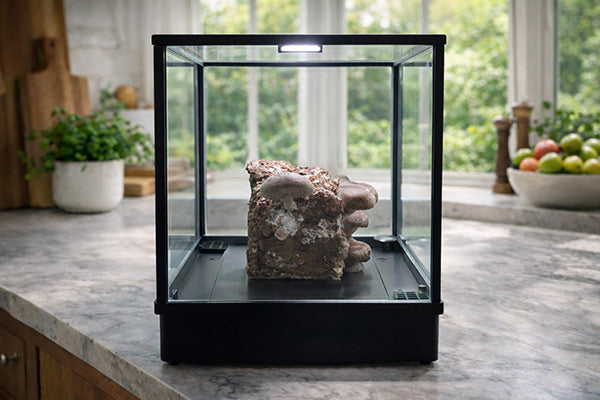
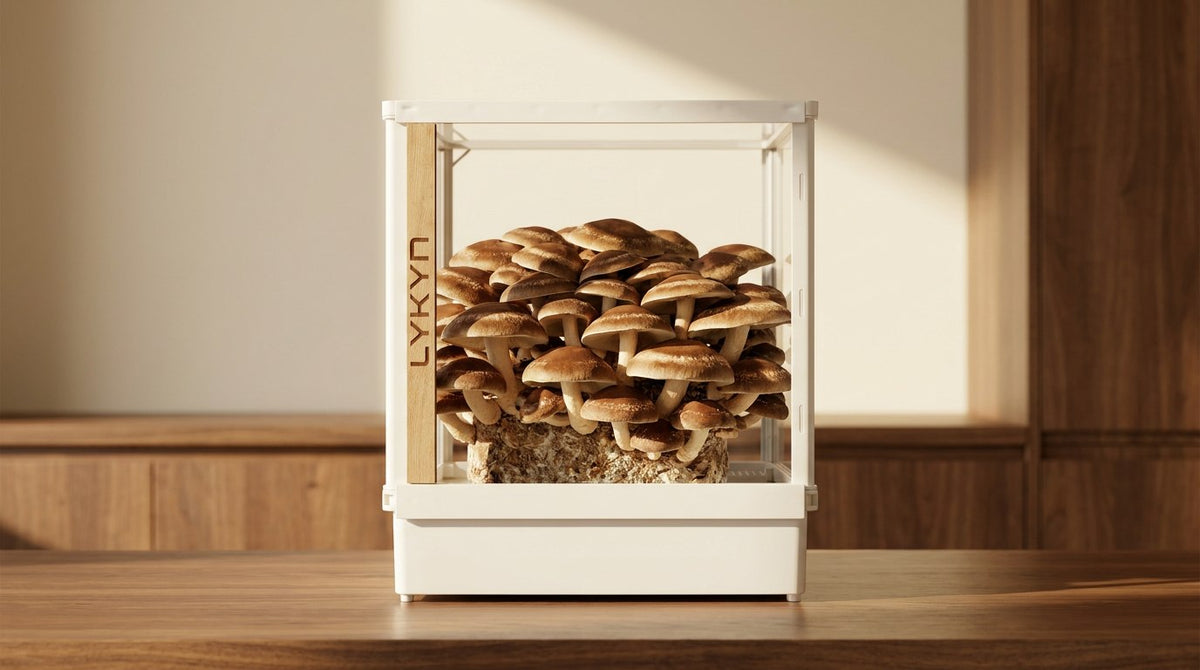
Smart Chamber. Obsidian Schwarz Single
- Gleiche Hardware wie Knochenweiß
- Mattschwarzes Premium-Finish
- Passt zu jeder Küchenpalette

Austernpilz-Zuchtset
- Auf Lager
- Fruchtkörper in 3-5 Tagen
- Ersetzt 1 Kammerzyklus
| Form | Gekühlt | Gefroren | Raumtemperatur |
|---|---|---|---|
| Frisch, ganz | 7 bis 10 Tage | 6 bis 9 Monate | 1 bis 2 Tage |
| Frisch, geschnitten | 5 bis 7 Tage | 6 bis 9 Monate | Weniger als 1 Tag |
| Gekocht | 3 bis 5 Tage | 8 bis 12 Monate | Weniger als 2 Stunden |
| Getrocknet | 1 bis 2 Jahre | Unbegrenzt | 6 bis 12 Monate |
| Pulver | 1 bis 2 Jahre | 2 bis 3 Jahre | 1 bis 2 Jahre (versiegelt) |
| Tinktur | Nicht erforderlich | Nicht erforderlich | 2 bis 4 Jahre |
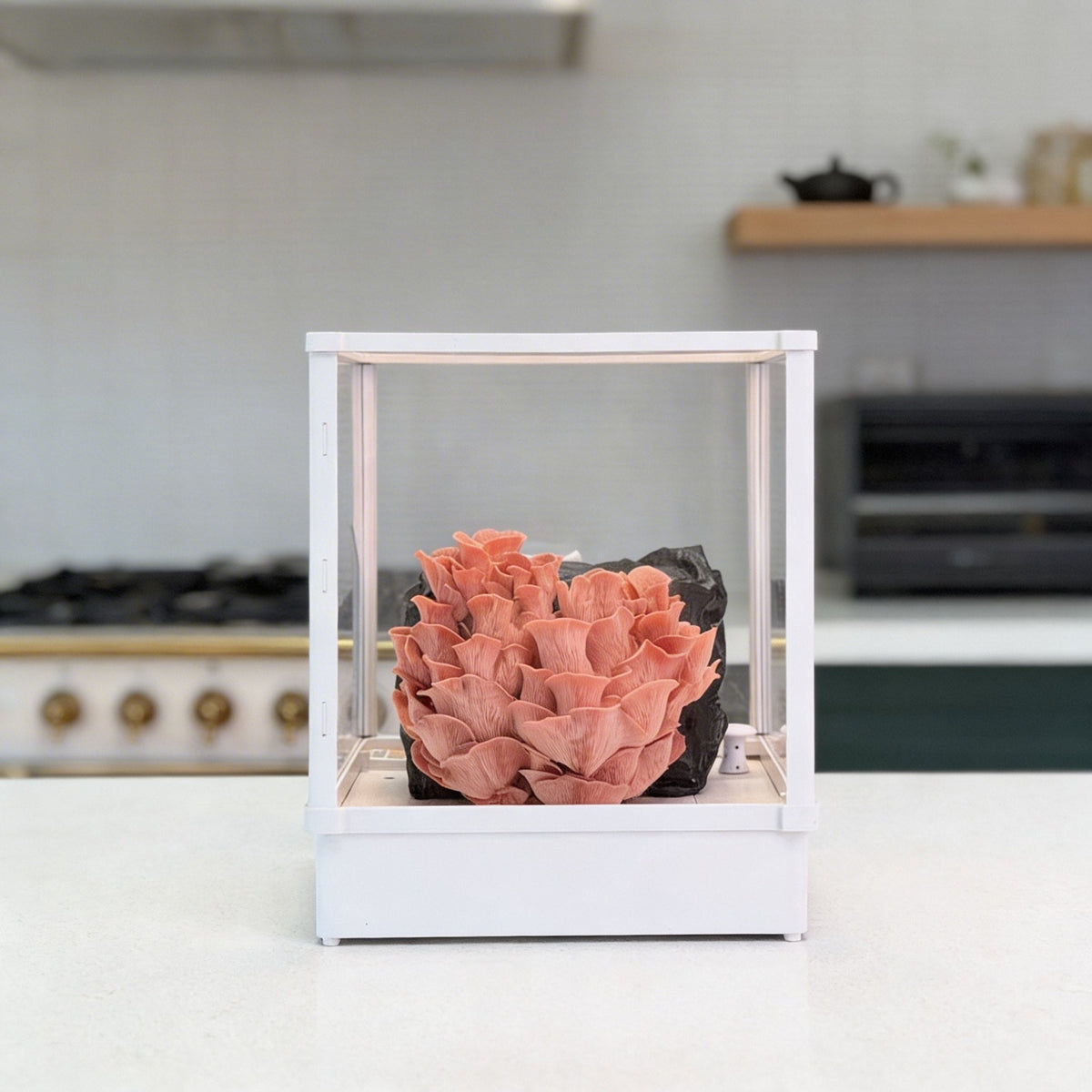
Wenn Sie wirklich frische Pilze ohne den Ablauf der Haltbarkeit wünschen, können Sie diese zu Hause anbauen und nur das ernten, was Sie an diesem Tag benötigen. Eine smarte Pilzzuchtbox für die Arbeitsplatte liefert in etwa 5 Tagen ca. 550 g frische Fruchtkörper, sodass das Verderben kein Thema mehr ist.
Woran man erkennt, ob Pilze schlecht geworden sind: 5 Anzeichen
Sie brauchen kein Labor. Ihre Augen, Nase und Finger sagen Ihnen in etwa 10 Sekunden, was Sie wissen müssen.
1. Schleimigkeit auf Kappe oder Stiel
Schleimigkeit ist das größte Anzeichen für Verderb. Frische Pilze haben eine trockene, leicht samtige Oberfläche. Sobald der Hut feucht, schlüpfrig oder klebrig wird, haben Bakterien begonnen, die Zellwände abzubauen. Die Schleimschicht ist ein bakterielles Nebenprodukt. Kein Spülen oder Kochen macht sie wieder sicher.
2. Dunkle Flecken, Druckstellen oder schwarze Verfärbungen
Ein paar hellbraune Flecken auf weißen Champignons sind normale Oxidation und können normalerweise abgeschnitten werden. Weit verbreitete Dunkelfärbung, schwarze Flecken oder weiche braune Stellen bedeuten, dass das Fleisch verrottet. Wenn mehr als 20 Prozent des Hutes verfärbt sind, entsorgen Sie den gesamten Pilz.
3. Schrumpelige, welk oder ledrige Textur
Pilze bestehen zu etwa 92 Prozent aus Wasser. Wenn sie Feuchtigkeit verlieren, schrumpft der Hut, die Lamellen ziehen sich zurück und die Oberfläche sieht zerknittert aus. Schrumpelige Pilze sind technisch gesehen noch sicher, wenn sie den Geruchstest bestehen, aber der Geschmack ist flach und der Nährwert sinkt. Entweder bewusst trocknen oder kompostieren.
4. Saurer, fischiger oder Ammoniakgeruch
Frische Pilze riechen erdig, mild, leicht süßlich. Eine saure oder essigartige Note bedeutet, dass Milchsäurebakterien aktiv geworden sind. Ein stechender Ammoniakgeruch deutet darauf hin, dass der Proteinabbau bereits weit fortgeschritten ist. Beides sind klare Signale, die ganze Charge wegzuwerfen. Insbesondere der Ammoniakgeruch ist auf den Abbau von Aminosäuren zurückzuführen, und Kochen neutralisiert ihn nicht.
5. Weiches, matschiges oder Flüssigkeit austretendes Fleisch
Drücken Sie den Hut vorsichtig. Ein frischer Pilz fühlt sich fest an und federt zurück. Ein verdorbener fühlt sich matschig an, hinterlässt eine Delle oder tritt braune Flüssigkeit aus. Flüssigkeitsaustritt ist bakterieller Schleim, gemischt mit Zellwasser. Fertig.
Die vollständige visuelle Referenz finden Sie unten. Wenn Sie zu Hause mit einem Indoor-Pilzanbau-Kit anbauen, werden Sie diese Anzeichen fast nie sehen, da Sie zur Spitzenreife ernten und innerhalb weniger Stunden kochen.
Wie lange Pilze nach Sorte halten
Verschiedene Arten haben unterschiedliche grundlegende Haltbarkeiten. Dichte, Wassergehalt und Lamellenstruktur spielen alle eine Rolle. Hier ist, was Sie von jeder gängigen Sorte erwarten können, die in einer Papiertüte im Hauptfach des Kühlschranks gelagert wird.
| Pilzart | Gekühlt (1,7 bis 3,3 °C) | Raumtemperatur |
|---|---|---|
| Champignon (weiß) | 7 bis 10 Tage | 1 bis 2 Tage |
| Brauner Champignon (Baby Bella) | 7 bis 10 Tage | 1 bis 2 Tage |
| Portobello | 5 bis 7 Tage | 1 Tag |
| Shiitake | 10 bis 14 Tage | 2 bis 3 Tage |
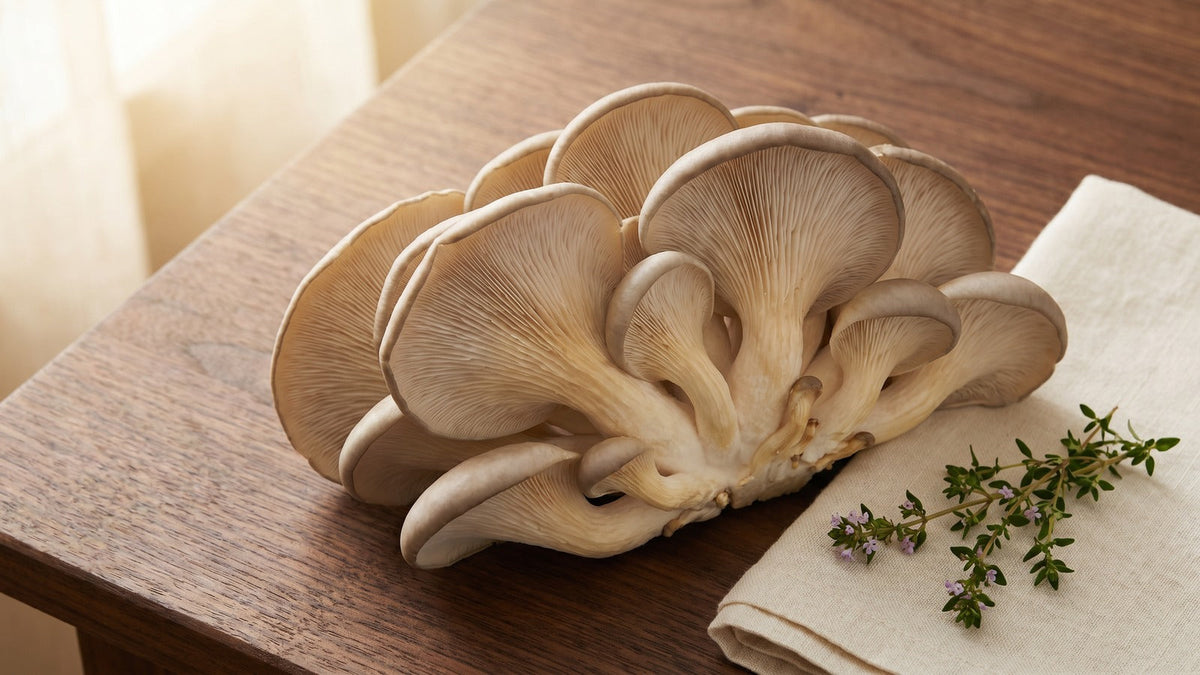
| Austernpilz | 5 bis 7 Tage | 1 Tag |
| Rosa Austernpilz | 3 bis 5 Tage | Weniger als 1 Tag |
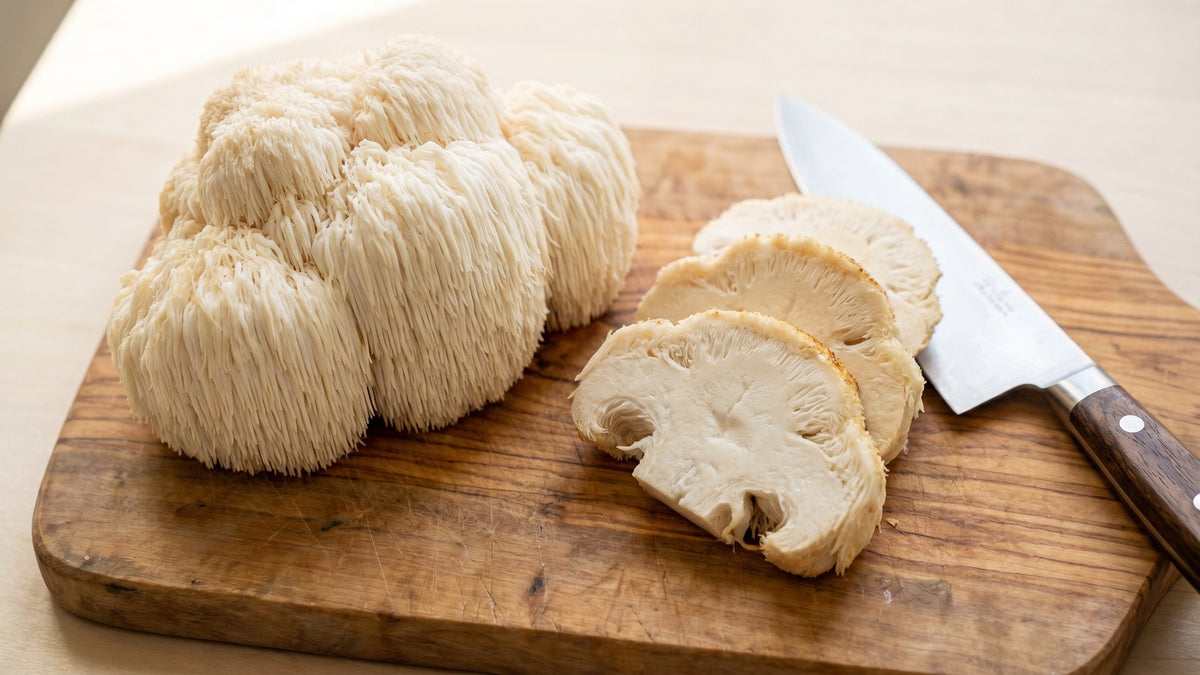
| Igelstachelbart | 5 bis 7 Tage | 1 bis 2 Tage |
| Reishi (frisch) | 7 bis 10 Tage | 2 bis 3 Tage |
| Kastanienpilz | 5 bis 7 Tage | 1 bis 2 Tage |
Igelstachelbart hat eine der kürzesten Frischhaltezeiten aller Speisepilze aufgrund seiner zarten Stachelstruktur. Genau deshalb ist ein Igelstachelbart-Zuchtset für zu Hause so viel praktischer, als es im Laden zu kaufen. Ernten, essen, wiederholen. Tinkturen und Pulver aus Igelstachelbart halten sich 1 bis 3 Jahre im Regal, was die andere zuverlässige Methode ist.
Pilze richtig lagern für maximale Frische
Die richtige Lagerung verdoppelt oder verdreifacht die Haltbarkeit. Der größte Fehler ist, Pilze in Plastikschalen oder versiegelten Gemüsetüten zu lassen. Plastik schließt Atmungsfeuchtigkeit ein, Wasser setzt sich auf den Kappen ab, Bakterien gewinnen.
Die Papiertüten-Methode (Am besten, kein Plastik)
Dies ist der Goldstandard für frische Pilze.
- Nehmen Sie die Pilze sofort aus jeglicher Plastikverpackung. Plastik ist der Feind.
- Legen Sie die Pilze lose in eine Papiertüte. Eine braune Brottüte ist perfekt.
- Falten Sie die Oberseite locker zusammen. Die Luft muss zirkulieren können, aber nicht so stark, dass die Kappen austrocknen.
- Im Hauptfach des Kühlschranks lagern. Nicht im Gemüsefach. Das Gemüsefach ist für Feuchtigkeit ausgelegt, was das Gegenteil von dem ist, was Pilze brauchen.
- Alle 2 bis 3 Tage überprüfen. Entfernen Sie alle, die anfangen zu schleimen, damit die anderen die Bakterien nicht abbekommen.
Papier nimmt überschüssige Atmungsfeuchtigkeit auf, während es die Pilze atmen lässt. Einfach, günstig und es funktioniert jedes Mal.
Die feuchte Papiertuch-Methode
Wickeln Sie Pilze in ein leicht feuchtes Papiertuch und legen Sie sie in einen offenen Behälter. Dies funktioniert gut für 5 bis 7 Tage, wenn Ihr Kühlschrank trocken läuft.
Pilze einfrieren: Zuerst kochen
Rohe, gefrorene Pilze werden beim Auftauen matschig, weil Eiskristalle die Zellwände zerstören. Die Lösung ist, sie zuerst anzubraten und dann einzufrieren.
- Schneiden Sie Pilze in die gewünschte Dicke.
- In einer trockenen Pfanne 5 bis 7 Minuten anbraten, bis sie Wasser abgeben und dieses verkocht ist.
- Auf einem Backblech vollständig abkühlen lassen.
- In Gefrierbeutel verpacken, Luft herausdrücken, mit Datum beschriften.
- Innerhalb von 8 bis 12 Monaten für besten Geschmack verbrauchen.
Sie können sie auch 2 Minuten in Salzwasser blanchieren, wenn Sie diese Textur für Suppen und Eintöpfe bevorzugen.
Pilze zu Hause trocknen
Trocknen ist die zuverlässigste Langzeitkonservierungsmethode. Richtig getrocknete Pilze halten sich 1 bis 2 Jahre und behalten etwa 90 Prozent ihrer bioaktiven Verbindungen, einschließlich Beta-Glucanen.
- Gleichmäßig in etwa 6 mm dicke Scheiben schneiden.
- Auf einem Drahtgestell oder einem Dörrgerät-Gitter anordnen in einer einzigen Schicht ohne Überlappung.
- Bei 43 bis 54 °C (110 bis 130 °F) trocknen für 6 bis 12 Stunden, je nach Sorte und Luftfeuchtigkeit.
- Auf Bruchanfälligkeit prüfen. Eine richtig getrocknete Scheibe sollte brechen, nicht biegen.
- Abkühlen lassen, dann lagern in luftdichten Gläsern mit einem Silicagel-Päckchen, vor Licht geschützt.
Wenn Sie Ihre eigenen Pilze in einer Pilz-Fruchtkammer anbauen, trocknen Sie alles, was Sie nicht innerhalb von 48 Stunden essen können. Sie werden einen Jahresvorrat an getrockneten Igelstachelbart, Shiitake und Austernpilzen ansammeln, ohne jemals einen wegwerfen zu müssen.
Pilz-Tinkturen und -Pulver: Jahrelang haltbar
Wenn Sie Pilze für funktionale Vorteile (Konzentration, Immununterstützung, Schlaf) verwenden, machen Tinkturen und Pulver die Frage der Frische fast obsolet.
- Tinkturen: 2 bis 4 Jahre versiegelt, 1 bis 2 Jahre geöffnet. Alkohol oder Glyzerin ist das Konservierungsmittel.
- Pulver: 1 bis 2 Jahre in einem versiegelten Beutel, weniger nach dem Öffnen. In einem kühlen, dunklen Schrank aufbewahren.
- Kapseln: 2 bis 3 Jahre, wenn trocken gelagert.
Der Nachteil ist, dass die Wirksamkeit im Laufe der Zeit nachlässt, auch wenn das Produkt technisch noch sicher ist. Der Beta-Glucan-Gehalt kann nach Ablauf des aufgedruckten Datums um 15 bis 25 Prozent sinken. Verwenden Sie das frischeste Produkt, das Sie bekommen können, aber machen Sie sich keine Sorgen wegen ein paar Wochen Überschreitung.

Befeuern Sie Ihre Pilzreise
Smarte Pilz-Zuchtkammer
Plug-and-Play Smart-Kammer mit Feuchtigkeit, Licht und Luftstrom, abgestimmt auf jede Art. Anfänger ernten ihre erste Spülung in Tagen, nicht Monaten.
In den Warenkorb $299Können alte Pilze krank machen?
Ja. Verdorbene Pilze können eine Lebensmittelvergiftung verursachen, und das Risiko ist auch beim Kochen real.
Die häufigsten Übeltäter sind Listeria monocytogenes, Salmonella und verschiedene Pseudomonas-Arten. Diese Bakterien wachsen auf der Hutoberfläche und in den Lamellen, wenn der Pilz zerfällt. Die Symptome treten typischerweise 6 bis 24 Stunden nach dem Verzehr auf und umfassen:
- Übelkeit und Erbrechen
- Durchfall (manchmal blutig bei Salmonella-Fällen)
- Bauchkrämpfe
- Fieber oder Schüttelfrost
- Kopfschmerzen
Kochen tötet die meisten Bakterien ab, aber einige bakterielle Toxine sind hitzestabil und werden bei Brat- oder Kochtemperaturen nicht abgebaut. Deshalb ist ein starkes Anbraten von schleimigen Pilzen kein Rettungsplan.
Was tun, wenn Sie verdorbene Pilze gegessen haben?
Bei den meisten gesunden Erwachsenen klingt eine leichte Lebensmittelvergiftung durch verdorbene Zuchtpilze innerhalb von 24 bis 48 Stunden von selbst ab. Bleiben Sie hydriert mit Wasser und Elektrolytgetränken. Essen Sie nach Abklingen der Übelkeit leichte Kost (Reis, Toast, Bananen).
Rufen Sie Ihren Arzt an oder suchen Sie dringend ärztliche Hilfe auf, wenn Sie Folgendes haben:
- Fieber über 39 °C (102 °F)
- Blutiger Durchfall oder Erbrochenes
- Anzeichen von Dehydration (kein Urin für mehr als 8 Stunden, Schwindel, Herzrasen)
- Symptome, die länger als 48 Stunden anhalten
- Geschwächtes Immunsystem, Schwangerschaft oder Sie sind über 65
Hinweis: Dieser Artikel handelt von verdorbenen Zuchtpilzen (die Art, die Sie kaufen oder zu Hause anbauen). Eine Wildpilzvergiftung durch Amanita, Galerina und ähnliche giftige Arten ist ein anderer Notfall und erfordert sofortige Krankenhausbehandlung. Die USDA-Kühllagertabelle für Lebensmittel und die allgemeinen Sicherheitshinweise der FDA für Produkte sind gute zusätzliche Referenzen.
Frisch vs. getrocknet vs. Extrakt: Welche Form hält am längsten?
Jedes Format hat einen klaren Anwendungsfall. Wählen Sie nach Lebensstil, nicht nach Tradition.
| Format | Haltbarkeit | Am besten geeignet für | Überlegungen |
|---|---|---|---|
| Frisch | 5 bis 14 Tage | Kochen, sofortiger Gebrauch | Braucht Kühlschrank, wöchentlicher Einkauf |
| Getrocknet | 1 bis 2 Jahre | Langzeitlagerung, Kochen | Braucht Rehydrierung, intensiverer Geschmack |
| Pulver | 1 bis 2 Jahre | Smoothies, Kaffee, täglicher Gebrauch | Einfache Dosierung, keine Zubereitung |
| Tinktur | 2 bis 4 Jahre | Tägliche Nahrungsergänzung | Höchste Wirksamkeitserhaltung |
| Kapseln | 2 bis 3 Jahre | Reisen, Bequemlichkeit | Vordosiert, geschmacklos |
| Hausgemacht | Frisch nach Bedarf ernten | Spitzen-Geschmack, null Abfall | Braucht ein Kit oder eine Kammer |
Ganz ehrlich: Es sei denn, Sie kochen mehrmals pro Woche mit Pilzen, ist der Kauf von frischen Pilzen im Supermarkt das Format mit dem schlechtesten Preis-Leistungs-Verhältnis. Die Hälfte der Tüte wird schleimig, bevor Sie sie verwenden. Entweder Sie entscheiden sich für eine Pilzzuchtbox für die Arbeitsplatte, damit Sie nach Bedarf ernten, oder Sie stellen den Supplement-Teil Ihrer Routine auf Pulver und Tinkturen um, damit die Frische nie ein Thema ist.
Wenn Sie Ihre tägliche Routine vertiefen möchten, finden Sie in unserem Leitfaden über welche Pilze für Tiere und Menschen unbedenklich sind Antworten auf Fragen zur artübergreifenden Fütterung, die auftreten, wenn Sie mehr anbauen, als Sie essen können.
Häufig gestellte Fragen
Woran erkenne ich, ob Pilze schlecht geworden sind?
Prüfen Sie vier Dinge: Oberflächenbeschaffenheit, Farbe, Geruch und Festigkeit. Schleimige oder klebrige Kappen, weit verbreitete dunkle Flecken, saurer oder ammoniakartiger Geruch und matschiges Fleisch bedeuten allesamt Entsorgung. Ein frischer Pilz ist trocken bei Berührung, gleichmäßig gefärbt, riecht erdig und fühlt sich fest an, wenn man ihn drückt.
Kann man Pilze nach dem Verfallsdatum noch essen?
Ja, oft. Das "Verbrauchsdatum" ist eine Qualitätsrichtlinie, kein hartes Sicherheitslimit. Wenn die Pilze noch fest aussehen, mild und erdig riechen und keine Schleimigkeit aufweisen, sind sie in der Regel 2 bis 3 Tage nach dem aufgedruckten Datum noch sicher. Kochen Sie sie gründlich. Wenn Anzeichen von Verderb auftreten, entsorgen Sie sie unabhängig vom Datum.
Verfallen getrocknete Pilze?
Getrocknete Pilze halten in luftdichten Behältern 1 bis 2 Jahre, manchmal länger im Gefrierschrank. Sie werden selten unsicher (geringe Wasseraktivität verhindert Bakterienwachstum), verlieren aber mit der Zeit an Geschmack und bioaktiver Wirksamkeit. Entsorgen Sie sie, wenn Sie Schimmel sehen, muffig riechen oder Insektenschäden bemerken.
Warum werden Pilze im Kühlschrank schleimig?
Schleimigkeit entsteht durch die Kunststoffverpackung, die die Atemfeuchtigkeit einschließt. Pilze atmen nach der Ernte weiter. Der Wasserdampf, den sie freisetzen, kondensiert auf den Kappen, Bakterien wachsen in diesem Wasserfilm, und Sie erhalten Schleim. Die Lösung ist die Aufbewahrung in Papiertüten im Hauptfach des Kühlschranks (nicht im feuchten Gemüsefach).
Können alte Pilze krank machen?
Ja. Verdorbene Pilze können Listeria, Salmonella und Pseudomonas enthalten, die alle innerhalb von 6 bis 24 Stunden Symptome einer Lebensmittelvergiftung verursachen. Einige Bakterientoxine überleben das Kochen, daher ist eine heiße Pfanne keine Rettung. Wenn Pilze Schleim, dunkle Flecken oder einen sauren Geruch aufweisen, entsorgen Sie sie lieber, als ein Risiko einzugehen.
Ruiniert das Einfrieren von Pilzen diese?
Rohe, gefrorene Pilze werden beim Auftauen matschig, weil Eiskristalle die Zellwände sprengen. Vorher anbraten oder blanchieren, abkühlen lassen, dann einfrieren. Gekochte, gefrorene Pilze behalten ihre Textur und ihren Geschmack für 8 bis 12 Monate und eignen sich gut für Suppen, Eintöpfe, Saucen und Aufläufe.
Wie lange halten gekochte Pilze im Kühlschrank?
Gekochte Pilze halten 3 bis 5 Tage in einem luftdichten Behälter im Hauptfach des Kühlschranks (35 bis 38 Grad F). Vor dem Servieren auf 165 Grad F (74 Grad C) erhitzen. Nach 5 Tagen leidet die Textur und das Risiko des Bakterienwachstums steigt, selbst wenn die gekochten Pilze gut aussehen.
Sind angeschlagene oder runzelige Pilze noch sicher?
Leichte Druckstellen und leichte Runzeln bei ansonsten festen, trockenen, erdig riechenden Pilzen sind in der Regel unbedenklich. Schneiden Sie die Druckstellen ab und verwenden Sie sie in Gerichten, bei denen das Aussehen keine Rolle spielt (Brühen, Suppen, Saucen). Wenn die Runzeln mit Schleimigkeit oder unangenehmem Geruch einhergehen, entsorgen Sie sie.
Das Wichtigste zum Ablaufdatum von Pilzen
Hier ist, was Sie mitnehmen sollten.
- Frische Pilze laufen gekühlt in 7 bis 10 Tagen ab, bei Raumtemperatur schneller und in Plastik fast über Nacht.
- Vertrauen Sie Ihren Sinnen. Schleim, dunkle Flecken, unangenehmer Geruch, matschige Textur: jedes einzelne reicht zum Entsorgen.
- Papiertüte im Hauptfach des Kühlschranks ist die beste Lagerungsmethode. Nicht Plastik, nicht das Gemüsefach.
- Zuerst kochen, wenn Sie einfrieren möchten. Rohe, gefrorene Pilze werden matschig.
- Getrocknete, pulverisierte und Tinkturformen halten 1 bis 4 Jahre und sind das richtige Format für die tägliche Nahrungsergänzung.
- Im Zweifelsfall wegwerfen. Eine Lebensmittelvergiftung ist die paar gesparten Dollar nicht wert.
Wenn Sie jede Woche Pilze wegwerfen müssen, liegt die eigentliche Lösung vorgelagert. Eine smarte Pilzanbau-Box ermöglicht es Ihnen, etwa 1,25 Pfund frische Fruchtkörper in etwa 5 Tagen direkt auf Ihrer Arbeitsplatte anzubauen. Sie ernten nur das, was Sie an diesem Tag benötigen, und die nächste Spülung läuft bereits. Die Frischeuhr läuft nie an.
Bereit, sich keine Sorgen mehr um die Frische von Pilzen zu machen?
Sie haben zwei praktische Wege nach vorn, je nachdem, wie Sie Pilze verwenden.
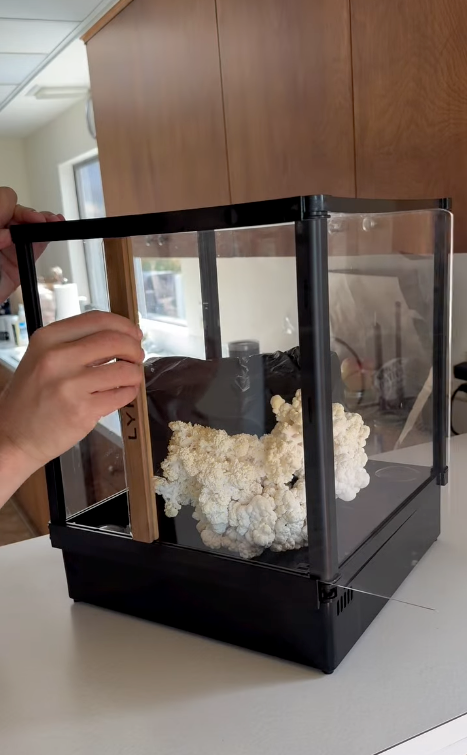
Wenn Sie regelmäßig mit Pilzen kochen, bauen Sie Ihre eigenen an. Die Lykyn Smart Mushroom Grow Box regelt Luftfeuchtigkeit, Luftzirkulation und Beleuchtung automatisch. Etwa 5 Tage von der Einrichtung bis zur ersten Ernte, etwa 1,25 Pfund Ertrag pro Block, über 28 unterstützte Arten. Frisch auf Abruf, jede Woche, kein Schleim.
Wenn Sie Pilze für Ihr tägliches Wohlbefinden verwenden, stellen Sie den Ergänzungsanteil auf haltbare Formen um: Tinkturen, Pulver oder Kapseln. Die Frischeuhr gilt hier einfach nicht.




Aktie:
Wie man jedes Mal das perfekte Pilzrisotto zubereitet
Wie man mit Pilzrezepten tolles Essen zubereitet (das auch wirklich schmeckt)