


Der Klapperschwamm (Grifola frondosa), auch als „Henne des Waldes“ oder „Tanzender Pilz“ bekannt, ist der begehrteste Gourmetpilz in der japanischen und italienischen Küche. Seine gekräuselten, fächerförmigen Büschel werden unvergleichlich knusprig, der Geschmack ist erdig und leicht pfeffrig, und die Textur wird in einer einzigen heißen Pfanne innen zart und außen wunderbar knusprig. Dieser Ratgeber erklärt, was Klapperschwamm ist, wie man ihn vorbereitet, stellt fünf von Köchen getestete Rezepte vor (geröstet, Tempura, sautiert, Risotto und Suppe), verrät die entscheidenden Kochtipps und zeigt, wie du ihn selbst anbauen kannst.
Was ist Klapperschwamm (Grifola frondosa)?
Klapperschwamm ist ein Porling, der in großen rosettenförmigen Büscheln am Fuß von Eichen wächst. Seine Lappen überlappen sich wie die Federn einer Henne – daher der gebräuchliche Name „Henne des Waldes“. Ein ausgewachsener wild wachsender Büschel kann 5 bis 50 Pfund wiegen. Der japanische Name „Maitake“ bedeutet „Tanzender Pilz“ und geht auf eine Legende aus dem 17. Jahrhundert zurück: Wer beim Sammeln einen fand, soll vor Freude getanzt haben, weil der Pilz sein Gewicht in Silber wert war.

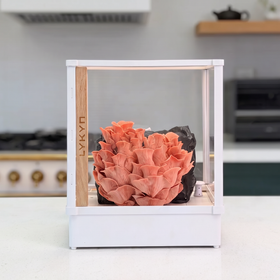
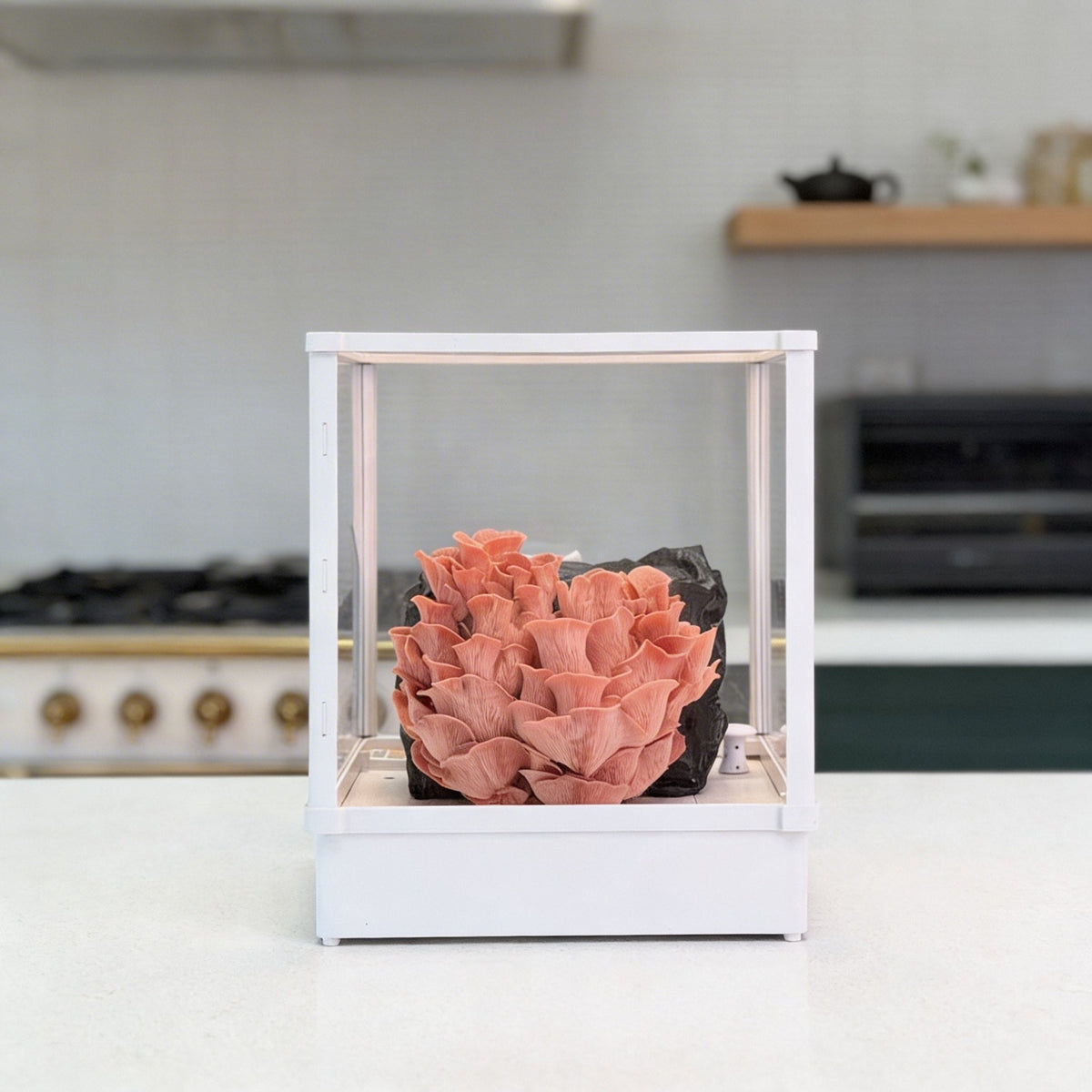
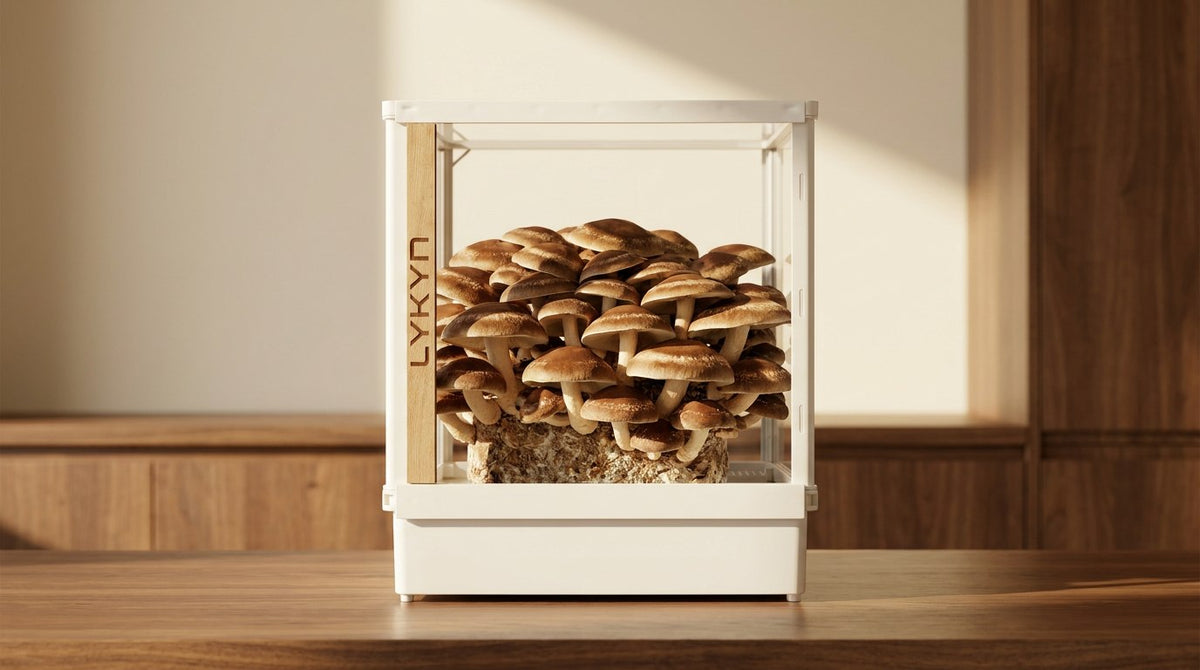
Smart Chamber. Bone White Single
- 2,8-L-Tank, automatische Luftfeuchtigkeit von 90 %
- App-gesteuert, sofort einsatzbereit
- Kapazität für Blöcke bis 6 lb, auf Lager

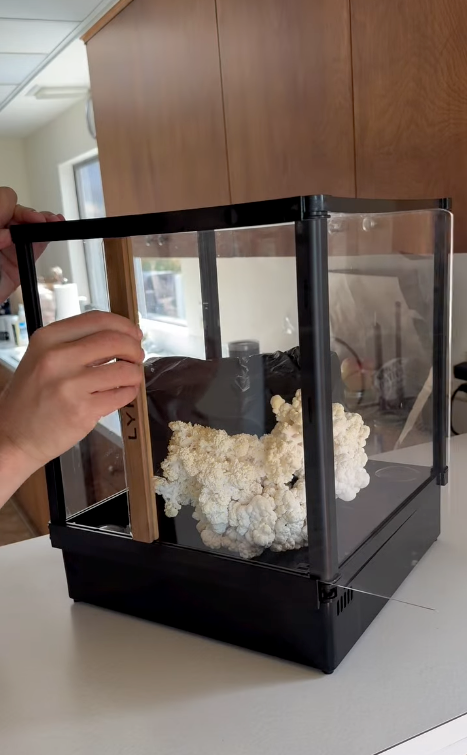
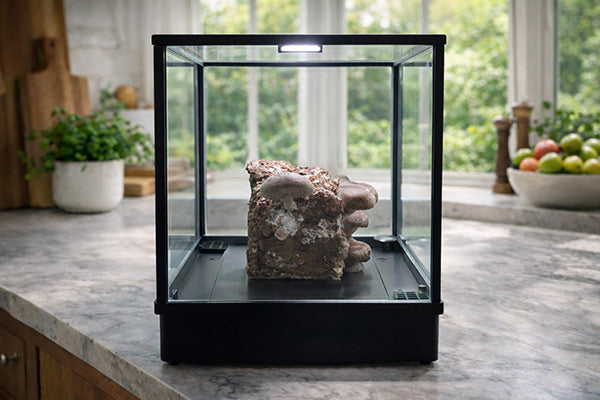
Smart Chamber. Obsidian Black Single
- Gleiche Ausstattung wie Bone White
- Hochwertige matte schwarze Oberfläche
- Passt zu jeder Küchenfarbpalette

Black Oyster Zuchtset
- Auf Lager
- Erste Primordien nach 3–5 Tagen
- Ersetzt einen Zuchtzyklus in der Kammer
Sein Geschmack macht Klapperschwamm so besonders. Er ist erdig, waldig und leicht pfeffrig, mit einer dezenten nussigen Note im Abgang. Anders als manche weicheren Pilze wird er beim Garen nicht schleimig. Die gekräuselten Ränder werden in heißem Öl fast so knusprig wie Prosciutto, während der dickere Fuß zart und fleischig bleibt.
Das sollten Hobbyköche wissen:
- Die Fransen sind das Beste. Die gekräuselten Außenränder der einzelnen Lappen werden am knusprigsten. Teile oder schneide den Büschel so, dass jedes Stück einen intakten gekräuselten Rand behält.
- Er muss nicht gewaschen werden. Kultivierter Klapperschwamm wird in kontrollierter Umgebung auf Sägemehlsubstrat gezüchtet. Eine trockene Bürste genügt. Wild wachsender Klapperschwamm muss nur bei sichtbarer Verschmutzung kurz abgespült und anschließend gründlich trocken getupft werden.
- Er ist schnell gar. Ein 1/2 Zoll dickes Stück braucht bei 425 °F 12 bis 15 Minuten im Ofen. Sautierte Stücke sind nach 5 bis 7 Minuten fertig.
Gesammelter oder kultivierter Klapperschwamm
Wild wachsender Klapperschwamm erscheint im Spätsommer und Frühherbst, vor allem an Eichenstümpfen und abgestorbenen Eichenwurzeln im Osten der USA, in Osteuropa und in Japan. Gesammelte Pilze haben einen besonders intensiven Geschmack, sind aber saisonal, oft schmutzig und erfordern fundierte Kenntnisse zur Bestimmung. Kultivierter Klapperschwamm wird das ganze Jahr über auf angereicherten Sägemehlblöcken gezüchtet und ist in Feinkostläden und auf Bauernmärkten für 12 bis 20 Dollar pro Pfund erhältlich.
Für Hobbyköche ist kultivierter Klapperschwamm in 95 Prozent der Fälle die richtige Wahl. Sein Geschmack ist zu 90 bis 95 Prozent so intensiv, der Büschel ist sauber und das Angebot konstant. Mit den Zuchtkammern von Lykyn kannst du Klapperschwamm zu Hause auf bereits durchwachsenen Blöcken anbauen. So erntest du alle 60 bis 75 Tage 1 bis 1,5 Pfund frische Pilze – zu einem Bruchteil des Ladenpreises. Mehr dazu weiter unten.
Klapperschwamm vor dem Kochen vorbereiten
Die Vorbereitung macht den Unterschied zwischen einem gelungenen und einem matschigen Klapperschwammgericht. Drei Regeln:
- Nur waschen, wenn es sein muss. Mit einer trockenen Bürste lässt sich Staub entfernen. Wasser bleibt in den Fransen hängen und dämpft den Pilz in der Pfanne, statt ihn knusprig zu braten. Bei schmutzigem Wildpilz kurz unter kaltem Wasser abspülen, gründlich mit Küchenpapier trocken tupfen und 15 Minuten auf einem Gitter lufttrocknen lassen.
- Reißen, nicht schneiden. Klapperschwamm hat eine natürliche Trennlinie an der Stelle, an der jeder Lappen in den Fuß übergeht. Reiße ihn entlang dieser Linie auseinander, damit jedes Stück seinen gekräuselten Rand behält. Beim Schneiden mit dem Messer werden die Fransen abgetrennt – und damit geht der knusprigste Teil verloren.
- Nur den holzigen Fußansatz entfernen. Der unterste Teil des Büschels, an dem er am Substrat oder Baum befestigt war, kann zäh sein. Schneide die untersten 1/2 Zoll ab und entsorge sie. Der Rest, einschließlich des dickeren Fußes, ist essbar.
Für einen ausführlicheren Vergleich von Klapperschwamm und Seitlingen (und warum sie unterschiedlich garen) zeigt der bestehende Lykyn-Ratgeber zu Klapperschwamm und Seitlingen Textur, Geschmack und Substrat im direkten Vergleich.
Die 5 besten Rezepte mit Klapperschwamm
1. Gerösteter Klapperschwamm mit Knoblauchbutter (das absolute Highlight)

Dieses Rezept sollte jeder Hobbykoch zuerst meistern. In 25 Minuten fertig, ein Backblech, ein Ergebnis wie im Restaurant. Die Fransen werden knusprig und filigran, der Fuß bleibt zart und die Knoblauchbutter sammelt sich in jeder Vertiefung.
Zutaten (für 4 Portionen)
- 1 Pfund frischer Klapperschwamm (Grifola frondosa), in 2 bis 3 Zoll große Stücke gerissen
- 4 Esslöffel ungesalzene Butter, geschmolzen
- 2 Esslöffel Olivenöl
- 4 Knoblauchzehen, fein gehackt
- 1 Esslöffel frische Thymianblättchen
- 1 Teelöffel flockiges Meersalz
- 1/2 Teelöffel grob gemahlener schwarzer Pfeffer
- Zitronenspalten zum Servieren
- 2 Esslöffel gehackte frische Petersilie
Zubereitung
- Den Backofen auf 425 °F vorheizen. Währenddessen ein schweres Backblech im Ofen erhitzen. Ein heißes Blech macht den Unterschied zwischen Rösten und Dämpfen.
- Den Klapperschwamm in 2 bis 3 Zoll große Stücke reißen und darauf achten, dass die gekräuselten Ränder intakt bleiben. In eine große Schüssel geben.
- In einer kleinen Schüssel die geschmolzene Butter mit Olivenöl, gehacktem Knoblauch, Thymian, Salz und Pfeffer verquirlen. Über die Pilze gießen und alles gut vermengen, sodass jedes Stück überzogen ist.
- Das heiße Backblech vorsichtig aus dem Ofen nehmen. Die Pilze in einer Lage darauf verteilen, die gekräuselten Ränder nach oben. Nicht zu dicht legen. Bei Bedarf zwei Bleche verwenden.
- 18 bis 22 Minuten rösten und nach der Hälfte der Zeit einmal wenden. Die Pilze sind fertig, wenn die Fransen tief goldbraun und knusprig und die Füße zart sind.
- Auf einen vorgewärmten Teller geben. Frische Zitrone darüberpressen und mit gehackter Petersilie bestreuen. Sofort servieren.
Der ausführliche Ratgeber zu dieser Garmethode, der bestehende Beitrag über gerösteten Klapperschwamm, behandelt die Ofentemperatur und die Wahl des Backblechs im Detail.
2. Klapperschwamm-Tempura (goldbraun, filigran, unwiderstehlich)

Klapperschwamm-Tempura ist das typische Pilzgericht vieler japanischer Restaurants – und das aus gutem Grund. Die gekräuselten Ränder werden zu zarter, knuspriger Spitze, der Teig ist federleicht und der Kontrast zwischen heißer, knuspriger Hülle und zartem Inneren kommt knusprig frittiertem Hähnchen unter den Gemüsen am nächsten.
Zutaten (für 4 Portionen als Vorspeise)
- 8 Unzen frischer Klapperschwamm, in 2 Zoll große Stücke gerissen
- 1 Tasse Weizenmehl, plus 2 Esslöffel zum Wenden
- 1 Tasse eiskaltes Mineralwasser mit Kohlensäure (oder Sodawasser)
- 1 großes Eigelb
- 1/2 Teelöffel Salz
- Neutrales Frittieröl (Raps-, Traubenkern- oder Reiskleieöl), etwa 4 Tassen
- Dip: 1/4 Tasse Sojasauce, 2 Esslöffel Mirin, 1 Teelöffel frisch geriebener Ingwer, 1/4 Tasse Dashi (oder Wasser)
- Zitronenspalten zum Servieren
Zubereitung
- In einem tiefen, schweren Topf 2 Zoll Öl auf 350 °F erhitzen. Ein Thermometer verwenden. Bei Tempura ist die genaue Temperatur wichtiger als jede andere Variable.
- Die Zutaten für den Dip in einer kleinen Schüssel verrühren und beiseitestellen.
- In einer gekühlten Schüssel das Eigelb in das Eiswasser einrühren, dann 1 Tasse Mehl und das Salz hinzufügen. Nur 4 bis 5 Mal umrühren. Der Teig soll klumpig sein. Durch zu starkes Rühren bildet sich Gluten und das Tempura wird zäh.
- Jedes Klapperschwammstück in den 2 Esslöffeln trockenem Mehl wenden, dann in den Teig tauchen und überschüssigen Teig abtropfen lassen.
- Portionsweise jeweils 3 bis 4 Stück frittieren. Die Fransen entfalten sich im Öl auf wunderschöne Weise. 90 Sekunden bis 2 Minuten frittieren, bis sie hellgolden sind (nicht tief goldbraun – die Resthitze gart sie noch weiter).
- Auf einem Gitter abtropfen lassen (nicht auf Küchenpapier, das Dampf einschließt und die Kruste aufweicht). Im heißen Zustand mit flockigem Salz bestreuen.
- Sofort mit dem Dip und Zitronenspalten servieren.
Lykyn-Tipp: Beim Tempura kommt es auf den richtigen Zeitpunkt an. Stelle sicher, dass das Öl die richtige Temperatur hat, der Teig gerade erst angerührt ist und ein sauberes Gitter bereitsteht, bevor du mit dem Frittieren beginnst. Bereite den Teig nicht im Voraus zu. Weitere Hinweise zur Technik findest du im Ratgeber zu frittiertem Klapperschwamm.
3. Sautierter Klapperschwamm mit Butter und Knoblauch (in 5 Minuten fertig)
Das schnellste Rezept mit Klapperschwamm in deinem Repertoire. Heiße Pfanne, Butter, Knoblauch – in 5 bis 7 Minuten fertig. Diese Variante eignet sich als Beilage, auf geröstetem Brot, unter Pasta gemischt oder zu Steak serviert.
Zutaten (für 2 Portionen als Beilage)
- 8 Unzen frischer Klapperschwamm, in mundgerechte Stücke gerissen
- 3 Esslöffel ungesalzene Butter
- 2 Knoblauchzehen, angedrückt und ganz
- 2 Zweige frischer Thymian
- 1 Teelöffel Sojasauce (für mehr Umami)
- Salz und Pfeffer nach Geschmack
- Frisch gehackte Petersilie zum Garnieren
Zubereitung
- Eine 10-Zoll-Pfanne bei mittelhoher Hitze stark erhitzen. 2 Esslöffel Butter hineingeben und aufschäumen lassen.
- Die Pilze in einer Lage hineingeben. Während der ersten 90 Sekunden nicht umrühren, damit sie bräunen können.
- Den angedrückten Knoblauch und Thymian hinzufügen. Umrühren und alles weitere 2 bis 3 Minuten garen, bis die Pilze stellenweise tief goldbraun und rundum zart sind.
- Den restlichen 1 Esslöffel Butter und die Sojasauce hinzugeben. Alles gut vermengen. Die Sojasauce sorgt für Umami, ohne dem Gericht einen asiatischen Geschmack zu verleihen.
- Mit Salz und Pfeffer würzen und mit Petersilie bestreuen. Sofort auf Toast, zu gegrilltem Fleisch oder unter heiße Pasta gemischt servieren.
4. Klapperschwamm-Risotto (italienische Art, cremig und herzhaft)

In Norditalien ist Klapperschwamm-Risotto ein herbstliches Wohlfühlgericht. Die Pilze geben ihr Aroma an die Brühe ab, die sich tief bernsteinfarben färbt, und der Reis erhält eine herzhafte Tiefe, die kein anderer Pilz ganz auf dieselbe Weise erreicht.
Zutaten (für 4 Portionen)
- 1 Pfund frischer Klapperschwamm, in kleine Stücke gerissen und aufgeteilt
- 1 1/2 Tassen Carnaroli- oder Arborioreis
- 6 Tassen warme Gemüse- oder Hühnerbrühe
- 1 kleine gelbe Zwiebel, fein gewürfelt
- 3 Esslöffel Olivenöl
- 2 Esslöffel ungesalzene Butter, aufgeteilt
- 1/2 Tasse trockener Weißwein
- 1/2 Tasse frisch geriebener Parmigiano Reggiano, plus mehr zum Servieren
- 2 Knoblauchzehen, fein gehackt
- Salz und Pfeffer nach Geschmack
- Frische Petersilie zum Garnieren
Zubereitung
- 4 Unzen Klapperschwamm zum Garnieren beiseitelegen. Die restlichen 12 Unzen grob hacken.
- In einem großen, schweren Topf 2 Esslöffel Olivenöl bei mittelhoher Hitze erhitzen. Die gehackten Pilze 5 bis 7 Minuten anbraten, bis sie tief goldbraun sind. Herausnehmen und beiseitestellen.
- Die Hitze auf mittlere Stufe reduzieren. Das übrige Olivenöl, die Zwiebel und 1 Esslöffel Butter hinzugeben. 4 Minuten weich dünsten.
- Knoblauch und Reis hinzufügen. 2 Minuten unter ständigem Rühren leicht anrösten.
- Den Weißwein dazugießen und rühren, bis er vollständig aufgenommen ist.
- Die warme Brühe schöpfkellenweise unter häufigem Rühren hinzufügen. Mit der nächsten Kelle jeweils warten, bis die Flüssigkeit zum größten Teil aufgenommen ist. Nach 16 bis 18 Minuten sollte der Reis al dente sein.
- Die gegarten Pilze, den Parmigiano und den restlichen 1 Esslöffel Butter einrühren. Das Risotto sollte locker und cremig sein. Abschmecken und bei Bedarf salzen.
- Während das Risotto ruht, die beiseitegelegten 4 Unzen Klapperschwamm in einer separaten Pfanne knusprig und goldbraun sautieren.
- Das Risotto auf Tellern anrichten. Mit dem knusprigen Klapperschwamm, zusätzlichem Parmigiano und frischer Petersilie garnieren.
5. Klapperschwammsuppe (samtig und herzhaft)
Eine klare, brühenartige Suppe, bei der der Geschmack des Klapperschwamms im Mittelpunkt steht. Zwanzig Minuten aktive Zubereitungszeit, mit einem tiefen Aroma wie im Restaurant. Als Vorspeise oder leichtes Abendessen mit knusprigem Brot servieren.
Zutaten (für 4 Portionen)

Starte deine Pilzzucht
Smarte Pilzzuchtkammer
Sofort einsatzbereite smarte Zuchtkammer mit optimal abgestimmter Luftfeuchtigkeit, Beleuchtung und Luftzirkulation für jede Pilzart. Anfänger ernten ihre erste Pilzwelle in wenigen Tagen statt Monaten.
In den Warenkorb – $299- 12 Unzen frischer Klapperschwamm, in kleine Stücke gerissen
- 1 kleine Stange Lauch, geputzt und in dünne Scheiben geschnitten (nur den weißen und hellgrünen Teil verwenden)
- 2 Schalotten, fein gewürfelt
- 4 Knoblauchzehen, fein gehackt
- 3 Esslöffel ungesalzene Butter
- 1 Esslöffel Olivenöl
- 6 Tassen Gemüse- oder Hühnerbrühe
- 1/2 Tasse trockener Sherry oder trockener Weißwein
- 1 Zweig frischer Thymian
- 1/2 Tasse Schlagsahne (optional, für eine reichhaltigere Konsistenz)
- Salz und Pfeffer
- Gehackter Schnittlauch zum Garnieren
Zubereitung
- Butter und Olivenöl in einem schweren Topf bei mittelhoher Hitze erhitzen. Zwei Drittel der Pilze hineingeben und 6 bis 7 Minuten kräftig anbraten, bis sie tief goldbraun sind. Herausnehmen und beiseitestellen.
- Die Hitze auf mittlere Stufe reduzieren. Lauch, Schalotten und Knoblauch hinzufügen. 5 Minuten garen, bis sie weich sind und duften.
- Die angebratenen Pilze zurück in den Topf geben. Den Sherry hinzufügen und 1 Minute einkochen lassen.
- Brühe und Thymian hinzufügen. Zum Köcheln bringen und 12 bis 15 Minuten garen.
- Optional: Die Hälfte der Suppe glatt pürieren und wieder in den Topf geben, damit sie samtiger wird. Für eine rustikalere Suppe einfach stückig lassen.
- Falls verwendet, die Sahne einrühren. Mit Salz und Pfeffer abschmecken.
- Währenddessen das verbleibende Drittel der Pilze in Butter knusprig anbraten.
- Die Suppe in Schalen schöpfen. Mit den knusprigen Maitake-Pilzen und reichlich frischem Schnittlauch garnieren. Mit knusprigem Brot servieren.
Kochtipps, die wirklich wichtig sind
Die meisten online verfügbaren Maitake-Rezepte lassen genau die Details aus, die darüber entscheiden, ob das Gericht am Ende gelingt oder matschig wird. Diese fünf Tipps machen den größten Unterschied.
1. Nicht zu lange garen. Bei der richtigen Temperatur werden die krausen Ränder in 6 bis 8 Minuten knusprig. Danach verbrennen sie. Maitake gart aufgrund seines großen Verhältnisses von Oberfläche zu Volumen schneller als Champignons oder Portobello-Pilze.
2. Von Anfang an hohe Hitze verwenden. Mittlere bis hohe oder hohe Hitze, niemals niedrige. Maitake besteht zu etwa 90 Prozent aus Wasser. Du brauchst starke Hitze, um die Feuchtigkeit schnell auszutreiben – sonst schmort der Pilz in seiner eigenen Flüssigkeit.
3. Die Pfanne nicht überfüllen. Eine flach verteilte Maitake-Rosette bräunt. Eine hoch aufgetürmte Rosette dämpft. Nimm lieber zwei Pfannen, statt eine einzige zu voll zu beladen.
4. Zerteilen, nicht schneiden. Die natürlichen Bruchlinien des Maitake verlaufen zwischen den Lappen. Wenn du ihn entlang dieser Linien auseinanderziehst, bleiben die krausen Ränder intakt. Ein Messer zerdrückt sie, und du verlierst den knusprigsten Teil des Pilzes.
5. Erst am Ende salzen, nicht zu Beginn. Salz entzieht rohen Pilzen Wasser und verlangsamt dadurch das Bräunen. Gib das Salz in den letzten 60 Sekunden der Garzeit oder direkt auf dem Teller hinzu.
Wo du Maitake findest oder selbst anbauen kannst
Frischen Maitake findet man nicht so leicht wie Supermarktpilze. Whole Foods führt ihn im Herbst saisonal. Asiatische Lebensmittelgeschäfte haben ihn ganzjährig für 12 bis 18 Dollar pro Pfund im Sortiment. Auf Bauernmärkten im Osten der USA ist er im September und Oktober erhältlich.
Wenn du mehr als zwei- oder dreimal im Jahr Maitake zubereitest, spricht die Rechnung für eine Möglichkeit: selbst anbauen. Die intelligente Pilzzuchtbox von Lykyn ist eine automatisierte Kammer, die die Luftfeuchtigkeit bei 85 bis 95 Prozent hält und den Frischluftaustausch zeitgesteuert regelt – genau das, was Grifola frondosa braucht, um seine charakteristischen krausen Lappen auszubilden. Maitake wächst langsamer als Austernseitlinge oder rosa Austernseitlinge (60 bis 75 Tage von der Beimpfung bis zur ersten Ernte gegenüber 14 bis 21 Tagen bei Austernseitlingen), doch ein einzelner Substratblock liefert typischerweise 1 bis 1,5 Pfund frische Pilze.
Die automatisierte Fruchtungskammer eignet sich für jeden bereits durchwachsenen Maitake-Block eines seriösen Anbieters. Der Vorteil gegenüber einem manuellen Aufbau ist spürbar: kein tägliches Besprühen, gleichmäßige Luftfeuchtigkeit und keine Verunreinigung durch Sporen aus der Umgebungsluft. Frisch geernteter Maitake hat merklich festeres Fleisch als Ware aus dem Laden (die oft schon 3 bis 5 Tage gekühlt gelagert wurde). Diese Festigkeit sorgt direkt für bessere Röstaromen, knusprigere Tempura und ein cremigeres, kräftigeres Risotto.
Noch ein Hinweis zur zweiten intelligenten Pilzzuchtbox von Lykyn: Wenn du Maitake und eine schneller wachsende Art wie rosa oder blaue Austernseitlinge abwechselnd anbaust, kannst du dir das ganze Jahr über Gourmetpilze zu Hause ziehen – für weniger als den Preis einer einzigen Premium-Maitake-Rosette im Supermarkt.
Nährwerte und gesundheitliche Vorteile von Maitake
Eine Portion Maitake von 100 Gramm liefert etwa 31 Kalorien, 1,9 Gramm Eiweiß, 7 Gramm Kohlenhydrate und 2,7 Gramm Ballaststoffe bei einem vernachlässigbaren Fettgehalt. Laut den Einträgen zu Grifola frondosa in der USDA FoodData Central zählt Maitake zu den besten natürlichen Vitamin-D2-Quellen unter den kultivierten Pilzen – besonders, wenn er nach der Ernte kurz dem Sonnenlicht ausgesetzt wird.
Die Art wurde hinsichtlich ihres Beta-Glucan-Gehalts untersucht, insbesondere eines bestimmten Polysaccharids namens Beta-Glucan-D-Fraktion, das Gegenstand dutzender von Fachkollegen begutachteter Studien zur Unterstützung des Immunsystems ist. Ein 2013 von der National Library of Medicine der NIH veröffentlichter Übersichtsartikel fasste die Forschung zur D-Fraktion des Maitake und zur Aktivität von Immunzellen zusammen. Wie bei allen Diskussionen über die gesundheitlichen Wirkungen von Maitake gilt: Nichts davon ersetzt ärztlichen Rat, und Lykyn erhebt keine medizinischen Ansprüche für seine Zuchtsets. Die Forschung zu den gesundheitlichen Vorteilen von Maitake ist umfangreich genug, um sie ernst zu nehmen – und dennoch ist die Küche der zuverlässigste Ort, um diese Pilzart zu genießen.
Ein 2018 in der Fachzeitschrift Mycologia veröffentlichter Artikel behandelte die Anbauparameter von Grifola frondosa und stellte fest: „Gezüchteter Maitake behält das Polysaccharidprofil wild wachsender Exemplare bei, wenn er auf mit Hartholz angereichertem Substrat kultiviert wird.“ Anders gesagt: Maitake aus dem eigenen Anbau hat dieselbe Nährstoffdichte wie wild gesammelter Maitake – was nicht für jede kultivierte Art gilt.
Häufig gestellte Fragen
Wie schmecken Maitake-Pilze?
Maitake schmeckt erdig, waldig und leicht pfeffrig, mit einer dezent nussigen Note. Die krausen Ränder werden beim Anbraten ausgesprochen knusprig, während der dickere Strunk zart und fleischig bleibt. Im Vergleich zu Champignons oder Cremini-Pilzen schmeckt Maitake kräftiger und komplexer, mit einer Fülle, die viele Köche irgendwo zwischen Steinpilz und Pfifferling einordnen. Durch Hitze intensiviert sich das Aroma, weshalb Zubereitungsarten wie Rösten, Anbraten oder Tempura besonders beliebt sind.
Wie bereitet man Maitake-Pilze zu?
Die vier besten Zubereitungsarten für Maitake sind Rösten, scharfes Anbraten in der Pfanne, Frittieren als Tempura und Schmoren in Risotto oder Suppe. Bei jeder Methode kommt es vor allem auf hohe Hitze und darauf an, die Pfanne nicht zu überfüllen. Zerteile die Rosette in mundgerechte Stücke, gare sie in einer einzigen Schicht bei mittlerer bis hoher oder hoher Hitze und bewege sie in den ersten 90 Sekunden nicht. Die gesamte Garzeit reicht von 5 Minuten (in der Pfanne angebraten) bis zu 22 Minuten (im Ofen geröstet). Immer erst am Ende salzen, nicht zu Beginn.
Ist Maitake dasselbe wie Hen of the Woods?
Ja. Maitake und Hen of the Woods sind zwei gebräuchliche Namen für dieselbe Art, Grifola frondosa. Maitake ist der japanische Name und bedeutet „tanzender Pilz“, während Hen of the Woods der englische Name ist. Er entstand, weil die überlappenden, krausen Lappen an die Federn einer Henne erinnern. In manchen amerikanischen Bestimmungsbüchern für Wildpilze findest du den Pilz auch unter den Namen „Ram's Head“ oder „Sheep's Head“. Alle diese Namen bezeichnen dieselbe Art.
Muss man Maitake-Pilze vor dem Kochen waschen?
Kultivierter Maitake muss nicht gewaschen werden. Die Pilze wachsen in einer kontrollierten Kammer auf sterilem Sägemehlsubstrat; Staub lässt sich mit einer kurzen Bürstenbewegung oder einem trockenen Papiertuch entfernen. Beim Waschen unter Wasser bleibt Flüssigkeit in den krausen Rändern hängen. In der Pfanne werden sie dann gedämpft, statt knusprig zu werden. Wenn dein Maitake selbst gesammelt wurde und sichtbar schmutzig ist, spüle ihn kurz unter kaltem Wasser ab, tupfe ihn dann mit Papiertüchern kräftig trocken und lass ihn vor dem Garen 15 Minuten auf einem Gitter an der Luft trocknen.
Wie lagert man frische Maitake-Pilze?
Frischer Maitake hält sich im Kühlschrank 7 bis 10 Tage. Lege die ungewaschene Rosette in eine Papiertüte (niemals in Plastik, da sich darin Feuchtigkeit staut und der Pilz verdirbt) auf ein mittleres Fach. Wasche ihn erst kurz vor dem Garen. Für eine längere Lagerung lässt sich Maitake nach kurzem Anbraten gut einfrieren: Gare ihn 2 Minuten in Butter, lass ihn vollständig abkühlen und bewahre ihn bis zu 3 Monate in luftdichten Behältern auf. Getrockneter Maitake hält sich in einem verschlossenen Glas an einem kühlen, dunklen Ort praktisch unbegrenzt.
Kann man Maitake-Pilze roh essen?
Technisch gesehen ja, aber es ist nicht empfehlenswert. Roher Maitake ist zäh, fade und etwas kaubar. Durch Erhitzen entfalten sich die herzhaften Umami-Verbindungen und die Konsistenz wird weicher, ohne schleimig zu werden. Maitake enthält außerdem Spuren von Chitin in seinen Zellwänden, das nach dem Garen leichter verdaulich ist. Maitake sollte immer vor dem Verzehr gegart werden, idealerweise bei hoher Hitze, damit die knusprigen, krausen Ränder entstehen, die diesen Pilz so unverwechselbar machen.
Sind Maitake-Pilze gesund?
Ja. Maitake ist kalorienarm (etwa 31 Kalorien pro 100 Gramm), reich an Ballaststoffen und B-Vitaminen und enthält Beta-Glucane – Polysaccharide, die seit Jahrzehnten im Zusammenhang mit dem Immunsystem erforscht werden. Die Art zählt außerdem zu den besten natürlichen Vitamin-D2-Quellen unter den kultivierten Pilzen, besonders wenn sie nach der Ernte kurz dem Sonnenlicht ausgesetzt wird. Maitake passt in vegane, ketogene und glutenfreie Ernährungsweisen sowie in die meisten Ernährungskonzepte mit möglichst wenig stark verarbeiteten Lebensmitteln. Lykyn bietet keine medizinische Beratung an. Bei konkreten Gesundheitsfragen solltest du dich an medizinisches Fachpersonal wenden.
Kann man Maitake-Pilze zu Hause anbauen?
Ja. Maitake (Grifola frondosa) wächst gut auf bereits durchwachsenen Sägemehlblöcken mit Hartholzzusatz, besonders auf Substrat auf Eichenbasis. Die Art benötigt 85 bis 95 Prozent Luftfeuchtigkeit, alle 4 bis 6 Stunden Frischluftaustausch und Temperaturen zwischen 55 und 75 Grad Fahrenheit. Eine automatisierte Kammer wie die intelligente Pilzzuchtbox von Lykyn sorgt für diese Bedingungen, ohne dass täglich von Hand gesprüht werden muss. Maitake braucht länger als Austernseitlinge (60 bis 75 Tage von der Beimpfung anstelle von 14 bis 21 Tagen), doch der Ertrag pro Block liegt typischerweise bei 1 bis 1,5 Pfund frischer Pilze.
Abschließende Tipps
Ein großartiges Maitake-Gericht braucht keine exotischen Techniken. Entscheidend sind drei Dinge: hohe Hitze, eine einzige Schicht und den Pilz nicht bewegen. Sobald dir die geröstete Variante gelingt, lassen sich die anderen vier Rezepte mühelos umsetzen. Tempura für eine Feier, Risotto für einen Abend zu zweit, Suppe für einen kalten Abend und angebratener Maitake als Beilage unter der Woche, die zu allem passt.
Wenn du mehr als ein paar Mal im Jahr zu Maitake greifst, lohnt sich der Anbau zu Hause schnell. Die intelligente Pilzzuchtbox von Lykyn nimmt dir die manuelle Arbeit ab und reduziert das Risiko einer Verunreinigung im Anbauzyklus – zwei Herausforderungen, mit denen viele Hobbyzüchter bei dieser langsamer wachsenden Art zu kämpfen haben. Zwei Ernten pro Jahr machen die Kosten für eine hochwertige Kammer mehr als wett.
Quellen
- USDA FoodData Central, Nährwertprofil von Grifola frondosa
- National Library of Medicine der NIH, Übersichtsarbeit zur D-Fraktion von Maitake (2013)
- Mycologia, 2018, Domestizierung von Grifola frondosa und Polysaccharidprofil




Aktie:
Austernpilzsteak: Der vegane Cut, der wie Jakobsmuschel schmeckt
Austernpilzsteak: Der vegane Cut, der wie Jakobsmuschel schmeckt