


Austernpilze: Ein praktischer Leitfaden
Austernpilze (Pleurotus-Arten) sind schnell wachsende, anfängerfreundliche Speisepilze. Sie wachsen in dichten Büscheln mit einem weichen Hut und einem milden, leicht meeresfrüchteartigen Geschmack. Die gängigsten Sorten, die zu Hause angebaut werden, sind Lungenseitling, blauer Austernpilz, goldener Austernpilz, rosa Austernpilz und Kräuterseitling, und jede gedeiht bei einer etwas anderen Temperatur. Dieser Leitfaden behandelt, was Austernpilze sind, wie sie wachsen, wie sie schmecken, was sie kosten und wie man sie selbst kocht und anbaut.
Kurzdefinition
Austernpilze sind essbare Pilze der Gattung Pleurotus. Sie wachsen in regalartigen Büscheln auf totem oder sterbendem Hartholz, reifen in 5 bis 10 Tagen in Innenräumen und enthalten Protein, B-Vitamine, Beta-Glucane und Ergothionein. Sie werden weltweit in großem Umfang angebaut, da sie eine breite Palette von Substraten und Temperaturen akzeptieren.

Was Austernpilze sind
Austernpilze ist der gebräuchliche Name für Pilze der Gattung Pleurotus, einer kleinen, aber kommerziell wichtigen Gruppe saprotropher Pilze, die totes Holz zersetzen. Der Name kommt von der Form, die Hüte fächern sich wie eine geschälte Auster auf, nicht von einem Meeresfrüchteanteil. Wilde Austernpilze wachsen natürlich auf toten oder sterbenden Hartholzbäumen in ganz Nordamerika, Europa und Asien und bilden überlappende Regale auf Baumstämmen und Stümpfen.
Was sie für Heimgärtner so besonders macht, ist ihre Fehlerverzeihlichkeit. Austernpilze akzeptieren fast jedes zellulosereiche Substrat, einschließlich Stroh, Kaffeesatz, Hartholzspäne und Papier. Sie besiedeln schnell, fruchten in dichten Büscheln und können mehrere Ernten aus einem einzigen Block hervorbringen. Wenn Sie neu im Pilzanbau sind, sind Austernpilze die Art, die die meisten Züchter für den Anfang empfehlen, und sie sind auch am einfachsten in einer kontrollierten Kammer anzubauen.
Arten von Austernpilzen
Es gibt verschiedene Sorten von Austernpilzen, jede mit einzigartiger Farbe, Geschmack und Wachstumsanforderungen. Das Verständnis dieser Unterschiede hilft Ihnen, die richtige Sorte für Ihr Klima, Ihre Küche und Ihr Können auszuwählen.
Lungenseitling (Pleurotus ostreatus)
Der Lungenseitling ist die häufigste und am weitesten verbreitete Sorte. Er hat graublaue bis weiße Kappen und ein robustes Wachstum und gedeiht bei kühleren Temperaturen zwischen 7 und 18 Grad Celsius. Lungenseitlinge haben einen milden Geschmack und eine fleischige Textur, was sie in der Küche äußerst vielseitig macht und die sicherste erste Wahl ist, wenn Sie Ihre Anbauanlage noch einstellen.
Goldener Austernpilz (Pleurotus citrinopileatus)
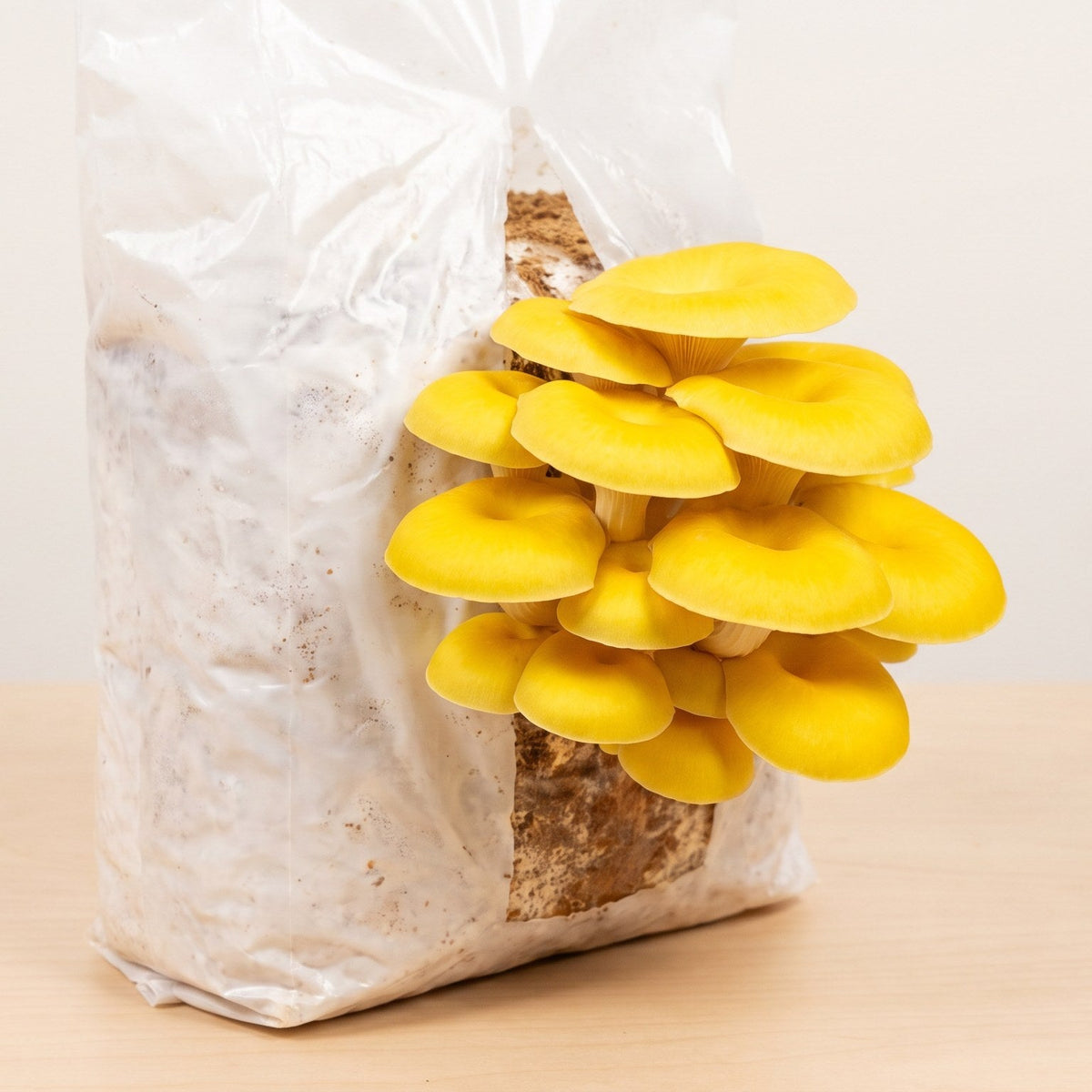
Mit ihren leuchtend gelben Kappen und ihrem zarten, gekräuselten Aussehen verleihen goldene Austernpilze jedem Gericht ein markantes visuelles Element. Sie bevorzugen wärmere Temperaturen um 21 bis 29 Grad Celsius und bieten ein komplexeres Geschmacksprofil mit nussigen, zitrusartigen Noten. Sie sind besonders in der asiatischen Küche beliebt und bei Fotografen sehr geschätzt, da die Farbe sowohl bei natürlichem als auch bei warmem Küchenlicht gut zur Geltung kommt.
Rosa Austernpilz (Pleurotus djamor)
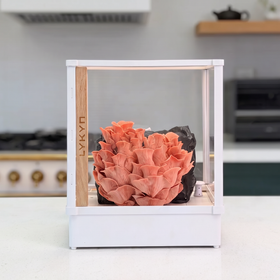
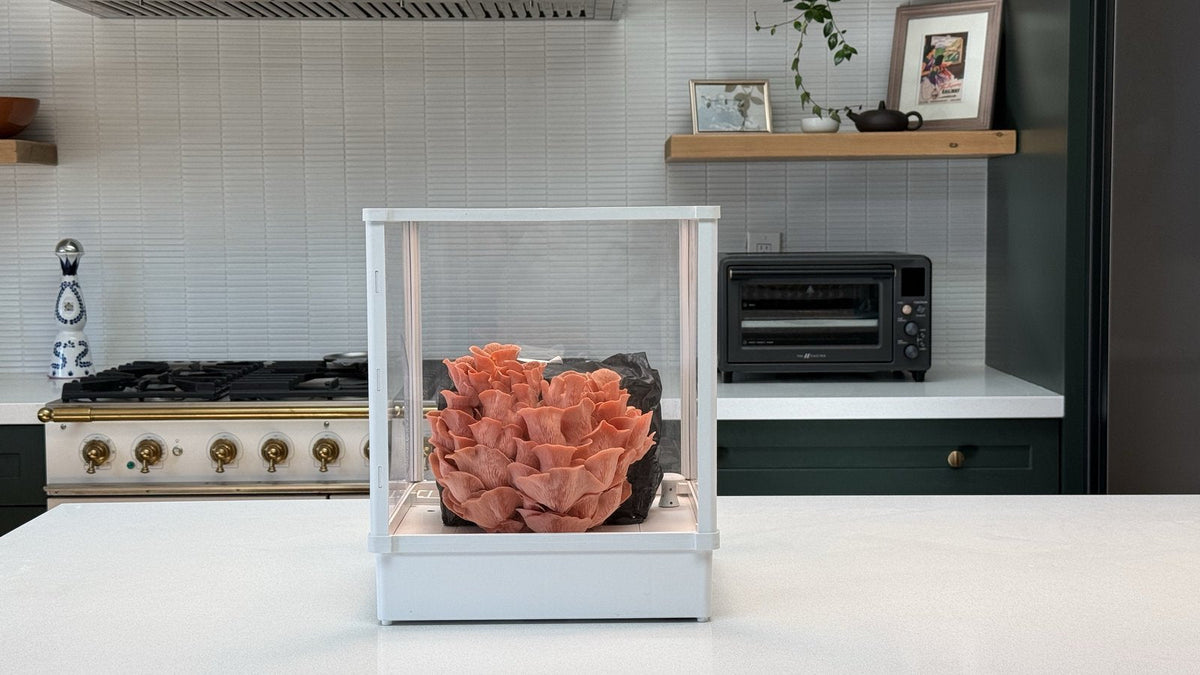
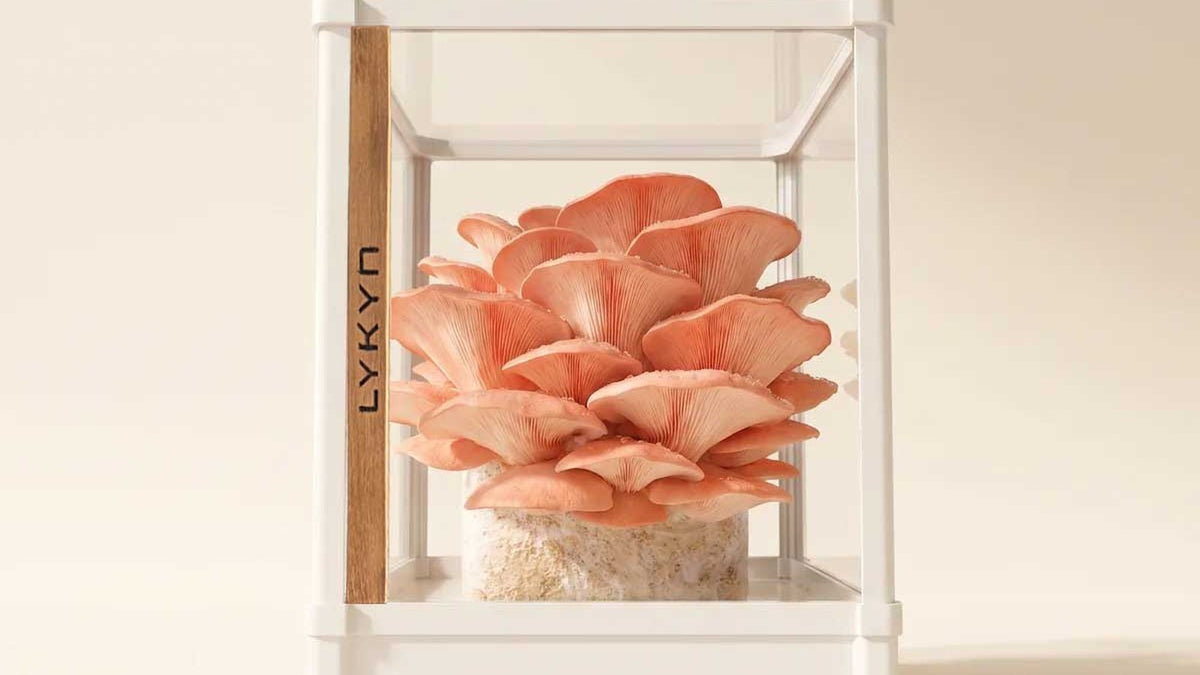
Der rosa Austernpilz zeichnet sich durch leuchtend rosa bis lachsfarbene Kappen aus. Er ist der schnellste Fruchtträger der Familie und gedeiht bei warmen Bedingungen (24 bis 29 Grad Celsius), hat aber auch die kürzeste Haltbarkeit aller Austernpilze, oft nur ein bis zwei Tage im Kühlschrank. Rosa Austernpilze haben einen stärkeren, etwas holzigen Geschmack, den viele Leute beim Braten mit Speck vergleichen, was sie zu einem beliebten pflanzlichen Ersatz macht. Wenn Sie in einem warmen Klima leben oder das schnellste sichtbare Wachstum wünschen, ist ein rosa Austernpilz-Anzuchtset der schnellste Weg zu einer Ernte.
Blauer Austernpilz (Pleurotus columbinus)
Blaue Austernpilze zeigen in jungen Jahren eine auffällige indigoblaue bis graublaue Färbung, die mit zunehmendem Alter zu einem ruhigeren Grau verblasst. Sie bevorzugen kühlere Temperaturen, ähnlich wie der Lungenseitling, und bieten einen milderen Geschmack. Ihre feste Textur hält sich besonders gut in Suppen, Pfannengerichten und Pasta. Der blaue Austernpilz ist die Sorte, die die meisten professionellen Züchter in den Wintermonaten anbauen, da kühle Keller und unbeheizte Garagen praktisch dafür geschaffen sind.
Kräuterseitling (Pleurotus eryngii)
Im Gegensatz zu anderen Austernpilzsorten, die in Büscheln wachsen, bilden Kräuterseitlinge große einzelne Pilze mit dicken, fleischigen Stielen und relativ kleinen Hüten. Sie werden für eine feste, Jakobsmuschel-ähnliche Textur und einen umami-reichen Geschmack geschätzt, der beim Anbraten intensiver wird. Kräuterseitlinge benötigen präzisere Wachstumsbedingungen als die anderen Sorten, etwas trockenere Luft und mehr Frischluftzufuhr, aber sie belohnen die Züchter mit einer längeren Haltbarkeit und außergewöhnlicher kulinarischer Vielseitigkeit.

Wie Austernpilze wachsen
Austernpilze wachsen in zwei Stadien: Myzelkolonisierung und Fruchtbildung. Im Kolonisierungsstadium breitet sich eine Masse fadenförmiger Zellen, das Myzel, im Substrat aus und verdaut die Zellulose. Sobald das Substrat vollständig besiedelt ist, lösen Umweltauslöser (ein Temperaturabfall, eine erhöhte Luftfeuchtigkeit, frische Luft und indirektes Licht) das Myzel in das Fruchtstadium aus, wo dichte kleine nadelförmige Pilze erscheinen, zu reifen Kappen anschwellen und innerhalb von 5 bis 10 Tagen erntereif sind.
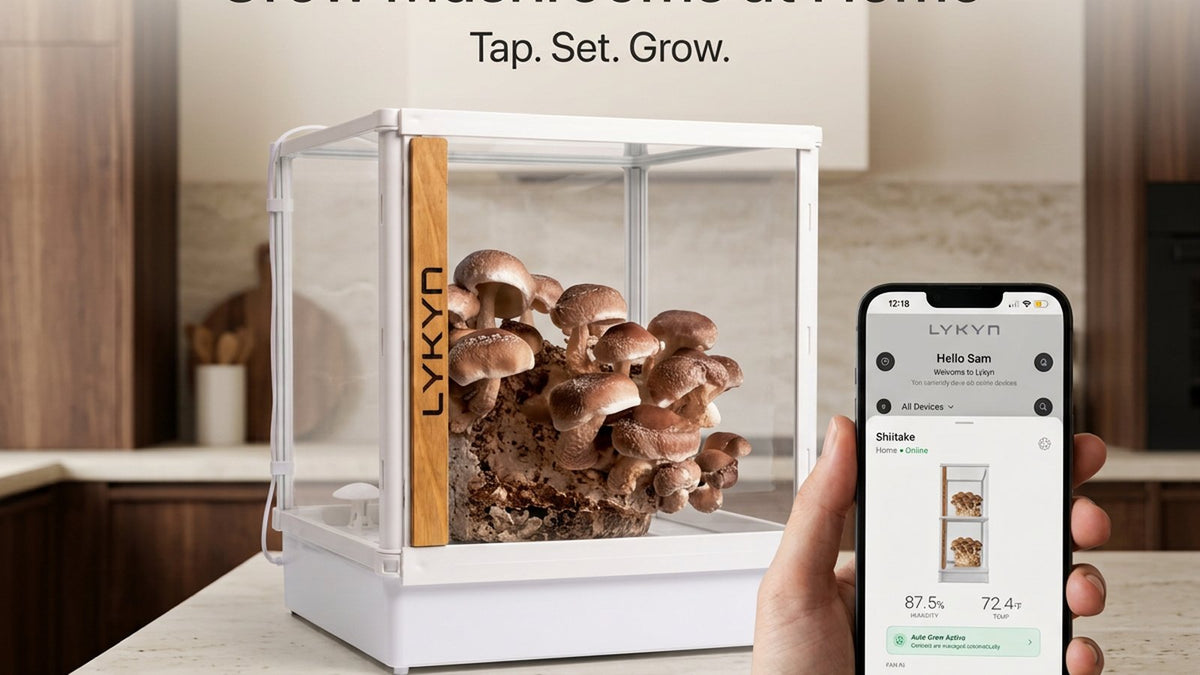
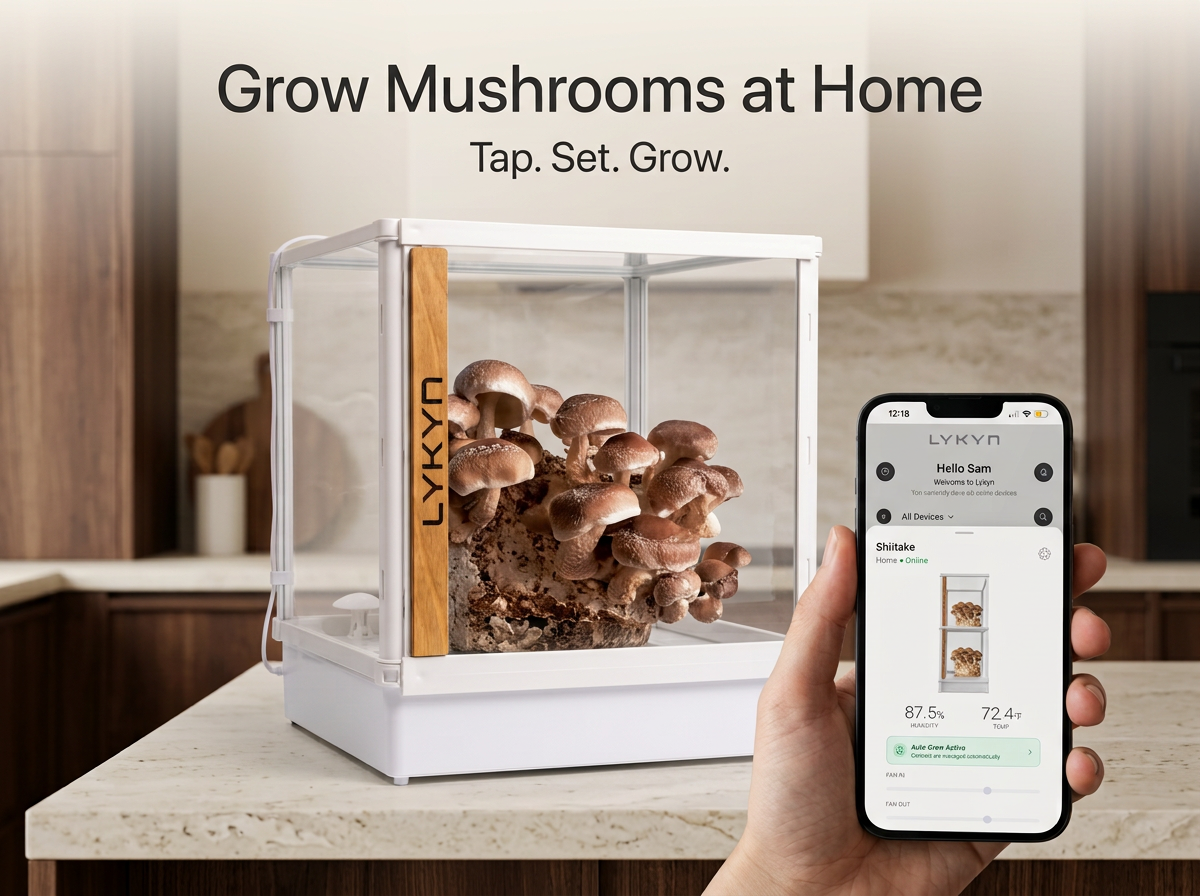
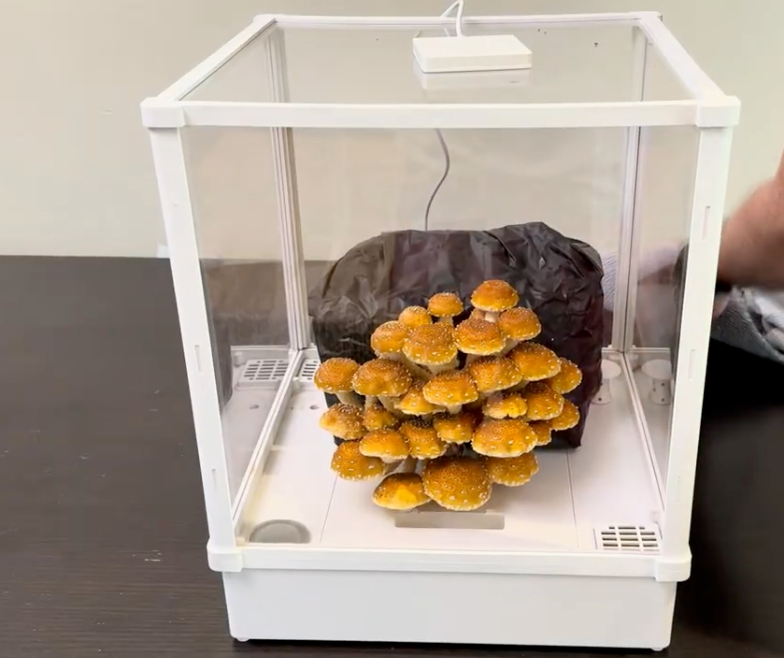
In freier Wildbahn fruchten Austernpilze nach Regen auf totem oder absterbendem Hartholz. In Innenräumen reproduzieren Züchter dieses Signal, indem sie den Block zwei- bis dreimal täglich mit Wasser besprühen und frische Luft in Bewegung halten, damit das von den Pilzen abgegebene Kohlendioxid nicht stagniert. Eine speziell gebaute Pilz-Fruchtungskammer automatisiert Luftfeuchtigkeit, Luftstrom und Beleuchtung, sodass Anfänger gleichbleibende Ergebnisse erzielen, ohne die ganze Nacht manuell sprühen zu müssen.
Nährwertprofil von Austernpilzen
Austernpilze sind nicht nur lecker, sie sind auch vollgepackt mit essentiellen Nährstoffen, die sie zu einer wertvollen Ergänzung jeder Ernährung machen.
Makronährstoffe
Austernpilze sind von Natur aus kalorienarm, mit etwa 30 Kalorien pro 100 Gramm frischer Pilze. Sie enthalten minimal Fett und sind cholesterinfrei, was sie zu einer guten Wahl für herzgesunde Ernährung macht. Trotz des geringen Kaloriengehalts liefern Austernpilze überraschend viel Protein und enthalten alle neun essentiellen Aminosäuren, die der menschliche Körper benötigt.
Fasergehalt
Diese Pilze sind eine ausgezeichnete Quelle für Ballaststoffe, insbesondere Beta-Glucane, eine lösliche Faser, die in der Forschung mit Immununterstützung und gesunden Cholesterinwerten in Verbindung gebracht wird. Eine 100-Gramm-Portion liefert etwa 2 bis 3 Gramm Ballaststoffe, die zur Verdauungsgesundheit und einem Sättigungsgefühl beitragen.
Vitamine
Austernpilze enthalten eine Reihe essentieller Vitamine, darunter:
- Vitamin D (insbesondere bei Sonneneinstrahlung während des Wachstums)
- B-Vitamine (B1, B2, B3, B5, B6, B9)
- Geringe Mengen an Vitamin A und C
Der B-Vitamingehalt macht Austernpilze besonders wertvoll für Vegetarier und Veganer, da diese Nährstoffe häufig an tierische Produkte gebunden sind.
Mineralien
Diese Pilze sind reich an verschiedenen Mineralien, die für die Gesundheit unerlässlich sind:
- Kalium
- Phosphor
- Eisen
- Zink
- Kupfer
- Selen
- Magnesium
Der Mineralstoffgehalt von Austernpilzen trägt zu ihren antioxidativen Eigenschaften bei und unterstützt eine Reihe von Körperfunktionen, von der Nervenübertragung bis zur Immunantwort.
Gesundheitliche Vorteile von Austernpilzen
Über den Nährwert hinaus bieten Austernpilze spezifische gesundheitliche Vorteile, die sowohl in der traditionellen Medizin als auch in der modernen, von Fachleuten begutachteten Forschung untersucht wurden.
Unterstützung des Immunsystems
Austernpilze enthalten Beta-Glucane und andere Polysaccharide, die nachweislich die Immunfunktion modulieren. Diese Verbindungen können dazu beitragen, Makrophagen, natürliche Killerzellen und andere Komponenten des Immunsystems zu aktivieren, was die Abwehr des Körpers gegen Krankheitserreger verbessern kann.
Cholesterinmanagement
Studien haben gezeigt, dass Austernpilze helfen können, LDL (das sogenannte schlechte Cholesterin) zu senken, während HDL (das gute) aufrechterhalten oder erhöht wird. Der Effekt wird sowohl den Beta-Glucanen als auch den natürlich vorkommenden Statinverbindungen im Pilz zugeschrieben.
Entzündungshemmende Eigenschaften
Die Antioxidantien und andere bioaktive Verbindungen in Austernpilzen zeigen entzündungshemmende Wirkungen, die helfen können, chronische Entzündungen zu reduzieren, die mit Arthritis, Herz-Kreislauf-Erkrankungen und Stoffwechselstörungen verbunden sind.
Blutzuckerregulierung
Einige Forschungsergebnisse deuten darauf hin, dass Austernpilze die Insulinsensitivität und den Glukosestoffwechsel verbessern können, was für Menschen mit Diabetes oder einem Risiko, ihn zu entwickeln, vielversprechend ist.
Krebsbekämpfendes Potenzial
Vorläufige Studien deuten darauf hin, dass bestimmte Verbindungen in Austernpilzen krebshemmende Eigenschaften haben könnten, einschließlich der Fähigkeit, das Tumorwachstum zu hemmen und Apoptose (programmierten Zelltod) in Krebszelllinien zu induzieren. Weitere klinische Forschung ist erforderlich, bevor diese Erkenntnisse in formale medizinische Empfehlungen umgesetzt werden.
Antioxidative Aktivität
Austernpilze enthalten verschiedene Antioxidantien, darunter Ergothionein und Selen, die helfen, freie Radikale zu neutralisieren und oxidativen Stress im Körper zu reduzieren. Ergothionein ist besonders bemerkenswert, da der Körper es nicht selbst produziert und Pilze eine der wenigen Nahrungsquellen sind.
Anbau von Austernpilzen
Einer der attraktivsten Aspekte von Austernpilzen ist ihre relative Anbaufreundlichkeit im Vergleich zu vielen anderen Gourmetpilzarten. Ob Anfänger oder erfahrener Züchter, Austernpilze bieten eine lohnende Erfahrung mit einer schnellen Erntezeit, typischerweise 10 bis 14 Tage von einem vollständig kolonisierten Block bis zum ersten Cluster auf dem Tisch.
Anbauanforderungen
Austernpilze haben mehrere grundlegende Anforderungen für einen erfolgreichen Anbau:
- Substrat: Sie wachsen auf zellulosereichen Materialien wie Stroh, Kaffeesatz, Holzspänen, Papier und landwirtschaftlichen Abfällen.
- Temperatur: Verschiedene Sorten haben unterschiedliche Präferenzen, im Allgemeinen zwischen 7 und 29 Grad Celsius.
- Luftfeuchtigkeit: 80 bis 95 Prozent relative Luftfeuchtigkeit sind essentiell, besonders während der Fruchtbildung.
- Indirektes Licht: Pilze betreiben keine Photosynthese, benötigen aber etwas indirektes Licht, um die Fruchtbildung auszulösen und die richtige Hutform zu entwickeln.
- Frische Luft: Eine ausreichende Belüftung ist entscheidend. Hohe Kohlendioxidwerte verursachen verkümmerte Stiele und gekräuselte Hüte.
Anbaumethoden
Es gibt verschiedene Methoden zum Anbau von Austernpilzen, von anfängerfreundlich bis kommerziell.
Anzuchtsets
Die einfachste Option für Anfänger. Ein kommerzielles Anzuchtset bietet einen vorimpfierten Substratblock, der nur die richtige Umgebung benötigt, um Pilze zu produzieren. Die meisten Kits liefern ein bis zwei Ernten mit minimalem Aufwand, und viele Züchter beginnen mit einem Austernpilz-Anzuchtset, bevor sie zu losen Substraten übergehen.
Eimer-Methode
Eine beliebte DIY-Methode. Bohren Sie Löcher in einen Plastikeimer, füllen Sie ihn mit pasteurisiertem Substrat (normalerweise Stroh oder Kaffeesatz) und impfen Sie ihn mit Austernpilzbrut. Diese Methode ist kostengünstig und kann über mehrere Monate hinweg mehrere Ernten produzieren.
Beutel-Anbau
Ähnlich wie die Eimer-Methode, aber es werden transparente Plastiktüten mit kleinen Löchern verwendet. Die Transparenz erleichtert die Überwachung der Kolonisierung und die Skalierung der Produktion.
Stammholz-Anbau
Ein natürlicheres Vorgehen. Austernpilzbrut wird in Hartholzstämme (Eiche, Ahorn, Buche) eingeimpft, die über mehrere Jahre saisonal Pilze produzieren. Diese Methode erfordert Geduld, die erste Ernte erfolgt in der Regel erst nach 6 bis 12 Monaten, erfordert danach aber fast keine fortlaufende Pflege.
Kommerzielle Produktion
Große Betriebe verwenden spezielle Ausrüstung wie Laminar-Flow-Hauben für sterile Arbeiten, Autoklaven zur Substratsterilisation und kontrollierte Umgebungsräume für optimales Wachstum. Heimanbauer, die kommerzielle Konsistenz ohne den Lagerbau wünschen, bauen ein Indoor-Pilzzucht-Kit, das Feuchtigkeit, Luftzirkulation und Beleuchtung automatisch regelt.
Häufige Anbauherausforderungen
Obwohl relativ verzeihend, kann der Anbau von Austernpilzen dennoch Herausforderungen mit sich bringen:
- Kontamination: Konkurrierende Schimmelpilze und Bakterien können Pilzmyzel überwuchern, insbesondere in nicht-sterilen Räumen.
- Schädlingsbekämpfung: Pilzmücken und andere Insekten können von fruchtenden Pilzen angezogen werden.
- Umweltkontrolle: Die Aufrechterhaltung der richtigen Luftfeuchtigkeit und Temperatur ist ohne spezielle Ausrüstung schwierig.
- Substratwahl: Die Substratwahl beeinflusst den Ertrag, Geschmack und die Textur erheblich.
Ernte und Lagerung
Richtige Ernte- und Lagertechniken sind unerlässlich, um die Qualität zu erhalten und die Haltbarkeit von Austernpilzen zu verlängern.
Wann ernten
Austernpilze sind typischerweise erntereif, wenn:
- Die Hüte voll entwickelt, aber noch leicht konvex sind (bevor sie abflachen oder sich nach oben krümmen).
- Die Hutränder noch fest und nicht dünn, wellig oder rissig sind.
- Die Sporenbildung noch nicht begonnen hat, erkennbar an einer weißen Staubschicht unter den Kappen.
Der Zeitpunkt ist entscheidend. Zu früh geerntet sind die Pilze unterentwickelt und haben weniger Geschmack. Zu spät geerntet wird die Textur zäh und die Haltbarkeit sinkt.
Erntetechniken
Um Austernpilze richtig zu ernten:
- Fassen Sie den Cluster an der Basis, wo er mit dem Substrat verbunden ist.
- Drehen und ziehen Sie vorsichtig, um den gesamten Cluster auf einmal zu entfernen.
- Alternativ können Sie den Cluster mit einem scharfen Messer an der Basis abschneiden.
- Vermeiden Sie es, einzelne Pilze vom Cluster zu ziehen, wenn möglich, da zurückbleibende abgebrochene Stiele eine Kontamination begünstigen.
Lagerungsmethoden
Frische Austernpilze haben im Vergleich zu kommerziellen Champignons eine relativ kurze Haltbarkeit. Um die Frische zu maximieren:
- Kühl aufbewahren: In einer Papiertüte im Kühlschrank lagern, damit sie atmen können, während sie feucht bleiben. Sie halten sich typischerweise 5 bis 7 Tage.
- Trocknen: Vollständig dehydrieren und in luftdichten Behältern bis zu einem Jahr lagern.
- Einfrieren: Vor dem Einfrieren kurz anbraten, um die Textur zu erhalten. Gut für bis zu 3 Monate.
- Einlegen: In einer Essiglösung konservieren für eine längere Haltbarkeit und ein einzigartiges Geschmacksprofil.
Kulinarische Verwendung von Austernpilzen
Austernpilze werden in kulinarischen Kreisen wegen ihrer Vielseitigkeit, Textur und der Fähigkeit, umgebende Aromen aufzunehmen, während sie ihren eigenen unverwechselbaren Geschmack behalten, hoch geschätzt.
Geschmacksprofil und Textur
Der Geschmack von Austernpilzen kann beschrieben werden als:
- Mild und dezent süß.
- Bei einigen Sorten leicht anisartig oder nach Lakritz.
- Leicht meeresfrüchteartige Untertöne, daher der Name "Austernpilz".
- Ausgeprägteres Umami bei Kräuterseitlingen, mit einer spürbaren jakobsmuschelartigen Fülle, wenn sie angebraten werden.
Ihre Textur ist einzigartig zart und doch fleischig, leicht zäh bei richtiger Zubereitung, samtig und glatt bei Kräuterseitlingstielen und je nach Garmethode variabel.
Kochmethoden
Austernpilze können mit verschiedenen Techniken zubereitet werden.
Sautieren
Vielleicht die gebräuchlichste Methode. Schnelles Sautieren bei hoher Hitze bewahrt die Textur und entwickelt den Geschmack durch Karamellisierung. Verwenden Sie eine heiße Pfanne mit Öl oder Butter, vermeiden Sie Überfüllung, kochen Sie, bis sie goldbraun und an den Rändern knusprig sind, und würzen Sie nach dem Kochen, damit die Pilze nicht matschig werden.
Braten
Braten intensiviert den Geschmack und erzeugt köstlich knusprige Ränder. Die Pilze mit Öl und Gewürzen vermischen, in einer einzigen Schicht auf einem Backblech verteilen, bei 205 bis 220 Grad Celsius 15 bis 20 Minuten braten und nach der Hälfte der Zeit wenden, um eine gleichmäßige Bräunung zu erzielen.
Grillen
Besonders effektiv für größere Sorten wie Kräuterseitlinge. Mit Öl und Gewürzen bestreichen, direkt auf den Grill legen oder einen Grillkorb verwenden und 3 bis 4 Minuten pro Seite garen, bis klare Grillspuren sichtbar sind. Grillen ist der schnellste Weg, um eine rauchige Tiefe hinzuzufügen.
Pfannenrühren
Die schnelle, hochhitzige Methode des Pfannenrührens funktioniert wunderbar mit Austernpilzen. In gleich große Stücke reißen oder schneiden, in heißem Öl mit Aromaten wie Knoblauch und Ingwer kochen, die Pfanne in Bewegung halten und die Sauce ganz am Ende hinzufügen.
Suppen und Eintöpfe
Austernpilze halten sich gut in flüssigkeitsbasierten Gerichten. Fügen Sie sie gegen Ende des Kochens hinzu, um ein übermäßiges Weichwerden zu verhindern. Ihre saugfähige Natur macht sie hervorragend zum Aufsaugen von Brüharomen, weshalb sie sowohl in asiatischen Suppen als auch in europäischen Sahnevarianten funktionieren.
Beliebte Austernpilzrezepte
Die kulinarische Vielseitigkeit von Austernpilzen hat unzählige Rezepte in verschiedenen Küchen inspiriert.
Vegane Austernpilz-"Jakobsmuscheln"
Kräuterseitlinge, in Scheiben geschnitten und richtig zubereitet, sind eine überzeugende pflanzliche Alternative zu Jakobsmuscheln. Schneiden Sie die Stiele in 2,5 cm dicke Scheiben, ritzen Sie eine Seite rautenförmig ein, marinieren Sie sie kurz in Tamari, Zitronensaft und Algenflocken und braten Sie sie dann in heißem Öl goldbraun an. Servieren Sie sie mit einer Zitronen-Knoblauch-Sauce zu Risotto oder Pasta.
Knuspriges Austernpilz „Brathähnchen“
Diese beliebte pflanzliche Alternative imitiert die Textur und das befriedigende Gefühl von Brathähnchen. Reißen Sie Austernpilze in große, hähnchenähnliche Stücke, tauchen Sie sie in Pflanzenmilch gemischt mit Apfelessig, panieren Sie sie in einer gewürzten Mehlmischung (Paprika, Knoblauchpulver, Kräuter), tauchen Sie sie für zusätzliche Knusprigkeit zweimal ein und frittieren Sie sie oder frittieren Sie sie in der Heißluftfritteuse, bis sie goldbraun sind. Servieren Sie sie mit Ihrer Lieblings-Dip-Sauce.
Asiatisch inspirierte Austernpilz-Pfanne
Ein schnelles Abendessen unter der Woche, das die natürlichen Aromen der Pilze hervorhebt. Reißen Sie die Pilze in mundgerechte Stücke, braten Sie sie mit gehacktem Knoblauch, Ingwer und Frühlingszwiebeln an, geben Sie Sojasauce, Reisessig und einen Hauch Ahornsirup hinzu und vollenden Sie das Gericht mit geröstetem Sesamöl und Sesamsamen. Servieren Sie es zu gedämpftem Reis oder Nudeln.
Austernpilz-Pasta
Ein einfaches, aber elegantes Gericht, das die Pilze glänzen lässt. Braten Sie Austernpilze goldbraun an, fügen Sie gehackten Knoblauch und frischen Thymian hinzu, löschen Sie sie mit Weißwein ab, vermischen Sie sie mit al dente gekochten Nudeln sowie einem Schuss Nudelwasser und Sahne und vollenden Sie das Gericht mit geriebenem Parmesan und schwarzem Pfeffer. Mit frischen Kräutern garnieren.
Wo man Austernpilze kaufen kann
Wenn Sie sie nicht selbst anbauen, sind Austernpilze zunehmend leichter zu finden. Die meisten gut sortierten Lebensmittelgeschäfte führen Austernpilze (Perl- oder Blau-Austernpilze) in der Obst- und Gemüseabteilung, üblicherweise zu Preisen zwischen 6 und 12 Dollar pro Pfund. Bauernmärkte sind oft eine bessere Quelle für frischere Pilze und seltenere Sorten wie Rosa-, Gold- und Kräuterseitlinge, wobei die Preise je nach Region und Jahreszeit variieren.
Spezielle asiatische und lateinamerikanische Lebensmittelgeschäfte führen tendenziell auch Perl- und Kräuterseitlinge zu niedrigeren Preisen als Mainstream-Supermärkte. Online werden getrocknete Austernpilze überallhin versandt und lassen sich gut in Suppen und Eintöpfen rekonstituieren, obwohl sie im Vergleich zu frischen Pilzen etwas an Textur verlieren. Viele Hobbyzüchter wechseln schließlich zu einem Zuchtkit oder einer Pilzkammer, da konsistente frische Ernten pro Pfund weniger kosten als im Laden gekaufte, wenn man den Verderb berücksichtigt.
Wilde Austernpilze sammeln
Während der Anbau eine zuverlässige Quelle für Austernpilze bietet, kann das Sammeln von Wildexemplaren für Pilzliebhaber eine lohnende Erfahrung sein.
Identifizierungstipps
Beim Sammeln von wilden Austernpilzen:
- Suchen Sie nach regalartigen Wuchsformen an toten oder absterbenden Laubbäumen.
- Achten Sie auf Lamellen, die am Stiel herablaufen (herablaufend).
- Überprüfen Sie den weißen bis lilafarbenen Sporenabdruck.
- Beachten Sie das Fehlen eines Rings am Stiel.
- Bestätigen Sie die charakteristische Austern- oder Fächerform.
- Überprüfen Sie dies mit mehreren Feldführern oder einem erfahrenen Mykologen, bevor Sie etwas essen.
Sicherheitsaspekte
Das Sammeln erfordert sorgfältige Beachtung der Sicherheit.
- Konsumieren Sie niemals wilde Pilze ohne 100-prozentige positive Identifizierung.
- Seien Sie sich der Doppelgänger bewusst, insbesondere des giftigen Engelsflügelpilzes (Pleurocybella porrigens).
- Sammeln Sie nur in unverschmutzten Gebieten abseits von Straßen und Industriegebieten.
- Überprüfen Sie die Legalität des Sammelns an Ihrem Standort, da einige Parks Genehmigungen erfordern.
- Beginnen Sie mit kleinen Portionen, wenn Sie eine neue Wildpilzart probieren.
Nachhaltige Erntepraktiken
Verantwortungsvolles Sammeln hält die Pilzpopulationen für die nächste Saison gesund.
- Nehmen Sie nur, was Sie brauchen und verwerten können.
- Lassen Sie einige Pilze stehen, damit sie reifen und Sporen freisetzen können.
- Schneiden Sie Pilze, anstatt sie zu ziehen, um Schäden am darunterliegenden Myzel zu minimieren.
- Tragen Sie Pilze in Netztaschen, damit sich die Sporen beim Gehen verbreiten können.
- Respektieren Sie die Natur und hinterlassen Sie keine Spuren Ihres Besuchs.
Dieser Leitfaden wurde von Lykyn erstellt, das seit 2021 Hobby- und kommerzielle Austernpilzzüchter unterstützt und jede Behauptung anhand realer Anbaudaten überprüft. Für tiefere Hintergrundinformationen zur Art und ihrer Biologie sind der Pilzanbauleitfaden der Cornell University und das FAO-Handbuch zur Pilzproduktion die beiden Referenzen, die wir den Züchtern am häufigsten empfehlen.
Häufig gestellte Fragen zu Austernpilzen
Kann man Austernpilze roh essen?
Technisch ja, aber es wird nicht empfohlen. Rohe Austernpilze können aufgrund des Chitins in ihren Zellwänden leichte Verdauungsbeschwerden verursachen, das nach dem Kochen leichter verdaulich wird. Kochen verbessert auch den Geschmack und eliminiert jegliche Oberflächenpathogene. Braten, rösten oder rührbraten Sie sie für das beste Ergebnis.
Wie wachsen Austernpilze?
Austernpilze wachsen in zwei Stadien. Zuerst besiedelt das Myzel ein zellulosereiches Substrat (Stroh, Hartholzspäne, Kaffeesatz, Papier) und verdaut es. Sobald es vollständig besiedelt ist, bringen Umweltreize wie ein Temperaturabfall, hohe Luftfeuchtigkeit, frische Luft und indirektes Licht das Myzel zum Fruchten. Pilze in Form von Nadeln erscheinen und reifen innerhalb von 5 bis 10 Tagen zu erntereifen Büscheln heran.
Wie schmecken Austernpilze?
Austernpilze haben einen milden, dezent süßen Geschmack mit einer leichten Meeresfrüchtenote, daher der Name. Perl- und Blau-Austernpilze sind die neutralsten. Goldene Austernpilze fügen nussige, zitronige Noten hinzu. Rosa Austernpilze sind kräftiger und holziger, mit einer speckähnlichen Qualität beim Braten. Kräuterseitlinge sind die fleischigsten, mit einem tiefen Umami-Geschmack, der sich beim Anbraten intensiviert.
Wie lange dauert es, bis Austernpilze wachsen?
Von einem vollständig besiedelten Wachstumsblock benötigen Austernpilze in der Regel 7 bis 14 Tage, um erntereife Büschel zu bilden. Rosa Austernpilze sind die schnellsten, oft schon in 5 bis 7 Tagen erntereif. Perl-, Blau- und Gold-Austernpilze benötigen 8 bis 12 Tage. Kräuterseitlinge brauchen 12 bis 16 Tage, produzieren aber dichte, fleischige Früchte. Der Anbau in einer kontrollierten Kammer liefert die konstantesten Zeiten.
Woran erkenne ich, ob Austernpilze schlecht geworden sind?
Verdorbene Austernpilze zeigen eine schleimige Textur, einen unangenehmen ammoniakartigen Geruch, dunkle oder verfärbte Stellen und ein runzeliges, trockenes Aussehen. Wenn Sie eines dieser Anzeichen bemerken, werfen Sie sie weg. Frische Austernpilze sollten trocken, aber prall aussehen, mit festen Hüten und einem sauberen, erdigen Geruch.
Kann ich Austernpilze ohne spezielle Ausrüstung anbauen?
Ja. Der grundlegende Austernpilzanbau funktioniert mit minimaler Ausrüstung, indem man Methoden wie die Eimertechnik oder Anzuchtbeutel verwendet. Der einfachste Einstieg ist ein kommerzielles Anzuchtkit, das vorbeseitigt geliefert wird und nur eine grundlegende Überwachung von Luftfeuchtigkeit und Temperatur erfordert. Sobald Sie das Kit überwachsen haben, automatisiert eine kleine Fruchtkammer die Umgebung, sodass die Ergebnisse konsistent bleiben.
Gibt es Nebenwirkungen beim Verzehr von Austernpilzen?
Die meisten Menschen vertragen Austernpilze gut. Mögliche Nebenwirkungen sind leichte Verdauungsbeschwerden bei sehr großen Mengen, allergische Reaktionen (selten, aber möglich) und eine respiratorische Empfindlichkeit gegenüber Sporen während des Anbaus (ein Zustand, der manchmal als Pilzzüchterlunge bezeichnet wird). Wenn Sie eine bekannte Pilzallergie haben, führen Sie Austernpilze langsam ein.
Wie vergleichen sich Austernpilze mit Champignons?
Im Vergleich zu Champignons (Agaricus bisporus) haben Austernpilze einen höheren Proteingehalt, einen komplexeren Geschmack, eine größere Vielseitigkeit in der Anwendung beim Kochen, einen einfacheren Weg zur Heimpflege und höhere Mengen an bestimmten Nährstoffen, einschließlich Beta-Glucanen und Ergothionein. Champignons halten länger im Kühlschrank, aber Austernpilze übertreffen sie in fast allen anderen Bereichen.
Fazit
Austernpilze stellen eine außergewöhnliche Verbindung aus kulinarischer Vielseitigkeit, ernährungsphysiologischen Vorteilen und Zugänglichkeit des Anbaus dar. Ob Sie ein Hobbygärtner sind, der zum ersten Mal Pilze anbaut, ein Koch, der sein Zutatenrepertoire erweitert, oder ein gesundheitsbewusster Esser, der funktionelle Lebensmittel in seine Routine aufnimmt – Austernpilze bieten eine hohe Rendite bei geringem Aufwand.
Ihre Anpassungsfähigkeit an verschiedene Substrate und Umweltbedingungen macht sie zu einem hervorragenden Einstiegspunkt für eine nachhaltige Lebensmittelproduktion zu Hause. Ihr Geschmacksprofil und ihre fleischige Textur öffnen die Tür zu allem, von schnellen Wochentags-Wokgerichten bis hin zu aufwändigen pflanzlichen Fleischalternativen.
Da das Interesse an nachhaltigen Lebensmittelsystemen, pflanzlicher Ernährung und funktioneller Ernährung weiter wächst, werden Austernpilze an der Spitze der Heimanbaubewegung bleiben. Ob Sie sie auf der Fensterbank anbauen, auf dem Bauernmarkt kaufen oder sorgfältig in der Natur sammeln – diese bemerkenswerten Pilze verdienen einen Platz im Repertoire jedes Lebensmittelliebhabers.
Aktie:
Das ultimative Rahm-Hähnchen-Pilz-Rezept
Steinpilze - Reichhaltiger Geschmack für die Gourmetküche