




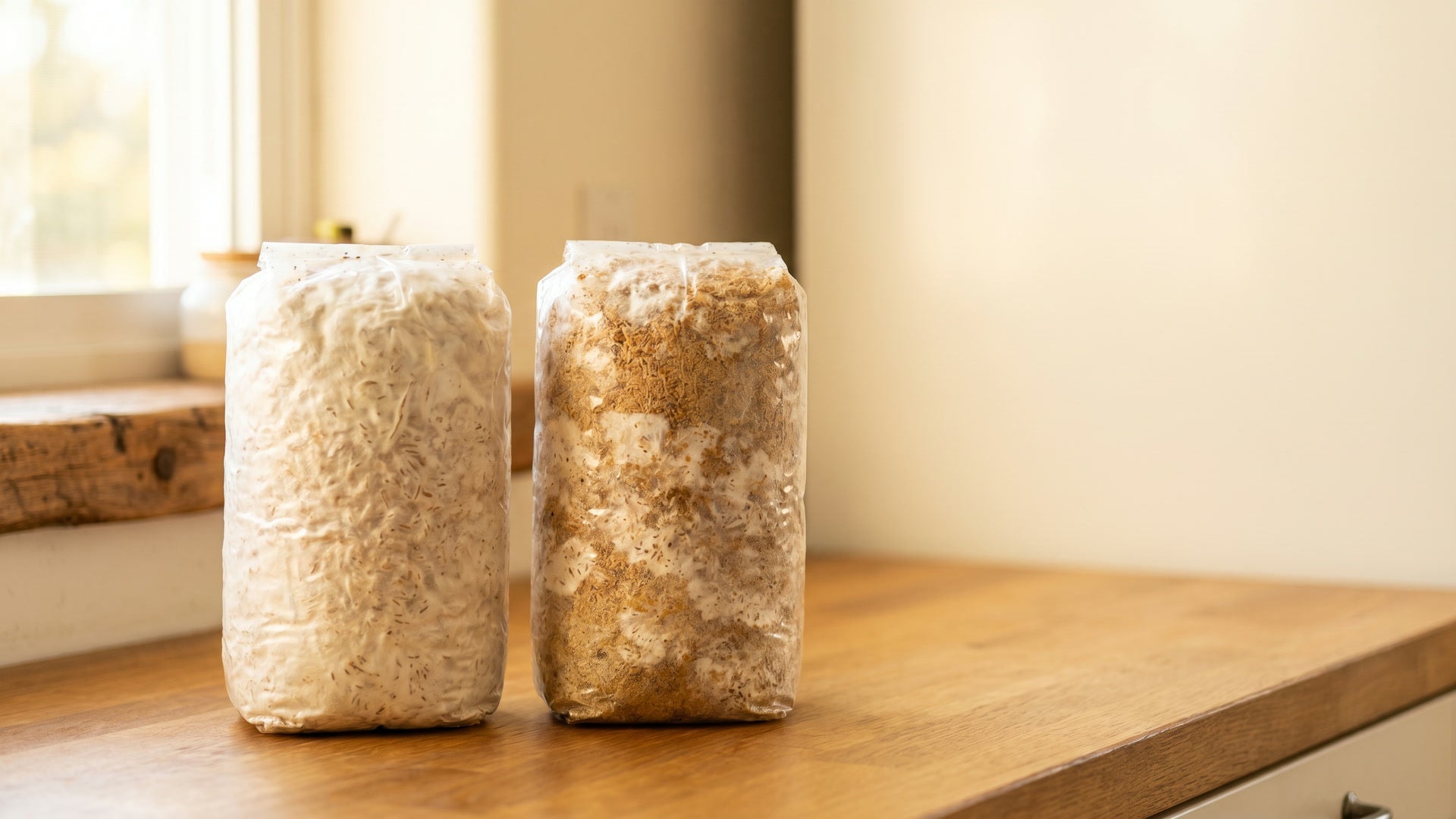
You've watched the white mycelium spread all the way across your mushroom block. The surface looks perfect. You opened the bag, started misting. And then.. nothing. No pins. Just a smooth, snow-white surface staring back at you for days.
Take a breath. Your block is almost certainly fine.
The most common assumption when a colonized block won't fruit is that it must be contaminated. In reality, fewer than 1 in 20 stalled home-grow blocks are actually contaminated. The other 19 are missing one specific environmental trigger that fruiting biology requires. This guide walks you through 7 real reasons your mushroom block is not fruiting, a 7-step recovery sequence you can run today, and how an automated chamber handles every condition at once.
Quick Recovery Checklist (Featured Snippet)

If you only have 60 seconds, here's the 7-step recovery sequence in order. Do them in this exact order; do not skip steps.
- Inspect the block for actual contamination (green, black, or pink fuzz). If clean, continue.
- Cold shock the block by placing it in your refrigerator for 12 to 24 hours.
- Soak or hydrate the block in cool water for 1 to 2 hours, then drain.
- Cut fresh openings in the bag, 1 to 2 inch slits in an X pattern.
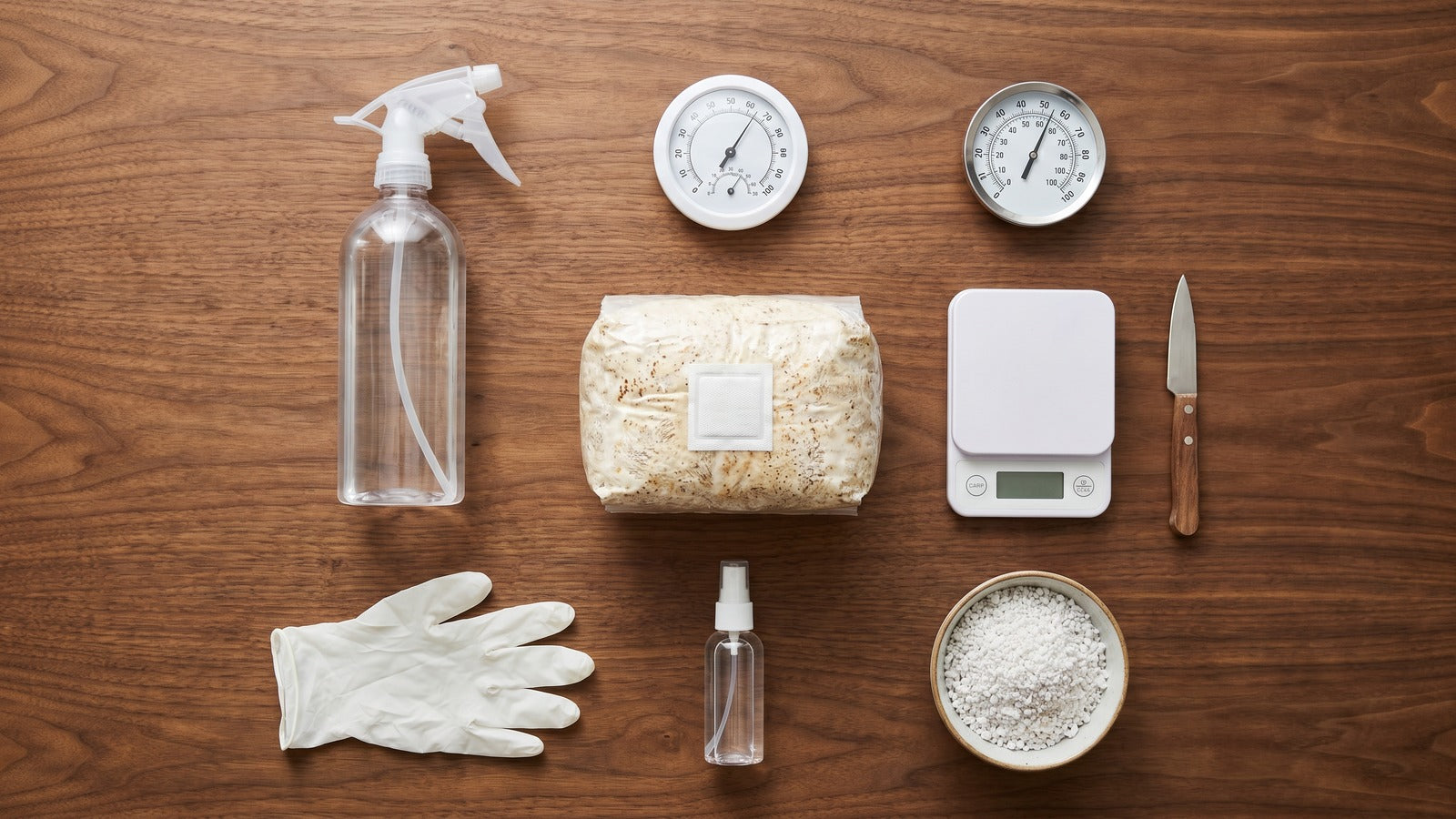
- Raise humidity to 85 to 95 percent around the block.
- Increase fresh air exchange (FAE) so CO2 stays below 1,000 ppm.
- Be patient. Pins typically appear 5 to 10 days after this reset.
That's the protocol. The rest of this article explains why each step works and how to set up your environment so it doesn't happen again.
Why a Fully Colonized Block Won't Fruit (and Why It's Not Contaminated)

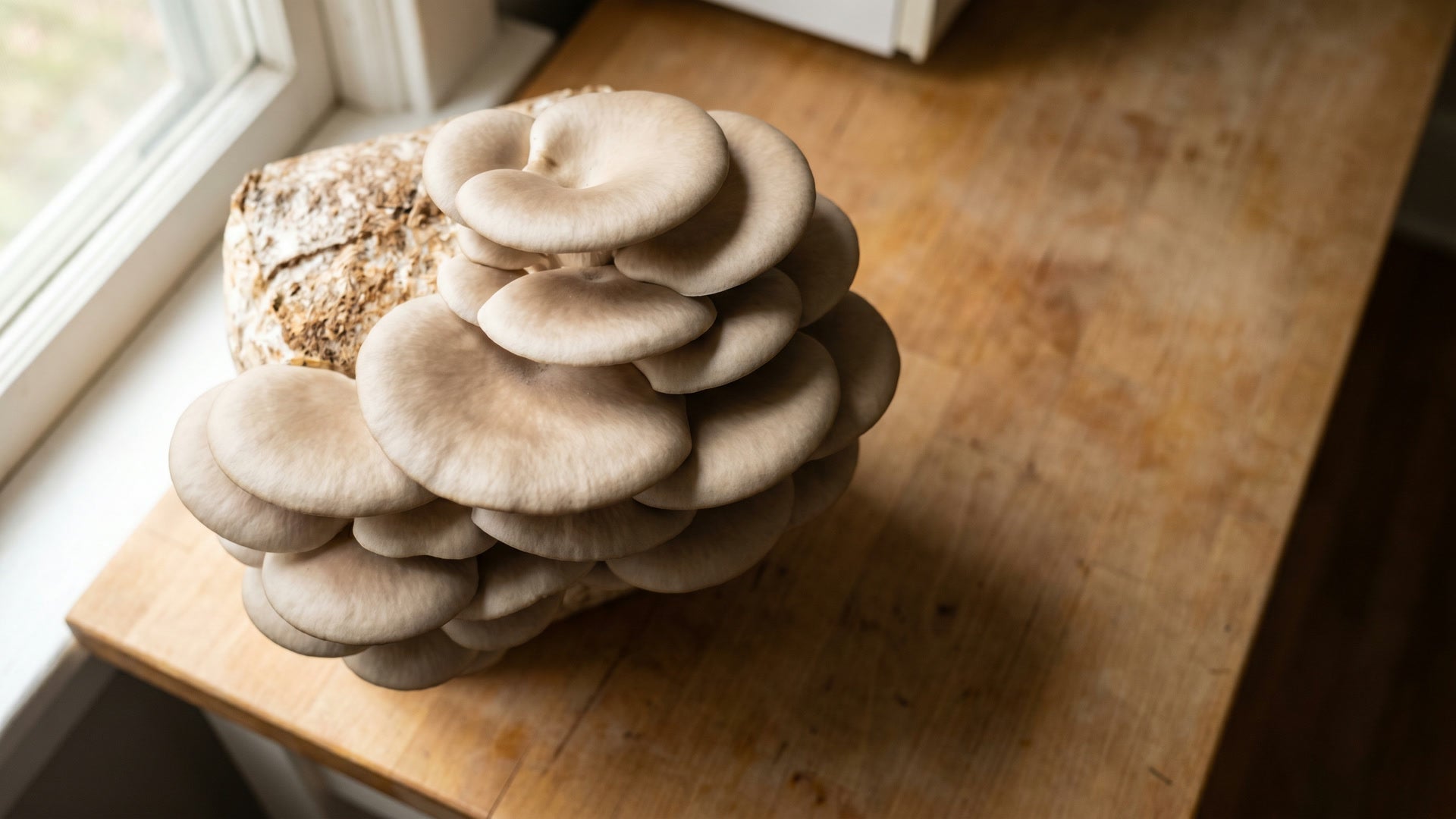
When the bag looks completely white, the vegetative phase of the fungus's life cycle is done. The mycelium has eaten what it needs and is sitting in a metabolic resting state, waiting for the environmental signal that says "now's a good time to make spores."
That signal is fruiting initiation. It's a wake-up call triggered by a sudden drop in temperature, an increase in fresh air, higher humidity, and exposure to light. In the wild, this combination happens naturally when autumn rains hit a fallen log after a hot summer. Indoors, you have to simulate it.
If even one of those four signals is missing, the mycelium stays asleep. It does not die. It does not contaminate (mycelium is actively defending against competitors). It just waits. A stalled block is paused, not broken. Once you internalize that, the 7 reasons below become a checklist, not a guessing game.
The 7 Real Reasons Your Mushroom Block Is Not Fruiting

1. The Fruiting Trigger Is Missing (Cold Shock + Light)
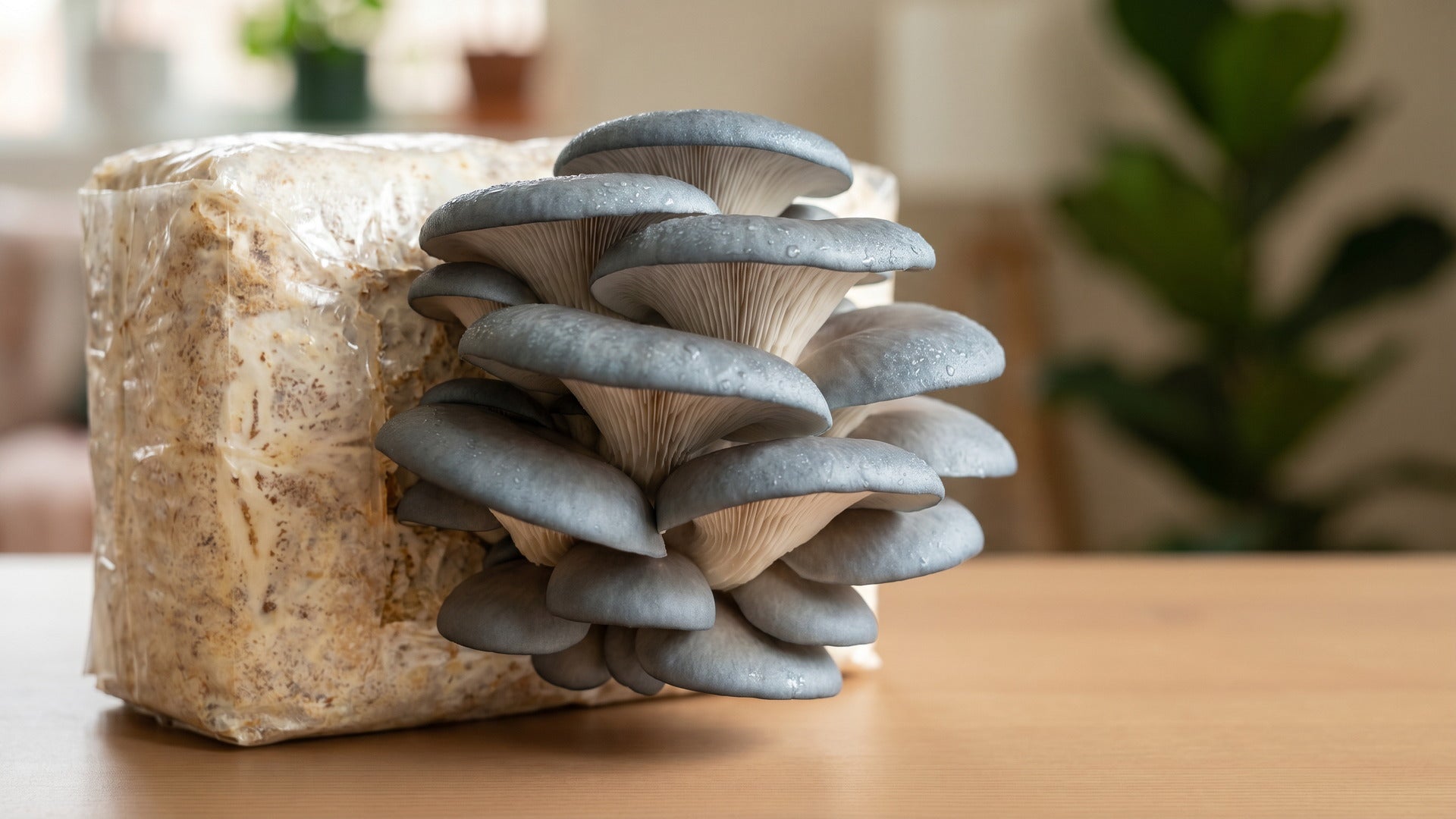
The number one reason for stalled home grows. Most species (especially Lion's Mane, Shiitake, Blue Oyster) need a brief cold shock to initiate fruiting. You can't take a colonized block out of a warm cardboard box and expect pins.
Fix: place the bagged block in your refrigerator for 12 to 24 hours. The 15 to 20°F drop triggers the mycelium's "fall is here, time to fruit" response. The block also needs light. Mushrooms use light for orientation; pins literally grow toward it. A few hours of indirect daylight or a 6500K LED for 8 to 12 hours daily is plenty.
2. Humidity Is Too Low
Mushroom pins are 90 percent water. If the air around the block is too dry, pins either never form or they abort (turn brown, shrivel). The fruiting zone needs 85 to 95 percent relative humidity for the whole pinning window (7 to 14 days).
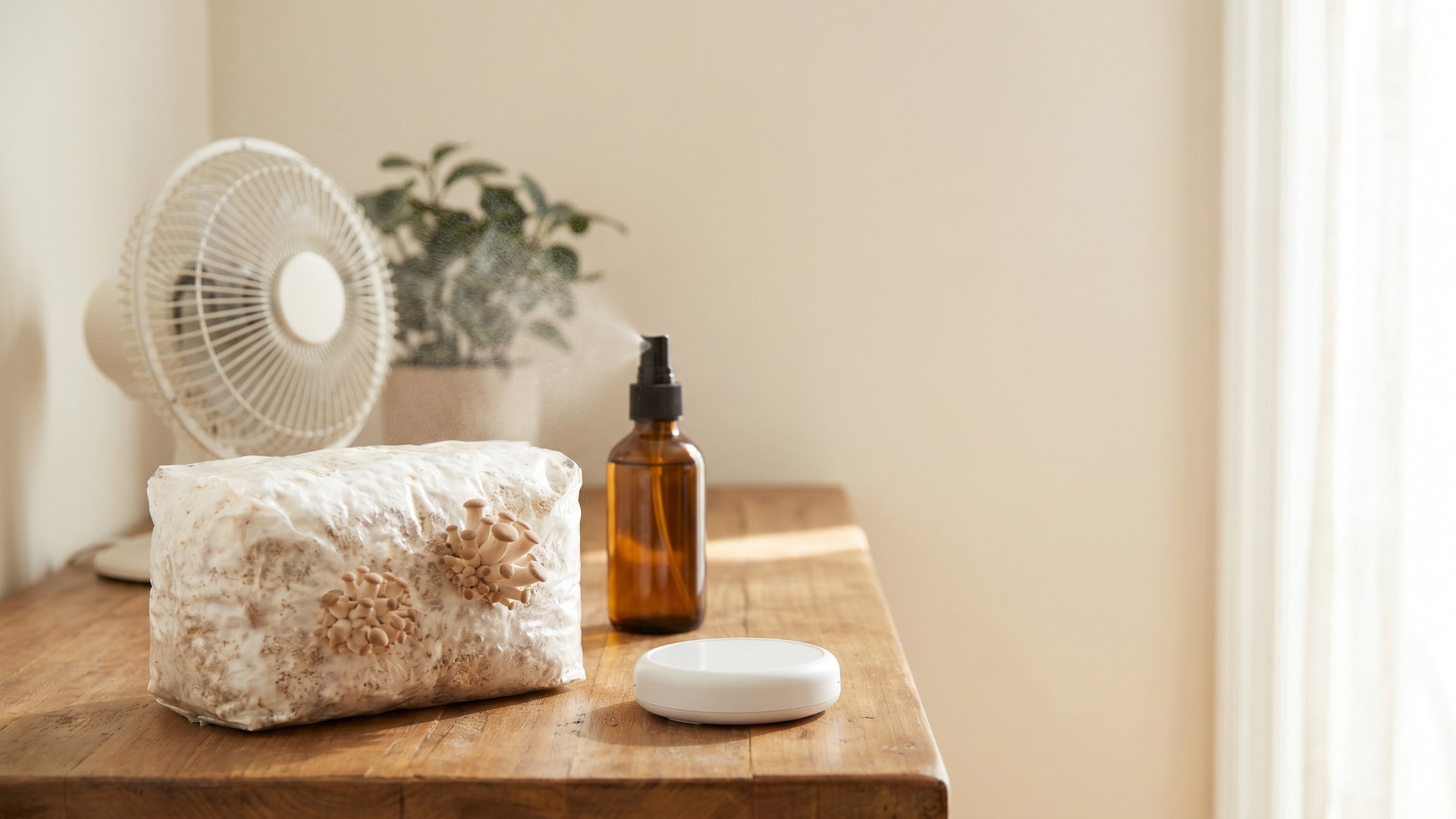
A hand mister twice a day will not get you there. Misting bumps humidity to 95 percent for about 4 minutes, then it crashes back to 30 to 45 percent. That on-off cycle is worse than a steady 70 percent: pins try to form, dry out, then try again.
3. CO2 Is Too High (No Fresh Air Exchange)
When mycelium fruits, it exhales CO2. Inside a sealed bag or unventilated tent, CO2 climbs from 400 ppm to 5,000 ppm or higher within hours. The fungus then reads the air as "underground" and either won't pin or produces stretched, stem-heavy mushrooms with tiny caps (the "no caps" oyster failure).
Fruiting needs CO2 below 1,000 ppm. The only consistent way is regular fresh air exchange (FAE). Hand-fanning across the block 3 to 4 times per day works in a pinch, but it's hard to sustain.
4. The Temperature Is Wrong for the Species
Every species has a fruiting range. "Room temperature" is not a universal answer.
| Species | Ideal Fruiting Temp |
|---|---|
| Lion's Mane | 60 to 68°F (15 to 20°C) |
| Blue Oyster | 50 to 65°F (10 to 18°C) |
| Pink Oyster | 70 to 80°F (21 to 27°C) |
| Yellow Oyster | 65 to 75°F (18 to 24°C) |
| Shiitake | 55 to 70°F (13 to 21°C) |
| Chestnut | 60 to 75°F (15 to 24°C) |
| King Trumpet | 55 to 65°F (13 to 18°C) |
If your kitchen is 75°F and you're trying to fruit Blue Oyster, the block is too warm to pin. It's not broken; it's waiting for cooler air. Move it to a cooler room or basement.

5. The Block Has Dried Out
A fully colonized block is about 60 percent water by weight. If the bag has been open or sitting in dry indoor air, that drops. Below 45 percent moisture, fruiting is physically impossible regardless of conditions.
The cure is a cold-water soak: submerge the block in cool tap water for 1 to 2 hours, then drain. The block gains back 200 to 400 grams of water in one session.

6. The Substrate Is Spent (Or Too Old)
A typical mushroom block produces 2 to 3 flushes before the substrate is exhausted. If you've harvested twice and it won't pin a third time, it's done. Older blocks (4 to 6 months from inoculation) lose vigor even before fruiting.
Quick test: weigh the block. A fresh, hydrated 5 lb block weighs close to 5 lbs. If yours weighs 3 lbs and feels light, compost it and start fresh.
7. The Chamber or Environment Is Dirty (Contam Risk)
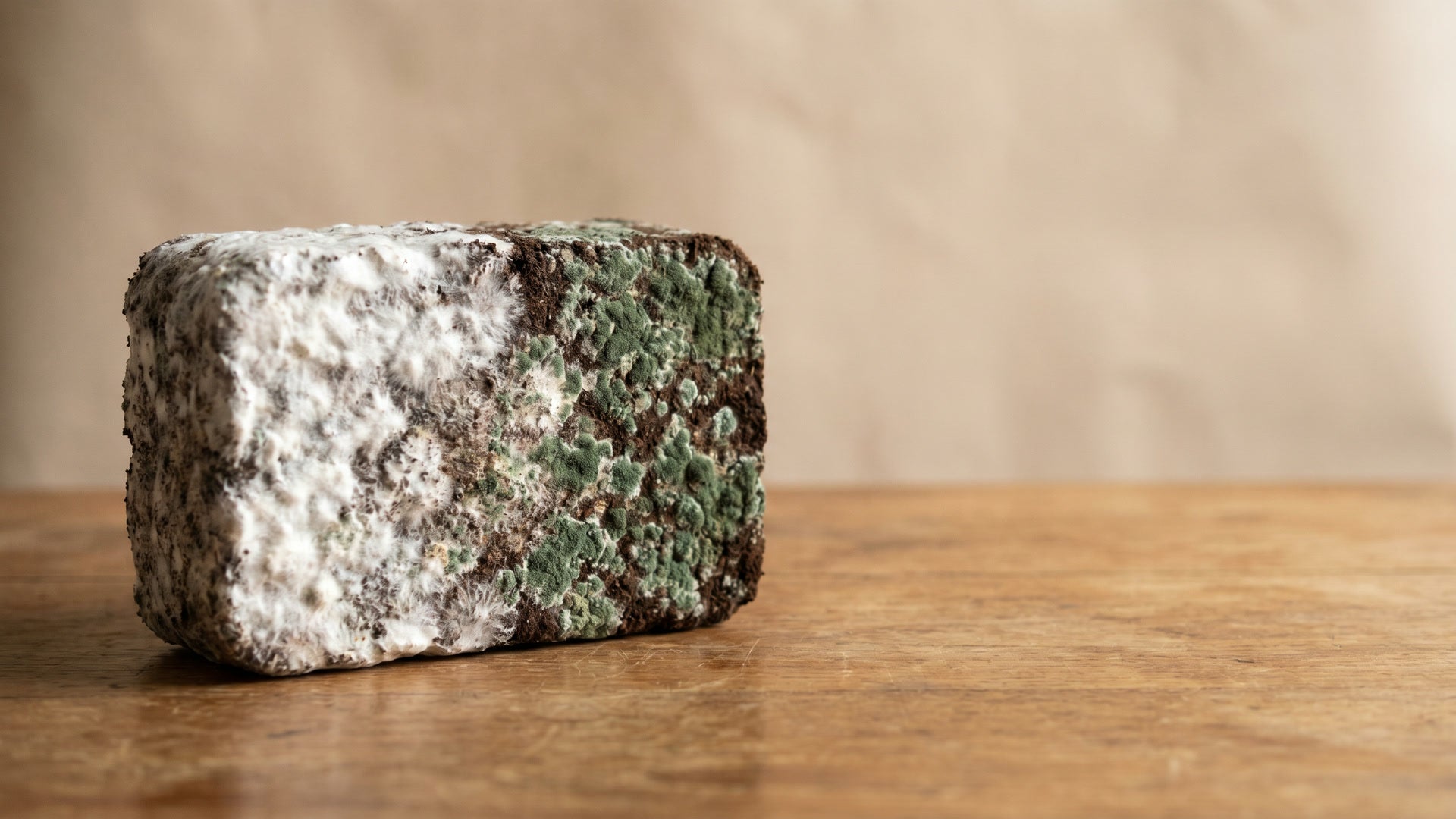
Last on the list because it's the least common. Real contamination shows up as visible patches of color: green (Trichoderma), black (Aspergillus), pink (bacterial), or a slimy wet surface that smells sour or like cat urine.
If you see any of those signs, do not soak the block (you'll spread the contaminant). Isolate it, clean any reusable equipment with a 10 percent bleach solution, and start with a fresh block.
Lykyn tip: A clean white mycelium surface with no pins is NOT contamination. Pure white = healthy and sleeping. Save your panic for the day you see green or black.
For a deeper look at what real contamination actually looks like, see our guide on the types of mushroom contamination.
For a deeper dive into the pinning phase itself, our mushroom pinning guide walks through what healthy pins look like at every stage. And if pins do appear but then die back, see our aborted mushroom pins guide for that specific recovery sequence.
How an Automated Chamber Handles All 7 Conditions

These 7 reasons trace to one root cause: the home grower has to manually juggle four variables (humidity, temperature, FAE, light) plus time the cold shock. That's a lot for what should be a simple first harvest.
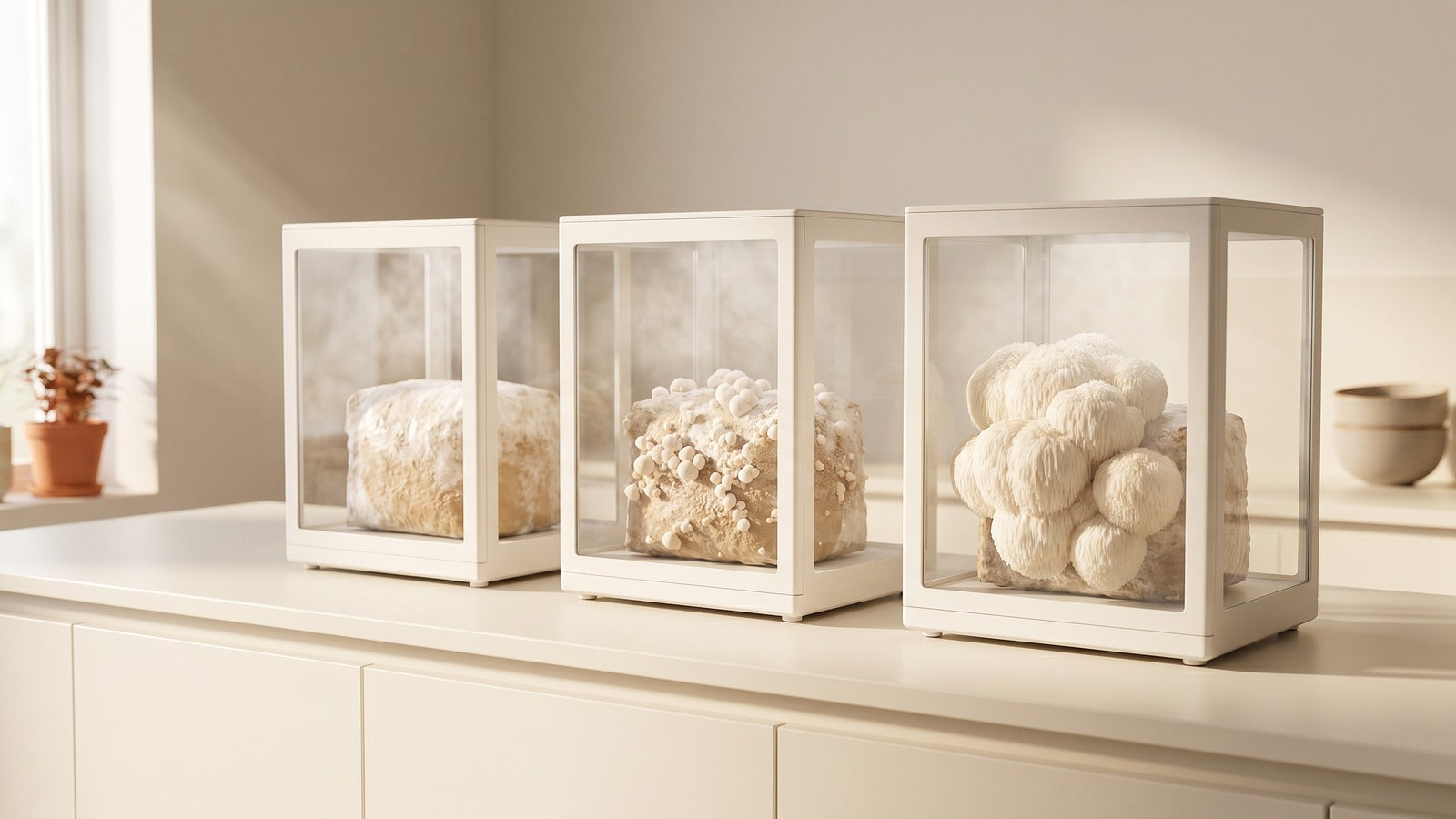
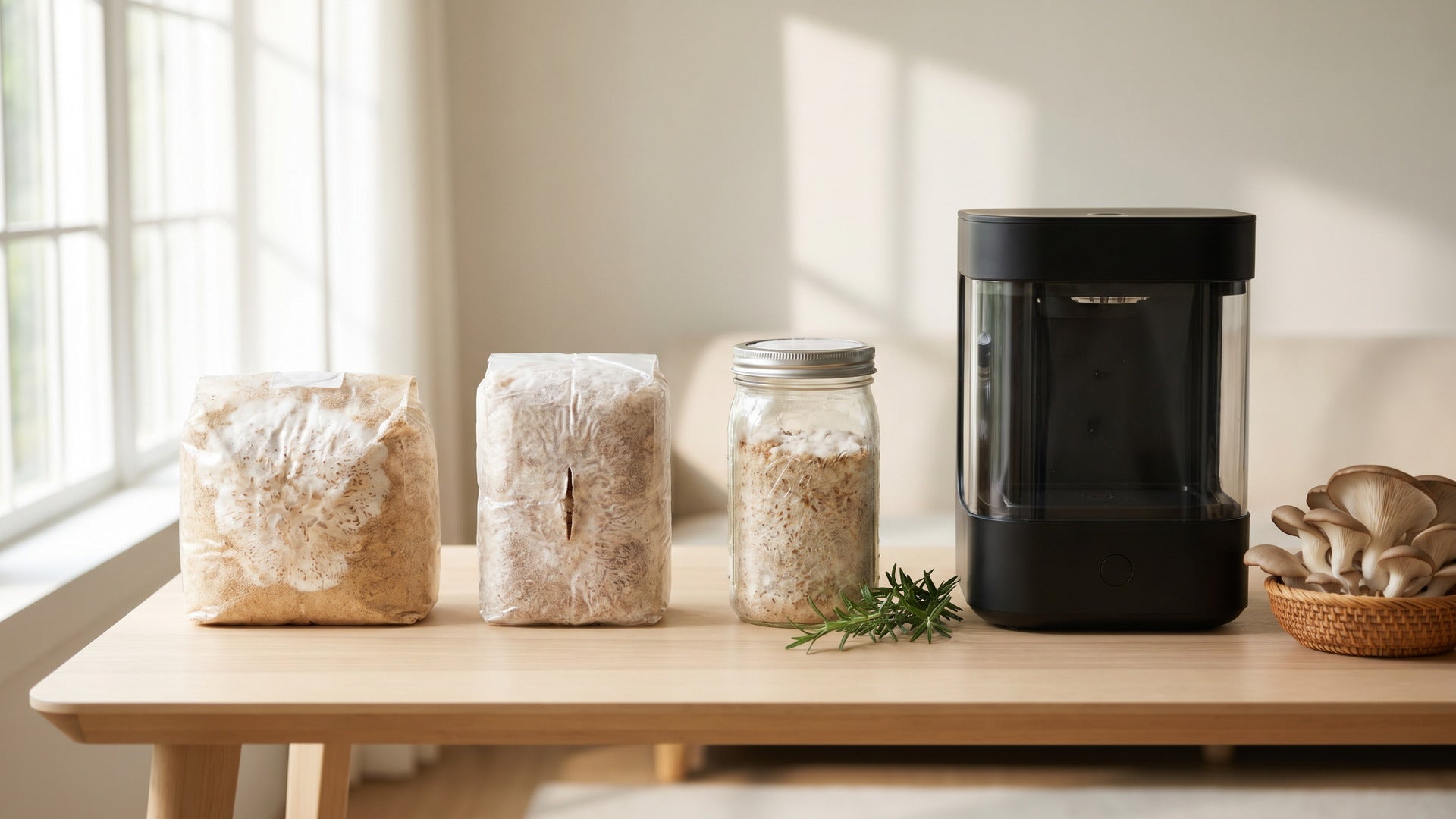
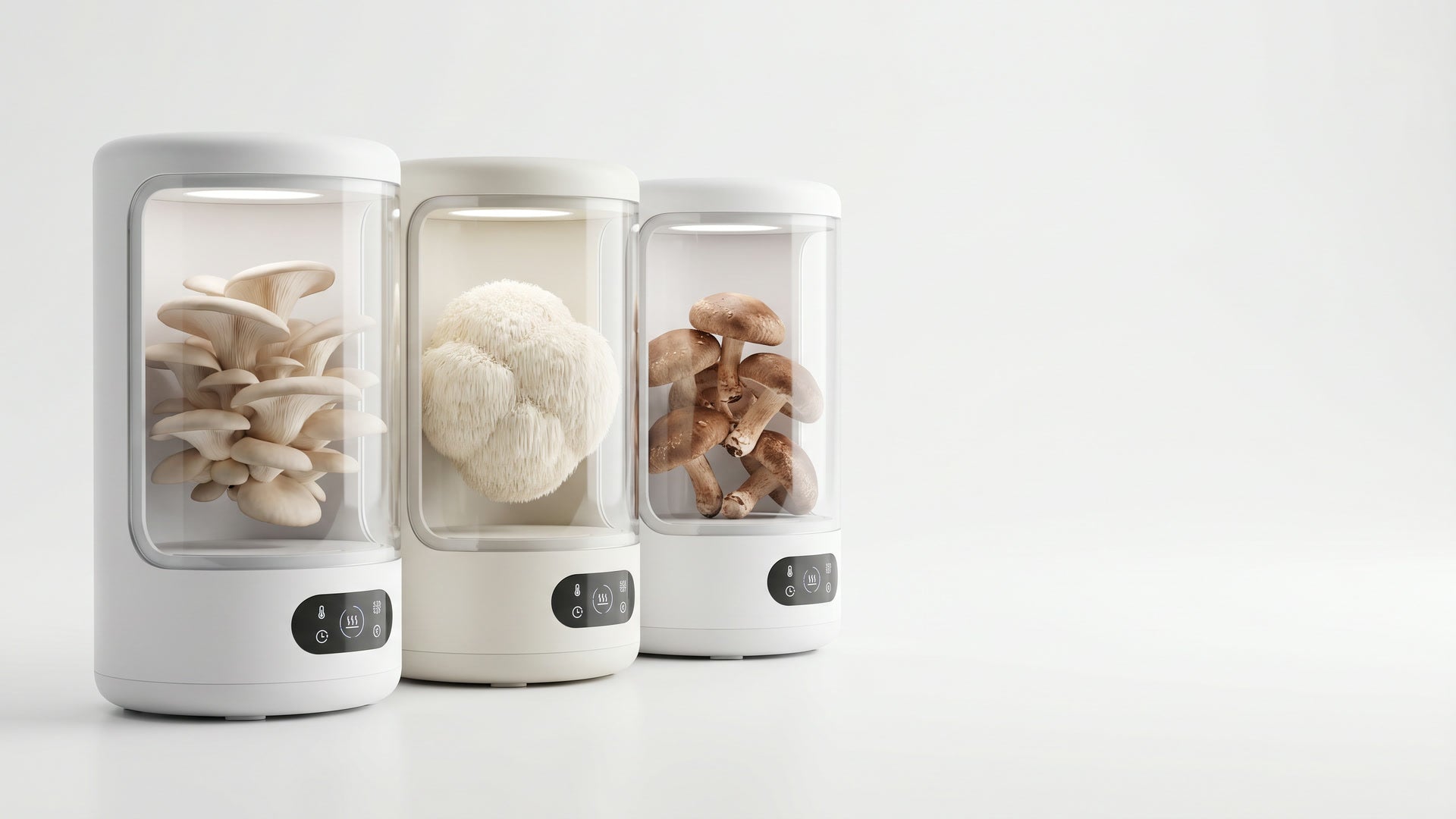
The Lykyn Smart Mushroom Grow Box was built for exactly this. Humidity holds at 85 to 95 percent via an ultrasonic humidifier with a ±2 percent RH sensor. Fresh air exchange runs on two variable-speed fans cycling CO2 out on a species-specific schedule. A Blue/Red/Green LED panel handles the light trigger. The built-in filter cuts the contam risk, which is the only one of these 7 reasons that can actually destroy a block.
If you've been stuck at no-pinning for weeks, the Lykyn mushroom fruiting chamber is purpose-built for this problem. Pair it with a pre-colonized indoor mushroom growing kit and your next grow won't need a 7-step rescue.

Fuel Your Mushroom Journey
Smart Mushroom Grow Chamber
Plug-and-play smart chamber with humidity, light, and airflow dialed in for every species. Beginners harvest their first flush in days, not months.
Add to cart $299Species-Specific Quirks: Lion's Mane vs Oyster vs Shiitake

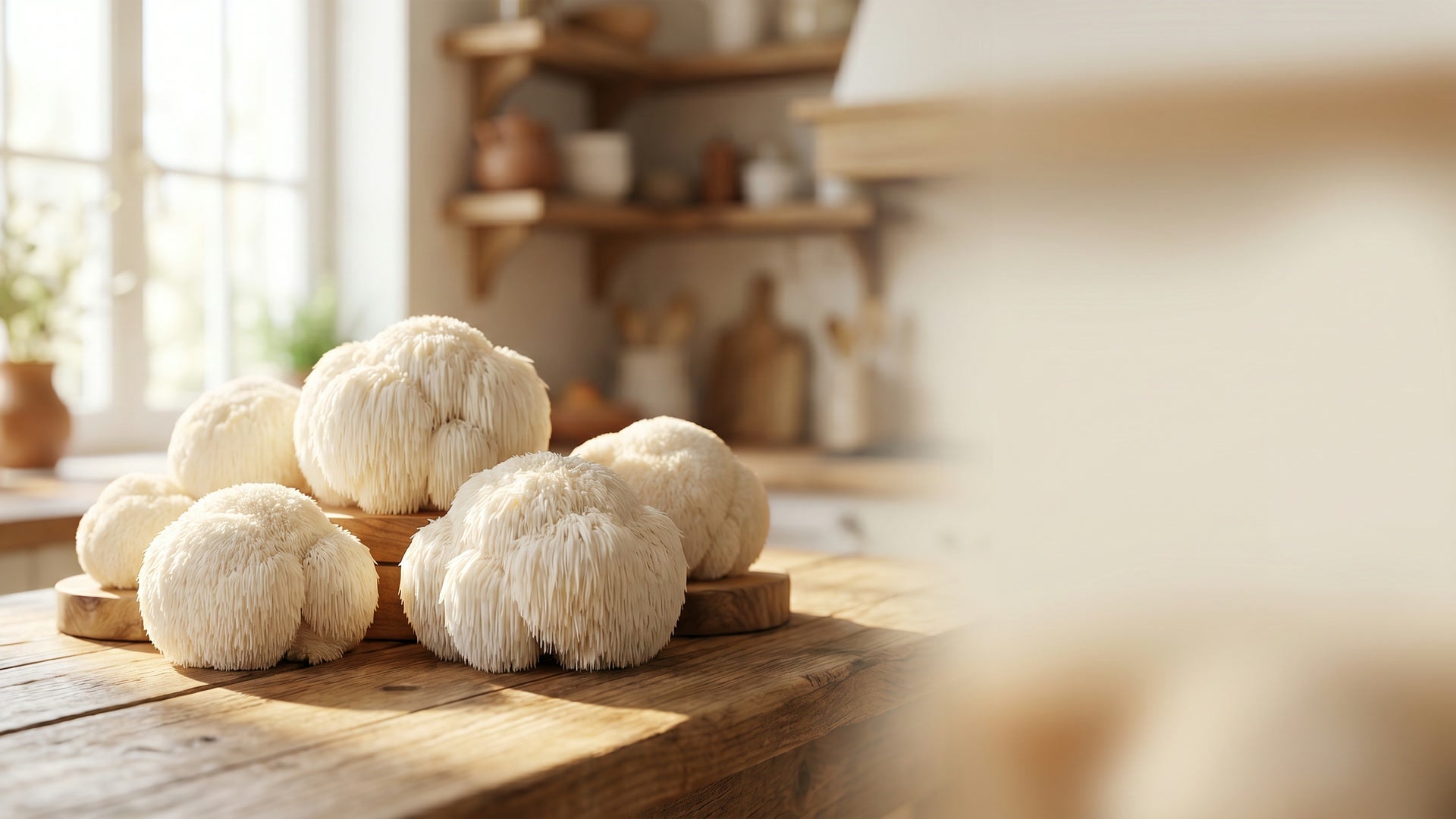
Lion's Mane is patient. After cold shock it can take 7 to 14 days for pins to show. Pins start as small white globs, not rounded oyster bumps. Resist over-misting; Lion's Mane hates being wet and will abort. Aim for 90 to 95 percent humidity with strong FAE so condensation doesn't drip on the pins.
Oyster mushrooms (Blue, Pink, Yellow, King) are the fastest. Pins usually appear 3 to 7 days after cold shock. Blue Oyster needs the lowest temperatures and stalls fastest in a warm room. Pink Oyster is the opposite: it refuses to fruit below 70°F. Mismatch the temperature and no amount of humidity will save the grow.
Shiitake is trickiest. It wants two soaks (12 hours plus a second 1-hour) and benefits from being removed from the bag entirely after colonization. Shiitake also produces a brown skin (the "popcorn stage") before pins form, which growers often mistake for contamination. The brown skin is normal and necessary.
This biology is grounded in published research: Penn State's Mushroom Research Center on temperature/FAE thresholds for Pleurotus species, Cornell's Small Farms Program on Lentinula edodes (Shiitake) fruiting initiation, and peer-reviewed work on Pleurotus ostreatus in journals like Fungal Biology and Mycologia. The cold-shock-to-pinning sequence is mediated by sudden temperature drops and increased oxygen, not by any single nutrient. This isn't folklore. It's reproducible biology.
Frequently Asked Questions
Why is my mushroom block not fruiting?
Almost always a missing fruiting trigger: cold shock, humidity, or fresh air exchange. A fully colonized white block is healthy and asleep. Refrigerate it for 12 to 24 hours, soak briefly, cut openings, then hold 85 to 95 percent humidity with regular FAE. Pins appear in 5 to 10 days.
How long does it take for a colonized block to start pinning?
After cold shock and proper setup: oyster species 3 to 7 days, Lion's Mane 7 to 14 days, Shiitake 10 to 21 days. If you've waited longer than 14 days with no white bumps, run the 7-step recovery sequence.
Why is my fully colonized block not producing pins?
One of four missing signals: temperature shock, humidity, fresh air, or moisture. Run through the 7 reasons in order; it's nearly always reason 1, 2, or 3.
Can a stalled mushroom block be revived?
Yes, in most cases. As long as the block is mostly white, has no green or black contamination, and weighs close to its original weight, it can be revived with a cold shock and soak. Even blocks dormant for 2 to 4 weeks can pin after a proper reset.
How do I cold shock a mushroom block?
Place the bagged block on the middle shelf of your refrigerator (35 to 40°F) for 12 to 24 hours. Remove it, let it warm to room temperature, cut fruiting openings, and move it into 85 to 95 percent humidity. The temperature drop is the wake-up signal.
Why are my mushrooms aborting before they form pins?
Almost always humidity crashes or CO2 spikes between misting cycles. The fix is sustained 85 to 95 percent humidity with steady fresh air. See our aborted mushroom pins guide for the full recovery sequence.
How much fresh air does a fruiting block need?
Enough to keep CO2 below 1,000 ppm. In practice: fan fresh air across the block 3 to 4 times daily for 30 seconds, or run a continuous low-speed fan. In a Lykyn Smart Mushroom Grow Box, fans cycle on a species-specific schedule.
When should I give up on a mushroom block?
Only when one of these is true: visible green, black, or pink contamination across more than 25 percent of the surface; block weighs less than half its original weight; you've already harvested 3 flushes; or you've run the full 7-step recovery twice with no pinning. Otherwise, be patient.
Ready to take the guesswork out? The Lykyn Smart Mushroom Grow Box automates humidity, fresh air exchange, light, and temperature staging in one quiet, app-controlled chamber. Pair it with a fresh pre-colonized block and your next grow won't need a 7-step rescue. Start growing today.
Fuel Your Mushroom Journey

Smart Chamber. Bone White Single
- 2.8L tank, 90% humidity automatic
- App-controlled, plug-and-play
- 6 lb block ceiling, in stock

Smart Chamber. Obsidian Black Single
- Same hardware as Bone White
- Matte black premium finish
- Pairs with any kitchen palette

Share:
Lykyn vs FreshCap: Honest Comparison (Chamber vs Tincture Brand) 2026
Lykyn vs FreshCap: Honest Comparison (Chamber vs Tincture Brand) 2026