


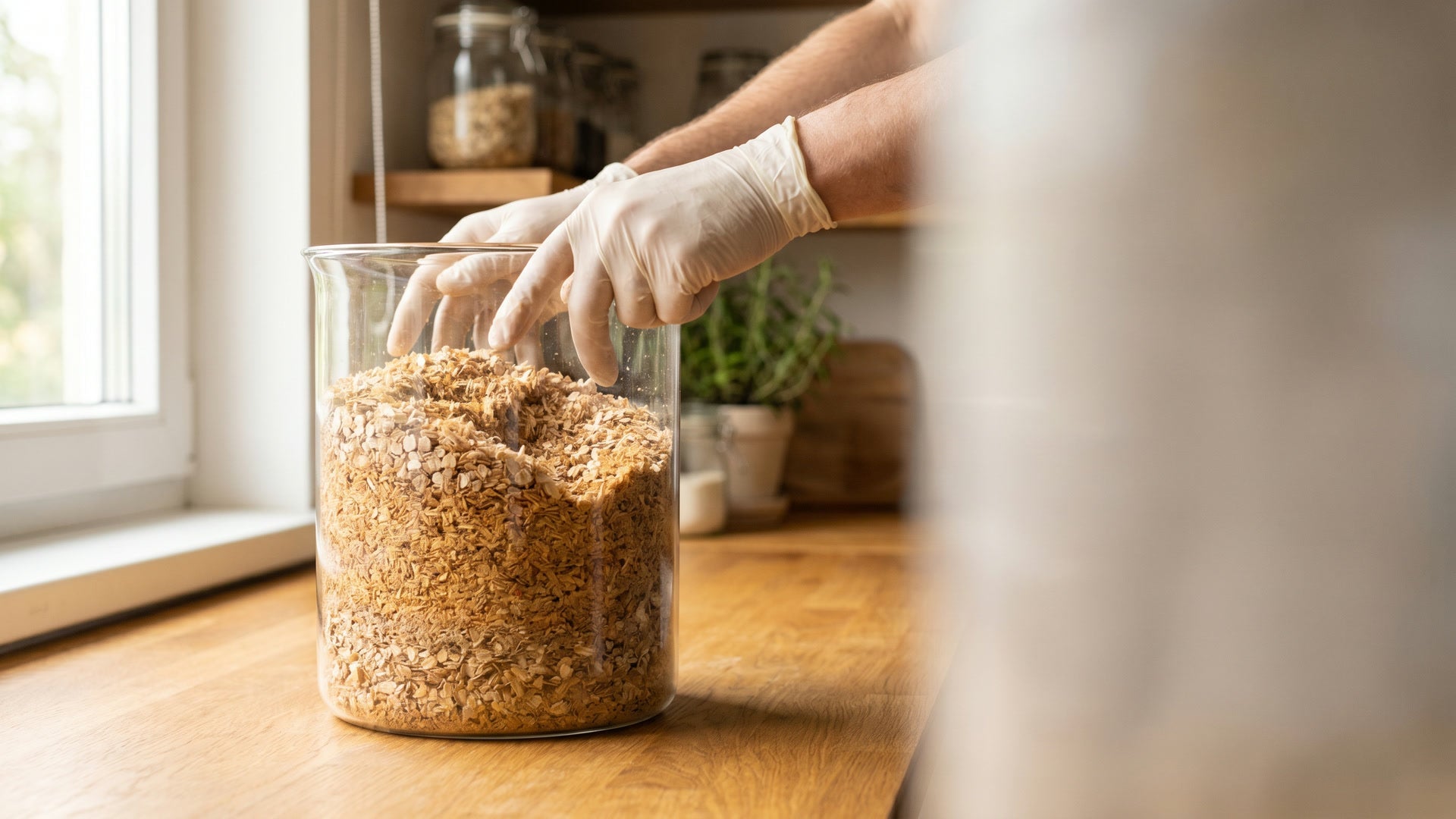
A pioppino grow kit is a hardwood-sawdust fruiting block inoculated with Agrocybe aegerita (black poplar mushroom) that produces tight clusters of slender stems and chestnut-brown caps in 14 to 21 days. Yield per block is roughly 0.75 to 1 pound across 2 flushes. The flavor is earthy, peppery, and slightly nutty. The Italian heritage mushroom for risotto, pasta, and braises. Not beginner-friendly but deeply rewarding.

Pioppino is the mushroom you bring home from a truffle-hunting grandfather, not the one you find in a grocery store. Italian home cooks have dried pioppino in pantry jars for generations. Chinese markets sometimes carry it under the name "tea tree mushroom" or "cha shu gu." In the US, you will almost never see it fresh unless you grow it yourself. That is the whole reason a pioppino grow kit matters.
This guide walks through picking a pioppino kit, understanding the 14-to-21-day timeline, and the Italian kitchen traditions that make this mushroom a seasonal staple. We build and sell a smart chamber and fresh fruiting blocks, so take our perspective with that context. Lykyn is a small California company making automated grow chambers and fresh mushroom blocks for home kitchens.
What Is a Pioppino Grow Kit
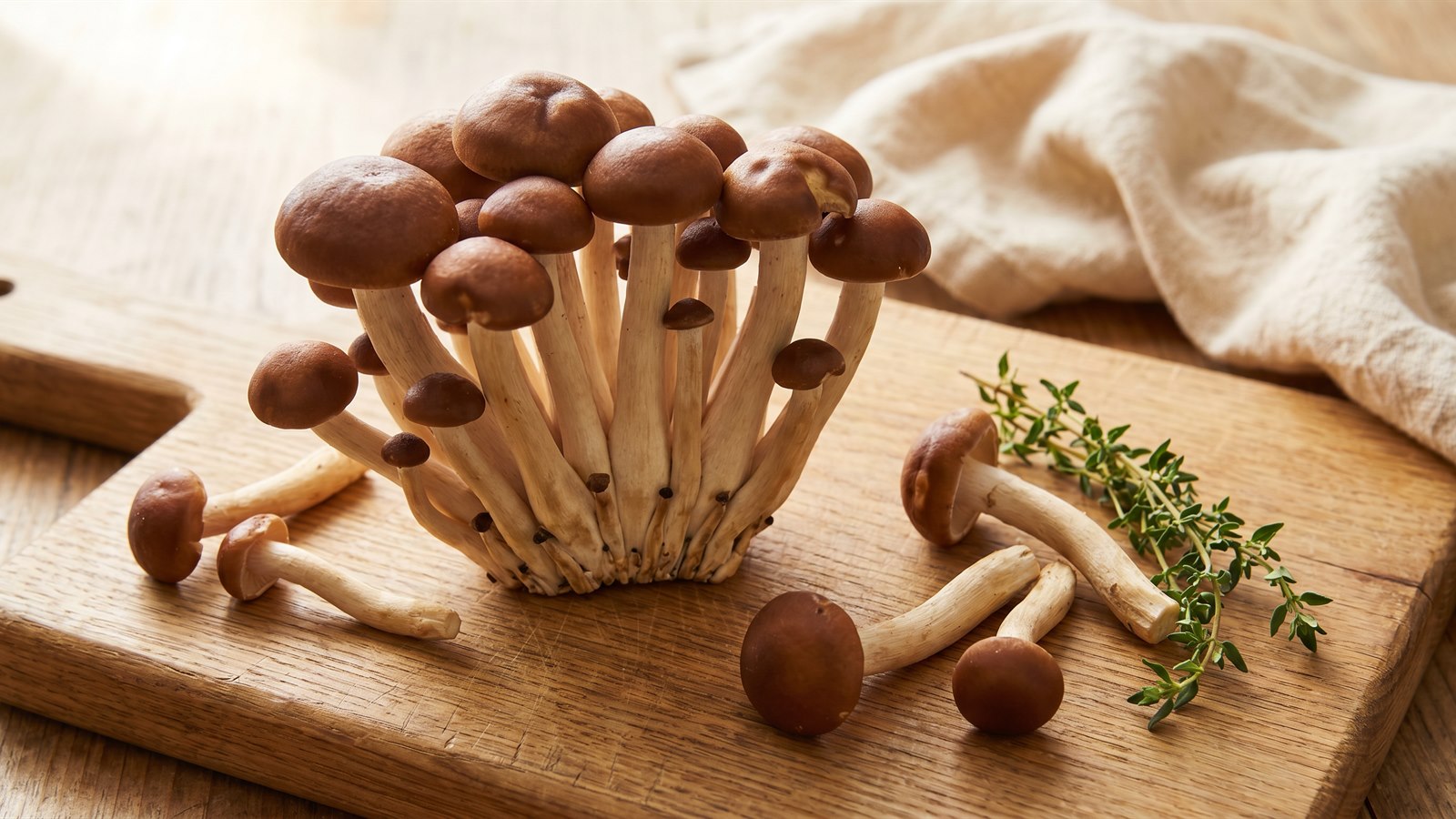
A pioppino grow kit is a pre-colonized hardwood-sawdust fruiting block inoculated with Agrocybe aegerita mycelium. The Italian black poplar mushroom, also called pioppini, piopparello, or willow agrocybe. The block fruits into tight bouquet-like clusters of slender cream-beige stems topped with glossy chestnut-brown hemispheric caps.
A Niche Species With a Long History
Pioppino has been foraged and cultivated in Italy since Roman times. It traditionally grew on poplar (pioppo) stumps, hence the name. It is one of the few true "cluster-forming" cultivated mushrooms. The stems grow together in dense bouquets of 20 to 40 individual mushrooms, not separate fruiting bodies.
The global mushroom growing kit market is dominated by oyster (35%) and shiitake (25%) according to Market Report Analytics (2025). Pioppino, enoki, and similar "heritage specialty" species split the remaining 20% of the market together. The specialty category is growing at 10.5% CAGR in US foodservice (Mushroom Council, 2024) as chefs seek ingredients customers cannot find at a grocery store.
What's in the Box
Most pioppino kits include:
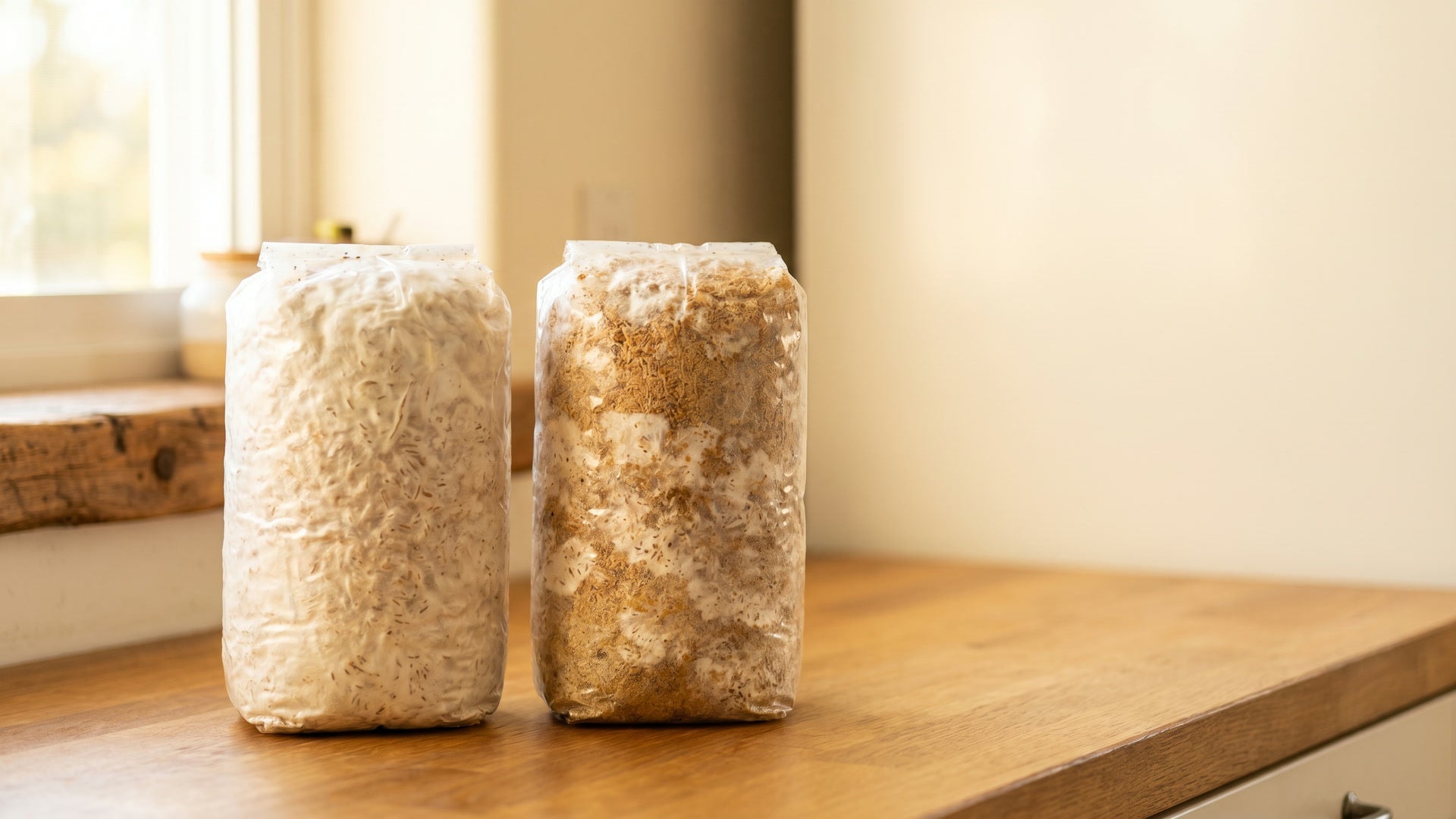
- A pre-colonized hardwood sawdust block (3 to 6 pounds)
- A breathable humidity bag
- Instructions for a top-fruiting setup
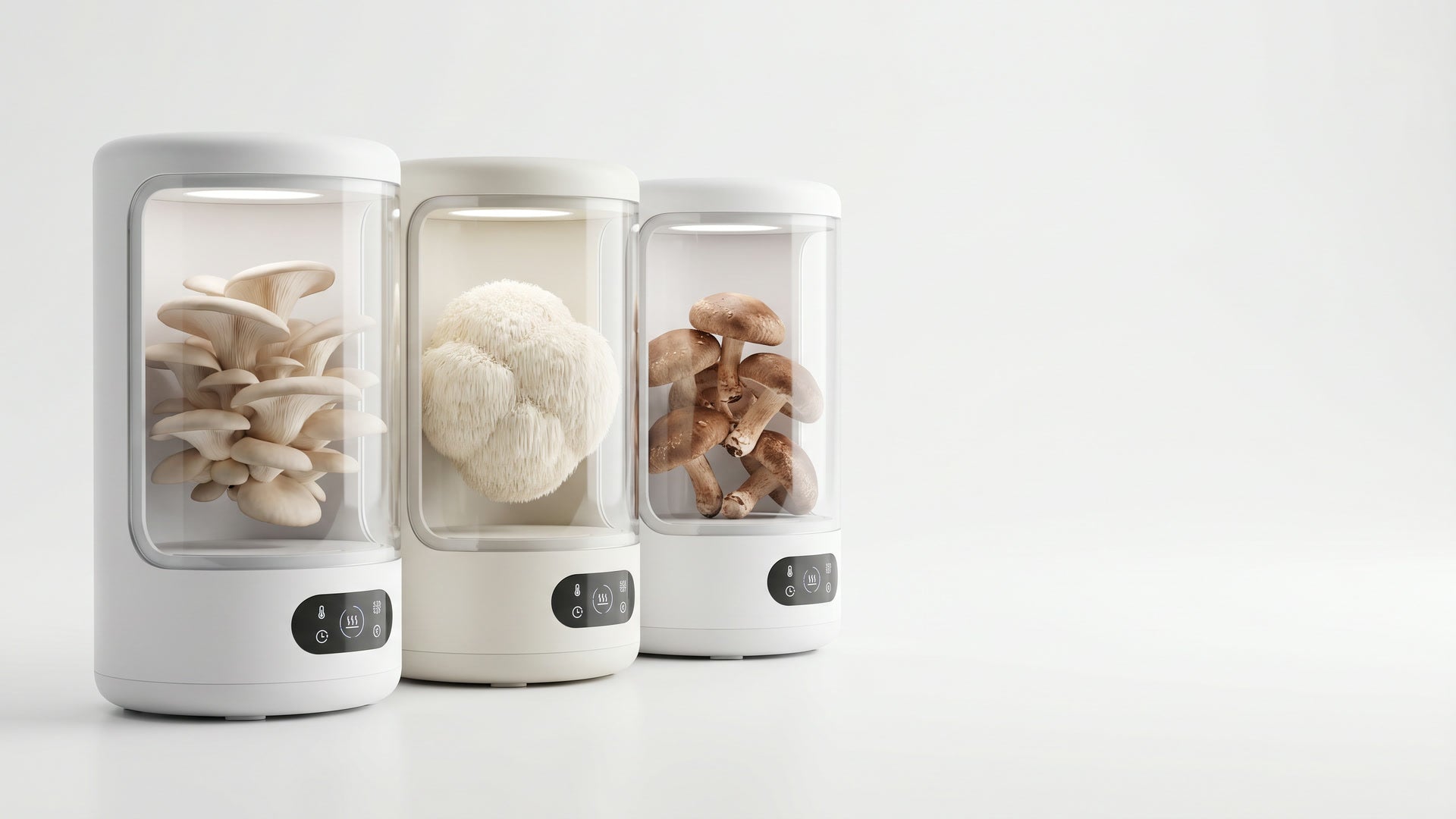
A Lykyn smart fruiting chamber supports up to a 6-pound block and runs the Pioppino preset on-board. The chamber caps on other platforms (some category alternatives 1.5 lbs) and availability gaps at some crowdfunded alternatives mean home growers have limited chamber options for specialty species like pioppino.
Why Grow Pioppino Instead of Buy
If you want fresh pioppino, growing it yourself is often the only option. Fresh pioppino almost never appears in US supermarkets. Specialty Italian markets sometimes carry dried. Asian markets occasionally stock fresh "tea tree mushrooms" (the same species). When you do find fresh, expect $18 to $30 per pound.
The second reason is cluster quality. Commercial pioppino is often sold as stems cut individually, which loses the visual drama of the natural cluster formation. A home-grown bouquet of 30+ stems fused at the base is genuinely beautiful as a plating element. A whole cluster on a plate dressed with olive oil and sea salt is a course.
The third reason is freshness. Pioppino has a delicate aroma that fades within 4 to 5 days of harvest. Home-grown, cooked that afternoon, captures a peppery-nutty top note that imported pioppino has always lost.
Customer proof: "I have been growing mushrooms for years and this is my new favorite grow box.". Rebecca T.

How the Lykyn Chamber Runs Pioppino
Pioppino is less forgiving than oyster and more forgiving than shiitake. It wants moderate temperatures (60 to 75F), high humidity (90 to 95%), and moderate light. It does not need a cold shock like shiitake. A chamber handles the humidity and airflow automatically.
Picking the Preset
Open the Lykyn app, pick "Pioppino" from the species list. The preset writes to the chamber's on-board memory. That is the only moment the app touches the cloud for the grow.
Autonomous Runtime
Once the preset is saved on-device, the chamber runs autonomously. No daily app interaction. No cloud heartbeat. If your Wi-Fi drops, your phone dies, or Lykyn's servers go offline, the grow keeps running. The preset lives in the device's own memory. If Lykyn disappeared tomorrow, the unit on your shelf would still finish your grow. Full context in our honest answer on app-dependent hardware.
Why the Chamber Matters for This Species
Pioppino clusters need sustained 90%+ humidity during pinning or the clusters split into separate small mushrooms instead of forming the distinctive tight bouquets. Manual misting 4 times a day can maintain this, but any miss causes the cluster to fragment.
| Method | Cluster Formation | First-Grow Success | Daily Effort |
|---|---|---|---|
| Plastic tote, manual mist | Often fragmented | ~40% | 15 min, 4x/day |
| Shotgun DIY chamber | Partially clustered | ~60% | 10 min, 2x/day |
| Automated chamber (Lykyn) | Full tight bouquets | 85%+ | ~2 min/day |
Honest Limits of Pioppino Grow Kits
Slowest of the common cultivated species. Pioppino takes 14 to 21 days from setup to first harvest. Primordia emerge in 7 to 10 days, and cluster development takes another 7 to 11. If you need a fast win, grow pink oyster first.
Lower yield than oyster or shiitake. A 6-pound pioppino block yields 0.75 to 1 pound of fresh mushroom across 2 flushes. About 25 to 40% less than an equivalent oyster block. This is species biology, not kit failure. Budget your expectations accordingly.
Sensitive to humidity drops during cluster formation. If humidity drops below 85% during days 7 to 14, clusters fragment into separate small mushrooms instead of forming tight bouquets. The mushrooms are still edible, but the visual and culinary appeal of the intact cluster is lost.
Moderate temperature only. Pioppino fruits best between 60 and 75F. Outside this range, primordia abort. Our chamber regulates humidity and airflow, not temperature. If your kitchen runs warmer than 75F in summer, consider delaying pioppino until fall.
Step-by-Step: 18-Day Pioppino Timeline
Day 0: Setup
- Unbox the fruiting block. Pioppino blocks often show a slight pale yellow coloration on the surface. Normal.
- Open the top of the bag entirely if using a chamber, or cut a single 2-inch slit on top if manual.
- Place the block in the chamber. Pick "Pioppino" preset in the app. Fill water reservoir.
Days 1 to 7: Dormancy
Nothing visible happens for the first week. The mycelium is gathering energy and preparing to fruit. Do not intervene. Do not worry. This slow phase is normal for pioppino and is why the species is less beginner-friendly than oyster.
Days 8 to 12: Primordia Formation
Small pale bumps emerge on the block surface, gradually darkening from cream to pale tan. These are primordia. Baby pioppinos. Humidity must stay at 90 to 95% during this phase or the cluster will not form properly.
Days 13 to 18: Cluster Development
Primordia fuse into tight bouquet-like clusters of 20 to 40 stems with slightly darker caps. Caps develop from pale tan to glossy chestnut-brown as they mature. Stems stay slender, cream-colored, about 3 to 4 inches tall at maturity.
Days 18 to 21: Harvest
Harvest when caps are fully chestnut-brown and slightly shiny but still hemispheric (not yet flat). The ideal harvest window is narrow. Caps flatten and start releasing spores within 1 to 2 days of full maturity. Twist the entire cluster off at the base.
A 6-pound block yields roughly 0.75 to 1 pound of fresh pioppino across 2 flushes.

Fuel Your Mushroom Journey
Smart Mushroom Grow Chamber
Plug-and-play smart chamber with humidity, light, and airflow dialed in for every species. Beginners harvest their first flush in days, not months.
Add to cart $299Harvesting, Cooking, and Storing Pioppino
The Italian Tradition
Pioppino is the mushroom Italian home cooks reach for in autumn. The flavor is peppery, nutty, and earthy with a slightly crunchy stem texture that holds up in long cooking.
Classic preparations:
Pioppino risotto: Cook arborio rice in broth with olive oil, onion, and white wine. Fold in sauteed pioppino clusters (tear into individual mushrooms before cooking), a handful of Parmigiano, a knob of butter, fresh thyme, cracked black pepper. Finish with flake salt.
Pioppino pasta: Saute torn pioppinos with garlic and red pepper flakes in olive oil. Toss with tagliatelle, pasta water, and plenty of grated Parmigiano. A squeeze of lemon at the end.
Braised pioppino with beans: Slow-braise whole clusters in tomato, white wine, and white beans (cannellini or flageolet) for 30 minutes. Serve with crusty bread.
Pioppino handles long cooking better than oyster or shiitake. The stems get more tender without disintegrating, and the flavor concentrates rather than fading.
How to Store
Fresh pioppino keeps 7 to 10 days in a paper bag in the fridge. For long-term storage, dry the whole cluster at 110F for 8 hours until brittle, then store in an airtight jar. Dried pioppino rehydrates beautifully for winter risottos and braises. The soaking liquid itself makes a deep umami broth.

Frequently Asked Questions
What is a pioppino mushroom? A pioppino mushroom is Agrocybe aegerita, also called Italian black poplar mushroom, piopparello, tea tree mushroom, or willow agrocybe. It grows in tight bouquet-like clusters of 20 to 40 slender stems topped with chestnut-brown hemispheric caps. The flavor is earthy, peppery, and nutty with a slightly crunchy texture.
How long does a pioppino grow kit take? A pioppino grow kit produces mushrooms in 14 to 21 days from setup. The first 7 days are a visual dormancy where nothing appears. This is normal. Primordia emerge days 8 to 12, and clusters mature over days 13 to 18. Yield per block is 0.75 to 1 pound across 2 flushes.
Is pioppino a good beginner mushroom? No. Pioppino is more demanding than oyster, lion's mane, or most common species. It has a longer timeline (14 to 21 days vs 5 to 14), lower yields, and requires strict humidity for cluster formation. Start with pink oyster for a first grow, then try pioppino as your third or fourth species.
What does pioppino mushroom taste like? Pioppino has an earthy, peppery, and nutty flavor. Reminiscent of chestnuts and black pepper with a slight bitter edge. The stems have a pleasant crunch that holds up in long cooking. Italian home cooks use it like porcini, but with a brighter, less muddy profile.
Can I grow pioppino without an automated chamber? You can, but cluster formation suffers. Pioppino needs sustained 90%+ humidity during days 7 to 14 to form the distinctive tight bouquets. Manual misting in a plastic tote achieves this about 40% of the time. The mushrooms you get with fragmented clusters are still edible, just less visually and culinarily interesting.
What is the difference between pioppino and tea tree mushroom? They are the same species. Agrocybe aegerita. Sold under different names in different markets. "Pioppino" is the Italian name (from pioppo, poplar tree). "Tea tree mushroom" or "cha shu gu" is the Chinese name. In Chinese grocery stores, you will often find the dried version packaged as cha shu gu.
Bottom Line
A pioppino grow kit is for home cooks who want access to an Italian heritage mushroom that almost never appears fresh in US markets. The 14-to-21-day timeline is slow. The yield is lower than oyster or shiitake. But the reward is a mushroom with a peppery-nutty flavor and crunchy-stem texture that holds its own in long cooking and makes autumn risotto genuinely special.
Start with a single Pioppino block in the main Lykyn chamber. Rotate species over cycles from our full mushroom fruiting blocks collection. See how different kits compare in our 2026 grow kits guide. Real customer first-grows are on our reviews page.
We are a small team. We answer our own email. Pioppino is a species where we lean into helping. It is our favorite species to coach beginners through. If your cluster fragments, we will help you dial in humidity or send a replacement block. That is the deal.
Fuel Your Mushroom Journey

Smart Chamber. Bone White Single
- 2.8L tank, 90% humidity automatic
- App-controlled, plug-and-play
- 6 lb block ceiling, in stock

Smart Chamber. Obsidian Black Single
- Same hardware as Bone White
- Matte black premium finish
- Pairs with any kitchen palette
Share:
King Trumpet Grow Kit: King Oyster From Counter to Stir-Fry
Lion's Mane for Brain Fog - Fresh vs Supplement Truth