


You're standing in your kitchen with a container of white button mushrooms, ready to start cooking. But wait, should you wash them? Wipe them? Soak them? The conflicting advice you've heard suddenly floods your mind. Some people insist mushrooms should never touch water, while others rinse them freely. Who's right?
The truth about cleaning white button mushrooms is both simpler and more nuanced than most people realize. The right method depends on how dirty your mushrooms are, how you plan to cook them, and how much time you have. This comprehensive guide cuts through the confusion to give you practical, science-backed techniques for cleaning white button mushrooms properly every single time.
Whether your mushrooms are pristine store-bought specimens or slightly dirty farmers market finds, you'll learn the most effective cleaning methods that preserve flavor, texture, and quality while ensuring food safety. Let's transform those mushrooms from questionable to perfectly clean and ready to cook.

Why Proper Mushroom Cleaning Matters
Before diving into specific techniques, it's important to understand why cleaning mushrooms properly makes such a difference in your final dish.
White button mushrooms grow in composted substrate, typically a carefully controlled mixture of straw, manure, and other organic materials. While commercial mushroom farms maintain strict sanitation standards, some growing medium inevitably clings to harvested mushrooms. You'll also find natural elements like substrate particles, dust from spore release, and occasionally bits of the mushroom's mycelial network (root system).
Improper cleaning can leave grit in your dish that creates unpleasant texture, but overcleaning can waterlog mushrooms, diluting their flavor and creating a soggy texture that prevents proper browning during cooking. The goal is removing unwanted debris while preserving the mushroom's natural moisture balance and concentrated flavor.
Additionally, proper cleaning is a food safety consideration. While commercial mushrooms are relatively clean and safe, removing surface debris eliminates potential bacteria that might be present from handling during harvest, packaging, and transport.
The Great Mushroom Washing Debate: Understanding the Science
You've probably heard passionate arguments on both sides of the washing question. Some chefs insist mushrooms should never touch water, while others routinely rinse them without concern. The truth, as with many culinary debates, lies somewhere in the middle.
The Case Against Washing
The "never wash mushrooms" camp makes valid points backed by mushroom biology. Mushrooms have incredibly porous structures, their cell composition is roughly 80-90% water already. This porous nature means mushrooms can absorb additional moisture quickly when exposed to water.
Excess moisture causes several problems:
- Prevents proper browning and caramelization during cooking
- Creates steam instead of sear when hitting hot pans
- Dilutes the concentrated umami flavors mushrooms are prized for
- Can make the texture slightly slimy or rubbery
- Extends cooking time as you wait for excess water to evaporate
Professional kitchens often avoid washing mushrooms to maintain complete control over moisture content, especially when techniques like sautéing or roasting require relatively dry surfaces for optimal browning.
The Case for Washing (When Done Properly)
However, research has shown that the moisture absorption concern, while valid, is somewhat overstated. Food scientist Harold McGee conducted experiments demonstrating that mushrooms soaked in water for several minutes absorbed only about 2% additional water by weight, a minimal amount that evaporates quickly during cooking.
The key is technique. Brief rinsing or washing doesn't waterlog mushrooms significantly, especially when followed by proper drying. For visibly dirty mushrooms, the benefit of removing grit outweighs the minimal moisture absorption from quick washing.
The Practical Middle Ground
For white button mushrooms specifically, which are typically quite clean when commercially grown, gentle dry cleaning works beautifully for most applications. However, brief water rinsing is perfectly acceptable when mushrooms are dirtier or when dry cleaning alone won't remove stubborn debris.
The critical factor is matching your cleaning method to mushroom condition and your intended cooking technique. High-heat methods (sautéing, roasting, grilling) tolerate brief water exposure better than low-heat preparations where excess moisture becomes more problematic.
Essential Tools for Cleaning White Button Mushrooms
Having the right tools makes mushroom cleaning faster, more effective, and less frustrating. Here's what you need:
Must-Have Tools
Soft Mushroom Brush: A dedicated mushroom brush with soft bristles is the single most valuable tool for cleaning mushrooms. These specialized brushes gently remove debris without damaging delicate caps. Natural bristle brushes or synthetic versions work equally well, soft is the key. A clean, unused paintbrush or soft toothbrush makes an acceptable substitute.
Paper Towels or Clean Kitchen Cloths: Absorbent paper towels or clean, lint-free kitchen cloths work for wiping mushrooms and drying them after any water exposure. Paper towels are particularly useful because they're disposable, no cross-contamination concerns.
Sharp Paring Knife: A small, sharp knife allows you to trim stems, remove blemishes, and cut away any discolored or damaged portions with precision.
Colander (Optional): When you need to rinse multiple mushrooms quickly, a colander provides drainage while you work efficiently.
Nice-to-Have Tools
Salad Spinner (Optional): After rinsing, a salad spinner removes excess water quickly and gently. This tool is especially useful when cleaning larger quantities.
Bowl of Water (Optional): For mushrooms requiring more thorough cleaning, having a bowl of cool water ready makes the process smoother.
Method 1: The Dry Brush Method (Best for Most Situations)
The dry brush method is the gold standard for cleaning commercially grown white button mushrooms in good condition. This technique preserves flavor and texture while removing surface debris effectively.
Step-by-Step Instructions
Step 1: Inspect Each Mushroom Remove mushrooms from their package and examine each one individually. Look for visible dirt, dark spots, or damaged areas requiring attention.
Step 2: Brush Away Debris Using your soft mushroom brush, gently brush each mushroom, working from the cap down to the stem. Pay special attention to the gill area underneath the cap where dirt can accumulate. Use light, sweeping motions rather than aggressive scrubbing.
Step 3: Wipe with Damp Paper Towel (If Needed) For any stubborn spots the brush doesn't remove, use a barely damp (not wet) paper towel to wipe them away. The key is "barely damp", you want minimal moisture transfer.
Step 4: Trim as Necessary Use your paring knife to remove the very bottom of stems if they're dried out or have substrate clinging to them. Cut away any bruised or discolored spots.
Step 5: Final Inspection Give each cleaned mushroom a final once-over to ensure you've removed all visible debris.
When to Use This Method
The dry brush method works best for:
- Clean commercial mushrooms from grocery stores
- Mushrooms you're planning to sauté, roast, or grill at high heat
- Situations where you want maximum browning and caramelization
- Any time you have relatively clean mushrooms with minimal debris
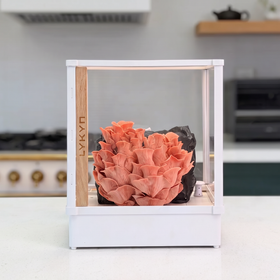
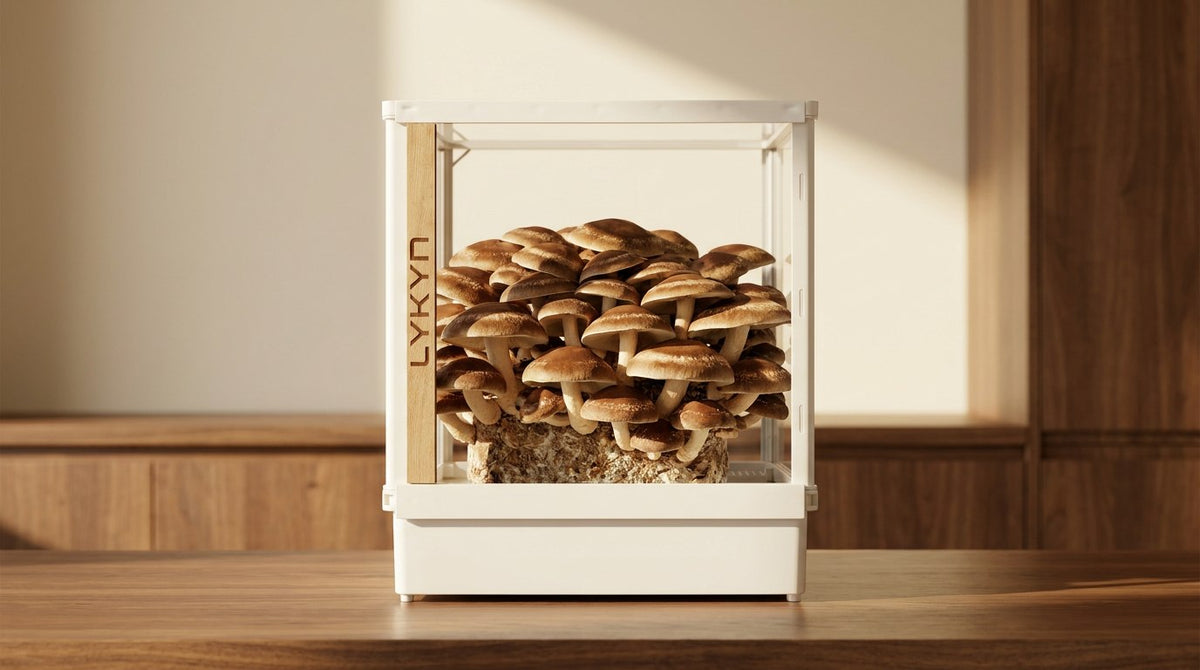
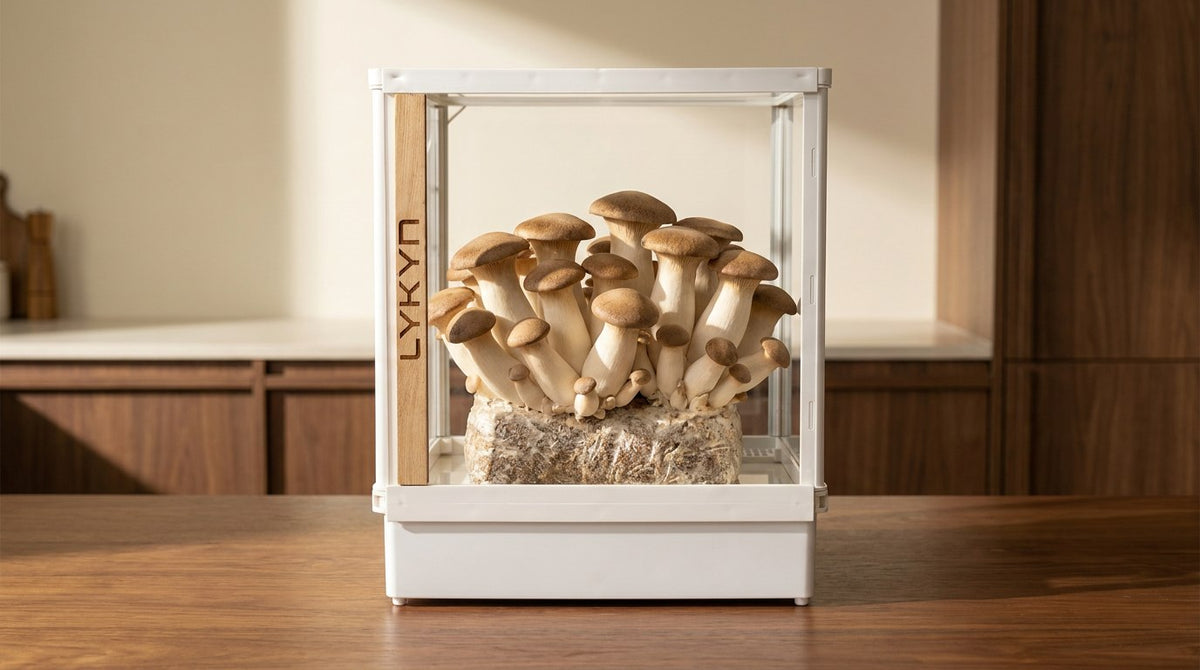
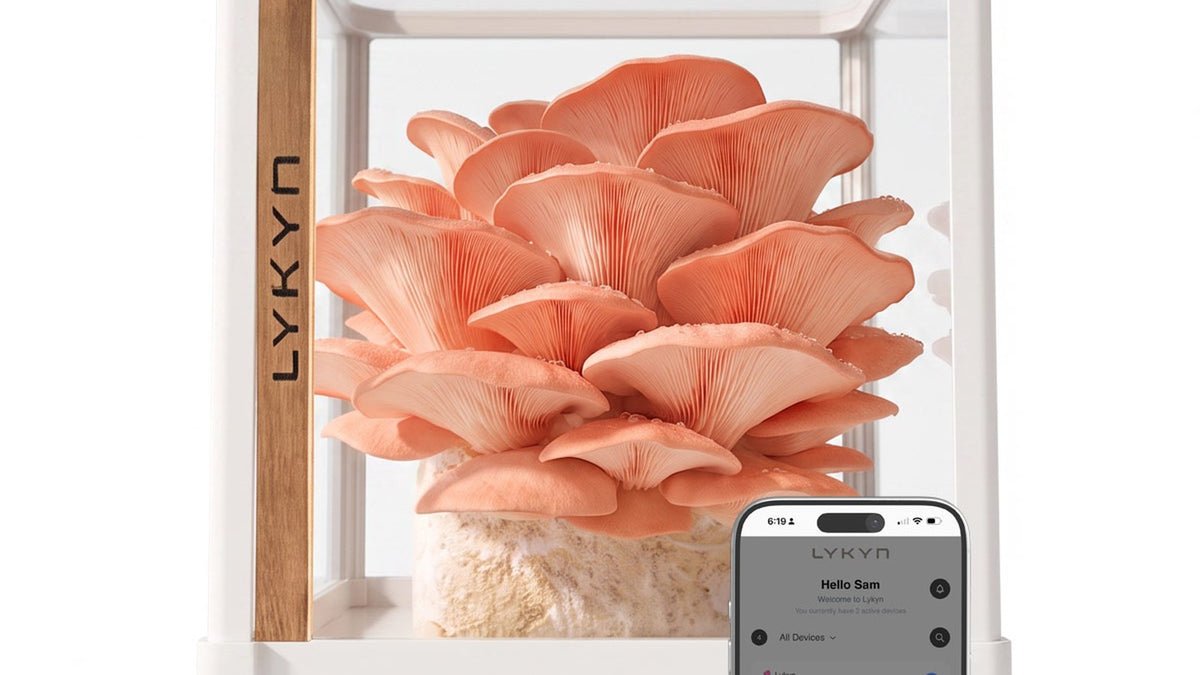
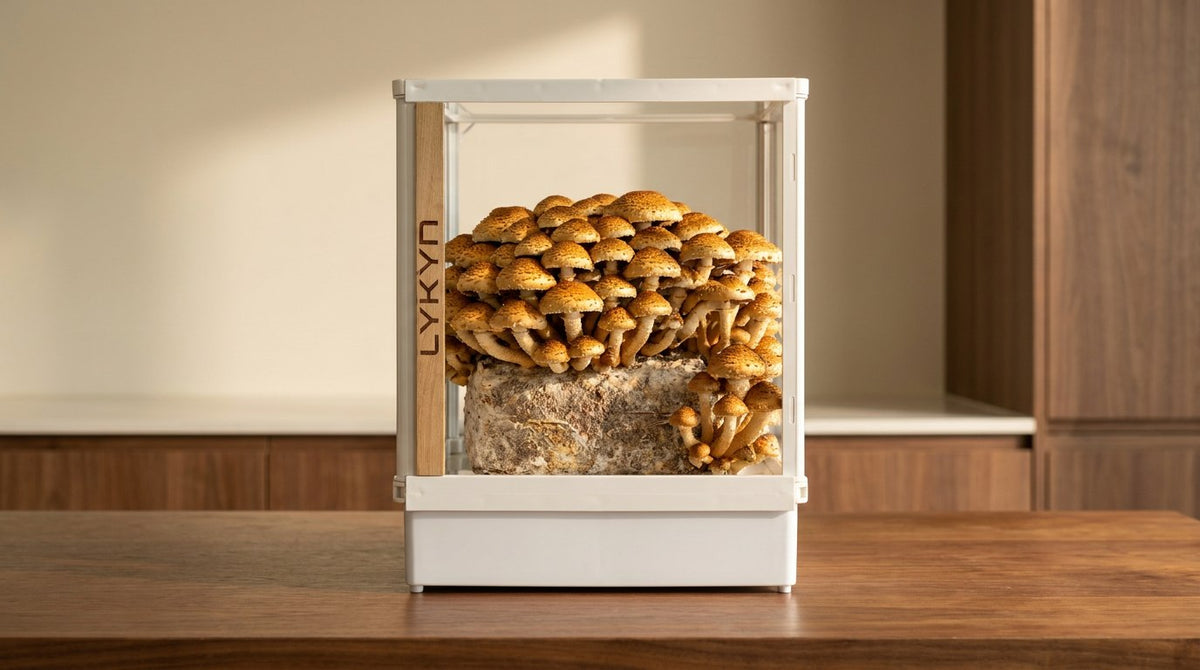
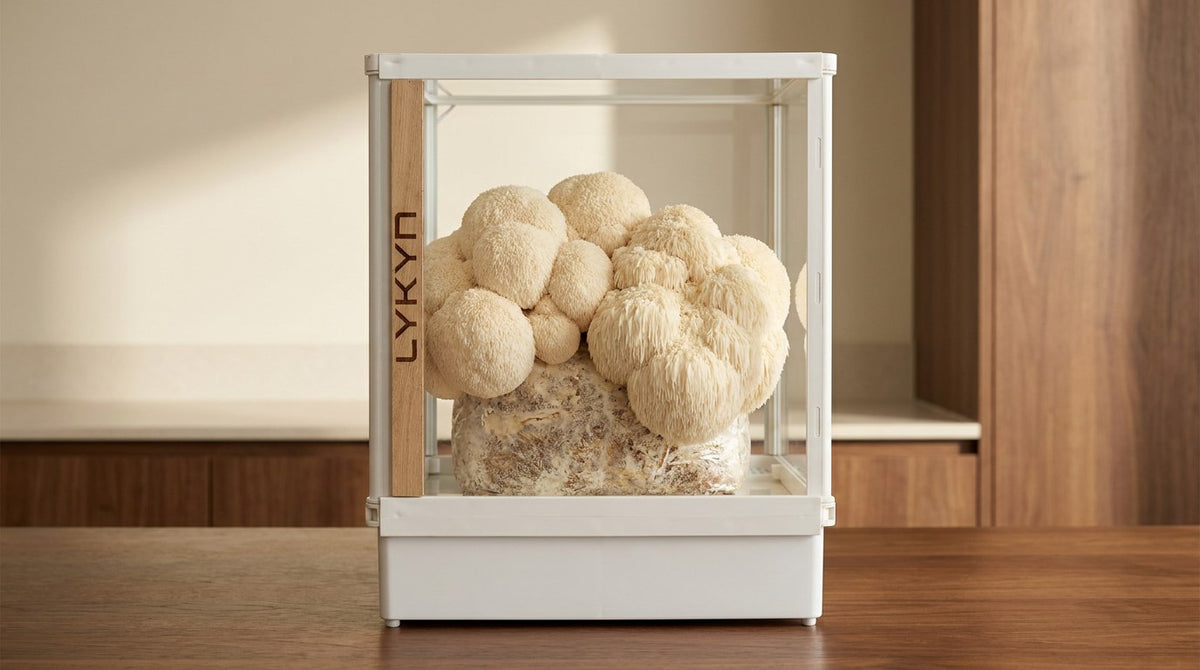
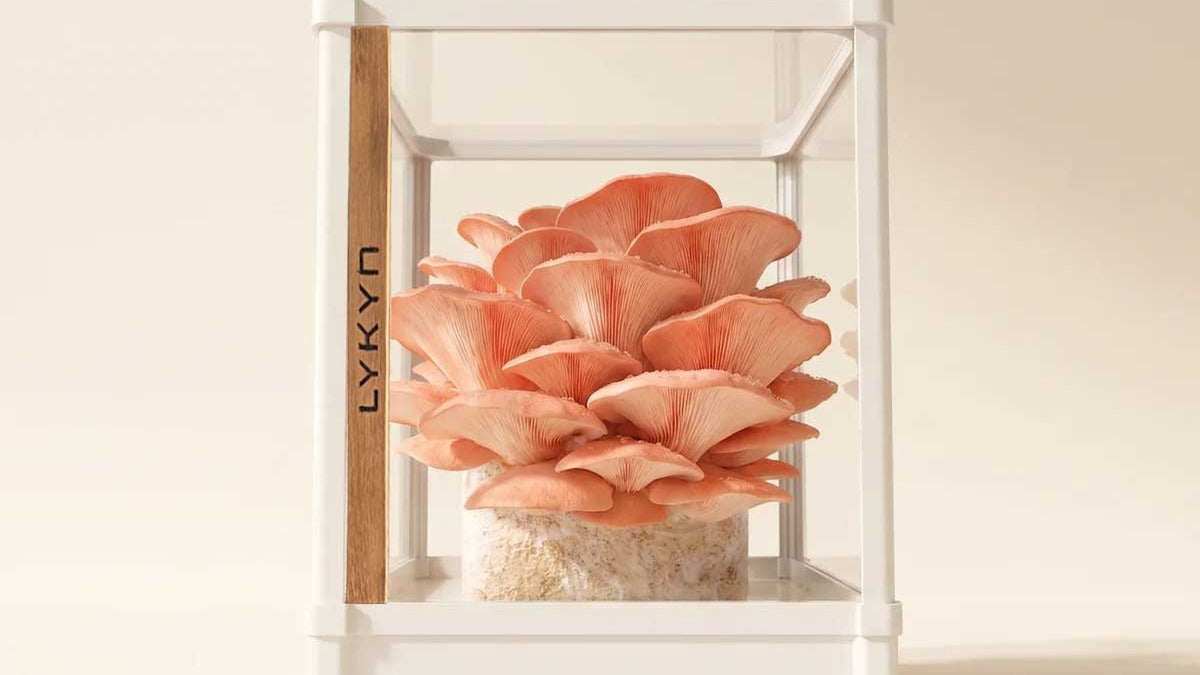
- Mushrooms from your LYKYN Smart Mushroom Grow Kit which are typically very clean
Advantages
- Preserves optimal moisture content for cooking
- Maintains concentrated mushroom flavor
- Fastest method for clean specimens
- No drying time required
- Professional kitchen standard
Method 2: The Quick Rinse Method (For Slightly Dirty Mushrooms)
When dry brushing alone won't get mushrooms completely clean, a quick rinse provides thorough cleaning without significant moisture absorption.
Step-by-Step Instructions
Step 1: Pre-Clean with Brush Start by dry brushing mushrooms to remove loose debris. This reduces the amount of dirt that might enter water during rinsing.
Step 2: Rinse Under Running Water Hold mushrooms under cool running water for just 5-10 seconds each, gently rubbing with your fingers to dislodge stubborn dirt. Work quickly, the goal is brief exposure, not a thorough soaking.
Step 3: Shake Off Excess Water Immediately shake each mushroom vigorously to remove surface water. This step is crucial for minimizing moisture retention.
Step 4: Dry Thoroughly Spread rinsed mushrooms on several layers of paper towels or a clean kitchen towel. Pat gently but thoroughly to absorb as much water as possible. You can also roll them gently in the towel to wick away moisture.
Step 5: Air Dry (Optional) For maximum dryness, let patted mushrooms sit at room temperature for 10-15 minutes before cooking. This allows any remaining surface moisture to evaporate.
When to Use This Method
The quick rinse works well for:
- Farmers market mushrooms with visible dirt
- Mushrooms with stubborn debris dry brushing can't remove
- When you're cooking mushrooms in liquid (soups, stews) where a bit of extra moisture doesn't matter
- Any situation where cleanliness is the priority
Key Tips for Success
- Never soak, only brief rinse
- Dry immediately and thoroughly
- Use cool, not warm or hot water
- Work in small batches for better control
Method 3: The Damp Cloth Method (For Pristine Mushrooms)
The damp cloth method offers a middle ground between completely dry cleaning and water rinsing, ideal for mushrooms needing only minor attention.
Step-by-Step Instructions
Step 1: Prepare Your Cloth Dampen a clean kitchen cloth or paper towel with cool water, then wring it out thoroughly. The cloth should be barely moist, just enough to pick up dirt, not wet enough to transfer significant moisture.
Step 2: Wipe Each Mushroom Gently wipe each mushroom with the damp cloth, paying attention to the cap, stem, and gill area. Turn the cloth frequently to use clean sections.
Step 3: Final Dry Wipe After wiping, use a dry paper towel or cloth section to remove any moisture transferred during cleaning.
Step 4: Trim and Inspect Trim stems and remove any blemishes as needed, giving each mushroom a final inspection.
When to Use This Method
This method works perfectly for:
- Very clean store-bought mushrooms needing minimal attention
- Mushrooms with only a few small dirty spots
- When you want the compromise between dry and wet methods
- Delicate mushrooms you don't want to rinse
Method 4: The Water Bowl Method (For Very Dirty Mushrooms)
For exceptionally dirty mushrooms, perhaps from a farmers market or foraged, the water bowl method provides thorough cleaning while minimizing water absorption compared to extended rinsing.
Step-by-Step Instructions
Step 1: Fill Bowl with Cool Water Fill a large bowl with cool water. Have paper towels ready nearby for immediate drying.
Step 2: Swish Mushrooms Briefly Place mushrooms in the water and swish them around gently for 10-15 seconds maximum. Use your hands to rub away stubborn dirt.
Step 3: Lift Out Immediately Lift mushrooms out of the water by hand (don't pour through a colander, as this would redeposit settled dirt onto mushrooms). Transfer to a colander to drain briefly.
Step 4: Dry Aggressively Spread mushrooms on several layers of paper towels and pat thoroughly. Roll them gently to remove as much water as possible. This step is critical, you want them as dry as possible before cooking.
Step 5: Extended Air Drying Let cleaned mushrooms sit at room temperature for 15-20 minutes to allow surface moisture to evaporate completely before cooking.
When to Use This Method
Use the water bowl method for:
- Visibly dirty mushrooms with soil clinging to them
- Foraged or wild mushrooms (once positively identified)
- Mushrooms from outdoor markets where they've been exposed to dust
- Any situation where thorough cleaning is essential
Important Warnings
Never use this method if you plan to store mushrooms afterward, only clean mushrooms immediately before cooking. The added moisture significantly reduces shelf life if mushrooms aren't used right away.
Special Considerations for Different Mushroom Conditions
Store-Bought Commercial Mushrooms
Grocery store white button mushrooms are grown in highly controlled environments and undergo quality control before packaging. These mushrooms typically require minimal cleaning:
- Light dry brushing usually suffices
- Check for any bruising or soft spots and trim them away
- The gill area underneath is generally clean on commercial mushrooms
- Packaging dates provide freshness guidance, fresher mushrooms need less cleaning
Farmers Market or Local Farm Mushrooms
Mushrooms from local sources might have more substrate clinging to them:
- Expect to spend more time cleaning each mushroom
- The quick rinse method often works best
- Ask the farmer about their growing methods, some use cleaner substrates than others
- Build a relationship with vendors who consistently provide clean product
Home-Grown Mushrooms
If you're growing mushrooms at home with a smart mushroom cultivation system, you control cleanliness from the start:
- Harvested mushrooms from clean grows need minimal cleaning
- Dry brushing is usually sufficient
- Trim only the stem base where it attached to substrate
- Home-grown mushrooms often surpass commercial quality in cleanliness
For those interested in growing their own consistently clean mushrooms, our guide to the best mushroom growing kits can help you get started with home cultivation.
Older or Less Fresh Mushrooms
As mushrooms age, they become more delicate and require gentler handling:
- Avoid water if possible, drier cleaning prevents further degradation
- Be extra gentle to avoid bruising soft tissue
- Trim away any dark spots or sliminess immediately
- Use quickly after cleaning, older mushrooms won't store well post-cleaning
Common Mushroom Cleaning Mistakes to Avoid
Mistake 1: Soaking Mushrooms
Extended water contact is mushroom enemy number one. Never soak mushrooms in water for more than a few seconds. The porous structure absorbs water like a sponge, leaving you with waterlogged mushrooms that release liquid during cooking instead of browning beautifully.
Mistake 2: Washing Before Storage
Only clean mushrooms immediately before cooking. Washing adds moisture that dramatically accelerates spoilage. Store mushrooms unwashed in their original packaging or a paper bag, cleaning them only when you're ready to cook. For more detailed storage information, check our comprehensive guide on keeping mushrooms fresh.
Mistake 3: Being Too Aggressive
Mushrooms bruise easily, and bruised tissue browns quickly and develops off-flavors. Use gentle pressure whether brushing, wiping, or rinsing. Let your tools do the work rather than applying force.
Mistake 4: Neglecting to Dry Thoroughly
If you rinse mushrooms, thorough drying is non-negotiable. Wet mushrooms steam in the pan instead of browning, resulting in rubbery texture and disappointing flavor. Take the time to dry them properly.
Mistake 5: Removing Too Much Stem
The entire white button mushroom is edible, cap, gills, and stem. Only trim the very bottom if it's dried out or has substrate clinging to it. Many people wastefully discard perfectly good stem portions.
Mistake 6: Not Inspecting Carefully
A quick visual inspection catches problems early. Check for:
- Dark or slimy spots indicating spoilage
- Unusual odors (fresh mushrooms smell earthy, not sour or ammonia-like)
- Excessive softness or mushiness
- Visible mold (white fuzzy growth is usually harmless mycelium, but blue-green mold means discard)
How Cleaning Method Affects Cooking Results
Your cleaning method directly impacts cooking outcomes. Here's how different approaches affect various cooking techniques:
For Sautéing
Dry-cleaned mushrooms produce the best results when sautéing. They develop beautiful golden-brown color, crispy edges, and concentrated flavor. Wet mushrooms release liquid, steaming instead of browning until that moisture evaporates, adding several minutes to cooking time and producing less desirable texture.
For Roasting
High-heat roasting tolerates briefly rinsed mushrooms reasonably well since extended oven time evaporates surface moisture. However, dry-cleaned mushrooms still produce superior caramelization and more concentrated flavor.
For Grilling
Grilled mushrooms benefit from being as dry as possible. Excess moisture creates steam that prevents the beautiful grill marks and smoky flavor you're seeking. Dry brush or use the damp cloth method before grilling.
For Soups and Stews
When mushrooms will cook in liquid, thorough cleaning matters more than minimal moisture. Feel free to rinse if needed, the extra moisture won't affect final results since mushrooms are cooking in broth or sauce anyway.
For Raw Consumption (Not Recommended)
If you insist on using raw mushrooms despite expert recommendations to cook them (see our article on eating white button mushrooms raw), cleaning becomes even more critical. Use the water bowl method for thorough cleaning, then dry completely.
Time-Saving Tips for Cleaning Large Quantities
When you're cleaning mushrooms in bulk, perhaps for meal prep or a party, efficiency matters:
Batch Processing Strategy
- Sort mushrooms by cleanliness level first
- Process cleanest ones with dry brushing quickly
- Handle dirtier specimens separately with appropriate methods
- Work assembly-line style: clean, trim, transfer to clean container
Multi-Tasking Approach
Clean mushrooms while other meal prep tasks happen:
- Set them to air dry while you prep other vegetables
- Clean between other cooking steps
- Have family members help, mushroom cleaning is a great task for kitchen helpers
Storage for Meal Prep
If cleaning mushrooms for use throughout the week:
- Clean only what you'll use in 2-3 days
- Store cleaned mushrooms in paper towel-lined containers
- Add fresh paper towels if any moisture appears
- Use cleaned mushrooms before uncleaned ones
How to Clean Different Button Mushroom Products
Whole Mushrooms
Follow any of the methods above depending on cleanliness level. Whole mushrooms are easiest to handle during cleaning.
Pre-Sliced Mushrooms
Pre-sliced packages often contain cleaner mushrooms since they've been processed in controlled facilities:
- Quick dry brushing is usually sufficient
- Pat with barely damp towels if needed
- These are typically cleanest and most convenient
- Trade-off: shorter shelf life than whole mushrooms
Baby Button Mushrooms
These smaller specimens require the same attention but may be more delicate:
- Gentle brushing is usually sufficient
- Their smaller size means faster cleaning
- Handle carefully to avoid bruising
Frequently Asked Questions About Cleaning White Button Mushrooms
Should you wash mushrooms before cooking them?
Brief rinsing is acceptable when mushrooms are dirty and dry cleaning alone isn't sufficient, but it's not necessary for most commercial white button mushrooms. Dry brushing with a soft brush removes debris while preserving optimal texture and flavor. If you do rinse, keep water exposure under 10 seconds and dry mushrooms thoroughly immediately afterward. The key is matching your method to mushroom condition, clean specimens need only brushing, while dirtier ones benefit from quick rinsing.
Can you clean mushrooms ahead of time?
Never clean mushrooms more than a few hours before cooking them. The cleaning process, especially any water contact, introduces moisture that accelerates spoilage dramatically. Store mushrooms unwashed in their original packaging or paper bags, cleaning them only when you're ready to cook. If you must prep ahead, clean them no more than 2-3 hours in advance, dry them thoroughly, and store with paper towels to absorb any residual moisture.
What's the white stuff on my mushrooms?
White fuzzy growth on mushrooms is usually harmless mycelium (the mushroom's root system), not dangerous mold. This occurs when mushrooms are stored in low-oxygen environments and is completely safe to eat, simply brush it away. However, if the growth is blue-green, slimy, or accompanied by bad odors, that indicates actual mold and the mushrooms should be discarded. Fresh mushrooms smell earthy and pleasant, never sour or ammonia-like.
Do you need to peel white button mushrooms?
No, white button mushrooms don't need peeling. The skin is edible, nutritious, and contains much of the mushroom's flavor. Peeling wastes perfectly good mushroom and removes valuable nutrients. Simply clean the exterior with a brush or damp cloth. Only trim away specific damaged areas or cut the very bottom of stems if they're dried out or have substrate attached.
How do you know if mushrooms are too dirty to use?
Mushrooms with heavy soil or substrate can be cleaned using the water bowl method. However, discard mushrooms that show signs of spoilage regardless of dirt level: dark slimy spots, strong unpleasant odors, excessive softness, visible blue-green mold, or any indication they've been stored improperly for too long. A little dirt is cleanable; spoilage is not. When in doubt, trust your senses, fresh mushrooms smell pleasant and earthy.
Featured Snippet Summary
Clean white button mushrooms using a soft brush to gently remove debris, this dry method works for most store-bought mushrooms and preserves texture. For dirtier mushrooms, rinse briefly under cool water for 5-10 seconds, then dry immediately with paper towels. Never soak mushrooms or clean them before storage, only right before cooking. The dry brush method produces optimal results for sautéing and roasting by preventing excess moisture.
Conclusion: Mastering Mushroom Cleaning for Perfect Results
Properly cleaned white button mushrooms are the foundation of countless delicious dishes. By matching your cleaning method to mushroom condition and intended cooking technique, you ensure optimal flavor, texture, and food safety every time.
Remember the golden rules: keep cleaning as dry as possible, only clean immediately before cooking, dry thoroughly if you do rinse, and be gentle throughout the process. These simple principles, applied consistently, guarantee perfect results whether you're preparing a quick weeknight sauté or an elaborate gourmet dish.
Ready to take your mushroom game to the next level? Growing your own ensures you always have the freshest, cleanest mushrooms possible. Explore our smart mushroom cultivation systems that make home growing remarkably simple, or check out our recipe guides like cooking oyster mushrooms for inspiration on what to make with your perfectly cleaned mushrooms.
Now that you know exactly how to clean white button mushrooms, there's nothing standing between you and mushroom perfection. Grab that brush, clean those mushrooms confidently, and get cooking!
Share:
White Button Mushroom Nutrition: The Complete Nutritional Breakdown You Need to Know
Why Button Mushrooms Deserve a Permanent Spot in Your Weekly Meal Plan