


Lawn mushrooms are usually a sign of healthy soil, not a problem. They appear after rain, often overnight, and most disappear within a few days on their own. The trouble is that some lawn mushrooms are toxic to pets and children, and a few species (like the green-spored parasol) are the leading cause of mushroom poisoning calls in North America. Knowing the difference between harmless decomposers and dangerous species is the entire reason this guide exists.
This article walks through why lawn mushrooms appear, the most common species you will find in residential yards, how to identify the toxic ones, and what to do when they show up.
Why mushrooms grow in lawns
The visible mushroom is the fruiting body of a fungal network living in the soil. That network, called mycelium, can spread across many square feet underground and break down organic matter year-round without producing anything visible. Only when conditions are right (moisture, warm temperatures, and adequate food) does the mycelium push up fruiting bodies to release spores.
Common food sources for lawn fungi include:
- Buried tree roots from a tree that was removed years ago
- Decaying mulch worked into the soil
- Construction debris like buried wood scraps
- Animal waste and decomposing grass clippings
- Thatch buildup at the soil surface
This is why lawn mushrooms often return to the same spot year after year. The food source is still there underground, even if the visible mushrooms come and go.

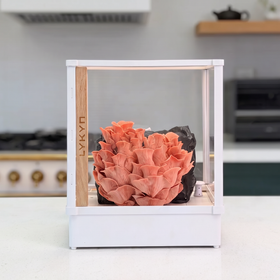
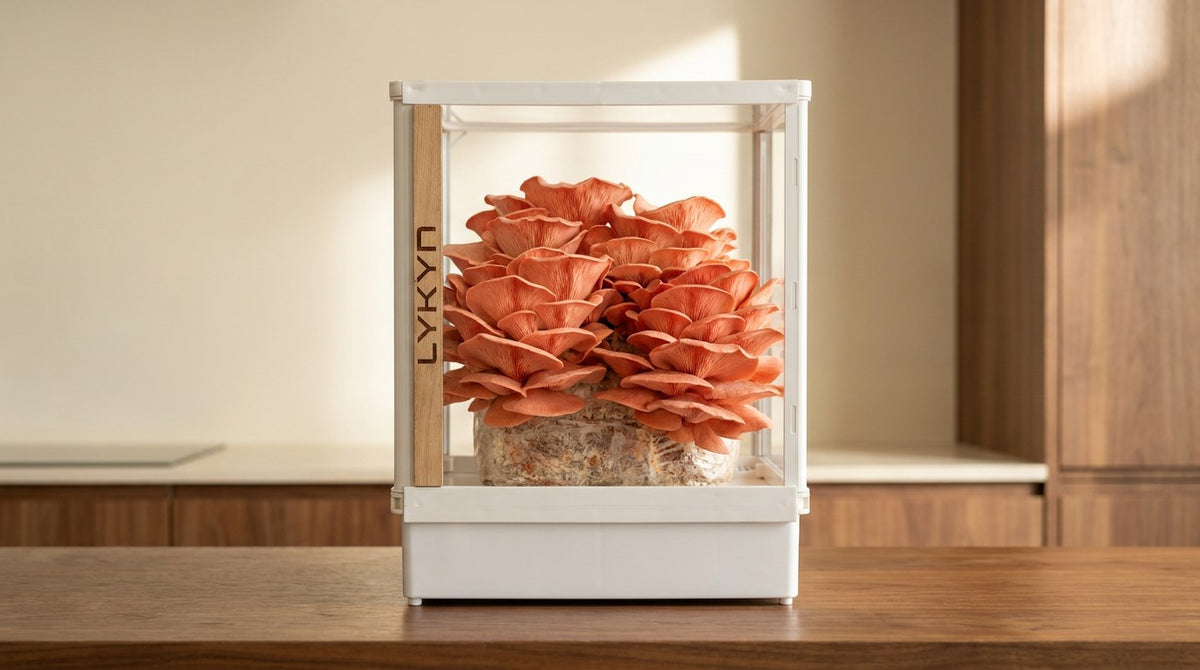
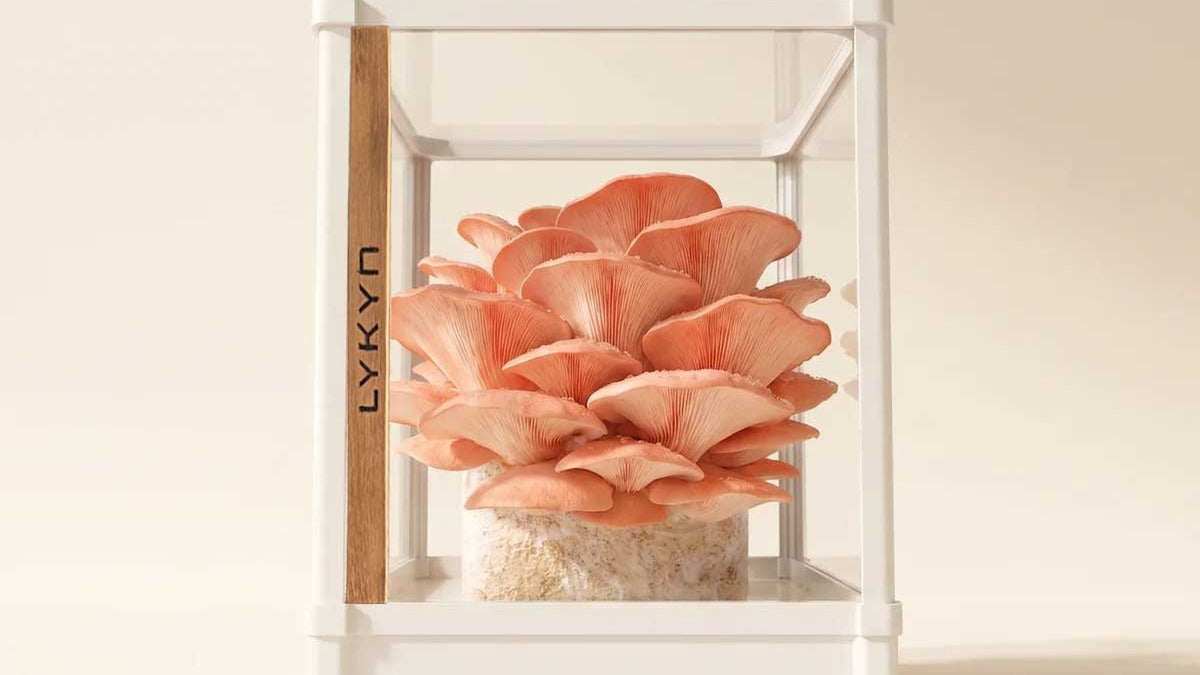
Smart Chamber. Bone White Single
- 2.8L tank, 90% humidity automatic
- App-controlled, plug-and-play
- 6 lb block ceiling, in stock

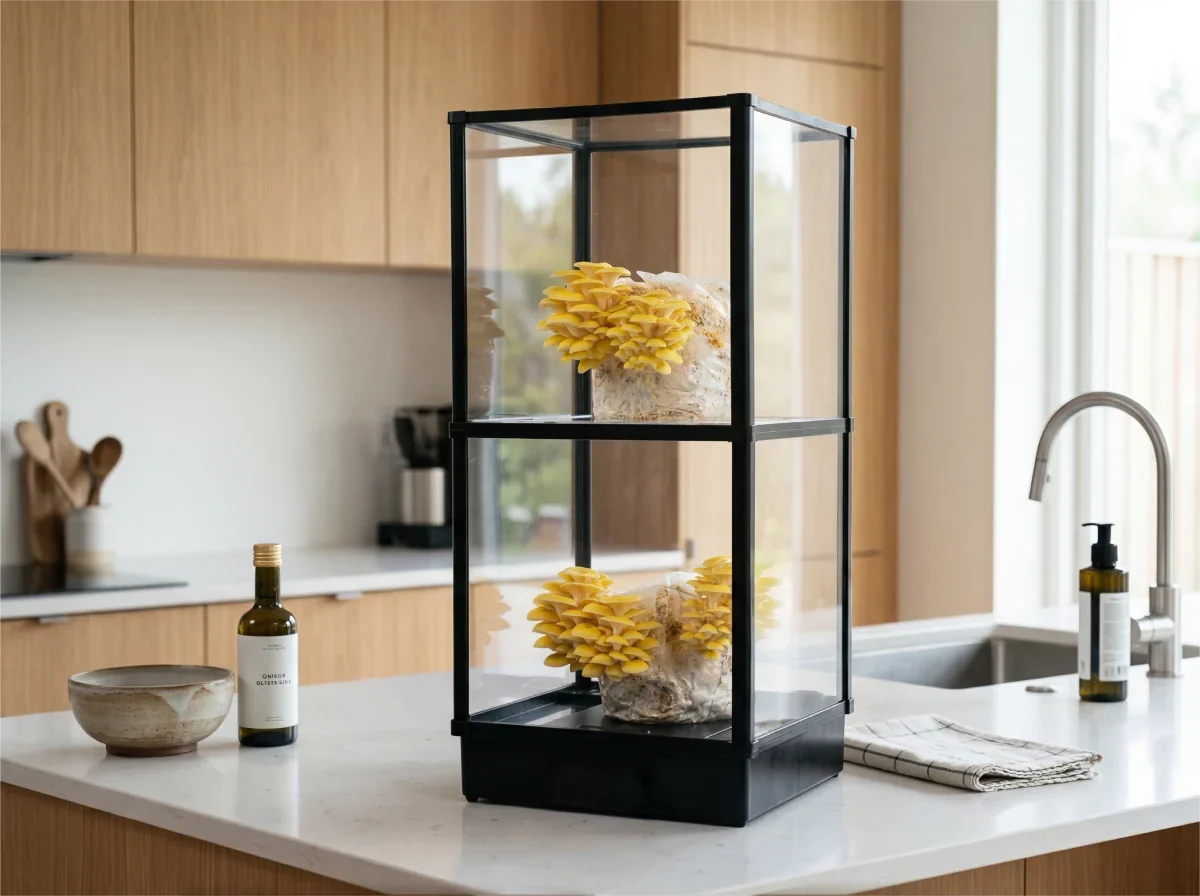
Smart Chamber. Obsidian Black Single
- Same hardware as Bone White
- Matte black premium finish
- Pairs with any kitchen palette

Common lawn mushroom species
The species that appear most often in residential lawns across North America and Europe:
- Fairy ring mushrooms (Marasmius oreades): tan caps growing in expanding circles, edible after careful identification but not recommended for casual foragers
- Green-spored parasol (Chlorophyllum molybdites): large white-cream caps with olive-green mature gills, the most common cause of mushroom poisoning in North America
- Shaggy parasol (Chlorophyllum brunneum): similar shape, edible but can cause stomach upset in some people
- Common puffballs (Lycoperdon perlatum): white round balls with no stem, edible when young and pure white inside
- Inky caps (Coprinus and Coprinopsis species): tall thin caps that dissolve into black liquid as they mature
- Field mushrooms (Agaricus campestris): cousin of the common button mushroom, edible but easily confused with toxic Amanita species
- Yellow stainer (Agaricus xanthodermus): looks similar to field mushroom but turns chrome-yellow when bruised, toxic
Lawn species change with climate and soil. A yard in Florida will show a different mushroom set than one in Minnesota, but the basic categories above cover most of what people see in temperate yards.
Identifying toxic lawn mushrooms
The single most useful identification tool is the spore print. Cut off a mature cap, place it gill-side down on a sheet of white paper, cover it with a bowl, and wait a few hours. The cap will drop spores onto the paper in a pattern that reveals the spore color. Green spores point to the toxic green-spored parasol. White, brown, pink, and black spores point to other groups.
Beyond spore color, watch for these warning signs:
- A volva (cup-like structure) at the base of the stem: a feature of the deadly Amanita family
- A ring on the stem combined with white gills and a volva: another Amanita signal
- Chrome-yellow staining when bruised at the stem base: indicates yellow stainer Agaricus species
- Olive-green mature gills: indicates green-spored parasol
If you find a mushroom that matches any of these signs, do not eat it under any circumstance, even after a confident-feeling visual ID.

Fuel Your Mushroom Journey
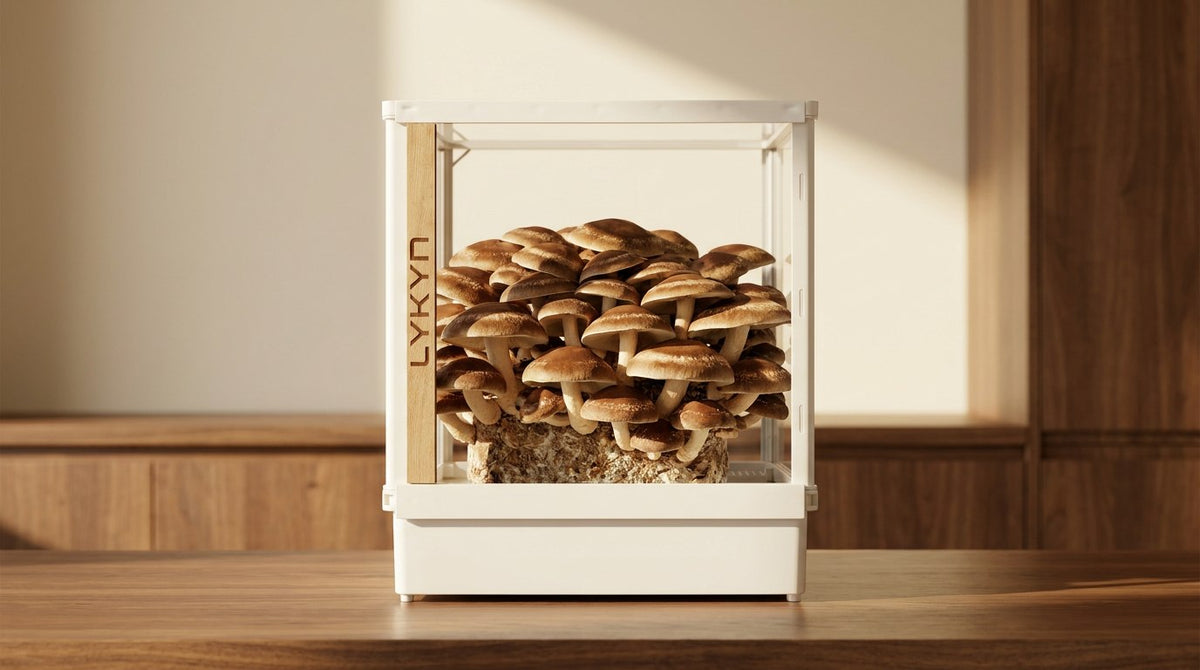
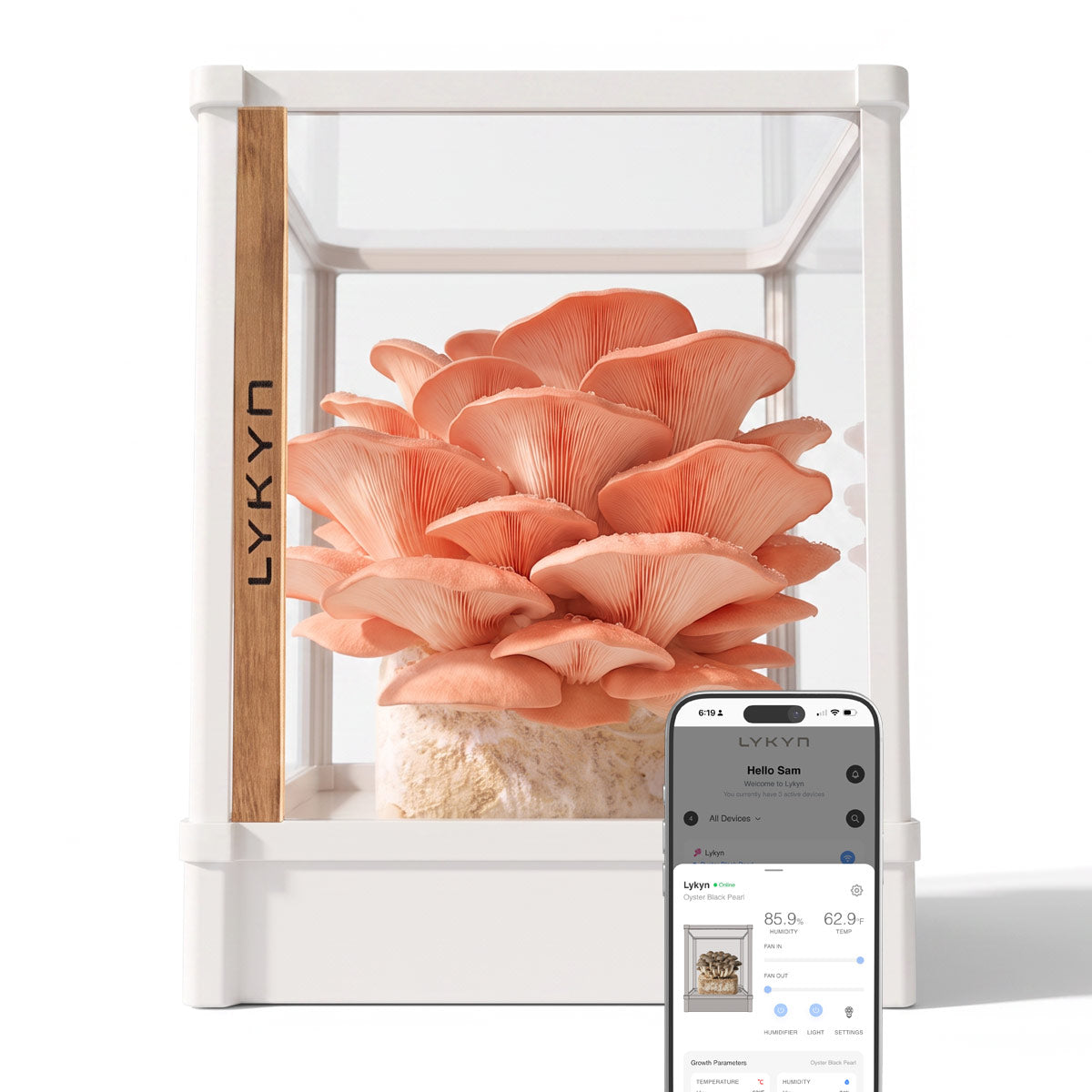
Smart Mushroom Grow Chamber
Plug-and-play smart chamber with humidity, light, and airflow dialed in for every species. Beginners harvest their first flush in days, not months.
Add to cart $299Pet and child safety
Dogs are the most common victims of mushroom poisoning in residential yards. They sniff, lick, and chew anything new in their environment, and a single bite of the wrong species can cause a medical emergency. Cats are less likely to eat mushrooms but still at risk.
If a pet or child eats a lawn mushroom, take a sample with you to the emergency vet or hospital. Bag the mushroom, take clear photos of the cap, gills, stem, and base, and call:
- Pet Poison Helpline: 855-764-7661
- ASPCA Animal Poison Control: 888-426-4435
- For humans: contact your local Poison Control Center via 1-800-222-1222 in the United States
Speed matters. Many mushroom toxins act on the liver or kidneys, where damage worsens over hours. Do not wait for symptoms.
How to remove mushrooms from a lawn
Mushrooms are difficult to fully eliminate because the visible cap is only a small part of the organism. The most effective combination is:
- Pull or rake up mushrooms before they release spores. Wear gloves and bag them for trash disposal.
- Improve drainage by aerating the soil, especially in compacted high-traffic areas.
- Reduce thatch buildup with regular dethatching once or twice a year.
- Find and remove any buried wood, old stumps, or excess mulch.
- Avoid overwatering. Most lawns need 1 to 1.5 inches of water per week, not daily watering.
- Reduce shade if possible, since shaded damp lawns favor fungal growth.
Fungicides are usually a waste of money for lawn mushrooms. They kill the surface fruiting bodies but rarely reach the underground mycelium, so the mushrooms return as soon as conditions are right again.
Will lawn mushrooms damage my grass?
Most lawn mushrooms do not directly damage grass. They feed on dead organic material, not living grass roots. Fairy ring is the exception: in advanced stages, the dense underground mycelium of fairy ring fungi can repel water and create rings of dead grass. Aerating those rings and watering deeply can rehydrate the soil and often brings the grass back over a season.
Outside of fairy ring, the worst that lawn mushrooms do to a lawn is look unsightly. The underground fungal activity is actually breaking down organic debris and contributing to soil nutrition.
The flip side: lawns benefit from fungi
Healthy soil is full of beneficial fungi, both microscopic and visible. Mycorrhizal fungi form partnerships with plant roots, including grass roots, and help with water and nutrient uptake. The same conditions that produce visible lawn mushrooms (moist soil, organic matter, healthy soil biology) also support those root-supporting fungi.
If you find mushrooms interesting and want to channel that curiosity into food, growing edible species at home is more rewarding than trying to identify wild lawn specimens. A countertop grow kit produces known-safe species in a controlled environment. You can explore home mushroom grow kits that handle the substrate and humidity for you.
The bottom line
Lawn mushrooms are mostly harmless to your grass and a normal part of a healthy yard ecosystem. The risk is to pets and small children who might eat them. Identify what you have, remove anything that could pose a risk, and treat the appearance of mushrooms as a sign of soil biology working as intended rather than a problem to eliminate at all costs.
Share:
Kikurage Mushroom: Wood Ear Uses, Nutrition, and Cooking
Mushroom in the Tree: What It Means and What to Do