



Kurze Antwort: Abgebrochene Pilze sind Stifte oder Primordien, die sich auf Ihrem Block zu bilden begannen und dann aufhörten sich zu entwickeln und abstarben. Sie sind ein Symptom, keine Verderbnis oder Kontamination an sich. Im Heimanbau gibt es vier häufige Ursachen, und Sie können diese in zwei Minuten eingrenzen, indem Sie sich die Stifte ansehen. Unten: Wie abgebrochene Pilze je nach Art aussehen, die Diagnose mit 4 Ursachen, wie Sie den nächsten Flush retten und die Feuchtigkeits-, CO2- und Temperaturziele, die Abbrüche verhindern.

Abgebrochene Pilze in 30 Sekunden (Zusammenfassung)

| Was Sie sehen | Was es bedeutet | Wahrscheinliche Ursache |
|---|---|---|
| Winzige braune, verschrumpelte Stummel, wo einst Pins waren | Pins begannen zu wachsen, trockneten dann aus und starben ab | Feuchtigkeitseinbruch (am häufigsten) |
| Pins bildeten lange dünne Stiele und entwickelten nie Kappen | Dehnung, nie entwickelt | CO2 zu hoch (FAE-Problem) |
| Pins bildeten sich, wurden dann über Nacht feucht und schwarz | Plötzlicher Kollaps | Temperaturschwankung oder Kontamination |
| Schwarze oder gelbe Flecken, die sich auf der Blockoberfläche ausbreiten | Bakterielle oder Schimmelpilzübernahme ging dem Abbruch voraus | Kontamination beginnt |
Die meisten Abbrüche beim Heimanbau stammen von einer dieser vier Ursachen. Der Rest dieses Leitfadens erklärt, welche davon Ihren Block betrifft und was Sie als Nächstes tun können.
Was ist ein abgebrochener Pilz?

Im Anbau ist ein „Abbruch“ ein Pin oder Primordium, das sich zu bilden begann und dann aufhörte, sich zu entwickeln, bevor es einen reifen Fruchtkörper bildete. Der Pin trocknet aus, schrumpelt, wird braun oder schwarz und bleibt als kleiner toter Stummel am Block kleben.
Drei Dinge, die manchmal verwechselt werden:
- Aborte sind ein Problem in der Fruchtphase. Der Block war gesund, die Stifte begannen zu wachsen, die Bedingungen wurden schlecht, die Stifte starben ab.
- Verderb ist ein Problem nach der Ernte. Der Pilz ist fertig gewachsen und zerfällt nun. Siehe unseren Leitfaden Pilze werden braun.
- Kontamination ist ein Problem mit Organismen. Bakterien oder Schimmelpilze konkurrieren mit Ihrem Myzel.
Die meisten Abbrüche im Heimanbau sind umweltbedingte Abstürze, die Sie beheben können, ohne den Block wegzuwerfen. Eine Auffrischung darüber, wie gesunde Pinbildung aussieht, finden Sie in unserem Leitfaden zur Pilz-Pinbildung, der die drei Stadien vom Hyphenknoten bis zum Baby-Pilz behandelt.
Die 4 Ursachen für abgebrochene Pilzstifte

Gehen Sie diese vier Ursachen der Reihe nach durch, bevor Sie entscheiden, dass Ihr Block fertig ist. Die Behebung ist für jede anders.
1. Feuchtigkeitseinbruch (die häufigste Ursache)
Ein Pin besteht hauptsächlich aus Wasser. Die Fruchtfläche hat fast keine schützende Kutikula, und das darin enthaltene Wasser wird durch eine relative Luftfeuchtigkeit von 85 % oder mehr um ihn herum festgehalten. Fällt die Luftfeuchtigkeit für ein paar Stunden unter 80 %, verliert der Pin Wasser schneller, als das Myzel es ersetzen kann. Zellen kollabieren, der Pin schrumpelt, und das Myzel gibt dieses Primordium auf.
Wie es aussieht: kleine braune oder bräunliche Stummel, wo früher Pins waren, trocken auf Berührung, kein Geruch. Der Block darunter ist immer noch gesundes, weißes Myzel. Löwenmähne- und Austernpilz-Pins sterben zuerst ab.
Wie es passiert: Luftbefeuchter läuft über Nacht trocken, Zeltreißverschluss offen gelassen, Kammertür zu oft geöffnet oder eine passive Einrichtung in einem Raum mit unter 50 % relativer Luftfeuchtigkeit.
Aktuellen Flush beheben: RH innerhalb einer Stunde wieder auf 90-95 % bringen. Befeuchten Sie die Innenwände (nicht den Block), füllen Sie den Behälter nach, reduzieren Sie den Luftaustausch für 24 Stunden. Etwa 30 % der teilweise verschrumpelten Pins erholen sich.
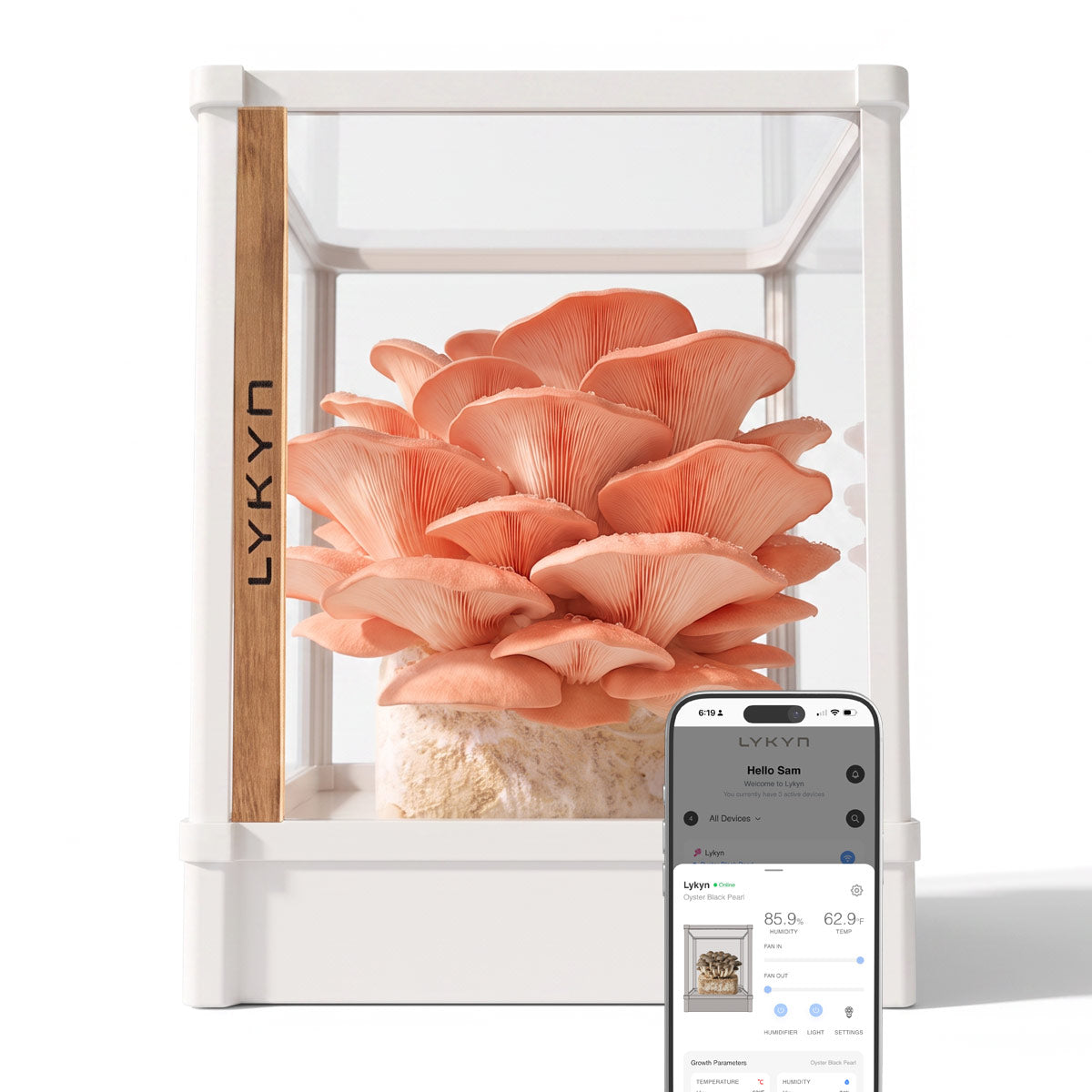
Prävention: Halten Sie die RH während des Pinning bei 85-95 %. Cornells Hericium-Anleitung gibt für die ideale Luftfeuchtigkeit der Löwenmähne 90-95 % an. In einer intelligenten Pilzzuchtkammer misst der SHT3x-Sensor die Luftfeuchtigkeit alle paar Sekunden, und der 2,8-Liter-Luftbefeuchter passt sich automatisch an, sodass ein 30-minütiger Absturz nicht auftritt.
2. CO2-Spitze (ungenügender Frischluftaustausch)
Fruchtende Pilze atmen: Sauerstoff ein, CO2 aus. Steigt das CO2 in der Kammer während der Pinbildung über 800-1000 ppm, strecken sich die Pilze nach oben auf der Suche nach frischer Luft. Die Stiele werden lang und dünn, die Kappen bleiben winzig oder bilden sich nie, und der Pin verliert Energie und bricht ab. Das Penn State Mushroom Research Center stellt fest, dass CO2 über 1500 ppm die normale Kappenentwicklung bei den meisten kultivierten Arten verhindert.
Wie es aussieht: Stiele 3- bis 6-mal länger als ihre Kappen, oft ohne echte Kappe. Weiße oder graue Reisnudeln, die aufrecht stehen und dann welken.
Aktuellen Flush beheben: Kammer alle paar Stunden für 15-30 Minuten öffnen, 24 Stunden lang. Die meisten gedehnten Pins erholen sich nicht, aber der nächste Flush vom selben Block fruchtet normal, wenn der FAE korrigiert wird.
Prävention: 2 bis 4 Frischluftwechsel pro Stunde während der Pinbildung. In einer Lykyn Pilz-Fruchtkammer führen die beiden DFH4010S-Variationslüfter (500-6000 RPM) einen programmierten FAE-Zyklus automatisch aus.
3. Temperaturschwankung
Die meisten kultivierten Pilze fruchten in einem Fenster von 15-24 C (60-75 F). Ein Abfall von mehr als 5-7 C innerhalb von 24 Stunden oder ein Anstieg über 26 C für mehrere Stunden stoppt die Pinentwicklung und löst Abbrüche aus. Kalter Zug von einem Winterfenster oder Sommerhitze auf der Kammer sind die üblichen Übeltäter.
Wie es aussieht: Pins verdunkeln sich über Nacht von perlweiß zu tiefbraun oder schwarz, oft feucht an der Basis, oft bricht der ganze Cluster zusammen ab.
Aktuellen Flush beheben: Kammer von Fenstern, Türen und Heizquellen entfernen. In einem kalten Raum hebt eine Heizmatte für Setzlinge unter der Kammer die Umgebungstemperatur um 4-6 C an. Stark abgebrochene Pins erholen sich nicht von einem Kälteschock.
Prävention: Halten Sie die Fruchttemperatur in einem Bereich von 2 °C. Ziel ist 18-22 °C für Löwenmähne, 18-24 °C für Austernpilze, 16-21 °C für Shiitake. Lykyn-Kammern verfügen nicht über eine aktive Temperaturregelung, daher sollten Sie für kalte Räume eine Heizmatte verwenden. Unsere Seite Indoor-Pilzzucht-Kit listet die Bereiche nach Arten auf.
4. Beginnende Kontamination
Manchmal brechen Stifte ab, weil etwas den Block von innen her anfällt. Trichoderma (Grünschimmel), Bacillus (bakterielle Fleckenkrankheit) und Spinnweben konkurrieren mit dem Pilzmyzel. Wenn sie sich festsetzen, hört der Block auf, Wasser und Nährstoffe an die Primordien zu senden, und die Stifte sterben ab. Kontaminationen treten oft erst an der Oberfläche auf, nachdem die Abbrüche begonnen haben.
Wie es aussieht: Abgebrochene Pins plus sichtbare Verfärbung. Grüne Flecken (Trichoderma), gelbe oder feuchte Streifen (Bakterien) oder graue Flusen (Spinnweben) neben abgestorbenen Pins. Manchmal ein saurer oder Ammoniakgeruch.
Aktuellen Flush beheben: Sind grüne oder gelbe Flecken sichtbar, ist der Block kompromittiert. Beuteln Sie ihn ein und entsorgen Sie ihn. Reinigen Sie die Fruchtumgebung mit 70% Isopropyl. Unser Leitfaden Arten von Pilzkontaminationen zeigt jede Verunreinigung mit Fotos.
Prävention: Beginnen Sie mit hochwertigen, vorkolonisierten Blöcken, halten Sie die Raumluftfeuchtigkeit zwischen 50-70 % (hohe Raumluftfeuchtigkeit fördert Schimmel) und öffnen Sie die Kammer nicht mehr als nötig. Eingebaute Filterung am Lufteinlass fängt die meisten luftgetragenen Sporen ab, bevor sie den Block erreichen.
Abgebrochene Pins nach Art

Die vier Ursachen erzeugen leicht unterschiedliche Signaturen bei den Arten, die Sie am ehesten anbauen werden.

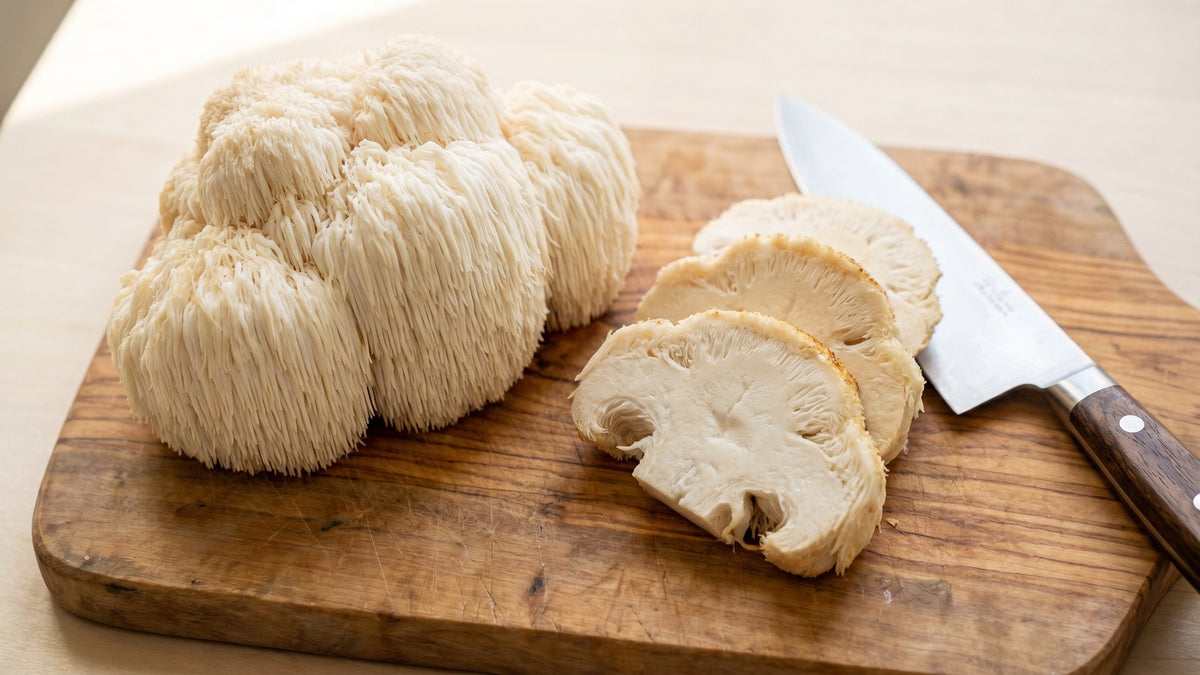
Löwenmähne (Hericium erinaceus) ist am empfindlichsten gegenüber Feuchtigkeit. Gesunde Pins sind kleine, hellweiße Kugeln wie Wattebäusche; abgebrochene Pins sehen an denselben Stellen aus wie braunes, zerknülltes Papier, die Zähne bilden sich nie. Ein Feuchtigkeitseinbruch trocknet das Cluster von außen nach innen aus. Eine CO2-Spitze erzeugt einen festen weißen Ball, der sich nie differenziert.

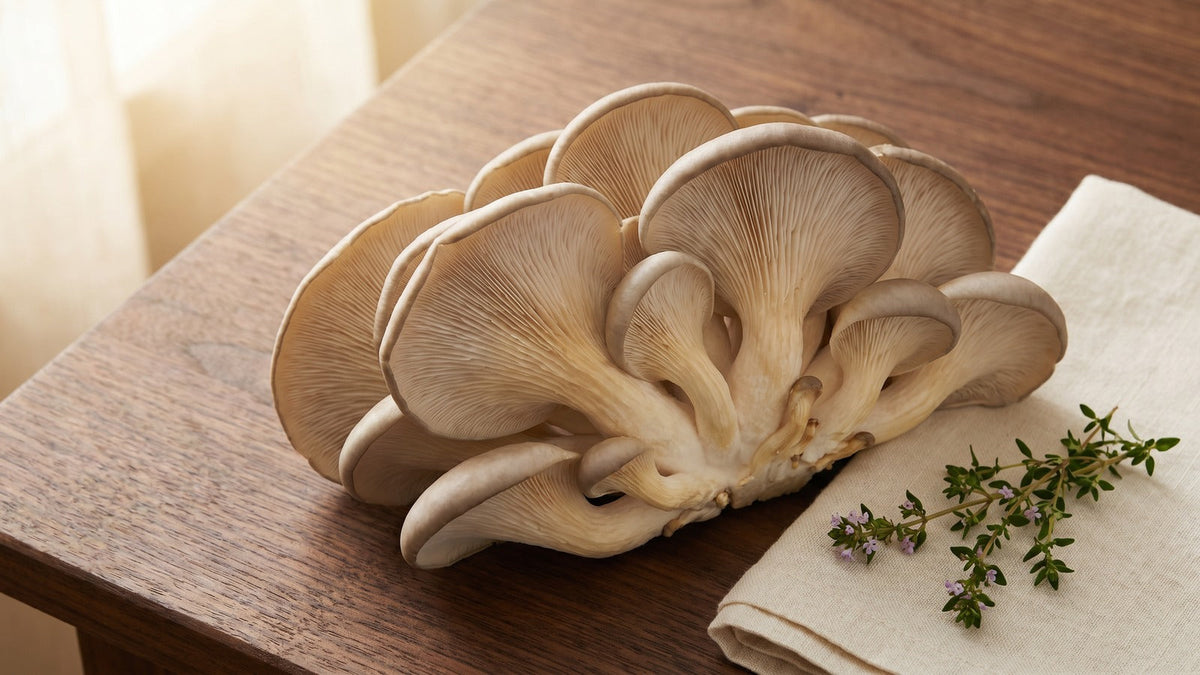
Austernpilze (Pleurotus ostreatus und Kultivare) brechen in Clustern ab, weil sie in Clustern anhaften. Gesunde Austernpilz-Pins sind winzige graue oder perlweiße Knubbel; abgebrochene Pins sind an den Rändern vergilbt, weich, manchmal feucht. Austernpilz ist die Art, die am anfälligsten für CO2-Streckung ist.
Shiitake (Lentinula edodes) ist der nachsichtigste. Aborte bedeuten gewöhnlich, dass der Block eine Pause braucht oder ein plötzlicher Kälteeinbruch die Pins unter 13 °C getroffen hat. Shiitake verträgt höhere CO2-Werte (bis zu 2000 ppm) als Austernpilze.
Der Entscheidungsbaum (welche Ursache tötet Ihre Pins?)
Verwenden Sie diese kurze Reihenfolge der Operationen, sobald Sie Abbrüche sehen:
- Blockoberfläche. Grüne, gelbe, rosa oder flaumige Flecken? Stopp. Kontamination. Werfen Sie den Block weg.
- Die Luft. Fühlt sich die Kammer für Ihre Fingerspitzen trocken an? Unter 80 % relativer Luftfeuchtigkeit ist ein Feuchtigkeitseinbruch. Am wahrscheinlichsten.
- Pin-Form. Lange, dünne, spindelförmige Stiele ohne Kappen? CO2-Spitze. Öffnen Sie die Kammer für 30 Minuten.
- Thermometer. Hat die Temperatur innerhalb von 24 Stunden um mehr als 5 C geschwankt? Temperaturabsturz. Stabilisieren Sie und warten Sie auf den nächsten Flush.
Wenn keine dieser vier zutrifft, handelt es sich meist um eine langsam wirkende Kombination (typischerweise Feuchtigkeit plus FAE in den kalten Monaten). Stellen Sie beides wieder auf die Spezifikation ein.

Befeuern Sie Ihre Pilzreise
Intelligente Pilzzuchtkammer
Plug-and-Play-Smart-Kammer mit optimal eingestellter Luftfeuchtigkeit, Licht und Luftzirkulation für jede Art. Anfänger ernten ihren ersten Flush in Tagen, nicht Monaten.
In den Warenkorb $299Können Sie den nächsten Flush retten?
Ja, fast immer. Ein abgebrochener erster Flush bedeutet NICHT, dass Ihr Block tot ist. Das Wiederherstellungsprotokoll:
- Entfernen Sie alle abgebrochenen Pins mit sauberen Fingern oder einem sterilen Messer. Wenn Sie sie lassen, laden Sie Bakterien ein.
- Wischen Sie die Kammerwände ab, um Kondenswasser und Sporen zu entfernen.
- Stellen Sie die Luftfeuchtigkeit wieder auf 90-95 % ein und den FAE auf 2-4 Wechsel pro Stunde.
- Lassen Sie ihn 5-10 Tage im Dunkeln ruhen. Das Myzel nimmt Nährstoffe aus den abgebrochenen Pins wieder auf und bildet darunter neue Primordien.
- Führen Sie am Tag 10 wieder Licht ein (8-12 Stunden pro Tag). Neue Pins erscheinen innerhalb von 3-5 Tagen.

Etwa 80 % der Blöcke, die ihren ersten Flush abbrachen, treiben auf diese Weise einen gesunden zweiten Flush. Löwenmähne treibt oft einen stärkeren zweiten Flush als den ersten.
Wie eine automatisierte Kammer Abbrüche verhindert
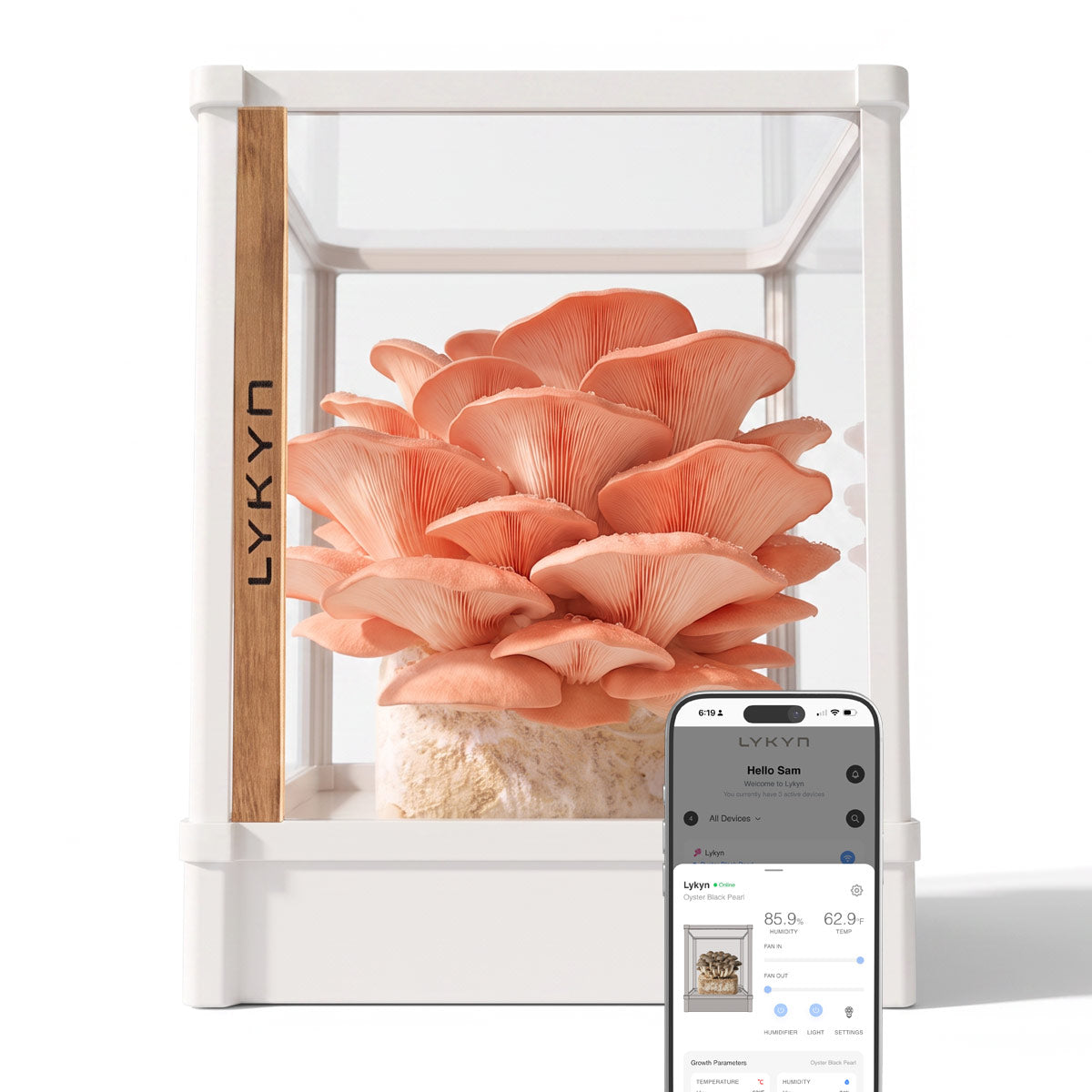
Die vier Ursachen teilen eine gemeinsame Wurzel: Umweltinstabilität. Manuell besprühte Zelte lassen die Luftfeuchtigkeit um 3 Uhr morgens abstürzen, lassen den CO2-Gehalt zwischen manuellen FAE-Fenstern ansteigen und laden Sporen jedes Mal ein, wenn Sie den Reißverschluss öffnen. Eine automatisierte Fruchtkammer stabilisiert alle vier Variablen kontinuierlich: Der SHT3x-Sensor liest die RH alle paar Sekunden, und der 2,8-Liter-Luftbefeuchter hält sie innerhalb von +/- 2%, die beiden variablen Lüfter steuern den FAE, um den CO2-Gehalt im Bereich von 600-900 ppm zu halten, das interne Volumen von 30 x 30 x 30 cm puffert Raumtemperaturschwankungen, und der versiegelte und über eine App gesteuerte Lufteinlass fängt die meisten luftgetragenen Sporen ab.
Häufig gestellte Fragen
Was verursacht Pilz-Abbrüche?
Pilz-Abbrüche werden durch Umweltstress während der Pinbildung verursacht. Die vier Ursachen sind ein Feuchtigkeitseinbruch unter 80 % relativer Luftfeuchtigkeit, eine CO2-Spitze über 1000 ppm, eine Temperaturschwankung über 5 C in 24 Stunden und beginnende Kontamination im Block. Feuchtigkeitseinbrüche sind für etwa 60 % der Abbrüche in passiven Zeltaufbauten verantwortlich.
Warum brechen Pilze ab?
Pilze brechen ab, wenn der sich entwickelnde Pin seinen Wasser-, Sauerstoff- oder Nährstoffbedarf nicht decken kann. Das Myzel opfert einen frühen Pin und nimmt seine Ressourcen wieder auf, um es später erneut zu versuchen, wenn sich die Umgebung verbessert. Es ist eine Überlebensreaktion, keine Krankheit.
Wie sehen Pilz-Abbrüche aus?
Kleine braune oder beige Stummel, die an der Oberfläche eines ansonsten gesunden Fruchtkörpers haften. Sie sind trocken, verschrumpelt und oft nur 2 bis 6 Millimeter hoch. Sie können sich schwärzen, bevor sie abfallen. Sie weisen keinen feuchten Schleim oder flaumigen Schimmel um sich herum auf (diese Anzeichen deuten auf Kontamination statt auf einen umweltbedingten Abbruch hin).
Kann man Pilz-Abbrüche essen?
Abbrüche im Anbau sind nicht giftig, aber auch nicht essenswert. Sie bestehen aus getrocknetem Zellwandmaterial mit sehr wenig Geschmack oder Nährwert. Kompostieren Sie sie und konzentrieren Sie sich auf den nächsten Flush. (Hinweis: Wilde "abgebrochene Entoloma" oder "Shrimp of the Woods" ist etwas anderes, ein parasitierter Wildpilz, den einige Sammler essen, aber das ist Sammeln, nicht Anbau.)
Wie verhindert man abgebrochene Pilze?
Halten Sie die relative Luftfeuchtigkeit bei 85 bis 95 %, den CO2-Gehalt während des Pinning zwischen 600 und 900 ppm, die Temperatur in einem 2 °C-Band innerhalb des Bereichs Ihrer Art und beginnen Sie mit einem sauberen, nicht kontaminierten Block. Eine automatische Fruchtkammer hält alle vier für Sie bereit.
Verhindert mehr Frischluftzufuhr (FAE) Pilz-Abbrüche?
Ja, bei CO2-Abbrüchen, bis zu einem gewissen Punkt. Bei mehr als 4 FAE pro Stunde trocknet die trockene Raumluft die Kammer schneller aus, als der Luftbefeuchter mithalten kann, was zu Feuchtigkeitsabbrüchen führt. Der optimale Bereich liegt bei 2 bis 4 FAE pro Stunde in Kombination mit aktiver Befeuchtung.
Wie bekommt man einen zweiten Flush nach einem abgebrochenen ersten Flush?
Entfernen Sie die abgestorbenen Pins, wischen Sie die Kammer ab, stellen Sie die Luftfeuchtigkeit auf 90 bis 95 % ein und lassen Sie den Block 5 bis 10 Tage im Dunkeln ruhen. Führen Sie dann wieder Licht ein. Etwa 80 % der Blöcke treiben auf diese Weise einen gesunden zweiten Flush, oft innerhalb von 3 bis 5 Tagen nach der Rückkehr des Lichts.
Was bedeutet es, wenn ein Pilz über Nacht schwarz wird oder verschrumpelt?
Ein plötzliches Schwärzen über Nacht bedeutet normalerweise einen Temperaturabfall, einen Feuchtigkeitsabfall oder beides. Pins, die innerhalb von 12 Stunden von perlweiß zu braun oder schwarz werden, haben schnell Wasser verloren. Wenn der Block darunter immer noch gesundes, weißes Myzel aufweist, handelt es sich um ein Umweltproblem, und der Block wird einen neuen Flush bilden, nachdem Sie die Umgebung stabilisiert haben.
Das Fazit
Ein abgebrochener Flush ist eine Information, kein Todesurteil. Die Pins sagen Ihnen, welcher der vier Umweltauslöser eine Grenze überschritten hat und wie er sie getötet hat. Diagnostizieren Sie die Ursache, korrigieren Sie sie, und derselbe Block produziert fast immer innerhalb von 2 Wochen einen gesunden zweiten Flush. Wenn Sie bei jedem Flush gegen denselben Ausfall kämpfen, hält eine intelligente Pilzzuchtanlage Feuchtigkeit, CO2, Temperaturstabilität und Luftfiltration automatisch aufrecht, sodass die vier Ursachen niemals eine Chance haben, zu entstehen.
Referenzen: Cornell University Mushroom Blog zu Hericium-Fruchtungsbedingungen. Penn State Mushroom Research Center zum Frischluftaustausch bei kultivierten Pilzen. Beelman et al., Mycologia, zur Primordienentwicklung und zum Abbruch bei Agaricus und Pleurotus.
Beleben Sie Ihre Pilzreise

Smart Chamber. Knochenweiß Single
- 2,8 l Tank, 90 % Luftfeuchtigkeit automatisch
- App-gesteuert, Plug-and-Play
- 6-Pfund-Block-Decke, auf Lager

Smart Chamber. Obsidianschwarz Single
- Gleiche Hardware wie Knochenweiß
- Mattschwarzes Premium-Finish
- Passt zu jeder Küchenpalette

Black Oyster Anzuchtset
- Auf Lager
- Pins in 3-5 Tagen
- Ersetzt 1 Kammerzyklus




Aktie:
Shiitake Stir Fry: Die 15-Minuten-Knoblauch-Methode, die immer funktioniert
Shiitake Stir Fry: Die 15-Minuten-Knoblauch-Methode, die immer funktioniert