


Kurzantwort: Pilzverunreinigung ist jeglicher unerwünschter Schimmel, Bakterien oder Krankheitserreger, die mit Ihrem Myzel konkurrieren und eine Zucht ruinieren. Am schnellsten erkennt man sie an Farbe und Wachstumsmuster: Grünes Pulver ist Trichoderma, weiß-graue, dünne Stränge sind Spinnwebenschimmel, schwarze Nadelspitzen sind Rhizopus-Nadelschimmel, schleimige gelbe Flecken sind bakteriell und leuchtend Rosa ist bakterieller Fleckenpilz. Dieser Leitfaden führt Sie durch die 10 Verunreinigungen, denen Sie tatsächlich begegnen werden, wie Sie jede von gesundem weißem Myzel unterscheiden können und ob Sie den Block retten können oder entsorgen müssen.
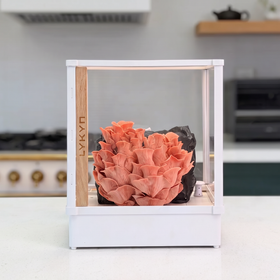
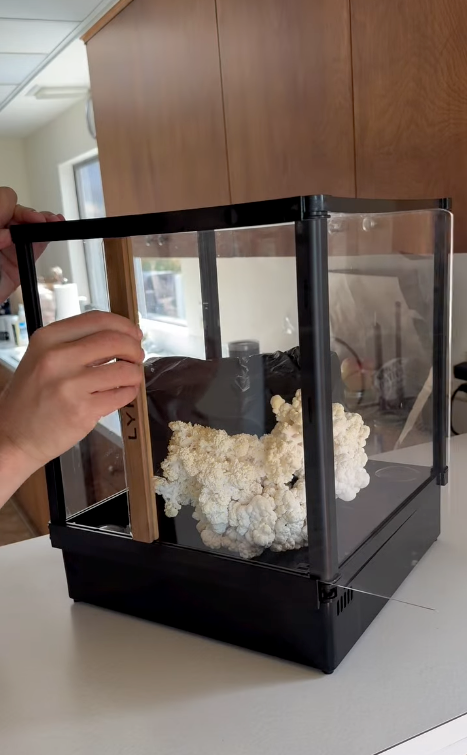
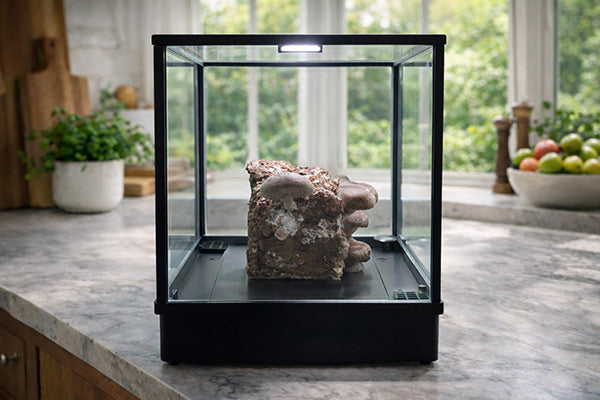
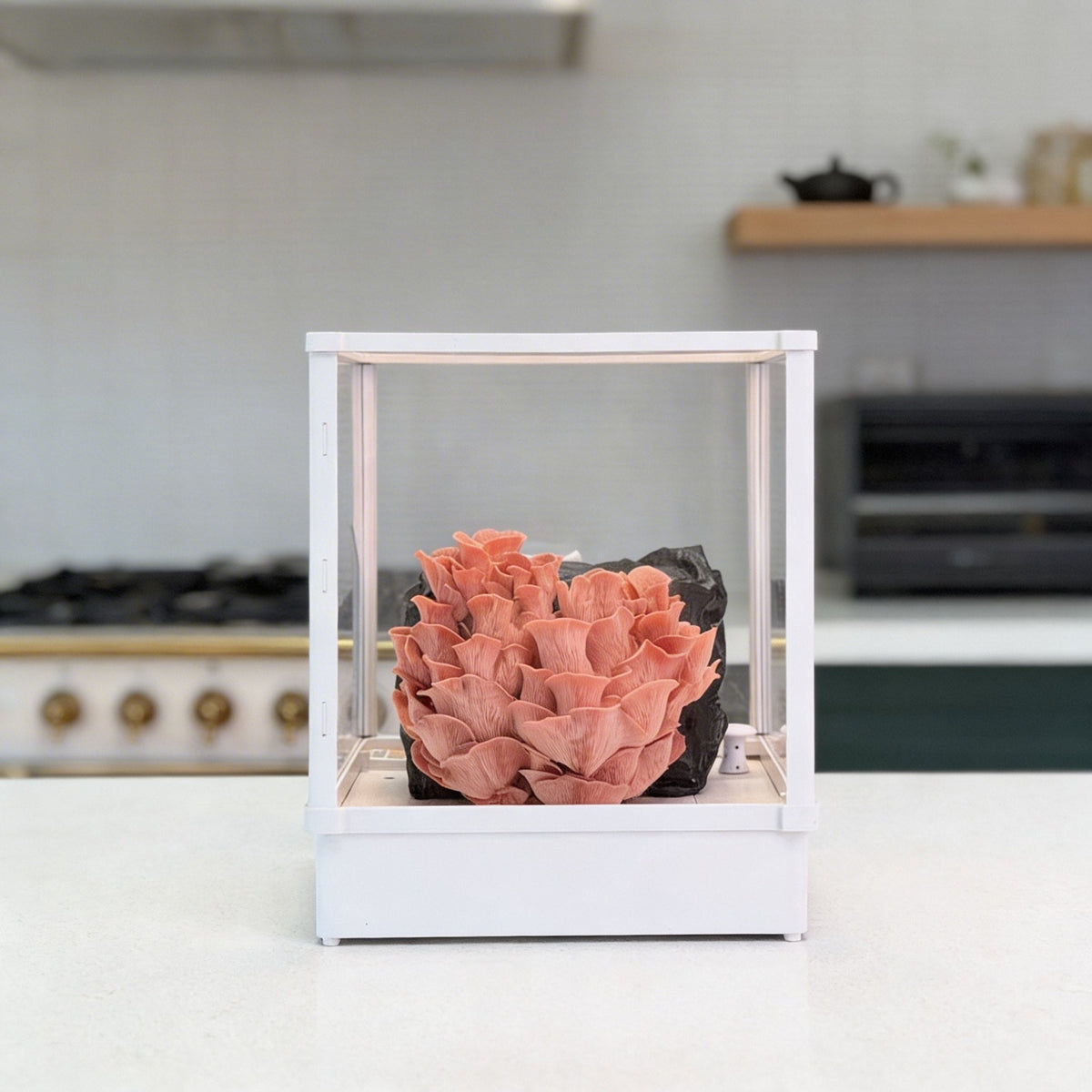
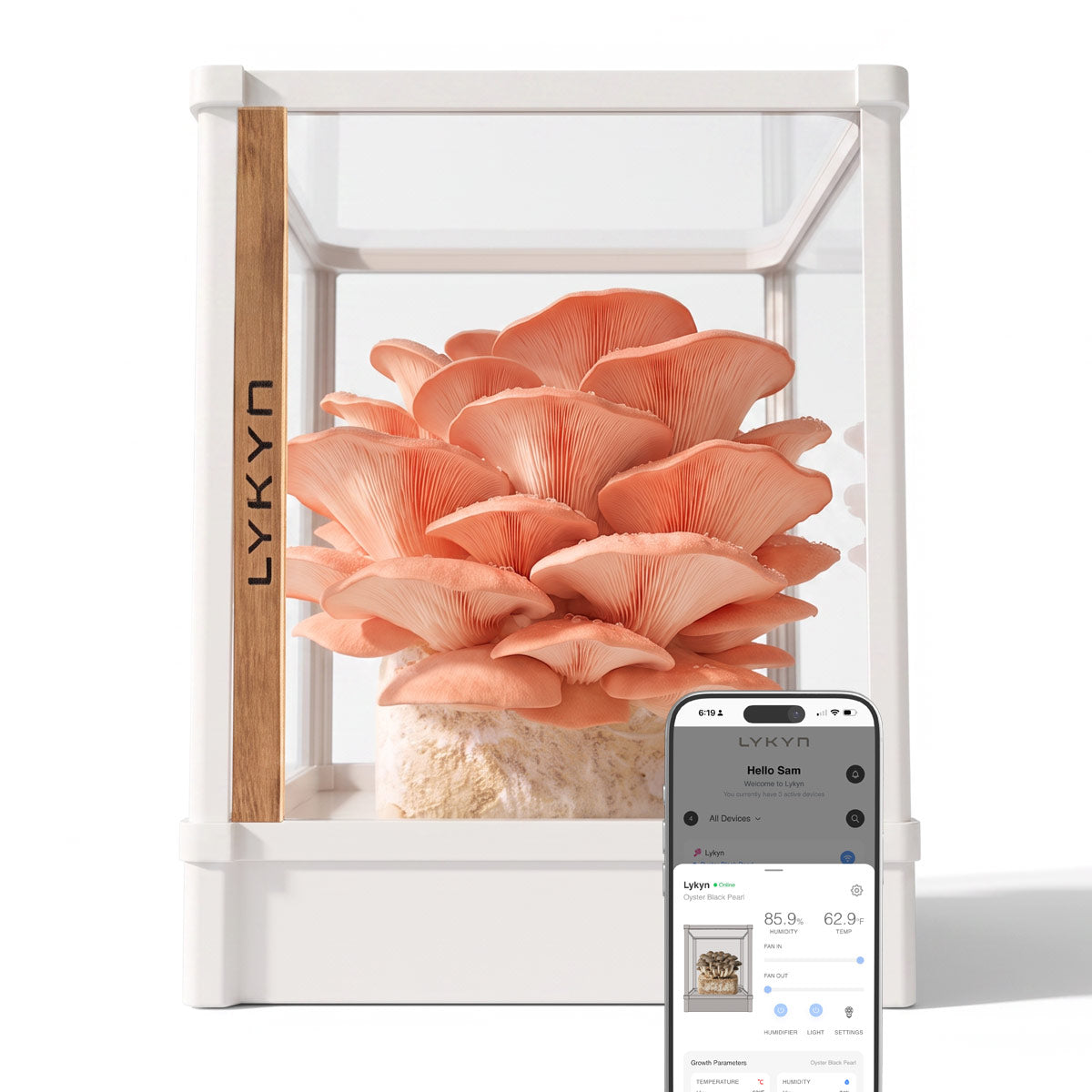
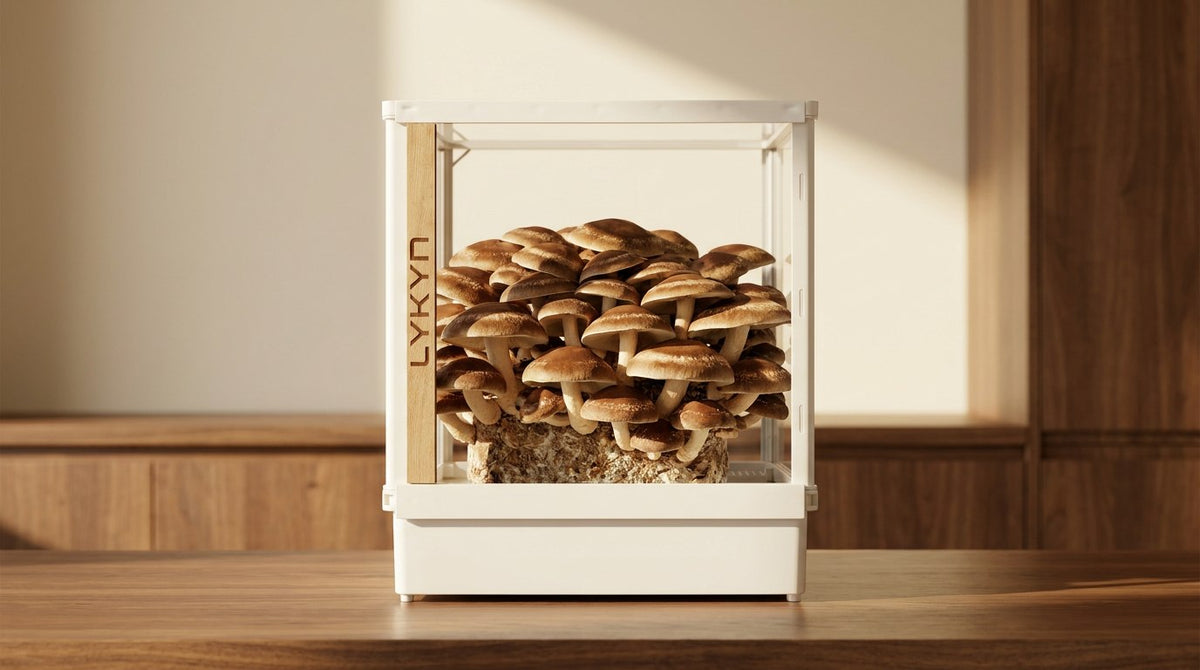
Wenn Sie sich überhaupt nicht mit Verunreinigungen befassen möchten, wird die Lykyn Smart Mushroom Grow Box mit vorsterilisierten, vorkolonisierten Blöcken in einer versiegelten Anzuchtkammer mit versiegelter und app-gesteuerter Luftzirkulation geliefert, sodass die unten beschriebenen Fehler meistens nicht auftreten.

Identifizieren Sie Ihre Pilzverunreinigung auf einen Blick
Dies ist die Nachschlagetabelle, auf die Sie bei jeder Zucht zurückkommen werden. Vergleichen Sie die Farbe und Textur, die Sie sehen, mit der Zeile und springen Sie dann zum H2 mit der vollständigen Diagnose.
| Farbe, die Sie sehen | Textur / Muster | Wahrscheinlichste Verunreinigung | Können Sie es retten? |
|---|---|---|---|
| Hellgrün | Pulveriger Staub auf weißem Myzel | Trichoderma (Grünschimmel) | Nein. Den Block entsorgen |
| Blau-grün | Fuzzy Flecken, deutliche Ränder | Penicillium | Manchmal, wenn klein entdeckt |
| Hellgrau-weiß | Haardünne, schnell wachsende Stränge | Spinnwebenschimmel (Cladobotryum) | Ja, wenn nur oberflächlich. Besprühen und Luftzufuhr |
| Schwarze Nadelspitzen auf Weiß | Winzige schwarze Punkte in einem weißen Halo | Nadelschimmel (Rhizopus) | Nein, sobald Schwarz sichtbar ist |
| Rußig olivgrün bis schwarz | Samtige, manchmal kreisförmige Kolonien | Aspergillus | Nein. Mit Maske entsorgen |
| Leuchtend Rosa / Lachsfarben | Schleimige Flecken mit saurem Geruch | Bakterieller Fleckenpilz (Pseudomonas) | Manchmal. Luftfeuchtigkeit senken, betroffenen Bereich abschneiden |
| Orange bis Lachsrosa | Zuckerwatte-Flaum, süßlicher Geruch | Neurospora (Oranger Brotschimmel) | Nein. Einer der aggressivsten |
| Olivgrün bis Dunkelgrau | Glatte, nass aussehende Flecken | Olivgrüner Schimmel | Nur oberflächlich. Tief schneiden und beobachten |
| Dunkelbraune nasse Flecken | Weiche, übel riechende Stellen | Nasse Fäule (bakteriell) | Selten. Meist zu spät |
| Trockene braune Verkrustungen an Stielen | Verkrustete, ledrige Flecken | Trockene Fäule (bakteriell) | Nur oberflächlich. Luftzufuhr verbessern |
Wenn Ihr Pilzblock nur flauschiges weißes Wachstum zeigt und Sie befürchten, dass es sich um Schimmel statt um Myzel handeln könnte, springen Sie zum Abschnitt weißes Myzel vs. Schimmel – 80 % der "Ist das eine Kontamination?"-Paniken erweisen sich als vollkommen gesundes Pinning-Verhalten.
Was Pilzverunreinigung eigentlich ist
Kontamination ist jeder Mikroorganismus, der nicht von Ihrer Sporenspritze oder Ihrem Getreidespawn stammt und nun mit Ihrer Kultur um Wasser, Sauerstoff und Nahrung konkurriert. In der Praxis bedeutet dies drei Kategorien:
- Konkurrierende Schimmelpilze – andere Pilze, die dasselbe Substrat fressen. Trichoderma, Penicillium, Spinnwebenschimmel, Nadelschimmel.
- Bakterien – einzellige Eindringlinge, die Schleim produzieren und riechen. Bakterieller Fleckenpilz, Nassfäule, Sauerfäule.
- Hefen – seltener bei Hobbyzuchten, erscheinen aber als trübe, beige Flecken mit Bierhefegeruch.
Warum die Farbe, die Sie sehen, wichtig ist: Jede Verunreinigung produziert ein anderes Pigment, wenn sie sporuliert (Sporen freisetzt). Trichoderma ist in den ersten 24-48 Stunden weiß und nicht von Ihrem Myzel zu unterscheiden, dann explodiert es zu hellem lindgrünen Sporenstaub. Penicillium wird blau-grün. Aspergillus wird rußschwarz. Die Farbe ist der Fingerabdruck, und sie lesen zu lernen, ist 90 % der Kontaminationsdiagnose.
Die anderen 10 % ist der Geruch. Gesundes Myzel riecht schwach nach Waldboden oder gar nicht. Nassfäule riecht nach Ammoniak. Sauerfäule riecht nach Essig. Neurospora ist bekanntlich süß, fast kuchenartig. Wenn Ihre Nase etwas Ungewöhnliches meldet, vertrauen Sie ihr.
Warum Kontaminationen auftreten (Fehler bei der sterilen Technik)
Fast jede Kontamination lässt sich auf eine von vier Ursachen zurückführen:
Luftgetragene Sporen. Die Luft in Ihrer Küche enthält Hunderttausende von Schimmelsporen pro Kubikmeter. Trichoderma- und Penicillium-Sporen sind überall. An Schuhen, an Haustieren, an den Ventilatoren Ihrer Dunstabzugshaube. Jeder Moment, in dem ein Substrat ungefilterter Luft ausgesetzt ist (Öffnen eines Glases, Beimpfen eines Blocks, Mischen von Getreide), ist eine Gelegenheit für eine einzelne Spore, zu landen und zu keimen.
Kontaminierte Werkzeuge. Ein Skalpell, das eine Theke berührt hat, eine Spritze, die einen Handschuh berührt hat, der einen Türgriff berührt hat, ein Rührstab, der nicht flammensterilisiert wurde. Sterile Technik funktioniert nur, wenn jede Oberfläche, die Ihr Myzel berührt, innerhalb der letzten Minuten hitzesterilisiert wurde.
Unzureichend sterilisiertes Substrat. Getreide, das nicht die vollen 90 Minuten bei 15 PSI druckgekocht wurde. Hartholzpellets, die heiß pasteurisiert wurden, obwohl sie drucksterilisiert werden mussten. Sägemehl, das Endosporen (hitzebeständige bakterielle Sporen) enthielt, die eine kurze Kochzeit überlebten.
Umgebungsfeuchtigkeit, die zu hoch oder zu stagnierend ist. Bakterien und Spinnwebenschimmel gedeihen bei 95-100 % Luftfeuchtigkeit ohne Luftzirkulation. Pilze gedeihen bei 85-95 % mit etwas Luftzirkulation. Die Lücke zwischen diesen beiden Bereichen ist der Bereich, in dem sorgfältige Züchter arbeiten. Versiegelte Behälter ohne Belüftung entwickeln oft Spinnwebenschimmel, bevor sie Pilze entwickeln.
Das größere Bild: Kontamination ist kein moralisches Versagen oder ein Zeichen dafür, dass Sie ein schlechter Züchter sind. Es ist ein Wahrscheinlichkeitsereignis. Jede Zucht hat eine gewisse Wahrscheinlichkeit einer Kontamination. Sterile Technik reduziert diese Wahrscheinlichkeit, automatisierte Kammern reduzieren sie weiter, und vorsterilisierte, versiegelte Blöcke wie die Lykyn Smart Mushroom Grow Box reduzieren sie für den Hobbyzüchter auf nahezu Null, da die Fehlermodi in unserer Einrichtung auftreten, nicht in Ihrer Küche.
Die 10 Kontaminanten, denen Sie tatsächlich begegnen werden
Dies ist der Kern des Leitfadens. Jeder Unterabschnitt enthält die visuelle ID, die Ursache, das Urteil "Retten oder wegwerfen" und wie man es beim nächsten Mal verhindert. Setzen Sie ein Lesezeichen für diesen Abschnitt.
1. Grünschimmel (Trichoderma)

Visuelle Identifizierung: Beginnt als kleiner Fleck weißen Myzels, der nicht von Ihrer eigenen Kultur zu unterscheiden ist. Innerhalb von 24-72 Stunden sporuliert er und wird leuchtend lindgrün oder waldgrün. Die Farbe von frisch geschnittenem Gras. Die Textur ist pulverförmig, nicht flauschig. Wenn Sie Grün sehen, hat das darunterliegende Myzel Ihr Substrat bereits seit Tagen verdaut.
Ursache: Trichoderma harzianum und Trichoderma viride sind die beiden Arten, die laut Forschung des Penn State Mushroom Research Center für über 70 % der Grünschimmel-Vorfälle in der Pilzzucht verantwortlich sind. Trichoderma-Sporen sind im Boden und Kompost allgegenwärtig. Sie gelangen durch ungefilterte Luft, schmutzige Werkzeuge oder Substrat, das nicht vollständig drucksterilisiert wurde, in Ihre Zucht.
Kann man es retten? Nein. Trichoderma produziert Gliotoxin, eine antimykotische Verbindung, die Ihr Pilzmyzel direkt abtötet. Sobald grüne Farbe sichtbar ist, ist der Block nicht mehr zu retten. Verpacken Sie ihn, versiegeln Sie ihn und entsorgen Sie ihn außerhalb Ihres Zuchtbereichs, um die Freisetzung von Millionen von Sporen in den Rest Ihres Raumes zu vermeiden.
Prävention: Getreide mindestens 90 Minuten bei 15 PSI druckkochen. In einer Stillluftbox oder unter einer Flowhood beimpfen. Jedes Werkzeug flammensterilisieren. Wenn Sie wiederholt Trichoderma-Vorfälle sehen, liegt die Ursache normalerweise im Raum, in dem Sie arbeiten. Reinigen Sie ihn, lassen Sie vor Ihrer nächsten Sitzung 24 Stunden lang einen Luftreiniger laufen und erwägen Sie den Umzug in eine versiegelte, automatisierte Kammer.
Für einen tieferen Einblick, wie man Grünschimmel von gesundem Wachstum unterscheidet, führt der bestehende Myzel-Kontaminationsleitfaden Bild für Bild durch die visuellen Hinweise.
2. Spinnwebenschimmel (Cladobotryum)

Visuelle Identifizierung: Flaumige, hellgraue bis weiße Fusseln, die genau wie ein Spinnennetz über Ihrem Substrat oder Ihren fruchtenden Pilzen aussehen. Es breitet sich erstaunlich schnell aus. Ein kleiner Fleck kann seine Größe alle 12 Stunden verdoppeln. Im Gegensatz zu Trichoderma wird es niemals grün. Das prägende Merkmal sind die länglichen, dünnen Stränge, nicht eine dichte Matte.
Ursache: Cladobotryum dendroides (auch Dactylium-Mehltau genannt) gedeiht bei hoher Luftfeuchtigkeit mit stehender Luft. Es tritt typischerweise spät im Wachstumszyklus auf, oft nachdem die Bildung von Fruchtkörpern begonnen hat. Der Auslöser ist eine Luftfeuchtigkeit über 95 % in Kombination mit keinem Frischluftwechsel.
Kann man es retten? Meistens ja, wenn man es innerhalb des ersten Tages bemerkt. Besprühen Sie den betroffenen Bereich leicht mit 3 % Wasserstoffperoxid, erhöhen Sie den Frischluftwechsel (öffnen Sie die Kammertür zweimal täglich für 10 Minuten) und senken Sie die Luftfeuchtigkeit von 95 % auf 85 %. Das Peroxid tötet Spinnwebenschimmel-Sporen ab, schädigt aber das Myzel nicht. Wenn der Spinnwebenschimmel über mehr als 30 % der Oberfläche fortgeschritten ist, lohnt sich die Rettung des Blocks nicht.
Prävention: Sättigen Sie die Luft nicht übermäßig. Viele unerfahrene Züchter geraten in Panik und drehen die Luftfeuchtigkeit auf 100 %, sobald sie trockenes Myzel sehen. Dies ist der zuverlässigste Weg, Spinnwebenschimmel zu züchten. Halten Sie die Luftfeuchtigkeit während der Kolonisierung bei 90 %, während der Fruchtkörperbildung bei 85-92 % und lassen Sie einen kleinen Ventilator für mindestens 6 Frischluftwechsel pro Stunde laufen. Der automatisierte Luftaustausch der Lykyn-Kammer läuft kontinuierlich, weshalb Spinnwebenschimmel in unseren Kammerzuchten selten ist.
Für einen direkten Vergleich von Spinnwebenschimmel und gesundem weißen Flaum auf Pilzen (der normalerweise ungefährlich ist), siehe den bestehenden Leitfaden für weiße, flaumige Pilze.
3. Schwarzer Nadelschimmel (Rhizopus)
Visuelle Identifizierung: Winzige schwarze Punkte an den Spitzen schnell wachsender weißer Sporangienträger. Aus der Ferne sieht das Substrat aus, als hätte es eine Prise schwarzen Pfeffer auf einem weißen Feld. Aus der Nähe ist jeder Punkt ein Sporangium. Eine winzige Kugel schwarzer Sporen, bereit zur Freisetzung.
Ursache: Rhizopus stolonifer ist der klassische schwarze Brotschimmel. Er verbreitet sich durch luftgetragene Sporen und gedeiht bei höheren Temperaturen (24-32°C). Altes Getreide, übrig gebliebene Brotstärke im Substrat und feuchte Umgebungen sind seine bevorzugten Lebensräume.
Kann man es retten? Nein, besonders nicht, wenn die schwarzen Sporangien bereits sichtbar sind. Jeder sichtbare schwarze Punkt hat bereits Sporen freigesetzt. Schwarzer Nadelschimmel ist auch ein Atemwegsrisiko. Niemals einen kontaminierten Block ohne FFP2-Maske berühren.
Prävention: Substrat vollständig sterilisieren (Rhizopus-Sporen haben eine moderate Hitzebeständigkeit und benötigen mindestens 90 Minuten bei 15 PSI). Halten Sie Ihren Zuchtraum während der Kolonisierung bei 18-24°C. Vermeiden Sie Substrate auf Weizenbasis, wenn Sie wiederholt Rhizopus-Vorfälle hatten. Roggen und Hirse sind widerstandsfähiger.
4. Blaugrüner Penicillium
Visuelle Identifizierung: Deutliche runde Flecken von flauschigem blaugrünem bis türkisfarbenem Schimmel, oft mit einem dunkleren Zentrum und einem weißen Ring am Rand. Die Textur ist fester als der pulverförmige Staub von Trichoderma. Penicillium ist richtig flauschig. Die Farbe ist unverkennbar blau-stichig, nicht das Gelbgrün von Trichoderma.
Ursache: Penicillium-Arten (insbesondere P. citrinum und P. expansum) sind überall. Sie gehören zur selben Familie, die dem Blauschimmelkäse seinen Charakter verleiht und das ursprüngliche Antibiotikum produzierte. Sie gelangen durch luftgetragene Sporen in die Zuchten, oft durch verdorbenes Obst oder Gemüse in der Nähe (Penicillium liebt Obst) oder durch erdkontaminiertes Substrat.
Kann man es retten? Manchmal, wenn der Fleck klein und nur oberflächlich ist und man ihn am 1. oder 2. Tag entdeckt. Schneiden Sie den betroffenen Bereich mit einer sterilen Klinge heraus, gehen Sie dabei mindestens 2,5 cm in das Substrat um den Fleck herum und sprühen Sie den freiliegenden Bereich mit 3 % Peroxid ein. Wenn der Fleck größer als ein Viertel ist oder Sie mehrere Flecken sehen, entsorgen Sie den Block.
Prävention: Lagern Sie Substrat nicht in der Nähe von Obst, Kompost oder Zimmerpflanzen und beimpfen Sie es dort nicht. Wischen Sie Ihre Arbeitsfläche vor jeder Sitzung mit 70 % Isopropylalkohol ab. Sterilisieren Sie das Substrat gründlich.
5. Gelber Aspergillus
Visuelle Identifizierung: Rußige, gelb- bis goldfarbene Flecken, die zu olivgrün oder schwarz reifen. Die Textur ist samtig und leicht pudrig. Einige Aspergillus-Arten (insbesondere A. flavus) produzieren Aflatoxine, die zu den giftigsten bekannten natürlich vorkommenden Verbindungen gehören.
Ursache: Aspergillus gedeiht auf stärkehaltigen Substraten und unter warmen, trockenen Bedingungen. Er ist besonders häufig in schlecht gelagertem Getreide oder Sägemehl zu finden. Wie Rhizopus weist er eine bemerkenswerte Hitzebeständigkeit auf, so dass unzureichend sterilisiertes Substrat der übliche Eingangspunkt ist.
Kann man es retten? Nein, und behandeln Sie es als Atemwegsgefahr. Niemals an einem Aspergillus-kontaminierten Block riechen. Tragen Sie beim Entsorgen eine FFP2- oder P100-Atemschutzmaske und verpacken Sie ihn doppelt, bevor er Ihren Wachstumsbereich verlässt. Waschen Sie sofort danach Ihre Hände und Kleidung.
Prävention: Kaufen Sie frische Getreide- und Sägemehlpellets. Lagern Sie Substratmaterialien in luftdichten Behältern, niemals in offenen Säcken in der Garage oder im Keller. Eine vollständige Drucksterilisation ist unerlässlich.
6. Pinker bakterieller Fleckenpilz
Visuelle Identifikation: Hellrosa bis lachsfarbene schleimige Flecken, meist auf den Kappen oder Stielen bereits gebildeter Pilze. Die Pilze fühlen sich feucht und schlüpfrig an, und der Geruch reicht von sauer bis fischig. Im Gegensatz zu rosa Schimmel (Neurospora, siehe unten) ist die bakterielle Fleckenkrankheit schleimig, nicht flaumig.
Ursache: Pseudomonas tolaasii ist die häufigste Ursache. Es ist ein Bakterium, das normalerweise in geringen Mengen auf Pilzoberflächen lebt, sich aber explosionsartig vermehrt, wenn die Oberfläche zu lange feucht bleibt. Der Auslöser ist Wasser, das ohne Verdunstung auf den Kappen steht. Dies geschieht meist durch übermäßiges Besprühen oder durch Kondenswasser, das von der Kammerdecke tropft.
Kann man es retten? Oft ja für den gesamten Anbau, obwohl einzelne befallene Pilze entsorgt werden müssen. Schneiden Sie alle sichtbar schleimigen Pilze mit einer sterilen Klinge ab. Senken Sie die Luftfeuchtigkeit in der Kammer um 10 % und erhöhen Sie die Luftzirkulation, um die verbleibenden Kappen zu trocknen. Wenn der nächste Satz von Pilzansätzen trocken und gesund aussieht, sind Sie wieder auf dem richtigen Weg.
Prävention: Besprühen Sie die Pilze nicht direkt. Besprühen Sie die Wände und den Boden der Kammer, falls Sie überhaupt sprühen. Stellen Sie sicher, dass Kondenswasser abfließen oder verdunsten kann. Automatisierte Kammern wie die Lykyn-Box lösen dies, indem sie die Feuchtigkeit von einem Basisbefeuchter leiten, der nicht von oben tropft.
7. Oranger Neurospora (Rosa Brotschimmel)
Visuelle Identifikation: Zuckerwatte-ähnlicher Flaum in leuchtendem Orange bis Lachsrosa, mit einem süßen, fast kuchenartigen Geruch. Neurospora crassa ist einer der aggressivsten Kontaminanten in jedem Labor. Er kann ein ganzes Substrat über Nacht besiedeln.
Ursache: Neurospora ist ungewöhnlich, da seine Sporen weitaus höhere Temperaturen überleben können als die meisten Schimmelpilze. Bis zu 130 °C für kurze Zeiträume. Das bedeutet, dass selbst die Drucksterilisation manchmal nicht ausreicht, um ihn abzutöten. Der übliche Eintrittspunkt sind kontaminierte Ausgangsmaterialien, insbesondere kommerzielle Getreidebrut oder Hartholzpellets, die ihn während der Lagerung aufgenommen haben.
Kann man es retten? Nein, und Sie sollten einen Neurospora-Ausbruch als Notfall für die gesamte Einrichtung betrachten. Isolieren Sie alle Blöcke, die aus derselben Substratcharge hergestellt wurden. Dekontaminieren Sie Ihren Arbeitsbereich mit Bleichmittel und anschließend mit 70 % Isopropylalkohol. Viele Labore mussten nach einem einzigen Neurospora-Vorfall monatelange Arbeit wegwerfen.
Prävention: Beschaffen Sie Materialien von seriösen Lieferanten. Wenn Sie Neurospora einmal sehen, werfen Sie den Rest dieser Substratcharge weg und reinigen Sie Ihren Bereich aggressiv, bevor Sie erneut beginnen.
8. Olivgrüner Schimmel
Visuelle Identifikation: Glatte, feucht aussehende olivgrüne bis dunkelgraue Flecken, manchmal mit einem leichten metallischen Glanz. Weniger häufig als Trichoderma oder Penicillium, aber markant, wenn er auftritt. Oft verwechselt mit sporulierendem, reifem Myzel bestimmter Pilzarten. Im Zweifelsfall riechen Sie daran (Myzel ist erdig, Schimmel ist sauer).
Ursache: Mehrere Arten können diese Farbe hervorrufen, darunter Chaetomium und einige Cladosporium-Varianten. Die Ursache ist meist zu feuchtes Substrat (Feldkapazität überschritten) in Kombination mit geringem Sauerstoffgehalt.
Kann man es retten? Wenn der Fleck nur oberflächlich ist und kleiner als eine Münze, schneiden Sie ihn mit einer sterilen Klinge heraus und beobachten Sie den Bereich 48 Stunden lang. Meistens ist olivgrüner Schimmel das Oberflächensymptom eines tiefer liegenden anaeroben Problems im Block, in welchem Fall das Ganze entsorgt werden muss.
Prävention: Hydratation bis zur Feldkapazität. Das Substrat sollte sich feucht anfühlen, aber kein Wasser sollte beim Zusammendrücken tropfen. Stellen Sie sicher, dass Ihr Block Luftaustauschkanäle hat (die meisten vorgefertigten Blöcke haben ein Filterfeld).
9. Nassfäule (Bakteriell)
Visuelle Identifikation: Weiche, übelriechende, braune Flecken, die wasserdurchtränkt aussehen. Der Geruch ist ammoniakartig oder nach faulem Fisch. Betroffene Bereiche des Substrats oder des Pilzes fühlen sich schleimig und matschig an. Nassfäule ist eine der markantesten Verunreinigungen, da der Geruch sofort Aufschluss gibt.
Ursache: Verschiedene Bacillus- und Pseudomonas-Arten, die in gesättigten, anaeroben Bedingungen gedeihen. Nassfäule deutet fast immer darauf hin, dass das Substrat zu nass ist und nicht genug Sauerstoff das Innere erreicht. Bakterien können Myzel übertreffen, wenn der Sauerstoffgehalt niedrig ist.
Kann man es retten? Selten. Sobald Nassfäule einen Geruch erzeugt, ist die bakterielle Belastung so hoch, dass der Block beeinträchtigt ist. Entsorgen Sie ihn und beginnen Sie von vorne.
Prävention: Achten Sie bei der Substratvorbereitung auf die richtige Hydratation. Die meisten fehlgeschlagenen Anbauten lassen sich auf zu viel Wasser zurückführen. Der „Feldkapazität-Quetschtest“ ist der Goldstandard: Drücken Sie einen Substratklumpen von Hand zusammen, und ein paar Tropfen sollten zwischen Ihren Fingern erscheinen, aber kein Wasserstrahl sollte herauslaufen.
10. Trockenfäule (Oberflächenbakteriell)
Visuelle Identifikation: Trockene, verkrustete braune Schorfstellen an Pilzstielen, manchmal mit rissiger Oberfläche. Weniger häufig als Nassfäule, und der Geruch ist milder. Betrifft bereits gebildete Pilze stärker als das Substrat.
Ursache: Dieselben Bakterienfamilien wie bei der Nassfäule, die sich jedoch unter trockeneren Bedingungen äußern. Tritt normalerweise auf, wenn die Luftfeuchtigkeit während der Fruchtbildung unter 80 % gefallen ist, wodurch die Pilze gestresst werden und opportunistische Oberflächenbakterien verschorfen können.
Kann man es retten? Ja, normalerweise. Schneiden Sie die betroffenen Pilze mit einer sterilen Klinge ab. Der Rest des Blocks wächst in der Regel normal weiter, wenn Sie Luftfeuchtigkeit und Luftzirkulation stabilisieren.
Prävention: Lassen Sie die Luftfeuchtigkeit nicht stark schwanken. Die geschlossene Feuchtigkeitsregelung der Lykyn-Kammer hält die Zielwerte innerhalb von ±2 %, weshalb Trockenfäule in unseren Kammern selten ist.
Wenn Ihr Block überhaupt keine Früchte trägt, anstatt Oberflächenprobleme zu haben, führt Sie der Leitfaden zur Fehlerbehebung bei nicht fruchtenden Pilzblöcken durch die Diagnoseleiter.
Weißes Myzel vs. Schimmel: Wie man den Unterschied erkennt

Dies ist die häufigste Panikfrage, die wir von neuen Züchtern erhalten. „Da ist weißes, flauschiges Zeug auf meinem Block. Ist es kontaminiert?“ Fast immer nein. Myzel soll weiß und flauschig sein.
| Gesundes Myzel | Schimmelkontamination |
|---|---|
| Hellbaumwollweiß | Zuerst weiß, nimmt aber innerhalb von 24-72 Stunden Farbe an |
| Gleichmäßiges, dichtes, mattenartiges Wachstum | Fleckig, mit deutlichen „Startpunkten“, die nach außen strahlen |
| Wächst vom Inokulationspunkt ausgehend konsequent nach außen | Erscheint an zufälligen Stellen, oft vom Hauptkultur abgetrennt |
| Zeigt manchmal winzige Tröpfchen (myzeliales Stoffwechselwasser). Das ist in Ordnung | Nasser Schleim, keine Tröpfchen, und riecht normalerweise schlecht |
| Gelbe Flecken, wo es reif ist = „myzeliale Metaboliten“, normal | Hell-Limetten-Grün = Trichoderma, Alarm |
| Pinheads / Hyphalknoten bilden sich = Vor-Fruchtbildung, aufregend | Baumwollartiger Flaum, der keine Pins bildet = wahrscheinlich Spinnweben-Schimmel |
Die zwei zuverlässigen Regeln:
Regel 1: Farbwechsel ist der Alarm. Gesundes Myzel bleibt weiß. Alles, was grün, blau, schwarz, rosa oder orange wird, ist eine Verunreinigung.
Regel 2: Geruch ist Ihre zweite Linie. Erdig oder kein Geruch = in Ordnung. Sauer, süß, fischig oder Ammoniak = Kontamination.
Für einen detaillierten Einblick mit direkten Vergleichen von gesundem Myzel und den am häufigsten verwechselten Kontaminanten ist der bestehende Leitfaden zu Myzel vs. Schimmel die definitive Referenz. Der begleitende Leitfaden zu schimmeligen Pilzen behandelt, was zu tun ist, wenn Sie Schimmel auf bereits geernteten Pilzen in Ihrem Kühlschrank finden.

Befeuere deine Pilzreise
Intelligente Pilzzuchtkammer
Plug-and-Play-Smart-Kammer mit optimaler Luftfeuchtigkeit, Licht und Luftstrom für jede Spezies. Anfänger ernten ihre erste Welle in Tagen, nicht Monaten.
In den Warenkorb $299Sterile Technik: Die wahre Prävention
Sterile Technik ist die Grundlage. Es gibt keine Kontaminationsheilung. Nur Prävention. Die 6 Regeln, die jeder Züchter verinnerlichen sollte:
- Substrat mindestens 90 Minuten lang bei 15 PSI drucksterilisieren. Atmosphärischer Dampf (Kochen) ist keine Sterilisation, sondern Pasteurisierung. Er tötet Bakterien, aber nicht alle Sporen.
- Arbeiten Sie in einer Stillluftbox (SAB) oder einer Laminar-Flow-Haube. Wind im Freien oder eine Küche mit laufender Klimaanlage ist keine Stillluft. Selbst eine 3 Kubikfuß große SAB senkt die Kontaminationsraten um eine Größenordnung.
- Alles mit 70% Isopropylalkohol abwischen. Arbeitsplatten, Handschuhe, Werkzeuge, die Außenseite von Gläsern, bevor Sie sie öffnen. 70% IPA tötet 99,9% der vegetativen Zellen in 30 Sekunden ab.
- Klingen und Impfösen zwischen den Anwendungen flammensterilisieren. Ein Butanbrenner, der 2 Sekunden lang bis zur Rotglut gehalten wird, tötet alles auf der Oberfläche ab.
- Langsam und überlegt bewegen. Schnelle Handbewegungen erzeugen Luftströme, die Sporen vom Boden und Ihrer Kleidung in Ihren Arbeitsbereich ziehen. Behandeln Sie jede Inokulation wie ein langsames Ritual.
- Tragen Sie saubere Kleidung, die Sie nicht draußen getragen haben. Tierhaare und Staub auf Hemden sind ein Hauptvektor für Trichoderma.
Die ehrliche Realität: Sterile Technik funktioniert, aber sie hat eine Lernkurve, und ein einziger unaufmerksamer Moment kann einen Anbau ruinieren. Dies ist der Hauptgrund, warum gekammerte, vorsterilisierte Anbausysteme existieren. Die Lykyn Smart Mushroom Grow Box übernimmt die fehleranfälligen Schritte. Drucksterilisation, versiegelte Inokulation, versiegelte und appgesteuerte Fruchtumgebung. Und verlagert sie in unsere Einrichtung, so dass der einzige Schritt für den Hobbyzüchter das Öffnen eines versiegelten Beutels und das Starten ist.
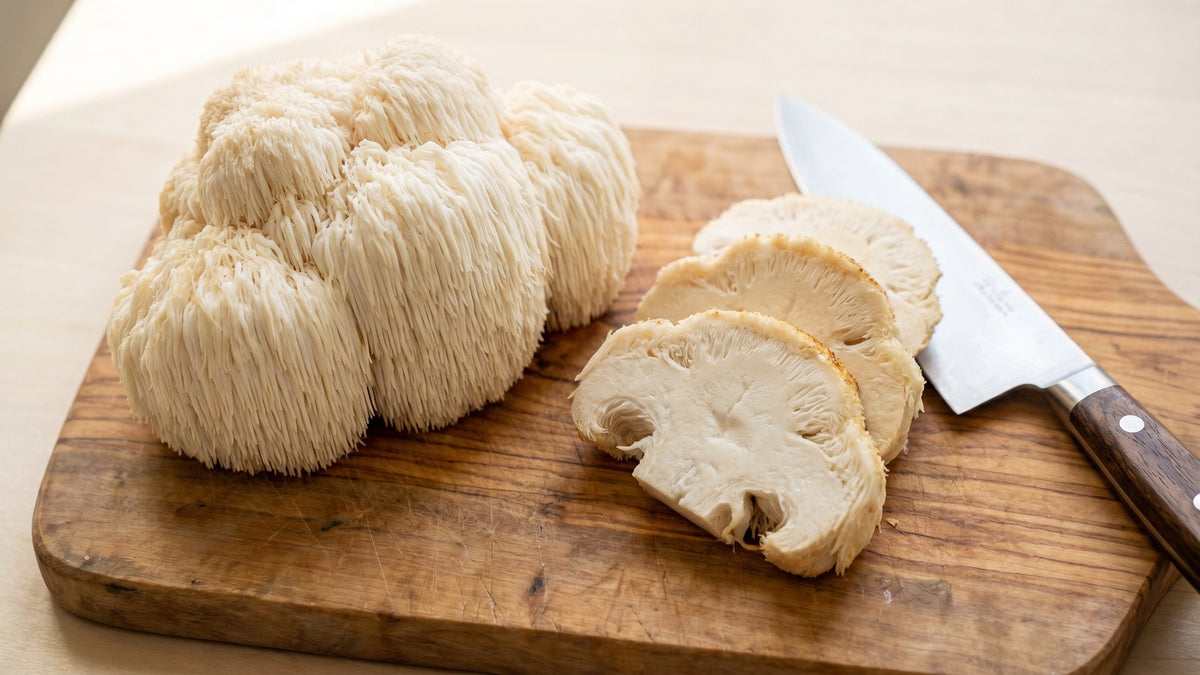
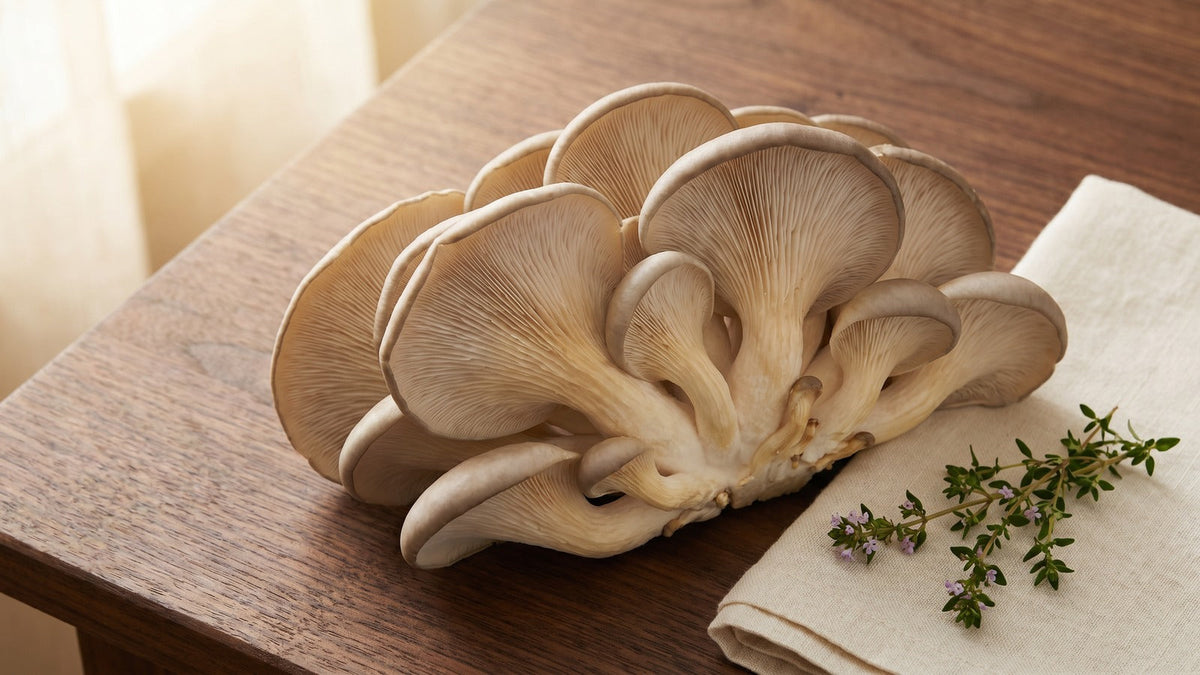
Die Kammer bietet auch vorkolonisierte Blöcke für die beiden beliebtesten Sorten zum Start an: das Löwenmähnen-Anbau-Kit und das Pink-Austernpilz-Anbau-Kit. Beide werden vorsterilisiert, vor-inkokuliert und vorkolonisiert in einem versiegelten Anzuchtbeutel geliefert, so dass die einzige Kontaminationsmöglichkeit der Moment ist, in dem Sie den Beutel öffnen und in die Kammer legen. Genau dann erfüllt der eingebaute Filter der Kammer seine Aufgabe.
Weitere Informationen zur Funktionsweise der Umgebungssteuerung der Kammer finden Sie in der Übersicht über die Pilzfruchtkammer.
8 schnelle Antworten auf die häufigsten Kontaminationsfragen
Kann ich Pilze mit einem kleinen bisschen Schimmel essen?
Nein. Selbst eine kleine sichtbare Schimmelkolonie bedeutet, dass das Pilzgewebe weiter besiedelt ist, als Sie sehen können. Werfen Sie den gesamten Pilz weg. Für eine detailliertere Anleitung, was mit schimmeligen Pilzen im Kühlschrank zu tun ist, siehe den Leitfaden zu schimmeligen Pilzen.
Ist weißer Flaum auf Pilzen immer Schimmel?
Nein. In der Tat, meistens nicht. Weißer Flaum auf einem frisch gewachsenen Pilz ist fast immer gesundes Myzel, das sich weiter ausbreitet. Pilze bestehen aus Myzel, daher ist es völlig normal, dass etwas Flaum an den Kappenrändern weiterwächst. Wenn der Flaum weiß bleibt und keinen üblen Geruch hat, ist er in Ordnung. Bilder finden Sie im Leitfaden für weiße, flaumige Pilze.
Wie unterscheide ich Trichoderma-Grünschimmel von grünen Pin-Formationen?
Pin-Formationen sehen aus wie winzige Pilzstiele, die vertikal nach oben ragen und eine definierte Kappe haben. Trichoderma sieht aus wie ein pulverförmiger grüner Staub, der flach auf der Substratoberfläche ausgebreitet ist. Pins haben Form und Struktur. Trichoderma hat keine Struktur. Es ist nur farbiges Pulver.
Kann ich einen kontaminierten Block retten, indem ich den schlechten Teil herausschneide?
Bei oberflächlichen Spinnweben-Schimmelpilzen oder bakteriellen Oberflächenproblemen manchmal ja. Bei Trichoderma, Aspergillus, Neurospora oder allem, was länger als 24 Stunden sichtbar war, nein. Die Kontamination ist tiefer als der sichtbare Fleck.
Warum hat mein Block braune Flecken auf dem Myzel?
Braune Flecken sind in der Regel eine von zwei Dingen: (a) Myzelmetaboliten, harmlose braune Tröpfchen, die die Kultur während der Reifung produziert, oder (b) beginnende bakterielle Fleckenbildung. Der Unterschied liegt in der Textur. Metaboliten sind trockene braune Flecken, die sich nicht ausbreiten, Flecken sind feucht und breiten sich innerhalb von 24 Stunden aus.
Was bedeutet schwarzer Schimmel auf einem Pilzblock?
Wahrscheinlich Aspergillus oder Rhizopus. Beide sind aggressiv, beide sind Atemwegsgefahren. Maske aufsetzen, den Block doppelt verpacken und außerhalb des Anbaubereichs entsorgen. Die Arbeitsfläche mit Bleichmittel reinigen.
Werden Schimmelsporen in der Luft meinen nächsten Anbau kontaminieren?
Wenn Sie nicht dekontaminieren, ja. Nach einem Kontaminationsereignis alle Oberflächen mit Bleichmittel (10%ige Lösung) und dann mit 70%igem Isopropylalkohol abwischen. Einen Luftreiniger 24 Stunden lang laufen lassen. 48 Stunden warten, bevor Sie einen neuen Anbau beginnen.
Ist Myzel oder Schimmel beim Berühren gefährlich?
Gesundes Pilzmyzel ist beim Berühren mit bloßen Händen harmlos. Die meisten Schimmelpilze sind bei kurzem Hautkontakt harmlos, aber gefährlich beim Einatmen. Wenn Sie einen kontaminierten Block anfassen, tragen Sie Handschuhe und eine N95-Maske. Waschen Sie Ihre Hände danach gründlich.
Das ehrliche Fazit
Kontamination ist der größte Grund für das Scheitern von Pilzzuchten zu Hause. Die 10 Verunreinigungen in diesem Leitfaden machen über 95 % der Fälle aus. Die gute Nachricht: Jede einzelne davon ist durch eine korrekte sterile Technik vermeidbar, und die meisten sind visuell so deutlich, dass Sie sie mit diesem Leitfaden in 30 Sekunden diagnostizieren können.
Die andere gute Nachricht: Sie müssen nichts davon selbst tun. Vorsterilisierte, versiegelte, vorkolonisierte Blöcke in einer versiegelten und app-gesteuerten automatisierten Kammer machen den größten Teil des Kontaminationsrisikos zu unserem Problem, nicht zu Ihrem. Wenn Sie zwei oder mehr kontaminierte Anbauten hintereinander hatten, ist das ein Zeichen dafür, dass die manuelle sterile Technik für Ihren Raum nicht funktioniert. Probieren Sie die Lykyn Smart Mushroom Grow Box aus und lassen Sie die automatisierte Umgebung der Kammer die Variablen handhaben.
Sobald Ihr Block sauber kolonisiert ist und Früchte trägt, drehen sich die nächsten Fragen meist um die Bildung von Fruchtkörpern, die Fruchtbildung und die Ernte. Dies wird ausführlich im Leitfaden zur Pilzbildung und im Leitfaden zur Fehlerbehebung bei abgebrochenen Pilzstielen behandelt. Und wenn Ihre Früchte während der Ernte die Farbe ändern, siehe Pilze werden braun.
Quellen und Referenzen:
- Penn State Mushroom Research Center, „Green Mold (Trichoderma) Disease of Cultivated Mushrooms“ (peer-reviewed Erweiterungspublikation)
- Cornell University College of Agriculture and Life Sciences, Mycology Program
- Hatvani, L. et al., „The Green Mould Disease Global Threat to the Cultivation of Oyster Mushroom“ (Pleurotus species), Plant Pathology, peer-reviewed paper on Trichoderma in commercial cultivation
- Royse, D.J. & Beelman, R.B., „Mushroom Industry Bacterial Diseases“ (Penn State Extension)
Dieser Leitfaden spiegelt die aktuellen Best Practices im kommerziellen und Hobby-Pilzanbau ab 2026 wider.
Befeuern Sie Ihre Pilzreise

Smarte Kammer. Knochenweiß Einlagig
- 2,8 l Tank, 90 % automatische Luftfeuchtigkeit
- App-gesteuert, Plug-and-Play
- 6 lb Blockdecke, auf Lager

Smart Chamber. Obsidian Schwarz Einfach
- Gleiche Hardware wie Bone White
- Mattschwarzes Premium-Finish
- Passt zu jeder Küchenpalette

Black Oyster Grow Kit
- Auf Lager
- Pin in 3-5 Tagen
- Ersetzt 1 Kammerzyklus




Aktie:
Maronenpilz-Rezepte: Der ultimative Leitfaden zur Zubereitung der nussigen Schätze der Natur
Was ist Sporensubstrat: Ihr vollständiger Leitfaden zum Verständnis der Grundlagen des Pilzanbaus