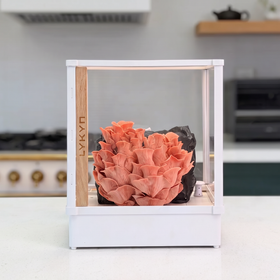





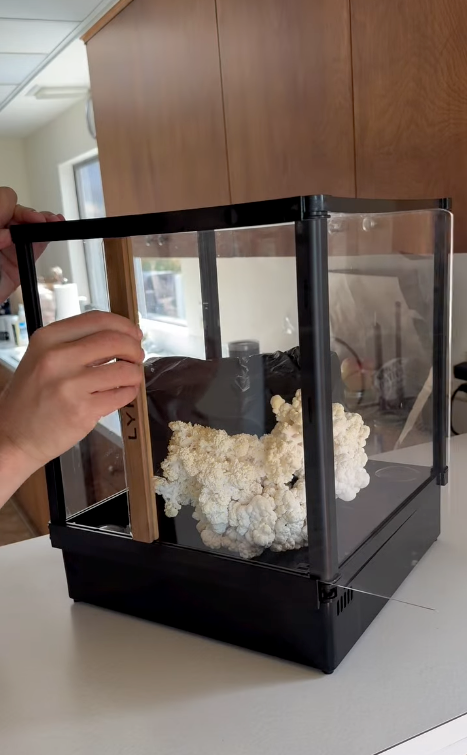
Du hast zugesehen, wie sich das weiße Myzel über deinen gesamten Pilzblock ausgebreitet hat. Die Oberfläche sieht perfekt aus. Du hast den Beutel geöffnet und mit dem Besprühen begonnen. Und dann ... nichts. Keine Primordien. Nur eine glatte, schneeweiße Oberfläche, die dich tagelang anstarrt.
Atme erst einmal durch. Deinem Block geht es mit ziemlicher Sicherheit gut.
Die häufigste Vermutung, wenn ein durchwachsener Block keine Fruchtkörper bildet, ist, dass er kontaminiert sein muss. Tatsächlich sind weniger als 1 von 20 stagnierenden Pilzblöcken aus dem Heimanbau wirklich kontaminiert. Bei den anderen 19 fehlt ein bestimmter Umweltreiz, den die Fruchtungsbiologie voraussetzt. Dieser Ratgeber führt dich durch 7 tatsächliche Gründe, warum dein Pilzblock keine Fruchtkörper bildet, eine 7-stufige Wiederbelebungssequenz, die du noch heute durchführen kannst, und erklärt, wie eine automatisierte Kammer alle Bedingungen gleichzeitig reguliert.
Schnell-Checkliste zur Wiederbelebung (Featured Snippet)

Wenn du nur 60 Sekunden hast, findest du hier die 7 Schritte der Wiederbelebungssequenz in der richtigen Reihenfolge. Führe sie genau in dieser Reihenfolge aus und überspringe keinen Schritt.
- Untersuche den Block auf tatsächliche Kontamination (grüne, schwarze oder rosafarbene Beläge). Wenn er sauber ist, mach weiter.
- Setze den Block einem Kältereiz aus, indem du ihn 12 bis 24 Stunden in den Kühlschrank legst.
- Weiche den Block ein oder befeuchte ihn 1 bis 2 Stunden in kühlem Wasser und lass ihn anschließend abtropfen.
- Schneide neue Öffnungen in den Beutel: 2,5 bis 5 cm lange Schlitze in X-Form.
- Erhöhe die Luftfeuchtigkeit rund um den Block auf 85 bis 95 Prozent.
- Sorge für mehr Frischluftaustausch (FAE), damit der CO2-Gehalt unter 1.000 ppm bleibt.
- Hab Geduld. Die Primordien zeigen sich nach diesem Neustart in der Regel nach 5 bis 10 Tagen.
Das ist das Vorgehen. Im Rest des Artikels erfährst du, warum jeder Schritt funktioniert und wie du deine Umgebung einrichtest, damit das Problem nicht wieder auftritt.
Warum ein vollständig durchwachsener Block keine Fruchtkörper bildet (und warum er nicht kontaminiert ist)

Wenn der Beutel vollständig weiß aussieht, ist die vegetative Phase des Lebenszyklus des Pilzes abgeschlossen. Das Myzel hat alles aufgezehrt, was es braucht, und befindet sich in einem metabolischen Ruhezustand. Es wartet auf das Umweltsignal, das ihm sagt: „Jetzt ist ein guter Zeitpunkt, Sporen zu bilden.“
Dieses Signal setzt die Fruchtung in Gang. Es ist ein Weckruf, ausgelöst durch einen plötzlichen Temperaturabfall, mehr Frischluft, höhere Luftfeuchtigkeit und Lichteinfall. In der Natur tritt diese Kombination ganz von selbst auf, wenn nach einem heißen Sommer Herbstregen auf einen umgestürzten Baumstamm treffen. In Innenräumen musst du sie nachbilden.
Fehlt auch nur eines dieser vier Signale, bleibt das Myzel inaktiv. Es stirbt nicht ab. Es wird nicht kontaminiert (das Myzel verteidigt sich aktiv gegen Konkurrenten). Es wartet einfach. Ein stagnierender Block ist pausiert, nicht kaputt. Wenn du dir das vergegenwärtigst, werden die folgenden 7 Gründe zu einer Checkliste statt zu einem Ratespiel.
Die 7 tatsächlichen Gründe, warum dein Pilzblock keine Fruchtkörper bildet

1. Der Fruchtungsreiz fehlt (Kältereiz und Licht)
Der häufigste Grund für stagnierende Pilzzuchten zu Hause. Die meisten Arten (insbesondere Igelstachelbart, Shiitake und Austernseitling) benötigen einen kurzen Kältereiz, um die Fruchtung einzuleiten. Du kannst einen durchwachsenen Block nicht einfach aus einem warmen Pappkarton nehmen und erwarten, dass Primordien entstehen.
Lösung: Lege den Block im Beutel für 12 bis 24 Stunden in den Kühlschrank. Der Temperaturabfall um 8 bis 11 °C löst die Reaktion des Myzels aus: „Der Herbst ist da, Zeit zu fruchten.“ Der Block braucht außerdem Licht. Pilze nutzen Licht zur Orientierung; die Primordien wachsen buchstäblich darauf zu. Einige Stunden indirektes Tageslicht oder täglich 8 bis 12 Stunden Licht einer 6500-K-LED reichen völlig aus.
2. Die Luftfeuchtigkeit ist zu niedrig
Pilzprimordien bestehen zu 90 Prozent aus Wasser. Ist die Luft rund um den Block zu trocken, bilden sich entweder keine Primordien oder sie sterben ab (werden braun und schrumpeln). Während der gesamten Phase der Primordienbildung (7 bis 14 Tage) muss die relative Luftfeuchtigkeit im Fruchtungsbereich bei 85 bis 95 Prozent liegen.
Zweimal tägliches Besprühen mit einer Handsprühflasche reicht dafür nicht aus. Durch das Besprühen steigt die Luftfeuchtigkeit etwa 4 Minuten lang auf 95 Prozent, danach fällt sie wieder auf 30 bis 45 Prozent. Dieses ständige Auf und Ab ist schlimmer als gleichbleibende 70 Prozent: Die Primordien versuchen sich zu bilden, trocknen aus und versuchen es dann erneut.
3. Der CO2-Gehalt ist zu hoch (kein Frischluftaustausch)
Während der Fruchtung gibt das Myzel CO2 ab. In einem verschlossenen Beutel oder einem nicht belüfteten Zelt steigt der CO2-Gehalt innerhalb weniger Stunden von 400 ppm auf 5.000 ppm oder mehr. Der Pilz nimmt die Luft dann als „unterirdisch“ wahr und bildet entweder keine Primordien oder produziert langstielige Pilze mit winzigen Hüten (das „hutfreie“ Problem bei Austernseitlingen).
Für die Fruchtung muss der CO2-Gehalt unter 1.000 ppm bleiben. Das lässt sich nur durch regelmäßigen Frischluftaustausch (FAE) zuverlässig erreichen. Den Block drei- bis viermal täglich von Hand anzufächeln, hilft kurzfristig, ist aber schwer durchzuhalten.
4. Die Temperatur passt nicht zur Art
Jede Art hat ihren eigenen Fruchtungsbereich. „Zimmertemperatur“ ist nicht für alle die richtige Antwort.
| Art | Ideale Fruchtungstemperatur |
|---|---|
| Igelstachelbart | 60 bis 68 °F (15 bis 20 °C) |
| Blauer Austernseitling | 50 bis 65 °F (10 bis 18 °C) |
| Rosenseitling | 70 bis 80 °F (21 bis 27 °C) |
| Gelber Austernseitling | 65 bis 75 °F (18 bis 24 °C) |
| Shiitake | 55 bis 70 °F (13 bis 21 °C) |
| Kastanienseitling | 60 bis 75 °F (15 bis 24 °C) |
| Kräuterseitling | 55 bis 65 °F (13 bis 18 °C) |
Wenn es in deiner Küche 75 °F (24 °C) hat und du blaue Austernseitlinge fruchten lassen möchtest, ist es für die Primordienbildung im Block zu warm. Er ist nicht kaputt, sondern wartet auf kühlere Luft. Stell ihn in einen kühleren Raum oder in den Keller.

5. Der Block ist ausgetrocknet
Ein vollständig durchwachsener Block besteht gewichtsmäßig zu etwa 60 Prozent aus Wasser. Wenn der Beutel offen war oder der Block in trockener Raumluft stand, sinkt der Wasseranteil. Bei weniger als 45 Prozent Feuchtigkeit ist die Fruchtung unabhängig von den übrigen Bedingungen physisch unmöglich.
Abhilfe schafft ein Bad in kaltem Wasser: Tauche den Block 1 bis 2 Stunden in kühles Leitungswasser und lass ihn anschließend abtropfen. Bei einem einzigen Einweichen nimmt der Block 200 bis 400 Gramm Wasser auf.

6. Das Substrat ist erschöpft (oder zu alt)
Ein typischer Pilzblock liefert 2 bis 3 Erntewellen, bevor das Substrat erschöpft ist. Wenn du bereits zweimal geerntet hast und sich kein drittes Mal Primordien bilden, ist der Block am Ende. Auch ältere Blöcke (4 bis 6 Monate nach der Beimpfung) verlieren an Vitalität, noch bevor sie fruchten.
Schnelltest: Wiege den Block. Ein frischer, gut befeuchteter Block mit 5 lb (2,3 kg) wiegt annähernd 5 lb. Wenn deiner nur 3 lb (1,4 kg) wiegt und sich leicht anfühlt, kompostiere ihn und fang mit einem neuen an.
7. Die Fruchtungskammer oder Umgebung ist verschmutzt (Kontaminationsrisiko)
Dieser Punkt steht zuletzt, weil er am seltensten zutrifft. Echte Kontamination zeigt sich durch sichtbare farbige Stellen: grün (Trichoderma), schwarz (Aspergillus), rosa (Bakterien) oder eine schleimige, nasse Oberfläche, die sauer oder nach Katzenurin riecht.
Wenn du eines dieser Anzeichen entdeckst, weiche den Block nicht ein (sonst verteilst du die Kontamination). Isoliere ihn, reinige wiederverwendbare Ausrüstung mit einer 10-prozentigen Bleichlösung und beginne mit einem frischen Block.
Lykyn-Tipp: Eine saubere, weiße Myzeloberfläche ohne Primordien ist KEINE Kontamination. Reinweiß bedeutet gesund und inaktiv. Heb dir die Panik für den Tag auf, an dem du Grün oder Schwarz siehst.
Wenn du genauer wissen möchtest, wie echte Kontamination aussieht, lies unseren Ratgeber zu den Arten der Pilzkontamination.
Unser Ratgeber zur Primordienbildung bei Pilzen erklärt ausführlich, wie gesunde Primordien in jeder Phase aussehen. Und wenn sich Primordien bilden, dann aber absterben, findest du in unserem Ratgeber zu abgestorbenen Pilzprimordien die passende Schritt-für-Schritt-Anleitung zur Wiederbelebung.
Wie eine automatisierte Kammer alle 7 Bedingungen reguliert

Alle 7 Gründe gehen auf eine gemeinsame Ursache zurück: Hobbyzüchter müssen vier Variablen (Luftfeuchtigkeit, Temperatur, Frischluftaustausch, Licht) von Hand regulieren und zusätzlich den Kältereiz zeitlich einplanen. Für etwas, das eigentlich eine einfache erste Ernte sein sollte, ist das ganz schön viel.
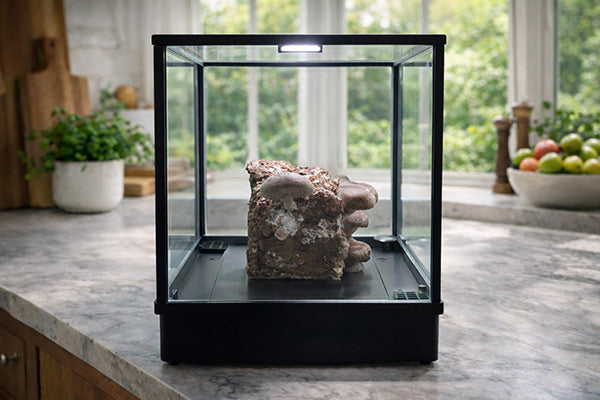
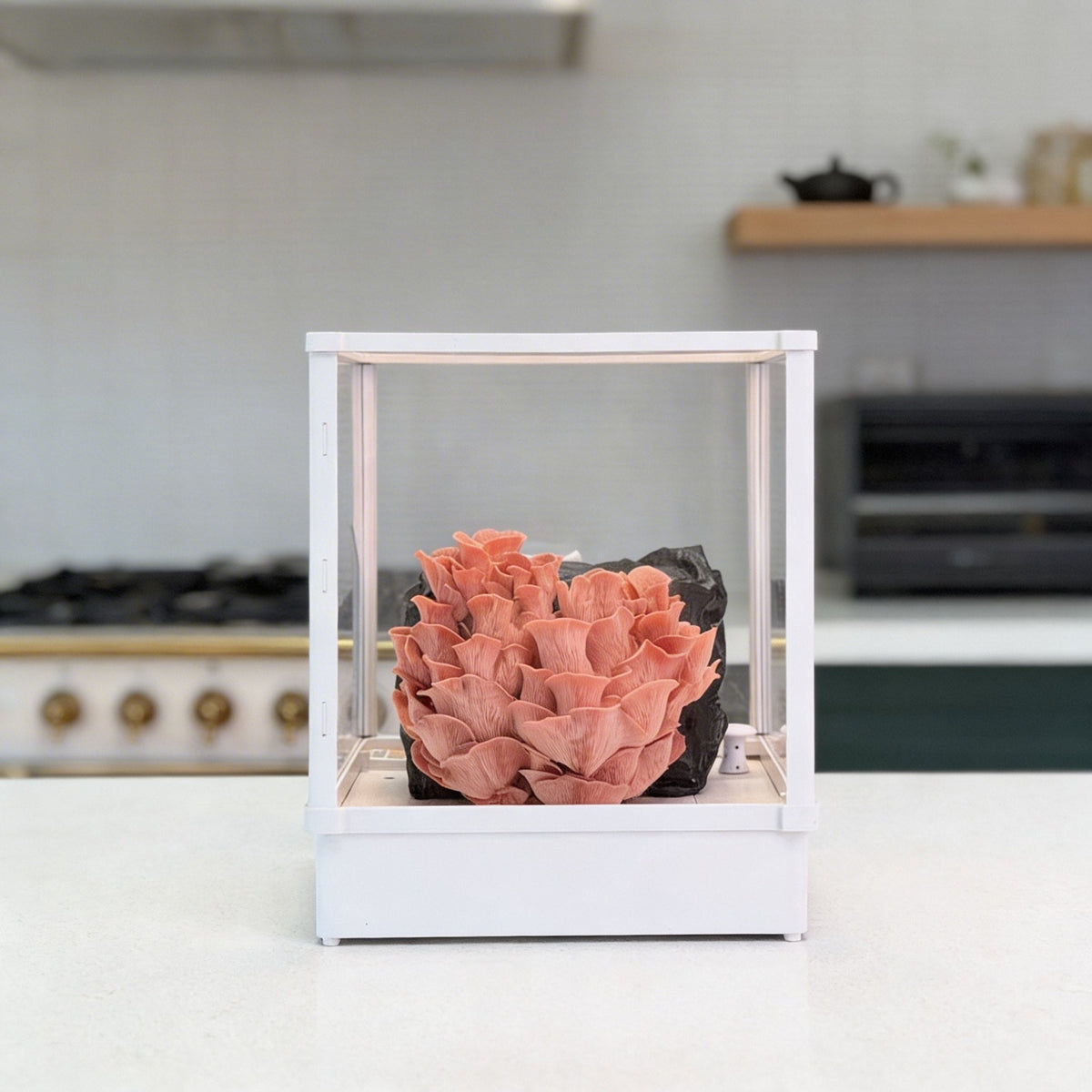
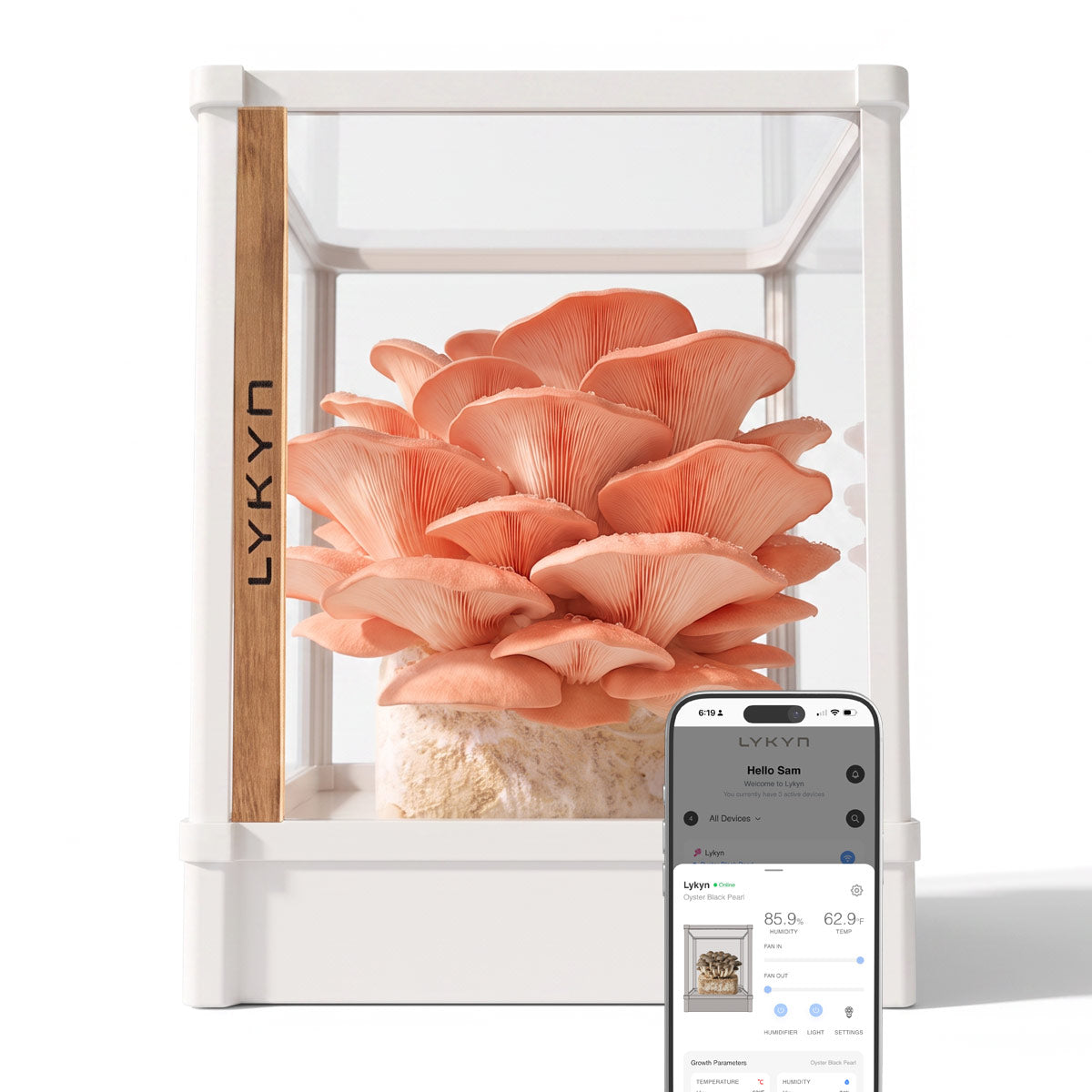
Die smarte Pilzzuchtbox von Lykyn wurde genau dafür entwickelt. Ein Ultraschall-Luftbefeuchter mit einem Sensor mit einer Genauigkeit von ±2 Prozent relativer Luftfeuchtigkeit hält diese bei 85 bis 95 Prozent. Zwei Ventilatoren mit variabler Drehzahl sorgen nach einem artspezifischen Zeitplan für Frischluftaustausch und führen CO2 ab. Ein blaues/rotes/grünes LED-Panel setzt den Lichtreiz. Der integrierte Filter senkt das Kontaminationsrisiko – der einzige der 7 Gründe, der einen Block tatsächlich zerstören kann.
Wenn sich seit Wochen keine Primordien bilden, ist die Fruchtungskammer von Lykyn genau für dieses Problem konzipiert. Kombiniere sie mit einem bereits durchwachsenen Pilzzuchtset für Innenräume, und bei deiner nächsten Zucht brauchst du keine 7-stufige Rettungsaktion.

Starte dein Pilzzucht-Abenteuer
Smarte Pilzzuchtkammer
Plug-and-Play-Kammer mit optimal eingestellter Luftfeuchtigkeit, Beleuchtung und Luftzirkulation für jede Pilzart. Anfänger ernten ihre erste Pilzwelle innerhalb von Tagen statt Monaten.
In den Warenkorb – 299 $Besonderheiten der einzelnen Arten: Igelstachelbart, Austernseitling und Shiitake

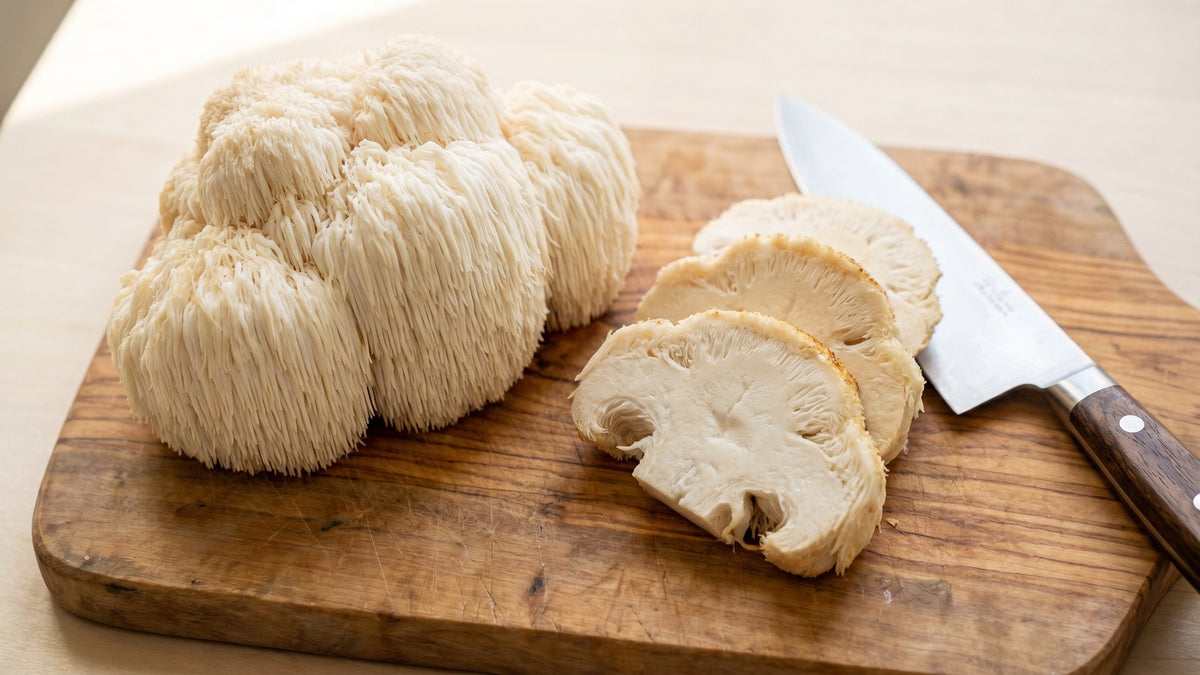
Igelstachelbart lässt sich Zeit. Nach dem Kältereiz kann es 7 bis 14 Tage dauern, bis sich Primordien zeigen. Sie beginnen als kleine weiße Knubbel, nicht als runde Austernpilz-Primordien. Sprühe nicht zu viel; Igelstachelbart verträgt Nässe schlecht und die Primordien sterben dann ab. Sorge für 90 bis 95 Prozent Luftfeuchtigkeit und starken Frischluftaustausch, damit kein Kondenswasser auf die Primordien tropft.
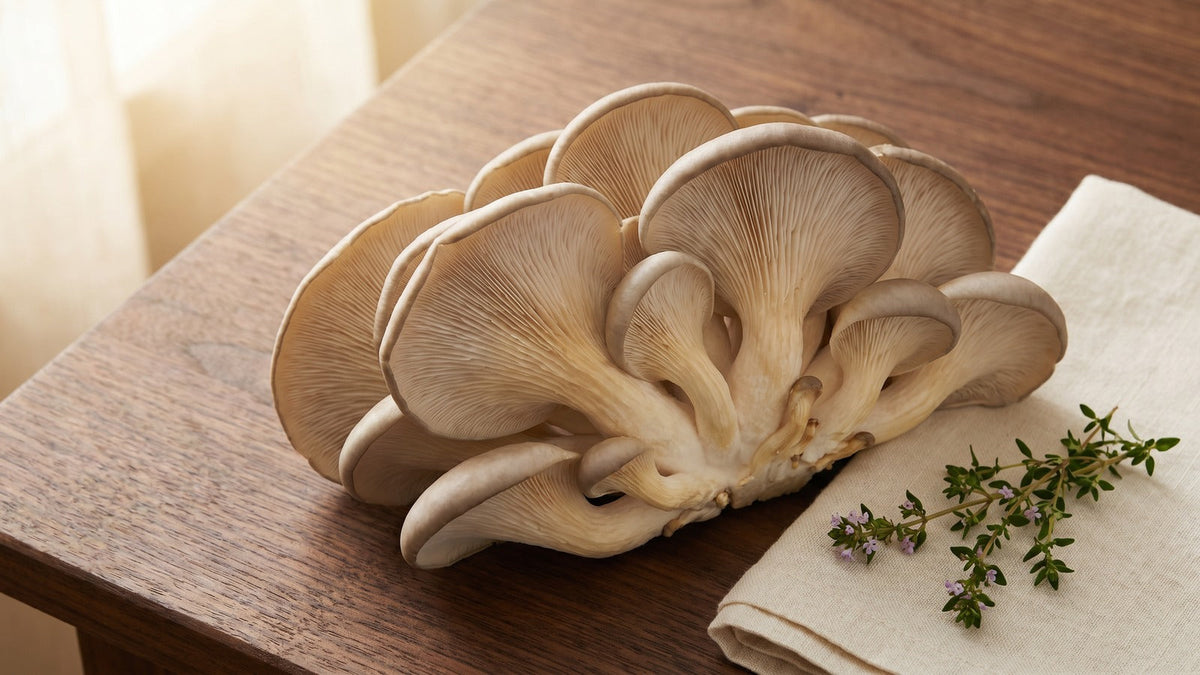
Austernseitlinge (blau, rosa, gelb, Kräuterseitling) wachsen am schnellsten. Primordien zeigen sich normalerweise 3 bis 7 Tage nach dem Kältereiz. Der blaue Austernseitling braucht die niedrigsten Temperaturen und stagniert in einem warmen Raum besonders schnell. Beim Rosenseitling ist es umgekehrt: Unter 70 °F (21 °C) fruchtet er nicht. Stimmen die Temperaturen nicht, kann auch noch so viel Luftfeuchtigkeit die Zucht nicht retten.
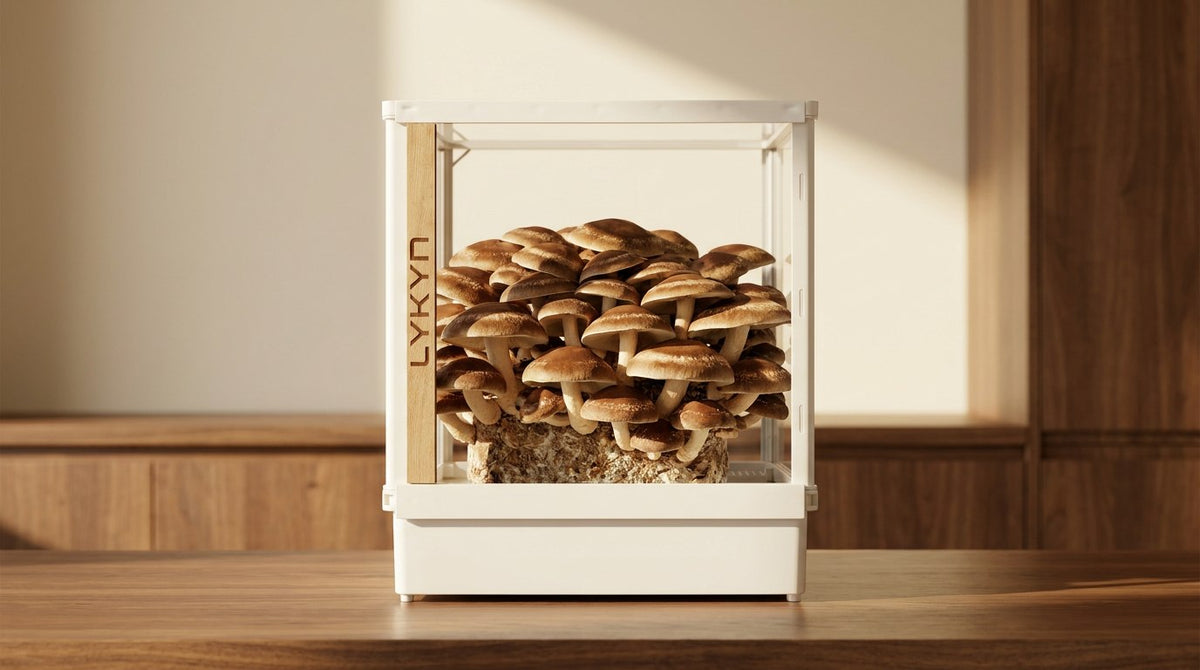
Shiitake ist am anspruchsvollsten. Er braucht zwei Einweichvorgänge (12 Stunden und anschließend eine weitere Stunde) und fruchtet besser, wenn er nach dem Durchwachsen vollständig aus dem Beutel genommen wird. Vor der Bildung der Primordien entwickelt Shiitake außerdem eine braune Haut (das „Popcornstadium“), die Züchter oft fälschlicherweise für eine Kontamination halten. Die braune Haut ist normal und notwendig.
Diese Erkenntnisse zur Biologie stützen sich auf veröffentlichte Forschung: das Mushroom Research Center der Penn State University zu Temperatur- und Frischluftschwellen bei Pleurotus-Arten, das Small Farms Program der Cornell University zur Fruchtung von Lentinula edodes (Shiitake) sowie begutachtete Fachpublikationen zu Pleurotus ostreatus in Zeitschriften wie Fungal Biology und Mycologia. Die Abfolge vom Kältereiz bis zur Primordienbildung wird durch plötzliche Temperaturabfälle und mehr Sauerstoff ausgelöst, nicht durch einen einzelnen Nährstoff. Das ist kein Aberglaube, sondern reproduzierbare Biologie.
Häufig gestellte Fragen
Warum bildet mein Pilzblock keine Fruchtkörper?
Fast immer fehlt ein Fruchtungsreiz: Kältereiz, Luftfeuchtigkeit oder Frischluftaustausch. Ein vollständig weißer, durchwachsener Block ist gesund und inaktiv. Lege ihn für 12 bis 24 Stunden in den Kühlschrank, weiche ihn kurz ein, schneide Öffnungen in den Beutel und halte die Luftfeuchtigkeit anschließend mit regelmäßigem Frischluftaustausch bei 85 bis 95 Prozent. Primordien zeigen sich nach 5 bis 10 Tagen.
Wie lange dauert es, bis ein durchwachsener Block Primordien bildet?
Nach dem Kältereiz und bei geeigneten Bedingungen: 3 bis 7 Tage bei Austernseitlingen, 7 bis 14 Tage beim Igelstachelbart und 10 bis 21 Tage beim Shiitake. Wenn du länger als 14 Tage gewartet hast und keine weißen Knubbel zu sehen sind, führe die 7-stufige Wiederbelebungssequenz durch.
Warum bildet mein vollständig durchwachsener Block keine Primordien?
Eines von vier Signalen fehlt: Temperaturreiz, Luftfeuchtigkeit, Frischluft oder Feuchtigkeit im Block. Gehe die 7 Gründe der Reihe nach durch; fast immer liegt es an Grund 1, 2 oder 3.
Lässt sich ein stagnierender Pilzblock wiederbeleben?
Ja, in den meisten Fällen. Solange der Block größtenteils weiß ist, keine grüne oder schwarze Kontamination aufweist und annähernd sein ursprüngliches Gewicht hat, lässt er sich durch einen Kältereiz und ein Wasserbad wiederbeleben. Selbst Blöcke, die 2 bis 4 Wochen inaktiv waren, können nach einem ordnungsgemäßen Neustart Primordien bilden.
Wie versetze ich einen Pilzblock einem Kältereiz?
Lege den Block im Beutel für 12 bis 24 Stunden auf die mittlere Ablage deines Kühlschranks (35 bis 40 °F bzw. 2 bis 4 °C). Nimm ihn heraus, lass ihn auf Zimmertemperatur kommen, schneide Fruchtungsöffnungen in den Beutel und bringe ihn in eine Umgebung mit 85 bis 95 Prozent Luftfeuchtigkeit. Der Temperaturabfall ist das Wecksignal.
Warum sterben meine Pilzprimordien ab, bevor sie sich bilden?
Fast immer fällt die Luftfeuchtigkeit zwischen den Sprühvorgängen ab oder der CO2-Gehalt steigt stark an. Abhilfe schafft eine dauerhaft hohe Luftfeuchtigkeit von 85 bis 95 Prozent bei gleichbleibendem Frischluftaustausch. Die vollständige Wiederbelebungssequenz findest du in unserem Ratgeber zu abgestorbenen Pilzprimordien.
Wie viel Frischluft braucht ein Pilzblock während der Fruchtung?
Genug, damit der CO2-Gehalt unter 1.000 ppm bleibt. In der Praxis heißt das: Fächle drei- bis viermal täglich 30 Sekunden lang frische Luft über den Block oder lass einen Ventilator dauerhaft auf niedriger Stufe laufen. In einer smarten Pilzzuchtbox von Lykyn laufen die Ventilatoren nach einem artspezifischen Zeitplan.
Wann sollte ich einen Pilzblock aufgeben?
Nur, wenn einer dieser Fälle zutrifft: sichtbare grüne, schwarze oder rosafarbene Kontamination auf mehr als 25 Prozent der Oberfläche; der Block wiegt weniger als die Hälfte seines ursprünglichen Gewichts; du hast bereits 3 Erntewellen geerntet; oder du hast die vollständige 7-stufige Wiederbelebung zweimal durchgeführt, ohne dass sich Primordien bilden. Andernfalls: Hab Geduld.
Keine Lust mehr auf Rätselraten? Die smarte Pilzzuchtbox von Lykyn automatisiert Luftfeuchtigkeit, Frischluftaustausch, Beleuchtung und Temperatursteuerung in einer leisen, per App gesteuerten Kammer. Kombiniere sie mit einem frischen, bereits durchwachsenen Block, und bei deiner nächsten Zucht brauchst du keine 7-stufige Rettungsaktion. Beginne noch heute mit der Pilzzucht.
Starte dein Pilzzucht-Abenteuer

Smart-Kammer. Knochenweiß, einstufig
- 2,8-l-Tank, automatische Luftfeuchtigkeit von 90 %
- App-gesteuert, sofort einsatzbereit
- Kapazität für Pilzblöcke bis 2,7 kg, auf Lager

Smart-Kammer. Obsidianschwarz, einstufig
- Gleiche Technik wie bei der knochenweißen Variante
- Hochwertige mattschwarze Oberfläche
- Passt zu jeder Küchenfarbpalette

Austernpilz-Zuchtset, schwarz
- Auf Lager
- Fruchtkörperbildung in 3–5 Tagen
- Ersetzt einen Zuchtzyklus in der Kammer




Aktie:
Lykyn vs FreshCap: Ehrlicher Vergleich (Kammer- vs. Tinkturmarke) 2026
Lykyn vs FreshCap: Ehrlicher Vergleich (Kammer- vs. Tinkturmarke) 2026