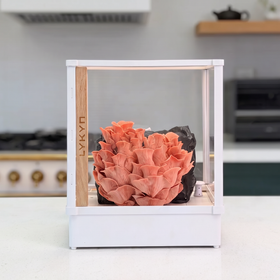



Kurzantwort: Blaue Austernseitlinge sind Pleurotus ostreatus – dieselbe Art wie der gewöhnliche graue Austernseitling. Die Blautöne entstehen durch kühle Fruchtungstemperaturen und nicht durch ein anderes Genom. Ziehen Sie sie auf einem Block aus Hartholzsägemehl und Sojahülsen bei 50 bis 65 °F, 85 bis 95 % Luftfeuchtigkeit und mehrmaligem täglichen Frischluftaustausch. Von der Bildung der Primordien bis zur Ernte dauert es 10 bis 14 Tage. Ein einzelner Block mit 5 bis 6 Pfund liefert über 6 bis 10 Wochen 2 bis 4 Erntewellen.
Liegt die Raumtemperatur eher bei 70 °F, fruchtet derselbe Stamm trotzdem, aber die Hüte sind eher graubraun als schieferblau. Die Farbe ist eine Stressreaktion auf Kälte und kein Kennzeichen eines bestimmten Stammes.
Was blaue Austernseitlinge wirklich sind
Blaue Austernseitlinge sind der Kältetemperatur-Phänotyp von Pleurotus ostreatus, demselben essbaren Saprophyten, der weltweit in gemäßigten Wäldern auf abgestorbenem Hartholz wächst. Kommerzielle Spawn-Anbieter wählen Stämme aus, die ihr blaues Pigment auch bei höheren Temperaturen behalten. Am weitesten verbreitet sind „Blue Pearl“ und die in Italien gezüchtete Variante Pleurotus ostreatus var. columbinus. Das USDA führt sie unter demselben Artencode; der sichtbare Unterschied ist phänotypisch, nicht taxonomisch.
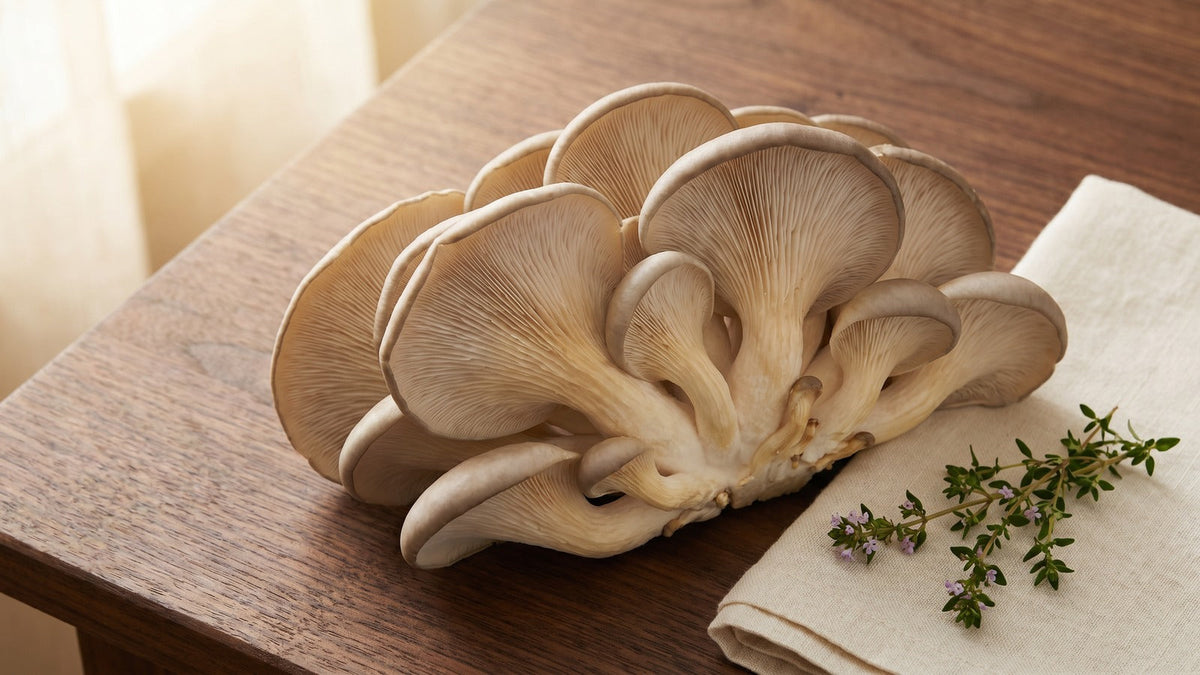
Ein frischer Hut des blauen Austernseitlings erscheint schieferblau, indigofarben oder anthrazit mit seidigem Schimmer. Wenn der Fruchtkörper reift und sich der Raum erwärmt, verblassen die Hüte zu Grau, Lavendelgrau oder Beige. Das ist normal und beeinträchtigt die Qualität als Speisepilz nicht. Das Fleisch ist fest, die Lamellen sind blass cremefarben und das Aroma hat eine feine Anisnote, die für die Gattung Pleurotus typisch ist.
In der Küche verhält sich der blaue Austernseitling wie ein fleischiger, milder Pilz. Er lässt sich wunderbar in der trockenen Pfanne anbraten, behält in Suppen seine Form und wird im Ofen auf dem Backblech schön knusprig. Das blaue Pigment verschwindet innerhalb von Sekunden nach dem Kontakt mit Hitze – der optische Genuss liegt also in der Ernte, nicht auf dem Teller.
Die Farbgenetik in einem Absatz
Forschende der Cornell Cooperative Extension und Autorinnen und Autoren der Zeitschrift Mycologia haben dokumentiert, dass die Hutfarbe von Pleurotus ostreatus durch temperaturabhängige Pigmentbildung und nicht durch ein stabiles Farbsgen gesteuert wird. Die blaue Farbe stammt von Melaninvorläufern, die sich während der langsamen, kühlen Bildung der Primordien anreichern. Sobald der Fruchtkörper bei wärmeren Temperaturen (über 65 °F) kräftig wächst, wird das Melanin durch die schnellere Zellausdehnung verdünnt und die Hüte werden heller. Für Hobbyzüchter heißt das: Wenn Sie ein fotogenes Blau möchten, halten Sie die Fruchtungskammer während der ersten 72 Stunden nach dem Erscheinen der Primordien kühl. Danach ist normale Raumtemperatur in Ordnung.
Was Sie brauchen, um blaue Austernseitlinge zu Hause zu züchten
Sie brauchen nur fünf Dinge.
- Einen vollständig durchwachsenen Hartholzsägemehlblock. Die meisten Hobbyzüchter kaufen einen 5 bis 6 Pfund schweren Block, der bereits mit blauem Austernseitlingsmyzel beimpft ist. Das Substrat besteht aus pasteurisiertem Hartholzsägemehl mit Sojahülsen oder Weizenkleie. Das übliche Mischungsverhältnis für „Master’s Mix“ beträgt, bezogen auf das Trockengewicht, 50 % Hartholzpellets und 50 % Sojahülsen; der Feuchtigkeitsgehalt wird auf 60–65 % eingestellt. Sojahülsen liefern den Stickstoff, den der blaue Austernseitling für kräftige Hüte braucht.
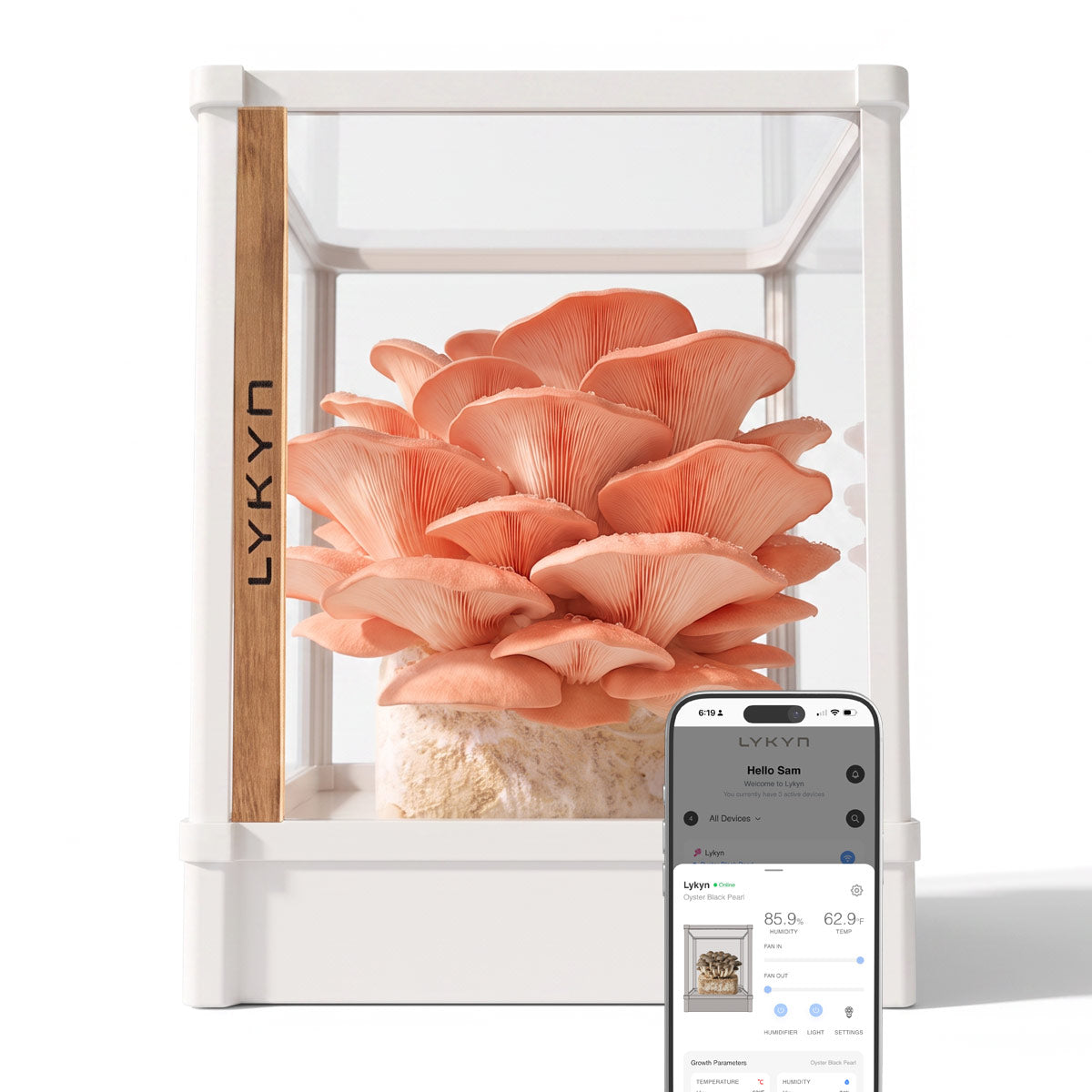
- Eine Fruchtungsumgebung mit 50 bis 65 °F in den ersten 72 Stunden, danach bis zu 70 °F. Ein kühler Keller, eine Garage im Frühjahr oder ein anderer Ort mit stabiler Temperatur ist geeignet. Eine automatisierte Zuchtkammer hält die Bedingungen für Sie konstant.
- Eine relative Luftfeuchtigkeit von 85 bis 95 %. In trockenen Räumen trocknen Primordien schnell aus. In einem Zuchtzelt funktioniert tägliches Besprühen; ein Ultraschall-Luftbefeuchter hält die Luftfeuchtigkeit konstant.
- Mehrmals täglich Frischluft. Austernseitlinge benötigen Sauerstoff, damit sich Primordien bilden und CO₂-bedingt lange Stiele vermieden werden. In einer Kammer genügen zwei bis vier 30-sekündige Ventilatorzyklen pro Stunde. In einem Zelt öffnen Sie viermal täglich für 30 Sekunden den Deckel.
- Indirektes Licht, 12 Stunden an, 12 Stunden aus. Pilze betreiben keine Photosynthese, aber Licht löst die Primordienbildung aus. Ein Fenster in der Nähe oder eine schwache LED-Leuchte genügt.
Ein vorgezüchteter Block kostet etwa 20 bis 25 $. Ein einfaches Feuchtigkeitszelt gibt es für 15 bis 30 $. Eine vollautomatische Kammer, die Luftfeuchtigkeit, Luftstrom und Beleuchtung regelt, kostet ab 299 $.
Die Einrichtung in 5 Schritten, die innerhalb von 5 bis 10 Tagen Primordien hervorbringt
Diese Schritte sind gleich, egal ob Sie in einem Feuchtigkeitszelt oder einer automatisierten Kammer züchten. Die Kammer erspart Ihnen die tägliche Betreuung; das Zelt funktioniert, wenn Sie zweimal am Tag sprühen können.
- Gewöhnen Sie den Block 24 bis 48 Stunden lang an die Umgebung. Lassen Sie den versiegelten Beutel nach der Ankunft bei Raumtemperatur und ohne direkte Sonneneinstrahlung liegen. Das Myzel befindet sich in einer Ruhephase; so kann es sich vom Kältestress während des Transports erholen. Nicht im Kühlschrank lagern.
- Schneiden Sie einen Fruchtungsschlitz, kein Fenster. Schneiden Sie auf einer Seite des Beutels einen einzelnen horizontalen Schlitz von 4 bis 5 Zoll Länge, parallel zur langen Kante. Ein größeres Fenster lässt den Block austrocknen. Der Schlitz bietet genug Oberfläche für eine kräftige Erntewelle.
- Stellen Sie die Luftfeuchtigkeit auf 90 % und die Temperatur auf 55 bis 60 °F ein. Primordien bilden sich am schnellsten am kühlen Ende des Temperaturbereichs. Liegt die Raumtemperatur über 70 °F, wachsen zwar Fruchtkörper, doch der Büschel wird eher grau als blau.
- Sorgen Sie alle 15 bis 20 Minuten für Frischluftaustausch (FAE). In einer Kammer geschieht das automatisch. In einem Zelt sorgen Sie drei- bis viermal täglich manuell für Luftaustausch. Stehende Luft führt zu langen Stielen und kleinen Hüten.
- Warten Sie 5 bis 10 Tage auf die Primordien. Am Schlitz erscheinen winzige, pinheadartige Büschel. Sobald sie sichtbar sind, senken Sie die Luftfeuchtigkeit auf 85 % und erhöhen die Temperatur schrittweise auf 65 °F, damit die Hüte kräftig wachsen. Ernten Sie 3 bis 5 Tage nach dem ersten Erscheinen der Primordien, wenn die Hüte einen Durchmesser von 2 bis 4 Zoll haben und die Ränder noch leicht nach unten gebogen sind.
Der Zeitplan auf einen Blick
| Tag | Was zu sehen sein sollte |
|---|---|
| 0 | Der versiegelte Block kommt an und kann ruhen |
| 1–2 | Schlitz schneiden und in die Fruchtungsbedingungen bringen |
| 3–7 | Das weiße Myzel verdichtet sich am Schlitz |
| 5–10 | Winzige blau-graue Primordien erscheinen |
| 8–12 | Die Primordien verdreifachen täglich ihre Größe, die Hüte entfalten sich |
| 10–14 | Ernte der ersten Erntewelle |
| 15–25 | Block ruhen lassen, zweite Erntewelle beginnt |
| 25–45 | Die etwas kleinere zweite Erntewelle bildet sich |
| 45–70 | Dritte Erntewelle, sofern die Bedingungen sauber bleiben |
Ein gesunder Block liefert über alle Erntewellen hinweg 1,25 bis 1,75 Pfund frische Pilze. Die erste Erntewelle ist die größte und macht etwa 60 % des Gesamtertrags aus. Nach der dritten Erntewelle ist der Block erschöpft und kann kompostiert werden. Das verbleibende Myzel ist hervorragendes organisches Material für ein Gartenbeet im Freien.
Die Zusammensetzung des Substrats ist wichtiger, als viele denken
Blaue Austernseitlinge sind Primärzersetzer mit einer ausgeprägten Vorliebe für Hartholzlignin. Das bewährte Substratverhältnis:
- 50 % Hartholzpellets (Eiche, Buche oder Ahorn), kein Weichholz
- 50 % pasteurisierte Sojahülsen
- Auf einen Feuchtigkeitsgehalt von 60–65 % befeuchten (Quetschtest: Bei festem Druck sollten einige Tropfen austreten)
Vermeiden Sie Blöcke, die ausschließlich aus Stroh bestehen. Auf Stroh wachsen Austernseitlinge zwar, der Ertrag ist jedoch 30 bis 40 % geringer als bei einer Mischung aus Hartholz und Sojahülsen. Außerdem sind die Fruchtkörper kleiner und haben dünneres Fleisch. Wenn Sie vor Ort keine Sojahülsen finden, ist Weizenkleie mit 20 % des Gewichts eine gute Alternative.
Verhältnis von Spawn zu Substrat: Ein durchwachsener Block enthält typischerweise 5 bis 10 % Getreidespawn, bezogen auf das Gewicht. Wer als Hobbyzüchter einen fertigen Block kauft, muss sich darüber keine Gedanken machen. Wenn Sie später aber auf Ihr eigenes Bulk-Substrat umsteigen, ist dies die relevante Zahl.
Mehrere Erntewellen pro Block: Was die meisten Anfänger übersehen
Ein Block mit blauem Austernseitling ist nicht nur einmal verwendbar. Nach der ersten Ernte:
- Schneiden Sie die abgeernteten Stiele bündig mit dem Substrat ab – mit einer sauberen Schere. Zurückgelassene Stiele begünstigen Verunreinigungen.
- Weichen Sie den Block 4 bis 6 Stunden in sauberem, kühlem Wasser ein. Er muss vollständig untergetaucht sein. Der Block nimmt wieder Wasser auf und bereitet sich auf die nächste Erntewelle vor. Wenn dieser Schritt ausgelassen wird, ist das der häufigste Grund dafür, dass nur eine Ernte gelingt.
- Lassen Sie ihn 10 Minuten abtropfen und bringen Sie den Block wieder in die Fruchtungsbedingungen.
- Nach 7 bis 14 Tagen erscheinen neue Primordien. Der Ertrag der zweiten Erntewelle beträgt ungefähr 40 % des Ertrags der ersten.
- Wiederholen Sie den Vorgang für eine dritte Erntewelle. Beim vierten Versuch produziert der Block nur noch sehr kleine Fruchtkörper und das Risiko einer Verunreinigung steigt. Das ist der natürliche Endpunkt.
Gesamtdauer des Projekts von der Ankunft bis zum Kompostieren: 8 bis 12 Wochen.

Begleiten Sie Ihre Pilzreise
Zuchtkit für schwarze Austernseitlinge
Hartholzsägemehlblock, durchwachsen mit kräftigem Myzel schwarzer Austernseitlinge. Passt direkt in Ihre Lykyn-Kammer und bildet innerhalb weniger Tage Primordien.
In den Warenkorb – 29,95 $Häufige Probleme, geordnet nach ihrer Häufigkeit
Lange, dünne Stiele und winzige Hüte. Ursache: zu viel CO₂. Lösung: häufiger für Frischluftaustausch sorgen. In einem Zelt viermal täglich 30 Sekunden lang Luft zufächeln. In einer Kammer die Häufigkeit der FAE-Zyklen erhöhen.
Die Hüte sind grau statt blau. Ursache: Fruchtungstemperatur über 65 °F. Lösung: Stellen Sie den Block während der ersten 72 Stunden nach der Primordienbildung an einen kühleren Ort. Farbe und Geschmack bleiben gleich – nur das Foto ändert sich. Wenn Sie ganzjährig in einem wärmeren Raum züchten und trotzdem eine intensive Farbe möchten, steigen Sie auf das Zuchtkit für schwarze Austernseitlinge um – es behält sein Pigment bis etwa 75 °F.
Primordien bilden sich, trocknen dann aber aus und schrumpfen. Ursache: Die Luftfeuchtigkeit ist unter 80 % gefallen. Lösung: Besprühen Sie die Innenwände Ihres Zelts zweimal täglich oder stellen Sie die Mindestluftfeuchtigkeit der Kammer auf 85 %. Primordien bestehen zu 90 % aus Wasser und verlieren innerhalb weniger Stunden Feuchtigkeit.
Grüner Schimmel auf dem Block. Ursache: Verunreinigung mit Trichoderma, fast immer durch nicht sterile Schnitte oder stagnierende, feuchte Luft. Lösung: Schneiden Sie den grünen Fleck mit einem sauberen Messer heraus und erhöhen Sie die Luftzufuhr. Wenn mehr als 20 % der Blockoberfläche betroffen sind, kompostieren Sie den Block. Bei starkem Befall weiterzumachen, ruiniert die Ernte und birgt das Risiko, Sporen zu verbreiten.
Nach 14 Tagen sind noch keine Primordien zu sehen. Ursache: Der Schnitt ist ausgetrocknet oder der Block war zu warm. Lösung: Befeuchten Sie den Schlitz mit sauberem Wasser und senken Sie die Temperatur 48 Stunden lang auf 55 °F, um die Primordienbildung anzuregen.
Die Hutkanten rollen sich nach oben. Ursache: Die Luftfeuchtigkeit ist während des Hutwachstums gesunken. Lösung: Erhöhen Sie die Luftfeuchtigkeit wieder auf 90 %. Der Büschel ist noch essbar, sieht aber weniger ansprechend aus. Das ist ein Zeichen dafür, beim nächsten Mal früher zu ernten.
Wann und wie geerntet wird
Das Erntefenster ist kürzer, als viele erwarten. Ernten Sie, wenn die Hüte einen Durchmesser von 2 bis 4 Zoll haben, die Ränder noch leicht nach unten gebogen sind und die Lamellen blass cremefarben statt hellbraun aussehen. Schieben Sie ein sauberes Messer unter den gesamten Büschel und schneiden Sie ihn am Ansatz ab. Drehen und Ziehen beschädigt das Substrat und verzögert die nächste Erntewelle.
In einer Papiertüte im Kühlschrank halten sich frische blaue Austernseitlinge 7 bis 10 Tage. Plastiktüten halten Feuchtigkeit zurück und verkürzen die Haltbarkeit auf 3 bis 4 Tage. Für eine längere Lagerung schneiden Sie die Pilze in Scheiben und dörren sie 8 Stunden bei 110 °F oder braten sie an und frieren sie portionsweise ein.
Möchten Sie Ihre Ernte zubereiten? In unserem Rezeptleitfaden für blaue Austernseitlinge finden Sie passende Schnittarten und Tipps zum Anbraten in der trockenen Pfanne.
Ein Kit kaufen oder von Grund auf selbst züchten
Für Ihre erste Zucht mit blauen Austernseitlingen sollten Sie einen vorgezüchteten Block kaufen. Sowohl die Spawn-Produktion als auch die Sterilisation des Substrats erfordern sterile Arbeitsweisen und Schnellkochtöpfe. Bei einem ersten Versuch ohne diese Hilfsmittel liegt die Verunreinigungsrate deutlich über 50 %. Ein vorgezüchteter Block kostet 20 bis 25 $ und kommt fertig zur Fruchtung bei Ihnen an.
Wenn Sie mehr als zwei Arten züchten oder mehrere Erntewellen pro Jahr anstreben, regelt eine intelligente Pilzzuchtbox Luftfeuchtigkeit, Luftstrom und Beleuchtungszyklen automatisch und macht die tägliche Routine überflüssig. Kombinieren Sie sie mit einem Zuchtkit für schwarze Austernseitlinge – Lykyns fast schwarze Variante des blauen Austernseitlings, gezüchtet für ein intensiveres Pigment, das auch in wärmeren Räumen erhalten bleibt.
Einen ausführlichen Überblick über Zuchtkits, ihre Varianten und den jeweiligen Lieferumfang finden Sie in unserem Leitfaden zu Zuchtkits für blaue Austernseitlinge.
Häufig gestellte Fragen
Sind blaue Austernseitlinge roh sicher zu essen?
Technisch gesehen ja, wir empfehlen es jedoch nicht. Wie alle Austernseitlinge enthalten auch blaue Austernseitlinge geringe Mengen Chitin und Arabinose in der rohen Zellwand, die manche Menschen schlecht verdauen. Garen Sie die Pilze. Schon 60 Sekunden in der trockenen Pfanne bauen die Zellwand ab und setzen das Umami frei. Rohe Austernseitlinge schmecken außerdem im Vergleich zu angebratenen eher fade.
Warum sind meine blauen Austernseitlinge nicht blau?
Die blaue Farbe ist eine Reaktion auf Kältestress und kein Merkmal des Stammes. Liegt die Temperatur im Fruchtungsraum über 65 °F, wird der Büschel auch bei einem „blauen“ Stamm graubraun. Senken Sie die Temperatur während der ersten 72 Stunden nach der Primordienbildung, damit der schieferblaue Farbton entsteht. Geschmack und Konsistenz sind unabhängig von der Farbe identisch.
Wie lange dauert es vom Start bis zur Ernte mit einem Zuchtkit für blaue Austernseitlinge?
Von der Anlage des Fruchtungsschlitzes bis zur ersten Ernte vergehen 10 bis 14 Tage. Der Block benötigt 24 bis 48 Stunden, um sich an die Umgebung zu gewöhnen, 5 bis 10 Tage für die Bildung der Primordien und 3 bis 5 Tage, bis der Büschel ausgereift ist. Jede weitere Erntewelle dauert noch einmal 2 bis 3 Wochen.
Wie viele Erntewellen erhalte ich von einem Block?
Ein gut gepflegter Block mit 5 bis 6 Pfund liefert über 6 bis 10 Wochen 2 bis 4 Erntewellen. Die erste ist mit 0,7 bis 1,0 Pfund die größte, die zweite bringt etwa 0,4 Pfund und die dritte 0,15 bis 0,25 Pfund. Nach drei Erntewellen ist das Substrat erschöpft.
Was ist der Unterschied zwischen blauen und gewöhnlichen grauen Austernseitlingen?
Es handelt sich um dieselbe Art, Pleurotus ostreatus. „Blauer Austernseitling“ bezeichnet Stämme, die auf eine stärkere kältebedingte Blaufärbung selektiert wurden. Genetisch und ernährungsphysiologisch sind sie austauschbar. Der optische Unterschied ist der Hauptgrund, warum Hobbyzüchter sich für die blaue Variante entscheiden.
Kann ich blaue Austernseitlinge im Freien züchten?
Ja. Blaue Austernseitlinge fruchten im Frühjahr und Herbst zuverlässig auf Hartholzstämmen aus Eiche, Buche, Ahorn oder Birke an schattigen Standorten im Freien. Auf Stämmen im Freien entstehen kleinere Erntewellen über einen Zeitraum von 2 bis 3 Jahren. Zuchtkits für den Innenbereich sind für Hobbyköche schneller und leichter kontrollierbar.
Benötigen blaue Austernseitlinge Licht zum Wachsen?
Das Myzel nicht, aber für die Primordienbildung und die Entwicklung der Hüte ist etwas Licht erforderlich. Indirektes Tageslicht durch ein nach Norden gerichtetes Fenster reicht aus. Wenn Sie in einem dunklen Schrank oder Keller züchten, genügt eine kleine LED mit Zeitschaltuhr und einem 12-Stunden-Rhythmus. Direkte Sonneneinstrahlung überhitzt den Block und trocknet ihn aus.
Sind blaue Austernseitlinge für Anfänger geeignet?
Ja. Der blaue Austernseitling ist eine der pflegeleichtesten Arten für die erste Zucht zu Hause. Er verträgt einen größeren Temperaturbereich als Shiitake oder Igelstachelbart, fruchtet innerhalb von 10 bis 14 Tagen und bildet auch bei kleineren Schwankungen der Luftfeuchtigkeit Primordien. Die in Einsteigerkits am häufigsten enthaltene Art ist Pleurotus ostreatus. Unser Überblick über Austernseitlinge stellt zur Einordnung die gesamte Gattung Pleurotus vor. Weitere Informationen zur Art selbst, ihren kulinarischen Verwendungsmöglichkeiten und Farbvarianten finden Sie in unserem Artenprofil des blauen Austernseitlings.
Quellen und weiterführende Literatur
- USDA Foreign Agricultural Service, Berichte zum kommerziellen Anbau von Pleurotus ostreatus, 2023
- Cornell Cooperative Extension, Mushrooms: Growing Specialty Mushrooms, aktualisierte Ausgabe 2024
- Bell, V., Silva, C., Guina, J., Fernandes, T., Mushrooms as future generation healthy foods, in Foods, 2022
- Stamets, P., Growing Gourmet and Medicinal Mushrooms, 3. Auflage, Ten Speed Press
Begleiten Sie Ihre Pilzreise

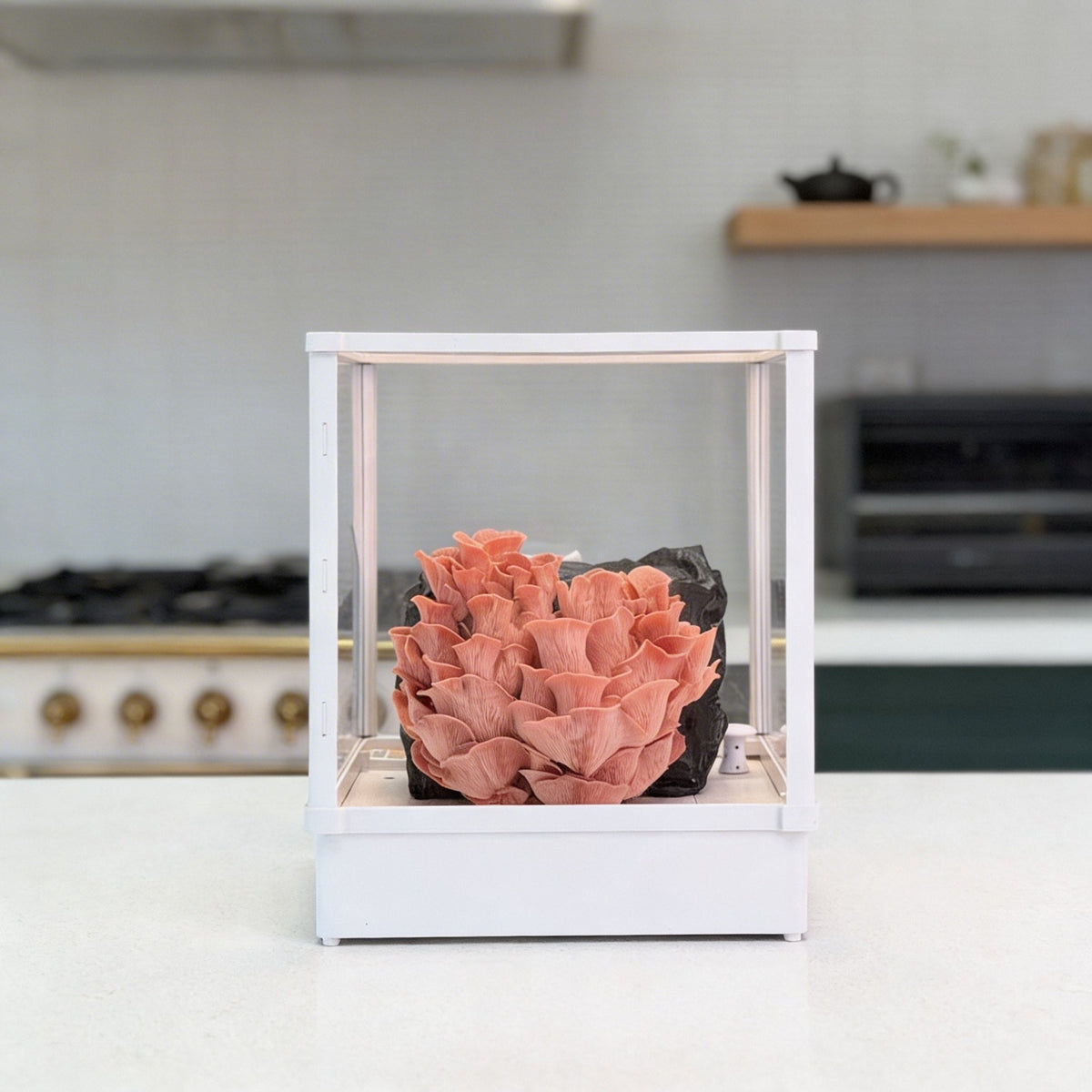
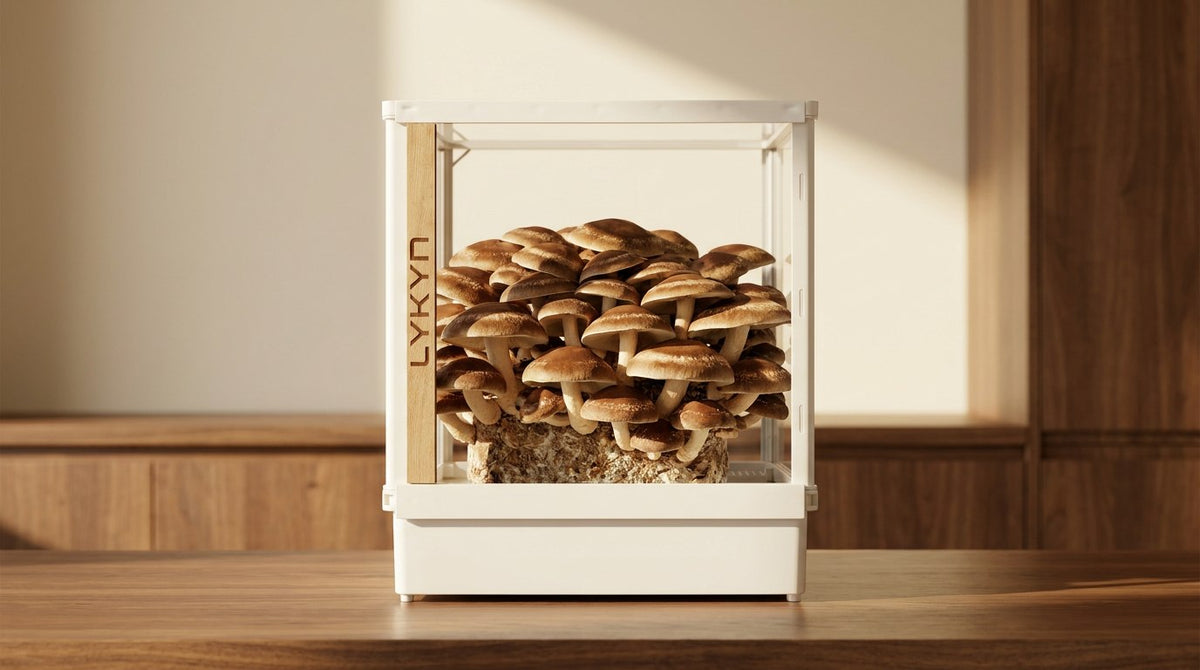
Smart Chamber. Einzelgerät in Knochenweiß
- 2,8-l-Tank, automatische Luftfeuchtigkeit von 90 %
- App-gesteuert, sofort einsatzbereit
- Deckenhöhe für 6-lb-Block, auf Lager

Smart Chamber. Einzelgerät in Obsidianschwarz
- Gleiche Hardware wie beim Modell in Knochenweiß
- Hochwertige matte schwarze Oberfläche
- Passt zu jeder Küchenfarbpalette
Austernpilz-Zuchtset, schwarz
- Auf Lager
- Erste Pilzknospen in 3–5 Tagen
- Ersetzt einen Zuchtzyklus in der Kammer



Aktie:
Shiitake-Pilzzuchtset: Ein Leitfaden für Anfänger
Löwenmähnenpilz-Zucht-Kit: Der komplette Leitfaden für Anfänger