



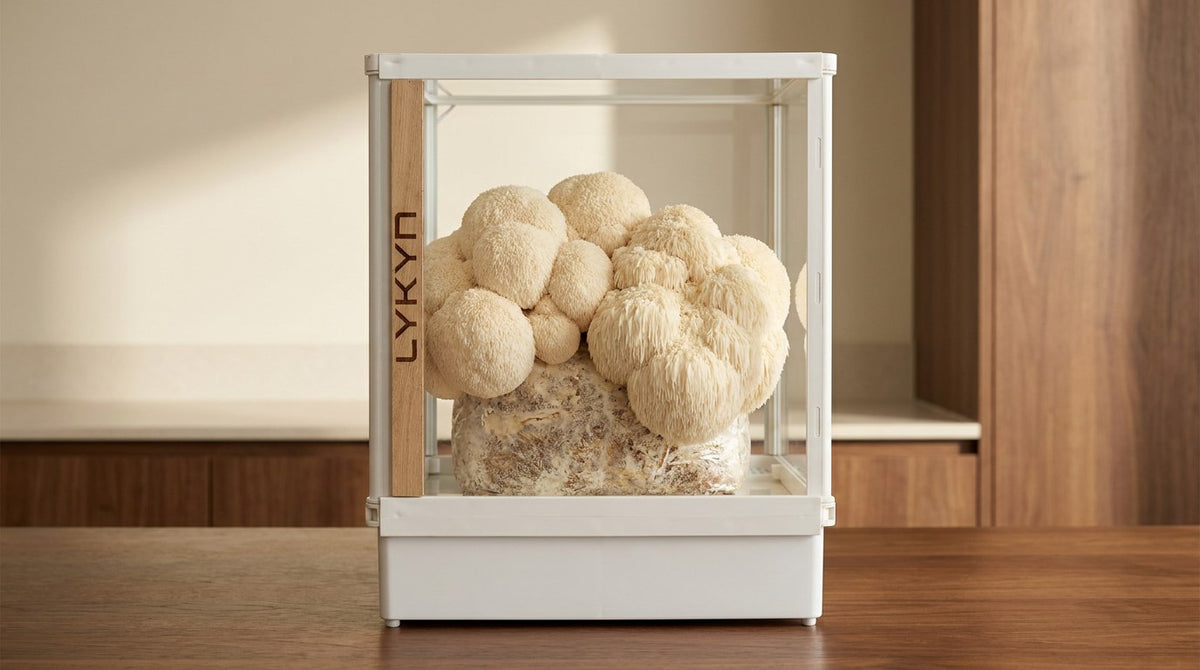
Lion's mane is the most striking gourmet mushroom you can grow at home. The pure ivory-white pom-pom clusters with delicate cascading icicle-like spines look more like a piece of sea coral than a mushroom. They are also the most studied culinary mushroom for cognitive support, with hericenones and erinacines that researchers have linked to nerve growth factor activity. If you want a kitchen counter showpiece that doubles as functional food, a lion's mane mushroom grow kit is where you start.
This complete beginner's guide walks through the four Hericium varieties worth growing, the setup process, the timeline you can actually expect, and the most common reasons first-time grows fail. Whether you go with a $30 substrate kit or a $389 smart chamber, the biology is the same. The difference is consistency.
What Is a Lion's Mane Mushroom Grow Kit?

Smart Chamber. Bone White Single
- 2.8L tank, 90% humidity automatic
- App-controlled, plug-and-play
- 6 lb block ceiling, in stock

Smart Chamber. Obsidian Black Single
- Same hardware as Bone White
- Matte black premium finish
- Pairs with any kitchen palette

A lion's mane mushroom grow kit is a pre-colonized hardwood block (typically supplemented oak or beech sawdust) that has been inoculated with Hericium mycelium and fully colonized in a sterile lab. By the time the kit ships to you, the mycelium has saturated the substrate and is ready to fruit. You skip the riskiest stage of cultivation (sterile inoculation) entirely.
Lion's mane kits come in two formats:
- Spray-and-grow bags ($28 to $40): A 1 to 2 pound block in a sealed plastic bag with a printed slit. Cut the slit, mist twice daily, harvest in 14 to 18 days.
- Full fruiting blocks ($30 to $48): A 5-pound pre-colonized block. Same setup, larger harvest. Best paired with a humidity tent or sealed chamber because lion's mane needs higher humidity (85 to 95 percent) than oyster mushrooms.
The size of the block matters more than the brand. A 5-pound block produces 4 to 5 times more mushrooms than a 1-pound bag, but it also requires tight humidity control. If your room is dry (under 60 percent humidity), a sealed chamber gives the 5-pound block its best yield, because lion's mane spines start drying and yellowing within hours of low humidity exposure.
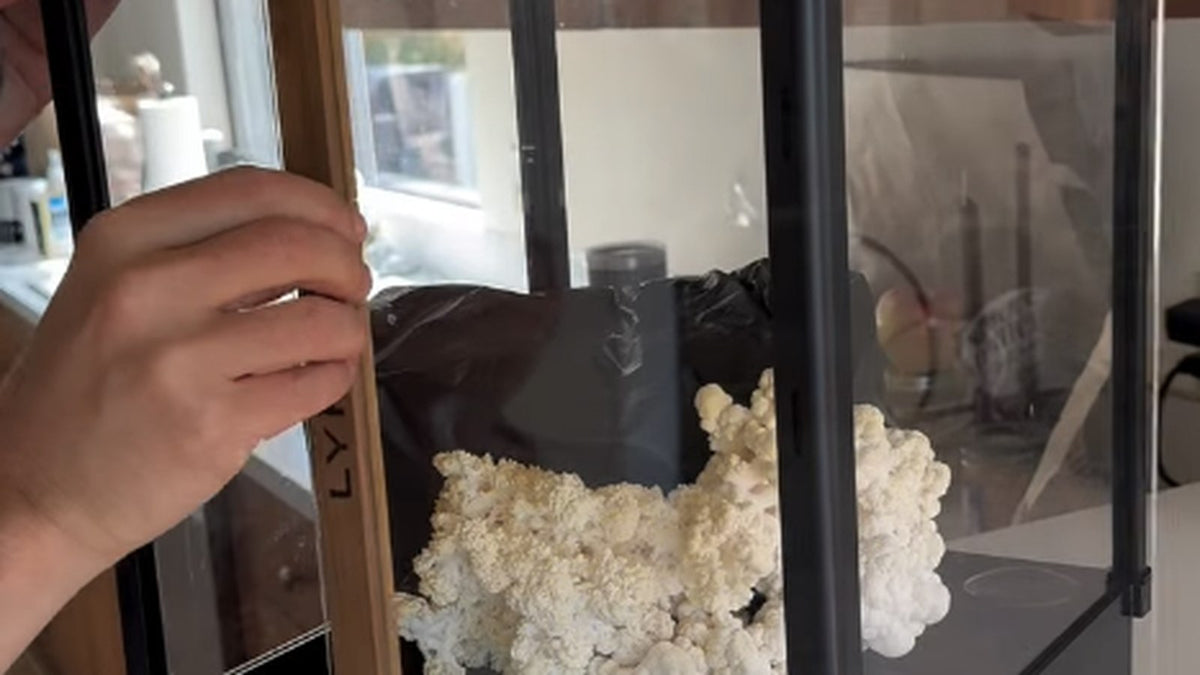
Lion's mane fruits look more like sea coral than mushrooms. The cascading icicle-like spines that earned the nickname "monkey head" or "pom-pom" are also the source of the hericenones that researchers study for nerve growth factor activity. Photogenic and functional in the same harvest.
You buy the block.
We hold the climate.
The lion's mane does the rest.
Best Hericium Species for Beginners

Pearl Pom
Hericium erinaceus (cultivar)
for First-Time Growers
The classic ivory-white pom-pom
Pearl Pom is the most-grown lion's mane cultivar and the standard recommendation for any first-time Hericium grower. A single tight rounded pom-pom with smooth cascading spines, beginner-friendly cycle, the highest hericenone density of the cultivated strains. Pins in 12 to 14 days, the fastest in the family.

Native Forest
Hericium erinaceus (wild-type)
for Deeper Flavor
Wild-type with longer spines
Native Forest strains are derived from wild log-grown lion's mane. Slightly less symmetrical pom-poms with longer, looser spines and a more pungent crab-like flavor. Slightly slower than Pearl Pom (16 to 18 days to pin) but the flavor sits closer to wild-foraged lion's mane.

Coral Tooth
Hericium coralloides
for Visual Impact
A branched coral-like Hericium
Coral Tooth is a different Hericium species that grows as a branched coral-like structure instead of a single pom-pom. Delicate slender white branches each tipped with tiny icicle teeth. Smaller harvests than the erinaceus strains but the most striking visual of any culinary mushroom. Mild, subtly sweet flavor closer to crab than the meaty erinaceus profile.

Bear's Head
Hericium americanum
for Maximum Yield
Chains of pom-poms in one harvest
Bear's Head is the largest Hericium species, growing as multiple connected pom-poms attached to a branching base. The highest absolute yield of any lion's mane variety (0.85 to 1.0 lb on a 5-lb block) with the same hericenone profile as the erinaceus strains. Deeper crab-like flavor than Pearl Pom.

Four Hericium varieties are widely available as grow kits in 2026, and each has different strengths.
Pearl Pom (Hericium erinaceus cultivar)
The classic ivory-white pom-pom. Pearl Pom is the most forgiving lion's mane cultivar and the default for any first-time Hericium grower. It tolerates 80 to 95 percent humidity, fruits in 12 to 14 days, and almost always produces a clean white pom-pom even when you make rookie mistakes. Mild crab-like flavor, beginner-friendly cycle.
Best for: First-time Hericium growers who want the highest success rate.
Native Forest (Hericium erinaceus wild-type)
Wild-type strains derived from log-grown lion's mane. The pom-pom is slightly less symmetrical with longer cascading spines and a more pungent flavor. Slightly slower than Pearl Pom (16 to 18 days to pin) and slightly more demanding on humidity (90 percent or above), but the flavor sits closest to wild-foraged lion's mane.
Best for: Cooks who want the wild-foraged flavor profile.
Coral Tooth (Hericium coralloides)
A different Hericium species that fruits as a branched coral-like structure, not a single pom-pom. Smaller absolute yield (0.5 to 0.7 lb on a 5-lb block) but the most striking visual on any kitchen counter. Mild and subtly sweet flavor closer to crab than the meaty erinaceus profile. Slightly slower (14 to 16 days to pin) and prefers cooler rooms (60 to 65 F).
Best for: Aesthetic projects, gifts, and growers who want a coral-like visual.
Bear's Head (Hericium americanum)
The largest Hericium species. Grows as multiple connected pom-poms attached to a branching base, producing the highest absolute yield of any lion's mane variety (0.85 to 1.0 lb on a 5-lb block). Same hericenone density as Pearl Pom but with a deeper crab-like flavor. Pins in 16 to 18 days and prefers 85 to 95 percent humidity.
Best for: Cooks who want the largest single harvest from a single block.
Step-by-Step Setup for a Lion's Mane Mushroom Grow Kit
Acclimate the Block (24 to 48 Hours)
When the lion's mane mushroom grow kit arrives, leave it sealed on a kitchen counter for 24 to 48 hours. Mycelium recovers from shipping stress in this window. Skipping the acclimation step is the most common cause of slow pinning for new growers.
Cut the Fruiting Slit

Most pre-colonized lion's mane blocks ship with a printed line showing exactly where to cut. Use a clean knife to make an X-shaped slit (1 to 2 inches long on each leg) on one face of the block. Cut through the plastic but only break the skin of the substrate. Lion's mane pins from a single concentrated point, so the X cut tells the mycelium exactly where to fruit.

Fuel Your Mushroom Journey
Smart Mushroom Grow Chamber
Plug-and-play smart chamber with humidity, light, and airflow dialed in for every species. Beginners harvest their first flush in days, not months.
Add to cart $299Set Up High Humidity
This is where most beginner Hericium grows succeed or fail. Lion's mane needs 85 to 95 percent humidity to fruit cleanly, higher than oyster mushrooms. The cascading spines start drying and yellowing within hours of low humidity exposure. You have two paths:
- Manual humidity tent: Drape clear plastic over the block with a small support so the plastic does not touch the cut face. Mist the inside walls three times daily with room-temperature distilled water (more often than oyster). Open briefly each morning and evening for fresh air.
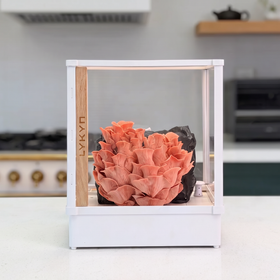
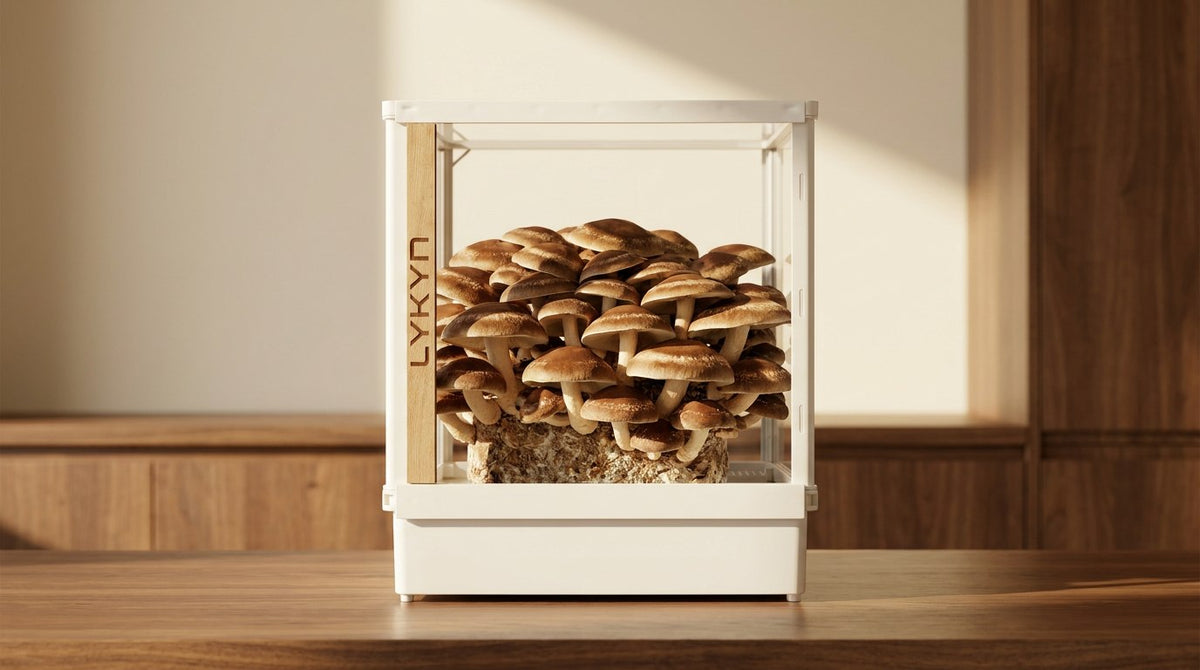
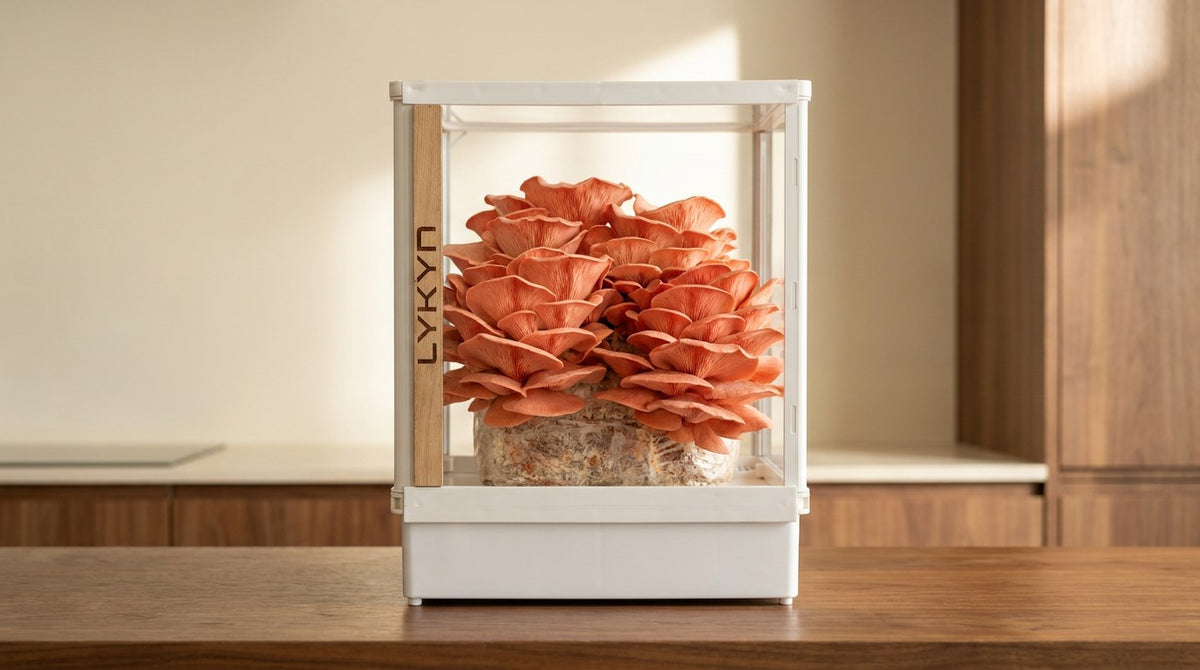
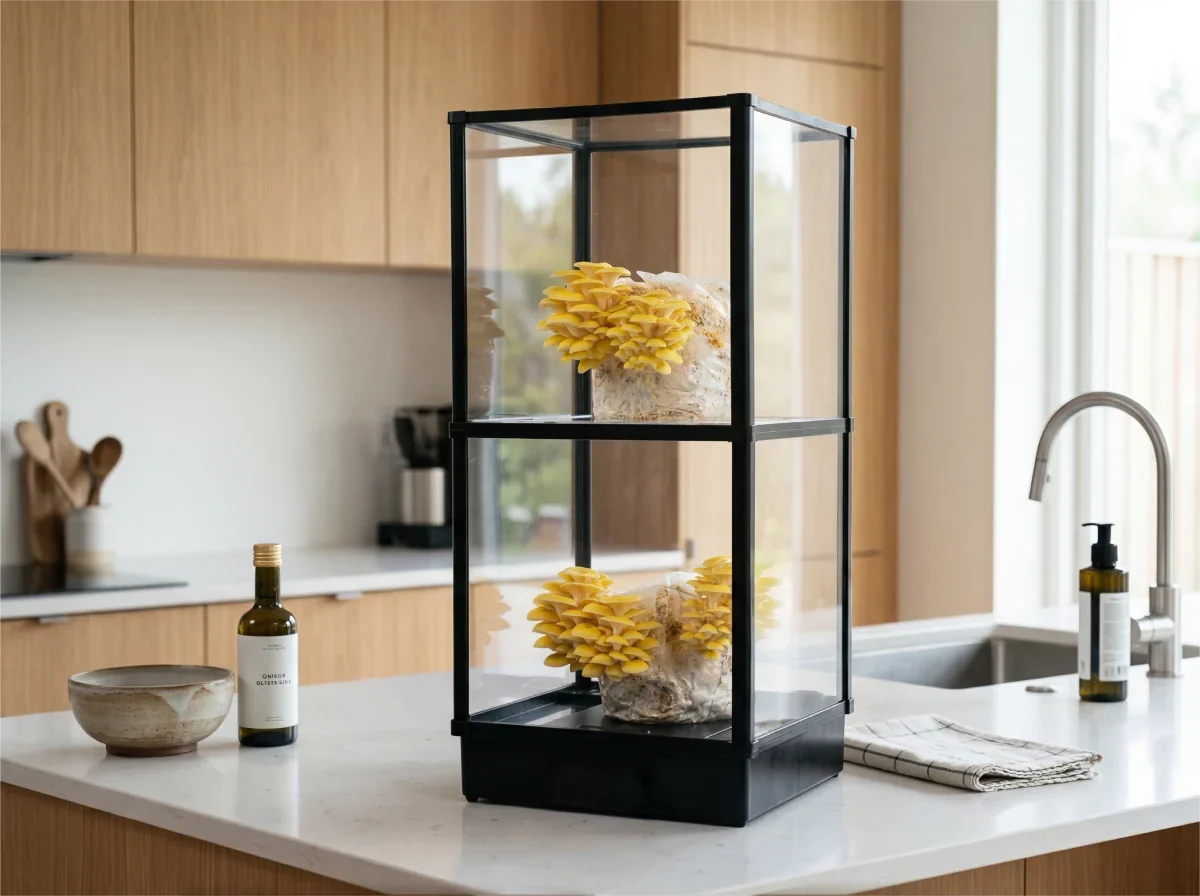
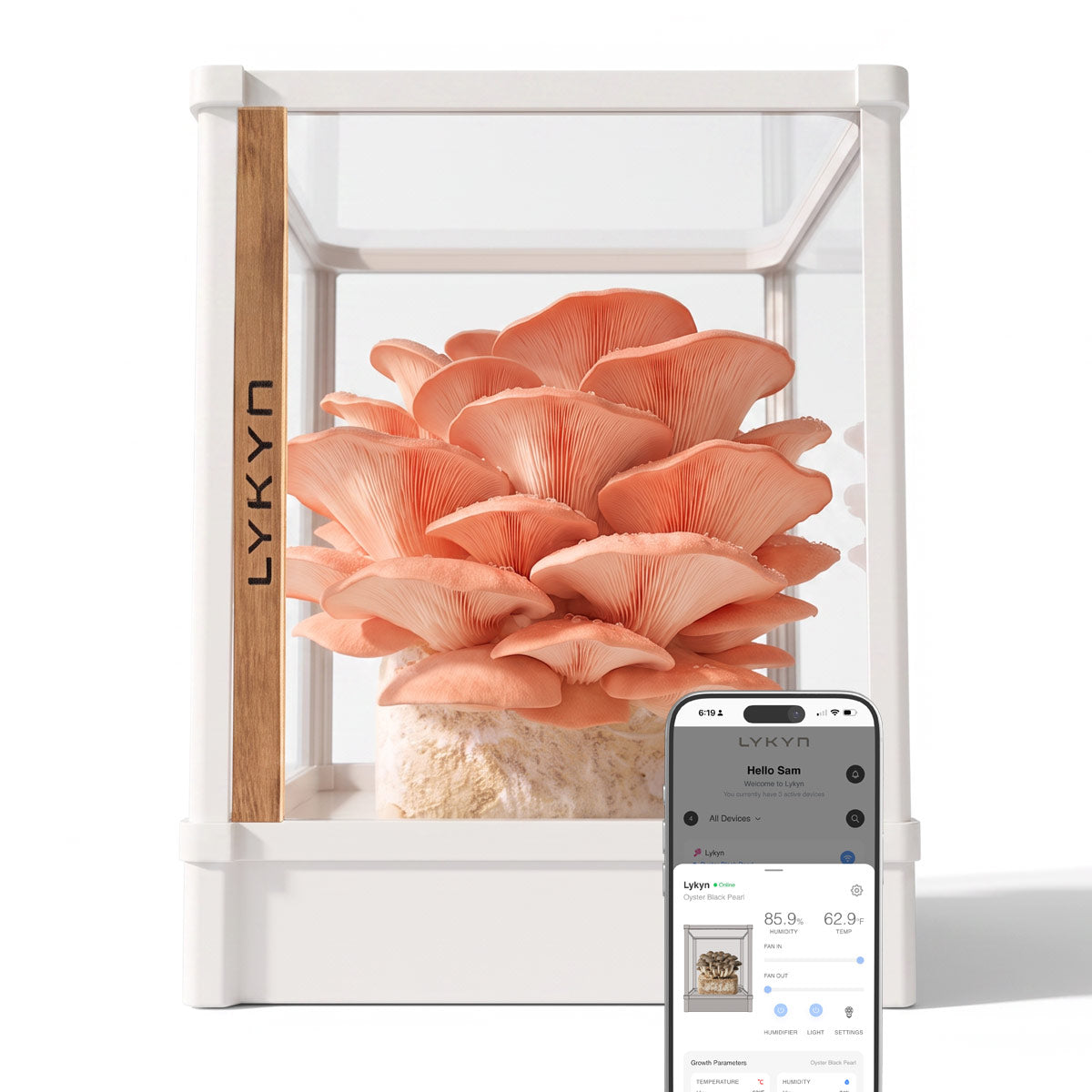
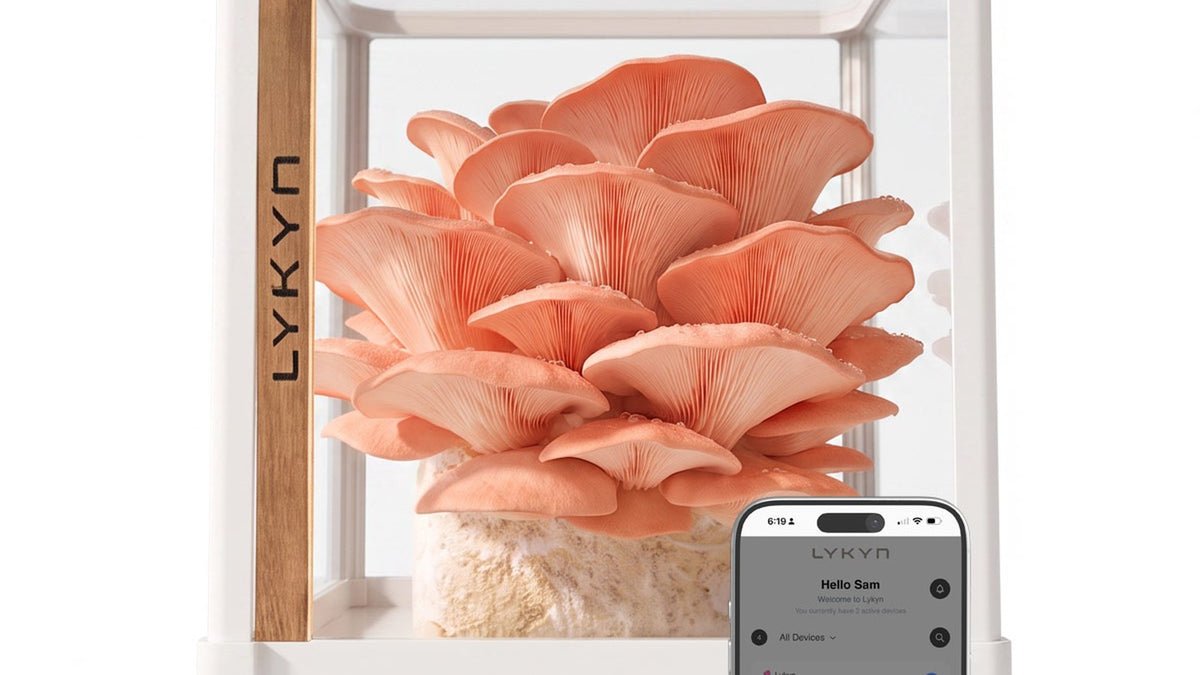
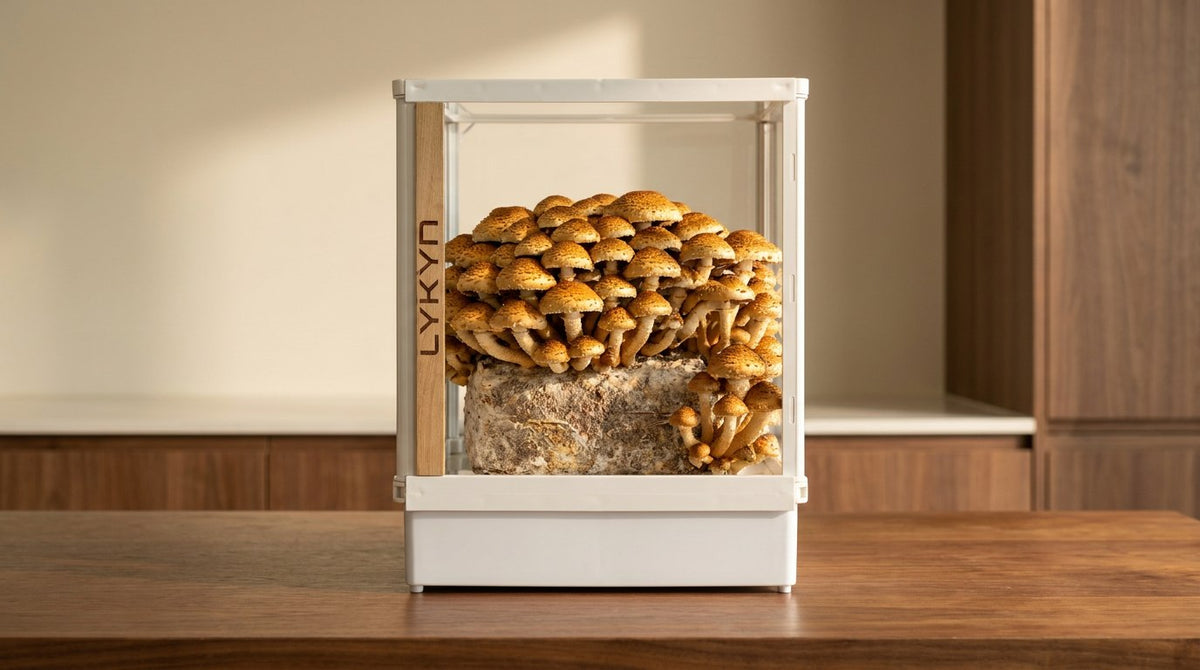
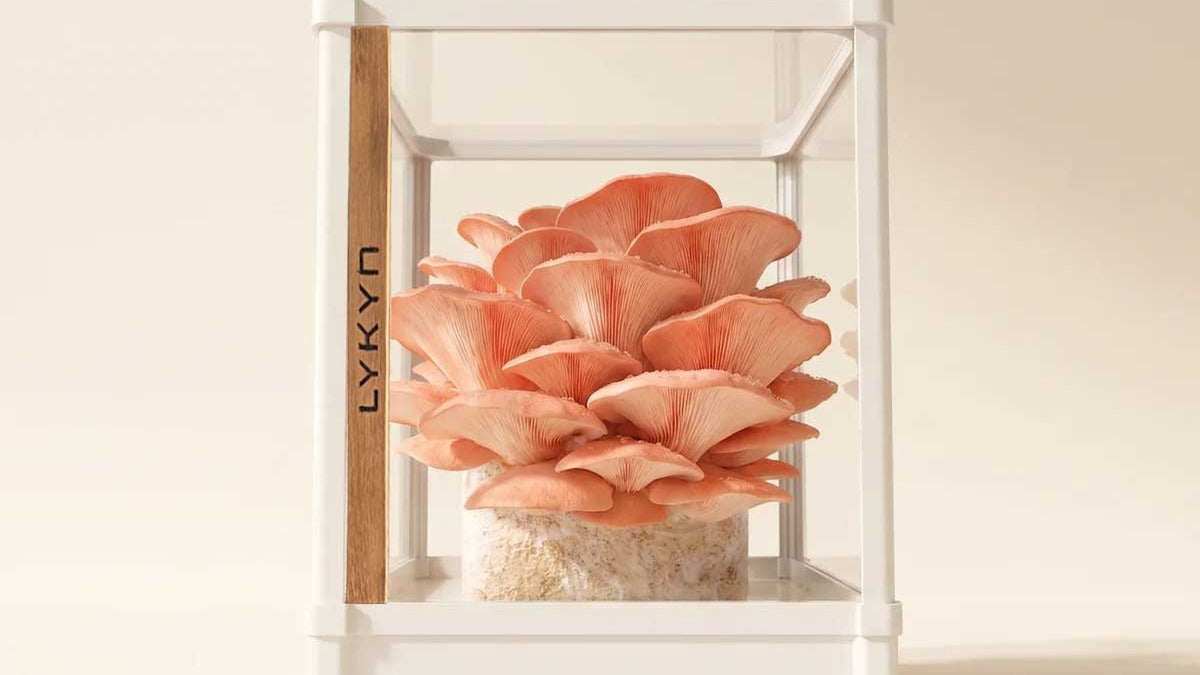
- Sealed chamber: The Lykyn Smart Mushroom Grow Box automatically holds humidity at 90 percent (lion's mane optimal) and runs a fresh air exchange cycle every hour. Drop the block in, pick "Pearl Pom" (or any other strain) in the app, and walk away.

Wait for Pinning (10 to 16 Days)
Lion's mane initiates fruiting bodies (pins) slower than oyster mushrooms. A small white nub appears at the slit between days 10 and 16. If pinning is delayed past day 18, your humidity is too low or your room is too warm. Increase misting, lower the temperature to 60 to 65 F, or close the chamber lid more tightly.
Watch the Pom-Pom Form (4 to 6 Days)
Once the pin appears, the lion's mane pom-pom forms steadily. The cluster doubles in size every 36 hours during peak development, the cascading spines getting longer and more delicate each day. A healthy 5-pound block produces a 0.7 to 0.95 lb pom-pom across the first flush. Bear's Head produces multiple connected pom-poms in the same window.
Harvest at Peak

Harvest lion's mane when the cascading spines are fully extended (1/2 to 1 inch long) and still pure ivory-white. Once the spines start yellowing or browning, the pom-pom turns bitter and shelf life drops fast. Cup your hand under the entire pom-pom, twist gently at the base, and lift the whole cluster off in one motion. Do not cut individual sections, the open wound invites contamination on the next flush.
Trigger a Second and Third Flush
After the first harvest, soak the block in cold water for 6 to 8 hours, drain, and place it back in the chamber. A second flush appears 14 to 21 days later at 50 to 60 percent of the first flush yield. Many lion's mane blocks produce a third flush at 25 to 35 percent yield. The block is exhausted after the third flush; compost it.
Realistic Lion's Mane Grow Kit Timeline
| Phase | Day | Yield Expectation |
|---|---|---|
| Acclimation | Day 0 to 2 | No fruiting; mycelium settles |
| First pinning | Day 10 to 16 | A small white nub forms at the slit |
| First harvest | Day 14 to 21 | 0.7 to 0.95 lb (5 lb block) |
| Second flush | Day 30 to 42 | 0.4 to 0.55 lb |
| Third flush | Day 50 to 65 | 0.2 to 0.35 lb (final) |
By day eighteen, most lion's mane cycles deliver three quarters of a pound of pure ivory-white pom-pom. The block stays productive for two more flushes after that, each about half the size of the previous one.
Estimate your year-one harvest
Plug in your plan. With a Lykyn chamber and a fresh fruiting block, the first flush comes in as little as 14 days.
Common Lion's Mane Grow Kit Problems and Fixes
"Spines Are Yellowing or Browning Before Harvest"
Humidity dropped or the pom-pom is over-mature. Lion's mane spines turn yellow within hours of low humidity exposure (under 80 percent) and within 24 hours of peak maturity. Mist more often, close the tent more tightly, or harvest immediately even if the pom-pom looks small. Yellow spines turn the cooked dish bitter.
"My Lion's Mane Has Tiny Spines or Is Smooth"
Humidity too low during pin development. Lion's mane needs 90 percent humidity to develop the long cascading spines that define the species. Below 80 percent, the pom-pom forms but stays smooth and almost cauliflower-like. The Lykyn chamber holds humidity at 90 percent automatically, which solves this in one buy.
"My Block Has Green Mold"
Green Trichoderma mold is the most common contamination on lion's mane blocks. If green mold appears before any pinning, discard the entire block and contact the supplier for a replacement under their contamination guarantee. Lion's mane is more contamination-prone than oyster because the longer fruiting window gives Trichoderma more time to colonize.
"My Pom-Pom Is Pink or Cream Instead of Pure White"
Slight cream tint is normal, especially on Native Forest wild-type strains. Pink discoloration usually indicates bacterial contamination from over-misting. Reduce misting frequency, increase fresh air exchange, and check that the chamber walls are not collecting water droplets that drip onto the fruit.
"Why Are the Spines Going Up Instead of Down?"
The room is too warm. Lion's mane spines hang straight downward at 60 to 65 F, but turn upward and start curling when temperatures climb above 70 F. Move the block to a cooler room or use a chamber that holds temperature in the lion's mane optimal range.
Substrate Kit vs. Smart Chamber: Which Lion's Mane Mushroom Grow Kit Should You Buy?
Both formats work for lion's mane cultivation. The choice depends on consistency.
Substrate kit ($30 to $48): Single use, 2 to 3 flushes total, requires three-times-daily misting (more than oyster mushrooms because lion's mane needs 90 percent humidity), yields vary 30 to 50 percent block to block based on humidity discipline. Best for one-time experiments or gifts.
Lykyn Smart Mushroom Grow Box ($299 to $389): Reusable indefinitely, 0 daily misting required, supports 28+ species (including all four Hericium varieties plus oyster, shiitake, king trumpet, pioppino, chestnut, and more). Best for repeat growers.
The chamber pays for itself across 4 to 6 fruiting blocks at $30 to $48 each, and lion's mane yields per block are typically 50 to 70 percent higher because humidity stays steady at 90 percent around the clock, which is hard to maintain manually. For people who want to grow lion's mane regularly (most do, after the first successful harvest), the chamber is the better long-term lion's mane mushroom grow kit choice.
The block does the biology. The chamber holds the 90 percent humidity that defines a clean lion's mane harvest. Together they remove the two things that defeat most first-time Hericium growers.
Twenty-eight species.
One small chamber.
Year-round harvest from your kitchen counter.
Frequently Asked Questions
What is the easiest lion's mane variety to grow?
Pearl Pom (Hericium erinaceus cultivar). Pearl Pom tolerates 80 to 95 percent humidity, pins in 12 to 14 days, and forgives missed mistings better than any other Hericium variety. It is the standard recommendation for any first-time lion's mane grower.
How long does a lion's mane mushroom grow kit take?
From setup to first harvest, lion's mane takes 14 to 21 days. Pinning starts at day 10 to 16, and the pom-pom fully forms in another 4 to 6 days. A second flush appears 14 to 21 days after the first harvest, at roughly 50 to 60 percent of the first yield.
What does fresh lion's mane taste like?
Mild, sweet, with a tender meaty texture closer to cooked crab or lobster than to a typical mushroom. Pearl Pom is the mildest, Native Forest is the most pungent, Coral Tooth is the sweetest, and Bear's Head sits in the middle. Fresh lion's mane sears beautifully in butter and turns golden brown in 4 to 6 minutes per side.
How many flushes will a lion's mane kit produce?
A standard 5-pound lion's mane fruiting block produces 2 to 3 flushes. The first is the largest (0.7 to 0.95 lb on a 5-lb block), the second is roughly half (0.4 to 0.55 lb), and the third is half again (0.2 to 0.35 lb). After the third flush, the substrate is exhausted and should be composted.
Is lion's mane the same as Hericium?
Lion's mane is the common name for Hericium erinaceus, the most-grown species in the genus. The Hericium genus includes three culinary species: H. erinaceus (true Lion's Mane, single pom-pom), H. coralloides (Coral Tooth, branched coral structure), and H. americanum (Bear's Head, chained pom-poms). All three carry the same hericenone and erinacine compounds studied for nerve growth factor activity.
Are lion's mane grow kits gift-friendly?
Extremely. Lion's mane is the most photogenic culinary mushroom you can grow, and the recipient sees a pure ivory-white pom-pom forming inside the chamber from day 12 onward. The visual reward beats almost any other gourmet species kit. Pair it with a printed timeline and a recipe card so the gift recipient knows what to expect.
Next Steps After Your First Lion's Mane Harvest
Once you nail your first lion's mane cycle, the natural progression is variety. Try Coral Tooth on cycle 2 for the visual impact, then move to oyster on cycle 3 for the easiest beginner species, then shiitake on cycle 4 for the smoky umami profile. The same fruiting chamber and the same general process work for all of them.
For people who plan to grow lion's mane (and other species) on rotation, the Lykyn Smart Mushroom Grow Box is the only lion's mane mushroom grow kit that does not need replacing after every harvest. Load a new block, pick the variety in the app, harvest 14 to 21 days later. No daily misting, no humidity guesswork, no contamination panic.
Ready to grow?
Skip the substrate guesswork. Start with the smart fruiting chamber that handles humidity, airflow, and lighting for you. If you want to grow your own dense, coral-like clusters at home, our Lion's Mane Grow Kit gives you a fully colonized block and a guided fruiting window so your first flush lands on schedule.
Start with the Lykyn Grow Box →
Share:
How to Grow Blue Oyster Mushrooms at Home (Pleurotus ostreatus)
Home Mushroom Growing Kits: Complete Buyer's Guide