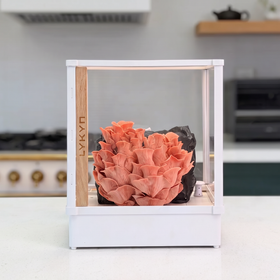



Rosa Austernseitlinge garen schneller als fast alle anderen Gourmetpilze in Ihrer Küche. Ihre leuchtend korallenfarbenen Hüte werden in etwa 8 Minuten knusprig und bekommen einen fleischigen, meeresfrüchteartigen Biss – deshalb greifen Hobbyzüchter immer wieder zu ihnen. Im Folgenden finden Sie 5 Rezepte mit rosa Austernseitlingen, die Sie noch heute Abend zubereiten können, dazu Hinweise zur Vorbereitung und Tipps zum Kochen sowie ein druckbares Rezeptschema für die vegane Speckvariante.

Warum es sich lohnt, rosa Austernseitlinge zu kochen
Rosa Austernseitlinge heben sich aus drei Gründen von weißen Champignons, braunen Champignons und sogar Kräuterseitlingen ab – das merken Hobbyköche schon beim ersten Bissen.
Kurze Garzeit. Dank ihrer dünnen, krausen Hüte dringt die Hitze in wenigen Minuten ein, nicht erst nach Stunden. In einer heißen Pfanne mit etwas neutralem Öl bräunen eine Handvoll rosa Austernseitlinge insgesamt in 6 bis 8 Minuten. Zum Vergleich: Portobello-Hüte brauchen oft 12 bis 15 Minuten.
Ein Geschmack, der eher an Meeresfrüchte als an Pilze erinnert. Wenn Sie rosa Austernseitlinge zunächst ohne Fett scharf anbraten und anschließend in Öl fertig garen, wird ihre Textur blättrig und ihr Geschmack erinnert an Räucherspeck, Schinken oder Krabbenfleisch. Laut dem Eintrag des USDA FoodData Central für rohe Pilze enthalten Austernpilzarten ungefähr 33 kcal pro 100 g, 3,3 g Eiweiß und fast kein Fett. Die Fülle, die Sie schmecken, entsteht also durch die Maillard-Reaktion beim Anbraten und nicht durch den Pilz selbst.
Nährstoffe, die einen Platz auf dem Teller verdienen. Eine begutachtete Studie zu Pleurotus djamor, veröffentlicht in Food Bioscience (2023), dokumentiert hohe Gehalte an Beta-Glucanen, Ergothionein und Selen, die alle mit der Unterstützung des Immunsystems und dem Schutz vor oxidativem Stress in Verbindung gebracht werden. Auch das Small-Farms-Programm der Cornell University zählt rosa Austernseitlinge zu den am einfachsten zu Hause anzubauenden Gourmetpilzen. Deshalb ernten unsere Züchter alle 5 bis 7 Tage eine frische Pilzwelle.
Wenn Sie noch nie frische rosa Austernseitlinge probiert haben, beginnen Sie mit dem Speckrezept. Dieses Gericht überzeugt selbst Skeptiker.

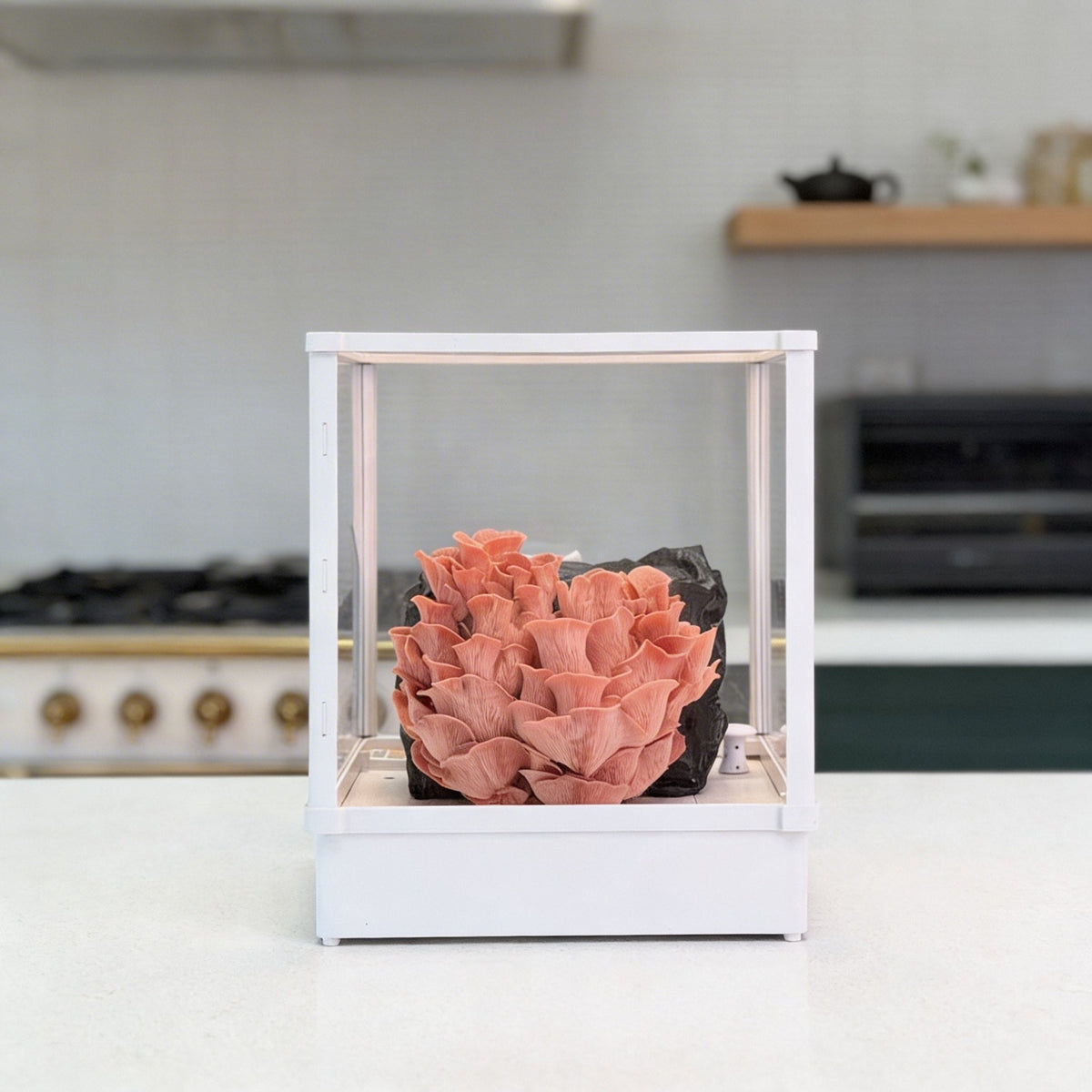
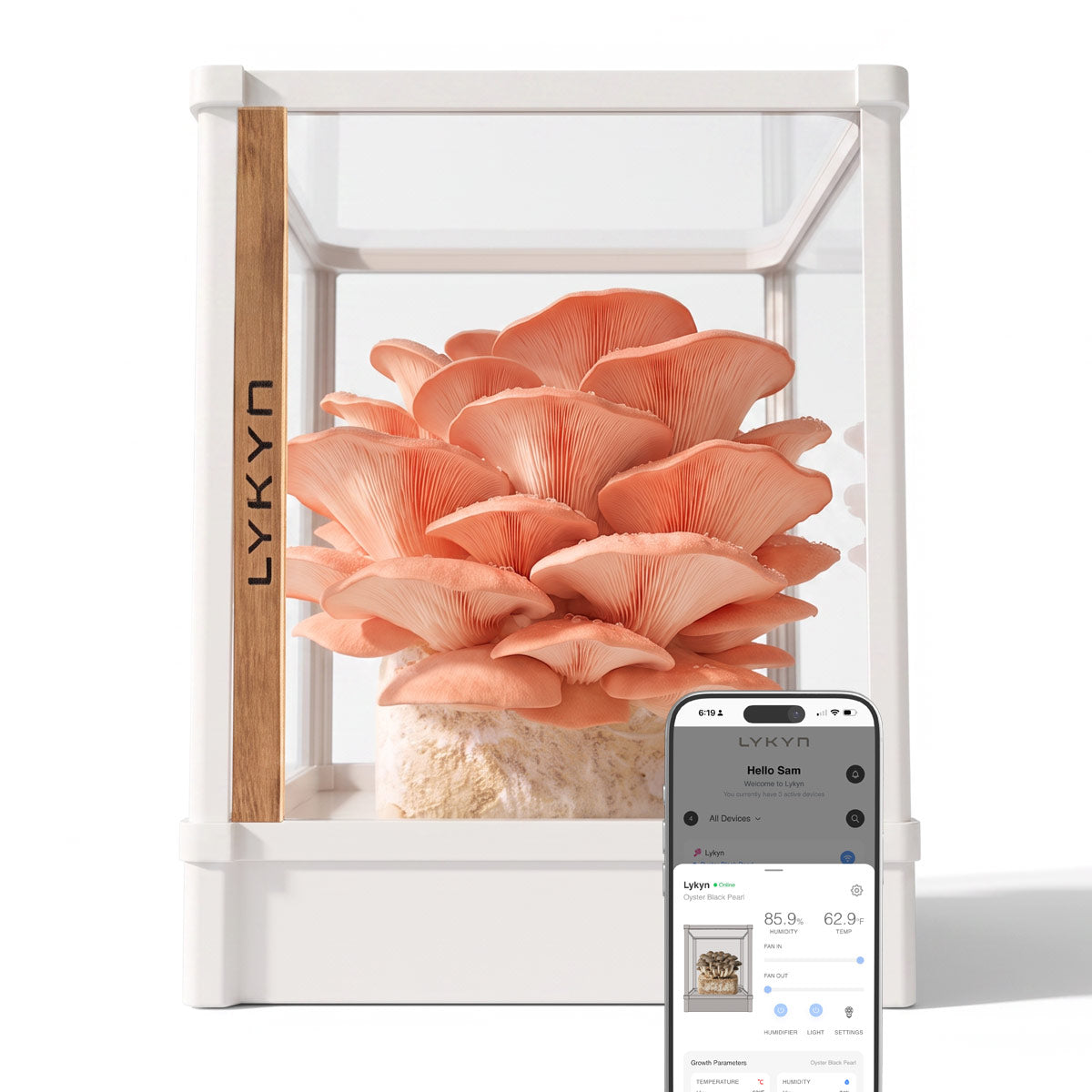
Smart Chamber. Knochenweiß, einstöckig
- 2,8-l-Tank, automatische Luftfeuchtigkeit von 90 %
- Per App steuerbar, Plug-and-play
- Für Blöcke bis 6 lb, auf Lager

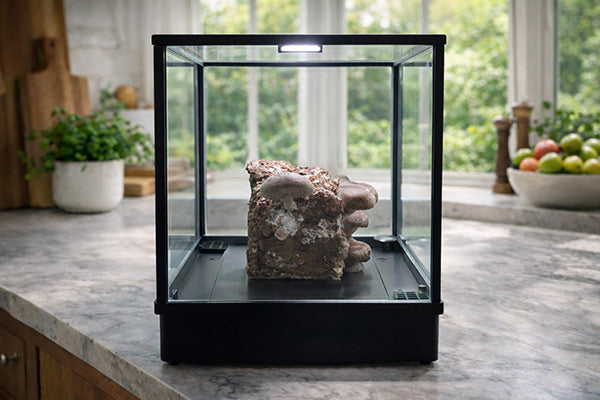
Smart Chamber. Obsidianschwarz, einstöckig
- Dieselbe Ausstattung wie die Variante in Knochenweiß
- Hochwertige matte schwarze Oberfläche
- Passt zu jeder Küchenfarbpalette

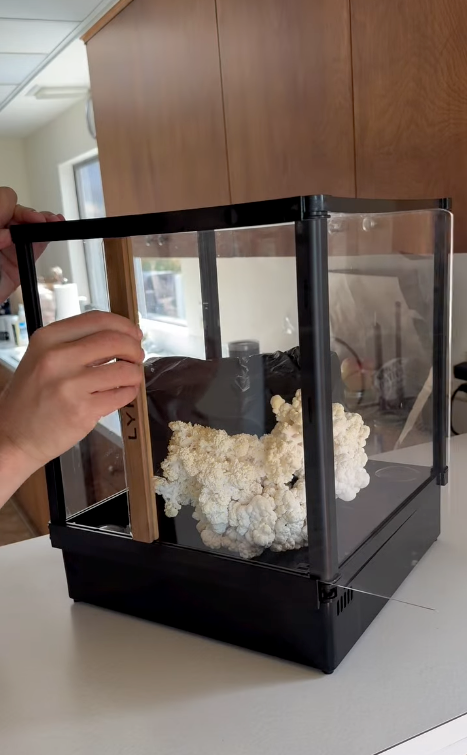
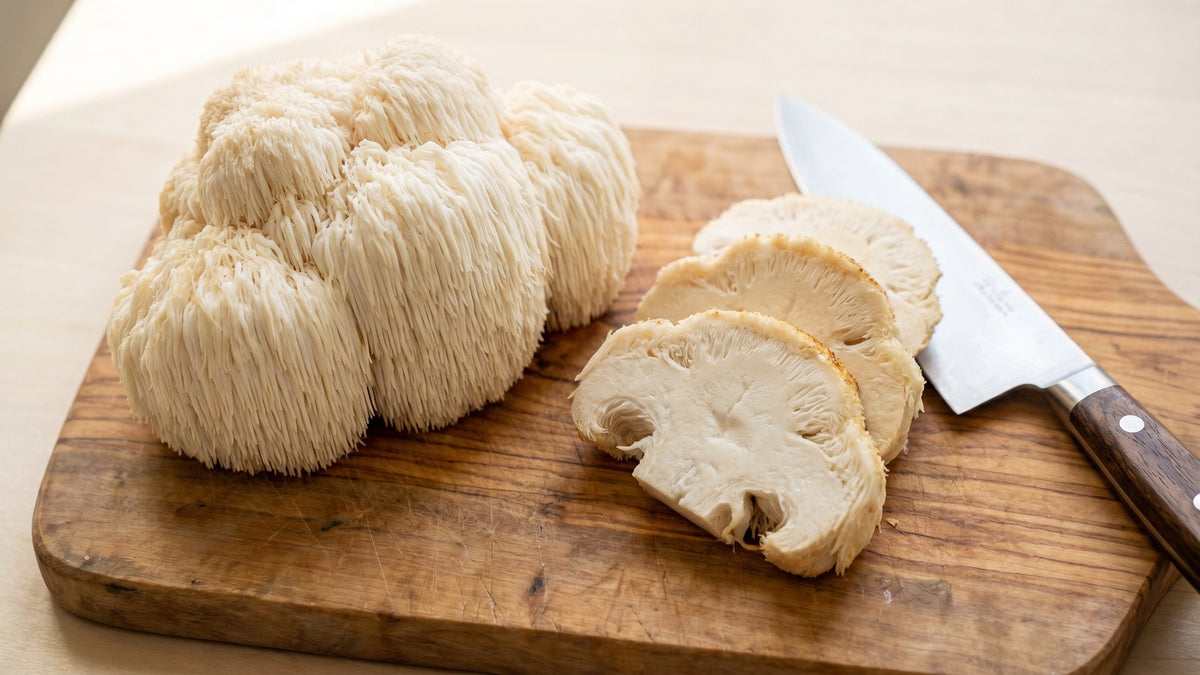
Zuchtset für schwarze Austernseitlinge
- Auf Lager
- Erste Primordien in 3–5 Tagen
- Ersetzt einen Zuchtzyklus in der Kammer
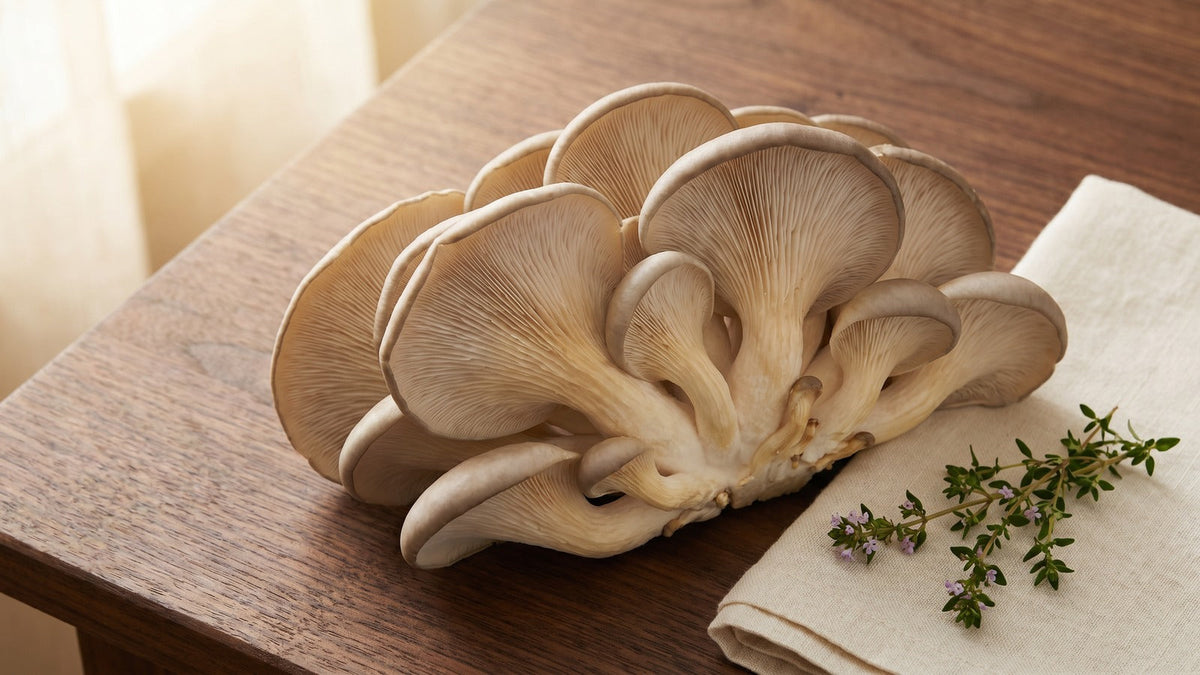
So bereiten Sie rosa Austernseitlinge vor dem Kochen vor
Gute Ergebnisse beginnen, bevor die Pfanne heiß wird. Mit drei kurzen Schritten bereiten Sie ein frisches Büschel für jedes der folgenden Rezepte vor.
- Zupfen, nicht schneiden. Ziehen Sie die einzelnen Hüte mit den Fingern vom zentralen Stiel ab. Beim Zupfen bleiben die natürlichen Fasern erhalten, wodurch die Textur beim Anbraten bestehen bleibt. Ein Messer quetscht die Ränder.
- Rückstände abbürsten, nicht abspülen. Rosa Austernseitlinge nehmen schnell Wasser auf. Entfernen Sie Substratreste mit einem trockenen Backpinsel oder einem weichen Tuch. Nur bei sichtbarer Verschmutzung abspülen und anschließend gründlich trocken tupfen.
- Zuerst ohne Fett anbraten. Geben Sie die gezupften Hüte für 2 bis 3 Minuten in eine heiße, leere Gusseisenpfanne. Sie geben Wasser ab und schrumpfen um etwa ein Drittel. Geben Sie nun Öl oder Butter hinzu. Dieser eine Trick sorgt für die charakteristisch knusprigen Ränder der rosa Austernseitlinge.
Ein vollständig durchwachsener 5-lb-Block aus unserem Zuchtset für rosa Austernseitlinge liefert über drei Pilzwellen üblicherweise 1,2 bis 1,6 lb frische Pilze – genug für jedes Rezept auf dieser Seite und noch mehr.
Die 5 besten Rezepte mit rosa Austernseitlingen
1. Speck aus rosa Austernseitlingen

Das ist das Rezept mit rosa Austernseitlingen schlechthin und das, mit dem die meisten Köche anfangen. Die Pilze werden zu dünnen, rauchigen Streifen, die sich für ein BLT-Sandwich, als Topping für Salate oder als Beilage zu Rührei eignen.
Zutaten (für 4 Portionen):
- 8 oz frische rosa Austernseitlinge, in Streifen gezupft
- 2 EL Sojasauce oder Tamari
- 1 EL Ahornsirup
- 1 TL geräuchertes Paprikapulver
- 1 TL Flüssigrauch (optional, aber er macht das Gericht aus)
- 1 EL Olivenöl
- 1 Prise schwarzer Pfeffer
Zubereitung:
- Die Pilze in lange, dünne Streifen in Speckbreite zupfen. Beiseitestellen.
- Sojasauce, Ahornsirup, geräuchertes Paprikapulver und Flüssigrauch in einer Schüssel verquirlen. Die Pilze dazugeben und wenden, bis sie gleichmäßig bedeckt sind. 10 Minuten marinieren lassen.
- Das Olivenöl in einer Gusseisenpfanne bei mittlerer bis hoher Hitze erhitzen.
- Die Streifen nebeneinander in einer Lage in die Pfanne legen. 4 Minuten braten, ohne sie zu bewegen.
- Wenden und weitere 3 bis 4 Minuten braten, bis die Ränder knusprig und dunkel sind.
- Auf Küchenpapier abtropfen lassen. Mit frisch gemahlenem Pfeffer abschließen und warm servieren.
Gesamtzeit: 25 Minuten (10 Minuten Marinierzeit + 8 Minuten Garzeit + 7 Minuten Vorbereitung). Entscheidend ist das scharfe Anbraten bei hoher Hitze.
2. Pasta mit rosa Austernseitlingen und cremiger Knoblauchsauce

Ein Pastagericht für den Feierabend, das schneller fertig ist, als die Nudeln garen. Die rosa Austernseitlinge bringen eine feine, an Meeresfrüchte erinnernde Note mit, die gut zu Linguine oder Fettuccine passt.
Zutaten (für 2 Portionen):
- 6 oz rosa Austernseitlinge, gezupft
- 6 oz Linguine
- 3 Knoblauchzehen, fein gehackt
- 2 EL Butter
- 1/2 Tasse Sahne (oder Hafercreme für die vegane Variante)
- 1/4 Tasse geriebener Parmesan
- 2 EL gehackte Petersilie
- Salz, Pfeffer, Zitronenschale
Zubereitung:
- Die Pasta in Salzwasser kochen.
- Während die Pasta kocht, die Pilze 3 Minuten in einer heißen Pfanne ohne Fett anbraten. Butter und Knoblauch hinzufügen und weitere 2 Minuten anschwitzen.
- Die Sahne zugießen und auf die Hälfte einkochen lassen (2 Minuten).
- Die Pasta abgießen und 1/4 Tasse Kochwasser auffangen. Pasta in die Pfanne geben und mit der Sauce und dem Parmesan vermengen.
- Bei Bedarf etwas Nudelwasser zugießen. Mit Petersilie und Zitronenschale garnieren.
Die Zitronenschale ist entscheidend. Sie gleicht die Sahne aus und bringt die natürliche Süße der rosa Austernseitlinge zur Geltung.
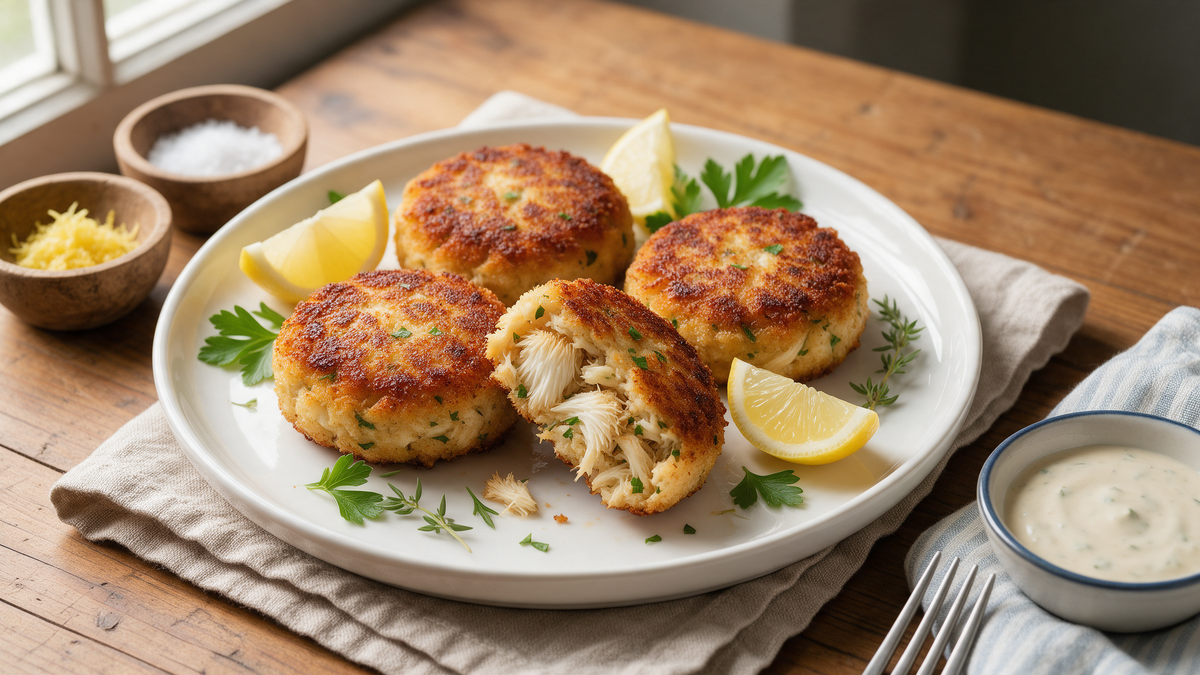
3. Puffer aus rosa Austernseitlingen

Außen knusprig, innen zart – diese Puffer sind genau das Richtige, wenn Sie ein halbes Pfund rosa Austernseitlinge haben und nicht wissen, was Sie damit machen sollen. Sie eignen sich hervorragend als Vorspeise mit Aioli oder als Beilage zu einem leichten Salat.
Zutaten (für 8 Puffer):
- 8 oz rosa Austernseitlinge, gehackt
- 1/2 Tasse Weizenmehl (oder Kichererbsenmehl für eine glutenfreie Variante)
- 1 Ei (oder ein Leinsamen-Ei)
- 2 Frühlingszwiebeln, in Ringe geschnitten
- 1 TL Backpulver
- 1/2 TL Salz
- 1/4 TL schwarzer Pfeffer
- 2 bis 3 EL Wasser
- Neutrales Öl zum Braten
Zubereitung:
- Die gehackten Pilze 3 Minuten ohne Fett anbraten und anschließend etwas abkühlen lassen.
- Mehl, Ei, Backpulver, Salz und Pfeffer verquirlen. Das Wasser esslöffelweise hinzufügen, bis ein dicker, pfannkuchenartiger Teig entsteht.
- Pilze und Frühlingszwiebeln unterheben.
- In einer Pfanne 1/4 Zoll Öl bei mittlerer Hitze erhitzen.
- Jeweils 1/4 Tasse Teig ins Öl geben und leicht flach drücken.
- Pro Seite 2 bis 3 Minuten goldbraun braten. Auf Backpapier abtropfen lassen.
- Mit einer Zitronenspalte und einer Sauce zum Dippen nach Wahl servieren.
4. Wokgericht mit rosa Austernseitlingen, Ingwer und Frühlingszwiebeln
Ein Abendessen für unter der Woche, das in 10 Minuten fertig ist. Halten Sie die übrigen Zutaten einfach und lassen Sie die Pilze glänzen.
Zutaten (für 2 Portionen):
- 8 oz rosa Austernseitlinge, gezupft
- 1 EL geriebener Ingwer
- 3 Frühlingszwiebeln, in Ringe geschnitten (weiße und grüne Teile getrennt)
- 2 Knoblauchzehen, fein gehackt
- 1 EL Sojasauce, 1 TL Reisessig, 1 TL geröstetes Sesamöl
- 1 TL Sesamsamen, 1 EL neutrales Öl
- Gekochter Jasminreis zum Servieren
Zubereitung:
- Das neutrale Öl in einem Wok bei starker Hitze erhitzen.
- Pilze, Ingwer, Knoblauch und die weißen Teile der Frühlingszwiebeln dazugeben. 4 bis 5 Minuten unter Rühren braten, bis die Ränder angeröstet sind.
- Sojasauce und Reisessig hinzufügen und 30 Sekunden durchschwenken.
- Vom Herd nehmen und mit Sesamöl beträufeln. Mit den grünen Frühlingszwiebelringen und Sesamsamen garnieren. Auf Jasminreis servieren.
Rosa Austernseitlinge nehmen die rauchigen Röstaromen des Wokkochens besser an als fast alle anderen Pilzarten. Dadurch schmeckt das Gericht wie aus einer Restaurantküche.
5. Suppe mit rosa Austernseitlingen, Miso und Tofu
Kräftig, herzhaft und in weniger als 20 Minuten fertig. Miso hebt das Umami der Pilze hervor, Tofu sorgt für einen ausgewogenen Texturkontrast.
Zutaten (für 4 Portionen):
- 8 oz rosa Austernseitlinge, gezupft
- 4 Tassen Gemüse- oder Pilzbrühe
- 3 EL helle Misopaste
- 1 Tasse weicher Tofu, gewürfelt
- 1 EL geriebener Ingwer, 2 Frühlingszwiebeln in Ringen, 1 TL Sesamöl
- 1 Noriblatt, zerrissen (optional)
Zubereitung:
- Die Brühe sanft erhitzen, aber nicht kochen lassen (Miso verliert oberhalb von 180 °F an Geschmack).
- Die Pilze separat 3 Minuten ohne Fett anbraten und anschließend mit dem Ingwer in die Brühe geben. 5 Minuten köcheln lassen.
- Die Misopaste in einer kleinen Schüssel mit 1/4 Tasse warmer Brühe verrühren und anschließend in den Topf geben.
- Die Tofuwürfel hinzufügen und weitere 2 Minuten köcheln lassen. Vom Herd nehmen und mit Frühlingszwiebeln, Nori und Sesamöl garnieren.
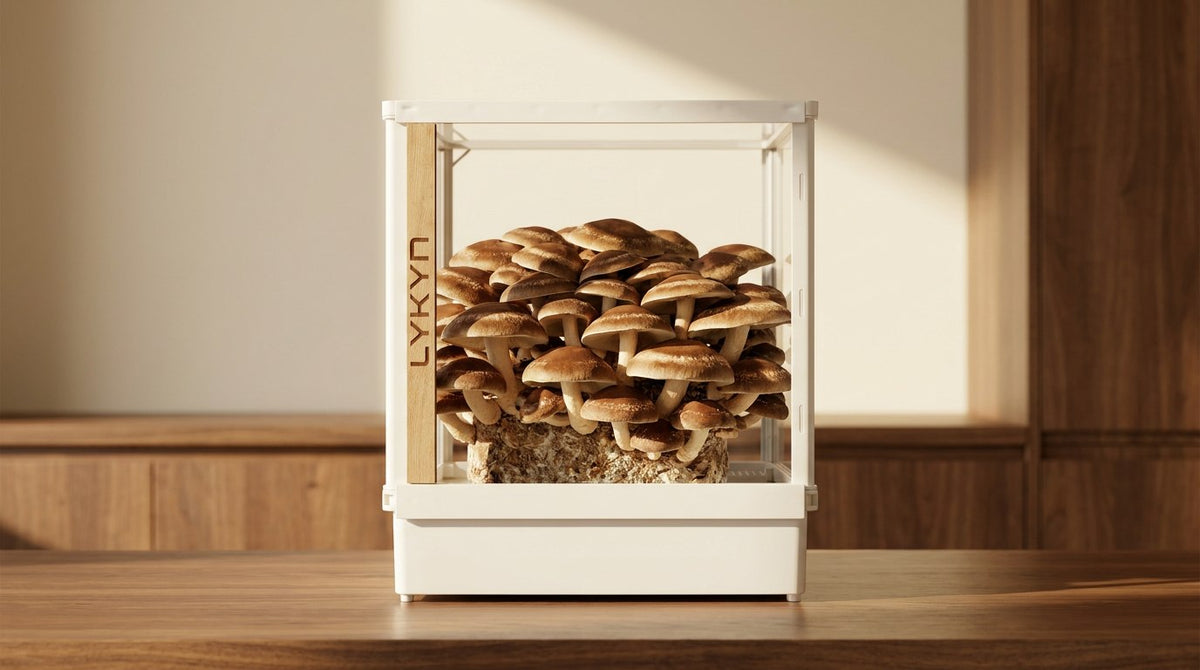
Wenn Sie selbst Pilze anbauen, ist die intelligente Pilzzuchtbox von Lykyn die einfachste Lösung. Sie reguliert Luftfeuchtigkeit und Luftzufuhr automatisch, sodass jede Pilzwelle gleichmäßig ausfällt.
Tipps zum Kochen mit rosa Austernseitlingen
Fünf Details machen aus einem ordentlichen Gericht mit rosa Austernseitlingen ein großartiges.
Immer zuerst ohne Fett anbraten. Das kann man nicht oft genug sagen. Ohne diesen Schritt dünsten rosa Austernseitlinge, statt zu bräunen.
Heiß und kurz garen. Bei mittlerer bis starker Hitze. Rosa Austernseitlinge bestehen zu 90 % aus Wasser, und bei niedriger Hitze werden sie matschig.
Erst zum Schluss salzen. Salz entzieht Wasser. Würzen Sie erst, wenn sich eine Kruste gebildet hat.
Den zentralen Stiel nur entfernen, wenn er zäh ist. Die Basis des Büschels kann faserig sein. Heben Sie zähe Stielstücke für eine Brühe auf.
Verwenden Sie möglichst frische Pilze. Rosa Austernseitlinge sind im Kühlschrank in einer Papiertüte nur 4 bis 6 Tage haltbar. Ausführliche Hinweise zur Aufbewahrung finden Sie in unserem Ratgeber zum Anbau und zur Verwendung frischer rosa Austernseitlinge sowie in unserem Ratgeber zum richtigen Erntezeitpunkt.
Wo Sie frische rosa Austernseitlinge bekommen
Rosa Austernseitlinge sind in US-amerikanischen Lebensmittelgeschäften selten und teuer, wenn man sie findet: oft kosten sie 18 bis 25 US-Dollar pro Pfund. Am einfachsten umgehen Sie das, indem Sie sie zu Hause selbst anbauen.
Ein vollständig durchwachsener 5-lb-Fruchtungsblock für rosa Austernseitlinge liefert über drei Pilzwellen 1,2 bis 1,6 lb frische Pilze – genug für jedes der obigen Rezepte. Mit einer Kammer, die Luftfeuchtigkeit und Luftzufuhr reguliert, ernten unsere Züchter die erste Pilzwelle bereits 5 bis 7 Tage nach dem Einrichten. Derselbe Block produziert weitere 2 bis 3 Wochen lang Pilze.
Wenn Sie mehr als zweimal pro Woche mit Pilzen kochen, macht sich die intelligente Pilzzuchtbox durch frische Ernte bezahlt, sobald Sie 6 bis 8 Blöcke gezüchtet haben. Sie eignet sich für alle vier Austernpilzarten im Lykyn-Sortiment.
Häufig gestellte Fragen
Wie bereitet man rosa Austernseitlinge so zu, dass sie wie Speck schmecken?
Zupfen Sie die rosa Austernseitlinge in dünne Streifen und marinieren Sie sie 10 Minuten lang in Sojasauce, Ahornsirup, geräuchertem Paprikapulver und Flüssigrauch. Braten Sie sie in einer heißen Gusseisenpfanne pro Seite 4 Minuten an, ohne sie zu bewegen. Die Marinade, die hohe Hitze und das lange, ungestörte Anbraten sorgen gemeinsam für die knusprige, rauchige Specktextur. Lassen Sie die Streifen auf Küchenpapier abtropfen und würzen Sie sie mit schwarzem Pfeffer.
Schmecken rosa Austernseitlinge nach Meeresfrüchten?
Ja. Beim Anbraten ohne Fett entwickeln rosa Austernseitlinge eine blättrige Textur und einen Geschmack, der häufig mit Räucherschinken, Speck oder Krabbenfleisch verglichen wird. Die meeresfrüchteartige Note ist bei frischen, jungen Büscheln, die heiß und kurz gegart werden, am ausgeprägtesten. Ältere oder zu lange gegarte Pilze verlieren diese Nuance und schmecken eher wie gewöhnliche Pilze. Pleurotus djamor wird in Restaurantküchen besonders häufig für vegane Meeresfrüchtealternativen verwendet.
Kann man rosa Austernseitlinge roh essen?
Nein. Alle Pleurotus-Arten, einschließlich rosa Austernseitlinge, sollten gegart werden. Rohe Austernpilze können Magen-Darm-Beschwerden verursachen und enthalten Chitin in den Zellwänden, das das menschliche Verdauungssystem ohne Hitze nur schlecht abbauen kann. Empfohlen werden mindestens 6 bis 8 Minuten Garzeit bei mittlerer bis starker Hitze. Durch das Garen entfalten sich außerdem das Umami und die fleischige Textur, die rosa Austernseitlinge überhaupt erst so besonders machen.
Wie lange sind frische rosa Austernseitlinge im Kühlschrank haltbar?
Frische rosa Austernseitlinge halten sich im Gemüsefach in einer Papiertüte 4 bis 6 Tage im Kühlschrank. Vermeiden Sie Plastik, da es Feuchtigkeit einschließt und den Verderb beschleunigt. Anzeichen dafür, dass die Pilze verdorben sind: schleimige Hüte, säuerlicher Geruch oder dunkle Verfärbungen. Für eine längere Aufbewahrung braten Sie sie zunächst an, lassen sie abkühlen und frieren sie auf einem Tablett in einer einzelnen Lage vor. Anschließend können Sie sie in einen Gefrierbeutel umfüllen. Gegarte, tiefgefrorene rosa Austernseitlinge sind 3 Monate haltbar.
Kann ich rosa Austernseitlinge in einem Rezept durch andere Pilze ersetzen?
Ja, mit einigen Anpassungen. Rosa Austernseitlinge garen schneller als braune Champignons, Portobello oder Shiitake. Verkürzen Sie daher die Garzeit um 30 bis 40 Prozent. Ihr Geschmack ist feiner, deshalb sollten Sie weniger salzige Würzung und mehr aromatische Kräuter verwenden. Als Ersatz für Steinpilze eignen sie sich weniger, da bei diesen der kräftige, erdige Geschmack das ganze Gericht ausmacht. In jedem Rezept, das Kräuterseitlinge oder weiße Austernseitlinge verlangt, lassen sie sich jedoch gut verwenden.
eignen sich rosa Austernpilze zum veganen Kochen?
Rosa Austernpilze gehören zu den vielseitigsten Edelpilzen für die vegane Küche. Ihre fleischige Textur und ihr an Meeresfrüchte erinnernder Geschmack machen sie zu einem natürlichen Ersatz für Speck, Pulled Pork, Krabbenküchlein und gebratene Fischfilets. Sie sind proteinreich (3,3 g pro 100 g) und enthalten viele B-Vitamine, Ergothionein und Beta-Glucane. Restaurants von Los Angeles bis Berlin verwenden rosa Austernpilze inzwischen in pflanzlichen Gerichten.
Warum werden meine rosa Austernpilze beim Kochen matschig?
Matschige Pilze haben drei Ursachen: zu viel Flüssigkeit in der Pfanne, zu niedrige Hitze oder zu frühes Salzen. Rosa Austernpilze bestehen zu 90 Prozent aus Wasser und geben beim Erhitzen Feuchtigkeit ab. Wenn die Pfanne zu voll ist oder du Öl und Salz hinzugibst, bevor das Wasser verdampft ist, kochen die Pilze in ihrer eigenen Flüssigkeit, statt zu bräunen. Die Lösung: Die Pilze zuerst 2 bis 3 Minuten in einer leeren, heißen Pfanne trocken anbraten, dann Fett hinzugeben und erst zum Schluss würzen.
Kann ich rosa Austernpilze vor dem Kochen einfrieren?
Rohe rosa Austernpilze lassen sich schlecht einfrieren, weil ihr hoher Wassergehalt beim Auftauen die Zellstruktur zerstört und sie matschig werden. Besser ist es, sie zuerst anzubraten oder trocken anzubraten, vollständig abkühlen zu lassen und dann auf einem Backblech in einer einzigen Lage einzufrieren. Sobald sie fest sind, in einen Gefrierbeutel umfüllen. Gegarte, tiefgekühlte rosa Austernpilze sind bis zu 3 Monate haltbar und lassen sich gut in Wokgerichten, Pasta und Suppen aufwärmen.

Starte deine Pilzreise
Smarte Pilzzuchtkammer
Plug-and-Play-Zuchtkammer mit optimal abgestimmter Luftfeuchtigkeit, Beleuchtung und Luftzirkulation für jede Pilzart. Anfänger ernten ihre erste Pilzwelle schon nach Tagen statt Monaten.
In den Warenkorb – 299 $Abschließende Gedanken
Rosa Austernpilze gelingen am besten, wenn sie kurz und bei hoher Hitze gegart werden. Sobald du das Speckrezept und die Pasta zubereitet hast, lassen sich die anderen drei Rezepte problemlos in deinen Wochenplan integrieren. Schwieriger ist es, sie frisch zu bekommen – deshalb ist der eigene Anbau meist die beste Lösung. Mit einem 5-Pfund-Block und einer Kammer, die die Luftfeuchtigkeit für dich reguliert, kannst du nach 5 bis 7 Tagen ernten, und die Ernte hält wochenlang. Such dir ein Rezept aus, richte dein Anzuchtset ein und schon ist dein nächstes Pilzgericht nur eine Woche entfernt.
Quellen
- USDA FoodData Central: Pilze, roh, Nährstoffprofil
- Cornell University Small Farms Program: Austernpilzzucht
- Food Bioscience (2023): Nährwert- und bioaktives Profil von Pleurotus djamor



Aktie:
Warum werden Ihre Pilze braun? Verderb, Stress und was zu tun ist
Warum werden Ihre Pilze braun? Verderb, Stress und was zu tun ist